


In many workplaces, rewards and recognition are treated like the final layer of polish—something added once the real work is done. But in reality, they function more like sunlight and water in a growing ecosystem: essential, continuous, and deeply influential. Just as a well-tended environment helps plants grow strong and resilient, a culture of thoughtful appreciation fuels professional development, strengthens leadership, and elevates performance across every level of an organization.

Image used under license from Shutterstock.com
What are Rewards & Recognition?
Defining rewards and recognition requires distinguishing between two complementary approaches to reinforcing desired behaviors and outcomes, as well as motivating your team members to perform high-quality work that stems from an inner desire to grow. Rewards refer to benefits such as bonuses, promotions, gifts, or paid time off. Recognition involves expressions of appreciation, including verbal praise, written notes, public acknowledgment, sincere gratitude, meaningful feedback, or career opportunities. Both serve to reinforce performance, align behaviors with organizational values, and communicate that efforts are seen and valued.
To implement rewards and recognition effectively is to treat them as essential tools of culture-building rather than occasional gestures. Their importance lies in their ability to sustain motivation, foster commitment, and signal what matters within a team or company. They also reinforce norms and expectations while fostering an environment where people feel their contributions are valued. When recognition becomes a consistent practice and rewards are aligned with effort and impact, people feel seen, supported, and motivated. These mechanisms, when embedded in the everyday, boost morale, build trust, shape behavior, and improve outcomes across teams and functions.

Image used under license from Shutterstock.com
How To Reward and Recognize to Drive Improvement
Recognition and rewards are key levers for continuous improvement. To encourage progress, managers need to move beyond generic praise. Some strategies to drive improvement through honest rewards and recognition include:
- Recognize behaviors that reflect your company’s and your team’s values
- Focus more on these behaviors than on results
- Provide specific feedback that links actions to impact
- When possible, tailor recognition to individual preferences and motivations
- Offer rewards that support development (not just performance)
- Acknowledge effort and collaboration, especially when results are still emerging
- Build recognition into regular routines like team meetings and one-on-ones
- Encourage peer-to-peer recognition to foster mutual respect and awareness
- Use a mix of spontaneous and structured recognition to keep it fresh and meaningful
- Make reward criteria transparent to build trust and clarity
- Align recognition with larger goals to reinforce purpose and direction
- Make sure all praise, rewards, and recognition is authentic and honest

Image used under license from Shutterstock.com
Thought Leaders
Many researchers, authors, and practitioners have influenced how organizations approach motivation, rewards, and recognition. Their work spans psychology, management, behavioral economics, and organizational design. Some of the most notable thought experts include:
- Daniel H. Pink: A former speechwriter turned author, he is known for Drive: The Surprising Truth About What Motivates Us. He popularized the concept of Motivation 3.0, which argues that autonomy, mastery, and purpose are more effective than traditional carrot-and-stick rewards in driving engagement and performance.
- Teresa Amabile: A professor at Harvard Business School, she studies creativity, motivation, and the work environment. Her book, The Progress Principle (with Steven Kramer), highlights the importance of making consistent progress on meaningful work, supported by small wins and recognition.
- Adam Grant: An organizational psychologist at the Wharton School, he is the author of bestselling books including Give and Take and Think Again. Grant often explores motivation, generosity, and the conditions that help people thrive at work, drawing from research in psychology and economics.
- Susan Fowler: A leadership consultant and trainer, she is the author of Why Motivating People Doesn’t Work… and What Does. Her work centers on applying Self-Determination Theory to practical leadership, emphasizing the importance of internal motivation over external pressure.
- Frederick Herzberg: A psychologist known for the Two-Factor Theory of motivation, he distinguished between hygiene factors (pay and job security) and true motivators (recognition, achievement, and meaningful work). Some of his most notable work includes a Harvard Business Review article called One More Time: How Do You Motivate Employees?
- Edward L. Deci and Richard M. Ryan: Creators of Self-Determination Theory, they have conducted decades of research on intrinsic motivation. Their framework emphasizes autonomy, competence, and relatedness as key psychological needs that support engagement and well-being.
- Beverly Kaye: An expert in talent development and retention, Beverly Kaye is the author of Love ’Em or Lose ’Em and Help Them Grow or Watch Them Go. Her work focuses on career conversations and recognition as tools to retain and develop top talent.
- Gary Latham and Edwin Locke: Known for their work on Goal-Setting Theory, Latham and Locke showed how clear, challenging goals—combined with feedback and recognition—can dramatically improve performance. Their research remains foundational in both academic and applied settings.

Image used under license from Shutterstock.com
Key Frameworks
To better reward and recognize team members, models and frameworks that explain human motivation and behavior can be particularly helpful. These theories provide insight into why certain approaches are more effective than others and how to design systems that foster sustained engagement. Some of these include:
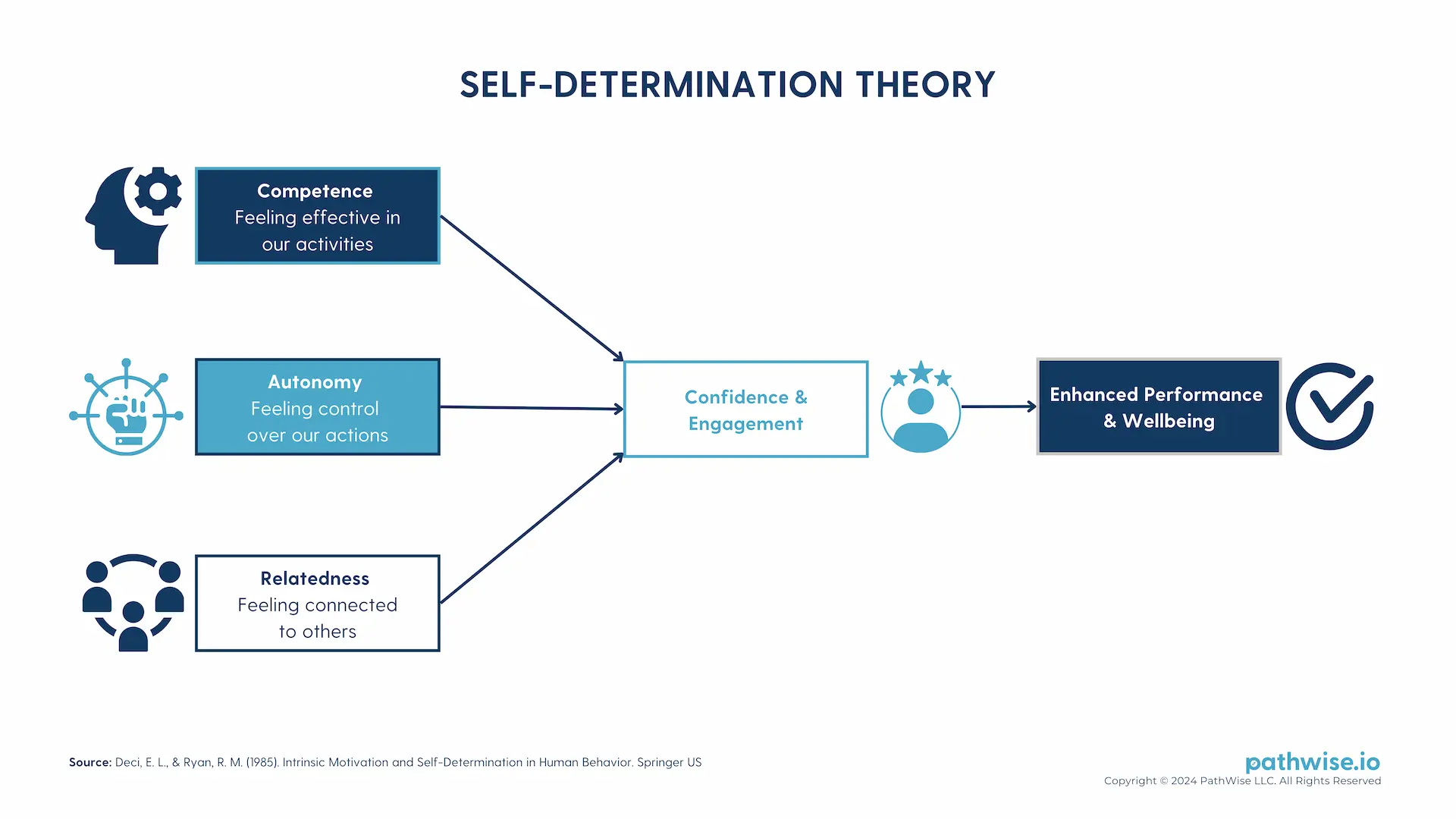
- Self-Determination Theory: This theory proposes three core psychological needs—autonomy, competence, and relatedness—as the foundation of intrinsic motivation. When these needs are supported, individuals are more likely to feel engaged, fulfilled, and self-directed in their work.
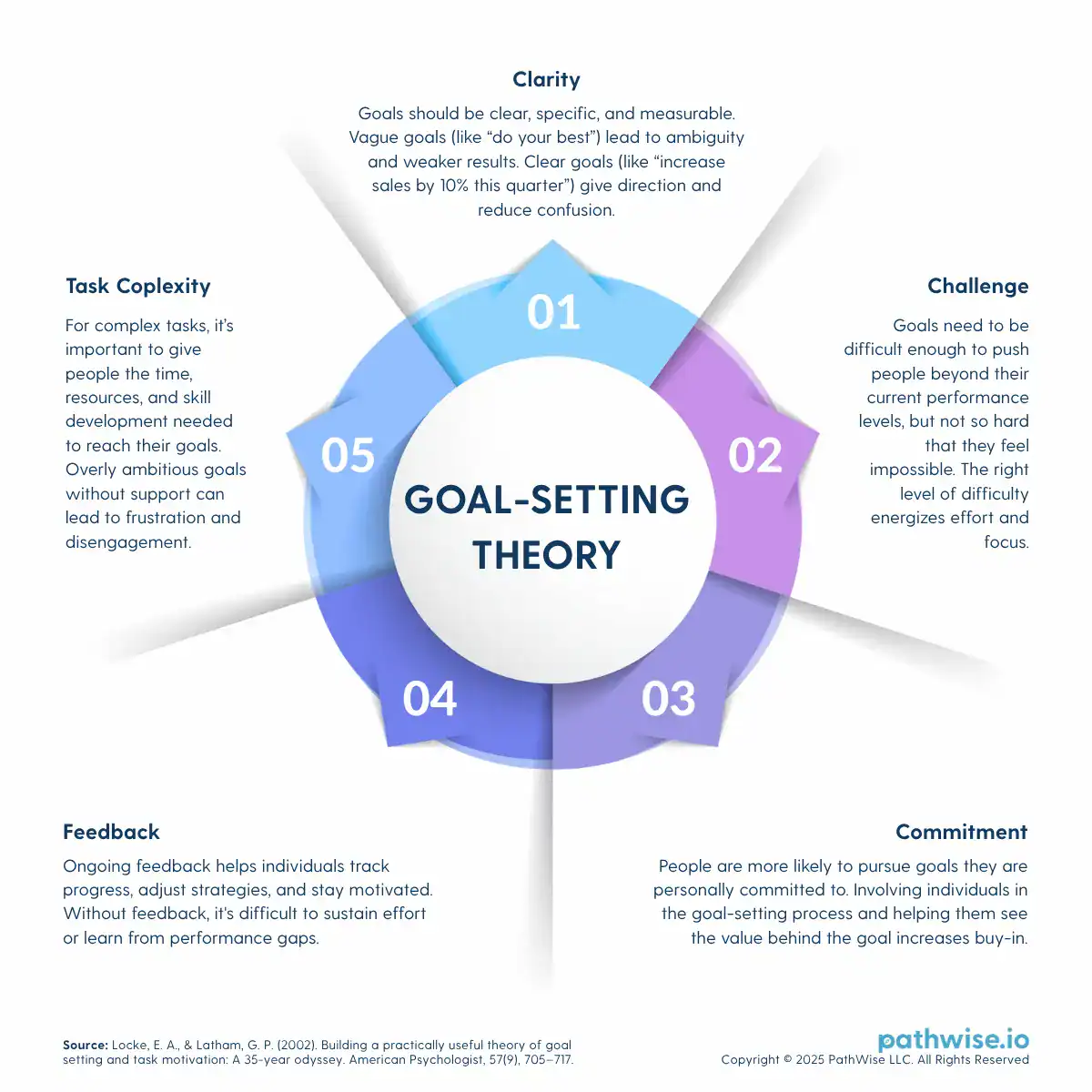
- Goal-Setting Theory: This framework suggests that setting specific, challenging goals paired with effective feedback leads to improved performance. It highlights the importance of clarity, commitment, and recognition of progress as key drivers of motivation.
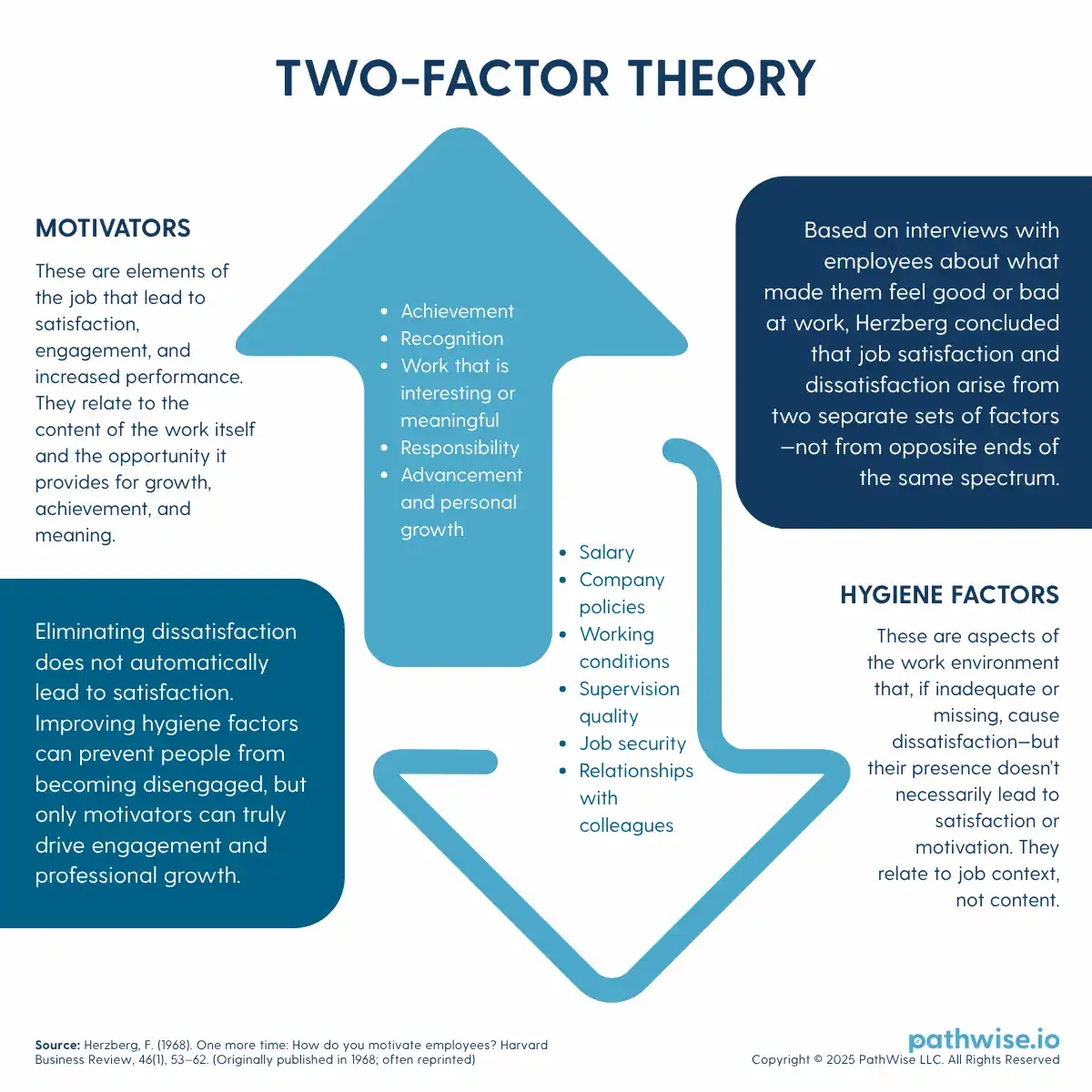
- Two-Factor Theory: Herzberg’s model distinguishes between motivators (such as recognition and meaningful work) and hygiene factors (like salary and policies), arguing that motivators drive true satisfaction and performance, while hygiene factors prevent dissatisfaction but don’t lead to long-term motivation.
- Motivation 3.0: Based on insights from Self-Determination Theory, this model replaces outdated carrot-and-stick approaches with a focus on autonomy, mastery, and purpose. Pink argues these are the drivers of creative, adaptive, and high-performing work.
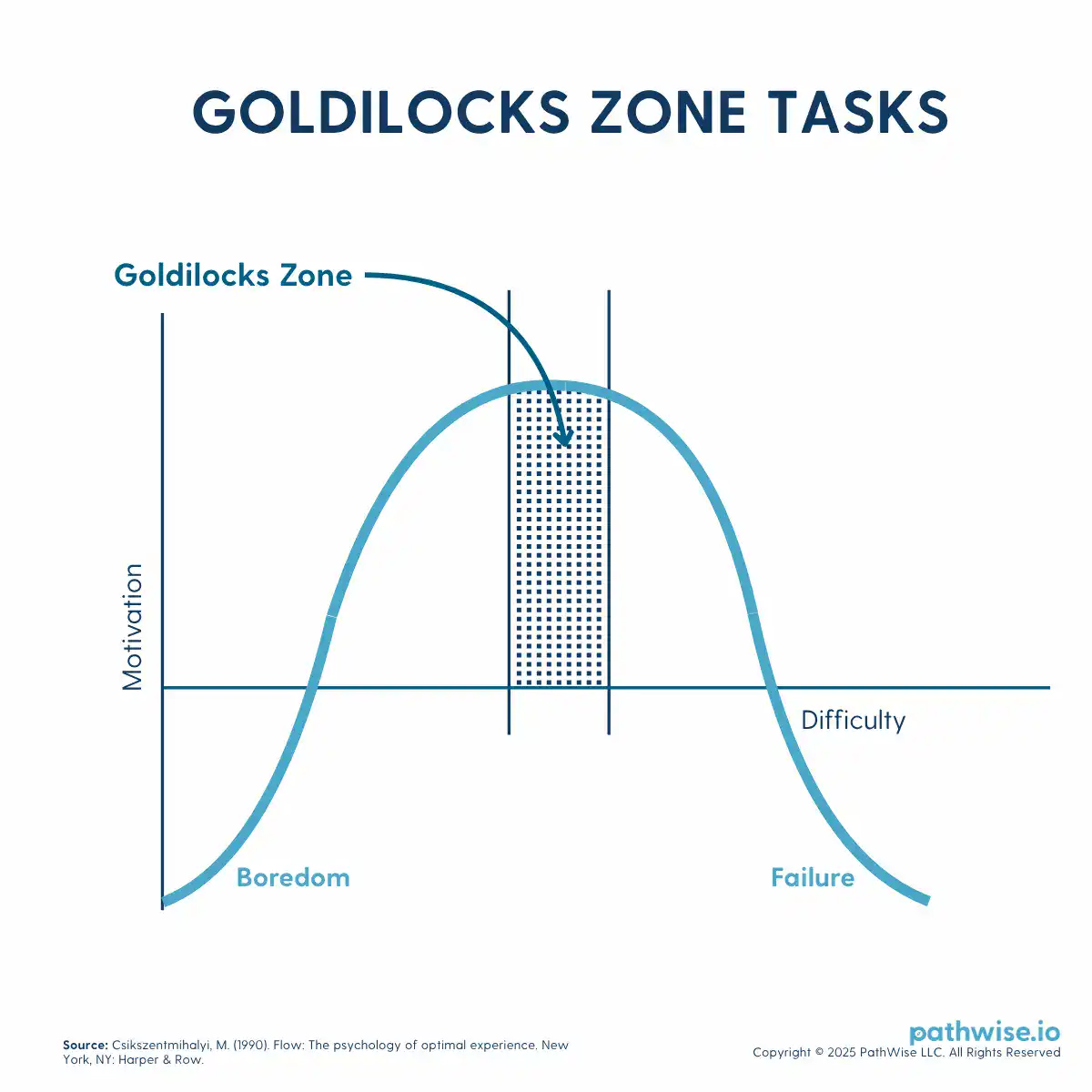
- The Goldilocks Zone of Challenge: This concept refers to the optimal level of difficulty that keeps people engaged, neither too easy nor too overwhelming. Recognition and rewards are most effective when tied to goals that stretch abilities just enough to promote growth and satisfaction.
- The Progress Principle: Developed by Amabile and Kramer, this model highlights the power of small wins in motivating people at work. Daily progress on meaningful work, reinforced through recognition, has a greater impact on inner work life than major rewards or sweeping change.
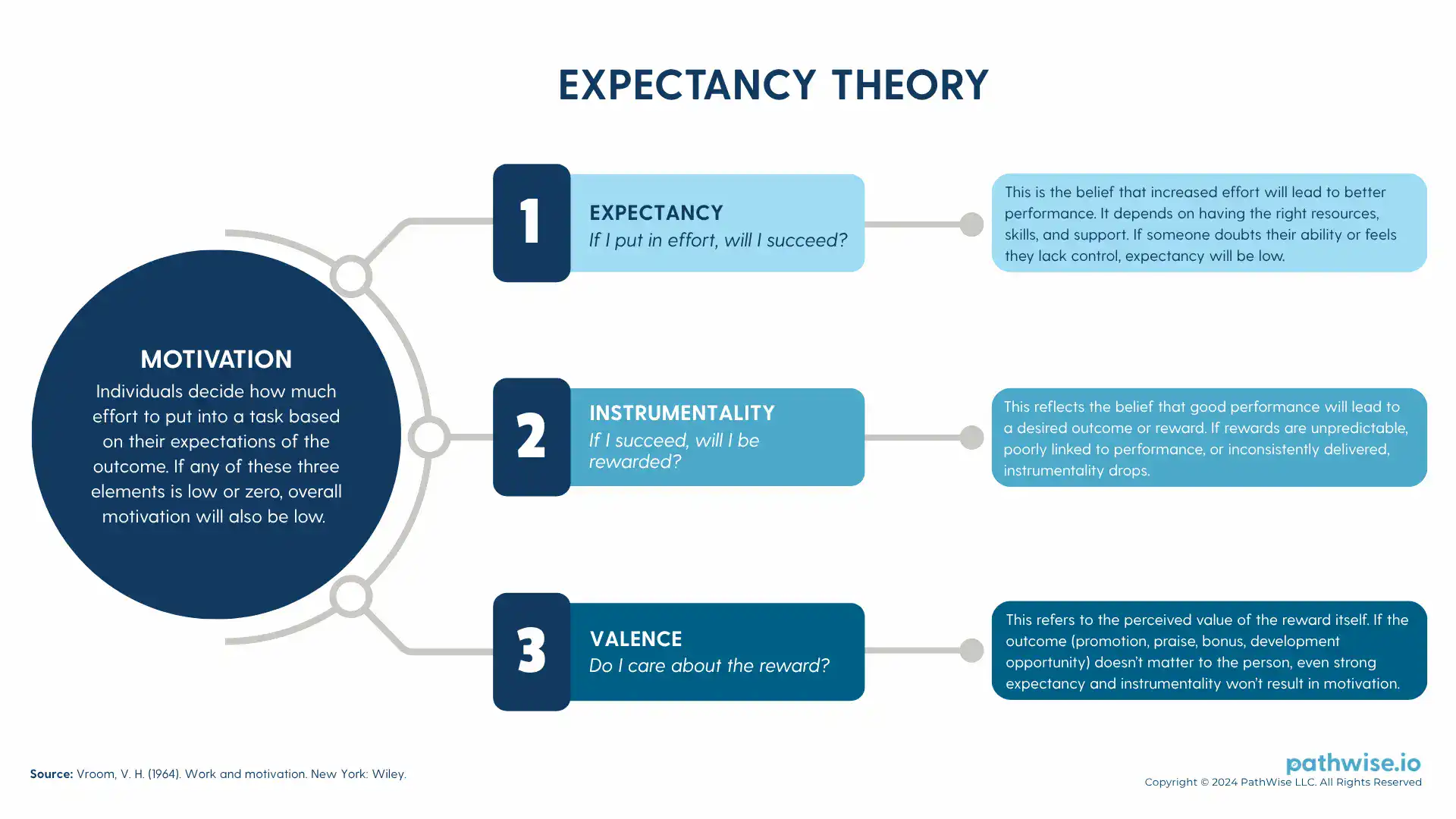
- Expectancy Theory: Developed by Victor Vroom, Expectancy Theory explains motivation as a function of three beliefs: that effort leads to performance, performance leads to outcomes, and the outcomes are valued. Effective rewards systems align with these beliefs to make effort feel worthwhile.
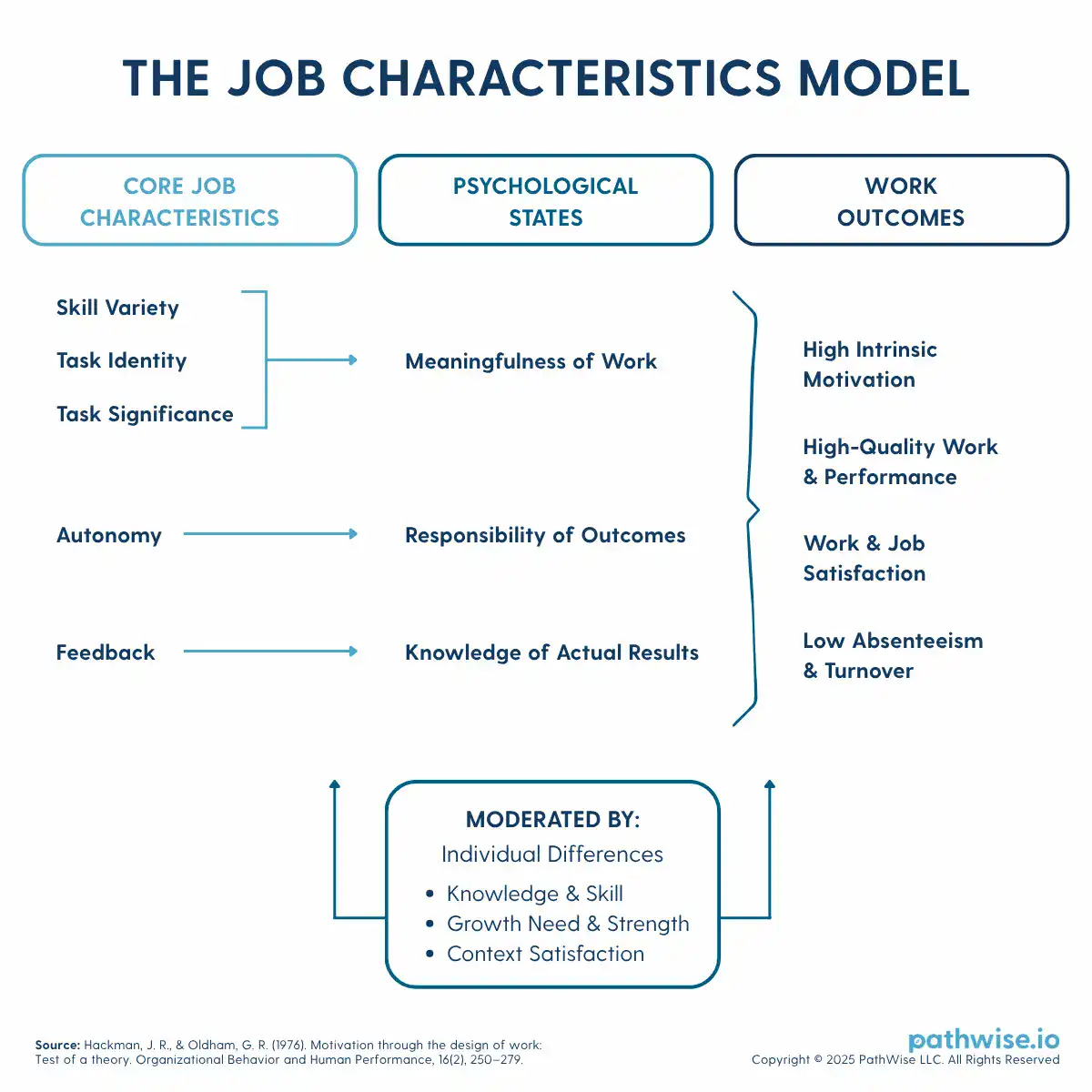
- Job Characteristics Model: Proposed by J. Richard Hackman and Greg R. Oldham, this framework identifies five core job dimensions—skill variety, task identity, task significance, autonomy, and feedback—that influence motivation and satisfaction. Recognition and rewards can be designed to enhance or reinforce these job elements.
Rewards & Recognition in Leadership
Rewards and recognition, when used intentionally, help managers grow into stronger, more effective leaders. They sharpen awareness, build trust, and create the conditions for people to thrive. More specifically, these practices contribute to leadership growth by fostering:
- Emotional intelligence: Recognizing contributions requires noticing effort, understanding individual preferences, responding with empathy, and communicating effectively—core elements of emotional intelligence.
- Strategic thinking: Effective recognition aligns with long-term goals and values. Managers who reward with intention learn to connect daily actions to broader organizational priorities.
- Credibility: Consistent and fair rewards and recognition build trust and boost morale. Teams come to see the manager as someone who clearly understands their work and rewards it with integrity.
- Communication skills: Giving meaningful recognition hones the ability to provide clear, timely, and sincere feedback— a key attribute of strong leadership.
- Culture-building: Managers shape team culture through what they reward and recognize. Over time, this develops a leadership presence that influences norms, morale, and performance.
- Coaching mindset: When rewards support learning and growth, managers begin to act more like coaches, guiding development rather than just measuring output.
- Accountability: To recognize well, managers must observe, reflect, and hold people—and themselves—accountable for results and values. This deepens their sense of responsibility as leaders.

Image used under license from Shutterstock.com
Rewards & Recognition in Personal Development
Rewards and recognition reinforce behaviors that lead to growth. For individual contributors, acknowledgment of progress, effort, or creativity builds confidence and encourages further skill development. When we receive recognition tied to learning, collaboration, or initiative, we are more likely to repeat those behaviors and seek out new opportunities for growth. Tangible rewards, such as stretch assignments, development stipends, or career advancement opportunities, signal that growth is valued and supported.
For managers, the practice of recognizing others sharpens observational and coaching skills. To identify what deserves acknowledgment, a manager must pay attention not just to outcomes but to behaviors and context, qualities that make for better leadership over time. When managers tie rewards to team development or cross-functional impact, for instance, they start to think more strategically about capability building. In turn, they become more effective in growing talent and aligning team growth with organizational needs.
Recognition also strengthens the relationship between development and culture. In environments where we feel seen for who we are becoming—not just what we deliver—we tend to take more ownership of our learning. Managers who model this through thoughtful recognition cultivate teams that are more engaged, curious, and resilient. Over time, rewards and recognition shape both mindset and momentum in a way that sustains growth across levels.

Image used under license from Shutterstock.com
Conclusion
To build a culture where people grow, contribute, and lead, recognition must be an integral part of the day-to-day experience, following a natural rhythm. When managers take the time to notice, name, and reinforce what matters, they motivate their team and shape the conditions for continuous development and lasting impact.
