



Have you ever left a virtual meeting wondering if anyone actually listened to what you said?
Remote and hybrid work are becoming increasingly common. This requires us to learn how to contribute effectively through a screen. We need to foster a remote presence that ensures that our ideas resonate, our leadership skills are visible, and our career growth opportunities don’t stall simply because of distance. Developing this skill is arguably becoming a core part of how we build influence and advance in modern organizations.

Image used under license from Shutterstock.com
What is Remote Presence?
Remote presence is the ability to project yourself as engaged, credible, and influential when you’re not physically in the same room as others. It’s an extension of executive presence into virtual and hybrid environments.
There are two sides to remote presence. First is how you show up in virtual interactions. This includes the way you communicate during video calls, emails, and online meetings, which also encompasses your tone of voice, clarity of speech, body language on camera, eye contact (with the camera), and overall professionalism. Second is how you maintain visibility and credibility from a distance. Your responsiveness, reliability, and thought leadership on digital platforms (such as LinkedIn), as well as your consistent contribution of value even when you aren’t physically present, all impact your influence.
Remote presence ensures people feel your impact, trust, and leadership, even if they rarely or never see you in person. The following practical strategies can help you develop your presence:
- Treat the camera like the room. Look into the lens when speaking to simulate eye contact. Sit upright, frame yourself well, and use expressive (but not distracting) gestures.
- Be intentional with voice and tone. Speak with energy, vary your pace, and pause strategically. A flat tone disappears in virtual settings, while warmth and clarity make you memorable.
- Signal engagement. Nod, smile, and use short verbal affirmations (“I see,” “good point”) to show you’re actively listening. In chat, use thoughtful comments or questions rather than just emojis.
- Curate your environment. A clean, well-lit, and distraction-free background communicates professionalism and reliability. Lighting should highlight your face.
- Be consistently visible. Share insights in team channels, follow up promptly, and occasionally contribute thought leadership on platforms like LinkedIn or your company’s intranet to remind others of your expertise.
- Balance presence with brevity. Keep contributions concise yet meaningful; remote audiences tend to tire quickly. Being crisp and relevant helps you stand out.

Image used under license from Shutterstock.com
Thought Leaders
Several thought leaders offer perspectives, cutting-edge research, data-driven insights, and practical tips on cultivating presence, leadership, and connection virtually. Some of the most notable experts include:
- Tsedal Neeley: A professor at Harvard Business School and author of Remote Work Revolutionand The Digital Mindset, she explores how leaders can successfully scale organizations in virtual and global environments. She frequently contributes insights on building digital agility, effective virtual strategies, and international success in thought leadership venues.
- Jared Spataro: The head of the Modern Work Group at Microsoft, he leads research and innovation on the future of work using data from collaboration platforms. His work, such as the Great Expectations: A Roadmap for Making Hybrid Work Work report, provides evidence-based guidance on enabling effective hybrid and remote teams.
- Dominic Price: Atlassian’s Work Futurist, he specializes in team dynamics and high-performing distributed work. Price is known for crafting practical playbooks that help global and hybrid teams stay agile, autonomous, and purpose-driven, often through talks and online writings.
- Kelly Monahan: The Managing Director of the Upwork Research Institute and former leader of Future of Work initiatives at Deloitte, Accenture, and Meta, she shares research-driven insights on workplace trends, particularly on how AI and human collaboration can coexist.
- Pilar Orti: The Director of Leadership and Management Development at Virtual, Not Distant, she coaches organizations shifting to flexible or “office-optional” structures. She’s the author of Thinking Remote: Inspiration for Leaders of Distributed Teams and frequently writes on humanizing remote work.
- Erica Dhawan: The author of Digital Body Languageand advocate for modern communication skills, she teaches leaders how to project confidence and authenticity in virtual settings. Dhawan explains about new digital cues needed to convey leadership presence when face-to-face signals are absent.
- William Arruda: A personal branding and leadership expert who wrote 7 Ways to Show That You’re a Leader When You Work Remotely, he offers practical guidance on mastering messaging, using video effectively, and staying visible as a leader in digital environments.
- Carol Kinsey Goman: A thought leader on body language and executive presence, she authored How to Project Leadership Presence in a Virtual Environment. She highlights the unique communication strategies required for lean digital mediums, where nonverbal cues must be deliberately conveyed.

Image used under license from Shutterstock.com
Key Frameworks
Several frameworks and models address the notions of remote presence, virtual leadership, and digital communication. Some of these include:
- Digital Body Language: Developed by Erica Dhawan, this model reframes traditional body language for the online world, emphasizing clarity, brevity, and empathy in written and virtual communication. It offers tools for building trust and presence when tone, pauses, and gestures are harder to read.
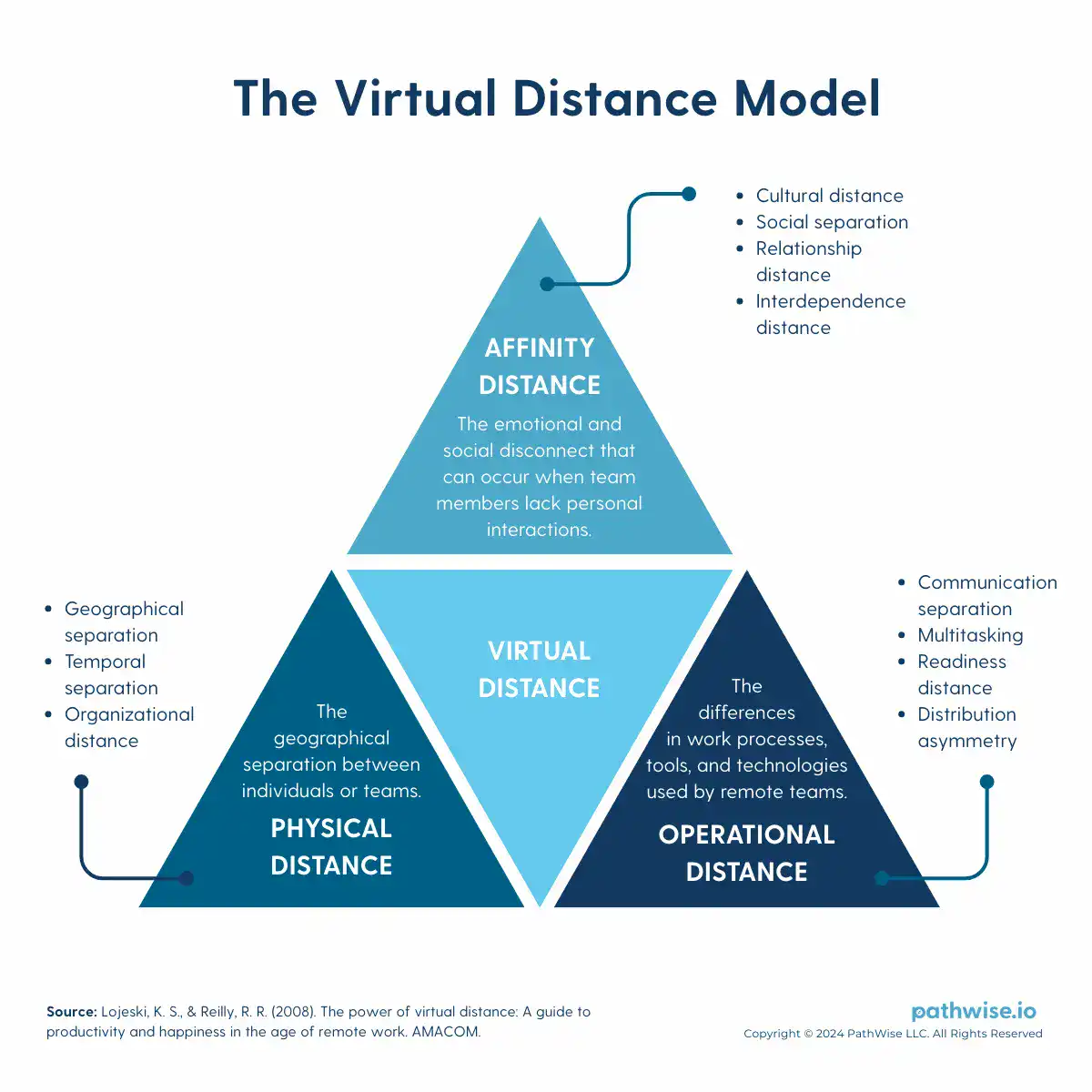
- Virtual Distance Model: This model describes the psychological gap created by remote work, broken into three dimensions: Physical Distance, Operational Distance, and Affinity Distance. Leaders can strengthen remote presence by reducing affinity distance through trust, empathy, and strong communication.
- The Trust Equation: Although not remote-specific, this framework, which proposes that Trust = (Credibility + Reliability + Intimacy) ÷ Self-Orientation, is often applied in virtual leadership. It underscores that trust is central to remote presence, and leaders must demonstrate dependability and authenticity across digital channels.
- Remote Work Revolution Framework: Derived from Tsedal Neeley’s book, Remote Work Revolution, this model offers guidance for leaders to overcome the barriers of communication, trust, and productivity in distributed teams. It emphasizes intentional presence, structured communication, and inclusivity as pillars of effective remote leadership.
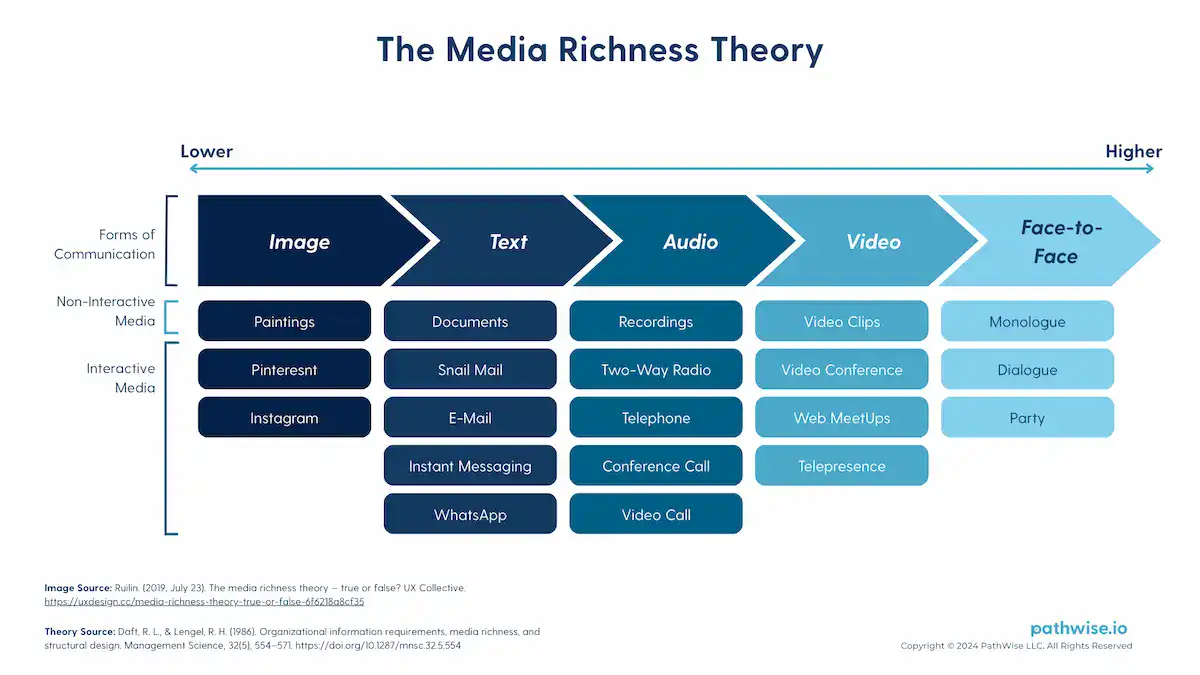
- Media Richness Theory: This communication framework explains that richer media (video calls, interactive platforms) are better suited for complex or emotional messages, while leaner media (emails, texts) fit simple exchanges. Applying it helps leaders choose the right medium to enhance their remote presence and make a lasting impact.
- The Four Components of Presence: Originally developed to address executive presence, the model identifies four core components: Gravitas, Communication, Appearance, and Authenticity. Adapted to digital work, it offers leaders a lens for evaluating how they “show up” online through tone, visibility, and personal branding.
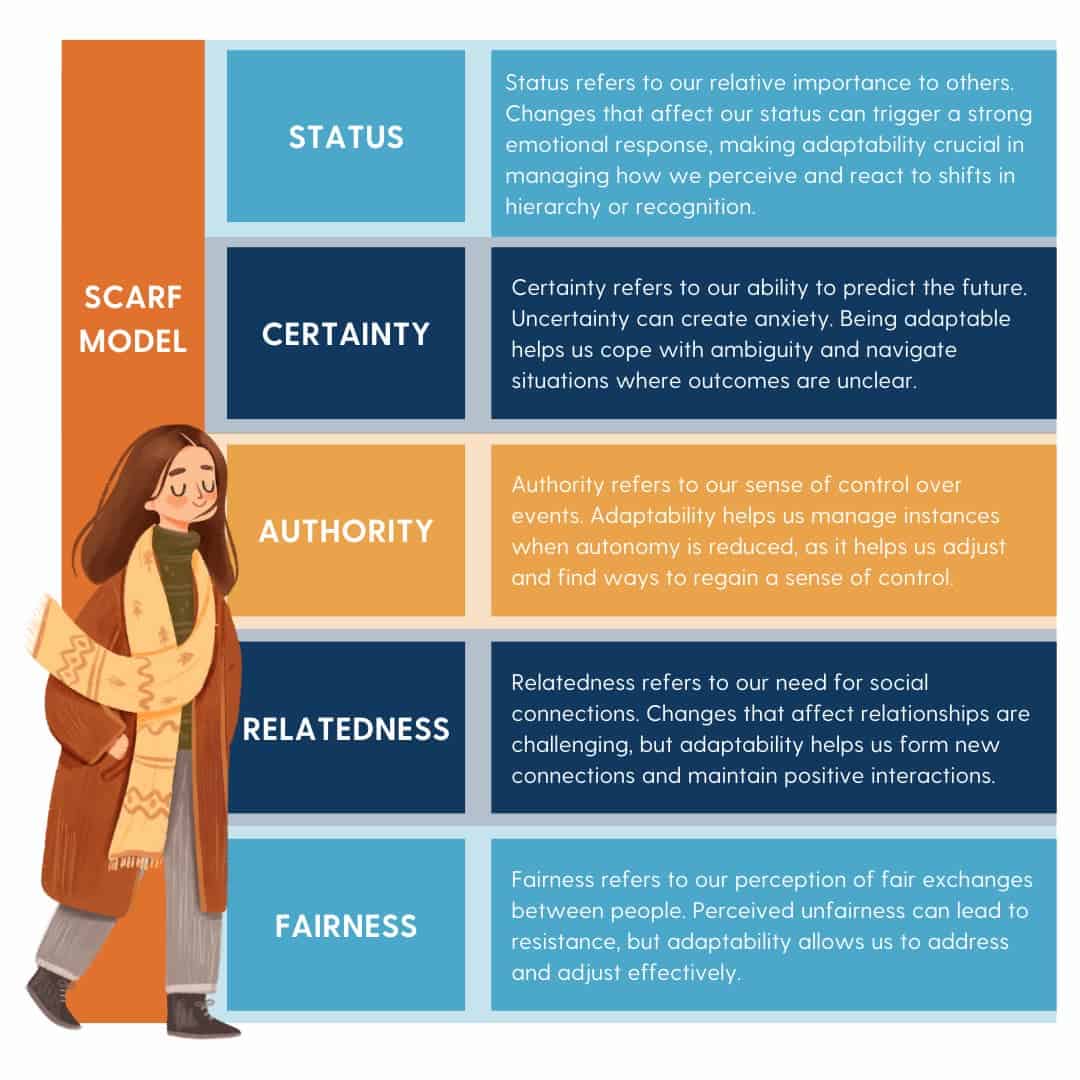
- SCARF Model: Focused on the social drivers of human behavior—Status, Certainty, Autonomy, Relatedness, and Fairness —this framework is used to strengthen psychological safety in teams. In remote contexts, managers can project presence by addressing these needs, thereby reinforcing trust and engagement from a distance.

Remote Presence in Leadership
Developing a strategic remote presence helps managers become better leaders, as it ensures that their influence, credibility, and care for their team are not diminished by physical distance. As hybrid and distributed workplaces become increasingly common, a manager’s effectiveness depends more and more on how consistently they’re perceived as present, engaged, and trustworthy, even at a distance. Thus, a purposeful effort to develop remote presence strengthens leadership by:
- Building trust and reliability: When managers consistently demonstrate professionalism online, employees feel they can count on them, even when they aren’t face-to-face.
- Amplifying influence: A strong remote presence allows managers to communicate vision, set direction, and inspire their teams across locations, rather than being limited to in-person settings.
- Keeping employees engaged: Teams tend to disengage if they feel unseen or unheard. Managers who project a sense of presence online reinforce psychological safety, making people more likely to contribute ideas and collaborate.
- Expanding visibility: Strategic use of digital platforms (internal forums, LinkedIn, Slack, etc.) helps managers demonstrate thought leadership and strengthens their credibility both inside and outside the organization.
- Modeling adaptability: By mastering remote presence, managers remain visible, trustworthy, and influential whether they’re across the table or across the world.

Image used under license from Shutterstock.com
Remote Presence in Personal Development
Remote presence plays a significant role in professional development because it directly affects how others perceive our competence, credibility, and leadership potential when we are not physically in the same room.
In many organizations, visibility is closely tied to advancement, and this visibility is increasingly accessed through digital channels. Someone with a strong remote presence can make a lasting impression in virtual meetings, articulate ideas clearly in writing, and consistently project professionalism across various platforms. This means that even when opportunities for face-to-face interaction are limited, their reputation and influence continue to grow.
It also accelerates learning and networking. By thoughtfully engaging in digital spaces through active participation in virtual discussions, online forums, or professional platforms like LinkedIn, we demonstrate our curiosity and initiative. These behaviors expand our professional networks, attracting mentors, sponsors, and collaborators who can be instrumental in our career growth.
Remote presence also fosters adaptability, a trait that is increasingly recognized as a key leadership characteristic. If we can project confidence, clarity, and authenticity across digital mediums, we demonstrate our ability to lead effectively in hybrid or distributed work environments. This positions us as future-ready leaders, capable of navigating evolving workplace norms and maintaining influence regardless of physical setting. In this sense, cultivating remote presence helps build a foundation for long-term professional growth.
Image used under license from Shutterstock.com
Conclusion
Remote presence ensures that your authenticity, expertise, and leadership are conveyed effectively across distance. As organizations continue to rely on hybrid and virtual work, we will become more successful by purposefully making ourselves visible, heard, and trusted, regardless of the media. By cultivating our remote presence, we strengthen our current impact and future-proof our careers. After all, presence is defined by the influence you leave behind.
Other Resources
- HBR: Hybrid Still Isn’t Working
- HBR: How to Develop Your Executive Presence
- HBR: How to Elevate Your Presence in a Virtual Meeting
- AESC: Communicating In The New Normal: Digital Body Language With Erica Dhawan
- Forbes: Mastering Executive Presence: The Critical Leadership Competence For Today’s Business Landscape
- Forbes: 8 Top Tips For Improving Your Body Language During Virtual Meetings
- Forbes: Body Language In A Virtual World: How To Communicate Your Message Effectively
