


In a 2024 commencement speech at Dartmouth College, Roger Federer revealed that he won, on average, just under 54% of the points he played throughout his professional tennis matches. This modest number, coming from a player with 20 Grand Slam titles, shows that even at the highest level of sport, you don’t always win.
In a similar way, managing our careers can be compared to an athlete’s training regime. No athlete wins every single challenge. But practice makes progress. It’s the failed attempts, missed goals, and difficult recoveries that build the endurance that ultimately leads them to succeed. Similarly, setbacks in professional life develop the stamina and perspective necessary for long-term success.

Image used under license from Shutterstock.com
What Are Career Mistakes & Setbacks?
Career management is rarely a linear process. Even the most accomplished individuals experience detours, miscalculations, or periods of stagnation. Far from being signs of failure, these moments often provide the raw material for growth, provided they are acknowledged and reflected upon.
Mistakes. One of the most frequent mistakes involves pursuing roles that are misaligned with personal strengths, values, or long-term goals. A position may offer prestige or higher pay, yet prove unsustainable if it does not fit with our motivations or working style. Similarly, we can undervalue the importance of relationship-building. Focusing exclusively on performance while neglecting networks, mentors, and sponsors can limit advancement, as opportunities often flow through both social and technical channels. Another common mistake is fear of risk or change. Many of us can remain in unfulfilling roles because moving elsewhere feels uncertain. Over time, this avoidance can translate into missed opportunities and reduced engagement. A related challenge is over-specialization, where we become so narrowly defined by a single skill that we struggle to adapt when industries evolve.
Setbacks. Setbacks often occur due when we overextend ourselves, which can lead to diminished performance and satisfaction. Other times, we can falter by ignoring or dismissing feedback, missing valuable insights that could guide our development. Yet, there are other setbacks that may be due to external circumstances. Being passed over for a promotion, experiencing a layoff, or being let go altogether can significantly disrupt our trajectories, often regardless of effort or competence. Shifts in organizational strategy, economic downturns, or changes in leadership can also alter the availability of opportunities or the perceived value of specific roles, hindering advancement despite strong capabilities.
The good news is that we can learn to make the best out of our mistakes and setbacks.

Image used under license from Shutterstock.com
How To Make the Best Out of Mistakes & Setbacks
Acknowledging missteps and setbacks is the very first step, and it is critical for several reasons. First, they serve as learning opportunities, highlighting blind spots, clarifying personal priorities, and providing practical lessons that no textbook or training program can replicate. Second, acknowledgment cultivates self-awareness, which is key to effective career navigation. Without reflection, we risk repeating unproductive patterns.
Third, recognition of setbacks fosters adaptability. Success depends less on avoiding failure than on the ability to recalibrate when circumstances change, promoting resilience. Fourth, acknowledging missteps builds credibility and authenticity. If we can admit where we have erred, we inspire greater trust as our honesty also signals humility and openness to growth.
Ultimately, careers unfold across decades, and what matters most is not perfection at each step but the ability to transform challenges into insight and momentum. However, as explained, acknowledgement is only the first step. Turning these moments into opportunities requires deliberate reflection and purposeful action. Specifically, it needs:
- Pausing and Reflecting: Take a moment to understand what happened, separating controllable factors from those outside your control.
- Extracting Lessons: Identify the specific skills, behaviors, or assumptions that contributed to the outcome, considering what they reveal about your strengths and areas for improvement.
- Seeking Perspective: Engage mentors, peers, or trusted colleagues who can provide objective insights and help reframe the experience.
- Recalibrating Goals: Use the setback as an opportunity to revisit your career objectives and clarify whether they remain relevant or need adjustment.
- Strengthening Resilience: Develop practices, such as setting boundaries, engaging in continuous learning, or cultivating supportive relationships, that enhance your capacity to navigate future challenges.
- Rebuilding Momentum: Take small, intentional steps to apply what you have learned, demonstrating progress and signaling growth to yourself and others.

Image used under license from Shutterstock.com
Thought Leaders
Several experts have studied the role of failure, regret, resilience, and reflection in professional development, offering frameworks and insights that can guide our response to challenges. Some of the most notable thought leaders include:
- Daniel H. Pink: Author of several New York Times bestsellers, including The Power of Regret, Drive, and When. In The Power of Regret, Pink presents his conclusions based on a global survey of over 16,000 people, showing how regret can be harnessed as an engine for self-improvement and informed career decisions.
- Amy C. Edmondson: Novartis Professor of Leadership and Management at Harvard Business School, noted for pioneering the concept of psychological safety. Her book Right Kind of Wrongexplores how intelligent failures can fuel innovation and organizational learning
- Herminia Ibarra: Charles Handy Professor of Organisational Behaviour at London Business School, renowned for her scholarship in leadership transitions and career identity. Ibarra’s work helps professionals understand how setbacks can lead to positive change, reframing career misalignments as opportunities for deeper self-direction and leadership growth
- Marshall Goldsmith: A globally recognized executive coach, author, and former professor. Goldsmith is respected for his work on leadership feedback and behavioral change. His practical insights help leaders recover from missteps and refine their habits toward sustained performance
- Kathryn Minshew: Co-founder and CEO of The Muse, a career-development platform. Minshew’s entrepreneurial journey involved early setbacks, including being rejected several times when pitching investors, yet she persevered, building a widely used resource and authoring The New Rules of Workto help others navigate career uncertainty proactively
- Lynda Gratton: A leading academic in organizational behavior and future-of-work research at London Business School. Her influential book The 100-Year Liferethinks career trajectories in the age of longevity, emphasizing how adapting to setbacks and weaving learning into extended career paths is essential for sustainable professional development
- Dave Ulrich: University of Michigan professor and co-founder of The RBL Group, often regarded as the “father of modern HR.” Authoring over 30 books and routinely ranked among the top HR and management thinkers, Ulrich’s frameworks equip organizations and individuals to convert disruptions and failures into leadership and capability enhancements
- Carol S. Dweck: Professor of Psychology at Stanford University, best known for her research on the growth mindset. Dweck’s work emphasizes that abilities and intelligence can be developed through effort and learning, reframing failures and setbacks as opportunities for growth rather than indicators of fixed limitations.

Image used under license from Shutterstock.com
Key Frameworks
Practical frameworks offer structured ways to navigate mistakes and setbacks. These models can help us interpret failures, extract lessons, and take deliberate action to recover and grow. The following frameworks represent widely used approaches for managing setbacks, building resilience, and turning challenges into opportunities for professional development.
- After-Action Review (AAR): Used extensively in military and corporate contexts, the AAR is a structured reflection process conducted after a project or event. Participants analyze what happened, why it happened, and how to improve, creating actionable lessons that turn failures into learning opportunities.
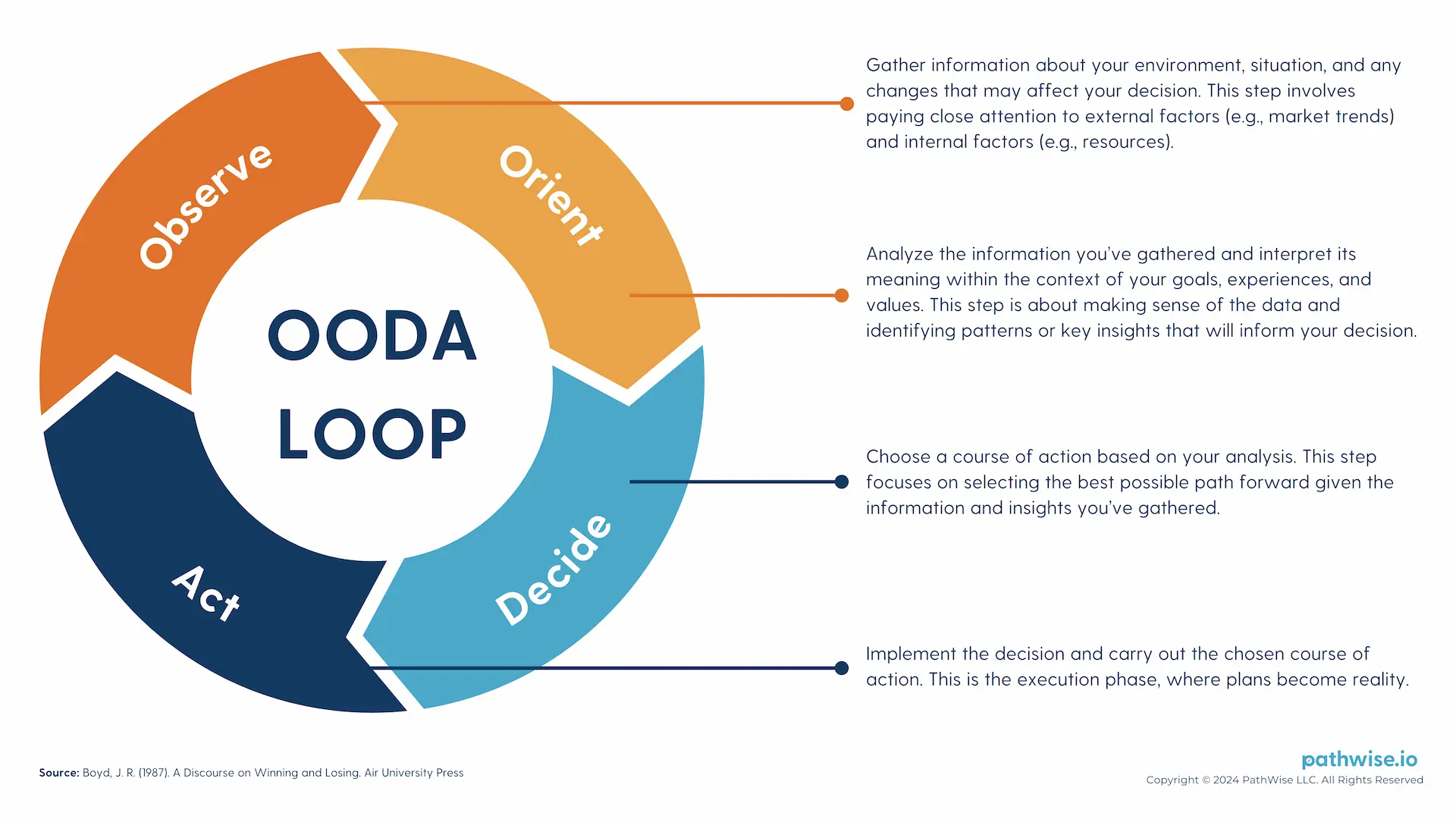
- The OODA Loop (Observe, Orient, Decide, Act): Originally developed by military strategist John Boyd, the OODA Loop provides a framework for rapid, iterative decision-making under uncertainty. By continuously observing the situation, orienting to new information, deciding on a course of action, and acting, individuals and organizations can adapt quickly to setbacks and refine their approach.
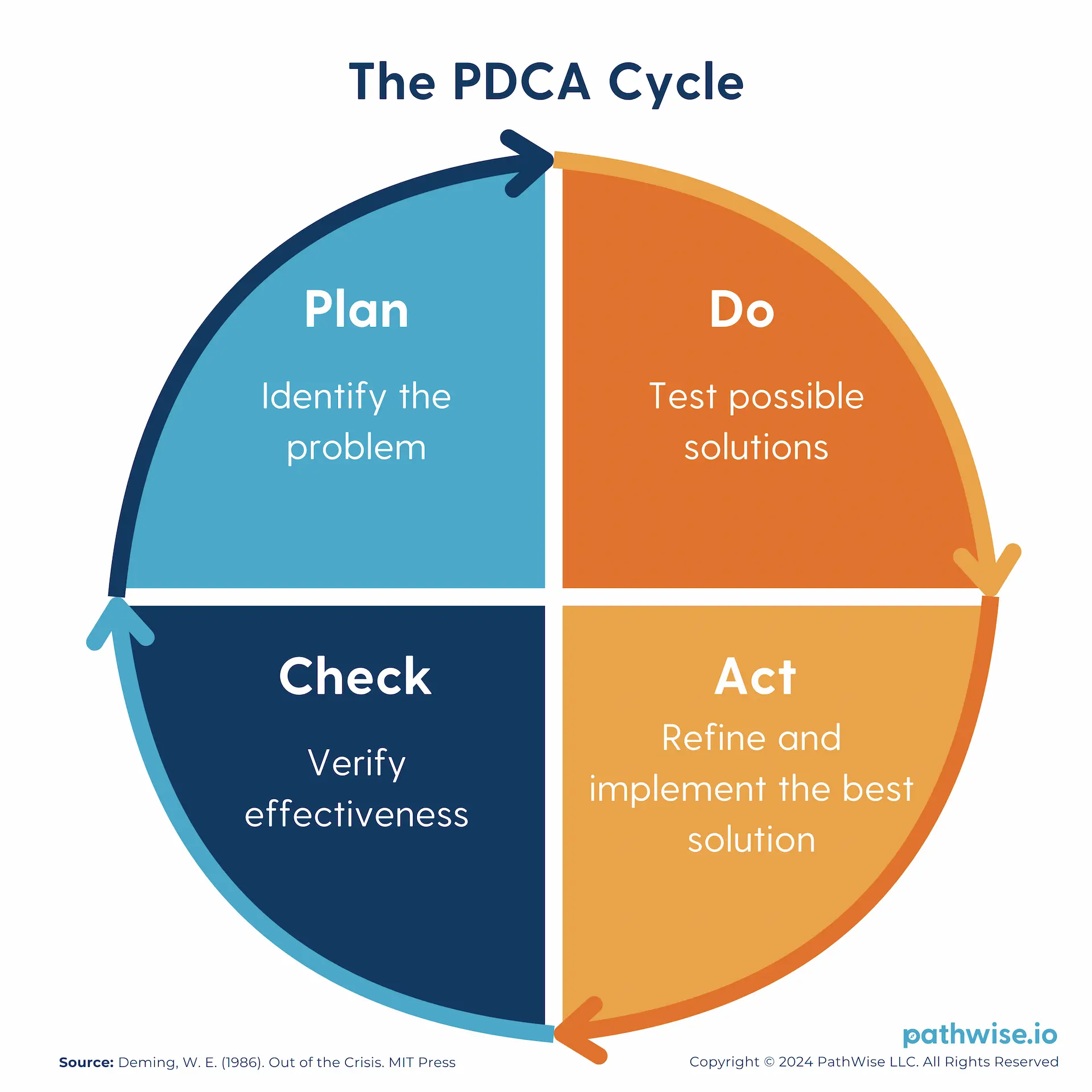
- Plan-Do-Check-Act (PDCA) Cycle: Developed by W. Edwards Deming, the PDCA cycle is a continuous improvement methodology used in business and operations management. It encourages a structured approach to failure: plan solutions, implement them, check the results against expectations, and act to correct or standardize any necessary improvements.
- Growth Mindset: Dweck’s concept emphasizes the belief that abilities and intelligence can be developed through effort and learning. Adopting a growth mindset reframes setbacks as opportunities to acquire new skills, gather feedback, and enhance resilience rather than as reflections of fixed limitations.

Diagram by Nigel Holmes, taken from Carol Dweck’s Mindset: The New Psychology of Success (p. 263)
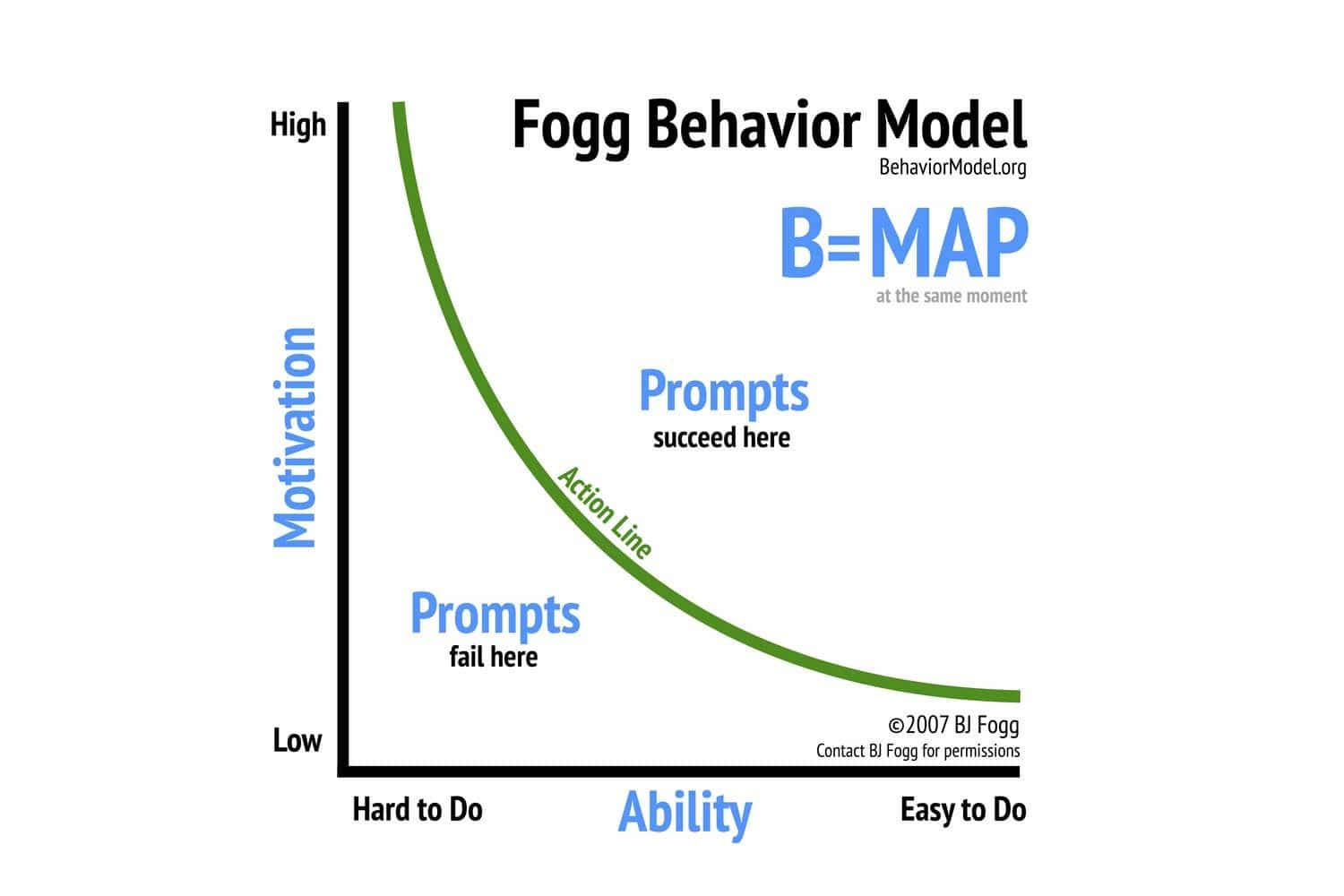
- Fogg Behavior Model: Developed by BJ Fogg, this model explains behavior change as the product of motivation, ability, and prompts. In the context of setbacks, it helps individuals identify small, achievable actions to recover momentum, reinforcing adaptive habits and forward progress after failure.

Mistakes & Setbacks in Leadership
How leaders respond to mistakes and setbacks often determines not only their personal trajectory but also their credibility and effectiveness in guiding others. Leaders who acknowledge missteps openly demonstrate authenticity, which fosters trust among colleagues and teams. In contrast, leaders who deny or conceal failures risk creating a culture of blame or fear, which stifles innovation and discourages honest dialogue.
Properly managing setbacks also cultivates resilience and perspective—two qualities that are indispensable for leadership. Leaders who have faced and overcome challenges are better equipped to navigate uncertainty and can serve as models of calmness in times of organizational stress. Their ability to draw lessons from adversity allows them to guide their teams with empathy and foresight, reinforcing psychological safety and collective confidence.
Leaders who integrate lessons from their own setbacks are more likely to develop others effectively. Having experienced the importance of feedback, adaptation, and perseverance firsthand, they are better positioned to coach, mentor, and create growth opportunities for those around them. Their example signals that failure is not an endpoint but part of the process, encouraging experimentation and innovation within their teams.
Ultimately, the way leaders manage their own mistakes and setbacks sets the tone for organizational culture. Acknowledging, learning, and moving forward constructively transforms individual missteps into shared opportunities for progress, shaping leaders who are both more human and more effective.

Image used under license from Shutterstock.com
Mistakes & Setbacks in Personal Development
Effectively managing mistakes and setbacks plays a crucial role in professional development, as it accelerates learning and skill acquisition. When we take the time to analyze what went wrong, we uncover knowledge gaps, refine our problem-solving abilities, and develop greater self-awareness. These lessons often prove more durable than those learned through success, because they are tied to moments of challenge and discomfort. Over time, this process strengthens adaptability and equips professionals to handle increasingly complex responsibilities.
Just as importantly, managing setbacks well contributes to career resilience and long-term growth. Professionals who respond constructively to challenges are more likely to pursue new opportunities, expand their capabilities, and remain engaged in their work even in the face of uncertainty. They cultivate a mindset that views setbacks not as permanent derailments but as temporary redirections. This perspective fuels continuous improvement but also signals to employers and peers that they are capable, reliable, and prepared for advancement.

Image used under license from Shutterstock.com
Conclusion
In the end, careers are not defined by the absence of mistakes but by the capacity to learn from them. By treating them as moments for recalibration rather than derailment, we build the resilience, perspective, and adaptability that sustain long-term success. Every mistake holds the potential to advance both our careers and the organizations we serve.
Other Resources
- PathWise Book Summary: The Power of Regret
- PathWise Book Summary: Right Kind of Wrong
- PathWise Book Summary: Mindset
- HBR: Let’s Talk About Our Career Failures
- HBR: Rebounding from Career Setbacks
