


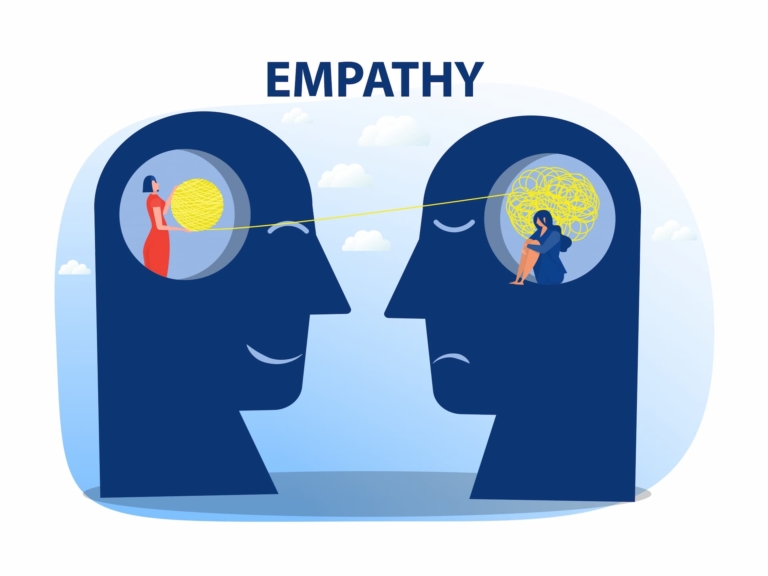
What is Empathy?
Do you struggle to understand other people and their motivations? Are they opaque to you? Or do you instinctively put yourself in their position, echoing their every joy and sorrow?
Empathy is the ability to understand and share someone else’s feelings, perspectives, and experiences. It involves recognizing and acknowledging their emotions but also having the capacity to “walk a mile in their shoes” and comprehend their point of view. Empathy is increasingly seen as a “must have” for successful leaders. More than intelligence, more than physical stature or raw power, more than charisma – empathy is what matters.
Empathy can manifest in different ways:
- Cognitive empathy involves understanding someone else’s thoughts, feelings, and perspectives. It’s about grasping what another person might be going through intellectually.
- Emotional empathy is about sharing the emotional experience of another person. It means being capable of feeling what they are feeling.
- Compassionate empathy or empathic concern involves not just understanding and sharing the emotions of others but also being motivated to help or support them in times of need.
- In more recent years, some experts have also included another form of empathy, somatic, which refers to some individuals’ ability to physically feel another’s pain or sensations.

Empathy is a fundamental component of human social interaction, as it plays a crucial role in building relationships, fostering cooperation, and promoting understanding among individuals within a given community. It’s essential in communication, conflict resolution, leadership, and, ultimately, career management and progress. Before discussing the role of empathy in our careers in more detail, let’s review some of the experts in the field.
Thought Leaders
Within the context of the workplace, some thought leaders who have made significant contributions to the understanding and promotion of empathy include:
- Brené Brown, a renowned author and researcher known for her work on vulnerability, shame, and empathy. Her books, such as Dare to Lead, and her TED Talks, including The Power of Vulnerability, emphasize the importance of empathy in leadership and in creating a culture of trust and belonging in the workplace.
- Simon Sinek, a leadership expert and author who emphasizes the role of empathy in effective management. Much of his work, such as Leaders Eat Last, delves into the concept of leadership and the role that empathy plays in creating a safe and trusting environment within organizations. He often discusses the importance of understanding and caring for the people you lead to create a positive and productive work environment.
- Daniel Goleman, known for his work on emotional intelligence and his book of the same name. Goleman highlights the significance of empathy as a core component of emotional intelligence. His research and publications emphasize how emotional intelligence, including empathy, can drive success in the workplace.
- Kim Scott, the author of Radical Candor and an advocate for compassionate and empathetic leadership. She emphasizes the importance of caring personally for your team members while challenging them to achieve their best.
- Travis Bradberry, the co-author of Emotional Intelligence 2.0 and Emotional Intelligence Habits, and the cofounder of TalentSmartEQ. He is an expert on emotional intelligence in the workplace. He discusses how empathy, as a component of emotional intelligence, can enhance leadership and teamwork.
- Daniel H. Pink, another author who discusses several attributes of a successful career and a joyous lifestyle. In one of his books, To Sell Is Human, he discusses the role of empathy in sales and persuasion. He argues that understanding others’ perspectives and needs is crucial in modern workplaces.
- Adam Grant, an organizational psychologist and author who often explores the power of empathy in creating a more compassionate and productive workplace. One of his most notable books, Give and Take: Why Helping Others Drives Our Success, explores the idea of reciprocity and the benefits of giving and helping others in both personal and professional contexts. He also emphasizes the importance of giving and receiving feedback with empathy.
Key Frameworks
Each of these experts has contributed significant insights and strategies for incorporating empathy into leadership, teamwork, and workplace culture. Many of them have created conceptual frameworks that rely on empathy as a key element to promote safe work environments that propel progress. For instance, Brené Brown developed the BRAVING framework to foster trust and empathy in relationships. The acronym stands for Boundaries, Reliability, Accountability, Vault (keeping confidences), Integrity, Non-judgment, and Generosity.

Source: https://brenebrown.com/resources/the-braving-inventory
Based on Brown’s work in Dare to Lead, Hayley Lewis created the Sketchnote below. We are reposting it, with her permission, as it clearly encapsulates the five elements of empathy.

Dr. Lewis also created the Sketchnote below, based on the work of Daniel Goleman. This framework is also a great visual of what empathy encompasses, as it contains three of the four elements described at the beginning of this article.

Applying Empathy to Career Management & Development
Empathy is a valuable skill in career management as it helps strengthen communication, build relationships, support leadership, resolve conflicts, and contribute to a positive and inclusive work environment. Enhancing personal growth through empathy accelerates professional development and becomes a key asset for success in the workplace.
Specifically, empathy allows you to:
- Understand other people’s perspectives, needs, and concerns, whether they’re your colleagues, superiors, clients, or subordinates. With this understanding, you can build stronger relationships, negotiate effectively, and collaborate with others in the workplace.
- Have more effective conversations. Empathy enhances your communication skills because, when you can empathize with others, you are better equipped to convey your thoughts and ideas in a way that resonates with them. This is particularly important in job interviews, negotiations, and sales pitches.
- Become a better leader. Empathetic leaders are often more effective. They can connect with their team members on a deeper level, understand their strengths and weaknesses, and provide the necessary support and guidance for career growth. Empathetic leaders also create a more positive and inclusive workplace culture.
- Manage and solve conflict more effectively. When you can empathize with the perspectives of those involved in a conflict, you are better equipped to find common ground and facilitate a resolution that satisfies all parties.
- Network. Empathy is valuable when building professional relationships, as it allows you to more readily establish genuine connections with others. Empathy can help you understand their challenges so that you can offer help and support them to nurture the relationship. This can also lead to valuable opportunities and mentorship.
- Understand the needs and preferences of clients or customers. By empathizing with their concerns and desires, you can tailor your services or products to better meet their expectations.
- Become more self-aware. Empathy is not just about understanding others but also about being capable of seeing how others perceive you. It helps you recognize how you’re coming across in other people’s minds, which is crucial for setting and achieving career goals.
- Develop a career plan. Empathy can guide your choices by considering not only your own interests and goals but also the impact your decisions may have on colleagues, teams, or the organization as a whole.
- Mentor and coach others. Empathetic individuals can provide guidance and support to others in their career journeys, helping them navigate challenges and make informed decisions.
- Adapt more easily. Empathy helps individuals and organizations navigate change moe effectively. By understanding how change may impact colleagues and teams, you can take steps to ease transitions and maintain morale.
Tools & Exercises
- If you’d like to learn about some strategies that can help you foster empathy, check out this website.
- You can also check out this resource to learn about exercises and activities to help you build more empathy.
- If you want to know more about fostering empathy within teams, take a look at this article.
Want to learn more about empathy? Check out these resources:
- Simon Sinek’s complete speech about empathy
https://www.youtube.com/watch?v=oUWMgHyf1bg - Empathy Types
https://www.youtube.com/watch?v=WdDVvLEKoc8 - Empathy Rules
https://hbr.org/2022/02/empathy-rules - Ways to communicate with more empathy
https://hbr.org/2022/08/4-ways-to-communicate-with-more-empathy - Shame and Empathy
https://www.youtube.com/watch?v=qQiFfA7KfF0 - From empathy to compassion
https://hbr.org/2021/12/connect-with-empathy-but-lead-with-compassion - The Secret to Leading Organizational Change
https://hbr.org/2018/12/the-secret-to-leading-organizational-change-is-empathy - Empathy as the most important skill
https://www.forbes.com/sites/tracybrower/2021/09/19/empathy-is-the-most-important-leadership-skill-according-to-research/?sh=20f32a863dc5 - Why Empathy Is Key To Effective Leadership
https://www.forbes.com/sites/forbesbusinesscouncil/2022/06/21/why-empathy-is-key-to-effective-leadership/?sh=2753aeed66b6
