


Embarking on the journey through the intricacies of the hiring process, you’ve reached a critical juncture: the interviews. Now, the focus shifts from the candidate’s qualifications on paper to the essence of who they are. The interview isn’t just about assessing their skills; it’s an opportunity for a “full person” assessment, a chance to understand the unique individual behind the resume.

Image used under license from Shutterstock.com
The Interview Goal
Beyond the technical evaluation, successful interviews uncover the layers of your candidates’ character and values, and give you an indication of how well they would fit into the company culture. This process goes beyond ticking off a checklist of competencies; it’s about getting a comprehensive understanding of each candidate as a person.
In essence, when interviewing candidates, you aim to go beyond the surface level of qualifications and understand the candidate holistically. By doing so, you can make better informed decisions that will lead to the selection of individuals who will be able to both excel in their roles and contribute positively to the company culture and its overarching objectives.
Other aspects you’d want to assess include:
- Cultural Fit: Determining how well the candidate aligns with the company’s values, culture, and work environment. Evaluating whether the candidate will fit the company culture is crucial for ensuring that the individual not only has the right skills but also will complement team dynamics.
- Behavioral Assessment: Understanding the candidate’s behavior and work habits through behavioral interview questions helps predict how they might approach challenges, collaborate with colleagues, and contribute to the overall work atmosphere.
- Motivation and Alignment: Exploring the candidate’s motivations for applying to the company and the specific role ensures that their career goals align with the opportunities and growth potential offered by the organization.
- Problem-Solving and Critical Thinking: Evaluating the candidate’s ability to think critically and solve problems is also essential, as it will inform their discernment and decision-making skills in the context of both the role and in navigating relationships within the company. These skills are often assessed through situational or scenario-based questions to gauge their thought and decision-making processes.
- Communication Skills: Assessing how effectively the candidate can communicate verbally and in writing will impact the organization, as it points to the candidate’s ability to collaborate and convey ideas within the team and broader firm.
- Long-Term Potential: You should also seek to identify candidates who not only meet the current needs of the role but also have the potential for long-term growth and development within the organization.
- Leadership Qualities (if applicable): For leadership roles, evaluate the candidate’s leadership skills, strategic thinking, and ability to inspire and guide a team.

Image used under license from Shutterstock.com
Preparing for the Interview
As the interviewer, you should prepare for an interview to ensure a thorough and effective evaluation of candidates. That way, you can make informed hiring decisions and build a team that aligns with your needs and the organization’s goals and values.
Here’s a guide to help you get ready:
- Understand Legal and Ethical Guidelines: Familiarize yourself with laws and regulations related to interviewing and hiring. Ensure your questions adhere to legal and ethical standards to avoid potential issues. For example, it is often not permissible to ask about a candidate’s marital status, children, or political views.
- Understand the Job Requirements: Clearly understand the skills, competencies, and qualities required for the position so that you can tailor your questions to assess specific attributes relevant to the role and each candidate’s experience.
- Review the Candidate’s Resume and Application: Familiarize yourself with the candidate’s qualifications, experience, and achievements, and identify potential areas of interest or concern you’d like to explore during the interview.
- Research the Candidate: If the candidate has an online presence (LinkedIn, professional profiles), take some time to review it. Gain insights into their background, projects, and any additional information that may be relevant.
- Coordinate with Other Interviewers (if applicable): Collaborate with colleagues who will also be interviewing the candidate. Ensure everyone is on the same page regarding the focus areas and evaluation criteria. Make sure you avoid asking the same questions or focusing on the same topics.
- Develop a Structured Interview Plan: Outline the key areas you want to cover during the interview, such as technical skills, cultural fit, and behavioral attributes. However, also create a set of standardized questions to ensure consistency in candidate evaluation.
- Prepare the Interview Environment: Choose a quiet and professional space for the interview. If you’re conducting a virtual interview, test any technology (video conferencing tools, if applicable) to avoid technical issues.
- Craft Behavioral and Situational Questions: Develop questions that prompt the candidate to share specific examples from their past experiences, focusing on scenarios relevant to the role seeking to assess problem-solving and decision-making skills.
- Prepare for Common Interview Challenges: Anticipate challenges such as nervous candidates, silence, or vague responses. Develop strategies to encourage open communication, probe into areas of particular interest, and gather valuable information.
Conducting the Interview
After making sure you are well prepared for the interview, here are several key actions and considerations to keep in mind during the interview to ensure a productive and fair evaluation of candidates.
- Remain Open-Minded: Approach each interview with an open mind, allowing candidates to showcase their unique strengths. Avoid making quick judgments, unless you hear something that is an absolute ‘knock-out factor’, and take the time to gather a holistic picture.
- Establish Rapport: Begin the interview with a friendly and welcoming demeanor to help candidates feel at ease. Build rapport by briefly introducing yourself, your role in the firm and in the interview process, and the format of the interview.
- Outline the Interview Structure: Provide an overview of how the interview will proceed, including different sections or types of questions. For instance, you can clarify that candidates will have time to ask questions at the end.
- Ask Open-Ended Questions: Use open-ended questions to encourage candidates to share detailed responses. Start your questions with “what” or “how.” You can also use “why,” but be careful not to sound judgmental. Your goal is to allow candidates the opportunity to elaborate on their experiences and achievements.
- Active Listening: Pay close attention to what candidates are saying. Avoid interrupting and give them the space to express themselves fully.
- Take Notes: Document key responses and observations during the interview to recall details when making final assessments and comparisons.
- Observe Non-Verbal Cues: Pay attention to body language and facial expressions, as they can provide additional insights into a candidate’s comfort level and enthusiasm.
- Evaluate Cultural Fit: Assess how well the candidate’s values align with the company culture by asking questions about their work preferences and values to gauge compatibility.
- Probe for Specific Examples: When assessing skills and competencies, ask candidates to provide specific examples from their past experiences so that you have concrete evidence for evaluation.
- Manage Time Effectively: Be on time and remain mindful of the interview duration to ensure a fair process for all candidates. If a candidate tends to elaborate excessively, gently guide them back to the main points.
- Address Candidate Concerns: Be open to addressing any concerns or questions the candidate may have about the role or the company. Provide a transparent and honest picture to help them make an informed decision.
- Conclude the Interview Positively: Summarize key points discussed, thank the candidate for their time, and provide information on the next steps in the hiring process.
Remember, each interview is an opportunity to gather valuable information and make informed decisions. By approaching the process with fairness, transparency, and professionalism, you create a positive candidate experience and build a team that aligns with the organization’s goals.
After the Interview
After the interview, you should take several actions to ensure a thorough and effective evaluation of candidates. For instance,
- Write Down Any Last Thoughts: After the candidate leaves, take a moment to write down anything else that you might have noticed and want to remember when making a hiring decision.
- Debrief with Interview Team: Schedule a debrief meeting with other interviewers to discuss each candidate’s strengths, weaknesses, and overall fit. Share observations and insights to gain a comprehensive perspective.
- Consider Cultural Fit: Reflect on how well each candidate aligns with the company culture and values, focusing on their potential contributions to team dynamics and workplace harmony.
- Evaluate Job Fit: Review how each candidate’s skills and experiences align with the job’s specific requirements.
- Address Any Concerns: If there were any concerns or uncertainties during the interview, discuss them with the interview team and determine whether additional follow-up questions or clarification are needed.
- Have a Candidate Ranking: Rank candidates based on their performance in the interview and alignment with the role, considering both technical skills and soft skills.
- Communicate Next Steps to Candidates: Inform candidates about the expected timeline for a decision. If there are additional steps in the hiring process, clearly communicate them to maintain transparency.
- Make Timely Decisions: Aim to make timely decisions to respect candidates’ time and maintain a positive candidate experience. Avoid unnecessary delays in the decision-making process. For any candidates that you have interviewed, it is common courtesy to let them know your decision and provide any feedback that you can share.
What Not To Do
When conducting a job interview, there are certain things that you should avoid doing to ensure a fair, respectful, and legally compliant process.
- Don’t ask questions about a candidate’s age, gender, marital status, religion, race, ethnicity, or other protected characteristics. In some states and countries, these questions are illegal. But even if they are not, they are unethical. So, stick to questions directly related to the candidate’s ability to perform the job.
- Refrain from making assumptions about a candidate based on personal biases or stereotypes. Focus on evaluating qualifications and competencies objectively.
- Don’t interrupt the interviewee or dominate the conversation. Allow candidates the opportunity to express themselves without frequent interruptions.
- Refrain from displaying disinterest or lack of engagement. Maintain an engaged and attentive demeanor throughout the interview, as displaying disinterest can create a negative candidate experience and reflect poorly on the company.
- Avoid discussing personal issues or sharing inappropriate details about your own life. Keep the conversation focused on the candidate’s qualifications and the job requirements.
- Don’t fail to provide relevant information. Communicate the interview process, timeline, and next steps to the candidate clearly. Lack of transparency can lead to confusion and frustration.
- Avoid rushing through the interview. Be punctual and allocate sufficient time for each interview to allow for a comprehensive assessment.
- Avoid making sudden changes to the interview plan without proper coordination. Communicate changes in advance to ensure a smooth and organized process.
Key Frameworks
Utilizing structured frameworks during job interviews can help you gather comprehensive and consistent information about candidates. Below are some popular interview frameworks to consider. You can use and combine them based on the specific requirements of the role and organization.
- Behavioral interviewing focuses on past behavior as an indicator of future performance. This method asks candidates to share specific examples from their previous experiences, highlighting actions, results, and learnings.
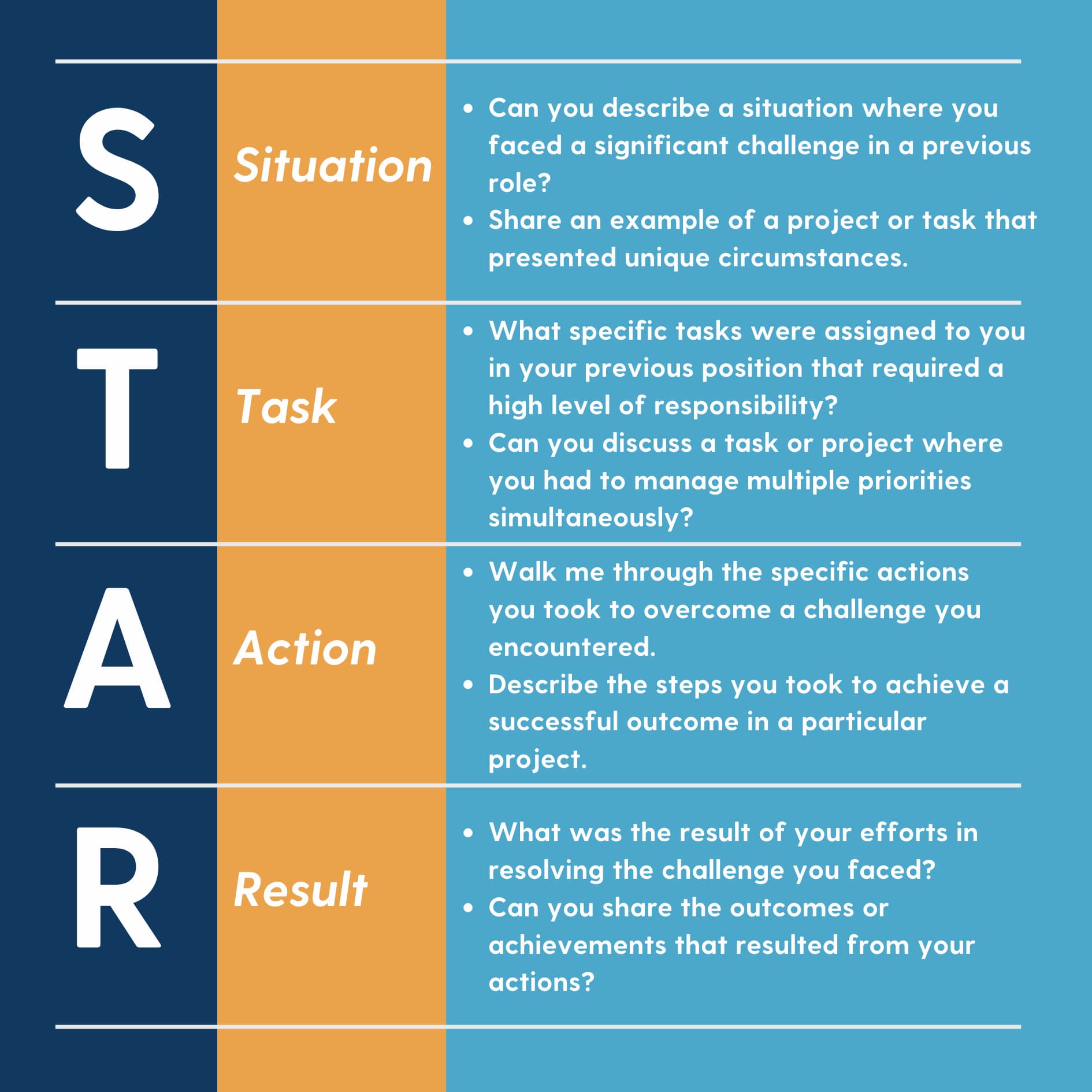
- The STAR Technique, particularly useful in behavioral interviews, instructs candidates to structure their responses by explaining the Situation, Task, Action, and Result of a particular experience or achievement. An alternative version is SOAR, where O is for the obstacle faced.
- The competency-based interviewing method assesses candidates based on specific competencies relevant to the job. It identifies the competencies required for success in the role and structures questions around them. This method aims to understand in a structured fashion how candidates have demonstrated these competencies in the past.
- Situational interviewing presents hypothetical scenarios to assess how candidates would handle specific situations, evaluating problem-solving abilities, decision-making, and thought processes. This method helps predict how candidates might approach challenges in the role.
- Case interviews are commonly used in consulting and analytical roles. In this interview, the interviewer presents candidates with a business scenario or problem to solve and assesses the candidate’s analytical skills, strategic thinking, and problem-solving abilities.
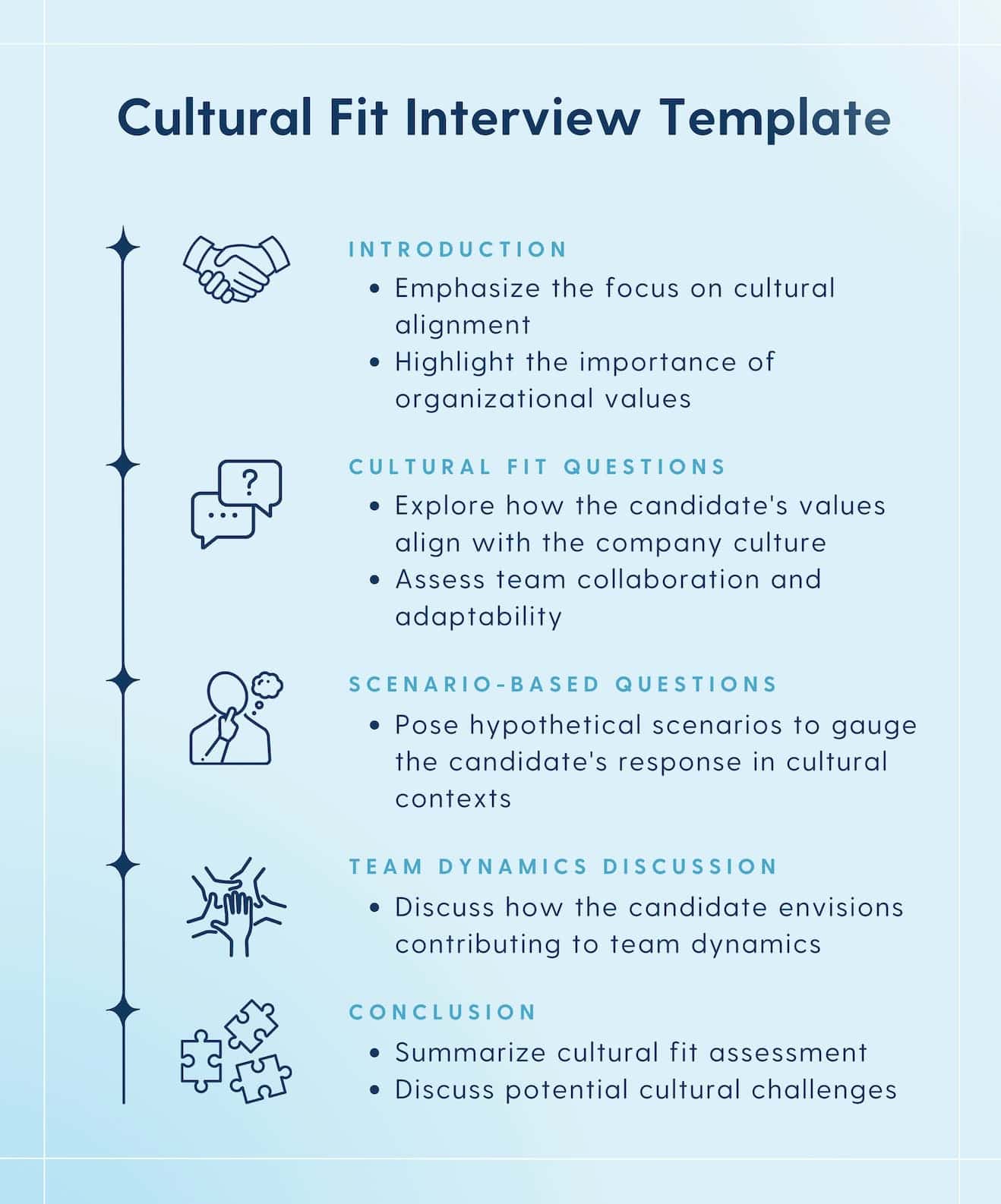
- A cultural fit interview focuses on assessing how well a candidate aligns with the company’s values and culture by exploring the candidate’s work preferences, collaboration style, and compatibility with the team.
- The technical interview evaluates a candidate’s technical skills and proficiency in areas directly related to the job. This approach may involve coding exercises, case studies, or technical problem-solving scenarios.
- Structured Interviewing refers to developing a comprehensive guide with a set of standardized questions for all candidates. With it, you ensure consistency and fairness and reduce bias by asking each candidate the same core questions.
- Blind Hiring is a method that removes certain identifiable information (such as name, gender, or education) during initial stages to minimize bias. It focuses solely on the candidate’s qualifications and experiences.


Conclusion
When interviewing, we find ourselves searching for the perfect match between individuals, roles, and skills and culture. As a manager, your responsibility extends beyond merely evaluating qualifications; it encompasses holistically understanding the candidates you are considering. Note that each interview will be unique, and ultimately, your goal is to form a relationship, however brief, and establish trust with your interviewee. Only then can you assess the real individual and determine whether they will be a good fit for your organization.
Other Resources
- TED Talk: Expect the Unexpected in an Interview by Itziar de Ros
https://www.youtube.com/watch?v=oNuMpnxLhK8 - Indeed: 13 Tips for Interviewing Candidates
https://www.indeed.com/career-advice/interviewing/interview-candidate - HBR: How to Conduct an Effective Job Interview
https://hbr.org/2015/01/how-to-conduct-an-effective-job-interview - HBR: Strategies for Effective Interviewing
https://hbr.org/1964/01/strategies-of-effective-interviewing - Forbes: 5 Tips for Conducting a Great Job Interview
https://www.forbes.com/sites/theyec/2019/04/08/five-tips-for-conducting-a-great-job-interview/?sh=64dab20f6349 - Forbes: Do’s and Donts of Interviewing
https://www.forbes.com/sites/forbeshumanresourcescouncil/2022/01/27/the-dos-and-donts-of-interviewing/?sh=631b20d467db - Forbes: Improve the Candidate Experience with Structured Interviewing
https://www.forbes.com/sites/forbeshumanresourcescouncil/2023/04/12/improve-the-candidate-experience-with-structured-interviewing/
