



Introduction
Change has a way of stirring up emotions within us—fear, uncertainty, irritation, and a touch of anxiety. Nowhere is this more evident than in organizational changes, where the prospect of adapting to something new can trigger a cascade of concerns. The fear of not measuring up, of disliking the alterations to the status quo, or the looming possibility of job insecurity can be daunting. Yet, hidden within the shadows of apprehension lies a powerful truth: good things can emerge from change.
Change manifests in myriad forms. Whether it’s the prospect of relocating, adjusting to a new managerial hierarchy, facing unexpected job transitions, embracing cutting-edge technologies, or navigating through corporate growth or mergers, change is an ever-present work world companion. Yet, within the folds of this uncertainty lies a realm of possibilities. Approaching change with a spirit of personal change readiness provides a compass that helps us navigate these transitions and transform them into avenues for personal and professional enrichment. From unforeseen promotions and skill development to discovering a more fitting job or expanding one’s professional network, the journey through change, when approached with a readiness mindset, unveils opportunities beyond mere adaptation, becoming a trigger for individual growth and fulfillment.

Image used under license from Shutterstock.com
What is Change?
Personal change readiness refers to our willingness, ability, and psychological preparedness to adapt to and embrace change in the workplace. It involves the mindset and behaviors that enable us to navigate and effectively cope with changes. More and more, work environments and organizations undergo regular transformations driven by technological advancements, structural reorganizations, or shifts in policies and procedures. Personal change readiness requires us to foster several key elements:
- Openness to Change: Individuals who are open to new ideas, flexible in their thinking, and receptive to change are more likely to be change-ready. They view change as an opportunity for growth rather than a threat.
- Adaptability: Being able to adjust to new circumstances, learn new skills, and handle uncertainties is crucial. Those who can quickly adapt to evolving situations are better positioned to thrive in changing work environments.
- Resilience: Change can be challenging, and setbacks are inevitable. Resilient individuals can bounce back from adversity, maintain a positive attitude, and continue to contribute productively despite the difficulties associated with change.
- Self-Awareness: Understanding one’s own strengths, weaknesses, and emotions is essential for navigating change. Self-aware individuals can better manage their reactions to change and seek appropriate support when needed.
- Continuous Learning: A mindset of continuous learning and a proactive approach to acquiring new skills and knowledge are critical for staying relevant in a changing work landscape.
- Effective Communication: Clear and open communication is essential during periods of change. Individuals who can express their thoughts, concerns, and ideas effectively, and who actively listen to others, contribute to a smoother transition.
- Goal Alignment: Having a clear understanding of personal and professional goals and how they align with organizational objectives can enhance personal change readiness. It helps individuals see the bigger picture and stay motivated during times of change.
Navigate Change
To navigate change within your organization, you need to foster the skills that give way to the elements mentioned. To do so, consider the following strategies:
- Embrace a positive attitude towards change. See it as an opportunity for personal and professional growth rather than as a threat. Be open to learning new skills, adapting to new processes, and embracing new ways of working.
- Keep yourself well-informed about the nature and reasons behind the change. If aspects of the change are unclear, don’t hesitate to seek clarification from leaders or colleagues. Understanding the reasons behind the change can help reduce uncertainty.
- Have a support network to help alleviate stress and anxiety. Connect with colleagues who are also experiencing the change. Share perspectives, exchange insights, and provide mutual support.
- Identify which aspects of the change that you can control and influence. Concentrate your efforts on those areas rather than dwelling on things beyond your control. For instance, you can break down the change needed into smaller, more manageable goals. Set realistic and achievable milestones to make the change process less daunting.
- Be proactive in acquiring new skills that may be required due to the change. Seek out training opportunities and stay updated on industry trends.
- Take care of your physical and mental well-being. Changes in the workplace can be stressful, so it’s important to prioritize self-care activities such as exercise, adequate sleep, and relaxation.
- Understand how your role contributes to the overall goals of the organization. Aligning your efforts with the bigger picture can provide a sense of purpose and motivation.

Image used under license from Shutterstock.com
Thought Leaders
There are a range of experts and thought leaders who have made significant contributions to the understanding and management of organizational change. Note that this is an interdisciplinary field that draws from various disciplines including psychology and management, among others. Therefore, reading the books, articles, and research these experts have published can provide valuable perspectives on navigating change in the workplace.
- John Kotter: A professor at Harvard Business School and a renowned author in the field of leadership and change management. He’s the author of Leading Change.
- Kurt Lewin: Often referred to as the father of social psychology, Lewin’s work laid the foundation for understanding organizational change. His model of unfreezing, changing, and refreezing is widely used in change management.
- Peter Senge: A senior lecturer at the MIT Sloan School of Management and known for his work on organizational learning. His book The Fifth Discipline explores the concept of a learning organization.
- Rosabeth Moss Kanter: A professor at Harvard Business School and a leading thinker on organizational change, innovation, and leadership. She authored The Change Masters.
- William Bridges: Known for his work on transitions during change. His model, often referred to as the Bridges Transition Model, focuses on managing the human side of change.
- Chip Heath and Dan Heath: The Heath brothers are authors known for their work on decision-making and change. Their book Switch: How to Change Things When Change Is Hard provides insights into the psychology of change.
- Linda A. Hill: A professor at Harvard Business School and an expert on leadership and innovation. Her work often explores how organizations can adapt to dynamic environments.
- Spencer Johnson: A physician and author, best known for his book, Who Moved My Cheese?. This book tells a parable about two mice, Sniff and Scurry, and two little people, Hem and Haw, navigating a maze in search of cheese, symbolizing life’s changes and challenges. The story emphasizes the importance of adapting to change and taking proactive measures to succeed in a world where change is the only constant.
Key Frameworks
The following frameworks and models can help guide you through organizational change. These models offer structured approaches to understanding, planning, and implementing change initiatives. (Note that models that help leaders navigate their organizations through change are covered in a separate article).
- ADKAR Model: Developed by Prosci, the ADKAR model focuses on the individual’s journey through change, emphasizing Awareness, Desire, Knowledge, Ability, and Reinforcement as key elements for successful change adoption.
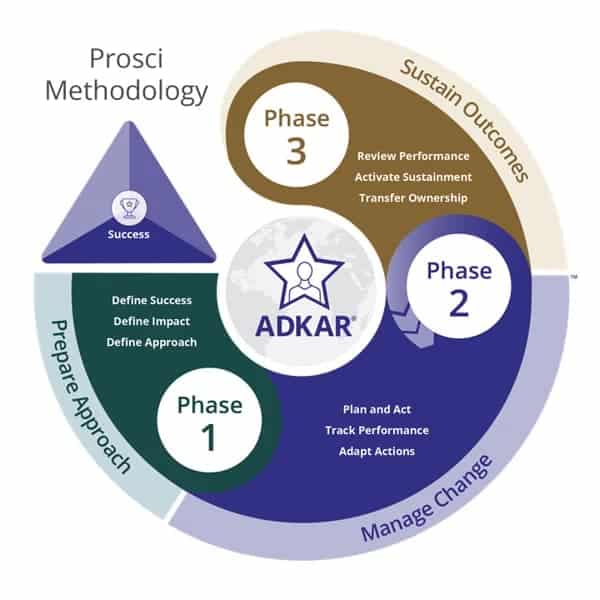
Image Source: https://www.prosci.com/blog/prosci-methodology
- Bridges’ Transition Model: William Bridges’ model focuses on managing transitions during change. It includes three stages: Endings (letting go of the old), Neutral Zone (the period of uncertainty), and New Beginnings (embracing the new).
- The Satir Change Model: Developed by family therapist Virginia Satir, this model describes the emotional stages individuals go through during change, including Late Status Quo, Resistance, Chaos, Integration, and New Status Quo.
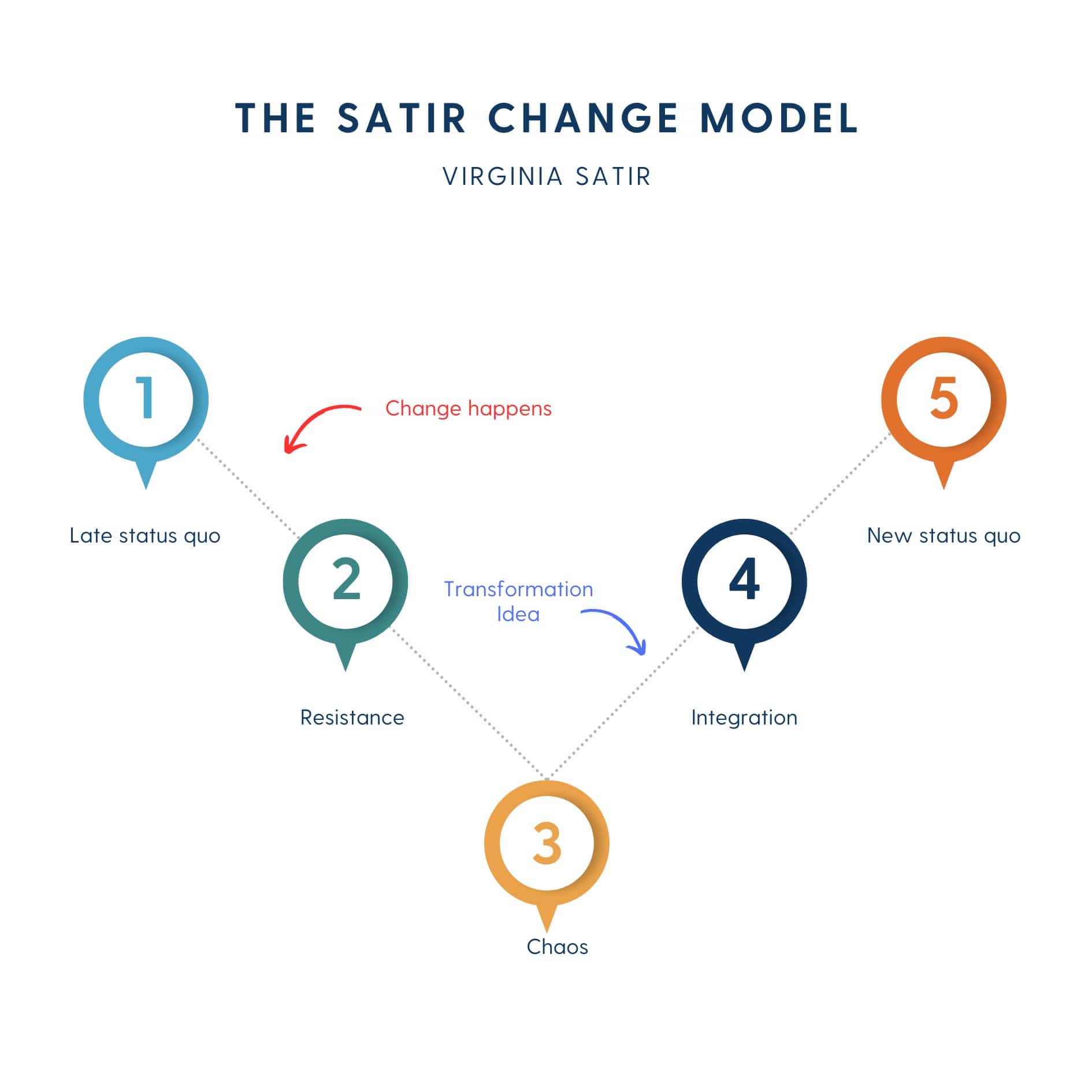
Image developed based on the work of Ricardo Vargas at: https://ricardo-vargas.com/podcasts/understanding-the-satir-change-model
- Kubler-Ross Change Curve: Adapted from the stages of grief model by Elisabeth Kubler-Ross, this curve outlines the emotional stages individuals may go through during change. It includes stages such as shock, denial, frustration, exploration, and acceptance.
- The Personal Resilience Model: This model focuses on building personal resilience during change. It involves developing coping strategies, fostering a growth mindset, and maintaining well-being to navigate challenges effectively.
- The SCARF Model: Developed by David Rock, the SCARF model identifies five social domains (Status, Certainty, Autonomy, Relatedness, and Fairness) that can be used to examine the influence of individuals’ reactions to change. Understanding and addressing these factors can help manage the emotional impact of change.


Change in Personal Development
Effectively navigating change impacts personal development by fostering adaptability, resilience, and continuous learning. Change prompts us to adapt to new circumstances, acquire new skills, and develop problem-solving abilities. It builds on our emotional intelligence and resilience as we learn to cope with uncertainties and setbacks. It also enables self-awareness, encouraging us to reflect on our values and goals.
Navigating outside our comfort zones ultimately leads to expanded capabilities and a willingness to embrace new challenges. Change fosters a sense of accomplishment, confidence, and a positive self-image, fostering goal-setting and alignment with evolving situations and promoting a purpose-driven approach to personal development.
Other Resources
- Indeed: 11 Tips to Deal with Change at Work
https://www.indeed.com/career-advice/career-development/dealing-with-change-at-work - Forbes: How to Cope With Change in the Workplace
https://www.forbes.com/sites/carolinecastrillon/2020/02/26/how-to-cope-with-change-in-the-workplace/?sh=59967884d207 - Harvard Business School: How to Deal with Change in the Workplace
https://online.hbs.edu/blog/post/managing-change-in-the-workplace - HBR: Change is Hard. Here’s How to Make It Less Painful
https://hbr.org/2022/04/change-is-hard-heres-how-to-make-it-less-painful - HBR: How To Become More Comfortable With Change
https://hbr.org/2021/11/how-to-become-more-comfortable-with-change
