



In recent years, the pace of change has accelerated, becoming a common experience across various aspects of life. However, this phenomenon is especially pronounced within the work world. Technological advancements, market shifts, and societal transformations continually propel organizations into new territories, demanding unprecedented levels of adaptability and resilience, and forcing businesses to continually adapt and innovate.
Amidst this ever-changing environment, managers are tasked not only with navigating the complexities of change but also with guiding their teams through the intricate process of transition. Beyond simply implementing new strategies or systems, managers play the role of cultivating organizational change readiness and fostering agility among their teams. They’re charged with directing efforts to enhance the organization’s capacity to stay in front of change and to respond swiftly and adeptly to unforeseen opportunities and challenges.
While change often evokes feelings of uncertainty and apprehension, it also presents opportunities for growth and innovation. Managers should recognize that, today, embracing change is not merely a necessity but a strategic must if they and their organizations seek to remain competitive and resilient.
What is Organizational Change Readiness?
Organizational change readiness refers to an organization’s ability and willingness to undergo and successfully implement change. It involves assessing and preparing the organization’s internal environment, culture, structure, and individuals for upcoming shifts. The goal is to ensure that the organization is equipped to handle and adapt to change with minimal resistance or disruptions.
Organizations may undergo various types of changes based on different factors such as external market conditions, internal processes, technological advancements, and strategic considerations.
Some common types of changes that organizations might experience include:
- Structural Changes: Changes in the organizational hierarchy, reporting lines, or departmental structure; or integration of new entities or restructuring due to mergers, acquisitions, or divestitures.
- Procedural Changes: Radical redesign of business processes to achieve significant improvements in efficiency, effectiveness, and quality; or the adoption of new software, hardware, or technological systems to enhance operations.
- Cultural Changes: Initiatives to shift or evolve the organizational culture to align with new values, beliefs, or priorities.
- Strategic Changes: Shifts in the overall business strategy to respond to market changes or capitalize on new opportunities.
- People-related Changes: Changes in leadership roles, such as new hires, promotions, or departures; or the implementation of initiatives to enhance employee skills and competencies.
- Operational Changes: Improvements or changes in the supply chain or within internal operations to increase efficiency and reduce costs.
- Policy and Regulatory Changes: Adjustments made to comply with new laws, regulations, or industry standards, as well as revisions to organizational policies and procedures to align with evolving business needs.
- Product or Service Innovation: Development and launch of new offerings to meet changing customer demands or phase out outdated or less profitable products or services.
- Cost-cutting Initiatives or Expense Reduction Programs: Implementing measures to cut costs, improve efficiency, and optimize resource allocation.
- Crisis Response: Rapid adjustments made in response to unforeseen events or crises, such as natural disasters, economic downturns, or public health emergencies.
Organizational change is often multifaceted and regularly involves a combination of these types of changes.

How To Help Build Organizational Change Agility?
Organizational change readiness is a proactive approach that aims to create an environment where change is not only accepted but also embraced as a means of improvement and growth. It recognizes that the success of any change initiative depends not only on the nature of the change itself but also on the organization’s preparedness and ability to adapt.
Successful management of change requires a strategic approach, effective communication, and consideration of the impact on employees and other stakeholders. Key elements include:
- Assessment:Evaluating the current state of the organization, including its culture, structure, and processes, and the readiness of its employees to embrace change. Identifying potential obstacles and areas that need improvement.
- Leadership Commitment:Ensuring that leaders at all levels are committed to the change initiatives. Leadership support is crucial for driving change and influencing the organization’s culture.
- Communication:Establishing clear and transparent communication channels to convey the purpose, benefits, and impact of the proposed changes. Effective communication helps in managing expectations and reducing uncertainty among employees.
- Employee Involvement:Involving employees in the change process by seeking their input, addressing their concerns, and providing opportunities for collaboration. This promotes a sense of ownership and increases buy-in from the workforce.
- Training and Development:Providing necessary training and resources to equip employees with the skills and knowledge required for the changes. This helps in building confidence and reducing anxiety associated with the unknown.
- Cultural Alignment:Ensuring that the proposed changes align with the organization’s values and culture. This alignment increases the likelihood of successful adoption and integration of the changes into the organizational fabric.
- Flexibility and Adaptability:Fostering a culture of adaptability and flexibility, encouraging employees to embrace change as a constant part of the organization’s evolution. This mindset helps in reducing resistance and facilitating a smoother transition.
- Monitoring and Feedback:Establishing mechanisms to monitor the progress of the change initiatives and gather feedback from employees. This allows the organization to make necessary adjustments and address emerging challenges promptly.
Thought Leaders
A number of experts have made significant contributions to the field of organizational change and change management. They have written extensively, conducted research, and provided valuable insights into managing and navigating organizational change. Here are some notable thought leaders:
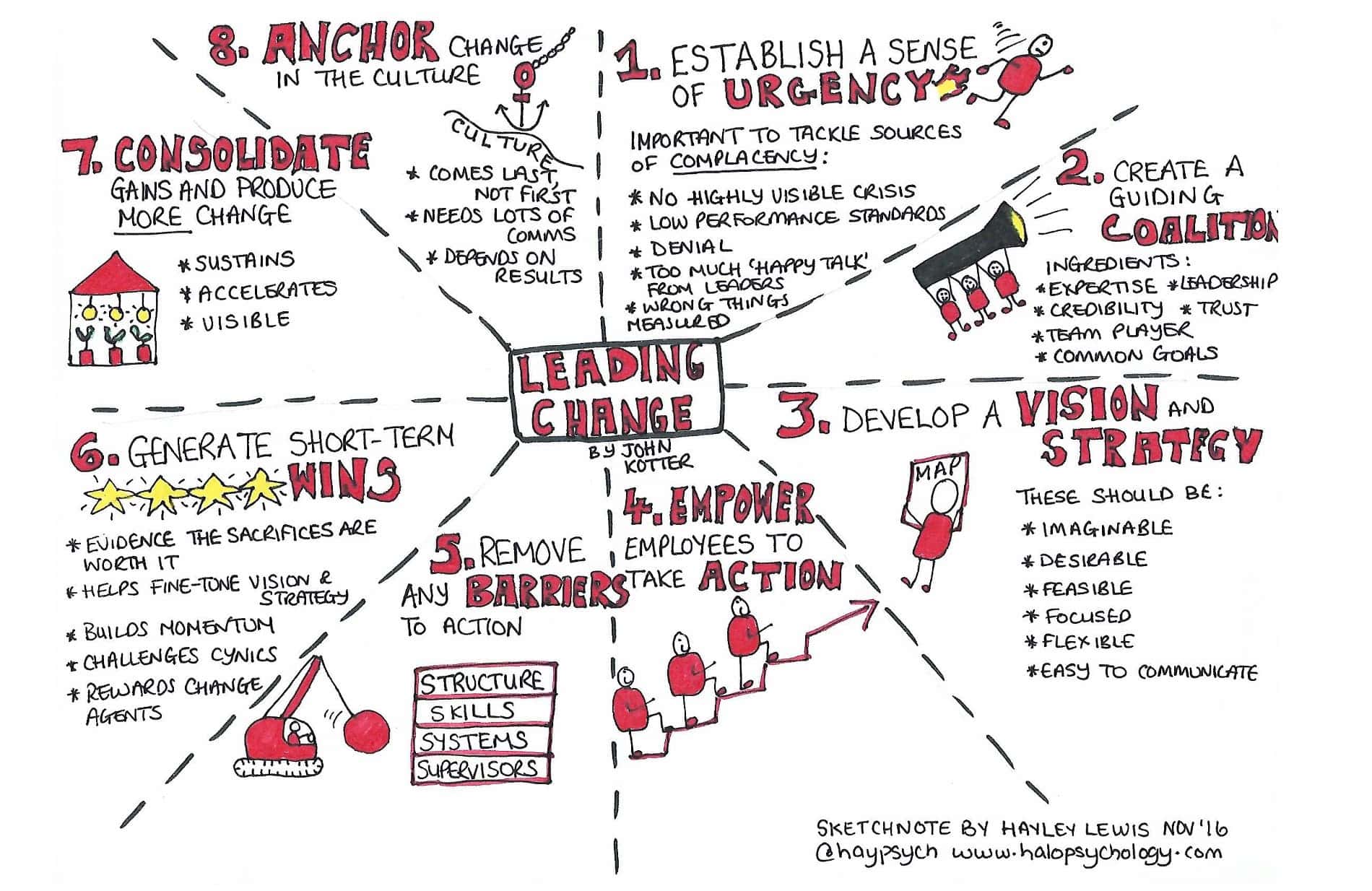
- John Kotter: Renowned for his work on change leadership, Kotter developed the 8-Step Process for Leading Change, which emphasizes the importance of creating a sense of urgency, building coalitions, and anchoring change in the organizational culture.
- William Bridges: Known for his work on transitions during change, Bridges developed the Transition Model, which focuses on helping individuals navigate the psychological and emotional aspects of change. His book Managing Transitions is widely referenced.
- Peter Senge: An expert in organizational learning, Senge’s work in The Fifth Discipline explores the concept of the learning organization. He emphasizes the importance of fostering a culture that encourages continuous learning and adaptation.
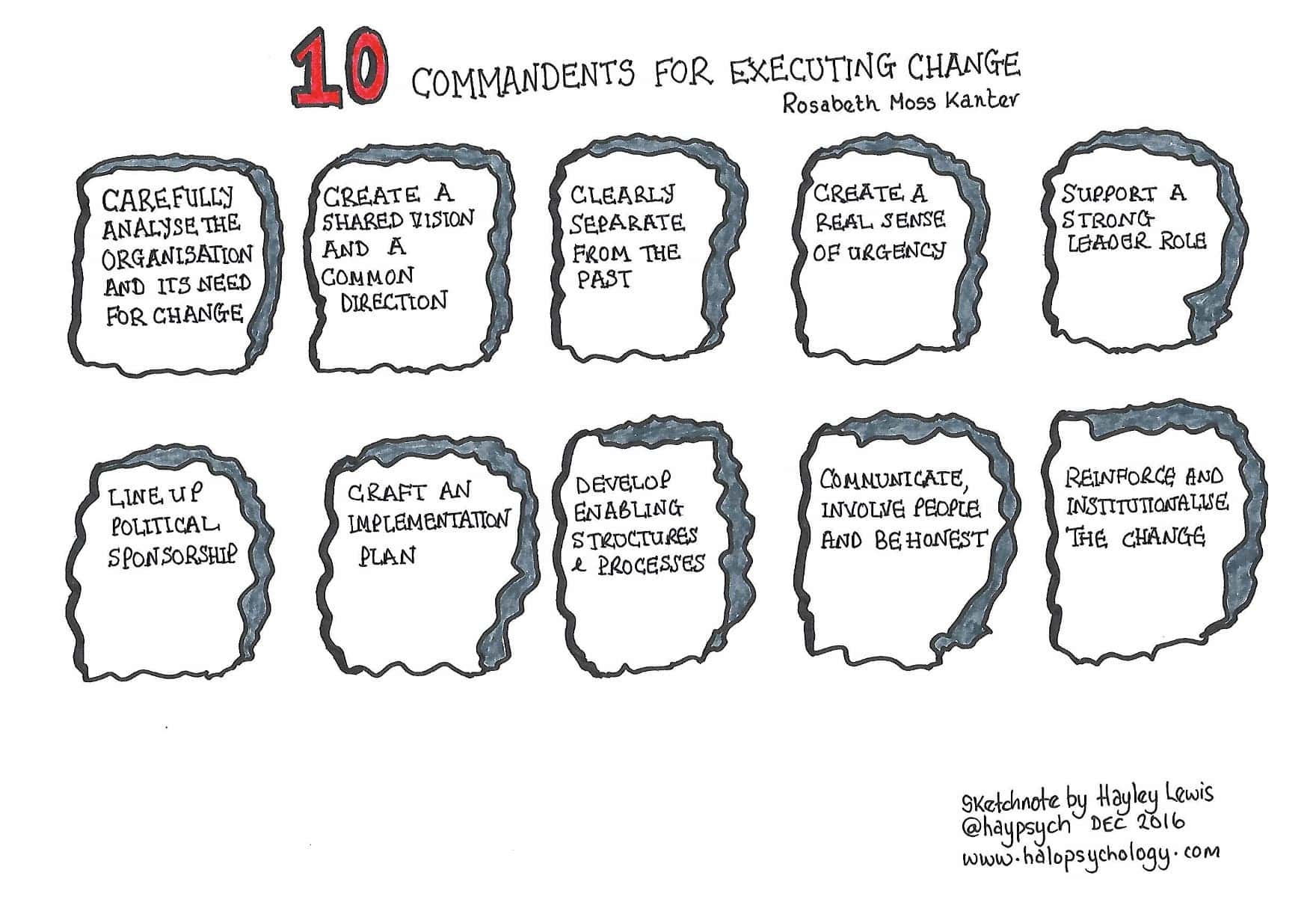
- Rosabeth Moss Kanter: A professor, author, and researcher, Kanter has written extensively on organizational change, innovation, and leadership. Her book The Change Masters explores the challenges and strategies of leading change. You can check out Dr. Hayley Lewis’s Sketchnote of the 10 Commandments for Executing Change, based on the work of Kanter.
- Gary Hamel: A management thinker and author who has focused on the future of management and organizational innovation. His work often emphasizes the need for organizations to be more adaptable, innovative, and agile.
- Michael Beer: Known for his research on organizational effectiveness and change, Beer has contributed to the understanding of organizational change processes. His co-authored book Managing Human Assets addresses the human side of organizational change.
- Kurt Lewin: Considered one of the pioneers in the field of social psychology and organizational change, Lewin is known for his three-step model of change: unfreezing, changing, and refreezing.
- Chip Heath and Dan Heath: Co-authors of books like Switch: How to Change Things When Change Is Hard, the Heath brothers explore the psychology of change and provide practical insights on how to make change more manageable and successful.
- Spencer Johnson: A physician and author best known for his book Who Moved My Cheese? This book shares a parable about two mice, Sniff and Scurry, and two little people, Hem and Haw, navigating a maze in search of cheese, symbolizing life’s changes and challenges. The story emphasizes the importance of adapting to change and taking proactive measures to succeed in a world where change is the only constant.

Key Frameworks
Several key frameworks have been developed to guide organizations through the process of managing and implementing change effectively. These frameworks provide structured approaches and methodologies for understanding, planning, and executing organizational change.
- Kotter’s 8-Step Change Model: Developed by John P. Kotter, this model emphasizes creating a sense of urgency, forming powerful coalitions, and institutionalizing changes to ensure they become part of the organization’s culture. Check out Dr. Hayley Lewis’s Sketchnote below for a summary of this model.
- Lewin’s Change Management Model: Kurt Lewin’s model involves three stages: unfreezing (preparing for change), changing (implementing the change), and refreezing (stabilizing the change). It is a simple yet widely used model for understanding the process of change.
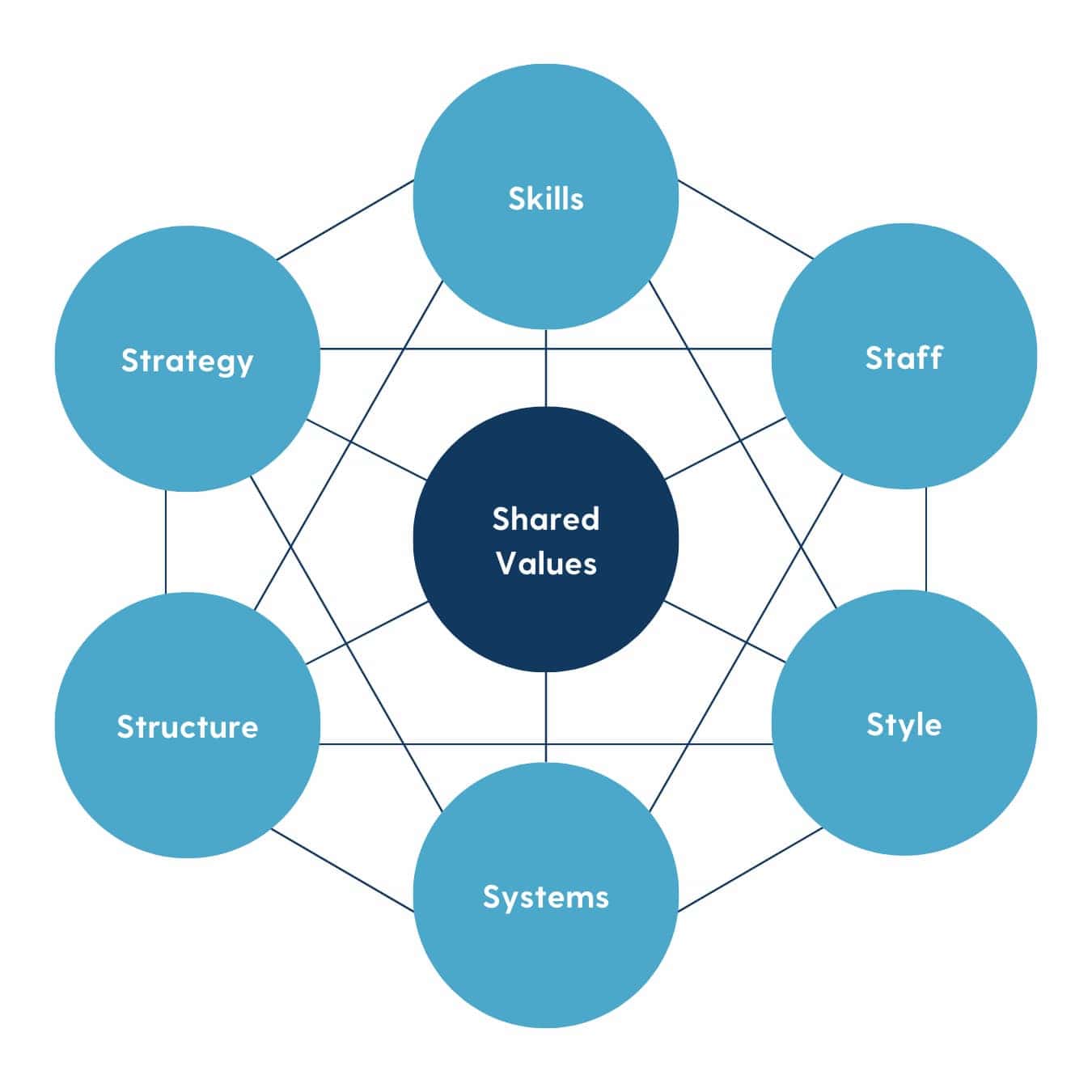
- McKinsey 7-S Framework: Developed by consultants at McKinsey & Company, this model identifies seven interconnected elements (strategy, structure, systems, shared values, style, staff, and skills) that need to be aligned for successful organizational change.
- Burke-Litwin Model: The Burke-Litwin Model identifies 12 key factors (such as external environment, strategy, leadership, and culture) that influence organizational performance and change. It helps organizations understand the complexities of change dynamics.
- The Agile Change Management Model: Drawing inspiration from agile methodologies in software development, this model promotes flexibility and responsiveness to change. It involves iterative cycles and collaboration among teams to adapt quickly to evolving circumstances.
- Cameron and Quinn’s Competing Values Framework: This model categorizes organizational cultures into four types: Clan, Adhocracy, Hierarchy, and Market. It helps organizations understand their current culture and how it may impact the success of change initiatives.
- Bridges’ Transition Model: William Bridges’ model focuses on managing transitions during change. It includes three stages: Endings (letting go of the old), Neutral Zone (the period of uncertainty), and New Beginnings (embracing the new).


Leadership in Change
We live in a day when technology advances, culture shifts, and companies grow at a faster-than-ever pace. The ability to guide and support your team through change is increasingly an essential leadership skill. As a manager, your influence goes beyond strategic decisions; it fosters a culture of resilience, openness, and shared purpose. Leading your team through change isn’t merely about reaching a destination; it’s about cultivating a journey where each member adapts and thrives, ensuring that every step forward is a step toward collective success and innovation.
Other Resources
- HBS: 5 Tips for Managing Change in the Workplace
https://online.hbs.edu/blog/post/managing-change-in-the-workplace - HBR: The Most Successful Approaches To Leading Organizational Change
https://hbr.org/2023/04/the-most-successful-approaches-to-leading-organizational-change - HBR: Driving Organizational Change — Without Abandoning Tradition
https://hbr.org/2023/04/driving-organizational-change-without-abandoning-tradition - HBR: How Leaders Get in the Way of Organizational Change
https://hbr.org/2021/04/how-leaders-get-in-the-way-of-organizational-change - HBR: Implementing New Technology
https://hbr.org/1985/11/implementing-new-technology - Forbes: Three Steps To Leading through Organizational Change
https://www.forbes.com/sites/forbeshumanresourcescouncil/2023/06/13/3-steps-for-leading-through-organizational-change/ - Forbes: Seizing The Future: Embracing Technological Change To Drive Innovation And Digital Transformation
https://www.forbes.com/sites/forbestechcouncil/2023/08/29/seizing-the-future-embracing-technological-change-to-drive-innovation-and-digital-transformation/
