


In the hustle and bustle of modern workplaces, meetings are an indispensable part of organizational culture. Yet, amidst the endless calendar invites and packed conference rooms, we can’t help but question: Are meetings fulfilling their intended purpose, or have they morphed into bureaucratic wastes of time and obstacles to productivity?
If you’re a manager, do you find holding meetings stressful? Are you grappling with the pressure to keep discussions focused and participants engaged? Or perhaps the mere attendance at meetings feels daunting, as you feel like your team’s time and energy could be directed towards more meaningful endeavors?

Meetings: Goals & Objectives
Meetings are meant to be a gathering of two or more individuals who come together to discuss, deliberate, share information, make decisions, or collaborate on a particular topic or set of topics. They can take various forms, including face-to-face interactions, virtual meetings conducted via video conferencing or phone calls, hybrid meetings involving a mix of in-person and online participants, and asynchronous meetings using collaboration tools, such as text or video messaging.
Meetings are necessary for several reasons:
- Communication: Meetings provide a platform for effective communication among team members, stakeholders, and decision-makers. They allow for the real-time exchange of information, ideas, and feedback, fostering understanding and alignment among participants.
- Collaboration: Meetings facilitate collaboration and teamwork by bringing together individuals with diverse perspectives, skills, and expertise to work towards common goals. They provide opportunities for brainstorming, problem-solving, and joint decision-making.
- Decision-Making: Many important decisions within organizations are made during meetings. Meetings enable stakeholders to discuss options, weigh alternatives, and reach consensus or make informed decisions based on collective input.
- Problem-Solving: Meetings offer a forum for addressing challenges, resolving conflicts, and finding solutions to complex issues. They provide a structured environment where participants can share insights, explore different viewpoints, and work towards finding viable solutions.
- Alignment and Accountability: Meetings help ensure that team members are aligned with organizational objectives, priorities, and expectations. They offer a platform for setting goals, clarifying roles and responsibilities, and holding individuals accountable for their actions and contributions.
- Relationship Building: Meetings contribute to building and nurturing relationships among team members, stakeholders, and collaborators. They provide opportunities for informal interactions, networking, and team bonding, which can enhance trust, morale, and camaraderie within the group.
- Information Sharing: Meetings serve as a means of disseminating important information, updates, and announcements to relevant stakeholders. They provide a centralized platform for sharing progress reports, project updates, and organizational news, ensuring that everyone is well-informed.
Holding Effective Meetings
A good meeting is characterized by several key factors that contribute to its effectiveness and success.
To hold a good meeting, have:
- A Clear Objective: Start with a clear objective or purpose. Make sure participants understand why the meeting is being held and what needs to be accomplished.
- A Structured Agenda: Follow a structured agenda that outlines topics to be discussed, time allocations for each agenda item, and any pre-meeting preparation required.
- Engaged Participants: Make sure participants actively engage in the discussion, contributing their ideas, insights, and expertise. Foster an environment where they listen attentively to others and respect differing viewpoints. If necessary, ask someone to play the role of “devil’s advocate” to ensure that a contrarian perspective is heard
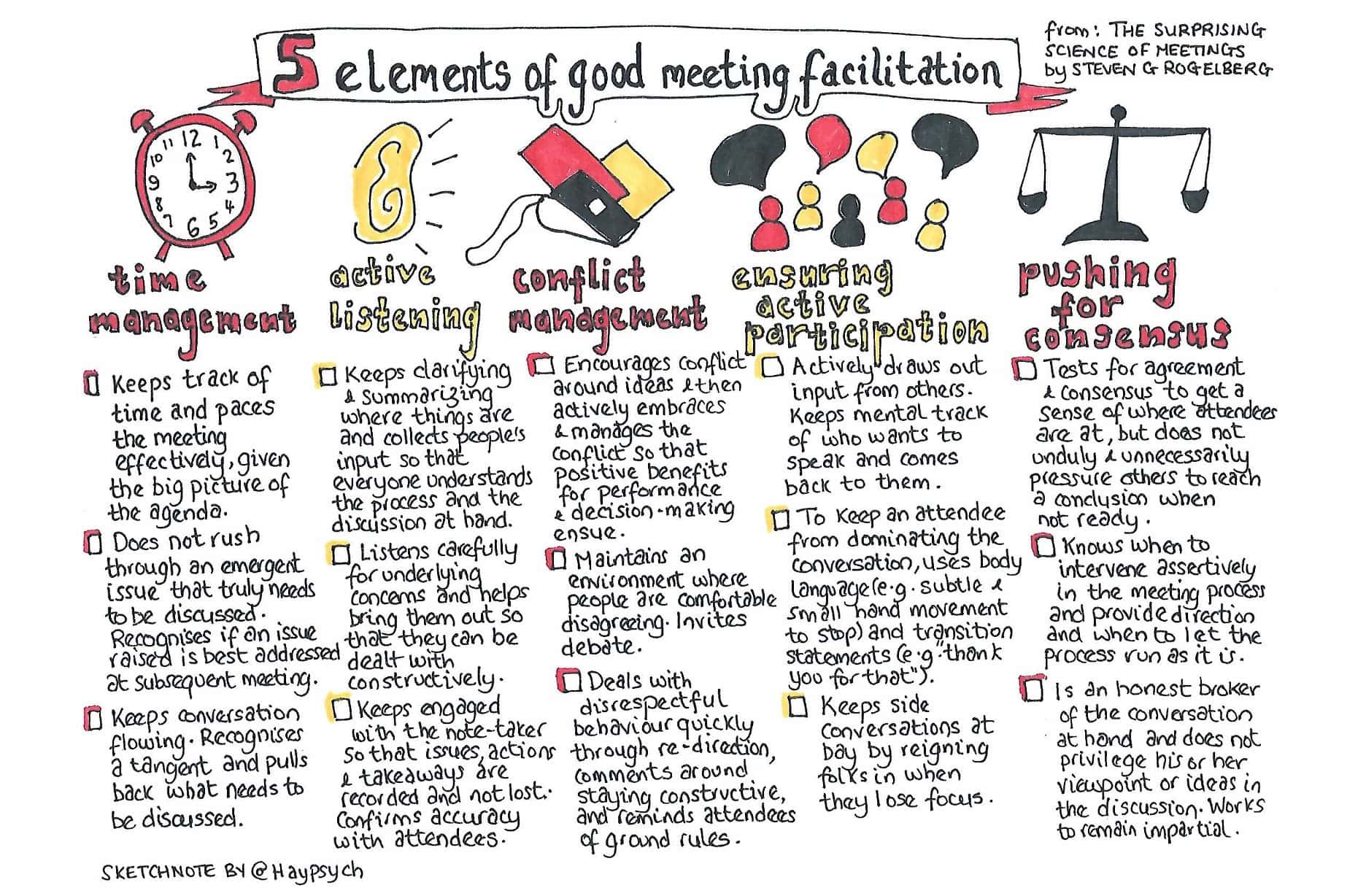
- Effective Facilitation: Facilitate the meeting well by guiding the discussion, managing time, and ensuring that everyone has an opportunity to participate.
- Focused Discussion: Ensure that the discussions remain focused on the agenda topics, and tangents are minimized or redirected back to the main points. As a facilitator, keep the conversation on track and encourage relevant contributions.
- Collaborative Decision-Making: If decisions need to be made, make sure they are reached collaboratively with input from all relevant stakeholders. The decision-making process should be transparent, and consensus sought whenever possible.
- Actionable Outcomes: The meeting should conclude with clear action items and next steps identified. Assign responsibilities, set deadlines, and agree on follow-up actions to ensure accountability. Send out a follow-up email summarizing these, as well as key decisions made and (if appropriate) a discussion summary. You can also experiment with the transcription tools available if you record the meeting and then ask ChatGPT or a similar GenAI tool to summarize the meeting for you.
- Respect for Time: Make sure the meeting starts and ends on time, respecting participants’ commitments. Use time efficiently, minimizing unnecessary delays and interruptions. If necessary, assign someone the role of managing the clock, to ensure that discussions don’t derail the group.
- Positive Atmosphere: Foster a positive and respectful atmosphere where participants feel comfortable expressing their thoughts and opinions, constructive feedback is welcomed, and conflicts are addressed respectfully.
- Follow-Up and Accountability: After the meeting, follow-up to ensure that action items are executed, progress is tracked, and any unresolved issues are addressed promptly.
Overall, a good meeting leaves participants feeling energized, informed, and motivated to take action. It enhances collaboration, drives progress towards goals, and strengthens relationships within the team or organization. If you’d like a tool to help you make the most out of your meetings, click here to access our PathWise Meeting Checklist.

Meeting Types
There are various types of meetings, each serving specific purposes and requiring different formats and structures. Depending on your objective, you can decide which meeting type and style best fits your needs:
- Informational Meetings: Focused on sharing updates, announcements, or important information with participants. They are typically one-way communication from the presenter(s) to the audience and may include Q&A. Examples of such meetings are company-wide updates, project status reports, and departmental briefings.
- Decision-Making Meetings: Convened to discuss and make important decisions on specific issues or topics. Participants may engage in discussions, weigh options, and reach consensus or even vote on proposed courses of action. Examples include board meetings, project planning meetings, and executive committees.
- Brainstorming Sessions: Designed to generate creative ideas, solutions, or strategies to address challenges or opportunities. Participants are encouraged to freely share their thoughts, explore new possibilities, and build upon each other’s ideas in a collaborative environment.
- Problem-Solving Meetings: Focus on identifying and addressing specific problems or obstacles. Participants work together to analyze the root causes of the problem, explore potential solutions, and develop action plans to resolve the issue.
- Status Update Meetings: Held to review the status of ongoing projects, tasks, or initiatives. Participants provide updates on their respective areas of responsibility, discuss any challenges or roadblocks, and coordinate efforts to ensure project alignment and progress.
- Team Building Meetings: Aimed at fostering camaraderie, collaboration, and team cohesion among group members. These meetings often include icebreaker activities, team-building exercises, and discussions to strengthen relationships, improve communication, and enhance trust within the team.
- Training or Educational Meetings: Conducted to impart knowledge, skills, or information to participants on specific topics or subjects. These meetings may involve presentations, workshops, demonstrations, or hands-on learning activities to facilitate learning and development.
- Feedback or Performance Review Meetings: Provide an opportunity for supervisors or managers to provide feedback, coaching, and evaluation to employees on their performance, progress, and areas for improvement. These meetings are crucial for fostering professional growth, clarifying expectations, and aligning individual goals with organizational objectives.
- Ad Hoc Meetings: Ad hoc meetings are impromptu or unscheduled meetings called to address urgent or time-sensitive issues that cannot wait for a regularly scheduled meeting. These meetings are often convened on short notice and may involve a subset of participants relevant to the specific issue at hand.
Thought Leaders
The following thought leaders offer valuable perspectives, strategies, and frameworks for improving communication, collaboration, and organizational effectiveness, including making meetings more productive and impactful.
- Patrick Lencioni: A renowned author and speaker on organizational health, teamwork, and leadership topics. His book Death by Meeting explores common meeting pitfalls and offers practical strategies for making meetings more effective, engaging, and results-oriented.
- Steven G. Rogelberg: A Professor of Organizational Science, Management, and Psychology at the University of North Carolina at Charlotte, he is the author of The Surprising Science of Meetings: How You Can Lead Your Team to Peak Performance, which provides evidence-based insights and practical advice for improving meeting effectiveness. To learn more, check out below Dr. Hayley Lewis’s Sketchnote summarizing some of the insights from this book.
- Adam Grant: An organizational psychologist, bestselling author, and Wharton professor known for his work on workplace dynamics, motivation, and collaboration. While his focus extends beyond meetings, his research and writings offer valuable insights into fostering creativity, innovation, and effective teamwork, which are essential for productive meetings.
- Nancy Duarte: A communication expert and author known for her work on effective storytelling and presentation design. While her expertise primarily revolves around presentations, her insights into communication, persuasion, and audience engagement can enhance the effectiveness of meetings and facilitate better understanding and alignment among participants.
- Kim Scott: The author of Radical Candor: Be a Kickass Boss Without Losing Your Humanity, she emphasizes the importance of clear communication and feedback, and building solid relationships in the workplace. While her focus is not solely on meetings, her effective communication and leadership principles are highly relevant to improving meeting dynamics.
- Julie Zhuo: The author of The Making of a Manager: What to Do When Everyone Looks to You and the former Vice President of Product Design at Facebook, her insights into leadership, management, and organizational culture offer valuable perspectives on fostering collaboration, driving productive meetings, and creating a positive work environment.
- Liz Wiseman: A leadership expert and bestselling author known for her research on leadership and organizational dynamics. Her book Multipliers: How the Best Leaders Make Everyone Smarter explores how leaders can create an environment of collaboration, empowerment, and high performance, which can positively impact the effectiveness of meetings.


Key Frameworks
There are several meeting frameworks that organizations and teams can adopt to ensure meetings are structured, purposeful, and productive. Here are some common meeting frameworks:
- Agile Stand-up Meetings: Typically used in Agile software development, stand-up meetings are short daily gatherings where team members provide updates on their progress, discuss any obstacles, and coordinate tasks. These meetings are brief, usually lasting no more than 15 minutes, and are often conducted standing up to keep them concise.
- Scrum Meetings: Similar to Agile stand-ups, Scrum meetings are part of the Scrum framework and include daily stand-ups, sprint planning meetings, sprint review meetings, and sprint retrospective meetings. These meetings help Scrum teams plan their work, review progress, and continuously improve their processes.
- Kanban Meetings: Kanban teams often hold regular meetings such as daily stand-ups and periodic backlog refinement meetings to review and prioritize tasks on the Kanban board. These meetings focus on visualizing workflow, identifying bottlenecks, and improving efficiency.
- Decision-Making Meetings (RACI Model): This framework, based on the RACI model (Responsible, Accountable, Consulted, Informed), outlines roles and responsibilities for decision-making in meetings. It helps clarify who is responsible for making decisions, who needs to be consulted or informed, and who is ultimately accountable for the outcome. A similar framework is Vote – Voice – Visibility, which sometimes includes a 4th V, Veto, though Vetos should be used sparingly to avoid disenfranchising others involved in the decision process.
- GTD (Getting Things Done) Meetings: Popularized by David Allen’s GTD methodology, these meetings focus on clarifying objectives, reviewing action items, and identifying next steps. They help teams stay organized, prioritize tasks, and ensure progress toward goals.
- Lean Coffee Meetings: Lean Coffee is a structured meeting format that encourages participants to collaboratively prioritize and discuss topics of interest. Participants suggest discussion topics, vote on them, and then engage in time-boxed discussions on the most popular topics. In case you were wondering, this model includes the word “coffee” in its name because it originally emerged from informal gatherings at coffee shops. The idea is to evoke the casual and relaxed atmosphere of these informal meetups.
- Open Space Meetings: In Open Space meetings, participants self-organize around topics of interest and engage in spontaneous discussions and activities. This format fosters creativity, collaboration, and emergent solutions to complex problems.
- Retrospective Meetings (Plus/Delta): Retrospective meetings, commonly used in Agile and Scrum, provide teams with an opportunity to reflect on past events, to identify what worked well (plus) and what could be improved (delta), and to develop action plans for continuous improvement.
These are just a few examples of meeting frameworks that organizations and teams can adopt to structure their meetings effectively and achieve desired outcomes. Depending on the team’s needs and objectives, they can customize these frameworks or create tailored approaches.
Other Resources
- HBR: Stop Wasting People’s Time with Bad Meetings
https://hbr.org/2022/03/stop-wasting-peoples-time-with-bad-meetings - HBR: 3 Types of Meetings — and How to Do Each One Well
https://hbr.org/2022/09/3-types-of-meetings-and-how-to-do-each-one-well - HBR: Meeting Overload is a Fixable Problem
https://hbr.org/2022/10/meeting-overload-is-a-fixable-problem - Forbes: How To Make Meetings Actually Work for You
https://www.forbes.com/sites/forbescommunicationscouncil/2023/12/05/a-primer-on-productive-meetings/?sh=625c151715ec - Forbes: How To Have Effective Meetings
https://www.forbes.com/sites/benjaminlaker/2023/10/18/how-to-have-effective-meetings-from-theory-to-transformative-practice/?sh=5e3c6d946d5b
