


Introduction
Have you ever felt stuck in your career? Maybe you’re not happy in your current organization. Or you love the company you work for but can’t see growth opportunities there. Perhaps you’re unsure about your long-term goals. Or you’re clear about them but don’t know if you’re on the right path for advancement. Maybe you don’t have a clear sense of your strengths and areas for improvement. Or perhaps you’re facing a specific challenge and are uncertain about how to navigate it effectively.
If any of these scenarios resonate with you, you’ll benefit from coaching. Working with a coach can help you set a path forward by accessing the full potential of your unique combination of strengths, skills, experiences, values, and specific circumstances. Coaching also helps manage stress, provides emotional support, clarifies personal and professional goals, identifies concrete steps for achieving them, enhances your skills, and ultimately advances your career so that you can become the best professional you can be.
What is coaching?
Coaching is a collaborative and supportive process designed to help you achieve your personal or professional goals. It involves a coach working closely with you to identify your objectives, create action plans, and overcome obstacles that may be hindering your progress. The role of a coach is to provide guidance, encouragement, and feedback to empower you to unlock your potential, develop new skills, and make positive changes in your life.
Coaching can cover a wide range of areas including career development, personal growth, leadership skills, health and wellness, relationships, and more. The ultimate aim of coaching is to facilitate self-discovery, increase self-awareness, and inspire you to take meaningful steps toward realizing your aspirations.
How is coaching different from feedback?
If you’re a manager, you might be wondering whether you also play the role of a coach. One of your main objectives is to help your reports grow, and you’ll have to provide regular feedback. However, coaching and feedback serve distinct purposes and are not exactly alike.
- Purpose: Coaching is a structured process that helps people achieve specific goals, develop skills, and unlock their potential through guidance, support, and encouragement. Feedback, on the other hand, involves providing information or performing an assessment or evaluation about someone’s performance, behavior, or actions, with the goal of reinforcing positive behaviors, correcting mistakes, or improving overall performance.
- Nature: Coaching is typically an ongoing and collaborative process that involves dialogue, exploration, and action plan creation to facilitate growth and development. Feedback, even if provided regularly, is focused on specific instances or behaviors rather than a continuous process.
- Focus: Coaching focuses on personal or professional development, enhancing skills, and achieving desired outcomes. It addresses broader aspects of an individual’s or group’s growth and progress. Feedback is usually more task-oriented and focused on providing information about specific behaviors, actions, or results. It may highlight areas of strength, areas needing improvement, or areas for adjustment, but it won’t guide you through the process to achieve that.
- Interaction: Coaching involves a dynamic interaction between a coach and a client or group, where the coach provides guidance, support, and encouragement to facilitate learning and growth. Feedback can come from various sources, including supervisors, peers, or clients, and it may be given directly or indirectly. It is often more of a one-way communication where the giver provides information or evaluation to the receiver.
How is coaching different from mentorship?
Coaching and mentorship are both valuable forms of guidance and support, but they, too, differ in several key aspects:
- Purpose and Focus: Coaching typically focuses on specific goals, tasks, or skill development. It helps people improve their performance, overcome challenges, and achieve specific objectives within a defined timeframe. Mentorship, on the other hand, tends to be more holistic and long-term. It involves a broader guidance relationship where the mentor shares wisdom, advice, and experience to support the mentee’s overall personal and professional growth.
- Expertise and Experience: Coaches are often trained professionals with expertise in specific areas such as leadership, communication, or career development. They use structured approaches and techniques to help clients progress. Mentors are usually (but not always!) more experienced individuals who have achieved success in their own careers or fields. They offer guidance based on their own experiences and insights, often providing informal advice and support.
- Structure and Relationship: Coaching relationships are typically more formal and structured. Coaches often work with clients for a set period, following a specific agenda, and using predefined methodologies to achieve desired outcomes. Mentorship relationships are often informal and may develop naturally over time. They are characterized by a mutual sense of trust and respect, with the mentor offering guidance and support as needed, without necessarily following a structured program.
- Accountability: Coaches often hold clients accountable for their actions and progress towards their goals. They may set deadlines, check-ins, and action plans to ensure clients stay on track. Mentors may offer advice and support but may not have the same level of accountability as coaches. The relationship is often more flexible, and the mentee is generally responsible for taking action based on the guidance received.
- Duration: Coaching relationships are often shorter-term, focusing on achieving specific goals or overcoming particular challenges within a defined timeframe. Mentoring relationships can be more open-ended and may last for an extended period, evolving as the mentee’s needs and circumstances change over time.
How is coaching different from therapy?
Coaching and therapy are both supportive processes aimed at facilitating personal growth and development, but they differ in several key ways.
- Focus: Coaching typically focuses on achieving specific goals, improving performance, and enhancing skills in areas such as career, relationships, leadership, and personal development. Therapy, on the other hand, focuses on addressing mental health-related issues, emotional challenges, past traumas, psychological disorders, and relationship issues. It often involves exploring deep-seated issues, understanding patterns of behavior, and resolving emotional conflicts.
- Time Orientation: Coaching tends to be primarily future-oriented, with an emphasis on setting goals, creating action plans, and working towards desired outcomes. Therapy often delves more deeply into the past to uncover underlying issues, traumas, and patterns of behavior that may be influencing current thoughts, emotions, and behaviors.
- Expertise and Training: Coaches typically have expertise in specific areas such as leadership, career development, or personal growth, and they often use their knowledge and experience to guide clients towards their goals. Therapists are trained mental health professionals who use evidence-based techniques and therapeutic interventions to help clients address psychologically-related issues, improve emotional well-being, and develop coping strategies.
- Client Population: Coaching clients are often high-functioning individuals seeking to enhance their performance, achieve success, or navigate life transitions. Therapy clients may include individuals struggling with trauma, mental health disorders, emotional distress, relationship problems, or significant life challenges. But, to be clear, many high-performing and successful people experience mental health challenges as well, so coaching and therapy need not be seen as an “either / or,” and in practice, almost all coaches provide a bit of unofficial therapy as well.
- Boundaries: Coaching typically involves a structured, goal-oriented approach with a focus on accountability and action steps. Therapy often involves a more exploratory and introspective process, allowing clients to delve into their thoughts, emotions, and experiences in a safe and supportive environment.

Thought Leaders
There are many thought leaders in the realm of coaching who have made significant contributions to the field through their research, writings, and teachings. Some notable figures include:
- Tony Robbins: A well-known life coach, author, and motivational speaker who has impacted millions of people worldwide through his books, seminars, and coaching programs.
- Marshall Goldsmith: Renowned executive coach, leadership thinker, and author of several best-selling books on leadership and personal development, including What Got You Here Won’t Get You There and Triggers.
- Brené Brown: Although she’s primarily known for her work on vulnerability, shame, and courage, Brown’s insights have deeply influenced the coaching field, particularly in areas related to authenticity, resilience, and emotional intelligence.
- John Whitmore: A pioneer in the coaching field, Whitmore authored Coaching for Performance, which is considered a seminal work in coaching literature. He is known for popularizing the GROW (Goal, Reality, Options, Will) model of coaching.
- Timothy Gallwey: Known for his book The Inner Game of Tennis, Gallwey introduced the concept of the inner game to coaching, emphasizing the importance of mindset, self-awareness, and focus in achieving peak performance.
- Julie Starr: Author of The Coaching Manual and The Mentoring Manual, Starr is recognized for her practical approach to coaching and mentoring, offering tools and techniques for effective coaching practice.
- Nancy Kline: Renowned for her work on the power of listening in coaching, Kline developed the Time to Think methodology, which emphasizes creating a thinking environment conducive to personal and professional growth. She also has a book by the same name.
- David Rock: Founder of the NeuroLeadership Institute, Rock has contributed significantly to the field of coaching by integrating neuroscience with coaching practice, particularly in areas such as leadership development and change management.
- Michael Bungay Stanier: Author of The Coaching Habit, Bungay Stanier is known for his pragmatic approach to coaching, focusing on asking powerful questions and building coaching habits for effective leadership and development.
Key Frameworks
There are several key coaching frameworks that coaches use to structure their coaching sessions and help clients achieve their goals. Some of these frameworks include:
- GROW Model: Developed by Sir John Whitmore, the GROW model stands for Goal, Reality, Options (or Obstacles), and Will (sometimes, Way-Forward). It provides a structured framework for coaches to guide clients through the process of setting goals, assessing their current reality, exploring options, and committing to action.
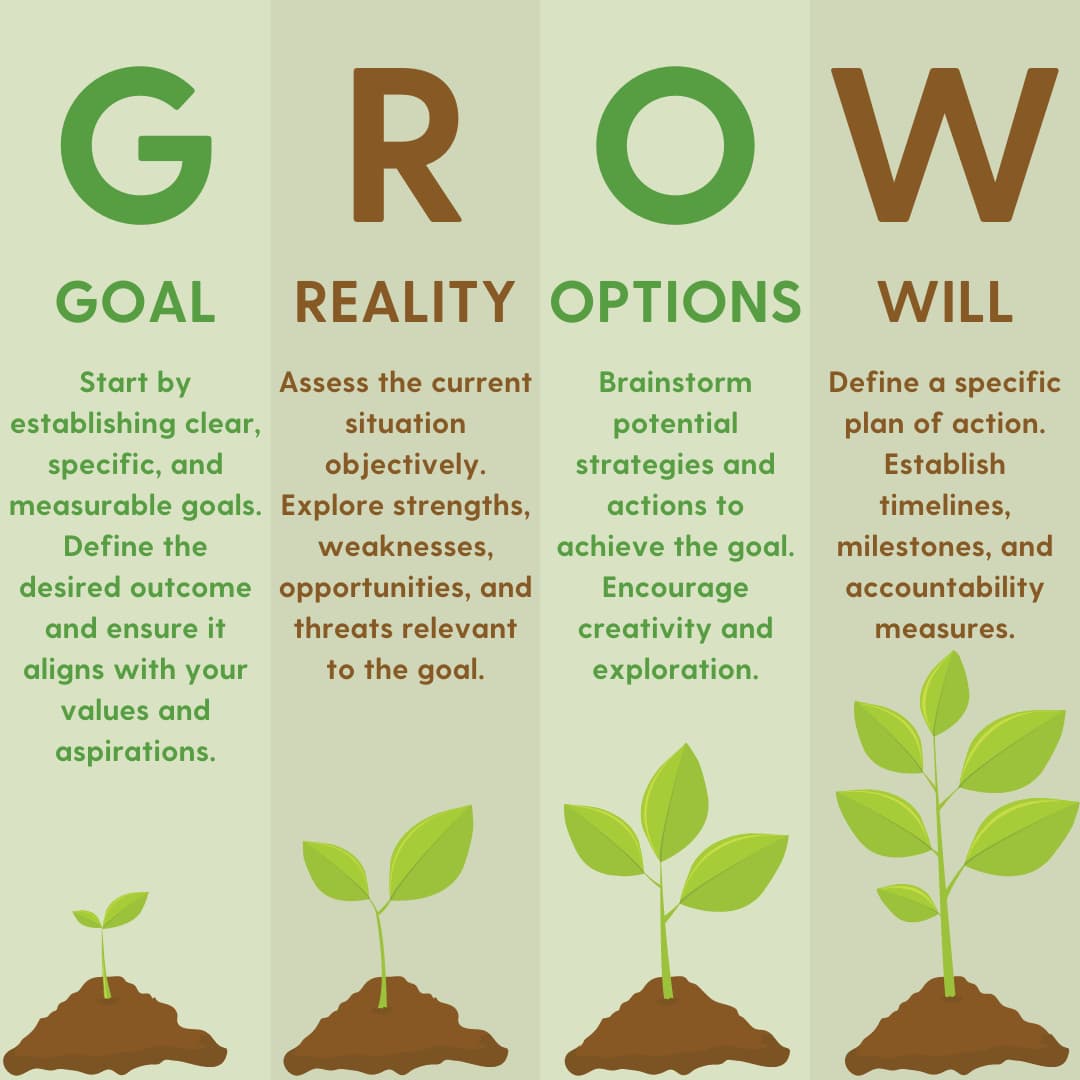
- TGROW Model: Similar to the GROW model, the TGROW model includes additional components of Topic, Goal, Reality, Options, and Will. It begins with defining the topic or subject of the coaching session before setting goals, assessing reality, exploring options, and determining the client’s will or commitment to taking action.
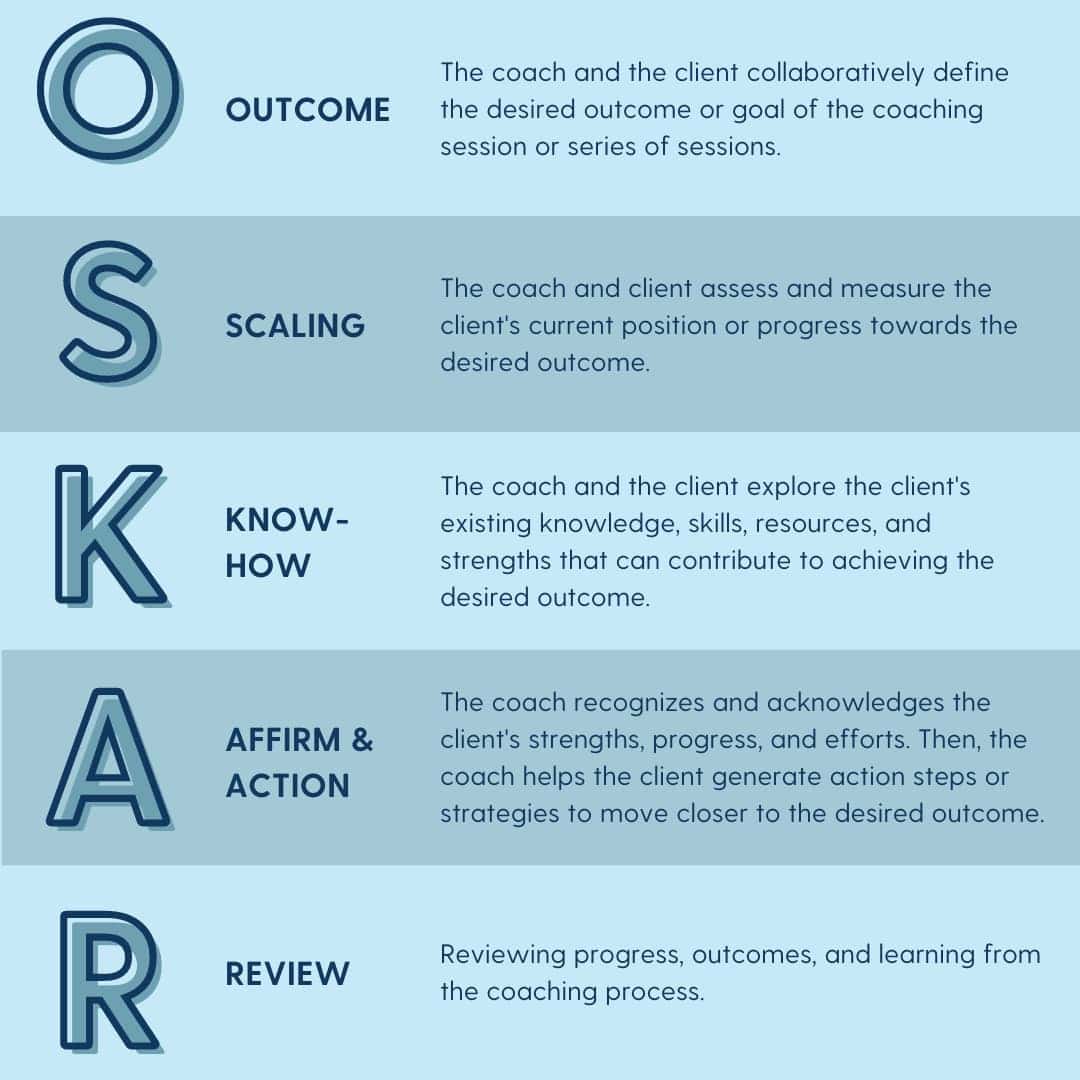
- OSKAR Model: The OSKAR model stands for Outcome, Scaling, Know-how, Affirm and Action, and Review. It is a solution-focused coaching framework that emphasizes identifying desired outcomes, measuring progress through scaling questions, exploring resources and know-how, affirming strengths and progress, and taking action towards goals.
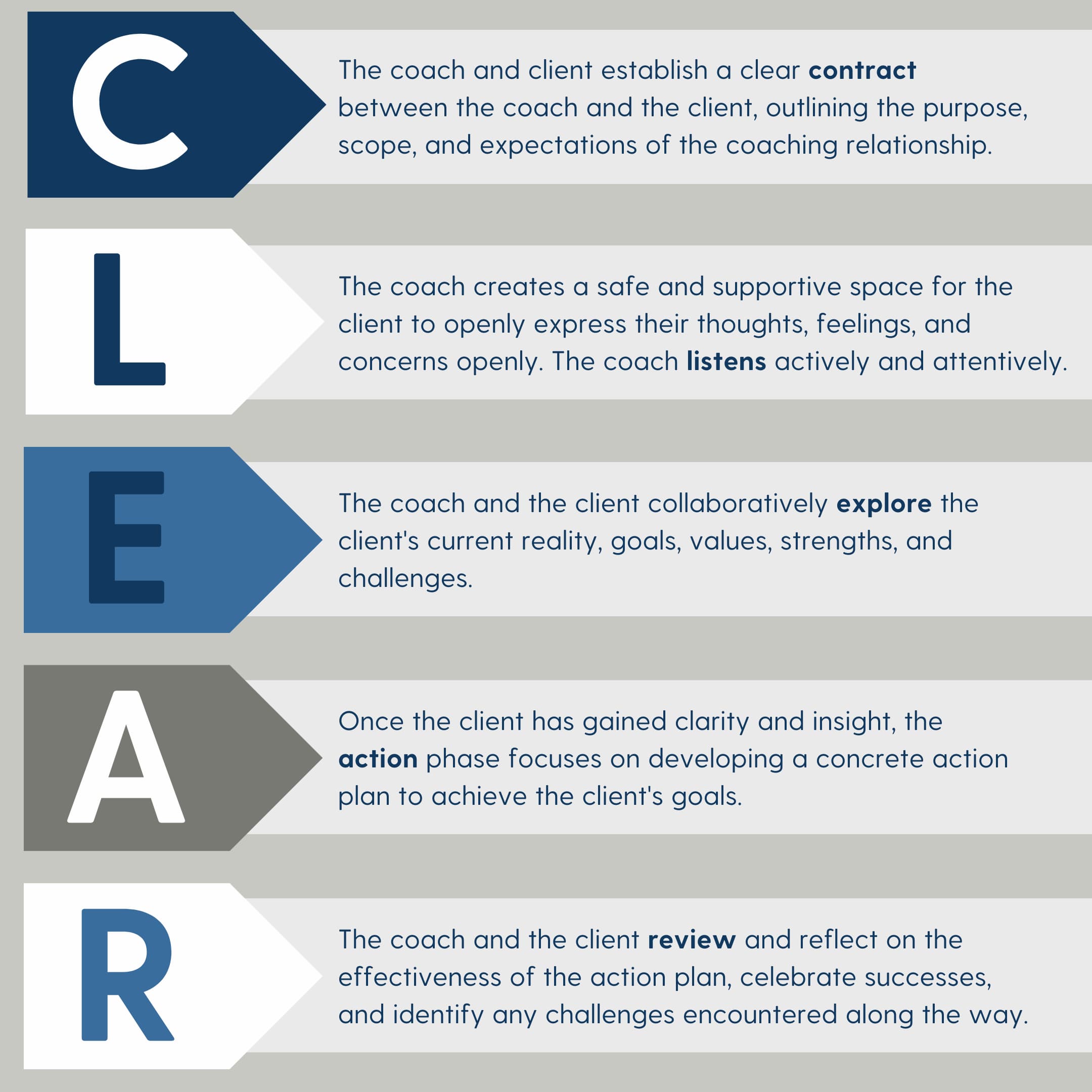
- CLEAR Model: Developed by Peter Hawkins and Nick Smith, the CLEAR model stands for Contracting, Listening, Exploring, Action, and Review. It provides a framework for establishing a coaching contract, active listening to understand the client’s perspective, exploring possibilities and options, taking action, and reviewing progress.
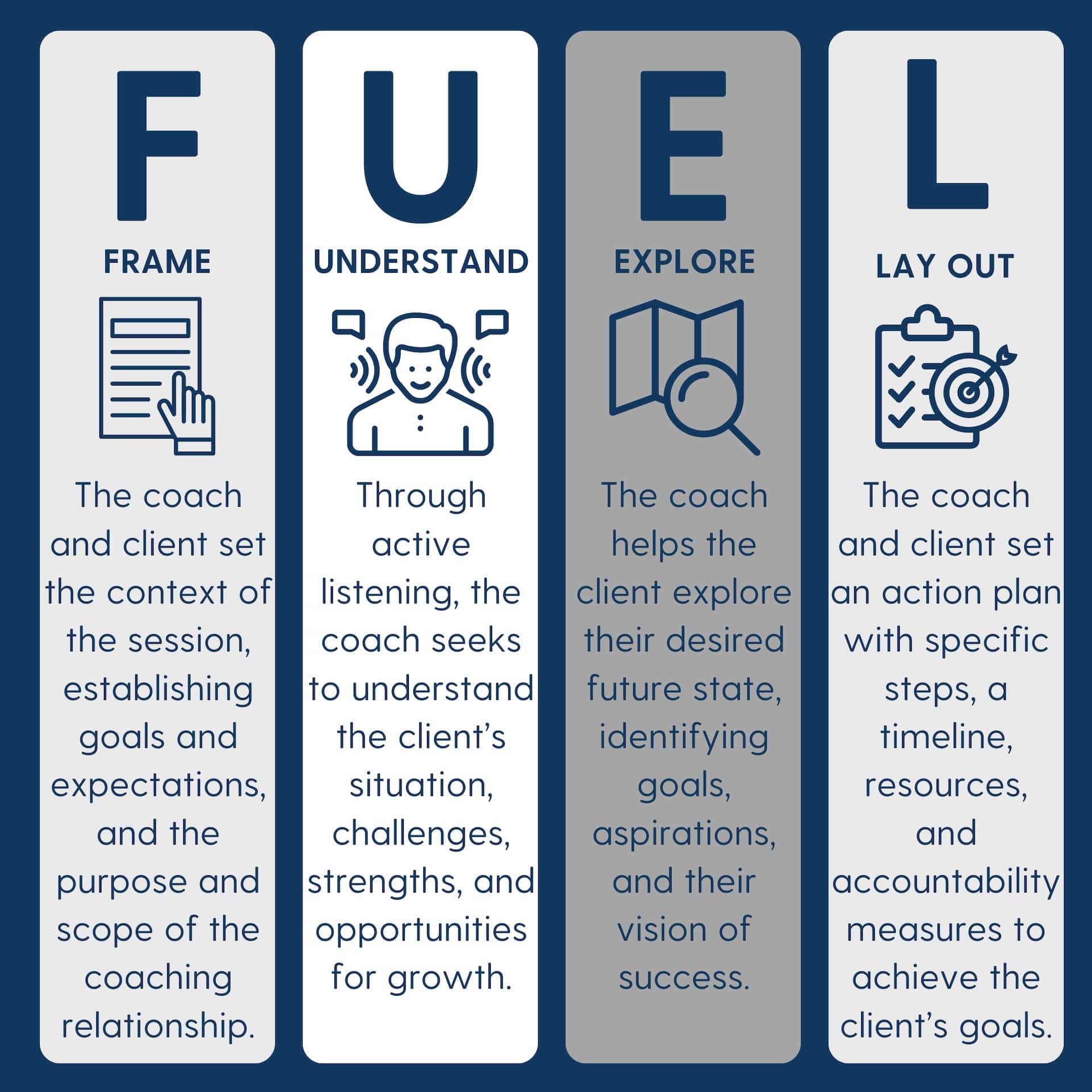
- FUEL: The FUEL coaching model, as developed by The Ken Blanchard Companies, indeed stands for Frame the conversation, Understand the current state, Explore the desired state, and Lay out a success plan. It provides a structured framework for conducting coaching conversations effectively, emphasizing the importance of clear communication, understanding, goal-setting, and action planning to facilitate growth and development.
- Co-Active Coaching Model: Developed by the Coaches Training Institute (CTI), the Co-Active Coaching Model emphasizes the principles of fulfillment, balance, and process. It focuses on the co-creation of the coaching relationship, exploring the client’s agenda, and supporting the client in achieving a balanced and fulfilling life.
- Solution-Focused Brief Therapy (SFBT): While not exclusively a coaching framework, SFBT is often integrated into coaching practice. It emphasizes identifying and building on the client’s strengths, setting clear goals, exploring solutions rather than problems, and implementing small, incremental changes to achieve desired outcomes.


Coaching in Leadership
Coaching plays a key role in shaping the leadership capabilities of individuals and organizations. By investing in coaching, leaders can access their full potential, drive organizational success, and create a positive impact on their teams and stakeholders.
Specifically, coaching can impact leadership development in several ways:
- Skill Enhancement: Coaching helps leaders develop and enhance their managerial and influence skills. Through personalized guidance and feedback, coaches can identify areas where leaders can improve, such as in communication, decision-making, conflict resolution, or strategic thinking.
- Self-awareness: Effective coaching encourages leaders to reflect on their strengths, weaknesses, values, and goals. This self-awareness enables leaders to understand how their behaviors and actions impact others, fostering empathy and emotional intelligence.
- Empowerment: Coaching empowers leaders to take ownership of their development and growth. By setting clear objectives and action plans, coaches enable leaders to take proactive steps towards achieving their goals and overcoming challenges.
- Accountability: Coaches hold leaders accountable for their commitments and actions. Regular check-ins and progress reviews help ensure that leaders stay focused on their development priorities and make necessary adjustments to achieve success.
- Confidence Building: Coaching provides leaders with the support and encouragement they need to build confidence in their abilities. As leaders achieve success and receive positive feedback, they become more self-assured and capable of tackling new challenges.
- Adaptability: Now more than ever, leaders must be adaptable and open to new ideas. Coaching helps leaders develop the flexibility and resilience needed to navigate uncertainty and lead effectively in dynamic situations.
- Employee Engagement: Effective leadership is closely linked to employee engagement and motivation. Through coaching, leaders can learn how to inspire and empower their teams, fostering a culture of trust, collaboration, and high performance.
Coaching in Personal Development
Coaching can also bring numerous benefits to personal development and career advancement. By leveraging the benefits of coaching, individuals can accelerate their personal growth and achieve greater success in their careers.
- Clarifying Goals: Coaches help individuals clarify their personal and professional goals, providing a clear direction for their development and career advancement.
- Self-awareness: Coaching fosters greater self-awareness by helping individuals understand their strengths, weaknesses, values, and motivations. This awareness enables individuals to make informed decisions and align their actions with their personal and career aspirations.
- Skill Development: Coaches assist individuals in identifying and developing the skills needed to succeed in their current roles and advance in their careers. Whether it’s communication skills, leadership abilities, or technical expertise, coaching provides targeted support for skill enhancement.
- Overcoming Challenges: Through coaching, individuals can explore and address challenges or obstacles that may be hindering their personal development or career progression. Coaches provide guidance, strategies, and support to help individuals overcome these challenges effectively.
- Building Confidence: Coaching helps individuals build confidence in themselves and their abilities. As individuals achieve success and receive positive feedback through coaching, they become more self-assured and empowered to pursue their goals with conviction.
- Networking and Relationship Building: Coaches often provide valuable networking opportunities and support individuals in building relationships with mentors, peers, and industry professionals. These connections can open doors to new career opportunities and enhance personal development.
- Career Planning and Strategy: Coaches assist individuals in creating and executing personalized career development plans and strategies. Whether it’s pursuing a promotion, transitioning to a new role, or exploring entrepreneurial ventures, coaching helps individuals navigate their career paths effectively.
- Work-Life Balance: Coaching helps individuals achieve better work-life balance by exploring priorities, managing time effectively, and setting boundaries. This balance is essential for personal well-being and long-term career satisfaction.
- Accountability and Progress Tracking: Coaches hold individuals accountable for their goals and actions, providing regular feedback and support to track progress and make necessary adjustments along the way.
- Overall Well-Being: Coaching encompasses holistic support for individuals’ personal and professional development, contributing to their overall well-being, fulfillment, and happiness.
Conclusion
Coaching is for everyone and anyone. It may well be the best investment you can make in your professional happiness and fulfillment. Ultimately, it facilitates transformative personal and professional growth through individualized guidance, feedback, and support. It empowers you to gain clarity on your goals, develop self-awareness, enhance your skills, overcome challenges, and become a better version of yourself. By fostering a supportive and collaborative environment, coaching enables you to navigate transitions, make informed decisions, and achieve greater fulfillment and success in your life and career.
If you’d like to work with a PathWise coach or would like to learn more about coaching, click here.
