


Diversity fuels creativity, drives performance, and enhances problem-solving, turning a group of individuals into a powerhouse of collaboration and innovation. Study after study demonstrates that organizations who foster their diversity perform better than those that don’t. But how do we move from the rhetoric of diversity to the reality of an inclusive culture where everyone thrives?
Let’s start by defining diversity.
What is Diversity?
Diversity refers to the presence of differences within a given setting. It encompasses a wide range of characteristics, including but not limited to race, ethnicity, gender, age, sexual orientation, disability, socioeconomic status, education, and national origin. However, it’s also about differences in strengths, interests, motivators, and thought processes. Diversity recognizes the value of varied perspectives and experiences that individuals from different backgrounds bring to the table.
In the workplace, diversity means creating an environment where individuals from various backgrounds are represented and valued. This includes hiring and retaining employees from diverse demographic groups and fostering an inclusive culture where differences are embraced, and individuals feel respected and supported. It involves practices that ensure equitable treatment and opportunities for all employees, regardless of their backgrounds.
Diversity is critical to a thriving, dynamic, and competitive workplace. It contributes to a positive work environment and drives organizational success by leveraging the strengths and insights of a diverse workforce. Specifically, diversity leads to:
- Enhanced Innovation and Creativity:Diverse teams bring various perspectives and experiences, leading to more creative solutions and innovative ideas. Different viewpoints can challenge conventional thinking and inspire new approaches to problem-solving.
- Improved Decision-Making:With a range of perspectives, diverse teams are better equipped to make well-rounded decisions. For instance, such teams can better anticipate and address a broader range of customer needs and market opportunities.
- Increased Employee Engagement and Retention:An inclusive workplace where diversity is valued can increase employee satisfaction and engagement. That’s because employees are more likely to feel connected to the organization and stay longer if they feel respected and included.
- Broader Market Reach:Companies that reflect the diversity of their customer base are better positioned to understand and meet the needs of different market segments, potentially leading to increased market share and customer loyalty.
- Compliance and Reputation:Embracing diversity helps organizations comply with legal and regulatory requirements and enhances their reputation as morally and socially responsible employers.

Image used under license from Shutterstock.com

How can we move from the idea of diversity to the reality of an inclusive culture?
To translate the rhetoric into real change, we need to focus on actionable strategies that embed inclusivity into our daily practices. Here are some key steps to consider:
- Commit to Leadership Support: Inclusion starts at the top. Leaders must champion diversity, model inclusive behavior, and hold themselves accountable.
- Implement Inclusive Practices: Review hiring, onboarding, and promotion practices to ensure they’re equitable. This includes providing bias training and fostering an environment where diverse voices are heard and valued.
- Foster Open Communication: Create channels for honest feedback and discussions about diversity and inclusion. Encourage employees to share their experiences and perspectives. Storytelling can be particularly powerful here.
- Promote Continuous Learning: Diversity and inclusion are ongoing journeys. Invest in training and development to keep the conversation alive and ensure that your team and organization grow in their understanding of inclusivity.
- Measure and Adjust: Regularly assess the effectiveness of your diversity and inclusion initiatives. Use metrics to track progress and make adjustments as needed.
Thought Leaders
Numerous thought leaders are well-regarded for their insights into diversity, inclusion, and personal development. Here are a few notable figures:
- Robin DiAngelo: Author of White Fragility, DiAngelo explores the dynamics of race and racism, offering insights into how individuals and organizations can engage more meaningfully in diversity and inclusion work.
- Ibram X. Kendi: Known for his book, How to Be an Antiracist, Kendi provides valuable perspectives on combating racism and promoting equity in various spheres of life, including the workplace.
- Roxane Gay: An influential writer and commentator, Gay’s work addresses issues of race, gender, and identity, contributing to the broader conversation about inclusivity and social justice.
- Verna Myers: As a diversity and inclusion expert, Myers focuses on strategies to overcome bias and build inclusive environments. Her work emphasizes actionable steps for organizations to improve diversity. Her TED Talk explores how to identify and overcome biases.
- David G. Smith: Co-author of Athena Rising, Smith explores how men can be effective allies in supporting women’s advancement and fostering inclusive workplaces.
- Jennifer Brown: Author of Inclusion: Diversity, the New Workplace & the Will to Change, Brown provides practical guidance on creating inclusive work environments and leveraging diversity for organizational success
- John Amaechi: A psychologist and former professional basketball player, Amaechi speaks on leadership, diversity, and the impact of inclusivity on organizational culture.
- Edgar Schein: Known as one of the pioneers in organizational culture, Schein has developed foundational work. His book, Organizational Culture and Leadership, is considered a seminal text.
Key Frameworks
Several frameworks and models provide structured approaches to understanding and implementing diversity in the workplace. Here are some key ones:
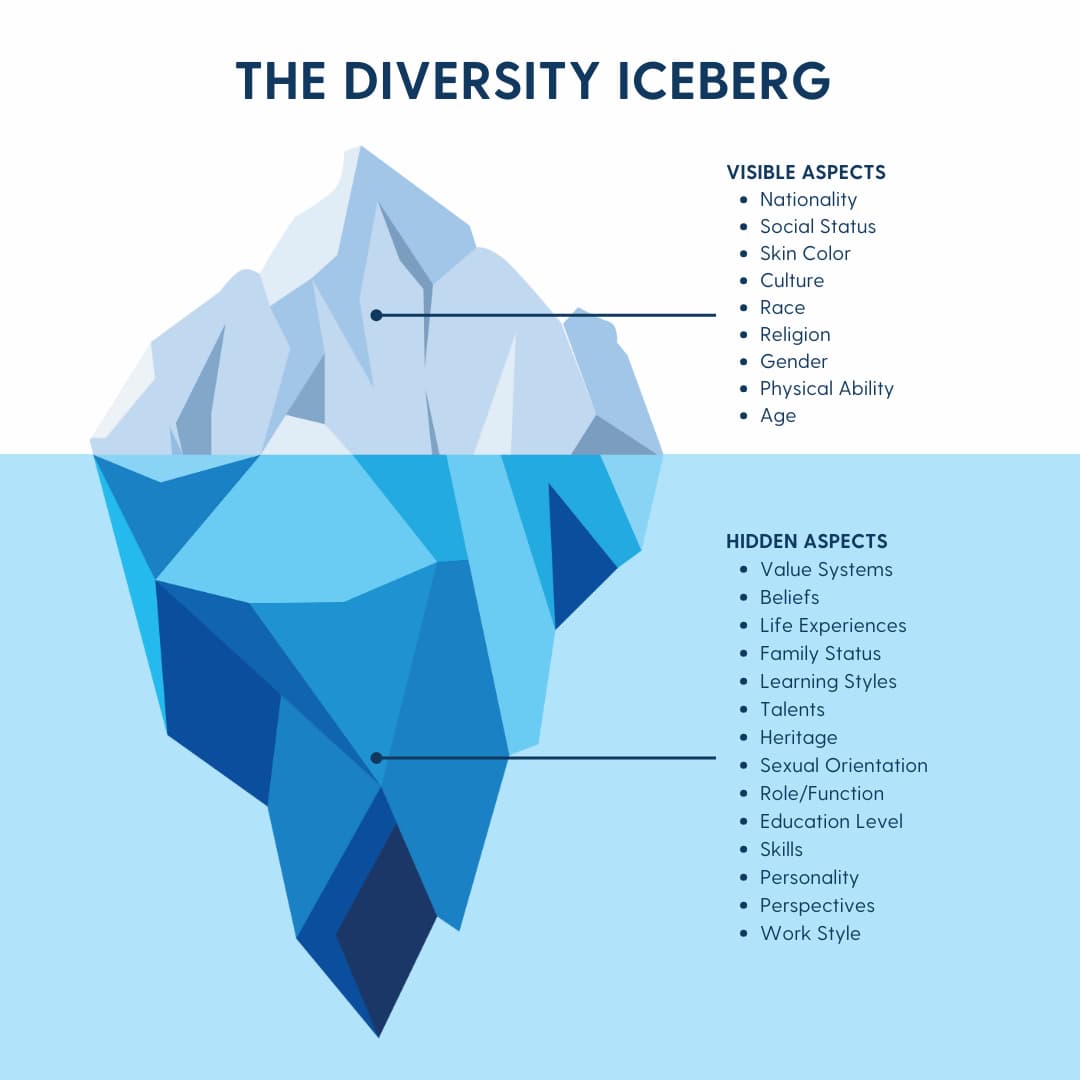
- The Diversity Iceberg Model: This model, introduced by Edgar Schein, visualizes diversity as an iceberg. Visible aspects (e.g., race, gender) are above the surface, while deeper, less visible aspects (e.g., values, beliefs, experiences) lie below. It emphasizes the importance of recognizing both visible and invisible dimensions of diversity.
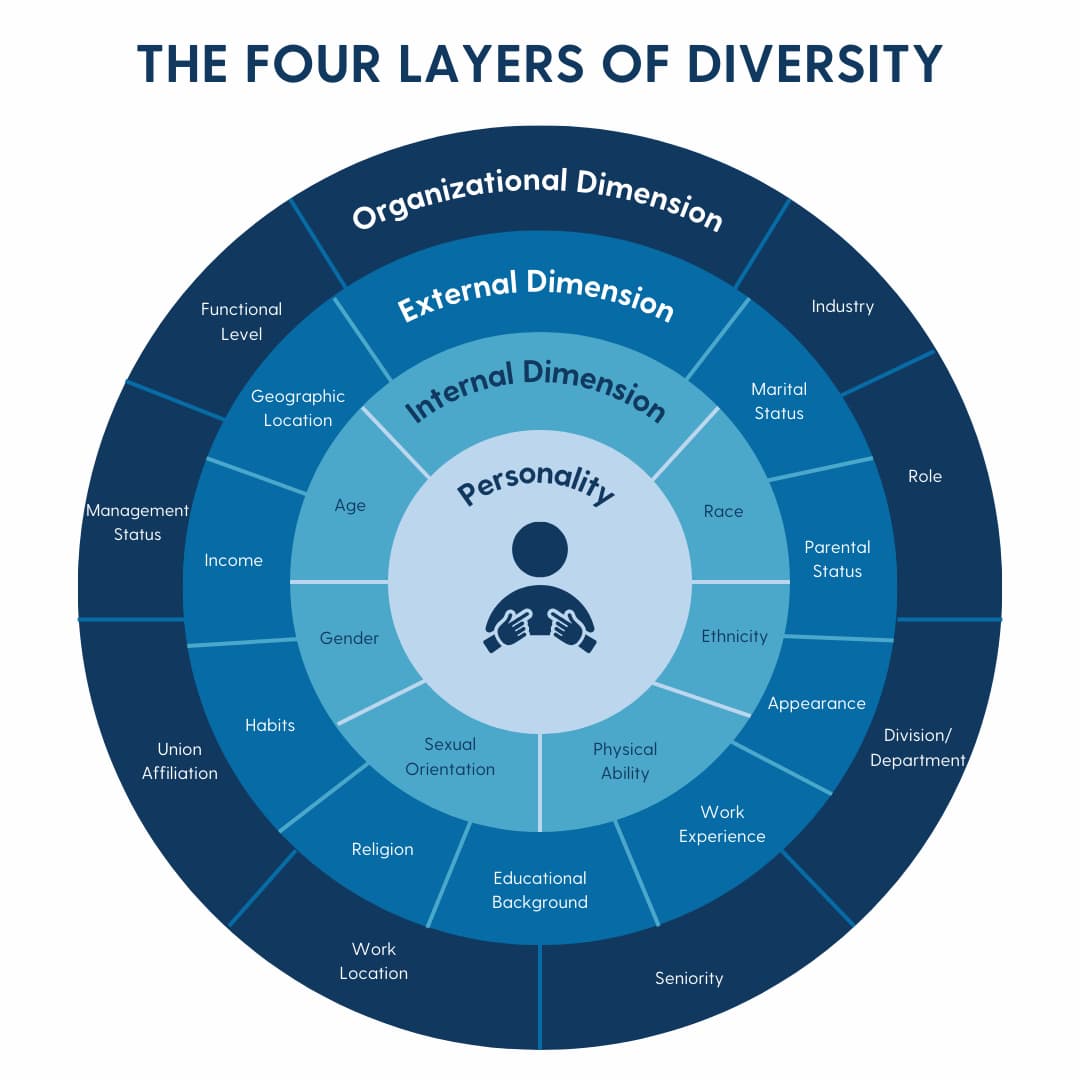
- The Four Layers of Diversity: This model categorizes diversity into four layers.
- Personality: This is the innermost layer and includes an individual’s traits, behaviors, and personal characteristics. It encompasses aspects like attitudes, preferences, and personal values that are unique to each person.
- Internal Dimensions: These aspects of diversity are typically out of an individual’s control but are significant in how they experience the world. This layer includes race, gender, age, ethnicity, physical ability, sexual orientation, and other inherent characteristics.
- External Dimensions: These factors relate to an individual’s life circumstances and experiences. Unlike the internal dimensions, these aspects can change over time and include elements like education, marital status, parental status, appearance, work experience, religion, income, geographic location, and personal habits.
- Organizational Dimensions: This outermost layer relates to an individual’s workplace or organization. It includes elements such as job function, work location, seniority, management status, union affiliation, and department or division.
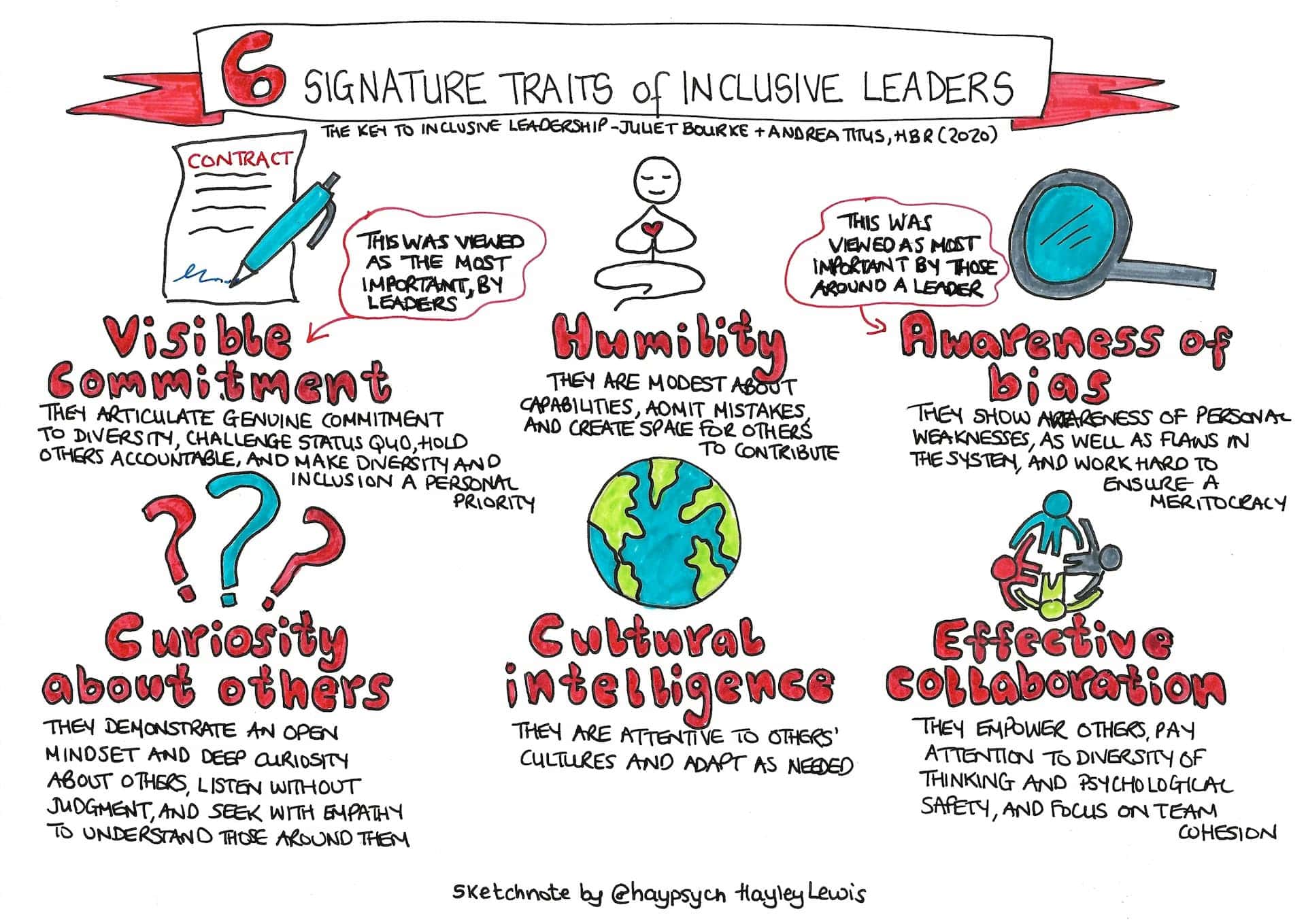
- Key Traits of Inclusive Leadership: Juliet Bourke and Andrea Titus’s 2020 Harvard Business Review article titled The Key to Inclusive Leadership identifies specific traits and behaviors that can help leaders foster inclusivity within their teams and organizations. To learn more, check out Hayley Lewis’s Sketchnote, posted below with her permission.


Diversity in Leadership
A manager who embraces diversity can be a significantly better leader, as by valuing diverse perspectives, such a leader encourages a broader range of ideas and solutions, which enhances creativity and innovation. When team members feel that their unique viewpoints are valued, they are more likely to contribute actively and engage with the team’s goals. This inclusive atmosphere leads to more effective problem-solving and decision-making, as diverse teams can address challenges from multiple angles.
Leaders who support diversity efforts also build stronger, more cohesive teams. In demonstrating a commitment to inclusivity, they create a culture where all employees feel respected and supported, regardless of their background. This respect and support translate into higher employee satisfaction, motivation, and loyalty levels. When employees see that their leader values and understands their individual experiences, they are more likely to be engaged and productive, which ultimately drives better performance and results.
Additionally, an inclusive leader sets a positive example and influences organizational culture. They model appropriate behaviors but also drive systemic changes within the organization. They ensure that diversity is integrated into all aspects of the workplace, from hiring and promotion practices to everyday interactions. This proactive approach helps dismantle biases and fosters an environment where every employee can succeed, leading to a more equitable and just workplace.

Image used under license from Shutterstock.com
Diversity in Personal Development
Embracing diversity significantly benefits personal development and career management in several key ways:
- Broadened Perspectives: Exposure to diverse viewpoints and experiences helps individuals expand their own perspectives. This broadens their understanding of different cultures, practices, and ideas, enhancing their ability to think critically and creatively.
- Enhanced Skills: Working in diverse environments can develop skills such as empathy, adaptability, and intercultural communication. These skills are valuable for career advancement and personal growth, making individuals more effective and versatile in their roles.
- Improved Networking: Embracing diversity allows individuals to build broader and more varied professional networks. Networking with people from diverse backgrounds can open doors to new opportunities and insights, helping to advance careers.
- Increased Cultural Competency: Developing an understanding of and appreciation for different cultures and backgrounds enhances cultural competency — an increasingly important skill in a globalized world.
- Personal Growth and Self-Awareness: Interacting with diverse colleagues encourages individuals to reflect on their own biases and assumptions, fostering personal development.
- Alignment with Values: For many, working in a diverse and inclusive environment aligns with personal values of fairness and equality. This alignment can lead to greater job satisfaction and motivation, which are crucial for long-term career success.
Conclusion
Diversity goes beyond the visible spectrum of race, gender, and age, and it’s more than hiring individuals from different backgrounds, as it requires that leaders create an inclusive environment where every employee feels valued and empowered to contribute their best. This means addressing both visible and hidden aspects of diversity, fostering a culture of respect and collaboration, and actively working to dismantle biases and barriers, both the overt and the subtle. A broad range of experiences, perspectives, and backgrounds will ultimately contribute to a richer, more dynamic organizational culture. It is through diversity that companies can unlock new ideas, enhance problem-solving capabilities, and build stronger connections with a diverse customer base.
Other Resources
- HBR: Getting Serious About Diversity—Enough Already with the Business Case
- HBR: The Forgotten Dimension of Diversity
- HBR: Research—The Most Common DEI Practices Actually Undermine Diversity
- HBR: Stop Making the Business Case for Diversity
- Forbes: One More Time: Why Diversity Leads To Better Team Performance
- Forbes: Diversity In The Workplace: Breaking Barriers And Building Bridges
- Forbes: The Power of Diversity and Inclusion
