

What would you do if you found a wallet filled with cash and credit cards on the street? Would you return it to its owner, keep it for yourself, or hand it to the authorities?
This common dilemma highlights a fundamental aspect of human behavior: the struggle between personal gain and moral responsibility. Yet, this ‘lost wallet’ scenario is much more straightforward than many dilemmas you might face in your career journey.
As the world becomes increasingly complex, with technological advancements rapidly emerging and disrupting traditional norms, establishing clear ethical principles is more essential than ever, as these principles will ultimately guide our decisions as the world continues to evolve.

Image used under license from Shutterstock.com
What are Ethics?
Ethics in the workplace refer to the moral principles and standards that guide behavior and decision-making. These principles determine what is considered right and wrong, influencing how we interact with colleagues, clients, and the organization as a whole. Key aspects of workplace ethics include:
- Integrity: Acting honestly and consistently, upholding commitments, and being truthful in communications and actions.
- Fairness: Treating all employees, clients, and stakeholders equitably, without favoritism or bias.
- Accountability: Taking responsibility for one’s actions, owning mistakes, and being transparent in decision-making.
- Respect: Valuing the dignity, rights, and contributions of others, promoting a culture of mutual respect and inclusivity.
- Confidentiality: Protecting sensitive information and maintaining trust by keeping private matters private.
- Compliance: Following laws, regulations, and organizational policies, as well as adhering to industry-specific standards.
Understanding what ethics are and how to employ these principles fosters a culture of trust and integrity among employees, which can lead to improved teamwork and collaboration. When we feel that our colleagues and leaders share our values and uphold ethical standards, everyone is more likely to communicate openly and work effectively together. Ethical practices also enhance an organization’s reputation, attracting customers and talent who value corporate responsibility. A strong ethical foundation can mitigate risks related to legal issues, as unethical behavior often leads to violations of laws and regulations, resulting in costly penalties. Additionally, understanding ethics empowers us to navigate complex situations and make informed decisions, promoting accountability and moral courage. Ultimately, a commitment to ethical principles contributes to a positive work environment where employees feel valued and motivated, leading to higher job satisfaction and retention.

Image used under license from Shutterstock.com
Thought Leaders
Several thought leaders are recognized for their contributions to the understanding and development of workplace ethics. Some notable ones include:
- Max H. Bazerman: A professor at Harvard Business School, he has written extensively on ethical leadership, decision-making, and the impact of cognitive biases on ethical behavior. His article A New Model for Ethical Leadership offers a fresh perspective on leading ethically in complex environments.
- Maryam Kouchaki: A professor at Northwestern University’s Kellogg School of Management, Kouchaki specializes in ethical decision-making and organizational behavior. Her co-authored article Building an Ethical Career explores strategies for maintaining ethical integrity throughout a career.
- Isaac H. Smith: An associate professor at Brigham Young University, his research focuses on moral psychology and ethical behavior in organizations. His work emphasizes how personal values align with workplace ethics.
- Susan Liautaud: A global ethics expert, she is the author of The Power of Ethics and a thought leader on ethical decision-making in both corporate and societal contexts. She focuses on practical, real-world applications of ethical principles.
- Lynn Paine: A professor at Harvard Business School, she is known for her work on ethical leadership and governance. Her book Value Shift discusses the evolving role of ethics in corporate leadership.
- Michael Josephson: Founder of the Josephson Institute of Ethics, he is an advocate for ethical behavior in both personal and professional life. His work includes the Six Pillars of Character framework, which emphasizes trustworthiness, respect, responsibility, fairness, caring, and citizenship.
- Annie McKee: A leadership expert and co-author ofPrimal Leadership, she explores the emotional aspects of leadership and ethics. She advocates for leaders to prioritize emotional intelligence and ethical behavior to enhance workplace culture.
- Richard Edelman: CEO of Edelman, a global communications firm, he is known for his work in trust and reputation management. His annual Trust Barometer report provides insights into how ethical behavior impacts organizational trust.
- R. Edward Freeman: A professor at the Darden School of Business at the University of Virginia, he is a pioneer of stakeholder theory, which argues that businesses should consider the interests of all stakeholders, not just shareholders. His work has significant ethical implications for corporate governance.
Key Frameworks
Several well-known models and frameworks help organizations and individuals navigate ethical decision-making in the workplace. Here are some of the most notable ones:
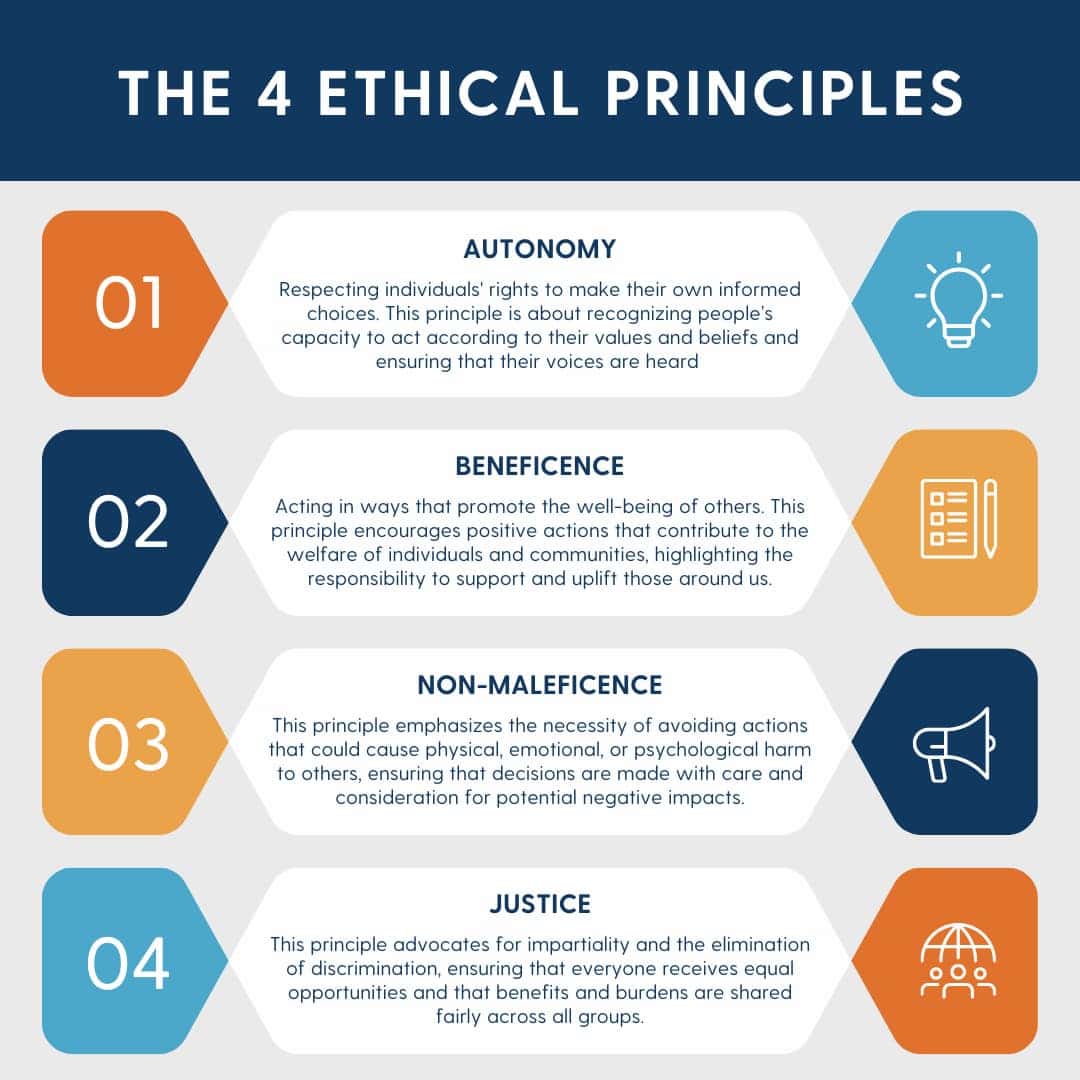
- The Four Ethical Principles: This model proposes the following four ethical principles:
-
-
- Autonomy: Respect for individuals’ rights to make their own decisions.
- Beneficence: The obligation to act for the benefit of others.
- Non-maleficence: The principle of not causing harm to others.
- Justice: Fair distribution of benefits and burdens among individuals.
-

- The Utilitarian Approach: This framework suggests that the best action is the one that maximizes overall happiness or utility. It focuses on the outcomes of decisions and their impact on the greater good.
- Kantian Ethics (Deontological Ethics): Developed by Immanuel Kant, this approach emphasizes duty and adherence to moral rules. Actions are considered ethical if they align with universal moral laws, regardless of the consequences.
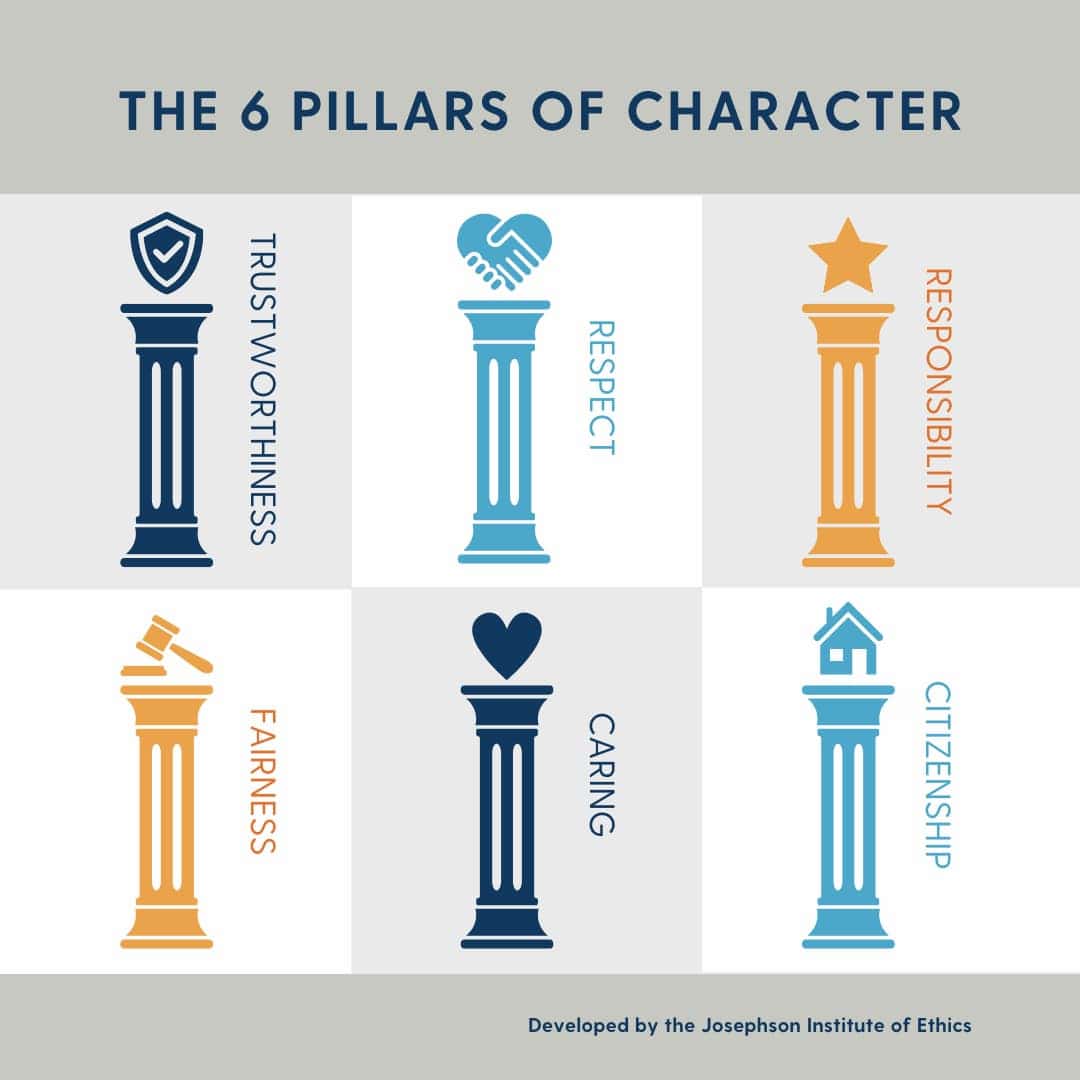
- The Six Pillars of Character: Developed by the Josephson Institute of Ethics, this model outlines core ethical values: Trustworthiness, Respect, Responsibility, Fairness, Caring, and Citizenship. These pillars serve as a guide for ethical behavior in personal and professional contexts.

- Stakeholder Theory: Developed by R. Edward Freeman, this framework emphasizes that businesses have a responsibility to all stakeholders (employees, customers, suppliers, communities, and shareholders) and should consider their interests in decision-making.
- PLUS Model: The PLUS model stands for:
-
-
- Policies – Is it legal?
- Leadership – Is it consistent with our values?
- Universal – Would it be acceptable if everyone did it?
- Self – Does it make me feel proud?
-

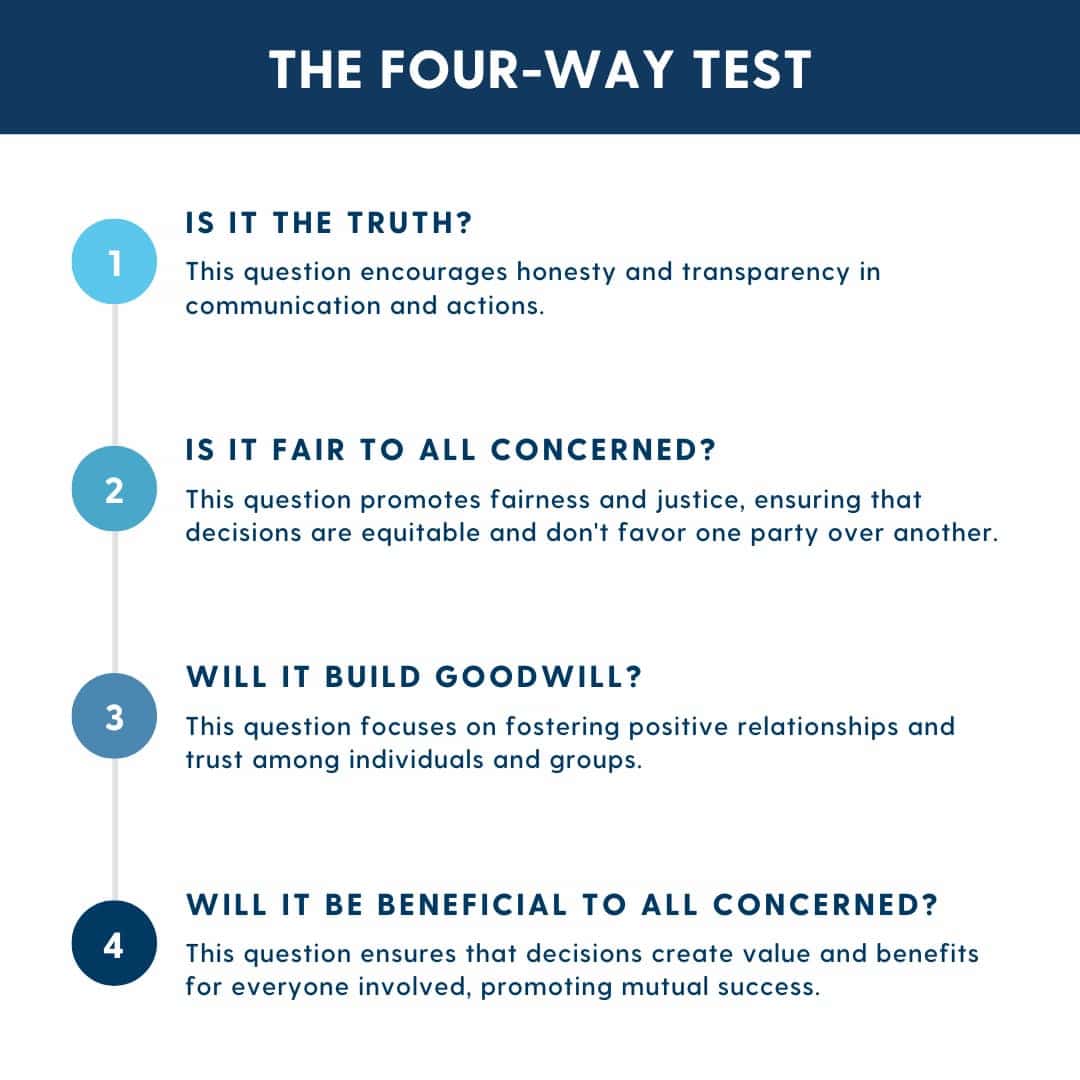
- The Four-Way Test: Created by Herbert J. Taylor in 1932 and later adopted by Rotary International, this test consists of four guiding questions that individuals and organizations can use to assess the ETHICAL implications of their actions:
-
- Is it the truth?
- Is it fair to all concerned?
- Will it build goodwill and better friendships?
- Will it be beneficial to all?
-

Ethics in Leadership
Ethics in leadership is crucial for fostering a positive organizational culture and guiding decision-making. Here are key aspects of how ethics should manifest in leadership:
- Modeling Ethical Behavior: Leaders should embody the ethical standards they expect from their teams. By demonstrating integrity, honesty, and accountability, leaders set a tone of ethical conduct throughout the organization.
- Clear Communication of Values: Leaders should articulate the organization’s core values and ethical principles. This includes establishing a code of conduct that outlines expected behaviors and ethical guidelines.
- Encouraging Open Dialogue: Leaders should create an environment where employees feel safe discussing ethical concerns. Open communication fosters trust and allows team members to voice their opinions without fear of retaliation.
- Making Ethical Decisions: Leaders should prioritize ethical considerations in decision-making processes. This involves evaluating the potential impact of decisions on various stakeholders and considering long-term consequences over short-term gains.
- Promoting Accountability: Ethical leaders hold themselves and their team members accountable for their actions. This includes recognizing and addressing unethical behavior and ensuring fair and consistent consequences.
- Fostering Inclusivity and Respect: Ethical leaders promote a culture of respect and inclusivity, valuing diverse perspectives and ensuring that all voices are heard. This enhances collaboration and helps to create a supportive work environment.
- Empowering Employees: Leaders should empower employees to act ethically by providing training and resources. Encouraging employees to take ownership of their ethical responsibilities can enhance the organization’s overall ethical climate.
- Responding to Ethical Dilemmas: When faced with ethical dilemmas, leaders should approach them thoughtfully and transparently. This may involve consulting with relevant stakeholders, seeking diverse perspectives, and reflecting on the organization’s values. Perhaps more than anything, employees will evaluate how their leaders handle the tough ethical calls, such as whether to hire a star performer for an ethical lapse.

Image used under license from Shutterstock.com
Ethics in Personal Development
Even if you’re not in a leadership position, embracing ethics in your career can significantly enhance your professional growth. Here are several ways ethics can help you advance and effectively manage your career:
- Building Trust and Credibility: Adhering to ethical standards establishes your reputation as a trustworthy and reliable professional. Trust is essential in forming strong relationships with colleagues, clients, and stakeholders, which can lead to more opportunities and collaborations.
- Enhancing Decision-Making: Ethical principles provide a framework for making informed decisions, particularly in complex situations. By considering the implications of your choices on others, you’re more likely to make fair and just decisions, positively impacting your career trajectory.
- Promoting a Positive Workplace Culture: Advocating for and embodying ethical behavior contributes to a healthier organizational culture. This boosts morale and improves employee engagement and retention, positioning you as a leader who values integrity.
- Creating a Strong Professional Network: Ethical behavior attracts like-minded individuals and organizations. Connecting with others who share your values expands your professional network, opening doors to new opportunities and partnerships.
- Advancing Your Leadership Skills: Ethical leadership involves making tough decisions, guiding teams with integrity, and being accountable. Developing these skills can position you for leadership roles and increase your organizational influence.
- Enhancing Your Problem-Solving Abilities: Ethics often requires considering multiple perspectives and potential consequences. This critical thinking enhances your problem-solving abilities, making you a valuable asset in any team or organization.
- Establishing a Long-Term Career Vision: Ethics encourages you to think about the long-term impact of your actions. Setting ethical goals and considering the legacy you want to leave can help you navigate your career path more intentionally and strategically.
Conclusion
In a world where ethical dilemmas are increasingly prevalent, our choices can significantly impact our lives and the lives of others. Fostering a culture of ethical awareness, encouraging open dialogue about moral challenges, and aligning our actions with our values help navigate the complexities of our decisions with integrity. Ultimately, ethics is a practical guide that can lead us to more meaningful and responsible lives.
Other Resources
- HBR: Building an Ethical Company
- HBR: A New Model of Ethical Leadership
- HBR: What’s the Matter with Business Ethics?
- Forbes: A Long Look At Business Ethics
- Forbes: Eight Leadership Ethics All Leaders Should Live By in 2024
- TED Talk: How Ethics Can Help You Make Better Decisions
- TED Talk: Ethics in the Age of Technology
