


There’s one skill that can unlock opportunities, deepen relationships, and accelerate your career growth. It’s not technical expertise or charisma—it’s the ability to ask great questions.
This skill can be useful in any career-related step, whether navigating a job interview, tackling a challenging project, or seeking feedback from your manager. The questions you ask can shape how others perceive you and how effectively you move toward your goals. In fact, asking thoughtful, reflective questions is a hallmark of successful professionals who continuously learn, adapt, and thrive. But asking good questions is more than just looking sharp in a meeting or impressing a mentor. It’s about curiosity, connection, and clarity. Smart questions invite deeper understanding, unlock hidden opportunities, and spark the kind of conversations that lead to breakthroughs in your career journey.

Image used under license from Shutterstock.com
What Makes For Great Questions?
Great questions are thoughtful, strategic probes designed to elicit valuable information, encourage deeper understanding, or drive meaningful conversation. These questions are typically open-ended, reflective, and geared toward gaining insights or building relationships.
The ability to ask well-considered questions is a critical tool that helps you advance in your career by:
- Demonstrating Curiosity and Critical Thinking: Questions show that you’re genuinely interested in the topic at hand and capable of analyzing information deeply. Employers and colleagues value those who exhibit intellectual curiosity and the ability to think critically, as these traits often correlate with problem-solving and innovation.
- Building Stronger Relationships: Questions facilitate meaningful connections. By showing genuine interest in others’ perspectives, experiences, or challenges, you can build rapport and create opportunities for collaboration. For example, when networking, you can ask, “What led you to pursue your current role, and what do you find most rewarding about it?” to open up the conversation for more meaningful dialogue. Questions can also help you navigate conflicts and arrive at meaningful resolutions more effectively.
- Gaining Career-Advancing Insights: Asking strategic questions can help you gather valuable information about opportunities, challenges, or trends that can inform your decisions and career paths. For instance, in a performance review, instead of saying, “How am I doing?” you can ask, “What specific skills or contributions could I develop further to have a greater impact on our team’s goals?”
- Standing Out in Interviews: During interviews, the right questions highlight your preparation and interest in the role and company. They also allow you to assess whether the position aligns with your goals and values. For example, you can open up an opportunity for growth by asking, “How does this role contribute to the company’s long-term objectives, and what would success look like in the first six months?”
- Driving Innovation and Problem-Solving: Questions challenge the status quo and encourage new ways of thinking. In meetings or brainstorming sessions, asking insightful questions can help make you a more proactive and solution-oriented professional. For example, a good question to ask in such a meeting is, “What assumptions are we making about this approach, and how might they impact the outcome?”
Overall, asking great questions helps you,
- Showcase professionalism and preparedness.
- Uncover opportunities that might not be immediately obvious.
- Enable continuous learning and adaptability.
- Strengthen your leadership potential by fostering collaborative problem-solving.
Still, there are some pitfalls to avoid, particularly in asking:
- Leading questions, such as, “Why wouldn’t we just…?”, as they close in the discussion rather than broaden it.
- Accusatory questions, like, “Why did you do that?”, as they will put the other person on the defensive rather than encouraging thoughtful reflection.
- Overly vague questions that can result in unclear or unfocused responses rather than driving productive conversations.
- Rapid-fire questions, which can overwhelm the other person and make them feel interrogated instead of engaged.
Thought Leaders
Several thought leaders focus on the art and importance of asking questions, and can help you develop this critical skill for career advancement and effective communication. A few influential figures in this area include:
- Michael Bungay Stanier: Author, coach, and thought leader in leadership development, known for his book The Coaching Habit, Stanier emphasizes the power of asking simple but effective questions to unlock potential in others. His approach encourages professionals, particularly managers, to ask fewer questions that generate more profound insights to help unlock their team’s potential.
- Warren Berger: Journalist, author, and innovation expert, author of A More Beautiful Question, Berger explores how asking thoughtful questions can drive innovation and problem-solving. He advocates for reframing challenges through “Why,” “What if,” and “How” questions. He also argues that questioning is a tool for creative thinking and decision-making.
- Hal Gregersen: Leadership scholar, educator, and speaker, author of Questions Are the Answer, Gregersen argues that innovative leaders focus more on questions than answers. He explores how inquiry can disrupt stagnant thinking and create breakthroughs. A notable framework of his is the “Question Burst” method, which involves generating a rapid series of questions to overcome obstacles.
- Liz Wiseman: Researcher, executive advisor, and author of Multipliers, Wiseman identifies how great leaders ask questions that challenge their teams and encourage growth rather than dictating solutions.
- Edgar Schein: Organizational psychologist, author, and professor. In Humble Inquiry, Schein explores the art of asking questions to build trust and effective communication. His approach emphasizes genuine curiosity and an absence of judgment.
- Clayton Christensen: The late professor and author of The Innovator’s Dilemmaencouraged questioning assumptions as a method to uncover new opportunities for innovation.
- Tim Ferriss: Entrepreneur, author of The 4-Hour Workweek, and podcast host of The Tim Ferriss Show, Ferriss advocates for asking bold and unconventional questions to challenge norms and uncover unconventional paths to success.
Key Frameworks
Several frameworks and models emphasize the strategic use of questions or adjacent concepts like decision-making, problem-solving, leadership, and communication. Some key ones include:
- The Seven Coaching Questions: Proposed by Michael Bungay Stanier, this framework is designed to enhance the quality of coaching conversations by promoting curiosity and encouraging reflection. The questions guide the individual being coached to focus on their priorities and identify actionable solutions. Each question has a unique purpose:
- What’s on your mind? Opens the conversation and prioritizes what’s most pressing.
- And what else? Probes deeper to uncover underlying concerns or opportunities.
- What’s the real challenge here for you? Narrows focus to the core issue.
- What do you want? Clarifies goals or desired outcomes.
- How can I help? Encourages collaboration and offers support.
- If you’re saying yes to this, what are you saying no to? Highlights trade-offs and commitments.
- What was most useful for you? Reflects on the value of the conversation and solidifies key takeaways.
For a deeper dive into these questions, check out our PathWise Cheat Sheet.
- Ladder of Inference: This cognitive model helps individuals understand how they interpret data and form beliefs, often unconsciously. Retracing the steps that lead to a conclusion highlights biases and assumptions that can distort perception. This tool fosters self-awareness and improves decision-making by encouraging a deliberate examination of thought processes. The Ladder of Inference poses key questions to reflect on, such as:
- What data are you selecting to focus on?
- What assumptions are you making?
- What beliefs are driving your conclusions?

- The Five Whys (Toyota Production System): This problem-solving method uses the iterative question “Why?” to dig beyond symptoms and uncover the root cause of an issue. Asking why repeatedly (usually five times) encourages thorough investigation, ensuring solutions address the underlying problem instead of treating surface-level symptoms. This technique fosters a mindset of curiosity and critical thinking.
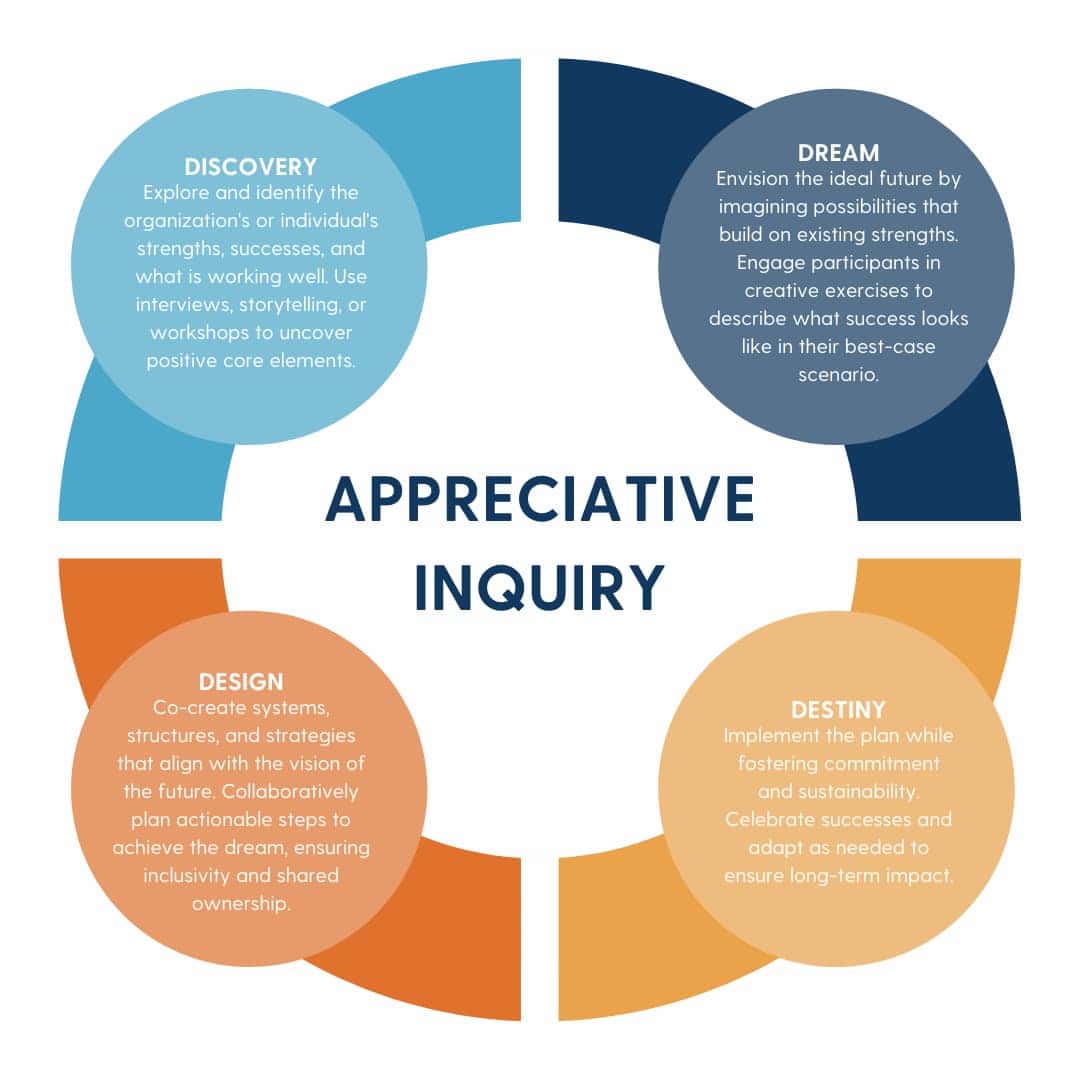
- Appreciative Inquiry: This model shifts the focus from problem-solving to amplifying strengths and opportunities. Fostering a positive approach to change engages individuals and teams in co-creating a shared vision for the future. This strengths-based framework fosters collaboration and innovation, emphasizing potential over pitfalls.
- Socratic Method: A time-tested framework for exploration, the Socratic Method relies on reflective, open-ended questions to stimulate dialogue and critical thinking. Rooted in philosophical inquiry, it encourages participants to challenge assumptions, explore diverse perspectives, and refine their reasoning. This method is ideal for fostering deeper understanding and innovation in problem-solving and decision-making.
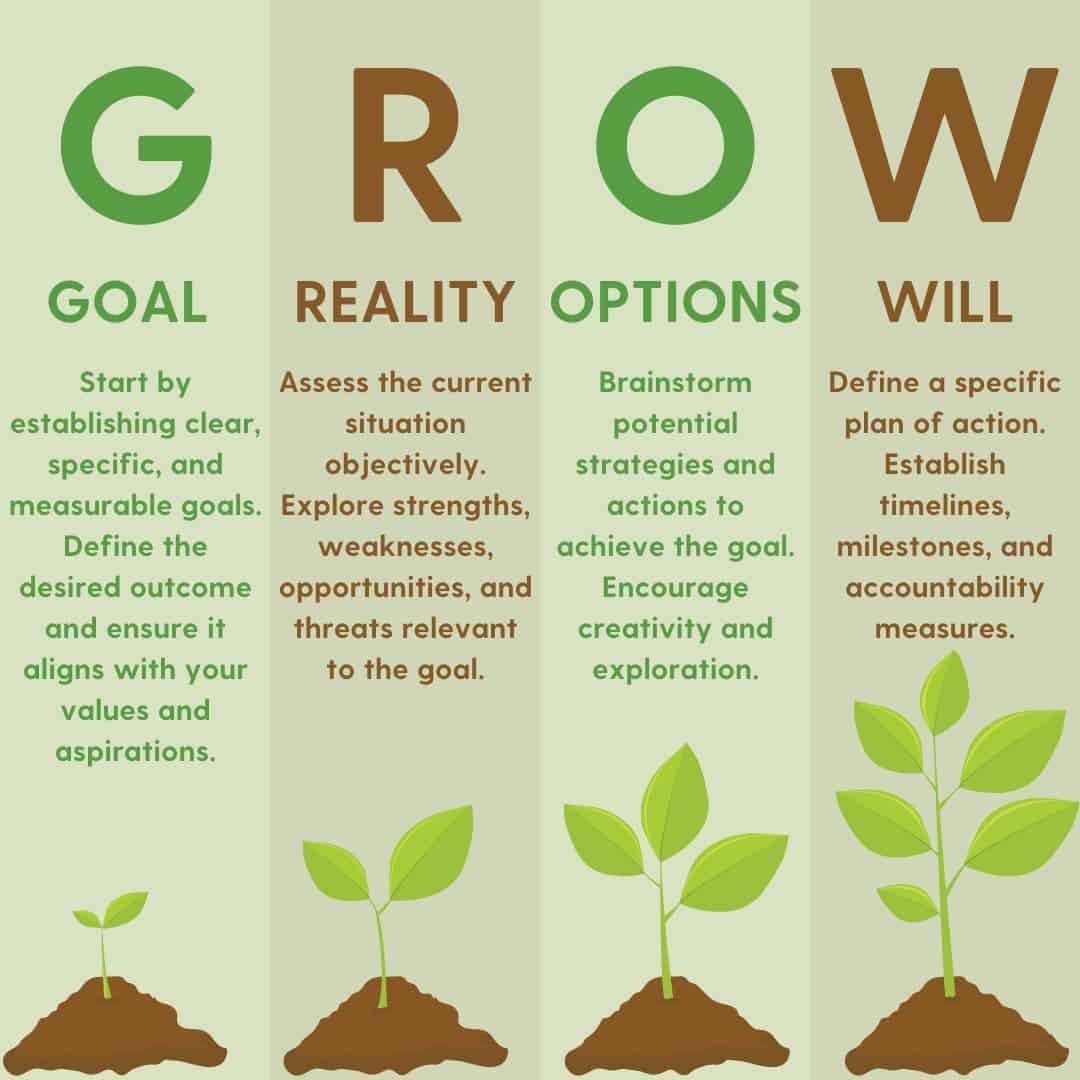
- The GROW Coaching Model: This widely used coaching framework structures conversations to help individuals clarify goals, explore options, and create actionable plans. The acronym represents its four stages:
-
- Goal: Define what you want to achieve.
- Reality: Assess the current situation and identify challenges.
- Options: Explore possibilities and brainstorm solutions.
- Will: Commit to specific actions and next steps
-
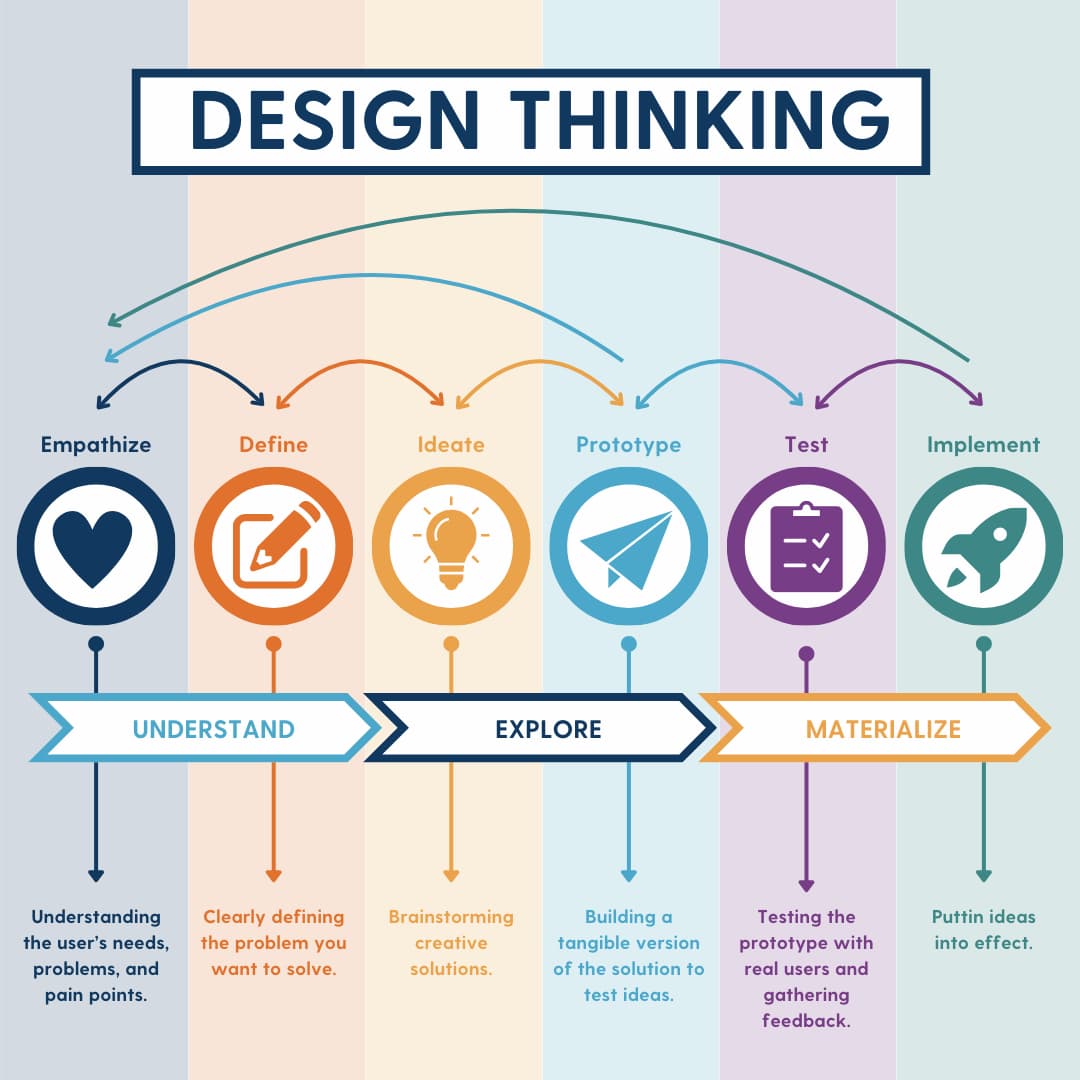
- IDEO’s Design Thinking Model: A creative problem-solving framework that emphasizes empathy, experimentation, and iteration. It is divided into six stages:
-
- Empathize: Understand the needs and experiences of the people you’re designing for.
- Define: Clearly articulate the problem based on insights gathered.
- Ideate: Generate a wide range of innovative ideas and solutions.
- Prototype: Create tangible representations of ideas to test and refine.
- Test: Gather feedback to improve and implement solutions effectively.
- Implement: Put ideas into effect.
-


Asking Powerful Questions in Leadership
Asking thoughtful and reflective questions can significantly enhance a manager’s leadership effectiveness. Specifically, learning to ask good questions contributes to better leadership by:
-
-
- Fostering Deeper Understanding: Questions prompt team members to think critically and articulate their perspectives, which helps managers understand underlying issues, motivations, or challenges. It also identifies root causes. For instance, techniques like the Five Whyscan enable leaders to uncover the true source of problems and avoid just addressing symptoms.
- Building Trust and Psychological Safety:Managers demonstrate that they value employees’ input and perspectives by asking questions. Reflective questions, especially in one-on-ones, signal that sharing thoughts and ideas is safe without fear of judgment.
- Empowering Team Members: Asking “What do you think?” or “How would you solve this?” encourages team members to take the initiative and feel responsible for outcomes. Questions push employees to think independently, fostering growth and autonomy.
- Enhancing Decision-Making: Asking questions helps test assumptions, challenge biases, and consider alternative perspectives. For example, asking “What options haven’t we explored?” ensures diverse viewpoints are considered, leading to more informed decisions.
- Inspiring Innovation and Creativity: Open-ended questions like “What if we did it differently?” spark brainstorming and encourage innovative thinking. Or asking, “What’s the smallest step we can take to test this idea?” supports a culture of experimentation.
- Strengthening Relationships and Team Dynamics: Questions encourage two-way dialogue, reducing the risk of misunderstandings or misaligned expectations. By asking, “How can we work together to achieve this goal?” managers promote teamwork and shared accountability.
- Cultivating Self-Awareness and Reflection: Managers who ask themselves reflective questions, such as “What could I have done differently?” or “How can I better support my team?” model continuous improvement and can help keep leaders focused on strategic goals.
- Driving Employee Engagement and Motivation: Asking “How does this task align with your goals?” helps employees see the value of their contributions. And questions like “What are you most proud of?” reinforce a sense of accomplishment and self-worth.
- Developing Future Leaders: Questions like “What did you learn from this experience?” reinforce resilience and adaptability. Managers can use coaching questions to guide employees in their career journeys.
-

Image used under license from Shutterstock.com
Questions in Personal Development
Learning to ask good questions is a powerful skill that can significantly impact career advancement. Thoughtful questions demonstrate curiosity, critical thinking, and a willingness to learn—qualities highly valued in any professional setting. When we ask good questions, we signal to others that we are engaged and invested in understanding complex issues, which can position us as thoughtful contributors and potential leaders.
Great questions also help us uncover opportunities and resources that might otherwise remain hidden. For example, asking, “What skills are most important for success in this role?” or “How can I add value to this project?” helps us gain clarity on expectations and can align our efforts with organizational goals. This proactive approach enhances performance and ensures that colleagues and superiors notice and appreciate our contributions.
In addition, asking reflective questions fosters personal growth and strategic career planning. Questions like “What do I want to achieve in the next five years?” or “What lessons can I take from this experience?” enable us to evaluate our progress, refine our goals, and adapt to changing circumstances. This intentional reflection ensures we remain focused on our priorities while staying flexible enough to seize new opportunities.
Finally, good questions build stronger professional relationships. Asking colleagues and mentors, “What advice would you give someone in my position?” or “How can I support you better?” shows respect for others’ expertise and perspectives. This habit cultivates trust, encourages collaboration, and expands professional networks—all essential components of long-term career success. In essence, learning to ask the right questions empowers us to navigate challenges, uncover opportunities, and continuously grow in our careers.

Image used under license from Shutterstock.com
Conclusion
Asking great questions is a tool for gaining information. But more than that, it’s a gateway to growth, connection, and career success. Cultivating curiosity and practicing thoughtful inquiry positions us as proactive learners, collaborative colleagues, and strategic thinkers.
The beauty of this skill lies in its versatility: it helps us clarify our goals, build stronger relationships, and navigate challenges confidently. Whether we’re exploring new opportunities, seeking guidance, or leading a team, the questions you ask will shape the answers—and the outcomes—we receive.
Other Resources
-
- PathWise Book Summary: The Coaching Habit
- PathWise Book Summary: Multipliers
- Career Sessions, Career Lessons by PathWise: Episode ft. Liz Wiseman
- HBR: The Art of Asking Smarter Questions
- HBR: Ask Smarter Strategic Questions
- TEDx Talk: How To Tame Your Advice Monster
- Forbes: Generative AI Arms You With Highly Intelligent Questions So You Look Wicked Smart
