


As businesses evolve and face new challenges, one important decision leaders must make is how to structure their organizations. Should they stick with the traditional hierarchical model, where authority and decision-making flow from the top down? Or should they embrace a non-hierarchical structure, empowering teams and individuals to take more initiative and responsibility? While each approach has benefits, the impact on leadership, professional development, and organizational culture can vary significantly. Therefore, understanding their dynamics will help in navigating the complexities of modern work environments more successfully.

Image used under license from Shutterstock.com
What is Hierarchy?
A hierarchy is an organization structured with clearly defined levels of authority and responsibility, often represented as a pyramid. At the top are executives and senior leaders who make strategic decisions, followed by middle managers who oversee specific departments, and then front-line employees who carry out daily operations. Departments may be organized by function, region, business line, or some combination of the three. Communication typically flows from the top down, and roles, titles, and reporting lines are well established. This structure offers stability, clear accountability, and streamlined decision-making, but it can also lead to bureaucracy and inhibit flexibility and innovation.
A hierarchical organization is characterized by:
- Clear Chain of Command: There is a well-defined structure with layers of authority. Each employee reports to a specific manager, and responsibilities flow from top to bottom.
- Defined Roles and Responsibilities: Job functions and expectations are clearly outlined, reducing ambiguity in who does what.
- Top-Down Decision Making: Most decisions are made by senior leaders and passed down through the organization.
- Formal Communication Channels: Information flows through structured pathways, often slowing feedback but maintaining control.
- Stability and Predictability: This structure maintains consistency, standard operating procedures, and accountability.
- Limited Flexibility: The rigid structure can make it harder to adapt quickly to change or encourage lower-level innovation.

Image used under license from Shutterstock.com
What is Non-Hierarchy?
Non-hierarchy refers to an organization that minimizes or eliminates traditional layers of management in favor of flatter, looser, more collaborative structures. Employees are often empowered to make decisions, contribute ideas, and work in cross-functional teams without needing to go through formal chains of command. This approach encourages flexibility, innovation, and a sense of ownership among team members. However, it can also present challenges such as unclear responsibilities, decision-making delays, or difficulty scaling as the organization grows. Non-hierarchical models are commonly found in startups, creative industries, project-oriented firms, and companies that value agility and adaptability.
This organizational structure is characterized by:
- Flat Structure: Few or no layers of management separate staff from leadership. Power is more evenly distributed.
- Shared Decision-Making: Employees often participate in strategic and operational decisions, either directly or through collaborative processes.
- Role Fluidity: Job roles may be flexible or overlapping, with team members contributing to multiple areas as needed.
- Open Communication: Emphasis on transparent, informal, and multi-directional communication, often aided by tools like Slack or other collaboration tools.
- Empowerment and Autonomy: Individuals and teams are trusted to take initiative and make decisions without excessive oversight.
- Adaptability and Innovation: The structure supports creativity and quick responses to change, though it may sometimes sacrifice clarity or control.

Image used under license from Shutterstock.com
How Can You Recognize Whether an Organization is Hierarchical or Non-Hierarchical?
You can recognize a hierarchical organization by observing its structured levels of authority and formal processes. Titles such as “manager,” “director,” and “vice president” are common, and employees usually know exactly who they report to. Meetings and decisions tend to follow a chain of approval, and there may be more paperwork or protocols involved in everyday tasks. Communication often flows from top leadership downward, with limited input from lower levels unless specifically requested. This structure is typical in government agencies, large corporations, and traditional industries like finance or manufacturing.
On the other hand, a non-hierarchical organization is more easily recognized by its collaborative, informal, and flexible working style. You might notice that team members share responsibilities, operate without rigid job titles, or rotate roles depending on the task or fproject. Decision-making often happens collectively, and communication is open across all levels—anyone can pitch an idea or give feedback. These organizations often prioritize innovation, speed, and adaptability, and you’re more likely to see this structure in startups, creative agencies, or modern tech companies. The atmosphere tends to feel more casual, with flatter organization charts and less emphasis on rank.
What is Required to Be Successful in a Hierarchical vs Non-Hierarchical Organization?
To be successful in a hierarchical organization, it’s important to understand and navigate the chain of command. This means respecting authority, following established protocols, and excelling within your defined role. Success often depends on strong communication with your direct supervisor, consistent performance, reliability, and professionalism. Climbing the ladder typically requires building a track record of results, demonstrating leadership potential, and understanding how to influence decisions through formal channels. Political savvy and the ability to manage up can also play a significant role in advancement.
In a non-hierarchical organization, success hinges on initiative, adaptability, and collaboration. Because roles are more fluid and less defined, you’ll need to be proactive in identifying opportunities, solving problems, and contributing beyond your job description. Strong interpersonal skills, comfort with ambiguity, and the ability to self-manage are crucial. You’ll also need to communicate openly, give and receive feedback well, and work effectively in cross-functional teams. Innovation and a willingness to learn quickly are valued, as is the ability to build trust and influence others without relying on formal authority.

Image used under license from Shutterstock.com
Thought Leaders
The conversation around organizational structure has been shaped by influential thinkers whose research and insights continue to guide how companies approach hierarchy and collaboration. Some of these thought leaders include:
- Gary Hamel: A prominent management thinker and professor at London Business School known for challenging traditional hierarchical models. He advocates for more flexible, people-centered organizations. His book The Future of Managementcritiques bureaucracy, while Humanocracy (co-authored with Michele Zanini) showcases companies that thrive by decentralizing authority and empowering employees.
- Frederic Laloux: An organizational theorist and former McKinsey consultant best known for his book Reinventing Organizations. In it, he introduces the idea of Teal Organizations, which operate with self-management, wholeness, and evolutionary purpose, moving beyond rigid hierarchies toward more fluid, human-centric structures.
- Henry Mintzberg: A professor at McGill University and a respected critic of conventional management theory. His book The Structuring of Organizationsclassifies organizational forms, highlighting hierarchical and non-hierarchical models like adhocracies. Mintzberg emphasizes that effective organizations require balance, not just top-down control.
- Brian Robertson: The founder of HolacracyOne and the creator of the Holacracy system, a framework for decentralized management and organizational governance. His book Holacracyexplains how organizations can distribute authority through clear roles and structured meetings, minimizing reliance on traditional hierarchies.
- Deborah Ancona: A professor at MIT Sloan and an expert in leadership and organizational design. Her work, including the concept of distributed leadership, emphasizes how leadership can emerge from multiple levels rather than from the top down, supporting non-hierarchical collaboration in dynamic environments.
- Marissa Mayer: A former Google executive and the ex-CEO of Yahoo! Her leadership style and organizational decisions have sparked debate about the balance between hierarchical control and innovation. She’s known for her focus on scaling companies while maintaining a certain degree of autonomy and creativity, particularly at Google.
- Ricardo Semler: A Brazilian entrepreneur and the CEO of Semco Partners. He is known for his radical approach to corporate management, promoting employee autonomy and non-hierarchical structures. His book Maverick describes how he transformed Semco by empowering employees and creating a culture that values flexibility and decentralized decision-making.
Key Frameworks
To better understand how organizations design and evolve their structures, several frameworks offer valuable lenses for analyzing both hierarchical and non-hierarchical models. Some of these include:
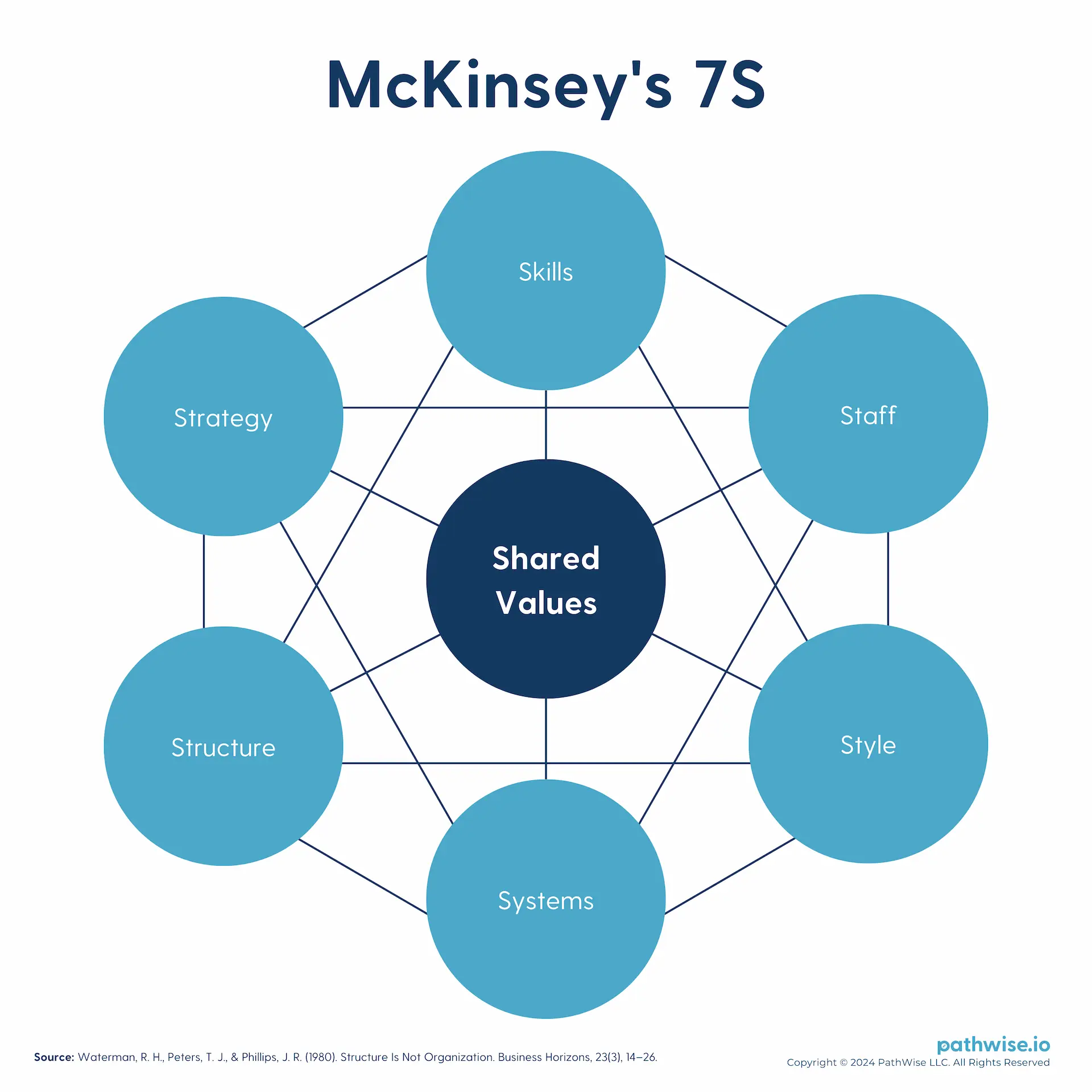
- McKinsey 7-S Framework: This model helps organizations assess and align seven key elements: Strategy, Structure, Systems, Shared Values, Skills, Style, and Staff. The Structureelement, in particular, can be used to analyze whether a hierarchical or non-hierarchical structure best supports an organization’s strategy and culture. It shows that while a hierarchical structure might fit organizations with a clear top-down approach, a non-hierarchical structure could work better for those emphasizing shared values and decentralized decision-making.
- Holacracy: Developed by Brian Robertson, Holacracy is a self-management system that eliminates traditional hierarchy. It uses a decentralized approach, where authority is distributed among teams through clearly defined roles, not titles or seniority. Holacracy empowers employees to take ownership of their roles and responsibilities, enabling a more flexible, dynamic work environment. The framework includes rules for decision-making and governance, enabling organizations to remain organized without relying on hierarchical structures.
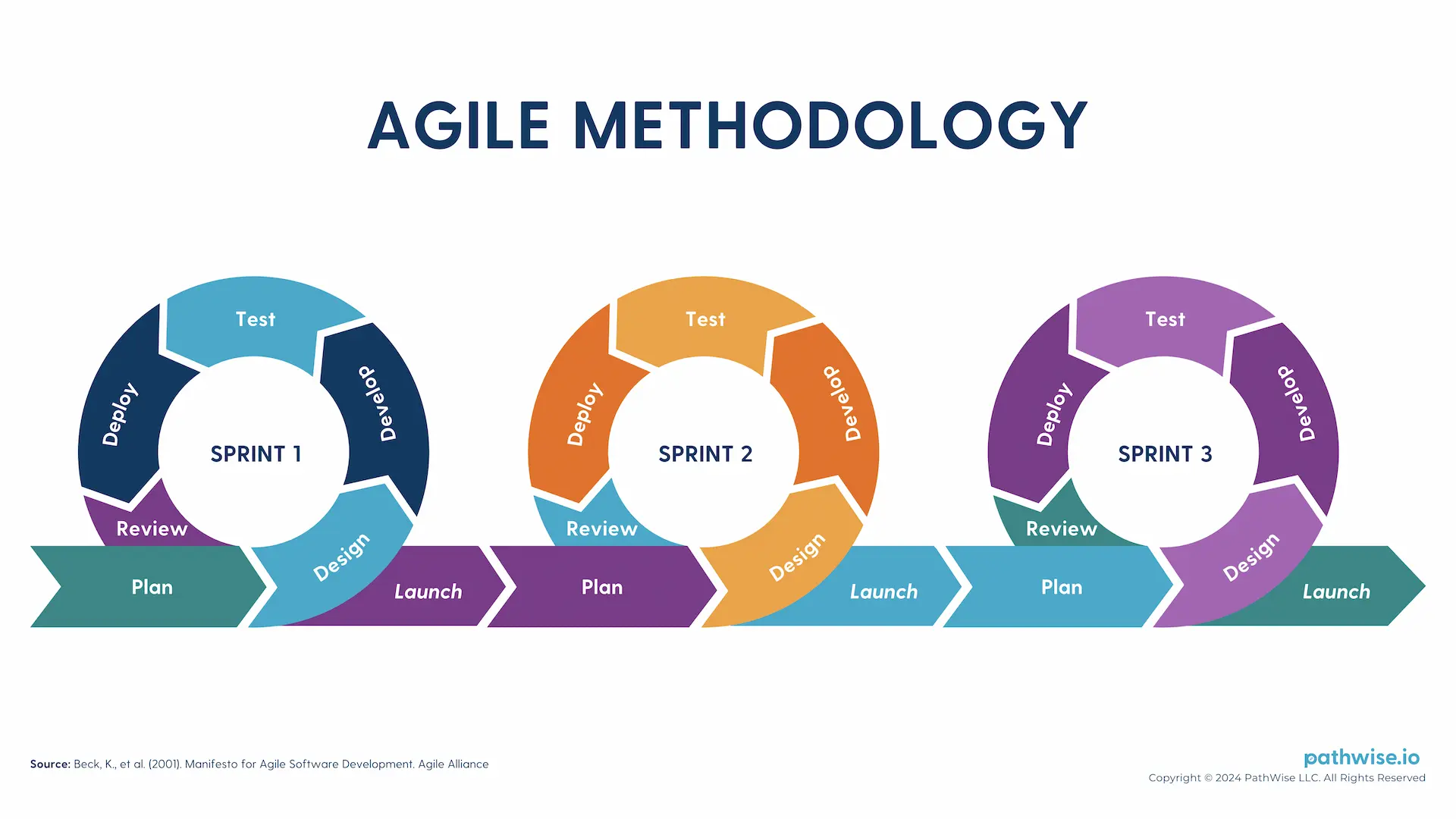
- Agile Framework: Originally developed for software development, Agile has grown into a widely used methodology across industries. Agile promotes adaptability, collaboration, and iterative progress, often in small, cross-functional teams. It challenges traditional hierarchical structures by empowering teams to make decisions quickly and autonomously, encouraging feedback loops and continuous improvement. Agile focuses on delivering customer value and encourages flexibility, making it a good fit for non-hierarchical organizations seeking to foster innovation and speed.
- The Sociocracy Model: Sociocracy is an alternative organizational model that blends hierarchy with decentralization. It incorporates circular decision-making processes where all voices are heard, and decisions are made based on consent rather than consensus. In sociocracy, organizational power is distributed among various circles (teams or departments), which self-organize and hold autonomy while remaining interconnected. This model aims to combine the best of hierarchical decision-making and non-hierarchical, collaborative dynamics.
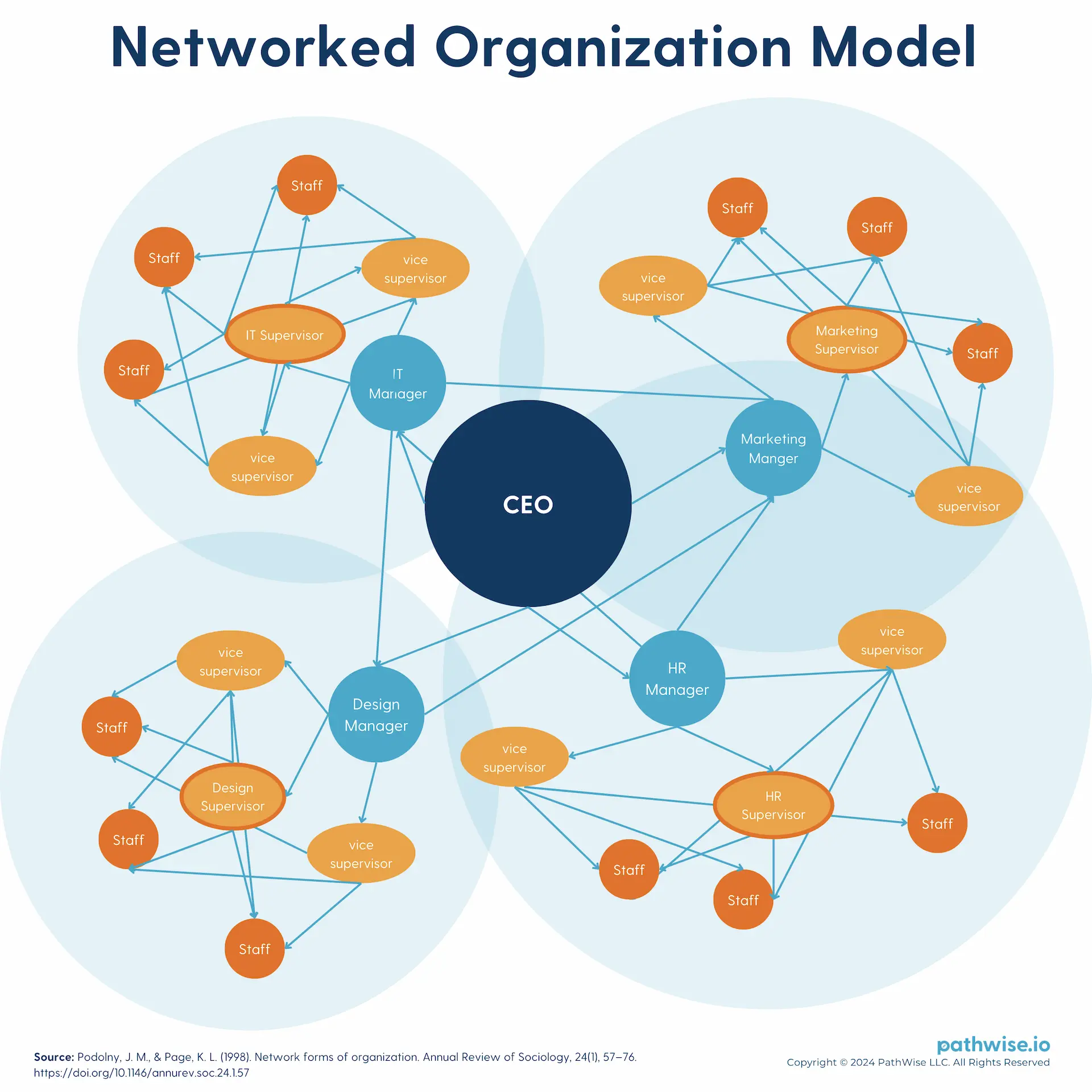
- Networked Organization Model: This model advocates for decentralized decision-making, where organizational structures are designed like networks rather than hierarchies. In networked organizations, relationships and collaborations are at the forefront, and leadership is often distributed among individuals who possess expertise in different areas. The focus is on building connections, knowledge-sharing, and empowering teams to respond flexibly to changing conditions. It’s commonly used in industries that require innovation, such as tech or creative sectors.
- Mintzberg’s Organizational Configurations: Henry Mintzberg’s theory identifies different types of organizational structures, including simple structures, machine bureaucracy, professional bureaucracy, divisionalized forms, and adhocracy. He contrasts more rigid, hierarchical structures (like machine bureaucracy) with more flexible, innovative ones (like adhocracy). Mintzberg’s work helps organizations understand how structure and hierarchy align with their strategic needs and external environment.
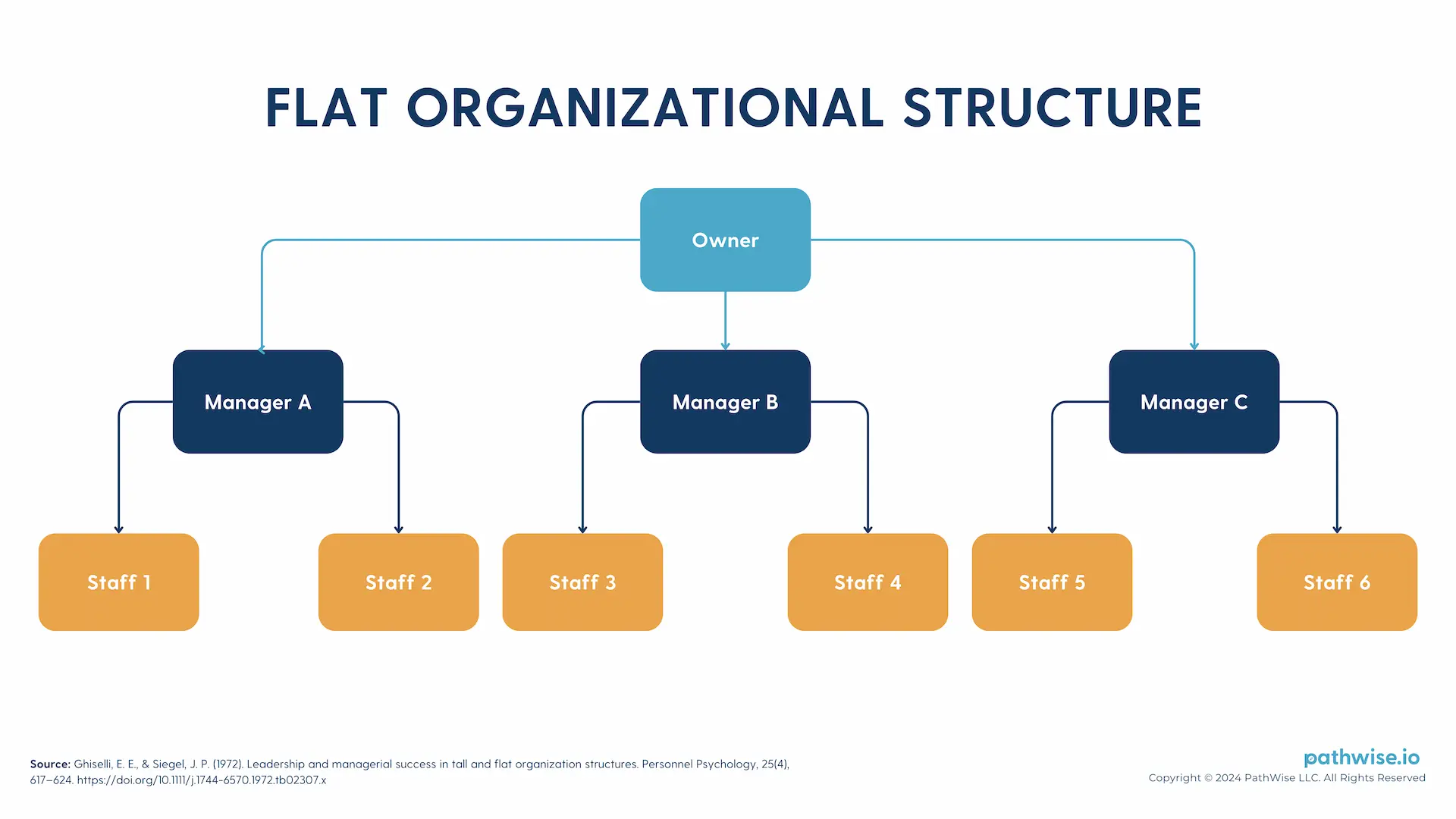
- The Flat Organization Model: In a flat organization, there are minimal or no levels of middle management between staff and executives. This structure supports a more collaborative and transparent approach, where decision-making is shared among employees at all levels. While it might resemble a non-hierarchical model, flat organizations still have some degree of structure but operate with far less hierarchy. The emphasis is on reducing bureaucracy and promoting open communication, innovation, and employee autonomy.
Hierarchy and Non-Hierarchy in Leadership
Hierarchy and non-hierarchy each shape leadership development in distinct ways, influencing how people grow into leadership roles and what skills are emphasized. In a hierarchical organization, leadership development tends to follow a formal, step-by-step path. High-potential employees are often identified early and moved through structured programs, such as leadership training, mentorship from senior leaders, and performance evaluations. The focus is typically on mastering specific competencies at each level, understanding organizational procedures, and demonstrating the ability to manage people and processes within a defined scope. Aspiring leaders learn to work within systems, navigate office politics, and align with strategic goals from the top.
In a non-hierarchical organization, leadership development is more organic, distributed, and self-directed. Since power and decision-making are more decentralized, leadership is often based on influence rather than title. People grow into leadership by taking initiative, solving problems, and earning the respect of their peers. Development focuses on emotional intelligence, collaboration, agility, and the ability to lead without formal authority. Instead of climbing a ladder, individuals may move sideways into new projects or take on rotating leadership roles. The emphasis is on personal growth, adaptability, and shared responsibility—qualities that allow leadership to emerge from any level of the organization.

Image used under license from Shutterstock.com
Hierarchy and Non-Hierarchy in Personal Development
Professional development is influenced heavily by whether an organization is hierarchical or non-hierarchical, as each structure shapes how growth opportunities are accessed, encouraged, and recognized. In a hierarchical organization, professional development is often formalized, with clear pathways tied to promotions, certifications, and job levels. Employees might follow structured training programs, pursue credentials relevant to their role, or attend company-sponsored workshops. Advancement usually depends on demonstrating competence in role-specific skills, meeting performance benchmarks, and securing managerial approval. There’s often a focus on specialization, with growth mapped to predefined career tracks.
In a non-hierarchical organization, professional development tends to be more fluid, self-directed, and based on personal initiative. Employees are encouraged to learn through experimentation, project-based work, or cross-functional collaboration. Instead of waiting for permission or a promotion, individuals might carve out their own development paths—choosing to deepen expertise in one area or broaden their skills across multiple domains. Learning is often peer-driven, supported by mentorship, shared resources, and real-time feedback. While there may be fewer formal promotions, professional growth is recognized through increased responsibility, visibility, or influence within the team or community.

Image used under license from Shutterstock.com
Conclusion
Ultimately, the choice between hierarchical and non-hierarchical structures depends on an organization’s goals, culture, and the challenges it faces. While hierarchy offers stability, clear authority, and efficient decision-making, non-hierarchy fosters innovation, flexibility, and collaboration. No one model is inherently superior; instead, the most successful organizations often find ways to blend elements of both, adapting their structure to support their evolving needs. At the individual level, the ability to adapt to the given organizational design will be crucial to long-term success.
Other Resources
- PathWise Book Summary: Humanocracy
- Career Sessions, Career Lessons Podcast Episode: From Bureaucracy To Humanocracy, With Michele Zanini
- HBR: The Challenge of Becoming a Less Hierarchical Company
- HBR: In Praise of Hierarchy
- Forbes: Why Rigid Hierarchies Might Be Killing Your Team’s Creativity
- Forbes: From Hierarchy To Wirearchy In An Always Connected Workplace
- TED Talk: Great Leadership is a Network, Not a Hierarchy
