


“The only constant in life is change.” This well-known saying has never been more relevant than in today’s fast-moving professional world. Industries evolve, job roles shift, and technology reshapes the way we work. In such a dynamic environment, success is no longer about following a fixed career path—it’s about agility: the ability to adapt, learn, and pivot in response to new challenges and opportunities. Agility is the key to staying relevant and thriving in an unpredictable job market.

Image used under license from Shutterstock.com
What is Agility?
In career development, agility refers to the ability to adapt, learn, and respond effectively to workplace changes, industry trends, and professional challenges. It involves a combination of flexibility, resilience, continuous learning, and strategic thinking that allows us to navigate uncertainty and seize new opportunities.
Fostering professional agility is key to long-term career success for several reasons, including:
- Adapting to Change: Industries evolve rapidly due to technology, economic shifts, and market demands. Career agility helps us stay relevant and embrace change rather than resist it.
- Lifelong Learning: With skill demands constantly shifting, agile professionals seek continuous learning opportunities through formal education, self-study, or experiential learning.
- Career Transitions & Growth: Agility enables us to pivot between roles, industries, or even career paths, taking advantage of emerging opportunities.
- Resilience Against Uncertainty: Economic downturns, layoffs, and industry disruptions are inevitable. Agile professionals develop resilience by proactively building transferable skills and a strong network.
- Increased Employability: Companies value employees who can think critically, problem-solve, and innovate, making agility a key trait for professional success.
- Leadership & Influence: Agile professionals often stand out as leaders because they anticipate changes, make informed decisions, and help others navigate transitions.
To cultivate career agility, stay curious, and be committed to lifelong learning. Take courses, read industry news, and purposefully develop key skills relevant to your industry or function. Expanding your network and building relationships across different fields is also essential for staying informed about opportunities and market trends. On that note, monitor emerging industries, technologies, and other factors that may shape or impact job opportunities. Also, developing a growth mindset will help you view challenges as learning opportunities rather than obstacles, fostering resilience and enhancing your ability to adapt to change. Ultimately, stimulating your professional agility will ensure long-term success by making you proactive (rather than reactive) in shaping your career path.

Image used under license from Shutterstock.com
Thought Leaders
Several thought leaders have shaped the conversation around career agility, adaptability, and professional growth. Some of these influential figures include:
- Herminia Ibarra: A professor at London Business School, she is known for her work on career transitions and leadership agility. Her books Working Identity and Act Like a Leader, Think Like a Leaderemphasize the importance of experimenting with new roles to grow professionally. She advocates for a more outside-in approach, where professionals develop by trying new things rather than waiting until they feel ready.
- Carol Dweck: A Stanford psychologist, she introduced the concept of the growth mindset in her book Mindset: The New Psychology of Success. She argues that people who believe their abilities can be developed through effort and learning are more adaptable, resilient, and ultimately more successful. Her work is foundational for understanding how agility drives career growth.
- Adam Grant: An organizational psychologist at Wharton, he explores how rethinking and unlearning are key to career agility. His book Think Againencourages professionals to stay curious, challenge their assumptions, and be open to new perspectives—critical skills for adapting to career changes and industry shifts.
- Reid Hoffman: Co-founder of LinkedIn, he co-authored The Startup of You, which redefines careers as dynamic, evolving startups that require adaptability, networking, and strategic risk-taking. He emphasizes entrepreneurial thinking, where professionals proactively build skills and connections to stay relevant.
- Lynda Gratton: A professor at London Business School, she researches the changing nature of work and careers. Her book The 100-Year Lifehighlights how longer careers require ongoing skill adaptation and career reinvention, making agility essential for long-term success.
- Dorie Clark: A marketing strategist, consultant, and author of Entrepreneurial Youand The Long Game, she focuses on career reinvention, personal branding, and long-term thinking in a rapidly changing world. Clark emphasizes the importance of strategic patience, skill-building, and networking to create entrepreneurial and diversified career opportunities over time rather than chasing short-term wins.
- Bill Burnett & Dave Evans: Stanford professors and co-authors of Designing Your Lifeand Designing Your New Work Life, they apply design thinking principles to career development. They advocate for a prototyping mindset, where professionals explore different career paths through experimentation, side projects, and iteration—an agile approach to career planning. Their work encourages people to remain open to change, test ideas, and adjust their career trajectory as they learn.
- Whitney Johnson: Author of Disrupt Yourself, she applies Clayton Christensen’s disruptive innovation theory to personal and professional development. She argues that embracing change, taking calculated risks, and constantly learning new skills are key to staying relevant in today’s workforce. Johnson encourages professionals to step outside their comfort zone and embrace new challenges, making agility a critical factor in long-term career success.
Key Frameworks
Several key frameworks can help us cultivate career agility, adaptability, and long-term growth, providing structured ways to navigate career decisions, embrace change, and continuously develop new skills. Some of the most notable ones include:
- Growth Mindset: Developed by Carol Dweck, a growth mindset is the belief that intelligence, skills, and abilities can be developed through effort, learning, and persistence. Professionals with a growth mindset view challenges as opportunities for growth rather than obstacles. This mindset fosters resilience and adaptability, which are key to career agility, allowing individuals to thrive through career transitions and continuous professional development.

Diagram by Nigel Holmes, taken from Carol Dweck’s Mindset: The New Psychology of Success (p. 263)
- The Protean Career Theory: Proposed by Douglas Hall, this theory emphasizes that modern careers are self-directed and shaped by personal values, goals, and the desire for continuous growth rather than following a fixed corporate ladder. It encourages us to take ownership of our career trajectory, adapt to change, and seek personal fulfillment and professional success. The model underscores the importance of lifelong learning and adaptability.
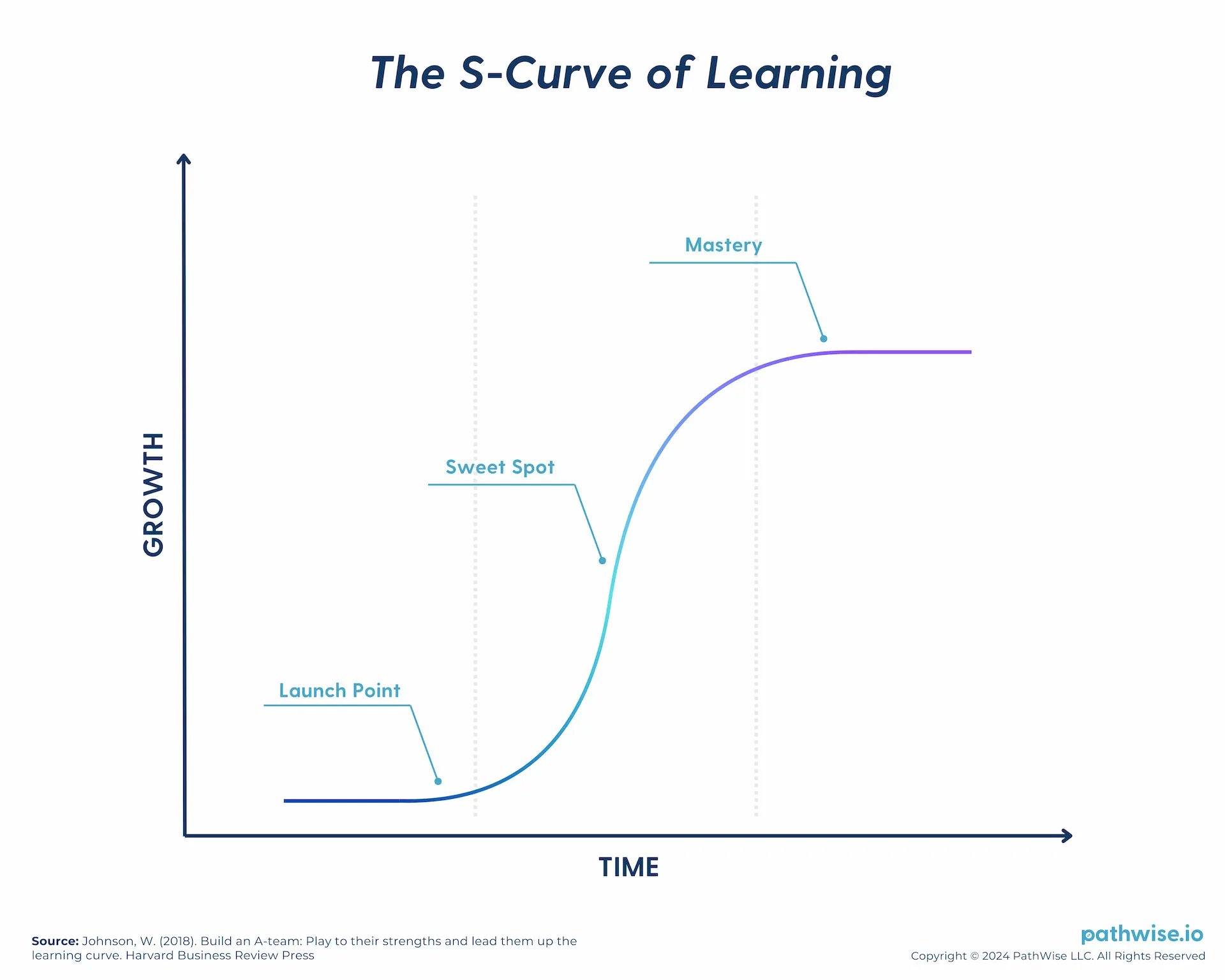
- The S-Curve of Learning: Proposed by Whitney Johnson, this model describes the process of career growth as a progression through three stages: the launch phase (where progress is slow), the sweet spot (where rapid growth occurs), and the mastery phase (where growth plateaus). She encourages embracing the idea of jumping to a new S-curve when they reach the mastery phase to continue growing and avoid stagnation.
- The Startup of You: Reid Hoffman and Ben Casnocha propose treating our careers like a startup. This involves continually adapting, learning, and seizing new opportunities while building a strong network. The framework encourages professionals to create a flexible career plan (ABZ planning), with Plan A representing their current career path, Plan B as a potential pivot, and Plan Z as a safety net. The key is continuously innovating and adjusting based on new experiences, keeping long-term goals in mind.
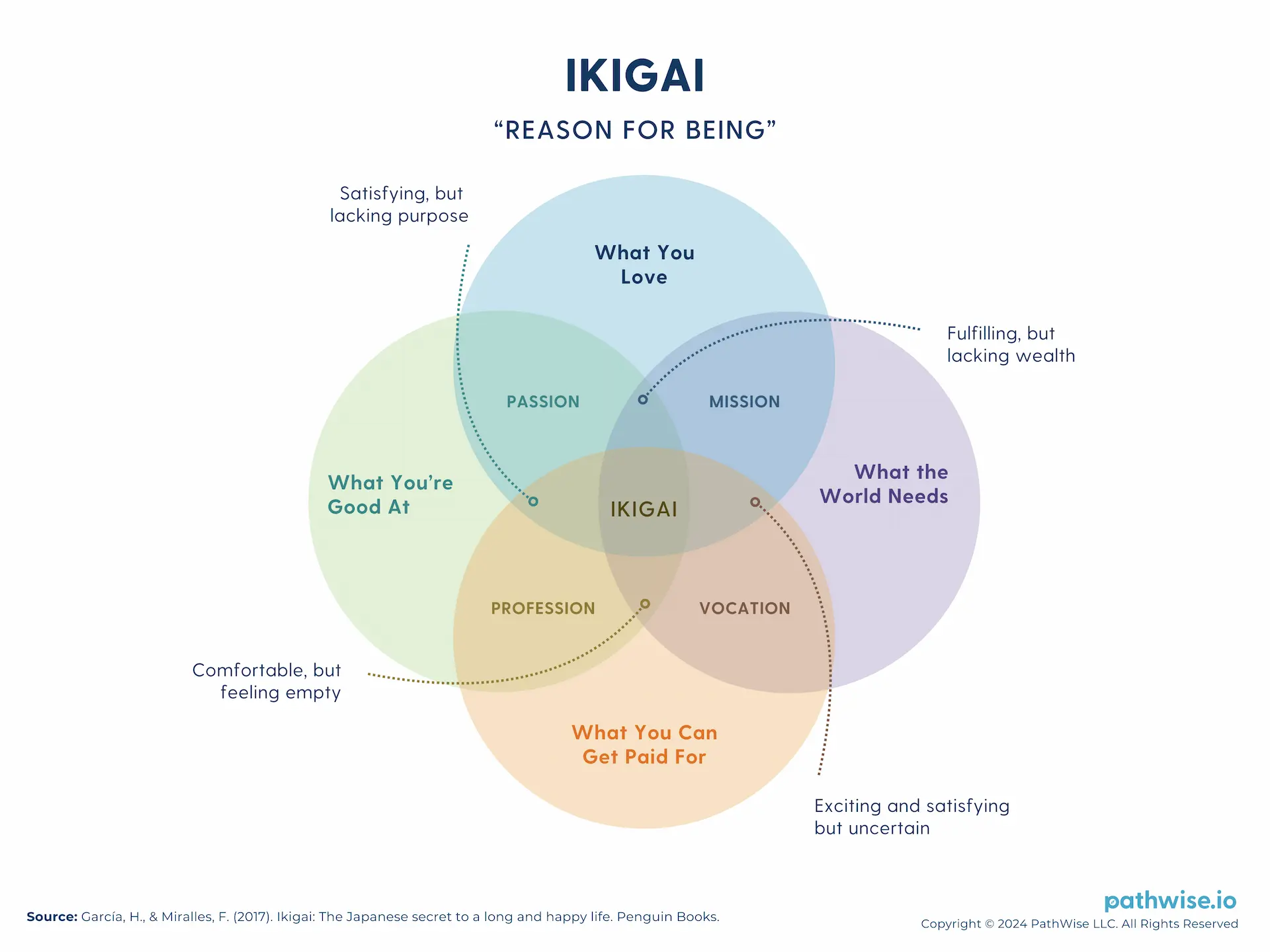
- Ikigai: A Japanese concept, Ikigai that refers to finding purpose and fulfillment in life and work. It’s the intersection of what you love, what you are good at, what the world needs, and what you can be paid for. When we align our careers with our Ikigai we’re more likely to experience long-term motivation and personal satisfaction, which encourages career agility by allowing us to shift our focus as we evolve.
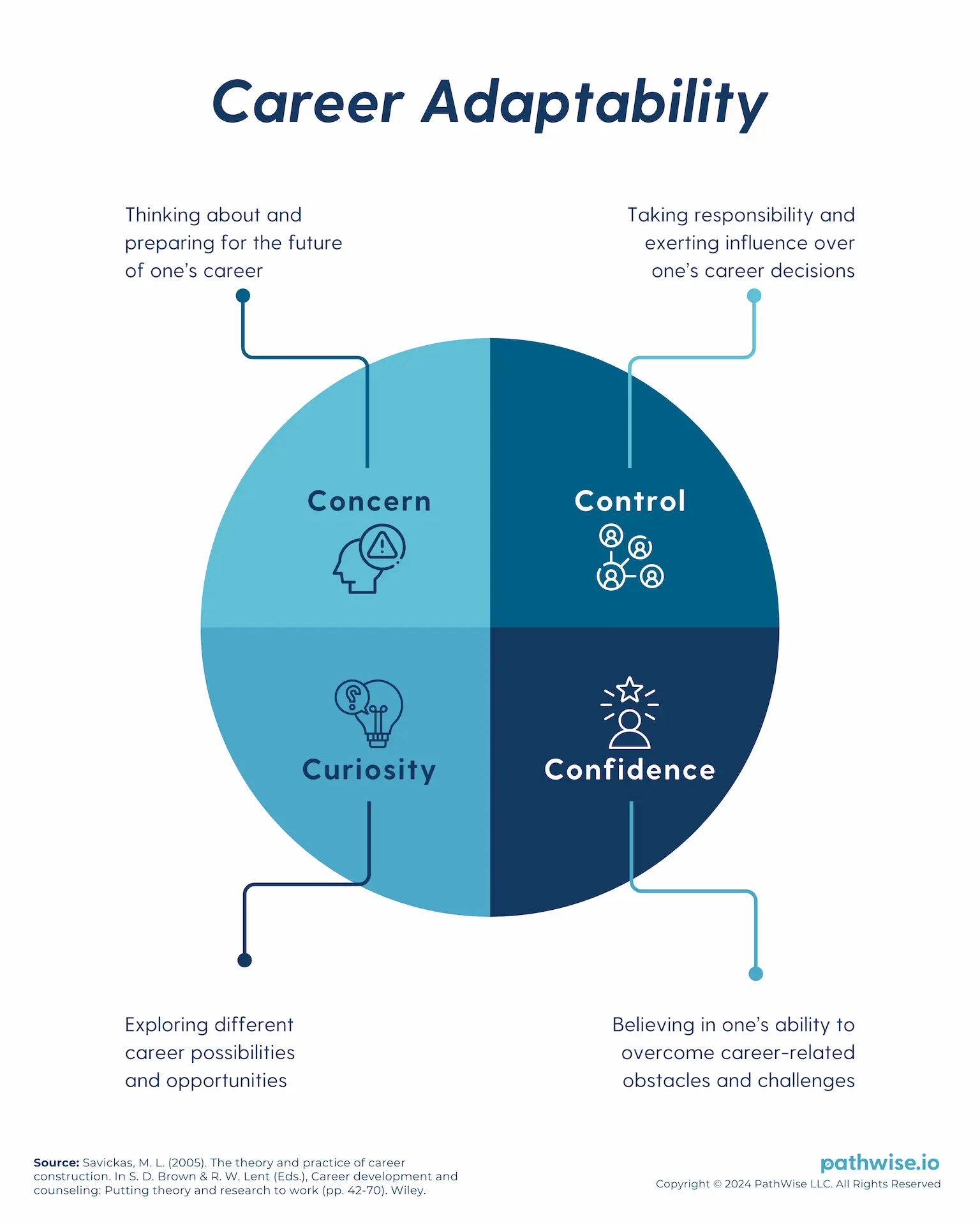
- Career Construction Theory (CCT) and Career Adaptability: Developed by Mark Savickas, this model is based on the idea that career success is built on four key dimensions: Concern (anticipating and preparing for future challenges), Control (taking ownership of one’s career path), Curiosity (actively exploring new opportunities), and Confidence (believing in one’s ability to adapt and succeed). This framework promotes proactivity and resilience, equipping us to navigate a rapidly changing job market and adapt to new career challenges.
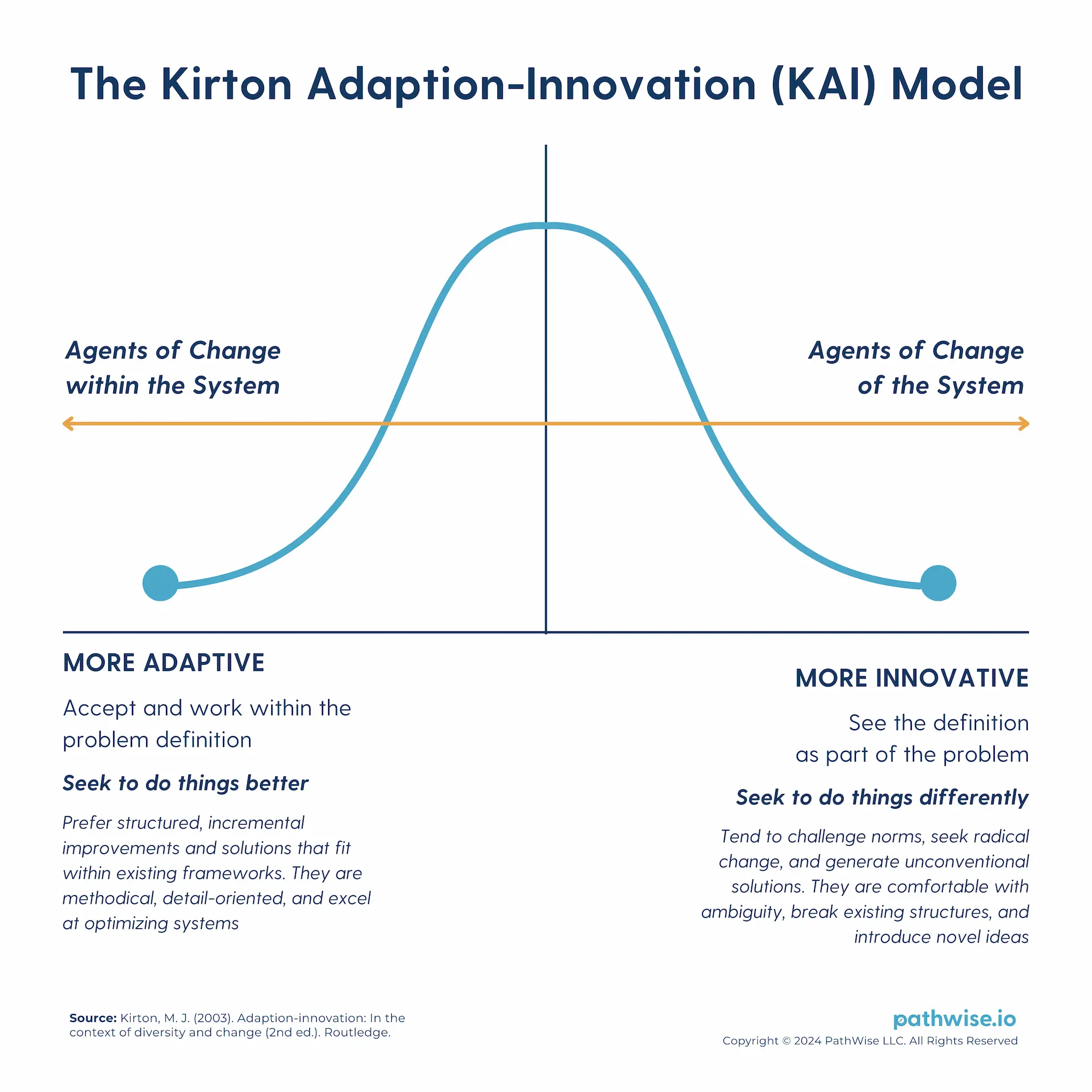
- The KAI Theory (Kirton’s Adaption-Innovation Theory): Developed by Michael Kirton, this theory categorizes individuals based on their preferred approach to problem-solving and creativity. Adaptors prefer solving problems using conventional methods, while Innovators seek out new, unconventional solutions. Understanding our personal style through this model can help us become more agile by leveraging both approaches as needed, balancing creativity and practicality in career decisions and teamwork.
Agility in Leadership
Fostering agility helps managers become stronger leaders, equipping them with the ability to adapt, innovate, and guide their teams effectively through change. Leadership is about vision, resilience, and strategic decision-making—all of which require agility. Specifically, agility strengthens leadership by stimulating:
- Adaptability in a Changing Environment: Agile leaders can pivot strategies, adjust priorities, and make informed decisions in dynamic business landscapes. They respond proactively to disruptions, such as market shifts, technological advancements, or organizational changes.
- Encouraging Innovation and Growth: Agile managers create environments where experimentation and continuous improvement are encouraged. They embrace new ideas, drive innovation, and empower their teams to think creatively.
- Resilience in Uncertainty: Challenges and setbacks are inevitable. Agile leaders maintain composure, reassess situations, and find alternative solutions instead of being paralyzed by uncertainty. They inspire confidence by demonstrating problem-solving skills and a forward-thinking approach.
- Developing and Coaching Talent: Strong leaders recognize that developing their team’s skills is essential for long-term success. By being agile, they can tailor coaching, adjust management styles, and help employees build the adaptability needed for career growth.
- Enhancing Decision-Making Skills: Agility involves analyzing situations quickly and making data-driven, strategic decisions. Leaders who practice agility balance short-term problem-solving with long-term vision to create sustainable success.
- Building Stronger Relationships and Influence: Agile leaders are skilled at navigating different personalities, perspectives, and stakeholder needs. They adjust their communication and leadership styles to connect with employees, peers, and senior executives effectively.
- Fostering a Culture of Continuous Learning: Companies and teams thrive when leaders model lifelong learningand encourage their employees to do the same. Agile managers seek feedback, embrace new skills, and cultivate curiosity within their teams.

Image used under license from Shutterstock.com
Agility in Personal Development
As mentioned earlier, agility is crucial in professional growth and development as it enables us to adapt, learn, and thrive in an ever-changing work environment. The modern workplace is defined by rapid technological advancements, shifting industry trends, and evolving job roles. So, professionals who embrace agility will more quickly adjust to new challenges, acquire relevant skills, and seize emerging opportunities, ensuring long-term career success.
One of the most significant ways agility impacts career development is through continuous learning and skill-building. The demand for new competencies is constantly evolving, and those who are open to learning—via formal education, self-directed study, or hands-on experience—position themselves for advancement. They also cultivate a growth mindset, viewing setbacks as opportunities for improvement rather than failures, fostering resilience, and making it easier to navigate career transitions (e.g., moving into leadership, switching industries, or taking on new responsibilities).
Additionally, agility enhances career adaptability and employability. As industries transform, professionals who can pivot and reinvent themselves remain competitive in the job market. Those who embrace change, build strong professional networks, and develop versatile skills are better equipped to handle unexpected career shifts, such as organizational restructuring or economic downturns. Ultimately, agility fuels continuous progress, ensuring that we remain relevant and highly sought-after in our fields.

Image used under license from Shutterstock.com
Conclusion
Agility is a skill everyone can develop, but the key is in shifting our mindset. Those who embrace change, continuously learn, and remain open to new opportunities will survive and flourish in continually changing professional landscapes. The most successful professionals are those who never stop evolving. In a world where change is inevitable, agility ensures that you’re not just keeping up—you’re leading the way.
Other Resources
- PathWise Book Summary: Entrepreneurial You
- PathWise Book Summary: Working Identity
- PathWise Book Summary: Mindset
- HBR: How To Thrive in the Skills Economy
- Forbes: Leading Through Disruption: The Agility Mindset For Business Leaders
- Forbes: Reengineering The Enterprise: AI, Agility, And Innovation Lead The New Business Paradigm
- Forbes: Six Soft Skills that Will Make You Unstoppable at Work
