

Ever wonder how some groups seem to thrive even when challenges come their way? It often boils down to how they handle disagreements and disputes. Do you sometimes question if there’s a better way to navigate those tricky office moments? Or, have you wondered how you can turn workplace conflicts into opportunities for growth and stronger teamwork? In this article, we’ll explore just that, sharing practical insights and strategies to make workplace conflict resolution a breeze and boost your professional journey.
Managing Conflict in the Workplace
Conflict management refers to handling disputes, disagreements, or conflicts between individuals or groups constructively and productively. It is an essential aspect of maintaining a healthy and effective work environment. Conflict in the workplace can arise from various sources, including differences in opinions, competing goals, personality clashes, or misunderstandings.
Effective conflict management in the workplace requires:
- Open and respectful communication among team members. Conflicts can be avoided and managed more effectively in an environment where employees feel comfortable expressing their concerns and viewpoints without fear of retribution. This notion is often referred to as psychological safety.
- Conflict resolution strategies. Employees should possess tools and strategies for resolving conflicts, including active listening, problem-solving, and negotiation techniques.
- Mediation. When conflicts become challenging to resolve independently, a neutral third party, such as HR or an external mediator to facilitate discussions, can help find a resolution.
- Clear conflict resolution policies. Clear policies and procedures for addressing conflicts ensure that employees know the steps to follow when conflicts arise. These processes should be fair and consistent.
- Focusing on the specific issue causing the conflict, rather than attacking the character or personality of their colleagues to avoid escalating conflicts and hindering resolution.
- Emotional intelligence and self-awareness, as they encourage employees to manage their emotions during conflicts and be empathetic toward the emotions of others.
- Feedback. Using conflicts as opportunities for learning and improvement can help determine what could be done differently in the future.
- Cultural sensitivity. Awareness of cultural differences that can influence the perception and handling of conflicts ensures that employees understand and respect others.
Effective conflict management in the workplace can lead to increased collaboration, improved relationships, and a more productive and harmonious work environment. It’s essential for fostering a positive workplace culture where differences are valued, and conflicts are seen as opportunities for growth and improvement.

Thought Leaders
The following experts have contributed substantially to workplace conflict management, offering valuable insights, research, and practical advice to help individuals and organizations navigate conflicts more effectively and build stronger, more collaborative teams.
- Amy Gallo: Gallo is a contributing editor at Harvard Business Review and an expert in communication and conflict resolution. She recently published her book, Getting Along, in which she offers practical advice for effectively handling relationships in the workplace.
- Joseph Grenny, Al Switzler, Ron McMillan, Kerry Patterson, and Emily Gregory: The authors of Crucial Conversations are known for their insights into effective communication in high-stakes situations. Their work has been instrumental in helping individuals and organizations manage conflicts constructively.
- Susan David: David is a psychologist and the author of Emotional Agility. Her research focuses on the importance of agile emotion management, which can help handle workplace conflicts and promote well-being.
- Daniel Goleman: Goleman is a renowned psychologist and author known for his book on emotional intelligence. His work has highlighted the significance of emotional intelligence in effective leadership, including conflict management.
- Kenneth W. Thomas and Ralph H. Kilmann: The creators of the Thomas-Kilmann Conflict Modes Model have significantly contributed to understanding how individuals and teams approach and manage conflict. Their model provides valuable insights into different conflict resolution strategies.
- Douglas Stone and Sheila Heen: Co-authors of the book Difficult Conversations, Douglas Stone and Sheila Heen provide valuable guidance on how to have challenging conversations and handle workplace conflicts effectively. Their work emphasizes the importance of understanding others’ perspectives and emotions.
- Amy Edmondson: Edmondson is renowned for researching psychological safety in the workplace. Her work emphasizes creating an environment where employees feel safe to voice concerns, ask questions, and share ideas without fear of reprisal. This concept is integral to effective conflict management and building resilient, innovative teams. Her book, The Fearless Organization, explains the concept and provides examples of the role it plays in organizational success.
- Cinnie Noble: Noble is a lawyer with a Masters of Law in Alternative Dispute Resolution and a conflict management coach and mediator known for her work in transformative conflict resolution. She offers insights and strategies for managing conflicts, focusing on personal growth and positive change during challenging situations.
- Chris Voss: a former FBI hostage negotiator, author of Never Split the Difference, and lecturer known for his expertise in negotiation. His skills, emphasizing active listening, empathy, and strategic communication, can be applied to conflict management by promoting open dialogue, understanding others’ perspectives, and finding mutually beneficial solutions through effective communication and negotiation techniques.
Key Frameworks
The following models and frameworks offer various perspectives and tools for addressing conflicts in multiple contexts.
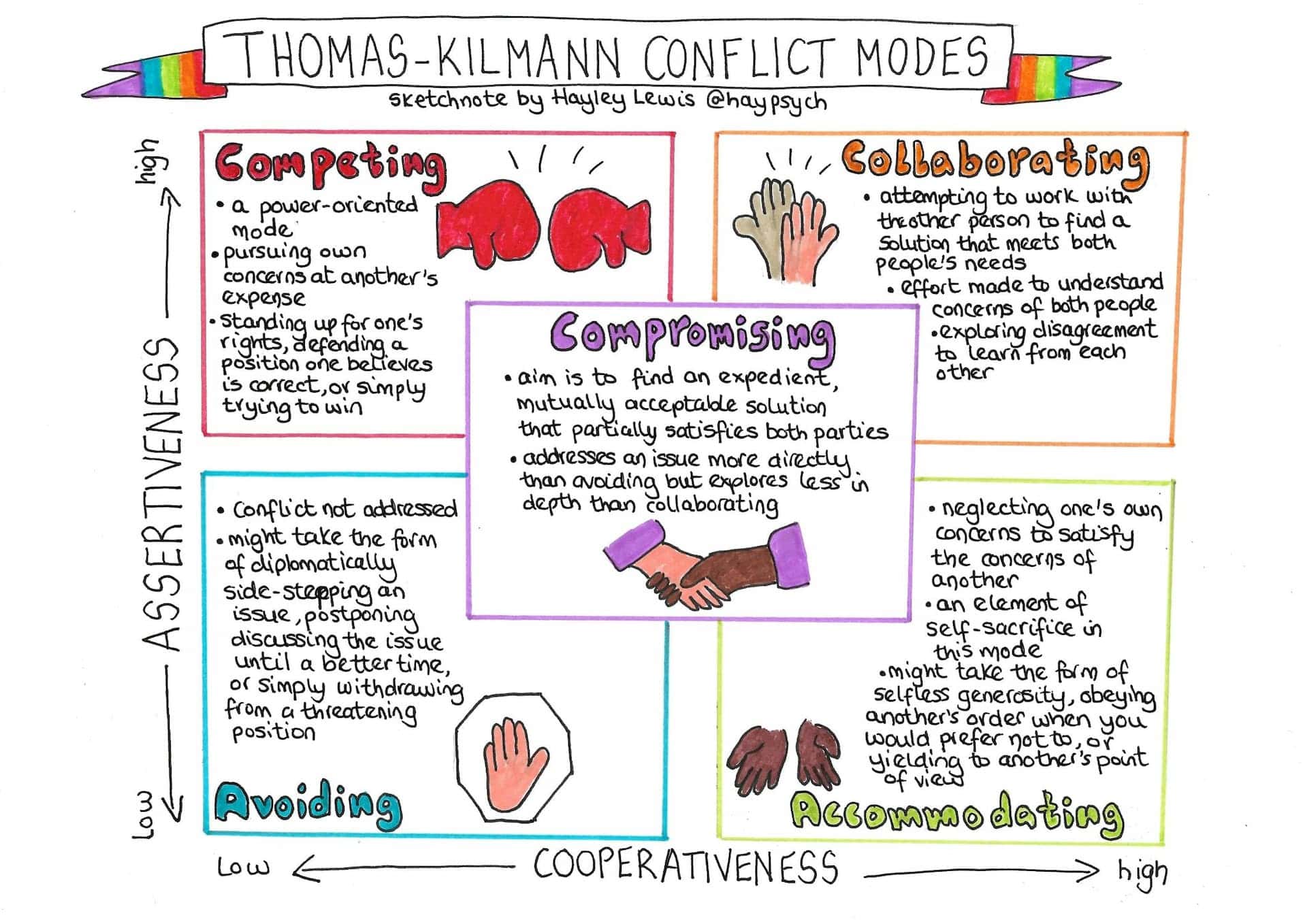
- Thomas-Kilmann Conflict Modes: This framework helps understand how individuals approach and handle conflicts. It categorizes conflict resolution strategies into:
-
-
-
- Competing: assertive and uncooperative,
- Collaborating: assertive and cooperative,
- Compromising: intermediate in both assertiveness and cooperativeness,
- Avoiding: unassertive and uncooperative, and
- Accommodating: unassertive and cooperative.
By identifying their preferred conflict resolution style and adapting it to the situation, individuals can navigate conflicts more effectively, aiming for mutually beneficial outcomes. Take a look at Dr. Hayley Lewis’ Sketchnote summarizing the model.
-
-
- The Five Whys: Originally part of the Toyota Production System, this technique involves asking “why” five times in succession to uncover the root cause of a problem or conflict. It’s a straightforward method for getting to the heart of an issue and addressing it effectively.
- The Interest-Based Relational Approach: This approach emphasizes focusing on the underlying interests of parties involved in a conflict rather than their positions. By identifying and addressing these interests, it becomes easier to find mutually beneficial solutions.
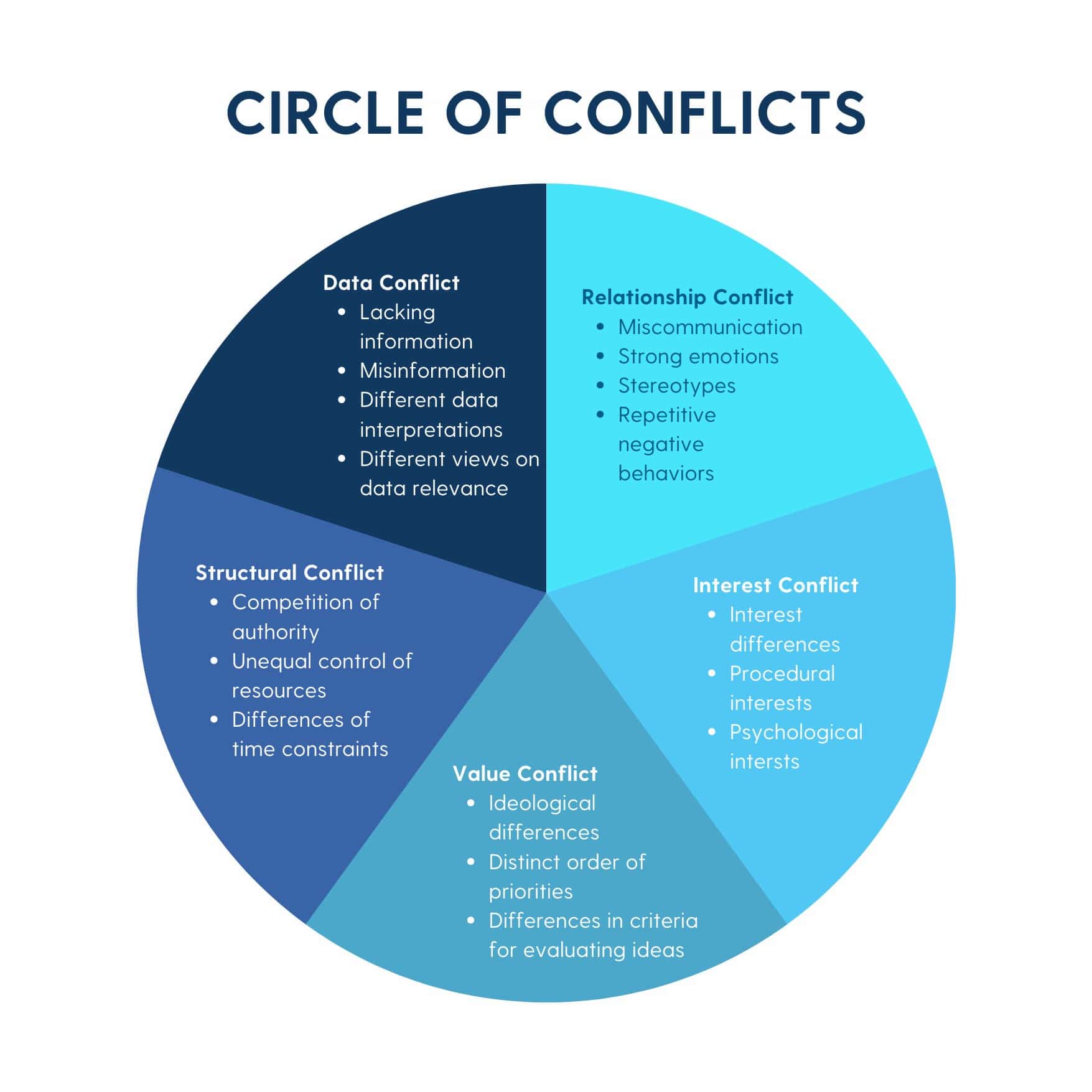
- The Circle of Conflict: This model by Michelle LeBaron highlights the interconnected nature of conflicts, illustrating how conflicts can emerge from various sources, including data, interests, relationships, values, and structural conflict.
- The Drama Triangle: Developed by Stephen Karpman, this model identifies three roles people often assume in conflicts: the Victim, the Persecutor, and the Rescuer. Understanding these roles can help individuals break free from unproductive dynamics and shift toward healthier conflict resolution.
- The OODA Loop (Observe, Orient, Decide, Act): Originally a military concept, this framework emphasizes the importance of rapid decision-making and adaptation during conflicts. It helps manage conflicts that require quick responses and flexibility.
- The Conflict Resolution Network’s Conflict Resolution Triangle: This model incorporates three specific dimensions of conflicts: the issue, the relationship, and identity. It encourages individuals to consider all three aspects when addressing conflicts.
- The Human Needs Theory: This framework, championed by scholars like John Burton, suggests that conflicts often arise from unmet fundamental human needs such as security, identity, and recognition. Understanding these needs can be instrumental in resolving conflicts.
- The GRPI Framework: This model is associated with team development and conflict resolution. GRPI stands for Goals, Roles, Processes, and Interpersonal Relationships. It’s a model that helps teams address conflicts and improve overall effectiveness by focusing on these key elements:
- Goals: Ensure clarity and alignment regarding the team’s objectives and purpose.
- Roles: Clearly define individual roles and responsibilities within the team.
- Processes: Establish effective work processes and communication channels to facilitate collaboration.
- Interpersonal Relationships: Foster a positive team environment by addressing interpersonal dynamics, building trust, and encouraging open communication.


By systematically addressing these four components, teams can identify and resolve conflicts, improve communication, and enhance overall team performance. The GRPI framework provides a structured approach to understanding and improving team dynamics.

Model based on the work of Richard Beckhard (1972)
Conflict Management and Leadership
Conflict management is a critical leadership skill because it promotes a positive work environment, enhances teamwork, and drives organizational performance and growth. Leaders who excel in this area create more resilient, innovative, and harmonious teams and organizations. Specifically, conflict management is crucial for leadership for several reasons:
- Team Performance: Effective conflict management ensures team members can work harmoniously together. Addressing and resolving conflicts improves teamwork, better communication, and, ultimately, higher team performance.
- Innovation: Constructive conflicts can lead to innovative solutions and fresh ideas. When managed well, conflicts challenge the status quo and encourage creative problem-solving, driving innovation within the organization.
- Employee Well-being: A leader who effectively manages conflicts creates a healthier work environment, reducing stress and tension among team members and contributing to improved employee morale, job satisfaction, and retention.
- Decision-Making: Conflicts often arise when making important decisions. Effective conflict management ensures that these decisions are well-informed and that opposing viewpoints are considered, leading to better, more balanced choices.
- Conflict Prevention: Leaders skilled in conflict management can identify and address issues before they escalate into more significant problems.
- Strengthening Relationships: When conflicts are resolved constructively, it builds trust and respect among team members. This, in turn, strengthens relationships and fosters a positive organizational culture.
- Role Modeling: Leaders who demonstrate effective conflict management skills set an example for their teams. They encourage employees to handle conflicts similarly, creating a culture of respectful communication and problem-solving.
- Resource Allocation: Unresolved conflicts can drain time and energy, diverting resources away from productive work. Effective conflict management ensures that resources are used efficiently.
- Adaptability: Conflict management skills are essential for adapting to evolving situations and maintaining agility.
- Organizational Growth: Conflict management is integral to an organization’s growth and success. By addressing conflicts constructively, leaders foster an environment where individuals and teams can learn, adapt, and thrive.
Conflict Management and Personal Growth
Conflict management skills are essential for building harmonious work relationships and play a pivotal role in personal and professional growth, ultimately shaping your career journey. When you possess these skills, you gain the ability to navigate challenging situations with finesse, leading to several career-enhancing benefits.
Effective conflict management cultivates resilience. By learning how to address conflicts and setbacks constructively, you develop the ability to bounce back from challenges. This resilience is invaluable as it empowers you to assume increasingly complex roles and responsibilities, making them more attractive candidates for leadership positions.
Conflict management skills enhance interpersonal communication. As you become adept at understanding and resolving conflicts, you improve their emotional intelligence, active listening, and empathy. These skills facilitate better collaboration with colleagues, clients, and stakeholders, bolstering your capacity to influence, negotiate, and lead. Strong communication and relationship-building abilities are often differentiators that accelerate career progression.
Conflict management skills also empower you to proactively address issues that hinder your career growth. Instead of avoiding conflicts or allowing tensions to fester, you can take the initiative to address and resolve these challenges. This proactive approach removes roadblocks and demonstrates leadership potential and a commitment to personal and professional development.
Tools:
- The Style Under Stress assessment helps you identify your preferred communication style under stress, highlighting your strengths and potential areas for growth. To learn more and take the assessment, visit https://cruciallearning.com/style-under-stress-assessment/
- HBR: Have you taken the Difficult Person Test? https://hbr.org/2021/03/have-you-taken-the-difficult-person-test
Other Resources:
- HBR: Managing Conflict
https://hbr.org/2007/11/how-to-manage-conflict - HBR: 4 Triggers Cause the Majority of Team Conflicts
https://hbr.org/2022/05/conflict-is-not-always-bad-but-you-should-know-how-to-manage-it - HBR: How to Navigate conflict with a Coworker
- https://hbr.org/2022/09/how-to-navigate-conflict-with-a-coworker
- Forbes: How to Recognize Conflict and Select the Right Tesolution Strategy
https://www.forbes.com/sites/forbescoachescouncil/2021/11/08/how-to-recognize-conflict-and-select-the-right-resolution-strategy/?sh=2d5f8ec93efb - Forbes: Five Steps to Conflict Resolution in the Workplace
https://www.forbes.com/sites/francesbridges/2019/02/28/5-steps-to-conflict-resolution-in-the-workplace/?sh=6fdff1861aad
