



In the relentless pursuit of professional success, it’s easy to overlook a critical factor that shapes our journey—the ability of energy to propel us forward or hold us back. Imagine this: a seasoned executive, tirelessly climbing the corporate ladder, suddenly hits a wall. Burnout creeps in, enthusiasm wanes, and the once unstoppable force begins to dwindle. In the pursuit of career excellence, we often forget that our vitality is a currency, and managing it strategically can be the key to unlocking unforeseen heights.
Energy, in its multifaceted forms—physical, mental, emotional, and spiritual—forms the currency that fuels our professional odysseys. How we nurture and channel these various forms of energy can profoundly influence not just our performance but the holistic trajectory of our careers. In other words, managing our energy isn’t just self-care—it’s a career strategy.

Image used under license from Shutterstock.com
What builds and drains energy?
Understanding the intricate interplay among our actions, environments, and well-being unveils the secrets to sustained energy in our careers. To truly thrive, we must navigate the delicate balance between fortifying our vitality and identifying the pitfalls that drain our reserves. For example,
- Physical energy is fortified by adequate sleep, regular exercise, and balanced nutrition. Conversely, long hours, sedentary work habits or lifestyles, and a lack of self-care can drain this vital resource.
- Mental energy flourishes when we engage in activities that stimulate our intellect—skill development, problem-solving, and creativity. On the flip side, information overload, constant multitasking, a lack of mental breaks, or boredom can erode mental vigor.
- Emotional energy thrives through meaningful connections, supportive environments, and a sense of purpose. Toxic work relationships, excessive stress, and emotional labor without acknowledgement or replenishment can exhaust this aspect of our energy.
- Spiritual energy, often overlooked in professional realms, is nurtured by aligning work with personal values, finding meaning in tasks, and fostering a sense of balance. When disconnected from purpose or values, spiritual energy diminishes, leading to a lack of fulfillment in our careers.
Energy in Personal Development
Energy management isn’t just about optimizing personal resources; it allows for holistic development, allowing us to thrive professionally by fostering resilience, sustained engagement, and optimal performance in our careers. For instance,
- Enhanced Productivity and Performance: Managing energy levels allows us to optimize our focus, creativity, and problem-solving abilities. By strategically allocating energy across tasks and leveraging peak energy periods, productivity and overall performance can significantly improve.
- Resilience and Stress Management: Effective energy management fosters resilience against workplace stressors. Balancing physical, mental, and emotional energy enables us to navigate challenges better, bounce back from setbacks, and maintain composure in demanding situations.
- Sustained Engagement and Motivation: When we align our tasks with our values and sources of energy, we experience higher levels of engagement and motivation. This alignment fuels a sense of purpose, fostering sustained enthusiasm and commitment to our careers.
- Health and Well-being: Prioritizing energy management supports overall well-being. It reduces the risk of burnout, enhances immune function, and positively impacts mental health. A healthy balance of energy promotes longevity and consistent performance in the long run.
- Effective Decision-Making and Leadership: Well-managed energy facilitates better decision-making and leadership capabilities. Leaders who understand energy dynamics can create environments that promote well-being, creativity, and productivity among their teams.

Image used under license from Shutterstock.com
Thought Leaders
Tony Schwartz and Jim Loehr are renowned for popularizing the concept of energy management in the context of personal and professional productivity. Their work, notably the book The Power of Full Engagement, explores the principles of managing energy rather than time as the key to high performance and well-being. Schwartz and Loehr emphasize the importance of balancing energy expenditure and renewal across physical, emotional, mental, and spiritual domains to optimize one’s effectiveness in various pursuits, including careers.
Later, Schwartz, along with Jean Gomes and , published The Way We’re Working Isn’t Working: The Four Forgotten Needs That Energize Great Performance. This book explores how the traditional ways of working, primarily focusing on time and task management, fall short of fostering sustainable high performance. Instead, it highlights four core needs essential for achieving and maintaining peak performance: physical, emotional, mental, and spiritual.
Other thought leaders who have contributed significantly to understanding and promoting the importance of holistic energy management within the context of career and personal development include:
- Arianna Huffington: Through her work with Thrive Global, she advocates for well-being and productivity by prioritizing sleep, mindfulness, and stress reduction, recognizing their impact on overall energy and success.
- Shawn Achor: Known for his expertise in positive psychology, Achor emphasizes in his book, The Happiness Advantage, the connection between happiness, positivity, and productivity, and how they indirectly influence our energy levels.
- Brené Brown: While her focus is on vulnerability and courage, Brown’s work addresses emotional energy and resilience, highlighting how these aspects significantly impact our professional lives.
- Adam Grant: Grant explores motivation, purpose, and fulfillment in the workplace, discussing how aligning personal values and meaning with one’s career can impact overall energy and performance.
- Gretchen Rubin: Known for her work on habits and happiness, Rubin’s insights into habit formation and the creation of environments conducive to well-being can influence our energy levels at work.
Key Frameworks
Several frameworks and models offer structured approaches to managing energy in our careers, providing us with tools and strategies to optimize our vitality, performance, and well-being in the workplace. Here are a few notable ones:
-
- Four Dimensions of Energy: This framework divides energy into four dimensions—physical, emotional, mental, and spiritual. It emphasizes balancing and nurturing each dimension to optimize overall energy levels and career performance. To learn more, you can read Schwartz’s Manage Your Energy, Not Your Time article published in Harvard Business Review or check out Dr. Hayley Lewis’s Sketchnote below.
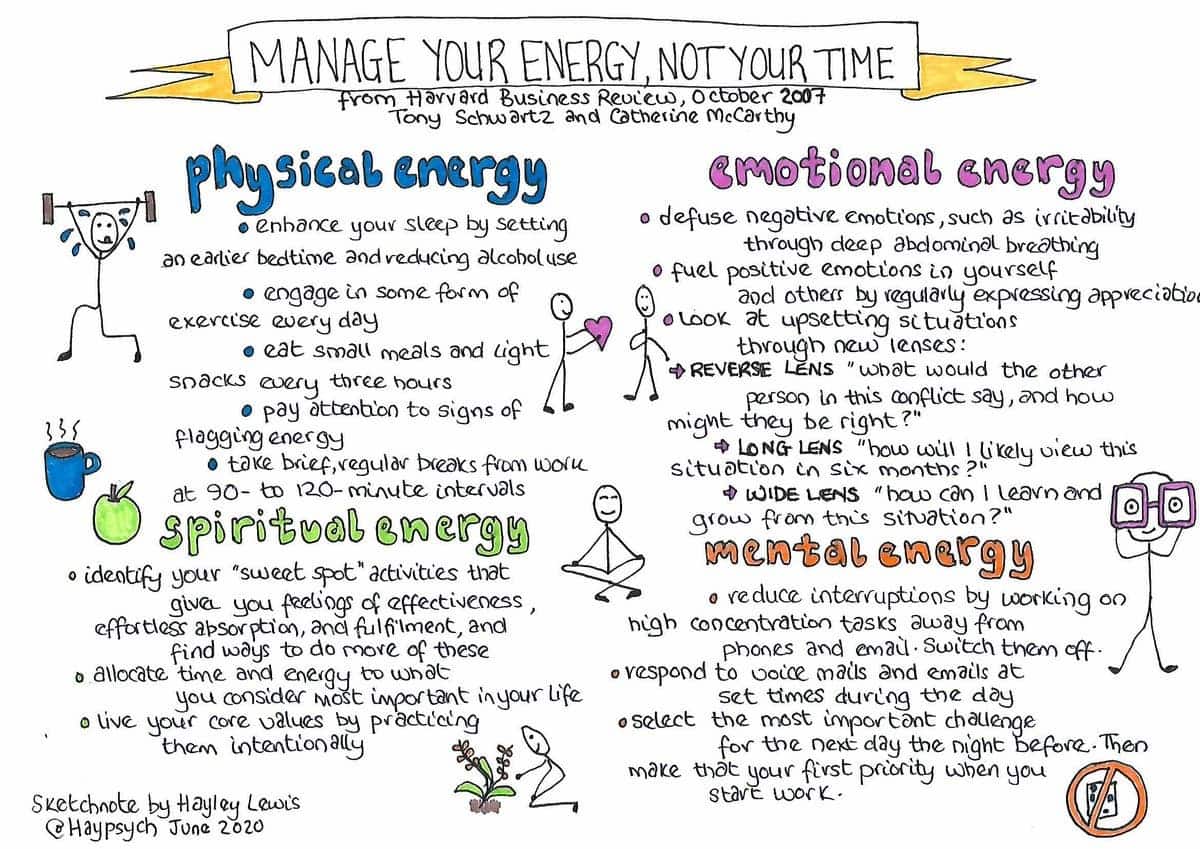
- Four Dimensions of Energy: This framework divides energy into four dimensions—physical, emotional, mental, and spiritual. It emphasizes balancing and nurturing each dimension to optimize overall energy levels and career performance. To learn more, you can read Schwartz’s Manage Your Energy, Not Your Time article published in Harvard Business Review or check out Dr. Hayley Lewis’s Sketchnote below.

- Energy Mapping: This involves identifying peak energy times throughout the day and aligning high-energy periods with tasks that require focus and creativity. Mapping energy cycles helps in prioritizing tasks accordingly.
- Energy Budgeting: Similar to financial budgeting, this framework involves allocating energy resources by identifying activities that replenish energy (energy gains) and those that deplete it (energy drains). The goal is to optimize your energy budget by minimizing drains and maximizing gains.
- Pulse and Pause: This approach involves alternating between periods of intense work (pulse) and deliberate rest or renewal (pause). It emphasizes the importance of taking regular breaks to recharge and sustain high performance.
- Purpose-Driven Energy Management: This framework aligns personal and professional goals with energy management strategies. It focuses on identifying tasks and projects that resonate with personal values and contribute to a sense of purpose, leading to sustained energy and engagement.
- Eisenhower Matrix for Energy: Inspired by the Eisenhower Matrix for time management, this framework categorizes tasks based on their importance and their impact on energy. It helps in prioritizing tasks that align with long-term goals and contribute positively to energy levels.
Energy Management in Leadership
If you’re a manager, handling your energy effectively can help you become a better leader. Energy management cultivates an environment where individuals feel supported, motivated, and empowered. It drives engagement, creativity, and innovation while nurturing a culture of well-being and sustainable success within an organization. More specifically,
- Influence and Inspiration: Leaders with well-managed energy radiate positivity and inspire their teams. Their enthusiasm and vitality can be contagious, motivating others to perform at their best.
- Decision-making and Clarity: Effective energy management supports clear thinking and sound decision-making. Leaders who maintain optimal energy levels are better equipped to analyze situations, consider various perspectives, and make strategic decisions.
- Emotional Intelligence and Empathy: Managing energy helps leaders regulate their emotions and exhibit empathy. They can better understand and connect with their team members, fostering a supportive and inclusive work environment.
- Resilience and Adaptability: Leaders with strong energy management skills are more resilient in the face of challenges. They can adapt to changing circumstances, remain composed under pressure, and effectively guide their teams through uncertainties.
- Role Modeling and Culture Creation: When leaders prioritize energy management, they set an example for their teams. This fosters a culture that values well-being, work-life balance, and sustainable high performance.
- Strategic Resource Allocation: Leaders who understand energy dynamics can allocate resources—both human and organizational—more effectively. They can optimize workflows, distribute tasks based on energy cycles, and create environments that promote productivity and well-being.
Conclusion
In a time when success is often measured by output and achievements, it’s the management of our energy that becomes the key to our professional realization. True success isn’t merely about what we accomplish but how sustainably and joyfully we navigate our path. By prioritizing our well-being, aligning our tasks with our values, and nurturing our vitality, we pave the way not just for career growth but for a fulfilling, purpose-driven life.
Other Resources
- HBR: 4 Ways To Manage Your Energy More Effectively
https://hbr.org/2021/05/4-ways-to-manage-your-energy-more-effectively - HBR: We’re in an energy crisis. This one is personal
https://hbr.org/2011/03/were-in-a-new-energy-crisis-th - TED Talk: Tony Schwartz’s The Way We’re Working Isn’t Working
https://www.youtube.com/watch?v=smrMWv5rcCo - Forbes: How to focus on energy management instead of time management
https://www.forbes.com/sites/forbeshumanresourcescouncil/2023/10/05/how-to-focus-on-energy-management-instead-of-time-management/?sh=2bfeb6fd269f - Forbes: Recharging Yourself as a Leader
https://www.forbes.com/sites/ginnywhitelaw/2022/10/01/recharging-yourself-as-a-leader-3-laws-of-managing-energy/?sh=58af38594b78
