



Introduction: Captivating Leaders
We’ve all encountered those individuals who effortlessly command attention and respect, whose presence is effortlessly captivating. They exude authority, elegance, and an undeniable charisma that marks them as exceptional leaders. But what’s the secret behind their magnetic allure? Are they simply born with it, or is there more to the story?
The truth is, behind every captivating leader lies a journey of dedication and hard work. These individuals have honed their executive presence—a powerful combination of confidence, gravitas, and authenticity. So, the good news is, executive presence isn’t an innate gift reserved for a select few; it’s a skill set that anyone can cultivate with diligence and determination. So, if you’ve ever found yourself wondering how to exude that same magnetic charm and authority, rest assured—there’s a path to mastering the art of executive presence.

What is Executive Presence?
Executive presence refers to the combination of qualities, behaviors, and demeanor that convey leadership, authority, confidence, and charisma in professional settings. It’s the ability to command attention, inspire trust and respect, and influence others positively. Executive presence is often associated with individuals in leadership positions, such as executives, managers, or high-ranking professionals, but it’s a valuable trait for anyone aiming to advance their career or make a strong impression in business environments.
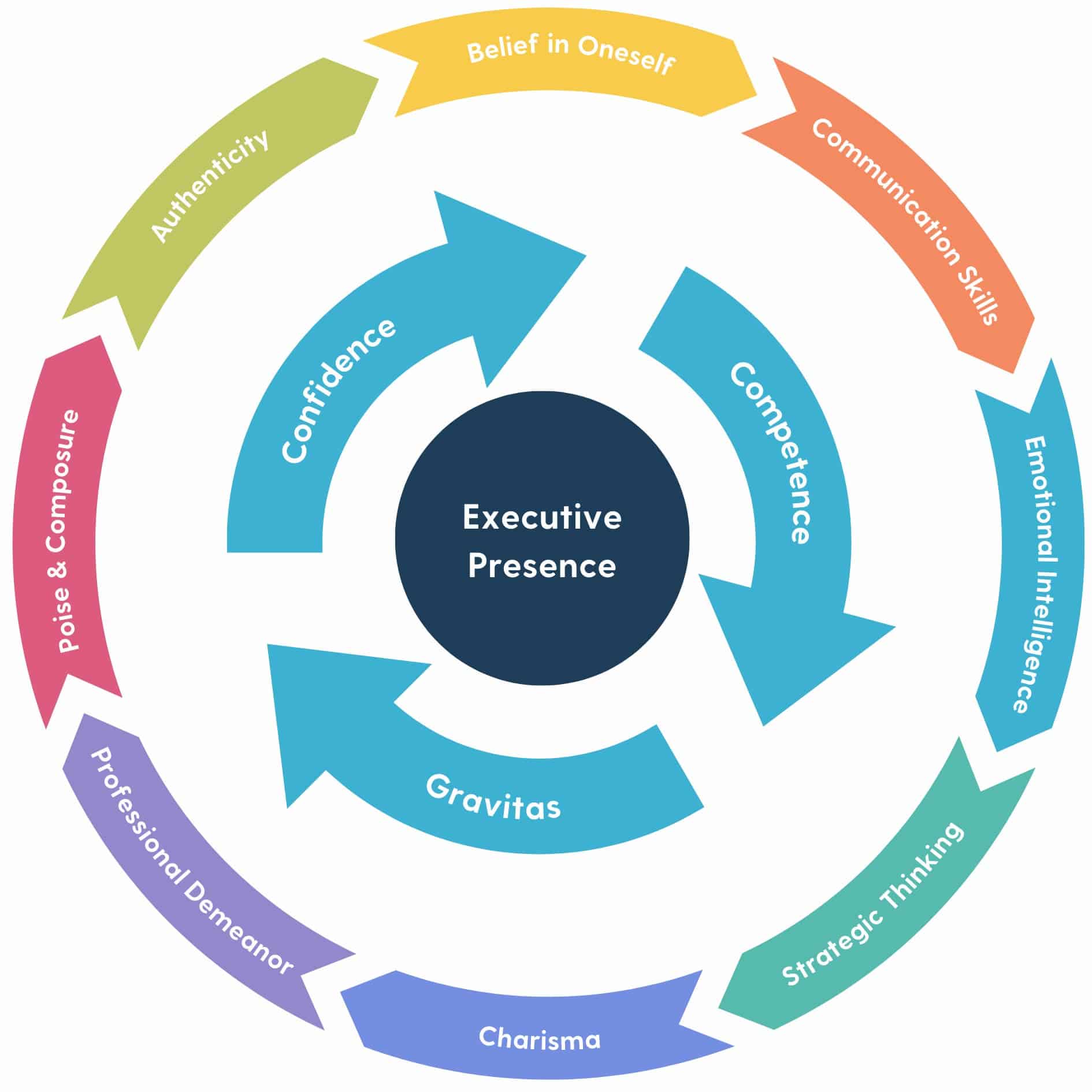
Some key components of executive presence may include:
- Confidence: Believing in oneself, one’s abilities, and the decisions made.
- Poise and Composure: Maintaining composure under pressure and remaining calm and collected in challenging situations.
- Authenticity: Being genuine, sincere, and true to oneself. Authentic leaders are trusted because they are perceived as honest and transparent.
- Communication Skills: Conveying ideas clearly, articulating one’s vision, and inspiring others to action. This includes verbal, nonverbal, and listening skills.
- Emotional Intelligence: Understanding one’s own emotions and those of others, empathizing, and navigating interpersonal relationships effectively.
- Strategic Thinking: Seeing the big picture, anticipating challenges, and making decisions that align with organizational goals.
- Charisma: Attracting, charming, and influencing others through one’s presence and personality.
- Professional Appearance and Demeanor: Presenting oneself in a polished, competent, and respectful manner. This can include attire, grooming, posture, composure, and body language.

How Can Someone Develop Executive Presence?
Developing executive presence typically involves a combination of self-awareness, communication skills training, leadership development, and personal branding efforts. It’s a dynamic and multifaceted trait that can be cultivated over time through practice, feedback, and continuous learning. However, here are some steps to help you begin fostering executive presence:
- Start by reflecting on your strengths, weaknesses, and areas for improvement related to executive presence. Consider seeking feedback from mentors, peers, or coaches to gain insight into how others perceive you in professional settings. You can also use self-assessment tools.
- Then, work on building self-confidence by setting achievable goals, celebrating successes, and challenging yourself to step out of your comfort zone. Practice confident body language, such as maintaining eye contact, standing tall or sitting upright, and using assertive yet respectful communication.
- On that note, the next step is to develop strong communication skills, including clear articulation, active listening, and the ability to tailor your message to different audiences. Practice delivering presentations, participating in meetings, being concise in your directions, and engaging in networking opportunities to refine your communication abilities.
- Then, cultivate your emotional intelligence by taking the time to understand and manage your emotions effectively, as well as demonstrating empathy and understanding others. Develop skills in conflict resolution, relationship-building, and managing interpersonal dynamics.
- At this point, you can consider participating in workshops, seminars, or executive coaching programs specifically designed to enhance executive presence. These resources can provide valuable guidance, feedback, and practical strategies for developing key aspects of executive presence.
- Throughout this process, pay attention to your professional appearance, grooming, and overall image. Dress appropriately for your industry and the level of formality in your workplace, and ensure that your appearance reflects confidence, competence, and professionalism.
- You can also take on leadership opportunities within your organization or community to gain experience and visibility as a leader. Seek out projects or initiatives where you can demonstrate leadership skills, inspire others, and make a positive impact.
- As a more general recommendation, it’s always a good idea to commit to ongoing learning and development to continuously improve your skills, knowledge, and abilities. Stay informed about industry trends, best practices, and emerging technologies relevant to your field.
- Learn from others. Observe them in action and take note of what is contributing to their effectiveness. Where you have a sufficient relationship, ask them how they have developed their own presence over the course of their professional journeys.
- Finally, be open-minded and solicit feedback regularly. You can ask colleagues, supervisors, and mentors to help you identify areas for improvement and track your progress in developing executive presence. Take time to reflect on your experiences, successes, and challenges, and use them as opportunities for growth and development.


What Are Some Pitfalls to Watch Out For?
As you begin working on developing the skills that contribute to the gravitas, confidence, and competence of executive presence, be careful to avoid some potential pitfalls along the way. Here are a few you should watch out for:
- Overconfidence: While confidence is a key aspect of executive presence, it’s essential to strike a balance and avoid coming across as arrogant, condescending or overbearing. Remember to listen actively, seek input from others, and remain open to feedback and alternative viewpoints. And balance your confidence with a humility that’s grounded in appreciating the skills and experience of others.
- Lack of Authenticity: Trying to mimic someone else’s leadership style or persona can undermine your authenticity and credibility. Instead, focus on being true to yourself, leveraging your unique strengths, and developing your own authentic leadership presence.
- Lack of Empathy in Your Communication: Ineffective communication, such as rambling, using jargon, or failing to articulate your message clearly, can detract from your executive presence. Practice active listening, clarity in speech, and adapting your communication style to resonate with different audiences.
- Inflexibility: Being overly rigid or resistant to change can hinder your ability to adapt and thrive in dynamic business environments. Cultivate flexibility, agility, and a willingness to embrace new ideas, perspectives, and approaches.
- Micromanagement: Excessive micromanagement can erode trust, stifle creativity, and impede team performance. Instead, empower your team members, delegate effectively, and focus on providing guidance and support rather than controlling every detail.
- Inconsistency: Inconsistency in behavior, decisions, or communication can also erode trust and credibility. Strive to maintain consistency in your actions, values, leadership approach, and even your style, demeanor, and attire, aligning everything with your leadership or personal brand.
- Lack of Self-Awareness: Failing to recognize your strengths, weaknesses, and blind spots can hinder your growth and effectiveness as a leader. Cultivate self-awareness through introspection, feedback, and ongoing self-reflection. Actively seek opportunities for personal and professional development.
By being mindful of these pitfalls and actively working to address them, you can enhance your executive presence and become a more influential and impactful leader in your organization.
Who are Some Thought Leaders in this Area?
While the concept of executive presence is not always tied to specific researchers or experts in the same way as more narrowly defined academic fields, there are thought leaders, coaches, and authors who have made significant contributions to understanding and developing executive presence. Here are a few notable ones:
- Sylvia Ann Hewlett: An economist and author known for her work on leadership, talent management, and diversity. She has written extensively on executive presence, particularly in her book Executive Presence: The Missing Link Between Merit and Success.
- Amy Cuddy: A social psychologist and professor at Harvard Business School known for her research on nonverbal behavior, power dynamics, and body language, and their effects on confidence and influence. While not exclusively focused on executive presence, her work on presence and power poses can inform its development, especially her book Presence: Bringing Your Boldest Self to Your Biggest Challenges.
- John Beeson: An executive coach and author who specializes in leadership development and succession planning. His book The Unwritten Rules: The Six Skills You Need to Get Promoted to the Executive Level addresses various aspects of executive presence and leadership effectiveness.
- Deborah Gruenfeld: A social psychologist and professor at Stanford Graduate School of Business. Her research focuses on power dynamics, status, and influence in organizations, which are closely related to executive presence.
- Sylvie di Giusto: An executive branding and image consultant who helps individuals and organizations enhance their professional presence. She offers workshops, coaching, and resources on personal branding, communication, and executive presence.
- Dorie Clark: A marketing strategist, author, and executive coach known for her work on personal branding, leadership, and career development. In her book Stand Out: How to Find Your Breakthrough Idea and Build a Following Around It, she discusses strategies for developing a strong professional presence.
Conclusion: Relying on Executive Presence to Uplift Others
Executive presence is far more than just a surface-level display of authority. It transcends notions of pride, arrogance, or dominance. Rather, it’s the essence of true leadership—a commitment to guiding, motivating, and inspiring others towards collective success. It’s about fostering an environment where every individual feels valued, empowered, and capable of achieving greatness. Executive presence, at its core, is a manifestation of humility, empathy, and a genuine desire to uplift those around us.
The beauty of cultivating executive presence lies in its accessibility to all, regardless of managerial title or leadership position. It’s a journey of personal growth and development that anyone can embark upon, irrespective of their current role or status within an organization. So, whether you’re a seasoned executive or an aspiring professional, remember: the path to becoming a truly impactful leader starts with the conscious decision to invest time and resources in your executive presence.
Other Resources
- LinkedIn: Ten Tips For Building A Stronger Executive Presence
https://www.linkedin.com/pulse/10-tips-building-stronger-executive-presence-kris-verlé - HBR: The New Rules of Executive Presence
https://hbr.org/2024/01/the-new-rules-of-executive-presence - HBR: The Essentials – Executive Presence
https://hbr.org/podcast/2024/03/the-essentials-executive-presence - HBR: If You Want To Lead, Master This Skill
https://hbr.org/2021/06/if-you-want-to-lead-master-this-skill - Forbes: Executive Presence – What Is It, Why You Need It And How To Get It
https://www.forbes.com/sites/forbescoachescouncil/2018/07/31/executive-presence-what-is-it-why-you-need-it-and-how-to-get-it/?sh=6733923e6bc7
