



On every episode of The Great British Baking Show, participants face a Technical Challenge. They’re given a list of ingredients, a limited amount of time, and vague instructions, and they’re expected to create a baking masterpiece. The pressure is intense and the stress palpable. Few bakers achieve what the judges consider a “successful” bake.
That moment—the chaos of unclear directions paired with the pressure to perform—can feel familiar in the workplace. Often, projects begin with the same kind of ambiguity: limited guidance, hidden standards, and an unspoken hope that the outcome will somehow be “just right.” Without clear expectations, your team is destined for second-guessing, improvising, and potentially even wasting energy. The difference is that at work, unlike the Technical Challenge in this popular baking competition show, clarity is possible. Managers can set expectations with precision by defining goals, roles, processes, standards, and responsibilities, removing ambiguity and guesswork. Teams can work toward results instead of trying to interpret vague instructions.

Image used under license from Shutterstock.com
What is Expectation Setting?
Expectation setting is the process of clearly defining what outcomes, behaviors, standards, and responsibilities are anticipated in a given situation before work begins or interactions unfold, so everyone involved understands what “success” looks like.
Clearly setting expectations reduces ambiguity as much as possible by:
- Clarifying goals and deliverables so there’s no confusion about what needs to be achieved.
- Agreeing on roles and responsibilities so people know what’s theirs to own and what’s outside their scope.
- Communicating timelines and quality standards so there’s a shared picture of pace and performance.
- Discussing potential challenges so expectations are realistic, not idealized.
Good expectation setting prevents misunderstandings, builds trust, and makes accountability fairer, as everyone on the team works from the same set of guidelines. Without it, even competent teams can misalign, overpromise, or underdeliver their objectives.

Image used under license from Shutterstock.com
Thought Leaders
Several thought leaders are highly influential in our understanding of expectation-setting at work. Some of the most notable ones include:
- Edwin A. Locke: An American psychologist renowned for co-developing goal-setting theory, which remains foundational in organizational psychology and workplace motivation. His theory emphasizes how setting specific, challenging goals can significantly enhance performance and clarity—essentially providing a blueprint for establishing practical expectations.
- Roger Connors: A management consultant and author known for championing workplace accountability, he co-authored several bestselling books, including The Oz Principle and How Did That Happen?, that guide organizations toward clarity in expectations and ownership.
- Liz Wiseman: Leadership researcher and executive advisor behind the bestselling Multipliers: How the Best Leaders Make Everyone Smarter, she explores how clear leadership expectations—when structured to amplify collective intelligence—can markedly elevate team performance.
- Bruce Tulgan: Author and management trainer focused on clarity and directness in workplace expectation-setting. His books, such as The Art of Being Indispensable at Workand It’s Okay to Be the Boss, offer practical tools for managers to communicate expectations clearly and avoid ambiguity.
- Patrick Lencioni: Author and consultant, he is best known for The Five Dysfunctions of a Team, which unpacks how unspoken norms and unclear expectations undermine performance. His work helps leaders articulate team roles, responsibilities, and behavioral standards to foster trust and alignment.
- Mark A. Murphy: Leadership, engagement expert, CEO of Leadership IQ, and author of Hundred Percentersand HARD Goals, his research and books guide managers on how specific, well-structured expectations and goals drive employee motivation and success. Leadership IQ’s data-driven insights help organizations refine their communication and enforcement of expectations.
- Paul Brewerton: Known as “the strengths guy,” Brewerton emphasizes clarity in both performance (“what”) and behavior (“how”) expectations. In his podcast episode, How to Set Expectations at Work (and Everywhere), he offers a simple, five-step framework to define, share, and reinforce expectations effectively at work.

Image used under license from Shutterstock.com
Key Frameworks
Expectation setting is supported by several models and frameworks that help managers translate clarity into action. The following approaches provide practical structures for defining goals, roles, and standards in the workplace:
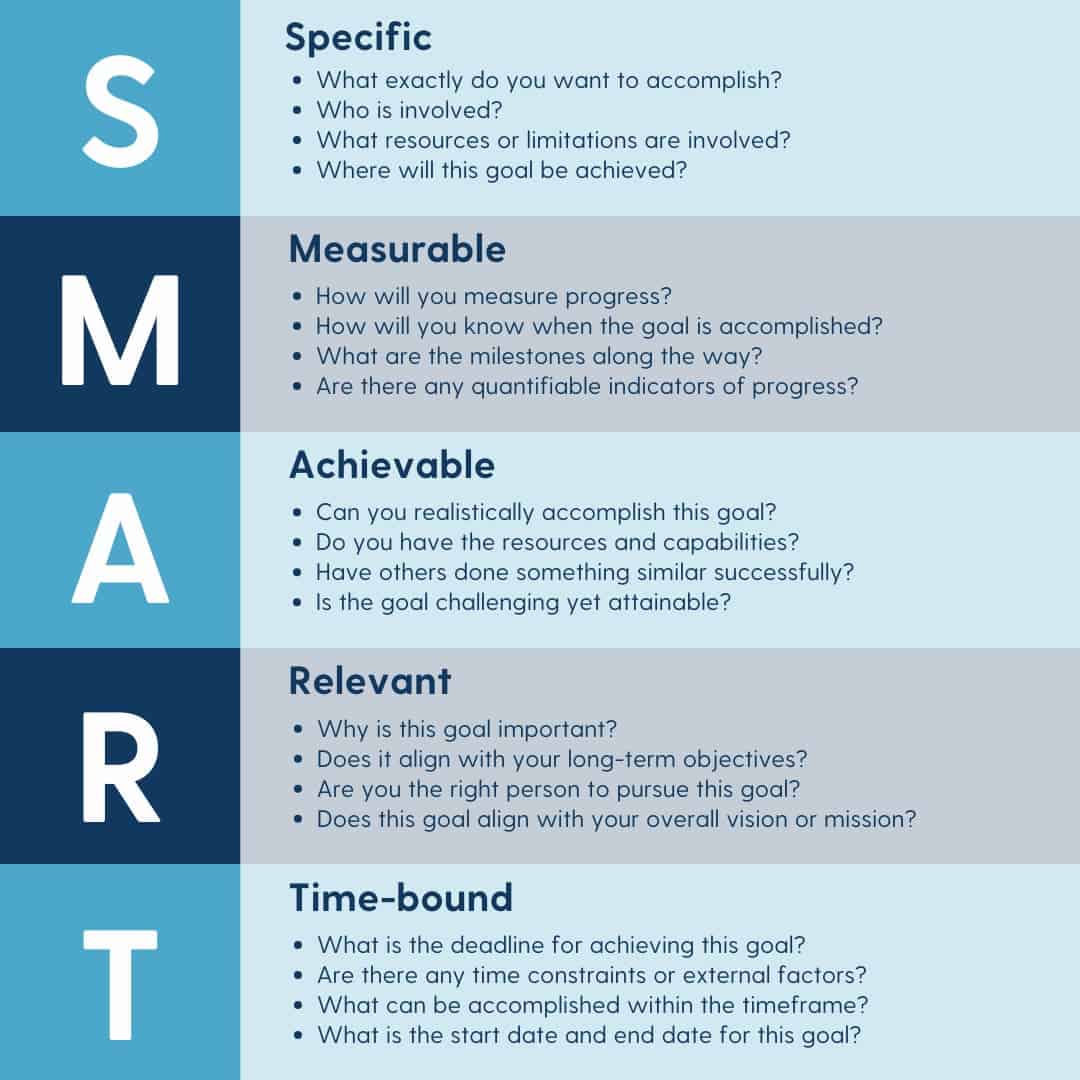
- SMART Goals Framework: The SMART model helps managers and employees set Specific, Measurable, Achievable, Relevant, and Time-bound goals. By clarifying these elements, it minimizes ambiguity and ensures expectations are actionable.
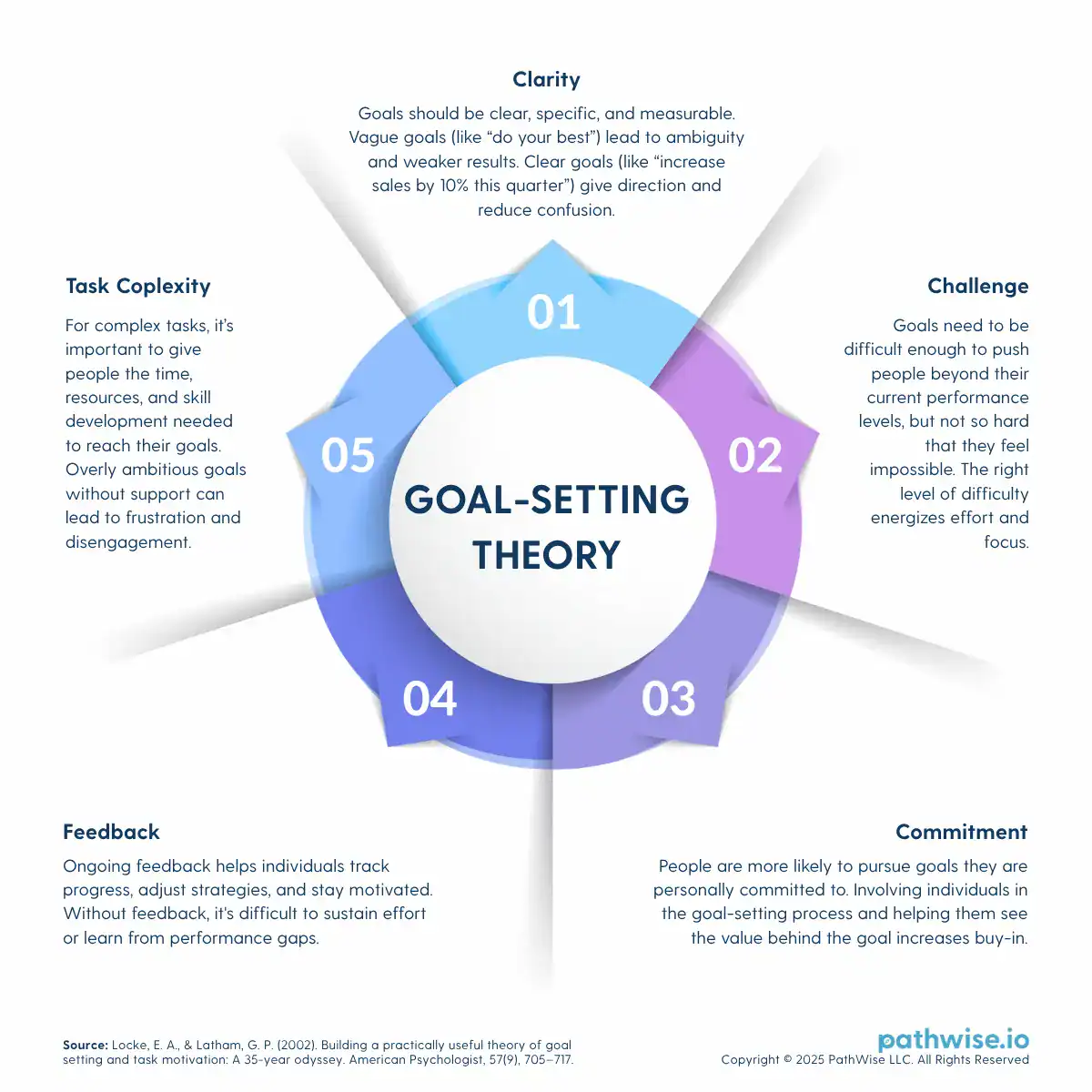
- Goal-Setting Theory: Developed by Edwin Locke and Gary Latham, this theory emphasizes that clear, challenging, and attainable goals improve motivation and performance. It underlines the importance of feedback and commitment in setting expectations.
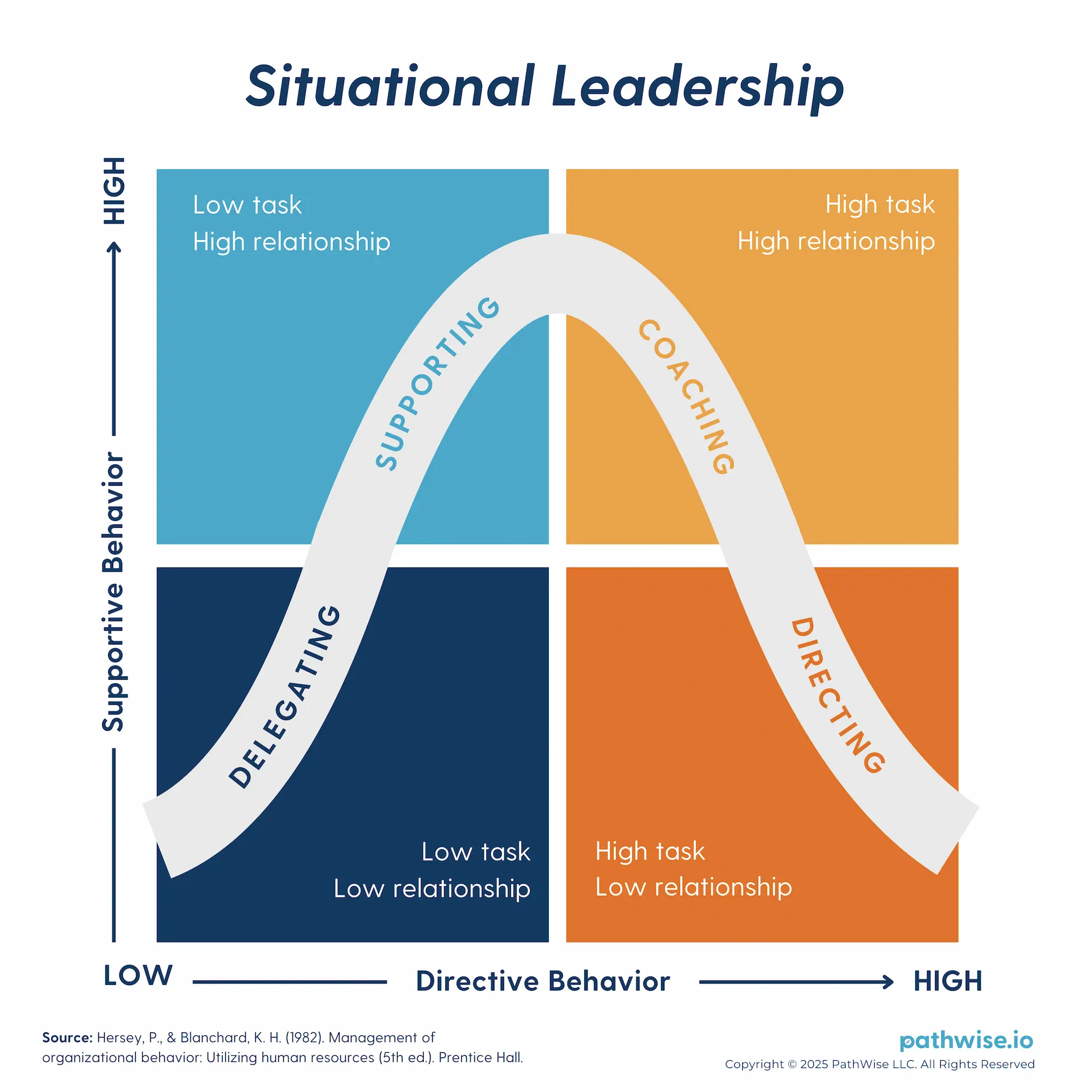
- Situational Leadership Model: This leadership model illustrates how leaders should adjust their style (directing, coaching, supporting, or delegating) according to employees’ competence and commitment. Expectation-setting is a central part of tailoring leadership behaviors to developmental needs. It ensures that both performance standards and the support provided are appropriate to each situation.
- HARD Goals: Introduced by Mark Murphy, this framework proposes setting goals that are Heartfelt, Animated, Required, and Difficult. Unlike SMART goals, HARD goals emphasize emotional connection and personal drive. This model is particularly effective for setting expectations when managers want employees to be deeply invested in achieving challenging objectives.
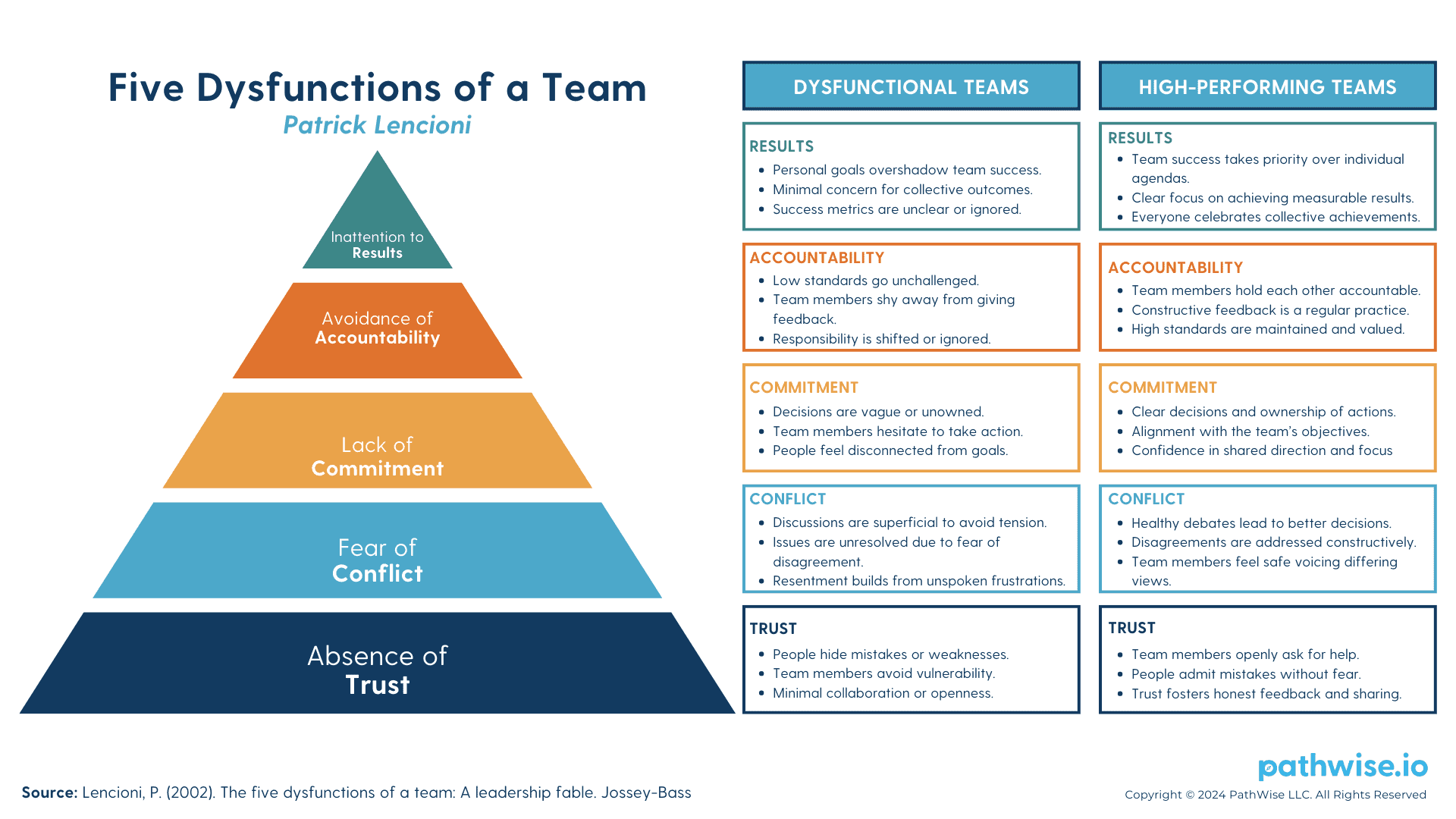
- The Five Dysfunctions of a Team: Patrick Lencioni’s model identifies five common dysfunctions: absence of trust, fear of conflict, lack of commitment, avoidance of accountability, and inattention to results. Expectation-setting plays a crucial role in addressing each dysfunction, particularly in terms of commitment and accountability. Teams that define clear goals and responsibilities can overcome ambiguity and misalignment.
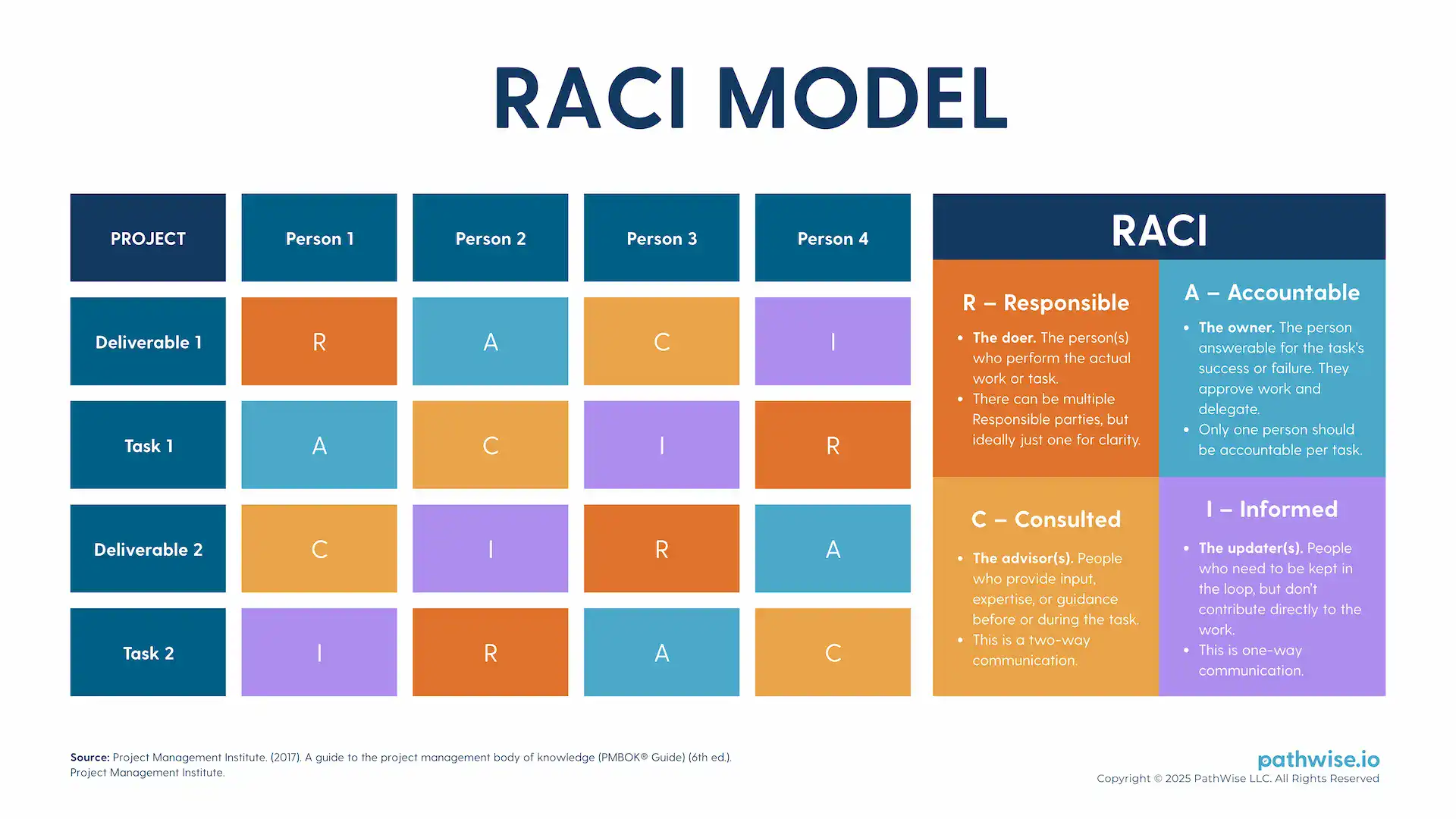
- RACI Matrix: The Responsible, Accountable, Consulted, Informed (RACI) model helps organizations clarify roles and decision-making expectations. It prevents confusion by specifying who is directly responsible, who has ultimate accountability, who must be consulted, and who should be kept informed. RACI is widely used in project management but applies broadly to any collaborative work.
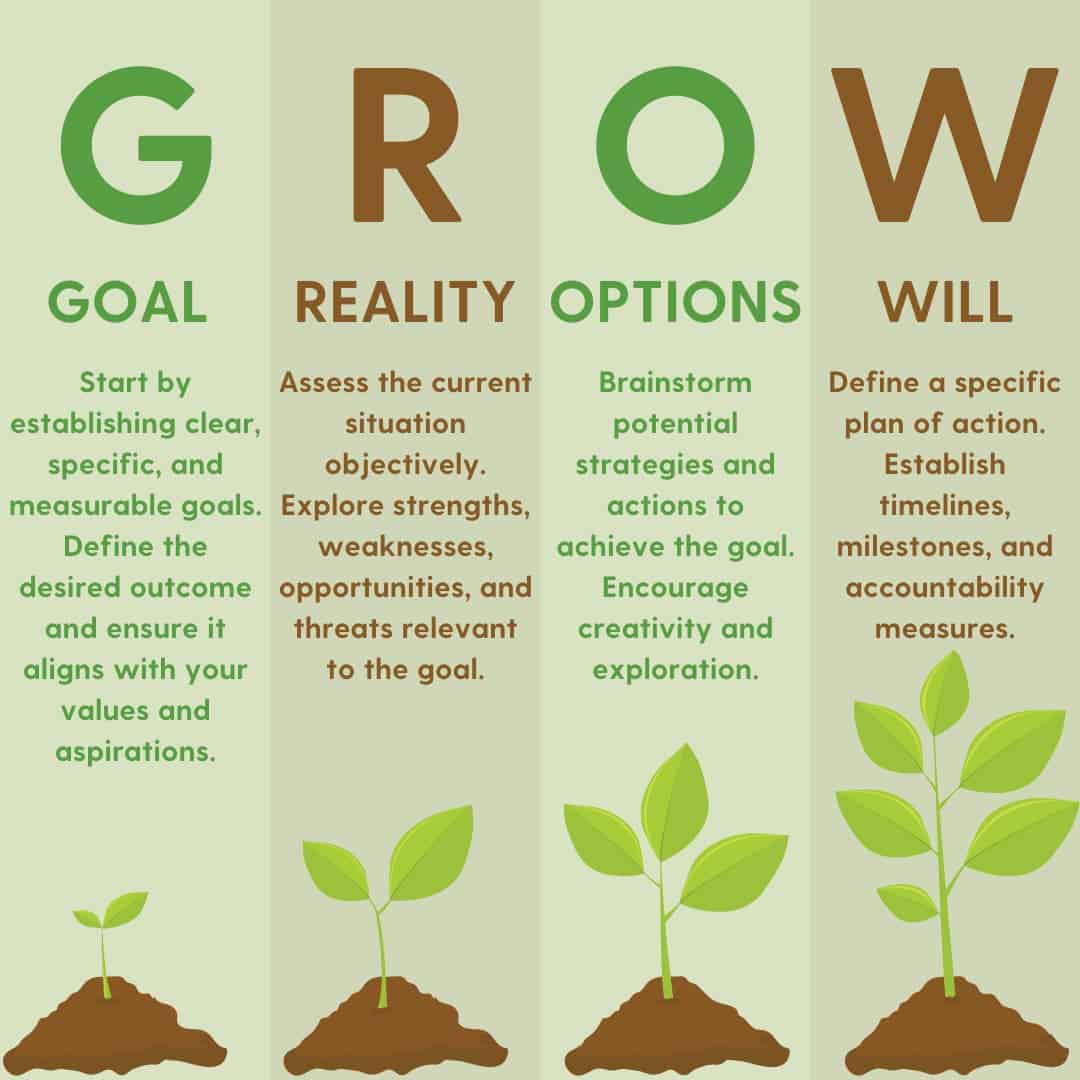
- GROW Model: Originally developed as a coaching framework, GROW helps structure conversations and clarify expectations. It guides managers and employees through four stages: defining the Goal, assessing the current Reality, exploring possible Options, and agreeing on the Way forward. By breaking down expectation setting into these steps, GROW makes it easier to align on outcomes and create accountability while leaving room for autonomy.


Expectation Setting in Leadership
Expectation setting helps managers grow into stronger leaders by shifting them from reactive problem-solvers to proactive enablers of success. Rather than controlling every detail or, at the other end of the spectrum, simply issuing instructions, effective managers invest time to clarify goals, roles, priorities, and standards from the outset. This clarity then eliminates guesswork, reduces the need for constant oversight, enhances the team’s efficiency, and fosters mutual trust. With clear expectations, managers enable their team to understand exactly what success looks like, helping them feel confident that they have the tools, authority, and support to achieve it. Therefore, they can work more independently and take ownership of their results, all while developing their skills. In this way, expectation setting drives performance and builds a workplace culture where people are empowered to thrive.
Specifically, setting clear expectations:
- Reduces unnecessary conflict.Clear expectations mean fewer surprises and misunderstandings, allowing issues to be addressed before they escalate.
- Empowers employees.People can work more confidently and independently when they know exactly what’s expected and what good performance looks like.
- Boosts performance.Clarity on goals, priorities, and deadlines helps teams focus their energy on the proper efforts, rather than guessing or duplicating work.
- Fosters growth.By setting expectations not only for results but also for behavior and development, managers guide their teams toward becoming more capable and self-sufficient.
- Creates fairness and accountability.Standards are applied consistently, making feedback feel objective rather than personal.
- Builds trust and credibility.When managers are clear upfront, team members perceive them as transparent and dependable, which in turn strengthens loyalty and respect.
Image used under license from Shutterstock.com
Expectation Setting in Personal Development
Expectation setting has a direct and consequential impact on professional development because it creates clarity around growth opportunities and performance standards. When managers clearly communicate what skills, behaviors, and outcomes are expected, we as individual contributors can identify gaps in our own capabilities and take targeted steps to improve. Without this clarity, we would resort to relying on assumptions, which can lead to misaligned priorities, wasted effort, duplicative work, gaps remaining unaddressed, or overall stagnation.
Clear expectations also provide a framework for meaningful feedback. If we know precisely what “success” looks like, then our managers can give specific, actionable guidance rather than vague or subjective critiques. This helps us to track progress and adjust our approach accordingly.
Meanwhile, expectation setting also fosters accountability. If we are clear about our role and responsibilities, it’s easier to take ownership of our development because the path forward appears transparent and supported. Over time, this cultivates self-directed learning, resilience, and the ability to manage our own career trajectory—skills that are essential for long-term professional success.
Ultimately, when teams operate under clear expectations, managers can focus on coaching and mentoring, rather than firefighting or constantly correcting misunderstandings. This shift enables leaders to invest in the growth of their people, fostering a culture where professional development is an ongoing, structured component of the work experience.

Image used under license from Shutterstock.com
Conclusion
Clear expectations seek to create the conditions for success. When people know what’s expected of them, they can focus less on decoding hidden rules and more on doing their best work. It leads team members out of uncertainty into alignment, confusion into clarity, and effort into meaningful results.
