



Imagine a moment when you’re completely absorbed in what you’re doing. Time seems to stand still, and you effortlessly navigate tasks with a sense of heightened focus and satisfaction. This phenomenon, known as ‘flow,’ has captivated psychologists, athletes, artists, and professionals alike for decades. But what exactly is flow, and how can we harness its power to unlock our full potential? Let’s explore.
What is Flow?
Flow is a psychological state of optimal experience characterized by complete absorption, intense focus, and a sense of effortless action. It was first coined by psychologist Mihaly Csikszentmihalyi, who described flow as the moments when we are fully immersed in an activity, experiencing deep concentration and a loss of self-consciousness. During flow, people feel energized, motivated, and deeply satisfied by their actions.
Flow typically occurs when the challenge level of a task matches our skill level, leading to a state of “effortless effort.” It is often associated with enhanced performance and creativity.

Image used under license from Shutterstock.com
Flow in Personal Development
Flow can have profound positive effects on personal wellbeing and professional development, contributing to greater happiness, productivity, creativity, and satisfaction in life. Therefore, it’s important that we learn to cultivate opportunities for flow in both personal and professional contexts to improve our overall quality of life. Specifically, some ways in which flow impacts personal development include:
- Increased Happiness: Engaging in activities that induce flow often leads to feelings of happiness and fulfillment, as flow experiences are inherently enjoyable.
- Reduced Stress: Flow involves a state of deep concentration and absorption, which can temporarily alleviate stress and anxiety. When we are fully immersed in a task, we are less likely to dwell on negative thoughts or worries.
- Enhanced Mental Health: Regularly experiencing flow has been associated with improved mental health outcomes, including decreased symptoms of depression and anxiety. Additionally, flow fosters a sense of mastery and accomplishment, which can boost self-esteem and resilience.
- Increased Productivity: Flow is associated with heightened levels of focus and concentration, leading to increased productivity and efficiency in tasks.
- Greater Creativity: Flow encourages divergent thinking and creative problem-solving. In this state, we are more likely to generate innovative ideas and solutions, leading to breakthroughs and advancements in our professional endeavors.
- Enhanced Performance: Flow is often accompanied by a heightened sense of skill and mastery, allowing us to perform at our peak level, whether that’s in sports, arts, or work-related tasks.
- Career Satisfaction: Engaging in work that induces flow can lead to greater job satisfaction and career fulfillment. Finding activities that align with our skills and interests allows us to experience a sense of purpose and meaning in our professional lives.
Thought Leaders
Several thought leaders have contributed to the field of flow and optimal human performance. Some of the most notable include:
- Mihaly Csikszentmihalyi: Regarded as the pioneer of flow psychology, Csikszentmihalyi’s research laid the foundation for understanding the concept of flow and its implications for personal development, creativity, and well-being. He published a book titled, Flow: The Psychology of Optimal Experience.
- Steven Kotler: A leading expert on the science of flow, Kotler has written extensively about the neurobiology of flow and its applications in various domains, including sports, business, and creativity.
- Jamie Wheal: Co-founder of the Flow Genome Project alongside Steven Kotler, Wheal is a prominent voice in the field of flow and peak performance. He explores the intersection of flow, neuroscience, and technology, offering insights into how people and organizations can harness flow to unlock their full potential.
- Jeanne Nakamura: A psychologist and researcher, Nakamura has conducted extensive studies on flow and its implications for human development and well-being. Her work has shed light on the conditions that facilitate flow experiences and their role in fostering resilience and personal growth.
- Angela Duckworth: Known for her research on grit and perseverance, Duckworth’s work explores the factors that contribute to long-term success and achievement. While not specifically focused on flow, her research on grit has found an association between flow and grit’s components, passion and perseverance.
- Adam Grant: A leading organizational psychologist and bestselling author, Grant’s work delves into topics such as motivation, creativity, and leadership. While he doesn’t specifically specialize in flow psychology, his research on workplace dynamics and the psychology of success offers valuable insights into how individuals and teams can thrive in their endeavors. He has a TED Talk titled, How to Stop Languishing and Start Finding Flow.
- Daniel Pink: An author, speaker, and former speechwriter for Al Gore, Pink has written several bestselling books on topics such as work, management, motivation, and behavioral science. In Drive: The Surprising Truth About What Motivates Us, Pink discusses the importance of intrinsic motivation, which can lead to experiences of flow. He explores how factors such as autonomy, mastery, and purpose can contribute to creating environments where flow is more likely to occur.
Key Frameworks
Several frameworks and models have been developed to conceptualize and understand the phenomenon of flow. Here are some key ones:
- Csikszentmihalyi’s Flow Model: Proposed by Mihaly Csikszentmihalyi, this model describes the conditions necessary for experiencing flow. It highlights the balance between the perceived challenge of a task and an individual’s perceived skill level. When the challenge is high and matches one’s skills, and clear goals are present, flow is more likely to occur.
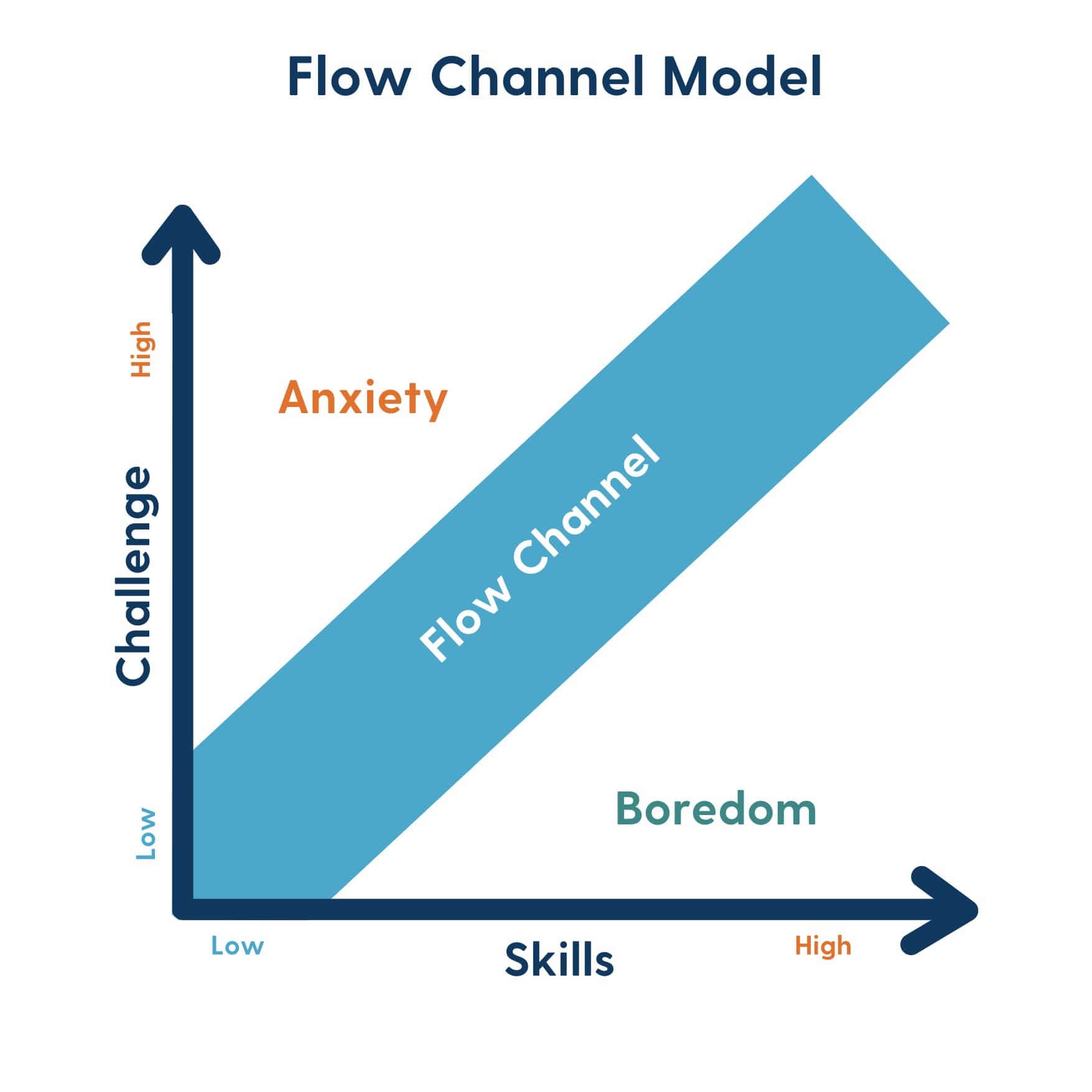
The flow channel model (adapted from Csikszentmihalyi, 1975)
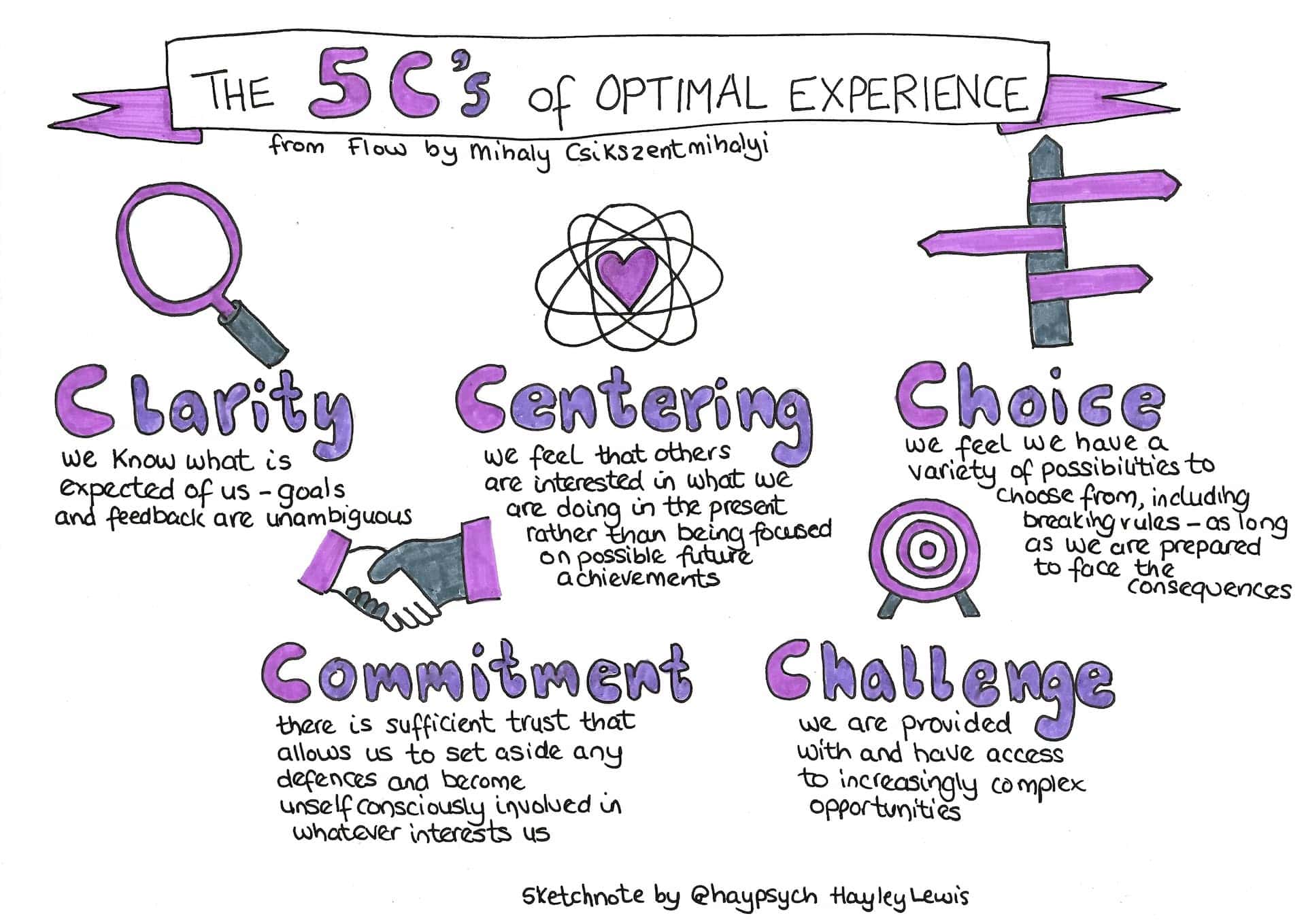
- The Five C’s of Flow: This framework, introduced by Csikszentmihalyi and later expanded upon by other researchers, outlines five key components necessary for achieving flow: clarity, centering, choice, commitment, and challenge. Check out below Dr. Hayley Lewis’s Sketchnote summarizing this framework.
- The Flow Genome Project’s Flow Cycle: This model, proposed by Steven Kotler and Jamie Wheal of the Flow Genome Project, describes the four stages of the flow cycle: Struggle, Release, Flow, and Recovery. It emphasizes the importance of embracing struggle and challenge as precursors to entering a state of flow, followed by a period of recovery to integrate and consolidate the experience.
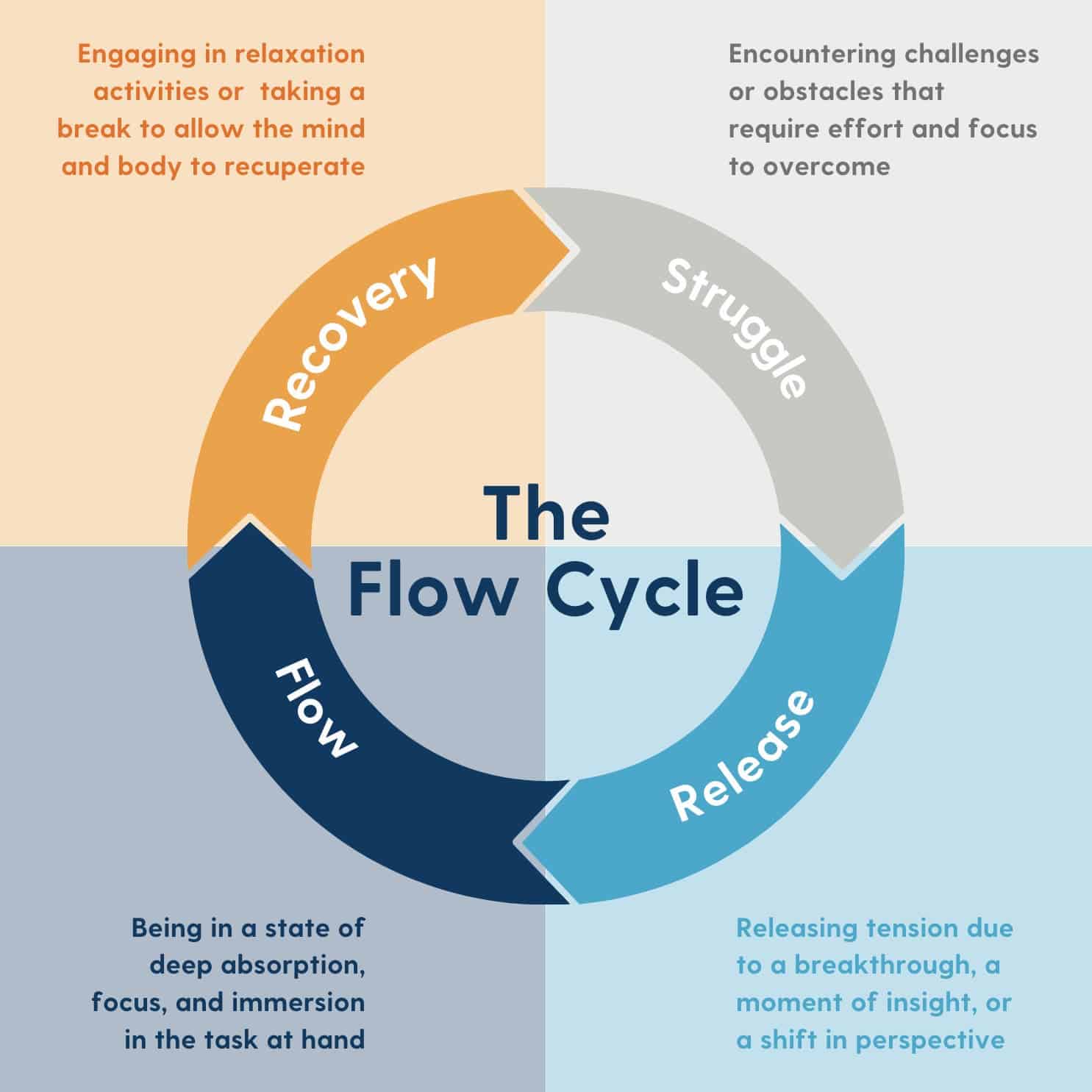
Based on the work of The Flow Genome Project


Flow in Leadership
Group flow refers to the collective experience of flow within a group or team. Just as we can individually enter a state of flow when fully engaged in a task, groups can also achieve a shared flow state when members collaborate seamlessly toward a common goal. In group flow, there is a sense of synergy and cohesion among team members, leading to enhanced communication, coordination, and productivity.
Leaders can cultivate group flow in several ways to enhance team performance and cohesion:
- Create a Shared Vision: Leaders should articulate a clear and compelling vision that inspires and motivates team members. A shared sense of purpose can align individual efforts and foster a collective commitment to achieving common goals, laying the foundation for group flow.
- Encourage Collaboration: Leaders should foster an environment that encourages open communication, collaboration, and teamwork. By promoting trust, respect, and psychological safety within the team, leaders can facilitate the conditions necessary for group flow to emerge.
- Provide Clear Goals and Feedback: Leaders should establish clear goals and expectations for the team, providing clarity on tasks, roles, and responsibilities. Regular feedback and recognition can help keep team members focused and motivated, guiding their efforts toward shared objectives.
- Cultivate a Positive Work Environment: Leaders should create a supportive and inclusive work environment where team members feel valued, empowered, and appreciated. By promoting a culture of positivity and mutual support, leaders can enhance team morale and cohesion, facilitating the emergence of group flow.
- Promote Skill Development: Leaders can also invest in the development of team members’ skills and competencies, ensuring that individuals have the necessary knowledge and resources to excel in their roles. By promoting continuous learning and growth, leaders can enhance team performance and adaptability, contributing to the achievement of group flow.
Other Resources
- HBR: Creating an Environment that Fosters Flow
https://hbr.org/2014/05/create-a-work-environment-that-fosters-flow - HBR: Why Work Should Get a Little Harder Everyday
https://hbr.org/2014/12/why-work-should-get-a-little-harder-every-day - Forbes: Finding Flow
https://www.forbes.com/sites/forbesbooksauthors/2024/02/05/finding-flow-the-point-where-process-meets-performance/?sh=2d90c1e719d3 - Forbes: How To Access Flow State on Demand
https://www.forbes.com/sites/forbesbusinesscouncil/2021/09/03/how-to-access-flow-state-on-demand/?sh=691109877f9c - Forbes: Achieving Flow – The Secret to Unlocking Peak Performance
https://www.forbes.com/sites/forbesbusinesscouncil/2023/11/22/achieving-flow-the-secret-to-unlocking-peak-performance/?sh=53016585ae9c
