



Followership is often the unsung hero of successful leadership, yet its role in driving organizational success is undeniable. While much attention is given to leaders and their actions, effective leadership cannot exist without engaged, proactive followers. Note, however, that followership is not about passive obedience but rather about taking responsibility, offering feedback, and contributing to a shared vision.
Followership is essential for leaders and anyone looking to build influence, develop professionally, and thrive in a team-oriented world. Understanding the concept of followership and its impact on leadership helps appreciate the value of those who support, challenge, and help shape leadership from the ground up.

Image used under license from Shutterstock.com
What is Followership?
Followership is the group of professionals who have the ability and desire to follow a leader. It refers to the behaviors, attitudes, and actions of those supporting, collaborating with, or challenging leadership in a productive way.
Good followership involves critical thinking, active participation, and a shared commitment to organizational or team goals. Effective followers are those who are proactive, responsible, and able to work independently while also supporting their leaders.
How to Build Followership
Building followership is essential because leadership cannot exist without followers. In fact, strong followership enhances leadership by fostering a culture of accountability, collaboration, and shared success. For the leader, it involves inspiring trust, commitment, and engagement from those they lead, fostering an environment where the team feels motivated, valued, and empowered.
Note that leadership and management are not the same. While a manager can have some authority, he’s not a leader if his team is not a true group of effective followers. Thus, key strategies to cultivate strong followership include:
- Leading with Vision and Clarity: To build followership, begin by clearly communicating your goals, purpose, and expectations. Help followers understand how their individual contributions tie into the broader mission and vision. When people see how their work impacts the larger picture, they feel more engaged and aligned with the team’s objectives.
- Building Trust and Credibility: Trust is foundational to strong followership. Be consistent in your actions and words, demonstrating integrity and transparency. When mistakes happen, acknowledge them and take responsibility. Followers are more likely to trust and engage with a leader who shows authenticity and reliability.
- Developing Genuine Relationships: Followership thrives when leaders invest in authentic relationships. Show empathy and care in individuals beyond their work performance. Be approachable and accessible, actively listening to your team and acknowledging their contributions. Building a connection with followers fosters loyalty and encourages mutual respect.
- Empowering and Support Followers: Effective leaders empower their followers by providing opportunities for autonomy and ownership. Offer mentorship and guidance to help followers grow in their roles, and recognize and reward their achievements. When followers feel supported, they are more likely to invest their energy and commitment in the team’s success.
- Encouraging Two-Way Communication: An open and transparent communication flow is vital for fostering strong followership. Encourage feedback and make sure followers feel comfortable sharing their thoughts and concerns. Actively involve them in decision-making, showing that their input is valued and respected. By taking action on their feedback, you demonstrate that their voices truly matter.
- Modeling the Behavior You Want to See: Leaders set the tone for followership by modeling the behavior they expect from others. Demonstrate commitment, professionalism, and accountability, especially in challenging situations. By upholding the values and culture you want to instill, you inspire followers to emulate these qualities and build a more cohesive team.
- Developing a Culture of Collaboration: Encourage teamwork and collaboration by fostering a culture where followers support each other. Break down silos and promote cross-functional relationships that contribute to shared goals. Celebrating collective achievements reinforces the value of collaboration and helps cultivate strong followership.
- Adapting Leadership Style to Followers’ Needs: Recognize that each follower has unique strengths, challenges, and motivations. Adapt your leadership style accordingly, providing tailored support based on their development and engagement levels. This personalized approach ensures that followers feel understood and empowered to contribute in the most effective way.
- Providing Growth and Learning Opportunities: One of the best ways to build followership is to invest in your followers’ professional development. Help them develop new skills, prepare for leadership roles, and provide opportunities for learning through coaching, training, and stretch assignments. By supporting their growth, you enhance their loyalty and long-term commitment.
- Inspiring Through Purpose and Passion: Lead with enthusiasm and a clear sense of purpose. Make work meaningful by connecting it to a larger mission or vision that inspires followers to make a difference. When followers see the value in their work and feel aligned with a greater purpose, they are more likely to commit fully and work toward shared success.

Image used under license from Shutterstock.com
Thought Leaders
Several thought leaders have significantly contributed to the study of followership and its relationship with leadership. Here are some key figures:
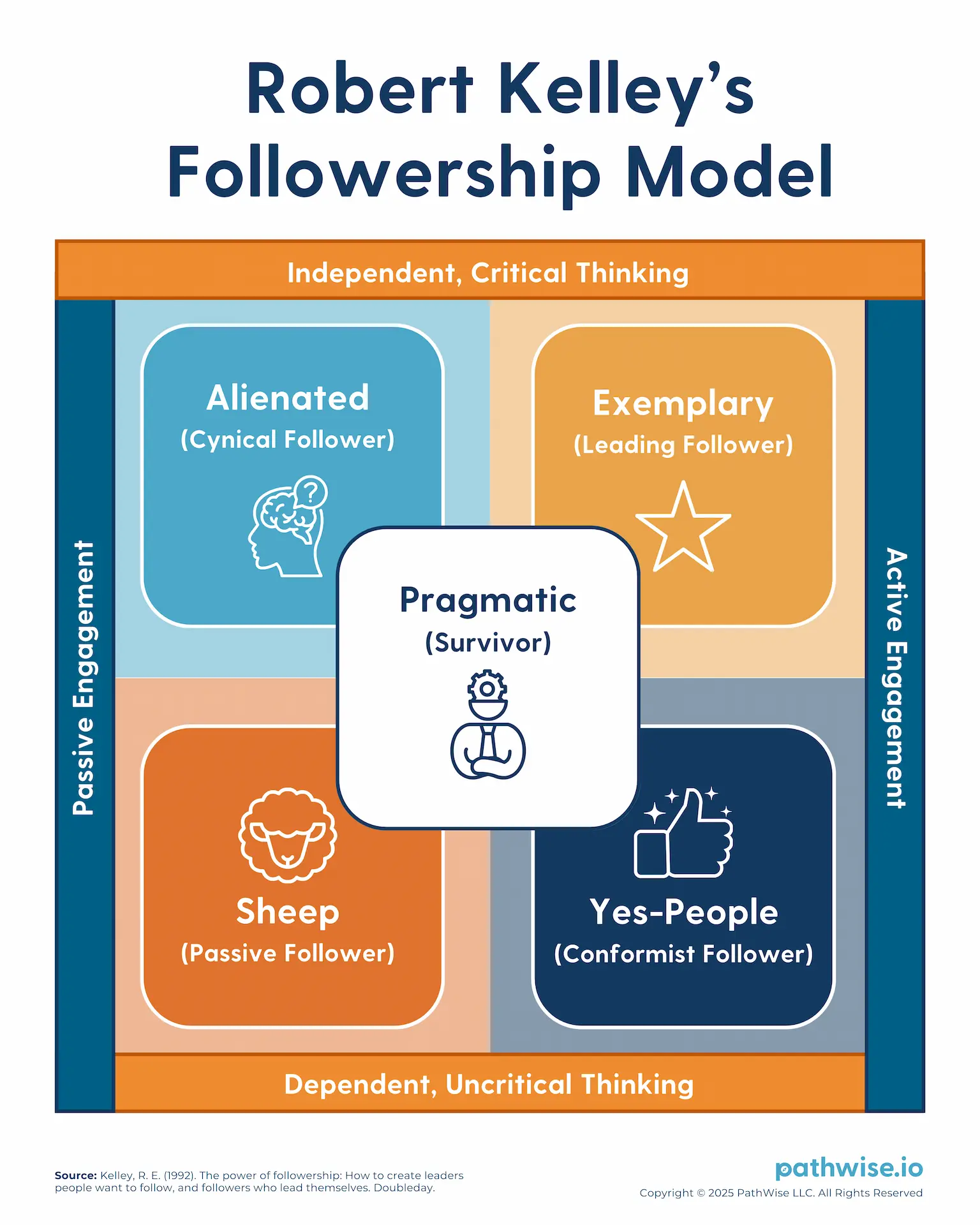
- Robert Kelley: A pioneer in followership studies, he is best known for his book The Power of Followership, where he introduced a framework categorizing followers into five types: exemplary, conformist, passive, alienated, and pragmatic. His work emphasizes that followership is active and that effective followers contribute significantly to leadership success.
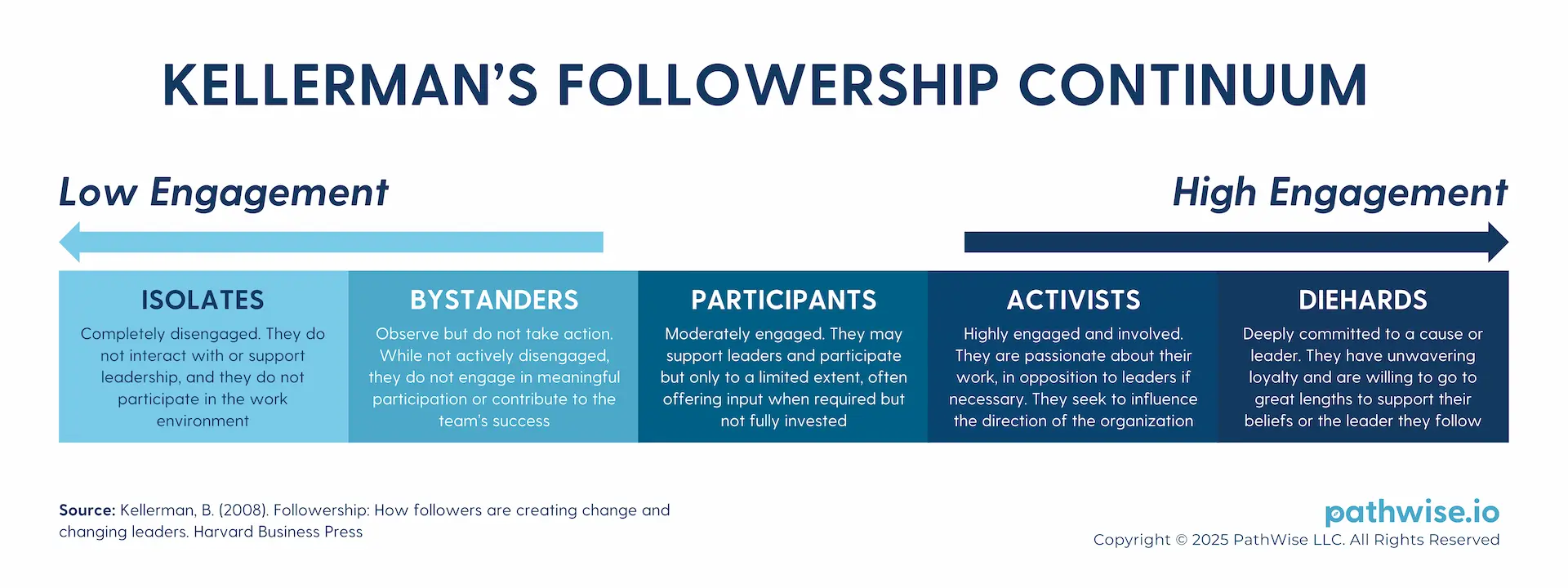
- Barbara Kellerman: A leadership scholar and professor at Harvard Kennedy School, she is known for her book Followership: How Followers Are Creating Change and Changing Leaders. She classifies followers based on their level of engagement, ranging from isolates (completely disengaged) to diehards (deeply committed, sometimes to the point of extremism). Her research highlights the power dynamics between leaders and followers and how followers influence leadership outcomes.
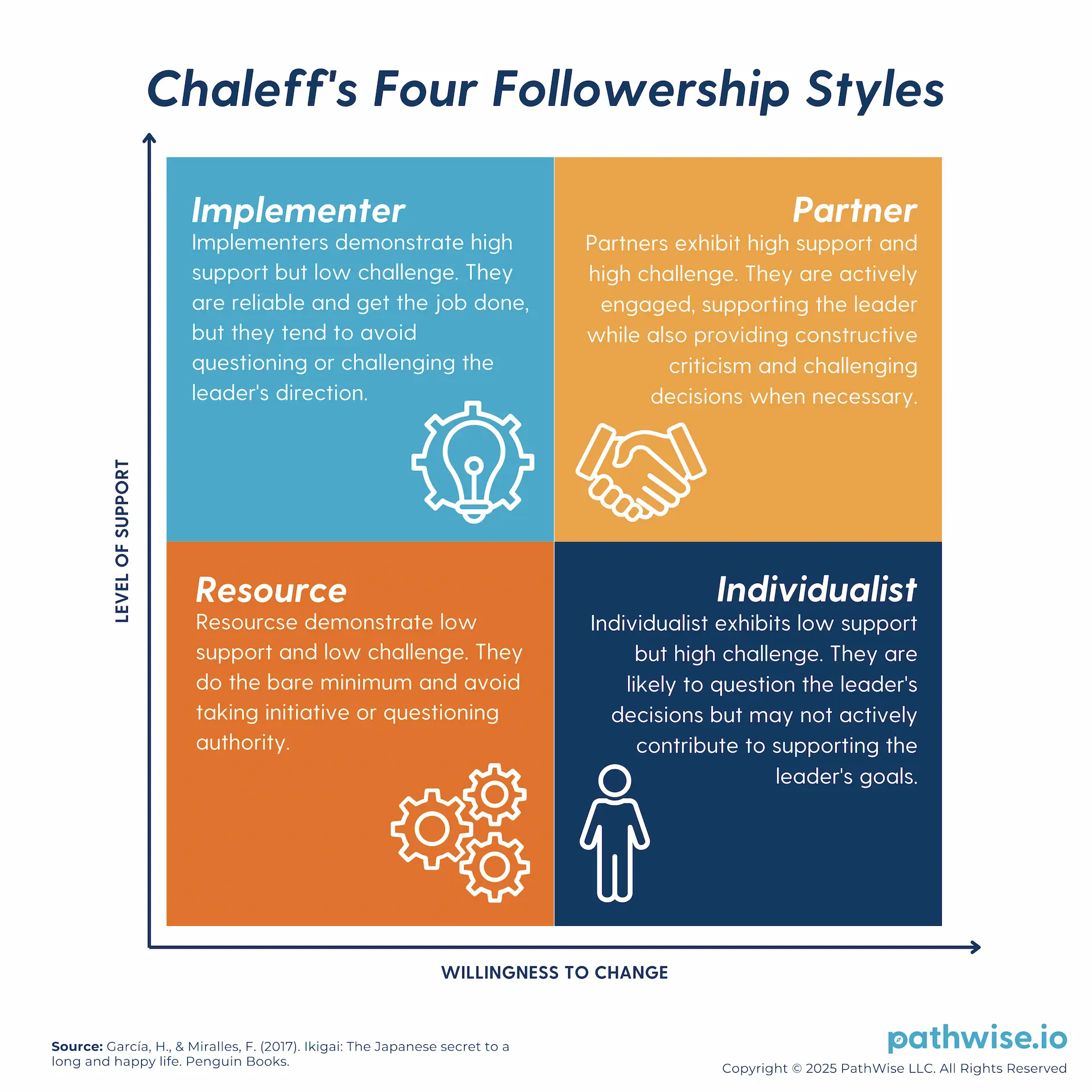
- Ira Chaleff: A leadership consultant and author of The Courageous Follower, he focuses on the responsibility of followers to actively support good leadership while also having the courage to challenge poor decisions. He argues that followers must be partners in leadership, demonstrating both loyalty and independent thinking to create a balanced and ethical leadership-followership dynamic.
- Ronald E. Riggio: A psychologist and leadership expert, he has written extensively on leadership and followership, emphasizing the role of emotional intelligence and communication in effective followership. His work explores how strong followership contributes to leadership development and organizational success.
- Susan Cain: Best known for her book Quiet: The Power of Introverts in a World That Can’t Stop Talking, she has contributed to the discussion of followership by highlighting the strengths of quiet, reflective individuals in leadership and team dynamics. Her work challenges the idea that leadership is solely about extroversion and charisma, emphasizing that great followers—and leaders—come in many forms.
- David Marquet: A former U.S. Navy submarine captain and author of Turn the Ship Around!, he is known for his leader-leader model, which challenges traditional top-down leadership. His approach empowers followers to take ownership, think critically, and act with initiative rather than waiting for orders. He argues that strong leadership is about creating an environment where followership thrives through autonomy and accountability.
- Roger Adair: A leadership scholar, he developed the Adair Followership Model, which categorizes followers based on their effectiveness and engagement level. His model emphasizes that organizations should focus on developing strong leaders while cultivating engaged and competent followers who drive team success.
- Doris Kearns Goodwin: A Pulitzer Prize-winning historian and author of Team of Rivals, she has contributed to the study of leadership and followership through her historical analysis of U.S. presidents, particularly Abraham Lincoln. Her work illustrates how great leaders succeed by surrounding themselves with strong, independent-minded followers who challenge and support them, reinforcing the importance of diverse perspectives in leadership.
Key Frameworks
Several models and frameworks provide insights into the role of followers in leadership dynamics, showcasing how followership is not about passive obedience but about active engagement, critical thinking, and contributing to leadership success in meaningful ways. Some of these models include:
- Kelley’s Followership Model: Developed by Robert Kelley, this model categorizes followers into five types based on their level of independent thinking and engagement: exemplary (independent, engaged), conformist (obedient, dependent), passive (disengaged, dependent), alienated (critical thinkers but unengaged), and pragmatic (situationally adaptable). This model emphasizes that effective followers are proactive and contribute to leadership success.
- Kellerman’s Followership Continuum: Introduced by Barbara Kellerman, this framework classifies followers based on their level of engagement: isolates (completely disengaged), bystanders (observant but inactive), participants (moderately engaged), activists (highly engaged and invested), and diehards (deeply committed, sometimes to extremes). Kellerman’s model highlights how different levels of engagement influence organizational outcomes.
- Adair’s Followership Model: Created by Roger Adair, this model categorizes followers based on their effectiveness and engagement, with an emphasis on how organizations can develop and leverage followership. While less widely known than Kelley’s and Kellerman’s models, Adair’s framework supports the idea that followership is not passive but an active and valuable role in leadership dynamics.
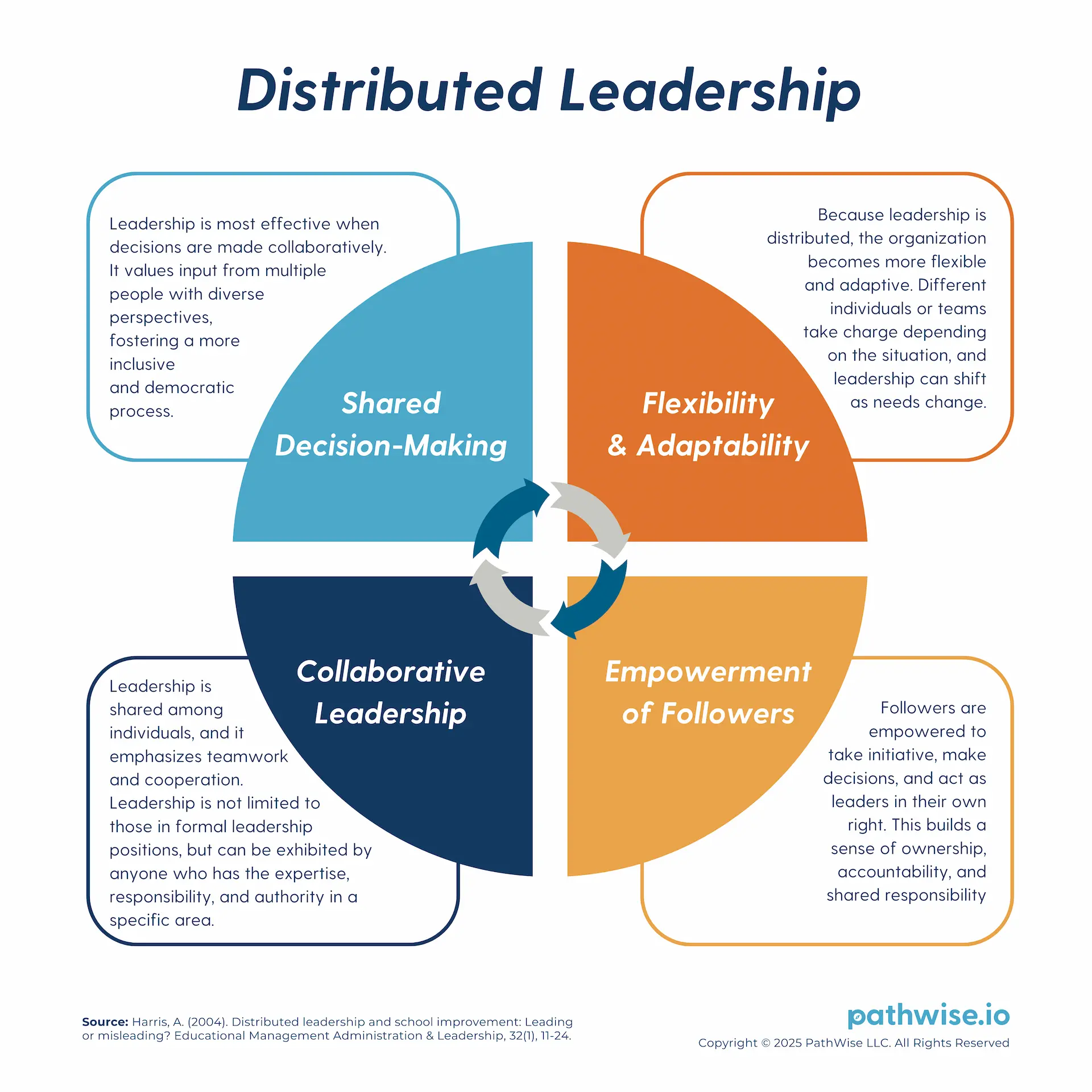
- The Distributed Leadership Model: Popularized by scholars like Peter Gronn and James Spillane, this model argues that leadership is not confined to a single individual but is shared across multiple people within an organization. It highlights how effective followership contributes to collective leadership by distributing decision-making and responsibility, leading to more adaptive and resilient organizations.
- Chaleff’s Courageous Followership Model: Developed by Ira Chaleff, this model focuses on the balance between supporting leaders and challenging them when necessary. It outlines five dimensions of courageous followership: assuming responsibility, serving the leader, challenging the leader when needed, transforming oneself, and taking moral action. Chaleff also outlines four types of followers based on their level of engagement, initiative, and the way they interact with their leaders. These styles of followership influence both the leader-follower relationship and the organizational environment.
- Reversing the Lens Framework: This framework shifts the focus from traditional leader-centric perspectives to studying how followers shape leadership. It argues that leadership is often attributed to individuals based on how followers perceive them, rather than just their actual behaviors. This model challenges organizations to recognize that leadership effectiveness depends on followership engagement and perception.
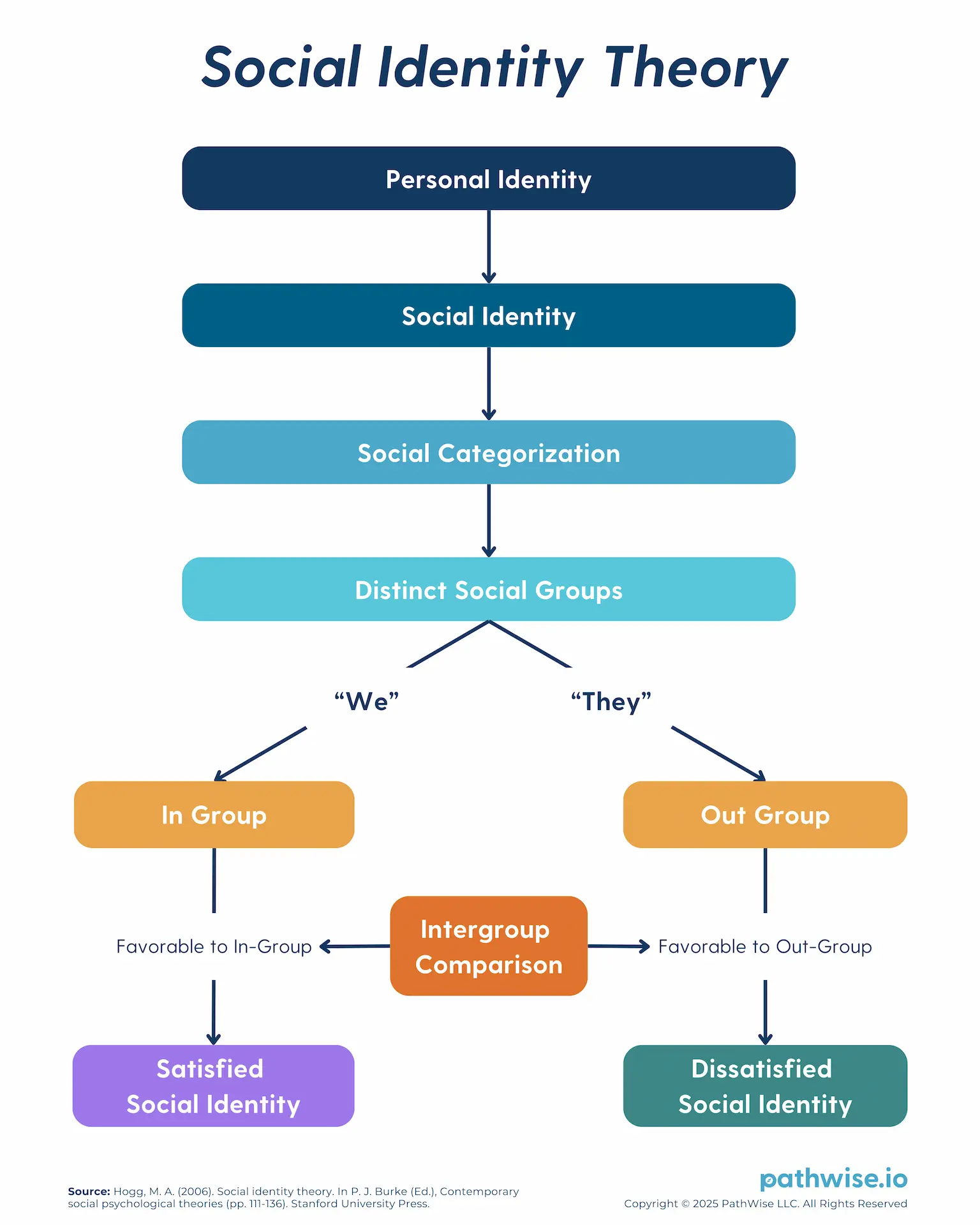
- Social Identity Theory: Proposed by Henri Tajfel and John C. Turner and later expanded by Michael Hogg, this theory suggests that leadership is influenced by group identity and that followers are more likely to support leaders who they see as representing their group’s values and identity. It reframes leadership as an outcome of social categorization and group dynamics, emphasizing that strong followership emerges when followers see themselves reflected in their leader’s vision.
- Implicit Followership Theories (IFTs): This concept examines the subconscious expectations that leaders and organizations have about what makes a “good” or “bad” follower. It highlights that biases about followership impact how followers are treated and how they engage with leadership. Recognizing these implicit beliefs can help organizations create healthier leadership-followership relationships.
Followership in Leadership
Followership and leadership are deeply interconnected—strong followership enhances leadership effectiveness, while poor followership can undermine even the best leaders. Specific ways followership impacts leadership include:
- Shaping Leadership Effectiveness: Engaged and proactive followers provide feedback, challenge assumptions, and help refine a leader’s vision. Leaders who have competent and responsible followers are more successful in achieving goals.
- Influencing Decision-Making: Followers who think critically and contribute ideas help leaders make better-informed decisions. Leaders rely on their teams for insights, expertise, and different perspectives.
- Creating Accountability: Strong followers hold leaders accountable for their actions, helping to prevent unethical behavior, poor decision-making, or mismanagement. When followers are passive or disengaged, leadership can become unchecked.
- Driving Organizational Success: Leadership is not just about vision; execution depends on the ability of followers to carry out plans effectively. Dedicated and motivated followers translate leadership strategy into tangible results.
- Developing Future Leaders: Many effective leaders start as strong followers. By taking initiative, demonstrating responsibility, and learning from leaders, followers build skills that prepare them for leadership roles.
- Impacting Organizational Culture: The way followers engage with leadership affects workplace morale, collaboration, and innovation. A culture of active followership promotes trust, teamwork, and adaptability.

Image used under license from Shutterstock.com
Followership in Personal Development
Followership is a crucial aspect of professional development because it builds the foundational skills necessary for leadership and career growth. Strong followers develop key competencies such as communication, critical thinking, adaptability, and teamwork, all of which are essential in any professional setting. By actively engaging with leaders, taking initiative, and demonstrating reliability, we enhance our problem-solving abilities and gain a deeper understanding of organizational dynamics. Effective followership also fosters accountability and self-management, allowing us to contribute meaningfully to our teams while preparing for greater responsibilities in the future.
Moreover, followership provides opportunities for mentorship and learning from experienced leaders. By observing and collaborating with strong leaders, followers can refine their own leadership style, learning what works and what doesn’t in real-world situations. Those who excel in followership are often recognized for their contributions, opening doors for career advancement and leadership roles. In essence, followership is about active participation, professional growth, and positioning ourselves for future success by building the skills and relationships necessary for long-term career development.

Image used under license from Shutterstock.com
Conclusion
Followership is a powerful and dynamic force that complements leadership. It is an active, intentional role where professionals contribute to organizational success through engagement, accountability, and critical thinking. Whether in a formal leadership role or not, cultivating strong followership skills can enhance your professional development, strengthen team relationships, and position us for future leadership opportunities. By recognizing the importance of followership, we can move toward a more collaborative, productive, and impactful way of working, where leaders and followers alike help drive success.
Other Resources
- PathWise Book Summary: Turn the Ship Around! by David Marquet
- HBR: What Every Leader Needs to Know About Followers
- HBR: To Be a Good Leader, Start By Being a Good Follower
- Forbes: Leadership is Only Half of the Equation
- Forbes: Followership – A Valuable Skill No One Teaches You
- Forbes: To Be a Great Leader, Learn to Be a Great Follower
- Forbes: Why Followership Is Now More Important Than Leadership
- Forbes: Followership – Forming Judgment from the Right Assumptions
