

Managing your career can be like sailing on open water. It’s calm one day and stormy the next, as the environment around you seems to constantly shift. Currents change, winds pick up, new routes emerge. You can’t control the sea, but you can learn to read the weather, strengthen your sails, and chart a course that keeps you moving forward. That’s the essence of future-proofing your career: preparing not for a single destination, but for the ability to navigate whatever comes. When applied to professional development, this mindset transforms skill-building from ticking the boxes into a strategic, lifelong journey.
Image used under license from Shutterstock.com
What is Future-Proofing Your Career?
Future-proofing your career means taking proactive steps to remain relevant and adaptable as you inevitably face change. It is the deliberate process of equipping yourself with the skills, mindset, and network needed to navigate shifting industries, evolving technologies, and new ways of working. Because preparing for a defined outcome is becoming increasingly difficult, future-proofing is a way of staying prepared for a range of possibilities.
The advent of technological advancements such as artificial intelligence, quantum computing, robotics, and even augmented reality makes it nearly impossible for experts to predict what the workplace will look like in a decade. Meanwhile, roles today are being redefined global trends that have reshaped how businesses operate. Future-proofing means building a career that can evolve with these changes instead of becoming made obsolete by them. It requires cultivating transferable skills such as critical thinking, communication, collaboration, and digital fluency, all of which remain valuable even as specific tools or job functions shift.
Future-proofing also means embracing lifelong learning. Regularly seeking out new knowledge —either through formal education, self-directed learning, or hands-on experience—makes you better positioned to pivot when opportunities arise or industries transform. Staying informed about trends in your field and adjacent sectors will help you anticipate change rather than react to it. This process also includes maintaining a strong professional network, developing a personal brand, and staying attuned to your values and goals. These elements provide stability and clarity when considering new roles or career directions, especially in uncertain times.
In short, future-proofing is about investing in long-term career sustainability. It is a strategic approach that favors flexibility, continuous growth, and the ability to thrive no matter how the landscape evolves.

Image used under license from Shutterstock.com
Thought Leaders
Several thought leaders offer insights, perspectives, frameworks, or tools for future-proofing your career, drawing from fields such as career development, leadership, the future of work, and adaptability. Some of these experts include:
- Dorie Clark: A business strategist and author of The Long Game and Entrepreneurial You, among others, she focuses on personal branding, strategic thinking, and long-term career planning. She argues that building a portfolio career and creating thought leadership helps remain relevant and in demand over time.
- Heather E. McGowan: A leading voice on the future of work, she’s known for her work on adaptability and lifelong learning as essential tools for career resilience. She argues that the most valuable skill in a rapidly changing economy is how quickly you can learn and relearn.
- Herminia Ibarra: A professor at London Business School, she’s an expert on career transitions and leadership development. Her work, such as Working Identity, highlights how professionals evolve by experimenting with new roles and identities, positioning adaptability and self-reinvention as central to long-term career success.
- Adam Grant: An organizational psychologist and bestselling author, he brings insight into how curiosity, flexibility, and rethinking long-held assumptions contribute to sustained professional growth. His work, such as Hidden Potential and Think Again, encourages professionals to embrace change as a habit, not a disruption.
- Reid Hoffman: Co-founder of LinkedIn and author of The Start-up of You, he views careers through an entrepreneurial lens. He encourages individuals to treat their professional lives like evolving ventures, constantly adapting, building networks, and investing in new skills.
- Seth Godin: A marketing expert and author of several books, he promotes the idea of “linchpin” individuals—those who stand out by being indispensable and embracing creative problem-solving. His work challenges professionals to lead from where they are and proactively shape their roles in response to change.
- Lynda Gratton: A professor at London Business School and co-author of The 100-Year Life, she explores how demographic shifts, longevity, and technology are transforming careers. Her work focuses on the importance of planning for multi-stage, flexible careers that accommodate reinvention, learning, and well-being across a longer working life.
Key Frameworks
Several models and frameworks can help you future-proof your career, each supporting different aspects of adaptability, skill development, and long-term professional resilience. Some of these include:
- Career Portfolio Model: Popularized by Charles Handy and more recently by Dorie Clark, this model promotes building a diversified career comprising multiple income streams or roles, such as consulting, teaching, writing, or entrepreneurship. It encourages flexibility and reduces dependence on a single employer or identity.
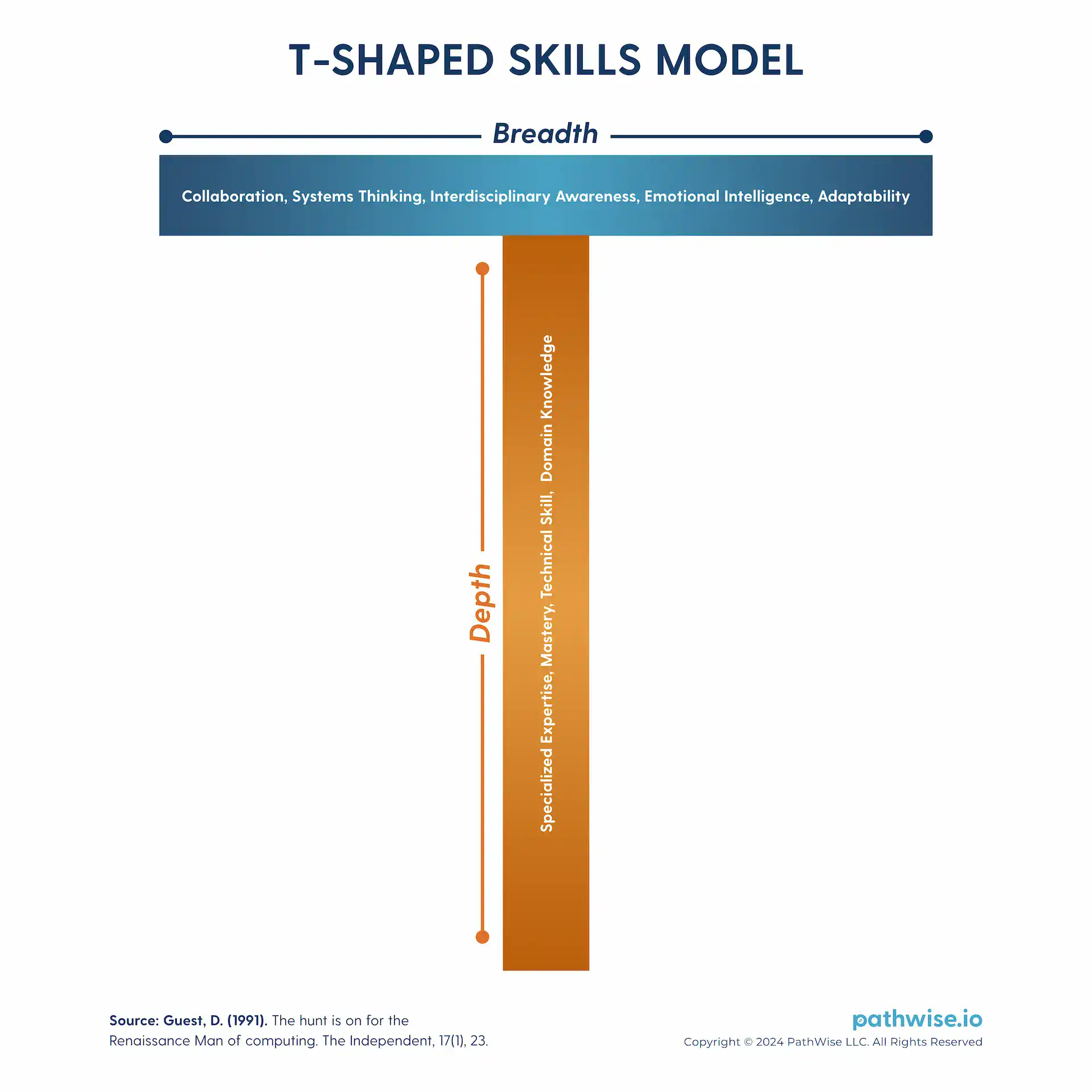
- The T-Shaped Skills Model: This model emphasizes the value of having deep expertise in a specific area (the vertical bar of the “T”) and a broad set of complementary skills across other disciplines (the horizontal bar). It encourages the development of a strong core while remaining versatile and collaborative across functions, which is critical for navigating changing roles and industries.
- Design Thinking for Career Development: Adapted from product and service design, this human-centered approach (popularized by Designing Your Lifeby Bill Burnett and Dave Evans) encourages experimenting, prototyping career moves, and iterating based on feedback. It supports adaptability and resilience by normalizing exploration and reframing uncertainty as opportunity.
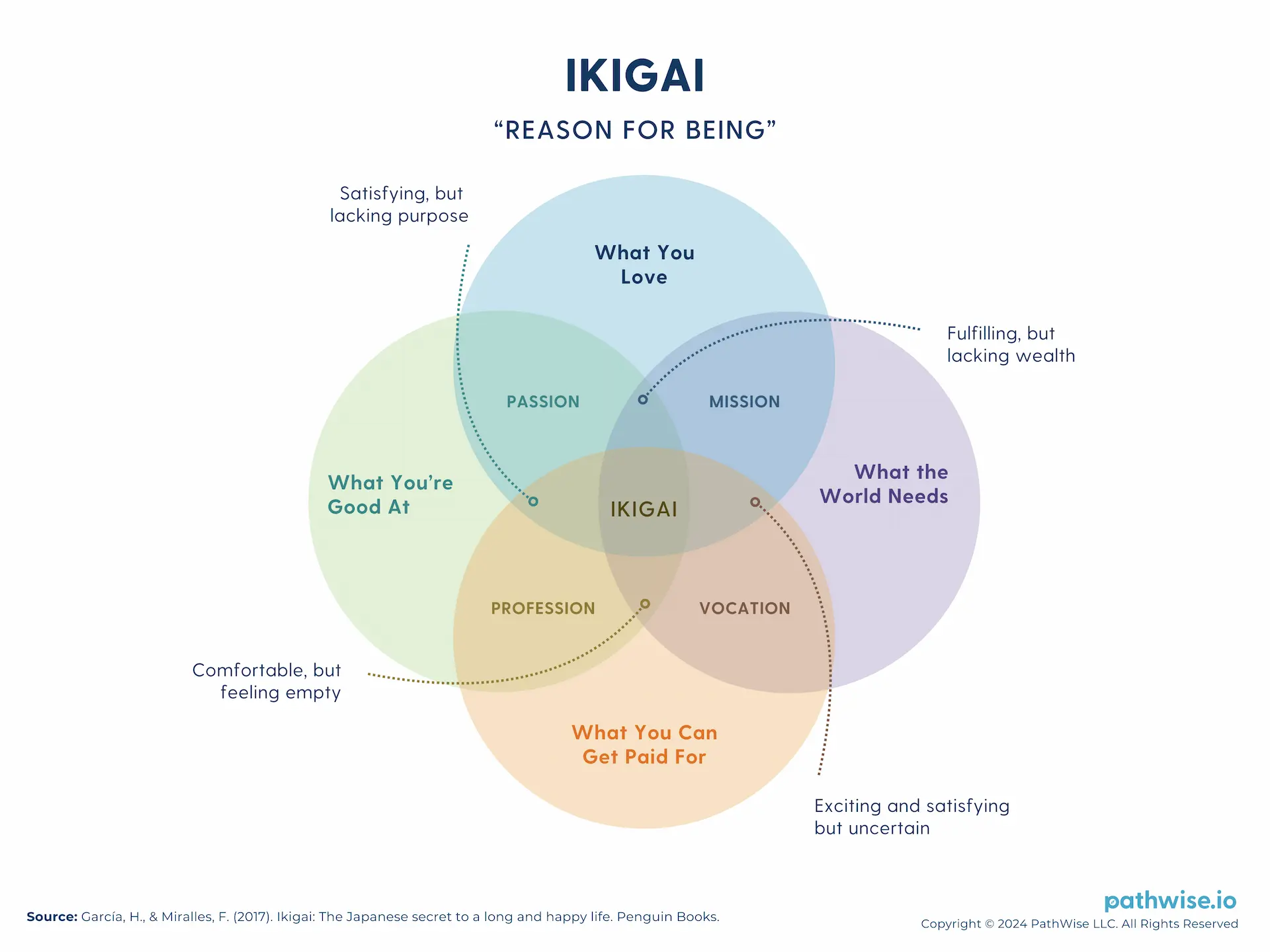
- Ikigai Framework: Originating from Japanese philosophy, Ikigai represents the intersection of what you love, what you are good at, what the world needs, and what you can be paid for. Applied to career planning, it helps align personal purpose with market relevance, which supports long-term motivation and adaptability.
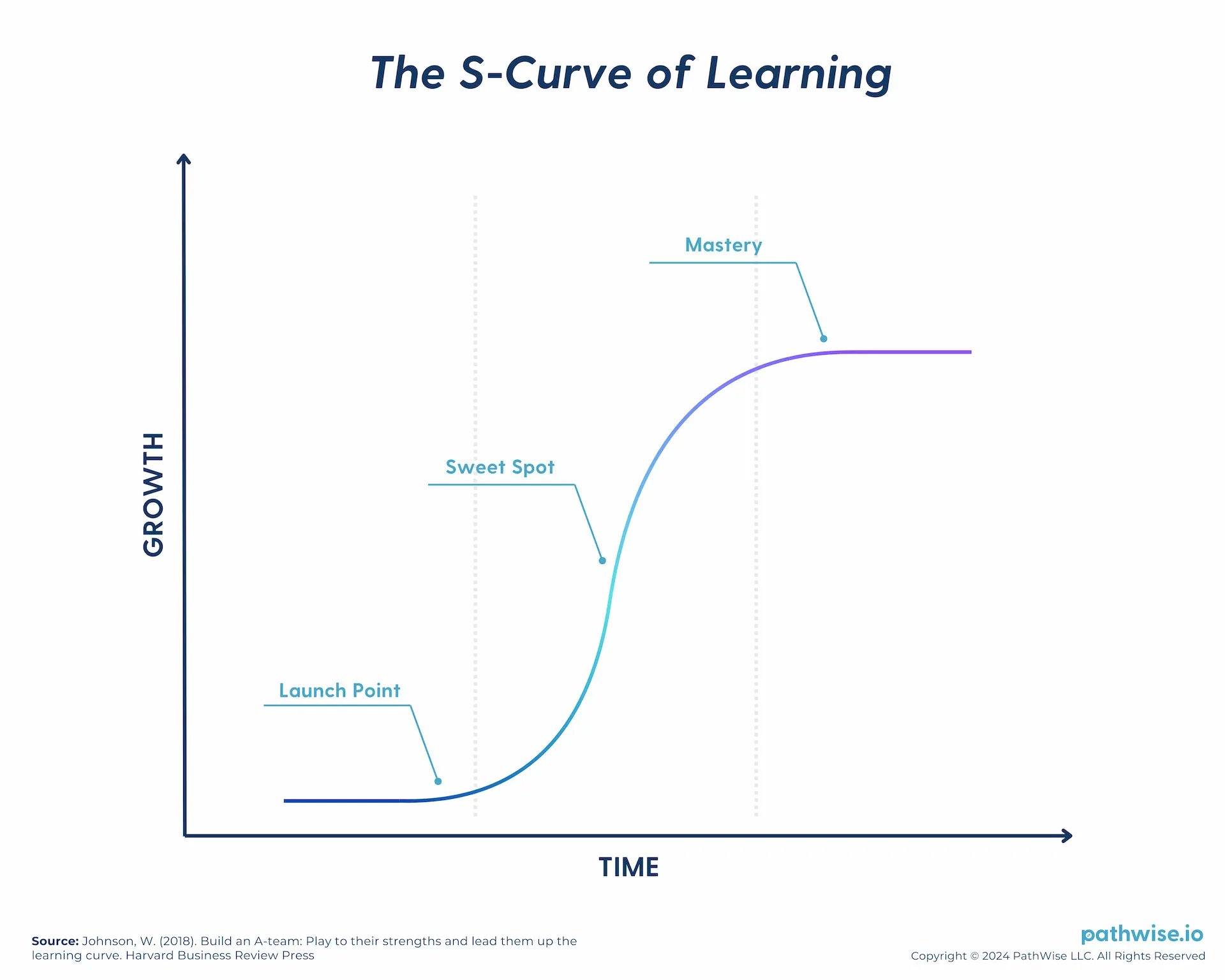
- The S-Curve of Learning: Developed by Whitney Johnson, this model illustrates the personal learning journey as a curve with distinct phases: launch, growth, and mastery. Johnson argues that we should intentionally “jump curves” by seeking out new challenges once they approach the top of a learning cycle, maintaining momentum, and avoiding stagnation.
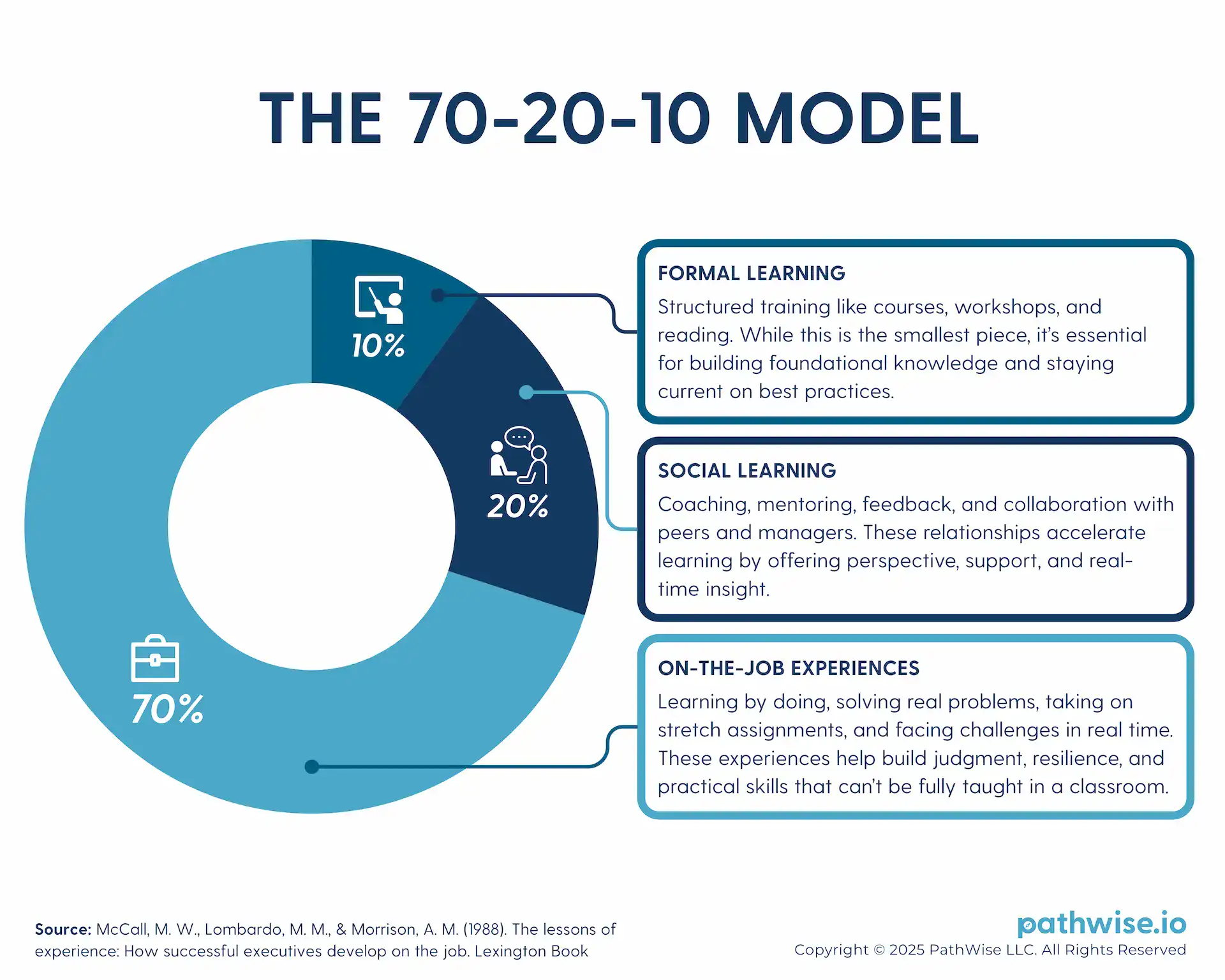
- The 70-20-10 Learning Model: Often used in leadership and talent development, this model suggests that 70% of learning comes from on-the-job experiences, 20% from interactions with others, and 10% from formal education. It reinforces the idea that continuous, experiential learning is essential for remaining competitive in a changing world.
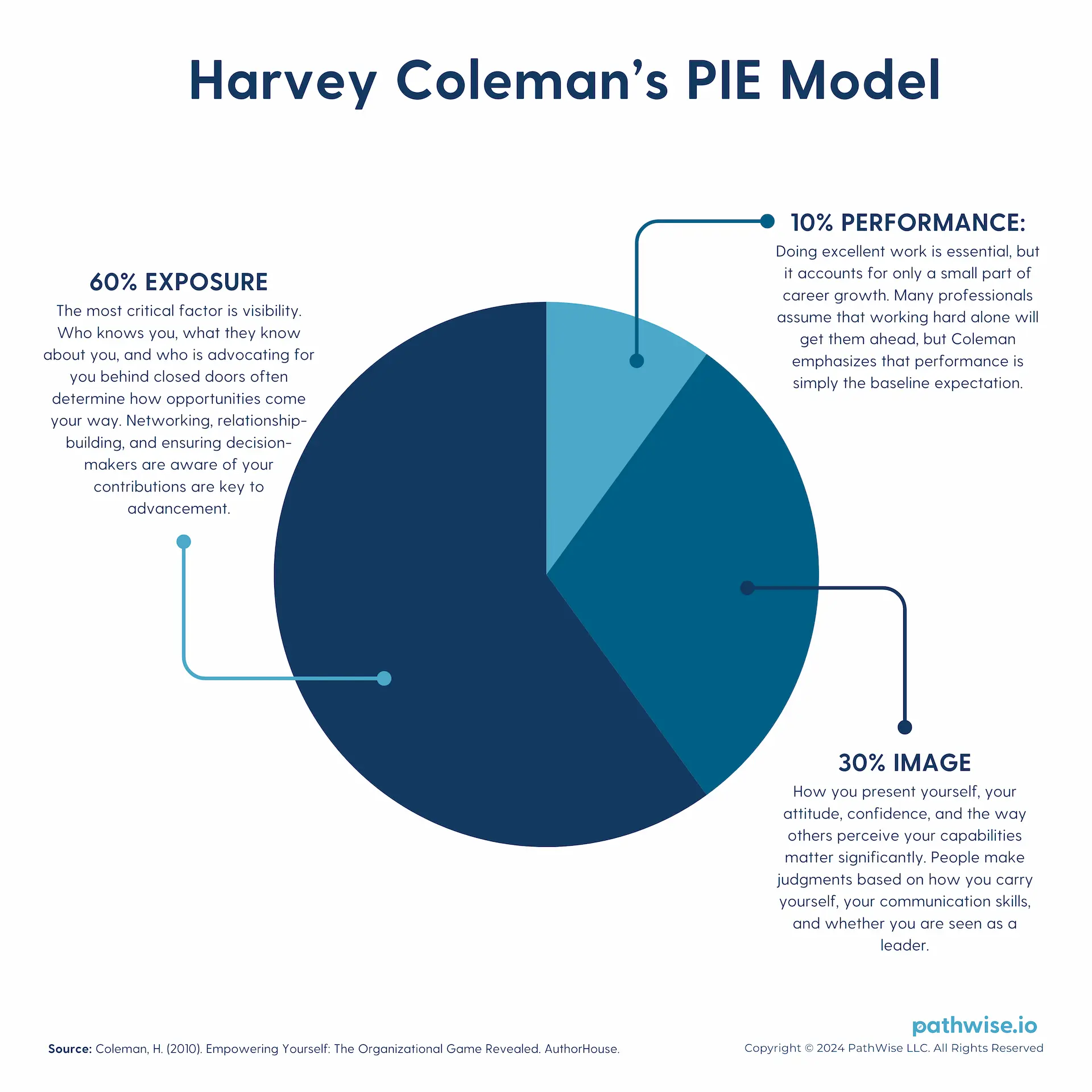
- The PIE Framework: PIE stands for Performance, Image, and Exposure, and this model argues that advancing your career depends on delivering strong results (Performance), managing how others perceive your work and contributions (Image), and actively increasing your visibility and network within your professional environment (Exposure). It argues that exposure is most important for career advancement.
Future-Proofing Your Career and Leadership
Future-proofing your career and leadership development are deeply interconnected. Both center on adaptability, strategic thinking, and continuous growth. At their core, they share a common goal: staying effective and relevant in a continually evolving environment.
Leadership requires influence, vision, and the ability to guide others through change. Those who invest in future-proofing are ultimately cultivating leadership qualities such as resilience, learning agility, and self-awareness, as these traits help them navigate complexity and uncertainty. In turn, those who demonstrate leadership are more likely to recognize emerging trends, take initiative, and inspire others to adapt, all of which contribute to long-term career sustainability.
A future-proof mindset also reinforces leadership by encouraging systems thinking. Rather than focusing solely on technical competence or immediate tasks, it involves understanding broader organizational dynamics, market shifts, and human behavior. This strategic perspective is essential in leadership and a key driver of career longevity. In aligning future-proofing efforts with leadership development, you can build a career that not only responds to change but also helps lead it.

Image used under license from Shutterstock.com
Future-Proofing Your Career and Personal Development
Future-proofing your career means bringing intentionality to growth and ensuring that development efforts remain aligned with long-term career goals and the demands of a changing world. Rather than pursuing skills reactively, future-proofing promotes a proactive, strategic approach to evolving as a professional. It influences professional development through:
- Focus on Transferable Skills: Future-proofing encourages the development of skills that remain valuable across roles and industries, such as communication, critical thinking, adaptability, and emotional intelligence. These foundational capabilities support growth no matter how specific tools or technologies change.
- Commitment to Lifelong Learning: A future-proof mindset drives continuous learning through courses, certifications, reading, and hands-on experience. It keeps you engaged with emerging trends and evolving best practices in their field.
- Strategic Skill Building: When guided by future-proofing principles, professional development becomes more targeted. Instead of chasing every new trend, you can prioritize learning that aligns with your career direction and anticipated industry shifts.
- Increased Agility: Future-proofing supports a readiness to pivot when needed. It helps build confidence and the capacity to transition into new roles, take on stretch assignments, or adapt to organizational change with minimal disruption.
- Greater Ownership of Career Path: Future-proofing is about taking an active role in shaping your career trajectory. This includes setting meaningful goals, seeking out mentorship, and building a career narrative that evolves with experience.
- Enhanced Relevance in the Marketplace: Key to future-proofing is staying informed and up to date to maintain your value to employers and clients. This will make it more likely for you to be considered for leadership roles, cross-functional projects, or new ventures.

Image used under license from Shutterstock.com
Conclusion
Future-proofing your career is an ongoing investment in your ability to grow, adapt, and lead in a world that never stands still. Approaching professional development with this mindset means actively shaping your path through change. Like a skilled sailor refining their craft, you gain confidence not because the waters are calm, but because you are ready to navigate whatever lies ahead.
Other Resources
- PathWise Book Summary: Entrepreneurial You
- PathWise Book Summary: Working Identity
- PathWise Book Summary: Designing Your Life
- HBR: Five Ways to Future-Proof Your Career in the Age of AI
- TED Talk: Future Proof Your Career
- Forbes: Seven Essential Skills to Future Proof Your Career
- Forbes: How To Future-Proof Your Career at Age 45 and Stay Competitive
