


In a world where career paths are increasingly less predictable, the ability to adapt and thrive in the face of change has become an invaluable skill. Improvisation is a tool often associated with the arts, but it’s also one that holds immense power in the professional world. Think about it: When was the last time a project went exactly as planned, or you reached a career milestone exactly as you envisioned it? Chances are that the twists and turns you’ve inevitably faced along the way have required quick thinking and an openness to explore uncharted territory. This is precisely where improvisation shines, empowering us to pivot, innovate, and grow, even when the roadmap is unclear.
What is Improvisation?
In the professional and career development context, improvisation refers to the ability to think and respond on the spot, adapting to unexpected challenges or shifting circumstances with agility and creativity. It’s a valuable skill that encourages a flexible mindset, enabling us to navigate uncertainty, seize opportunities, and make quick, informed decisions without always relying on pre-set plans.

Why is Improvisation Important?
In career-related contexts, improvisation is important for several reasons, including:
- Enhanced Problem-Solving: Improvisation allows for creative solutions when there isn’t time to rely on established procedures. This is particularly useful in fast-paced environments where quick, innovative thinking can make a big difference.
- Greater Adaptability: As businesses and industries evolve, pivoting and responding to unexpected changes is essential to success. Improvisation nurtures adaptability, helping us stay relevant and resilient even as circumstances shift.
- Increased Confidence: Professionals who improvise effectively are better positioned to develop confidence in their ability to handle challenges. This confidence can improve team dynamics and encourage a culture of experimentation and openness.
- Improved Collaboration: Improvisation often involves responding to others in real-time, whether in meetings, presentations, negotiations or project collaborations. This fosters a more engaged team environment where people listen closely and build on each other’s ideas.
- More Agile Leadership: Leaders who improvise are better equipped to guide their teams through ambiguity, setting a strong example of resilience and resourcefulness.
Note that incorporating improvisation in career development doesn’t mean abandoning structure—it’s about adapting within a framework, embracing spontaneity and creative problem-solving as assets in the workplace.
Thought Leaders
Several thought leaders offer valuable insights into improvisation, adaptability, and agile career management. Each of them has contributed perspectives that encourage experimentation and a flexible approach to career management. A few who stand out include:
- Wendy K. Smith: A professor at the University of Delaware and co-author of Both/And Thinking, which explores how individuals and organizations can embrace paradoxes to foster innovation and effective problem-solving, Smith’s research focuses on strategic paradoxes, organizational ambidexterity, and leadership, offering insights into navigating competing demands and driving sustainable success.
- Marianne W. Lewis: The dean of the University of Cincinnati’s Lindner College of Business and co-author of Both/And Thinking, Lewis’s work explores paradoxes in management and leadership, helping organizations leverage tensions to drive creativity and growth.
- Edward de Bono: A physician, psychologist, and author, de Bono is best known for developing the concept of lateral thinking. He authored over 85 books on thinking and problem-solving and introduced the Six Thinking Hats methodology (see next section), which encourages a parallel thinking process by adopting different perspectives.
- Eric Ries: Known for his book The Lean Startup, Ries introduced concepts like rapid experimentation and pivoting, which have become essential for agile decision-making.
- Carol Dweck: A Stanford psychologist and author of Mindset: The New Psychology of Success, Dweck popularized the concept of the growth mindset, which promotes the idea that abilities and intelligence can be developed through effort and learning. This mindset is key to career resilience, adaptability, and a willingness to tackle challenges, much like improvisation.
- Saras Sarasvathy: A professor of entrepreneurship at the University of Virginia, Sarasvathy developed the Effectuation Theory (see next section), which describes how entrepreneurs make decisions under uncertainty by leveraging the resources at hand. Her principles are widely applicable to career management, especially for those navigating ambiguous situations and using improvisation to make progress.
- Tim Brown: As the former CEO of IDEO and an advocate of Design Thinking, Brown encourages creative problem-solving methods in business and personal development. His work emphasizes prototyping, iterative thinking, and human-centered design—skills that foster flexible, adaptable career strategies.
- Matthew Syed: Author of Black Box Thinking, Syed advocates for learning from failures and approaching challenges with an experimental mindset. His work underscores the importance of resilience, adaptability, and viewing setbacks as valuable feedback—all of which are crucial to navigating and improvising at dynamic career paths.

Image used under license from Shutterstock.com
Key Frameworks
Several models and frameworks closely related to improvisation can help us manage our careers by building adaptability, fostering creativity, and enhancing decision-making under uncertainty. These frameworks support a mindset of flexibility, learning, and resourcefulness that complements improvisation. Some of these models include:
- Design Thinking: Originally used in product and service design, Design Thinking is a problem-solving approach that emphasizes empathy, ideation, rapid prototyping, and iteration. In career management, it encourages a prototype mindset, where you try out small, experimental steps to explore different career paths or skill sets. This framework helps us embrace trial-and-error, view setbacks as learning opportunities, and remain open to new directions.
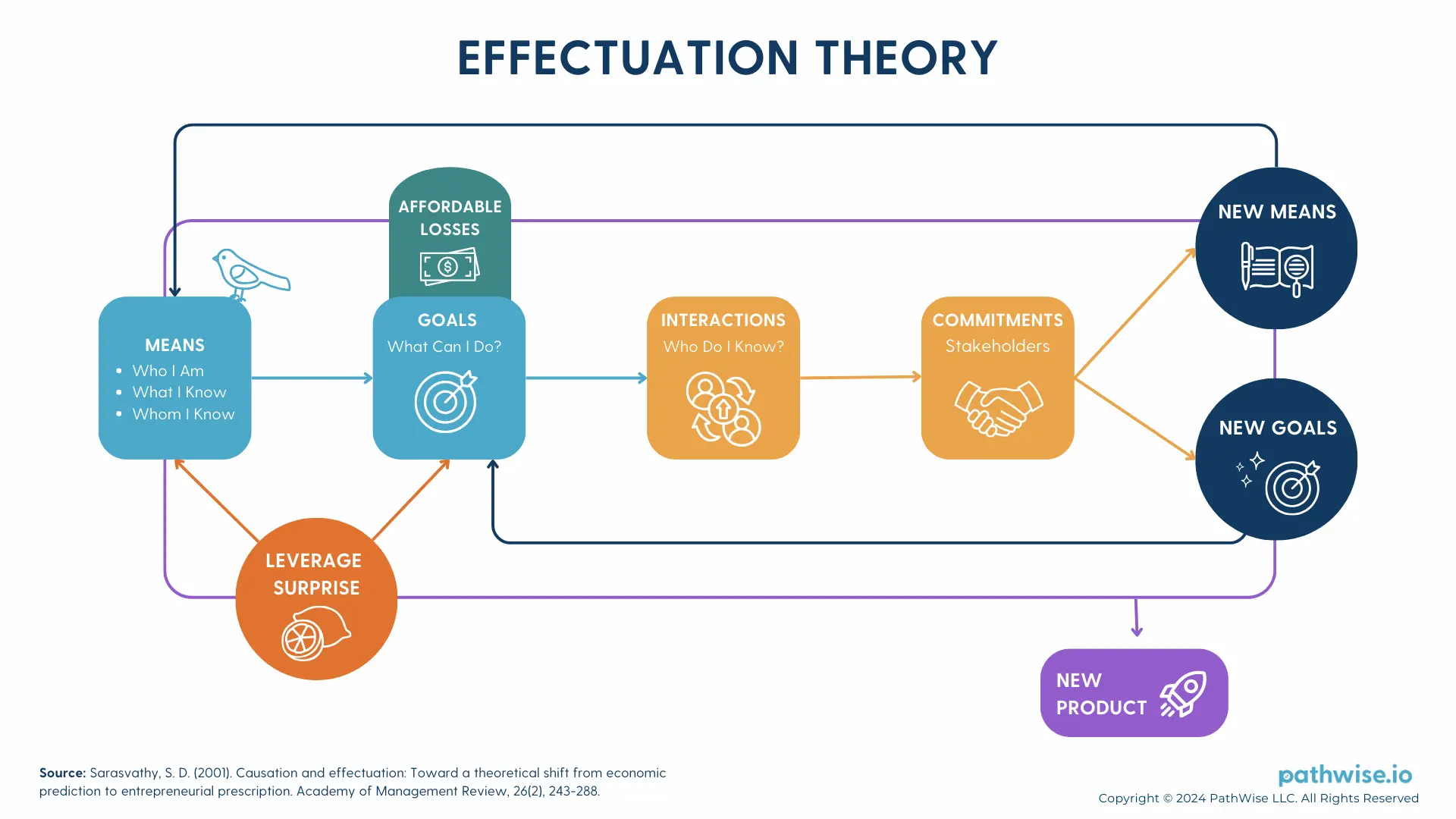
- Effectuation Theory: Developed by Saras Sarasvathy, effectuation is an entrepreneurial approach to decision-making that focuses on leveraging existing resources and relationships instead of waiting for ideal conditions. Key principles include bird-in-hand (starting with what you have), affordable loss (considering what you’re willing to lose), and lemonade (making the best out of surprises and uncertainty). In a career context, this mindset allows us to navigate ambiguity and seize opportunities, even when they lack complete information. Click here to learn more.
- Both/And Thinking: This framework proposes embracing paradoxes and balancing competing demands to drive innovation and effective problem-solving. The approach involves recognizing and accepting tensions, reframing them as opportunities, and finding integrative solutions that simultaneously satisfy multiple objectives. This method encourages us to move beyond binary “either / or” thinking and explore creative, holistic solutions, as we improvise and adapt to solve problems
- Growth Mindset: Popularized by Carol Dweck, a growth mindset encourages seeing challenges and failures as growth opportunities rather than setbacks. This framework is adjacent to improvisation, as it helps us stay open to learning and pivoting. In career management, a growth mindset supports resilience, fosters a passion for learning, and allows us to embrace new opportunities outside our comfort zones.

Diagram by Nigel Holmes, taken from Carol Dweck’s Mindset: The New Psychology of Success (p. 263)
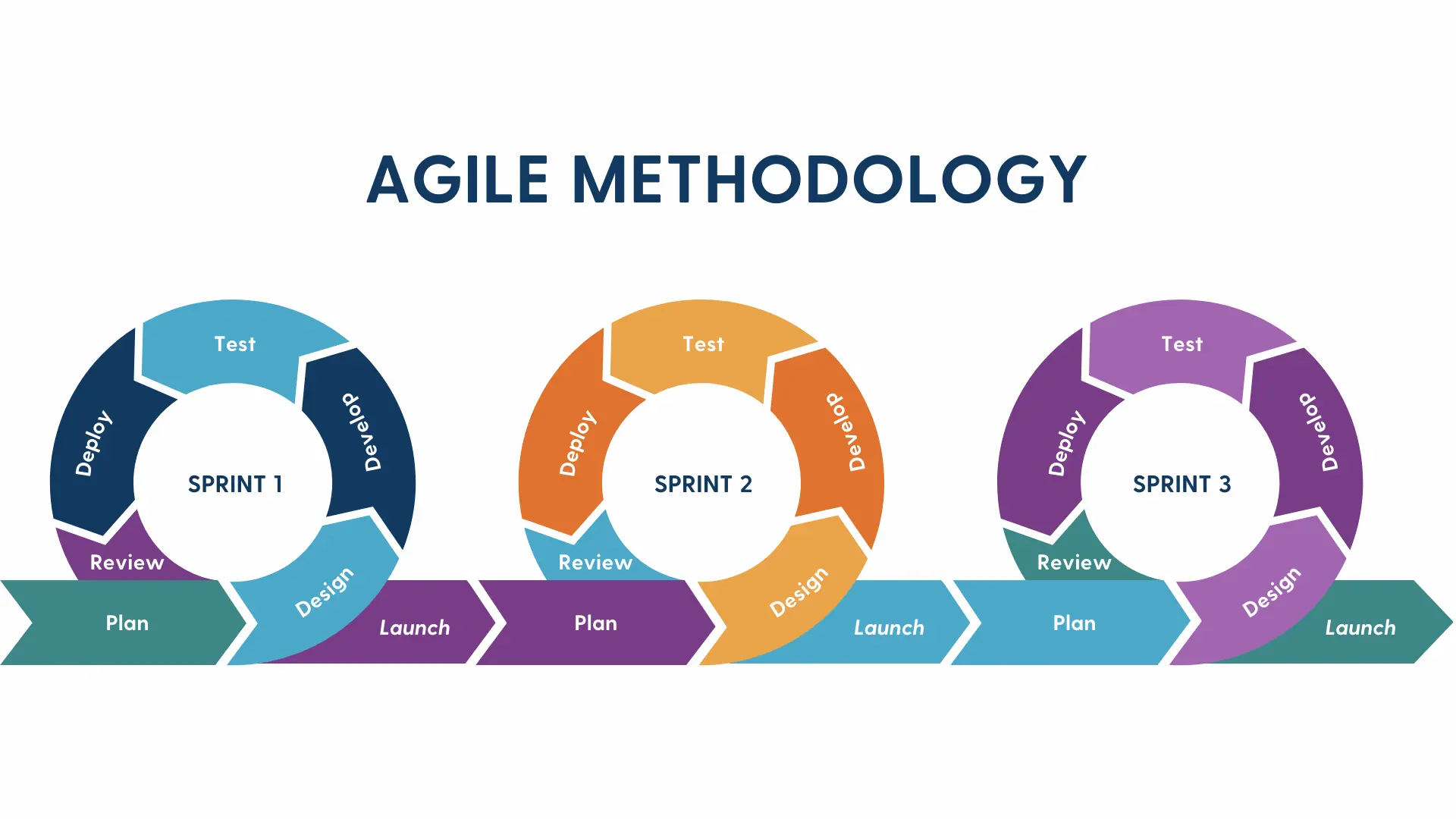
- Agile Methodology: Agile is a project management framework originally created for software development but is now widely used across industries. Key Agile principles—such as responding to change rather than rigidly following a plan, iterating quickly, and constantly reviewing and adjusting—are especially helpful in career management. Applying Agile principles can help us make incremental career changes, set flexible goals, and quickly pivot based on feedback or changes in the job market.
- The Lean Startup Model: Introduced by Eric Ries, the Lean Startup Model promotes rapid experimentation, validated learning, and a build-measure-learn loop. In careers, this model can be used to test new roles, skills, or side projects on a small scale before fully committing. It encourages professionals to validate their interests and strengths at low risk, making adjustments based on real experiences and feedback.
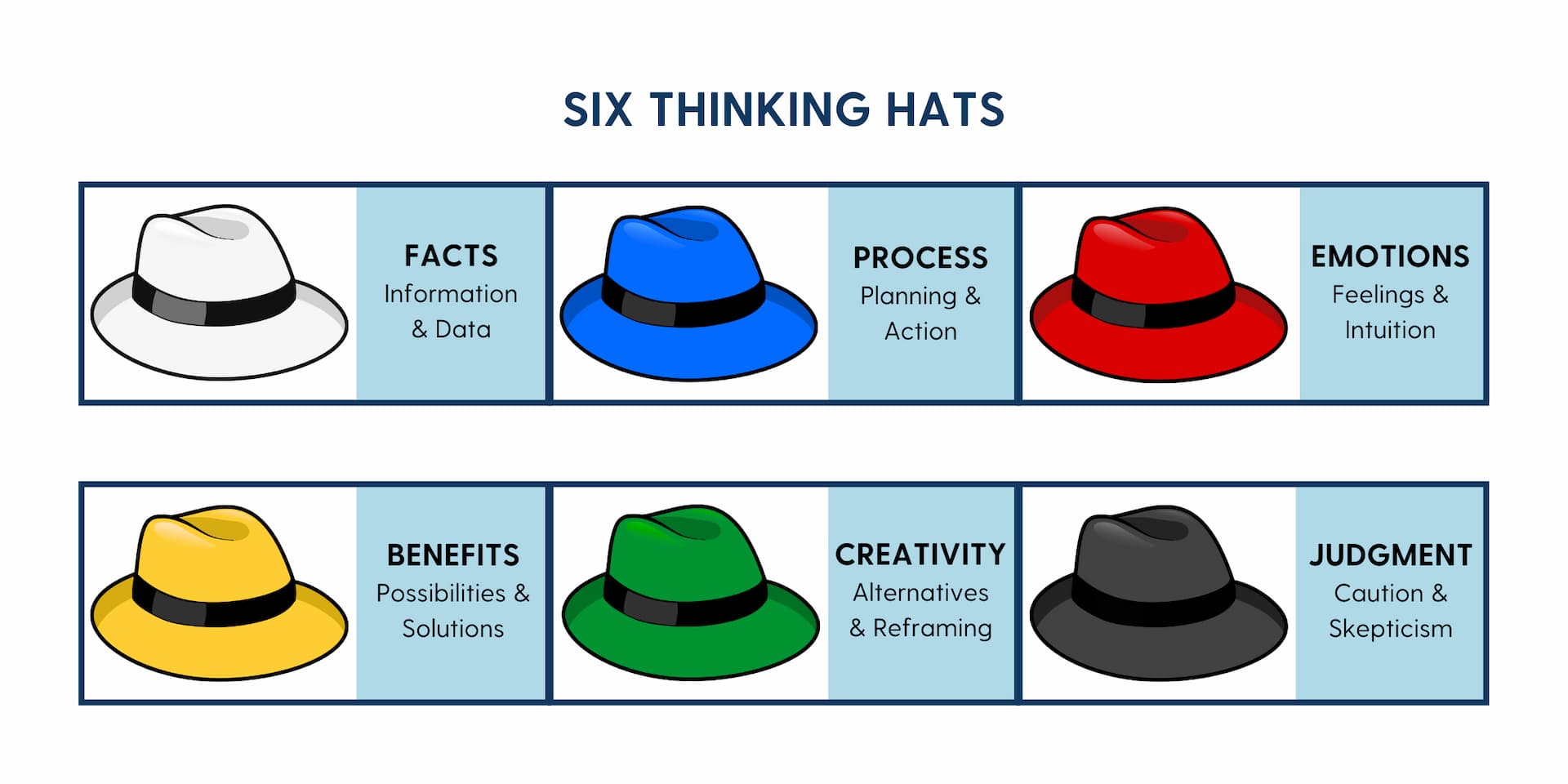
- Six Thinking Hats: This method involves wearing different metaphorical hats to explore a problem from various perspectives. The six hats represent distinct modes of thinking: white (facts), blue (process), red (emotions and feelings), black (caution and critical thinking), green (creativity), and yellow (benefits). This technique promotes comprehensive and balanced problem-solving as well as adaptability.
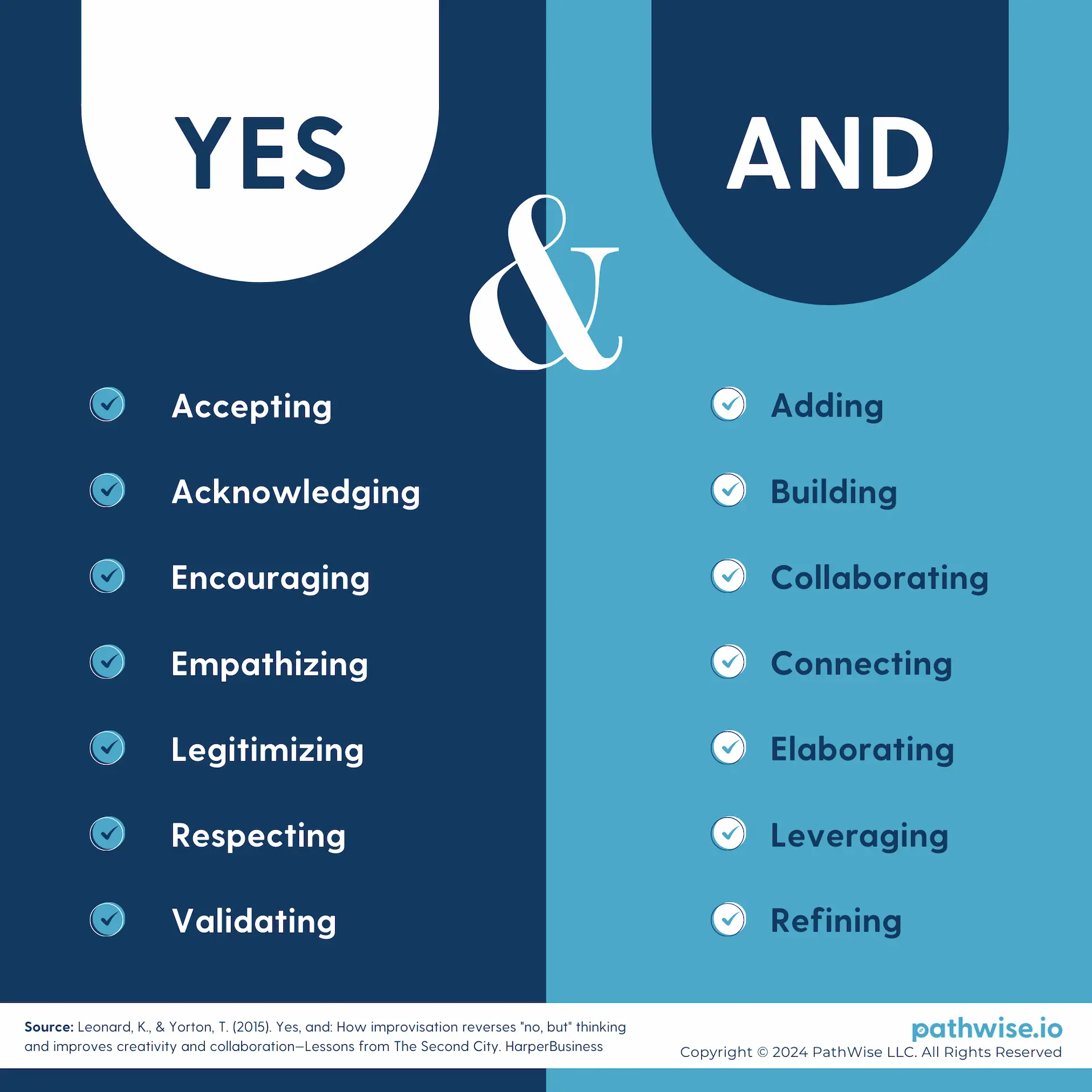
- Yes/And Improv Model: The “Yes, and…” principle from improv theater involves performers building scenes by affirming and expanding on each other’s ideas, using “Yes, and…” to accept what’s presented and add something of their own, rather than refuting them with a “but” or changing the topic entirely. Applied to careers, this mindset encourages embracing unexpected opportunities and building upon them rather than rejecting ideas due to fear, uncertainty, or rigid plans. It can help us stay open to feedback, accept new responsibilities, or pursue alternative paths that weren’t originally part of our goals. It fosters a positive, proactive approach to collaboration and problem-solving, which is vital for growth, learning, and adaptability in a fast-changing work environment.

Improvisation in Leadership
Improvisation can significantly enhance a manager’s leadership by equipping them to respond to real-time challenges, inspire their teams, and create a more resilient, adaptive work environment. More specifically,
- Agility in Decision-Making: A manager who can improvise is quick on their feet and can make confident decisions even without all the information. This agility allows them to address immediate issues effectively, inspire trust in their team, and keep projects moving forward without unnecessary delays.
- Handling Uncertainty with Composure: Leaders who can improvise are better equipped to handle uncertainty calmly, setting an example of resilience and poise for their team. This ability helps them navigate crises or sudden shifts in direction, reassuring their team in the process.
- Empowering Teams to Experiment: When managers model improvisation, they encourage a culture where flexibility and experimentation are valued. Team members feel empowered to try new ideas, knowing the manager is open to exploring creative solutions rather than sticking to established norms. This boosts innovation and morale.
- Fostering a Culture of Resilience: By improvising in challenging situations, managers demonstrate that it’s okay to adapt and adjust plans when needed. This cultivates a team culture that sees setbacks as opportunities to innovate rather than as failures, promoting resilience across the organization.
- Building Trust Through Authenticity: Improvised responses often feel more genuine than scripted ones. Managers who can think on their feet and respond authentically are perceived as more relatable and transparent, which helps build a stronger sense of trust.

Image used under license from Shutterstock.com
Improvisation in Personal Development
Improvisation can be a transformative skill in career development, helping us to navigate the unpredictable landscapes of our industry and personal career path. At its core, improvisation hones adaptability, enabling us to respond effectively to new challenges and opportunities that may not fit into a planned career trajectory. When we’re able to improvise, we’re able to seize unexpected opportunities, such as taking on new projects or roles, which can lead to significant professional growth and skill-building.
Improvisation also enhances problem-solving skills by encouraging us to think creatively and resourcefully. Rigid thinking can limit career advancement, but the flexibility that comes with improvisation opens new pathways. When we’re skilled at improvising, we can pivot in response to setbacks, use failures as learning opportunities, and find innovative ways to showcase our strengths. This is crucial in evolving workplaces, where success often depends on adapting to changing technologies, organizational shifts, or market demands.
Improvisation also strengthens communication skills, an essential component of career growth. Being able to adjust a message or approach based on real-time feedback improves interpersonal relationships and collaborative effectiveness, which are key to career success. This skill allows us to navigate high-stakes conversations—like job interviews, presentations, and negotiations—with greater confidence and authenticity, increasing our chances of making a positive impression.

Image used under license from Shutterstock.com
Conclusion
Again, incorporating improvisation into your career doesn’t mean throwing out plans or structure; rather, it’s about adding a layer of flexibility that allows you to make the most of every opportunity, whether planned or unexpected. When we embrace improvisation, we open ourselves up to possibilities that might have otherwise gone unnoticed, building resilience, creativity, and adaptability. Improvisation skills help us turn uncertainty into opportunity, navigate our careers with confidence and purpose, and assure us that we can handle whatever comes our way.
Resources
- PathWise book summary: Both/And Thinking by Wendy Smith and Marianne Lewis
- PathWise book summary: Mindset by Carol Dweck
- HBR: Improvisation Takes Practice
- HBR: Using Improv to Unite Your Team
- Forbes: More Than Laughs: Improv For Leadership And Listening
- Forbes: Embracing Improv as Part of Your Preparation Strategy
- Ted Talk: Stumbling Towards Intimacy
