



In a conference room, just minutes before presenting a strategic proposal, a manager suddenly finds herself gripped by hesitation. Her slides are polished, her research thorough, yet a voice within whispers, “You’re not ready. They’ll see right through you.” This voice doesn’t belong to any colleague or executive in the room—it belongs to her inner critic. Invisible to others but sharply audible to her, it has quietly shaped her choices for years, often unnoticed.
The inner critic is like an overzealous internal coach whose intentions may once have been to protect, but whose tactics undermine growth. It sits in the background of even the most accomplished professionals, casting doubt, magnifying missteps, and second-guessing success. Though it rarely shows up in résumés or performance reviews, its presence can profoundly influence how careers unfold. Understanding this voice—and learning how to work with it rather than for it—is essential for professional development and career success, as well as overall wellbeing and mental health.

What are Inner Critics?
Inner critics are internalized voices that express self-doubt, judgment, and fear. They typically present as persistent thoughts that challenge our capabilities, worth, or right to pursue success. Often rooted in a misguided attempt at self-protection, inner critics tend to reinforce limiting beliefs and hinder personal and professional growth. They can undermine confidence, stall decision-making, and discourage risk-taking.
Inner critics are deeply tied to identity, motivation, and behavior, often operating beneath conscious awareness. They tend to mirror internalized messages from early authority figures, cultural norms, or high-pressure environments. Their tones can vary—some are harsh and perfectionistic, others anxious or dismissive. Despite their negative impact, inner critics often originate from a desire to avoid failure, rejection, or vulnerability. Left unchecked, however, they can contribute to chronic stress, burnout, imposter syndrome, and career stagnation. For instance, inner critics may discourage you from negotiating salaries, applying for stretch roles, or voicing new ideas. They can also trigger overcompensation, such as overworking or excessive self-monitoring, which paradoxically undermines performance and well-being.
Addressing our inner critics requires a combination of emotional intelligence, cognitive flexibility, and self-awareness. Techniques like coaching, therapy, and mindfulness can also support this process, helping us rewire habitual thought patterns and reconnect with a more grounded, confident self. Ultimately, learning to work with the inner critic rather than suppress it creates space for growth, creativity, and authentic leadership.

Image used under license from Shutterstock.com
How To Counter The Voice of Your Inner Critic
In Burnout: The Secret to Unlocking the Stress Cycle, Emily and Amelia Nagoski describe the Inner Critic as a powerful internal voice that often echoes societal expectations and unrealistic standards. They explain that this voice tends to shame or belittle us for falling short, even when we do our best. Rather than silencing it through force, however, the authors advocate responding with care and curiosity, acknowledging the Inner Critic without letting it drive behavior. This shift helps reduce emotional exhaustion, fostering a kinder, more supportive internal dialogue.
To go a step further and counter the voice of the inner critic, it is essential to develop awareness, intentionality, and self-compassion. More specifically,
- The first step is recognizing when this internal dialogue activates and naming it for what it is—an automatic pattern, not a reliable reflection of reality.
- Once identified, the next move is to challenge its assumptions through evidence-based reflection. This may include recalling past achievements, acknowledging positive feedback, or reframing perceived failures as learning experiences.
- Strengthening a more constructive inner voice also requires consistent practice of self-affirmation and cognitive restructuring, where distorted thoughts are replaced with balanced perspectives.
Over time, cultivating mindfulness, seeking mentorship or coaching, and fostering environments that encourage psychological safety can further reduce the influence of the inner critic and reinforce a more empowered sense of self.

Image used under license from Shutterstock.com
Thought Leaders
Several thought leaders have contributed to the understanding of how inner critics and our mindset can impact professional growth. Some of the most respected experts include:
- Shirzad Chamine: A Stanford lecturer and the author of Positive Intelligence, a widely regarded book that explores how to quiet mental saboteurs and strengthen positive mental muscles. He developed the Positive Intelligence (PQ) framework, which integrates neuroscience, cognitive psychology, and coaching
- Tara Mohr: A leadership coach and author of Playing Big: Practical Wisdom for Women Who Want to Speak Up, Create, and Lead. Her work centers on helping professionals overcome inner criticism, self-doubt, and perfectionism, particularly in high-achieving women. Mohr’s approach blends psychological insight with spiritual grounding.
- Brené Brown: A research professor at the University of Houston and the author of several bestselling books, including Daring Greatlyand The Gifts of Imperfection. She is best known for her groundbreaking research on vulnerability, shame, and courage, and how these forces shape leadership and performance. Brown’s TED Talk, “The Power of Vulnerability,” remains one of the most viewed of all time, and her work has redefined the conversation around emotional awareness in leadership.
- Kristin Neff: An associate professor of educational psychology at the University of Texas at Austin and a pioneer in the field of self-compassion research. Her book Self-Compassion: The Proven Power of Being Kind to Yourselfpresents evidence for the role of self-compassion in reducing self-criticism and promoting sustainable motivation.
- Carol Dweck: A professor of psychology at Stanford University and the author of the influential book Mindset: The New Psychology of Success. She is best known for her research on the “fixed” vs. “growth” mindset, showing how beliefs about ability impact achievement and self-perception.
- Marshall Goldsmith: One of the world’s leading executive coaches and the author of What Got You Here Won’t Get You There, a classic in the field of leadership development. He focuses on helping high-achieving professionals identify behavioral blind spots that limit their advancement, emphasizing behavioral change, accountability, and the subtle inner barriers, such as self-limiting beliefs and ego, that often block growth at the top levels of leadership.
- Tasha Eurich: An organizational psychologist, leadership consultant, and author of Insight: The Surprising Truth About How Others See Us, How We See Ourselves, and Why the Answers Matter More Than We Think. Her research focuses on self-awareness, both internal and external, and how blind spots created by the inner critic can affect career outcomes.
- Julia Cameron: An author, teacher, and creativity expert best known for The Artist’s Way, a foundational book on unlocking creativity and overcoming internal resistance. While originally aimed at artists, her tools—such as Morning Pages and the concept of the inner censor—have helped professionals across fields work through self-doubt and reignite personal agency. Cameron’s work emphasizes self-expression, inner listening, and the dismantling of self-imposed limitations.

Image used under license from Shutterstock.com
Key Frameworks
Several models and frameworks address the role of inner critics in professional development and adjacent topics such as mindset, self-awareness, and personal development. Each offers a distinct lens for understanding and reshaping internal narratives that affect professional growth. Some of the most notable ones include:
- The Gremlin-Taming Method: Developed by Rick Carson, this model frames the inner critic as a Gremlin—a persistent internal voice that distorts reality and limits freedom. His method encourages observing the Gremlin without judgment, disidentifying from its voice, and choosing more empowering responses.
- Growth Mindset: This model, developed by Carol Dweck, contrasts fixed beliefs about intelligence and talent with a mindset that embraces effort, learning, and development. Those with a growth mindset view challenges as opportunities and failure as part of the learning process, reducing the influence of the inner critic by shifting focus from judgment to progress.

Diagram by Nigel Holmes, taken from Carol Dweck’s Mindset: The New Psychology of Success (p. 263)
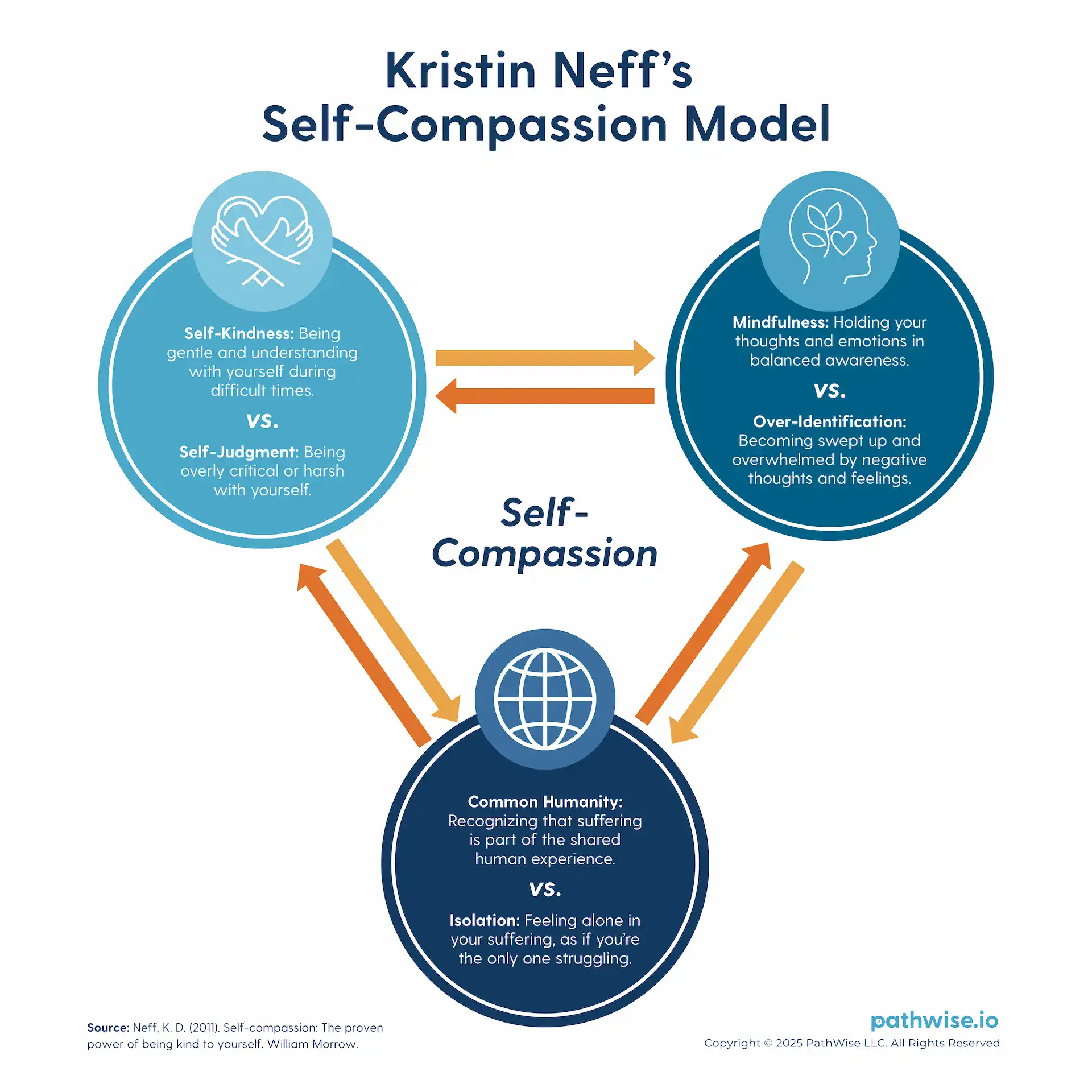
- Self-Compassion Model: This framework includes three core components: self-kindness, common humanity, and mindfulness. It offers a structured alternative to harsh self-criticism by encouraging us to treat ourselves with the same care and understanding we would offer to a friend.
- Immunity to Change: Developed by Robert Kegan & Lisa Lahey at Harvard, this framework explores why we often resist change even when we are highly motivated. It uncovers hidden competing commitments and core beliefs—many shaped by the inner critic—that block growth and reinforce self-limiting patterns.
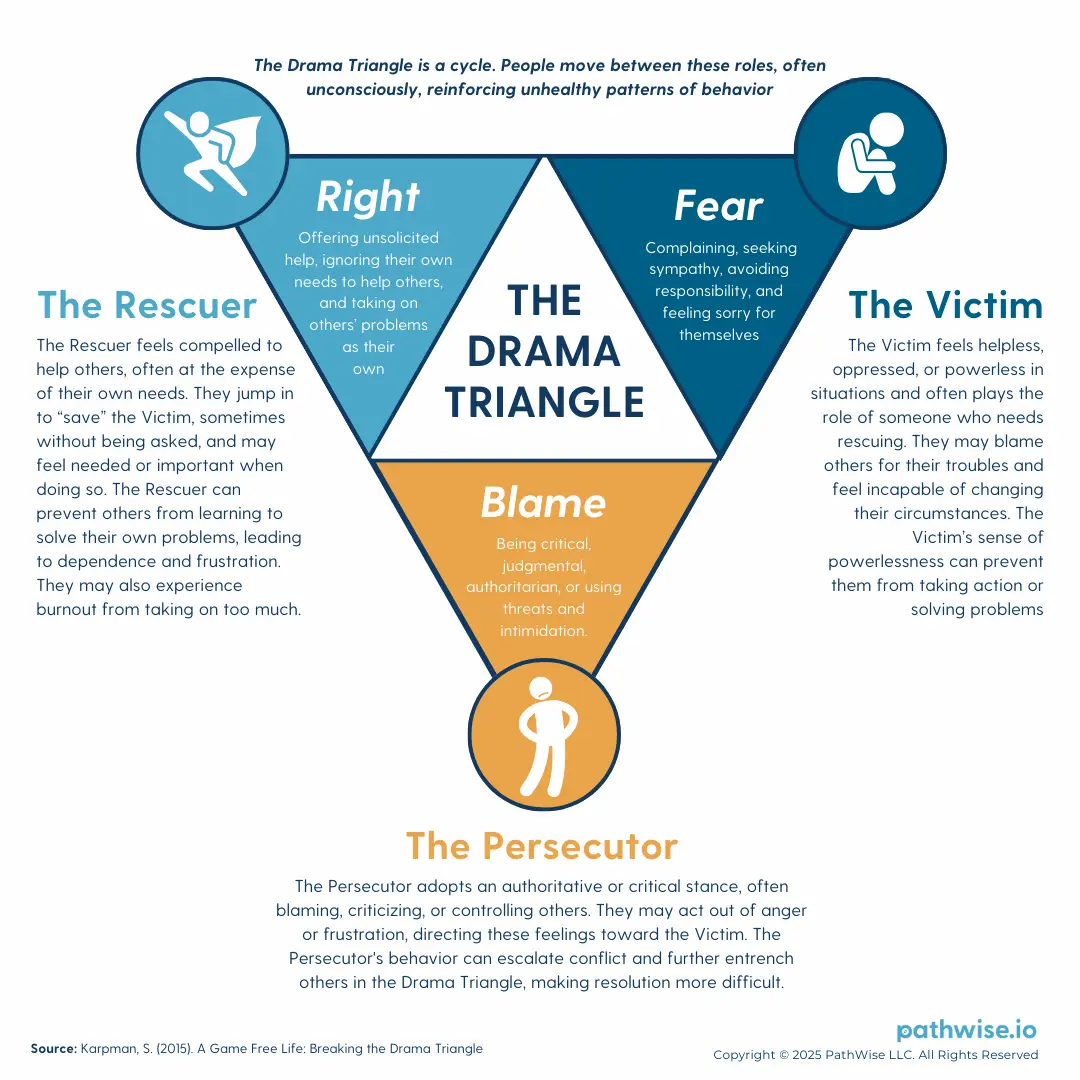
- The Drama Triangle: Though originally developed to explain dysfunctional relational dynamics, Stephen Karpman’s model offers insight into internal roles the inner critic may play, such as the Persecutor (harsh self-judgment) or Victim (helplessness). Recognizing these patterns helps individuals shift into more constructive roles, like that of the Creator, Challenger, or Coach, fostering a healthier internal dialogue and more empowered behavior.
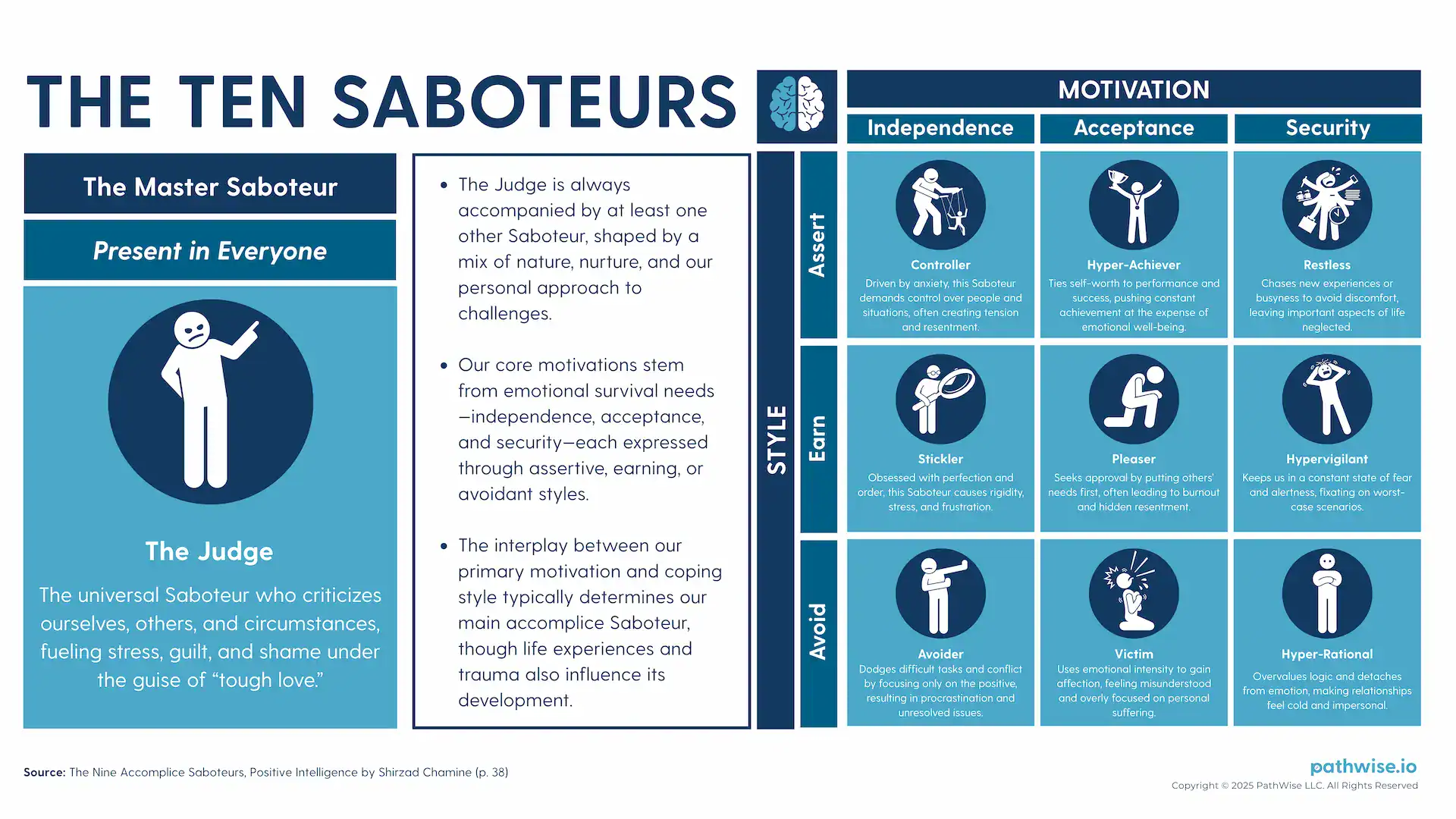
- Positive Intelligence (PQ): This framework distinguishes between Saboteurs (one master and nine other inner critics), and the Sage – the part of the brain rooted in empathy, curiosity, and creativity. This model integrates neuroscience, psychology, and coaching to help individuals identify, weaken, and reframe the internal voices that limit potential. It also provides tools and mental fitness exercises designed to shift habitual responses and build sustained inner resilience.
Inner Critics and Management
The inner critic can subtly, yet strongly, shape a manager’s behavior, communication style, and decision-making. A manager influenced by intense internal criticism may second-guess their choices, hesitate to delegate, or avoid difficult conversations out of fear of being perceived as inadequate. This self-doubt often leads to micromanagement, perfectionism, or indecisiveness, which can undermine team trust and organizational agility. When managers operate from a place of internal insecurity, they may focus more on avoiding mistakes than pursuing innovation, limiting their effectiveness and the growth of those around them.
In addition, an unchecked inner critic can erode a manager’s presence and emotional intelligence. It narrows attention to perceived personal shortcomings, leaving less cognitive and emotional bandwidth to understand others, respond empathetically, or remain adaptable under pressure. This internal noise can also distort feedback, making constructive input feel like personal failure. In contrast, managers who recognize and work through their inner critics foster psychological safety, show vulnerability appropriately, and create a culture where learning and imperfection are seen as part of progress, rather than threats to identity.

Image used under license from Shutterstock.com
Inner Critics and Professional Development
The inner critic often acts as an invisible barrier to professional development. It can discourage us from pursuing new challenges, networking strategically, or speaking confidently about our strengths. When this inner voice dominates, it amplifies fear of failure and fosters imposter syndrome, making us question our readiness or worthiness for advancement. As a result, we may avoid applying for leadership roles, hesitate to ask for promotions, or stay silent in high-stakes conversations, limiting our visibility and growth. Over time, these missed opportunities accumulate, slowing career momentum and reinforcing a cycle of self-doubt.
To grow despite the inner critic, as mentioned earlier, it’s essential to build a practice of self-awareness and intentional reflection. To foster professional development,
- Begin by identifying the patterns and triggers of your inner dialogue.
- Then, assess whether those thoughts are rooted in evidence or outdated fear.
- Follow by reframing limiting beliefs into constructive alternatives—shifting from “I’m not ready” to “This is an opportunity to learn,” for example.
- Then, consider seeking out feedback, mentorship, and professional development programs to create external validation and counterbalance internal negativity.
- Finally, work on establishing a growth mindset, celebrating small wins, and aligning work with personal values to strengthen confidence.
Over time, this approach will turn your inner critic from a barrier into a signal—a prompt to engage, reassess, and grow with clarity and purpose.

Image used under license from Shutterstock.com
Conclusion
The inner critic will likely never disappear entirely, but its volume can be turned down and its grip loosened through awareness, practice, and intentional growth. As we learn to recognize this voice and reframe its messages, we create space for clearer judgment, braver choices, and a deeper sense of self-trust.
Career success is shaped by external achievement up to a degree. The quality of the internal conversations that guide each step plays a key role in your well-being, mental health, and fulfilment. Work on having the inner critic no longer in the driver’s seat. What emerges is a more authentic, resilient, and forward-moving professional path, led not by fear but by clarity and conviction.
Other Resources
- PathWise Book Summary: Positive Intelligence by Shirzad Chamine
- PathWise Book Summary: Mindset by Carol Dweck
- PathWise Book Summary: Burnout by Emily and Amelia Nagoski
- HBR: Don’t Silence Your Inner Critic. Talk to It.
- HBR: Talk to Your Inner Critic
- Forbes: Do You Still Really Need Your Inner Critic?
- Forbes: Five ChatGPT Prompts to Stop Your Inner Critic’s Limiting Potential
- Forbes: Silence Your Inner Critic to Unleash Your Best Self
