


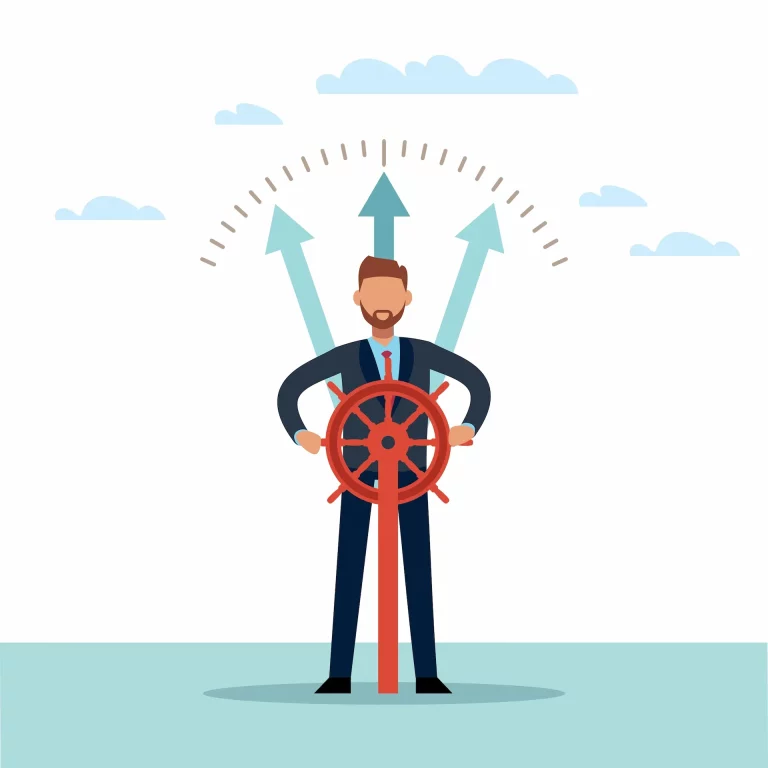
Have you ever wondered why some people rise through the ranks with ease while others, just as capable, remain stuck? It’s rarely just about hard work. More often, success hinges on the ability to navigate the system — to understand the people, the politics, and the power structures that shape how things really get done – and to apply this knowledge accordingly. This skill, organizational navigation, is one of the most underrated drivers of career growth. In simpler terms, it is about understanding that formal organizational charts tell only part of the story, and it is those who can read between the lines who will ultimately have a clearer advantage.
Image used under license from Shutterstock.com
What is Organizational Navigation?
Organizational navigation refers to the ability to effectively understand, move through, and influence the structure, culture, and dynamics of an organization to achieve individual, team, or company goals. It’s like having an internal GPS for the workplace — not just knowing the formal hierarchy and processes, but also understanding the informal networks, unspoken norms, and key decision-makers.
Key elements of organizational navigation include:
- Landscape Comprehension: Understanding the organization’s structure, culture, and politics. For structure, ask yourself, who reports to whom? What departments exist, and how do they interact? For culture, what behaviors are rewarded or discouraged? What are the unspoken rules? And for politics, where is the influence concentrated? Who are the power brokers, even informally?
- Relationship Building: Taking the time to network and connect with key individuals. This includes developing credibility and trust across organizational boundaries and levels; identifying and engaging with mentors, sponsors, and allies; and forming cross-functional connections that help get things done.
- Strategic Influence: Fostering your ability to persuade, inspire, and guide others. This involves learning how decisions are really made (beyond official processes); tailoring communication to the different audiences within and outside the organization; and knowing when to push, when to step back, and who to involve in your decision-making or projects.
Image used under license from Shutterstock.com
Thought Leaders
Several thought leaders have researched and developed work covering how leaders and professionals understand, influence, and move through complex systems, cultures, and power structures within organizations. Some of these key figures include:
- Ronald Heifetz: Founder of the Center for Public Leadership at Harvard and co-author of Leadership on the Lineand The Practice of Adaptive Leadership, he introduced the concept of adaptive leadership, helping leaders distinguish between technical and adaptive challenges. His work emphasizes navigating organizational complexity by mobilizing people to tackle tough problems and thrive amid change.
- Herminia Ibarra: A professor at London Business School and author of Act Like a Leader, Think Like a Leader, she studies identity and career transitions, offering practical frameworks for navigating shifting roles and power dynamics in organizations. Her work focuses on learning through action and expanding networks to grow influence and leadership capacity.
- Rosabeth Moss Kanter: A Harvard Business School professor and author of The Change Masters, she explores how power, innovation, and cultural context shape organizational life. She also highlights the importance of coalition-building, strategic positioning, and leading from any level to drive meaningful change.
- Michael D. Watkins: Author of The First 90 Days and The Six Disciplines of Strategic Thinking, he focuses on leadership transitions and how to quickly navigate new roles, build credibility, and assess political and cultural landscapes. His frameworks are widely used by leaders entering unfamiliar organizations or positions.
- Deborah Ancona: A professor at MIT Sloan and co-author of X-Teams, she emphasizes the importance of external focus, distributed leadership, and boundary-spanning teams. Her work helps leaders and teams navigate complex, fast-changing environments by actively engaging with stakeholders and aligning internal capabilities with external opportunities.
- Edgar Schein: A pioneer in organizational culture and author of Organizational Culture and Leadership, Schein introduced key frameworks for understanding how culture shapes behavior and decisions. He emphasized the role of leaders in reading and reshaping organizational norms to navigate and drive cultural change effectively.
- Frances Frei: A Harvard Business School professor and former Uber executive, she specializes in leadership, trust-building, and organizational transformation. Her work focuses on helping leaders create environments of psychological safety, equity, and alignment to navigate complexity and lead diverse, high-performing teams.
Key Frameworks
Some models and frameworks that help understand navigation include:
- The Adaptive Leadership Framework: Developed by Ron Heifetz and Marty Linsky, this framework helps leaders distinguish between technical and adaptive challenges, stay in “the productive zone of disequilibrium,” and mobilize people to tackle deep-rooted issues that require shifts in values, roles, or behaviors.
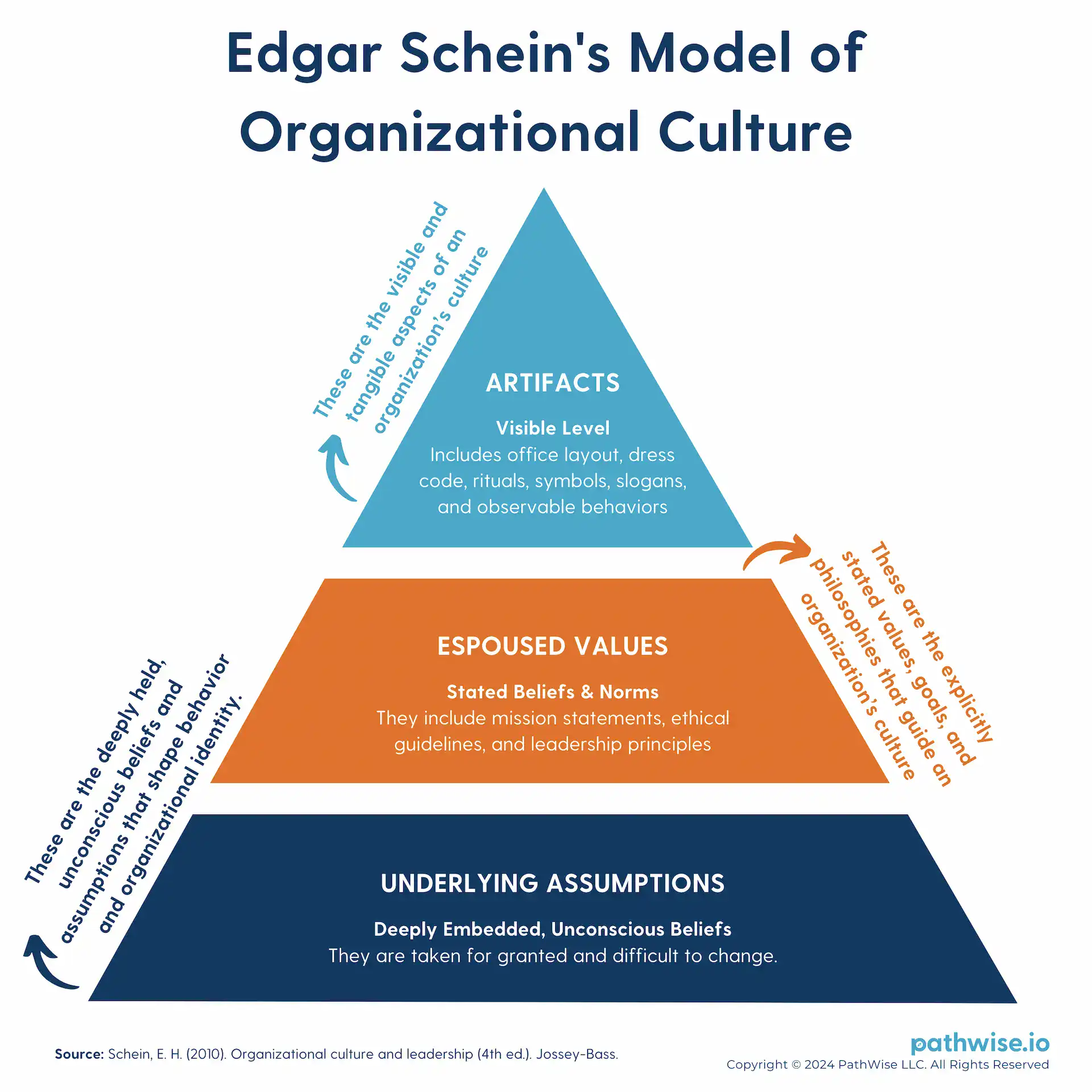
- Schein’s Levels of Culture: Developed by Edgar Schein, this model breaks down organizational culture into three levels—artifacts, espoused values, and underlying assumptions—helping leaders diagnose and influence deep cultural dynamics to navigate complex organizational contexts.
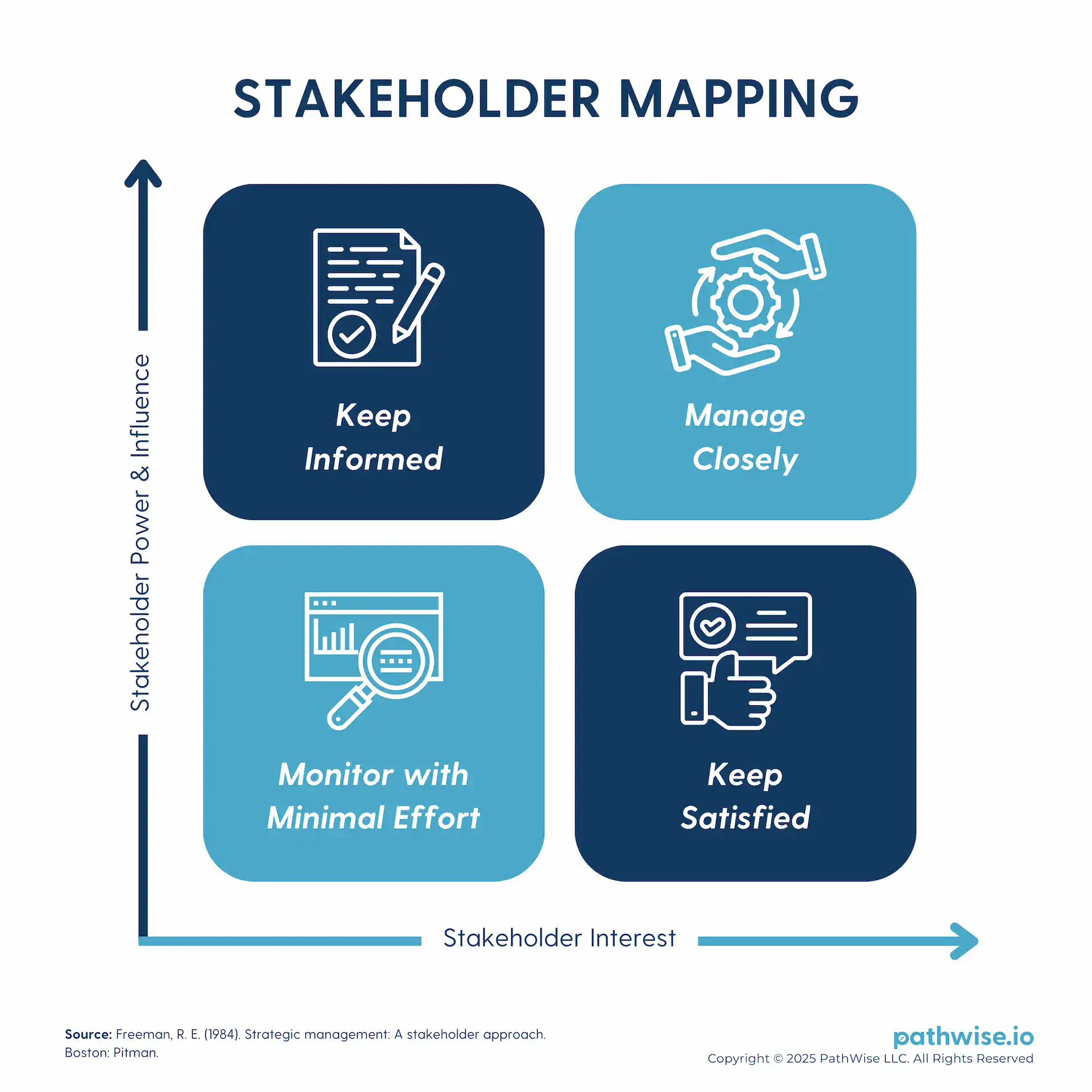
- Stakeholder Mapping: A tool in strategic influence, this framework helps leaders identify key players, assess their interests and power, and develop tailored strategies for gaining buy-in, navigating politics, and building support for initiatives.
- Political Savvy Framework: Popularized by Joel DeLuca and others, this approach views organizations as arenas of competing interests and teaches individuals how to ethically leverage informal networks, read the power dynamics, and navigate influence structures with integrity.
- Sensemaking: This cognitive framework emphasizes how people interpret and give meaning to ambiguous organizational situations. It supports navigation by helping leaders and teams make informed, collective sense of complex or rapidly changing environments.
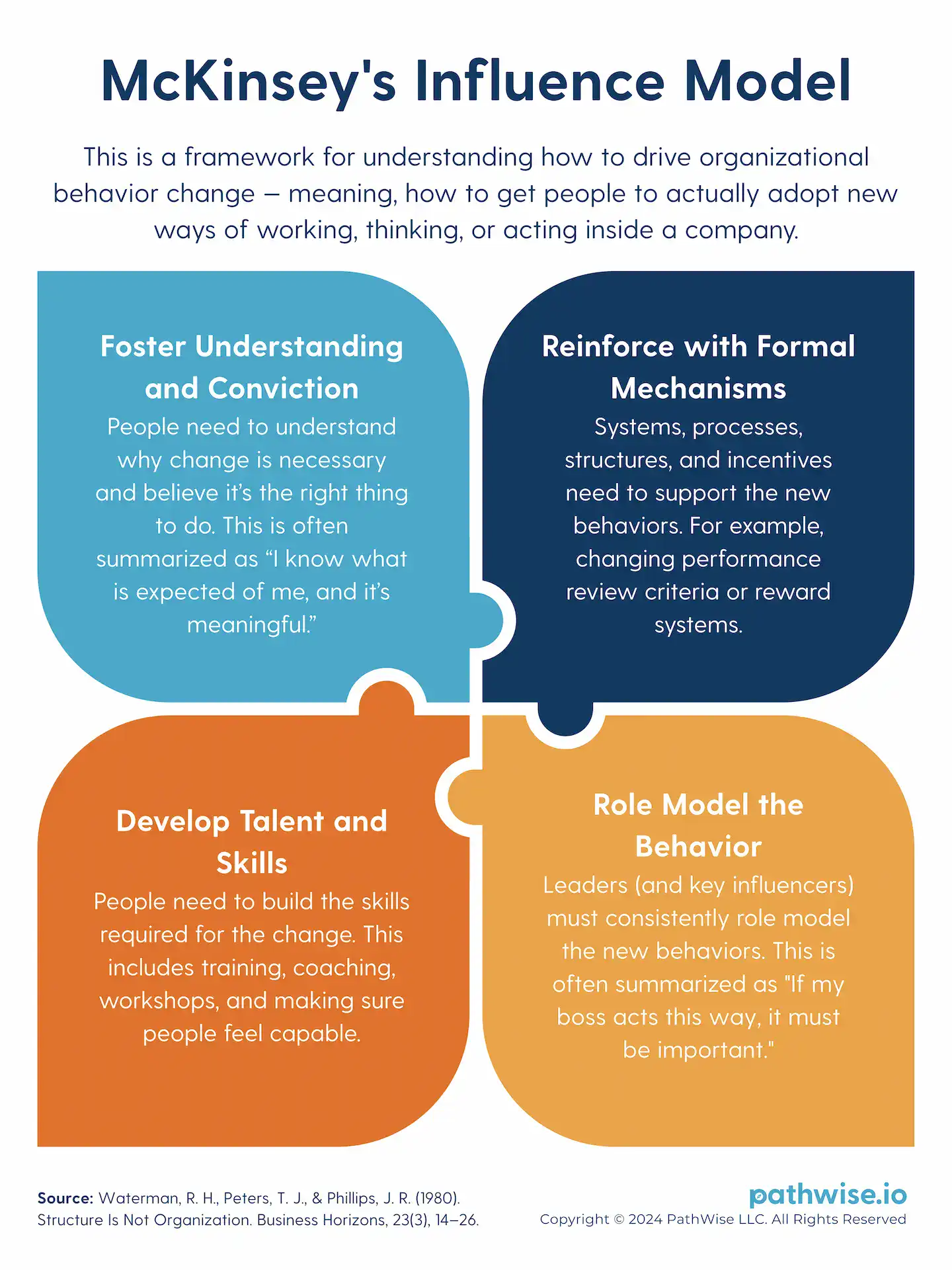
- McKinsey’s Influence Model: Developed by McKinsey & Company, this framework outlines four key levers for driving behavioral change in organizations: role modeling, fostering understanding and conviction, reinforcing with formal mechanisms, and developing talent and skills. It helps leaders systematically influence culture and behavior by aligning messages, incentives, and learning opportunities.
Organizational Navigation in Leadership
Organizational navigation is a core leadership skill — often invisible, but deeply impactful. Leaders who navigate well move systems, shape culture, and bring others along. It helps someone go from being a good team contributor to an effective, strategic, and influential leader. It’s what connects vision to execution and individual effort to organizational outcomes. More specifically, organizational navigation helps:
- Build Influence Beyond Authority: Great leaders seldom rely on their title alone; rather, they understand power dynamics (both formal and informal), earn trust across teams and levels, and secure buy-in from stakeholders who matter. This enables them to lead through influence instead of command, crucial for inspiring change and cross-functional collaboration.
- Improve Strategic Thinking: To lead effectively, leaders need to see the big picture while handling the minutia. Navigating an organization sharpens managers’ abilities to spot patterns in behavior, structure, and decision-making; understand what drives success in their company; and align actions with the broader business goals. This is about visioning and working towards the organization’s purpose rather than optimizing their own function.
- Enhance Communication: Good leaders know how to adapt their communication to different audiences. They know how to talk to executives, peers, and frontline staff, for instance, tailoring messages based on what matters to each group. They also understand when to use data, tell a story, or simply listen actively. Managers who do this well motivate, align, and inspire their teams more effectively.
- Boost Agility and Change Leadership: Leaders should be able to understand the currents beneath the surface to anticipate resistance, understand what truly motivates people, and know how to frame change so it resonates.
- Build a Stronger Reputation and Increase Visibility: Leaders who appreciate organizational navigation know how to get noticed. They are seen as problem solvers, add value across teams (not just their own), and are more likely to be tapped for new opportunities or promotions. Often, they create a leadership brand inside the company that opens doors for new opportunities.

Image used under license from Shutterstock.com
Organizational Navigation in Personal Development
Organizational navigation is essential in career development. It enables us to align our work with what truly matters in our company. Understanding the structure, culture, and key players within an organization better positions us to identify growth opportunities, get ideas heard, and contribute in ways that are visible and strategic. Rather than simply focusing on task completion, effective navigators are attuned to broader business goals and can adapt their approach to fit different contexts. This makes them valuable both within their current role and as potential candidates for higher-level responsibilities.
Moreover, organizational navigation helps cultivate relationships with mentors, sponsors, and influential colleagues who can advocate for our advancement. Career growth often hinges on both performance and perception, and those who navigate well build a reputation as trustworthy, capable, and proactive contributors. Plus, by understanding how decisions are made and who shapes them, we can align ourselves with the right people and projects, accelerating our path toward leadership roles. In this way, organizational navigation acts as both a compass and an accelerator for long-term career success.

Image used under license from Shutterstock.com
Conclusion
Mastering organizational navigation goes beyond office politics — it’s about being intentional. It means observing how things work, building trust across the right relationships, and aligning your efforts with what truly drives impact. When you understand the hidden dynamics of your workplace, your ideas gain traction, your influence grows, and your path forward becomes clearer. The better you read the landscape, the more powerfully you can lead within it.
Other Resources
- PathWise Book Summary: The First 90 Days
- PathWise’s Career Sessions, Career Lessons Podcast Episode Featuring Michael D Watkins
- HBR: Design Your Organization to Match Your Strategy
- HBR: The Office of Strategy Management
- Forbes: Five Ways to Navigate Organizational Transformation
- Forbes: How to Navigate Challenging Organizational Politics as a Rising Leader
- Forbes: 5 Ways To Navigate An Organizational Culture In A Politically Charged Environment
