



At points in our careers, many of us can find ourselves going through the motions, feeling disconnected from the excitement we once had about work. It’s a common scenario: enthusiasm wanes, and what once felt fulfilling starts to feel mundane. Most of us recognize that when we’re stuck in this rut, it often means we’re lacking in passion. But how do we rekindle that spark?
The good news is that discovering or reigniting passion in our careers doesn’t always require drastic changes. You don’t necessarily have to quit your job or change fields to find meaning and excitement in your work. There are practical steps you can take to reconnect with what made you passionate in the first place.

Image used under license from Shutterstock.com
What is Passion?
Passion is a deep and enduring enthusiasm or interest in a particular field, role, or activity. It goes beyond mere job satisfaction or financial reward; it’s a driving force that energizes us to pursue our work with purpose, dedication, and creativity. Passion often fuels a sense of meaning, leading us to overcome challenges, seek growth opportunities, and feel fulfilled in our career paths.
Passion in the workplace can be intrinsic, where the motivation comes from within, such as loving what you do, or extrinsic, where external factors like a mission or cause align with personal values. Nonetheless, it often manifests in high levels of engagement, curiosity, and a willingness to go the extra mile to achieve goals.
How can one find and foster a passion?
Finding and fostering passion requires us to spend some time in self-exploration, experimentation, and intentional practice. Here are some ways you can go about that:
- Self-Reflection: Start by reflecting on what excites or energizes you. Consider your core values, hobbies, and interests. Passions often stems from alignment between your work and personal values. Then, spend some time assessing your skills and talents. When you work in areas where you excel, passion tends to follow because you’re able to engage more deeply. You can use self-assessment tools to define your strengths.
- Experimentation: Experimentation refers to trying on different roles or side projects to discover what resonates with you. For example, you can volunteer for tasks outside your comfort zone or department to see if a particular area ignites passion. You can also prototype, that is, experiment with short-term opportunities or shadow professionals in areas you’re curious about. The goal is to test what environments or roles could foster your sense of passion.
- Cultivate Curiosity and Learning: Passion often grows through a pursuit of mastery. Stay curious and consistently seek to learn more about your field or new areas. Attend workshops, read books, or follow thought leaders to deepen your knowledge. You can also question why certain tasks or subjects draw your interest, as the more you understand what drives your curiosity, the easier it becomes to nurture it.
- Seek Purpose: Work becomes more meaningful when it aligns with a greater purpose. Find or connect to an organization, cause, or project whose mission resonates with you. Sometimes passion grows when your work impacts others positively. So, look for ways your skills can serve or help people, in or outside of work.
- Embrace Challenges: Passion doesn’t mean every moment of work is easy or enjoyable. It often deepens as you push through challenges and overcome obstacles, seeing growth and progress. Establishing personal or professional goals that are tied to your interests can help you focus your energy and feel more passionate as you work toward them.
- Surround Yourself with Inspiration: Seek out people who share your enthusiasm or are passionate about their own work. Their energy can inspire you to stay engaged and deepen your passion. Being part of professional or social communities around your area of interest can spark new ideas and sustain your enthusiasm.

Image used under license from Shutterstock.com
Thought Leaders
Several thought leaders have explored the concept of passion in the context of work. Here are some notable ones:
- Cal Newport: Author of So Good They Can’t Ignore You, Newport argues against the common idea of “follow your passion” and instead suggests that passion develops as you gain mastery in a field. His work focuses on cultivating skills that lead to career satisfaction, rather than waiting for passion to appear.
- Simon Sinek: Known for his TED Talk Start with Why and book of the same name, Sinek focuses on how discovering your why (purpose) can fuel passion in your work. He emphasizes the importance of aligning your career with your core beliefs and values to maintain passion and fulfillment.
- Angela Duckworth: Author of Grit: The Power of Passion and Perseverance, Duckworth explores how passion, combined with perseverance, drives long-term success. She argues that passion is not just about enthusiasm, but also about having the stamina to stick with something over the long haul.
- Elizabeth Gilbert: In her book Big Magic: Creative Living Beyond Fear,Gilbert discusses how to pursue work and projects you love by nurturing creativity and curiosity. She encourages people to let go of fear and follow their interests to find and sustain passion in their professional lives.
- Tony Hsieh: The late CEO of Zappos, Hsieh authored Delivering Happiness,where he shares how passion for customer service and creating a great work culture led to success and personal fulfillment.
- Ken Robinson: Known for his TED Talk on education and creativity, Robinson contends that the best way to find passion is by aligning work with natural talents and interests. His work focuses on how education and career choices can support people in finding their element, where passion and talent meet.
- Daniel Pink: Author of Drive: The Surprising Truth About What Motivates Us,Pink argues that passion at work comes from autonomy, mastery, and purpose. He emphasizes the importance of intrinsic motivation in creating a passionate and fulfilling work life.
- Mihaly Csikszentmihalyi: Regarded as the pioneer of flow psychology, Csikszentmihalyi’s research laid the foundation for understanding the concept of flow – a state of deep engagement and enjoyment in an activity, often experienced when pursuing one’s passions. He published a book titled, Flow: The Psychology of Optimal Experience.
Key Frameworks
Several frameworks and models explore passion in the context of careers and personal fulfillment. A few notable ones include:
- The Dualistic Model of Passion (Vallerand, 2003): This model defines two forms of passion that describe the intense motivation someone can feel for activities, people, or values. These are:
- Harmonious Passion: This type of passion comes from doing something we love freely and willingly. It’s intrinsically motivating and balanced with other life activities.
- Obsessive Passion: This type is more controlling, where the activity becomes all-consuming and conflicts with other areas of life. It can lead to burnout and negative emotions.
- Ikigai (Japanese Concept): This framework helps individuals find “their reason for being” (Ikigai) by aligning the four key areas below. It argues that true fulfillment lies at the intersection of these areas:
- What you love (Passion)
- What you are good at (Vocation)
- What the world needs (Mission)
- What you can be paid for (Profession)

Image sourced from ikigaitest.com
- Zone of Genius (Gay Hendricks): This model defines four zones people work in:
- Zone of Incompetence: Tasks you’re not good at.
- Zone of Competence: Tasks you’re okay at but don’t particularly enjoy.
- Zone of Excellence: Tasks you’re great at, but they don’t ignite passion.
- Zone of Genius: Tasks that align with your true passion and skills, where you thrive and find deep satisfaction.
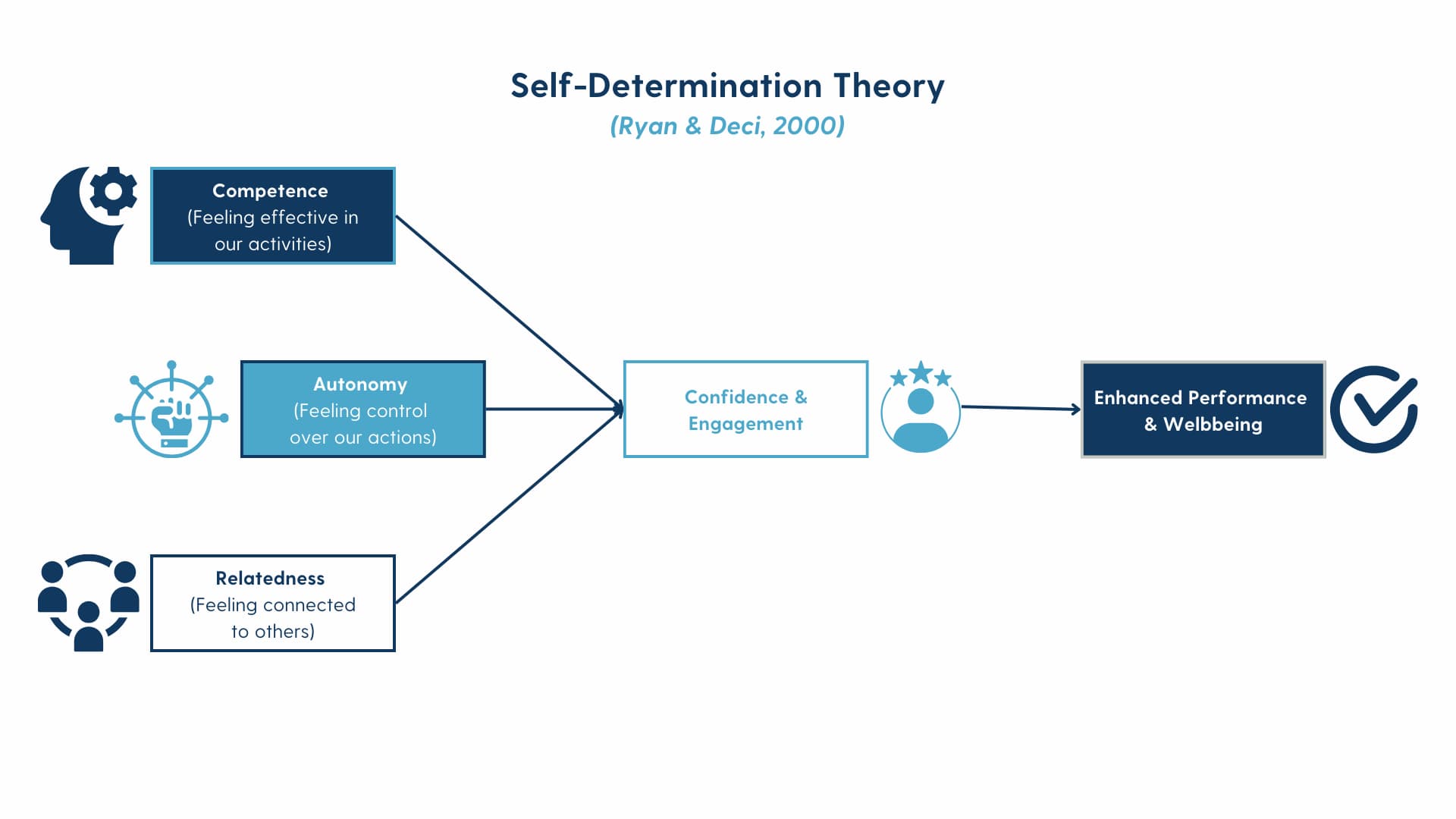
- Self-Determination Theory (Deci & Ryan): This theory suggests that passion is rooted in the three fundamental needs described below, arguing that when these needs are met, passion and intrinsic motivation flourish:
- Autonomy: Feeling in control of your actions and decisions.
- Competence: Mastering tasks that are important to you.
- Relatedness: Feeling connected to others in meaningful ways.
- Career Construction Theory (Mark Savickas): This theory suggests that passion is part of constructing a meaningful career narrative. It’s about finding coherence between one’s personal story, values, and professional goals. Passion, in this context, is a key element of creating a fulfilling career identity.
Passion in Leadership
Passion plays a key role in making a manager a better leader by enhancing their effectiveness, influence, and ability to inspire others. Passion helps leaders create a positive, motivated, and resilient team, fostering innovation, and driving a shared sense of purpose. Passionate leaders are also better equipped to support their teams.
- Inspires and Motivates Others: Passionate leaders naturally inspire and energize their teams. When a manager is deeply enthusiastic about their work, it fosters a positive environment where team members feel motivated to excel. Passion can be contagious, leading to higher engagement and morale.
- Leads with Purpose: Passion often stems from a sense of purpose. A manager who leads with purpose is more likely to create a vision that aligns with both organizational goals and team members’ values. This creates a sense of shared mission, encouraging employees to find meaning in their work and contribute with dedication.
- Enhances Communication and Influence: Passionate managers communicate with conviction and authenticity, making them more persuasive and influential. Their enthusiasm translates into clear, compelling messages that resonate with others, helping to align teams around shared objectives and values.
- Engages in Continuous Learning and Growth: Passionate leaders are often lifelong learners, committed to growing their skills and knowledge. This attitude encourages their teams to adopt a similar growth mindset and helps create a culture of continuous improvement, where employees feel empowered to develop themselves.
- Builds Strong Relationships: Passionate leaders are deeply invested in their work and their people. They tend to be more empathetic, supportive, and engaged with their team members, fostering trust and loyalty. They show genuine care for both the work and the individuals on their team, and therefore build stronger relationships that drive collaboration and productivity.
Passion in Personal Development
Passion plays a significant role in career management by serving as a guiding force that drives long-term fulfillment, growth, and success. When we are passionate about our work, we are more likely to pursue roles and opportunities that align with our values, interests, and strengths. This alignment creates a sense of purpose, which fuels motivation, helping us stay engaged and committed to our career paths. Passion can also enhance perseverance, making it easier to navigate challenges and setbacks, which are inevitable in any career journey.
Those who are passionate about their work tend to seek out new knowledge, develop their skills, and stay ahead of industry trends. This proactive approach to growth opens up doors to new opportunities and builds expertise, making us more likely to take ownership of our career development, set meaningful goals, and work toward them with enthusiasm and determination.

Conclusion
Passion is a powerful force that can transform a career from simply a means to an end into a fulfilling and purpose-driven journey. Passion fuels perseverance, creativity, and continuous growth, allowing us to overcome challenges and seize opportunities. By aligning work with personal values, pursuing mastery, and maintaining curiosity, passion helps us navigate our career paths with joy and enthusiasm. Ultimately, cultivating passion is about finding meaning in what we do and leveraging that energy to drive long-term personal and professional fulfillment.
Other Resources
- PathWise Book Summary: Drive by Daniel Pink
- PathWise Book Summary: Grit by Angela Duckworth
- HBR: Values, Passion, or Purpose — Which Should Guide Your Career?
- HBR: What You Should Follow Instead of Your Passion
- HBR: Reawakening Your Passion for Work
- HBR: When Following Your Passion Becomes Toxic
- Forbes: Why Passion Is Critical to Success in Life
- Forbes: Following Your Passion is One Thing, Finding It is Another
- Forbes: How to Blend Your Career With Your Passions
