



In an increasingly fast-paced and continually changing job market, managing our careers can feel overwhelming. Aside from our job responsibilities, trying to land our next role, deciphering how to climb the corporate ladder, or considering ways to pivot into a new industry can feel daunting. But one important fact to remember is that career success requires more than ambition or talent—it also depends on practical, real-world decision-making. Perfect plans will fall apart, challenges will arise, and change will continue to disrupt our routines. So, amidst unexpected events, adopting a pragmatic approach ensures we can manage setbacks, seize opportunities, and move forward with confidence, setting a path when the way is unclear.
What is Pragmatism?
Pragmatism is a philosophical approach that emphasizes practical outcomes and real-world results over abstract principles or theories. In the context of a career, pragmatism involves focusing on what works best in a given situation, being adaptable, and making decisions based on experience, evidence, and achievable goals rather than idealized outcomes.
Embracing pragmatism can help you in your career development in the following ways:
- Adaptability: Pragmatic people tend to be flexible and open to change, which is essential in a constantly evolving workplace. They can pivot when necessary, allowing them to stay relevant and effective.
- Problem-Solving: Pragmatism encourages a focus on achievable and effective solutions in real-world scenarios. This approach can help navigate complex challenges where ideal solutions might not be practical.
- Efficient Decision-Making: Instead of being bogged down by theoretical possibilities or perfect outcomes, pragmatists make decisions that balance current resources, constraints, and priorities. This efficiency can lead to faster progress and tangible results.
- Focus on Results: Pragmatic people prioritize outcomes and actions that deliver value, which is often appreciated in professional environments where results are key to success.
- Career Progression: Pragmatism helps in making strategic decisions about career moves, such as choosing roles that align with their skills and market demand, rather than chasing unrealistic or overly idealistic aspirations.

Image used under license from Shutterstock.com
Thought Leaders
Several thought leaders have contributed to the philosophy of pragmatism, shaping how it applies to decision-making, career development, and leadership. Here are a few key figures:
- Charles Sanders Peirce: Often regarded as the father of pragmatism, he argued that beliefs should be evaluated based on their practical consequences. His work laid the foundation for pragmatism as a philosophy of thought and inquiry. His main premise was that the meaning of an idea or a concept lies in its observable practical effects.
- William James: James popularized pragmatism and extended its application to psychology, religion, and ethics. His pragmatic approach encouraged people to focus on what works in practice and to evaluate ideas based on their usefulness.
- John Dewey: Dewey applied pragmatism to education, democracy, and social reform. He believed that learning and decision-making should be rooted in experience and experimentation, making him a key figure for those applying pragmatism in leadership and innovation. In particular, he argued that education is not preparation for life but life itself.
- Richard Rorty: Rorty argued that truth is not an objective reality but rather what works best for the community. He focused on the practical benefits of dialogue and communication rather than abstract ideals of truth.
- Peter Drucker: Known as the father of modern management, Drucker argued in favor of practical approaches to business and leadership. His ideas on decision-making, innovation, and managing for results are rooted in pragmatic thinking.
- Ray Dalio: Founder of Bridgewater Associates, he promotes a practical, principle-based approach to decision-making and leadership. His book Principlesoutlines a pragmatic approach to achieving success through radical transparency, meritocracy, and continuous learning.
- Bill Burnett and Dave Evans: Co-authors of Designing Your Life: How to Build a Well-Lived, Joyful Life, based on their work at the Stanford Life Design Lab, they apply design thinking principles grounded in pragmatism to career and life planning.
Key Frameworks
Pragmatism often intersects with frameworks that emphasize practical outcomes, experimentation, and adaptability. Here are several models that incorporate elements of pragmatism or are closely aligned with it:
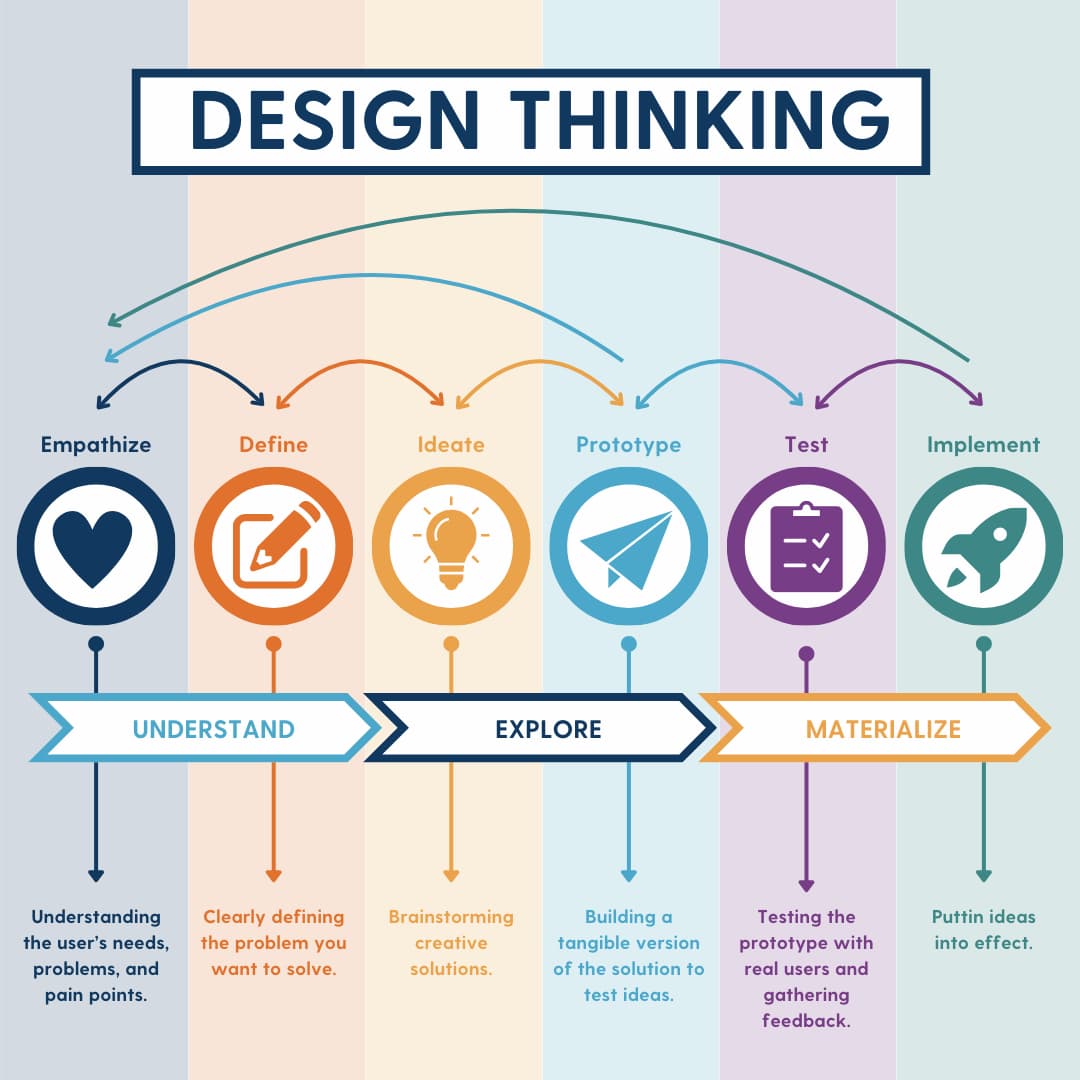
- Design Thinking: A problem-solving framework that focuses on understanding user needs, prototyping, and iterative testing to arrive at practical solutions. It is pragmatic because it emphasizes action, user feedback, and adjusting ideas based on real-world results. It also focuses on rapid, user-centered iterations and practical testing over abstract theorizing.

- Lean Startup Methodology: Popularized by Eric Ries, this framework is centered on building businesses or launching products through iterative development. It emphasizes creating a minimum viable product (MVP) and learning from customer feedback to make practical improvements. Its pragmatism stems from focusing on reducing waste, experimenting with ideas in the real world, and adapting quickly based on user input and results.
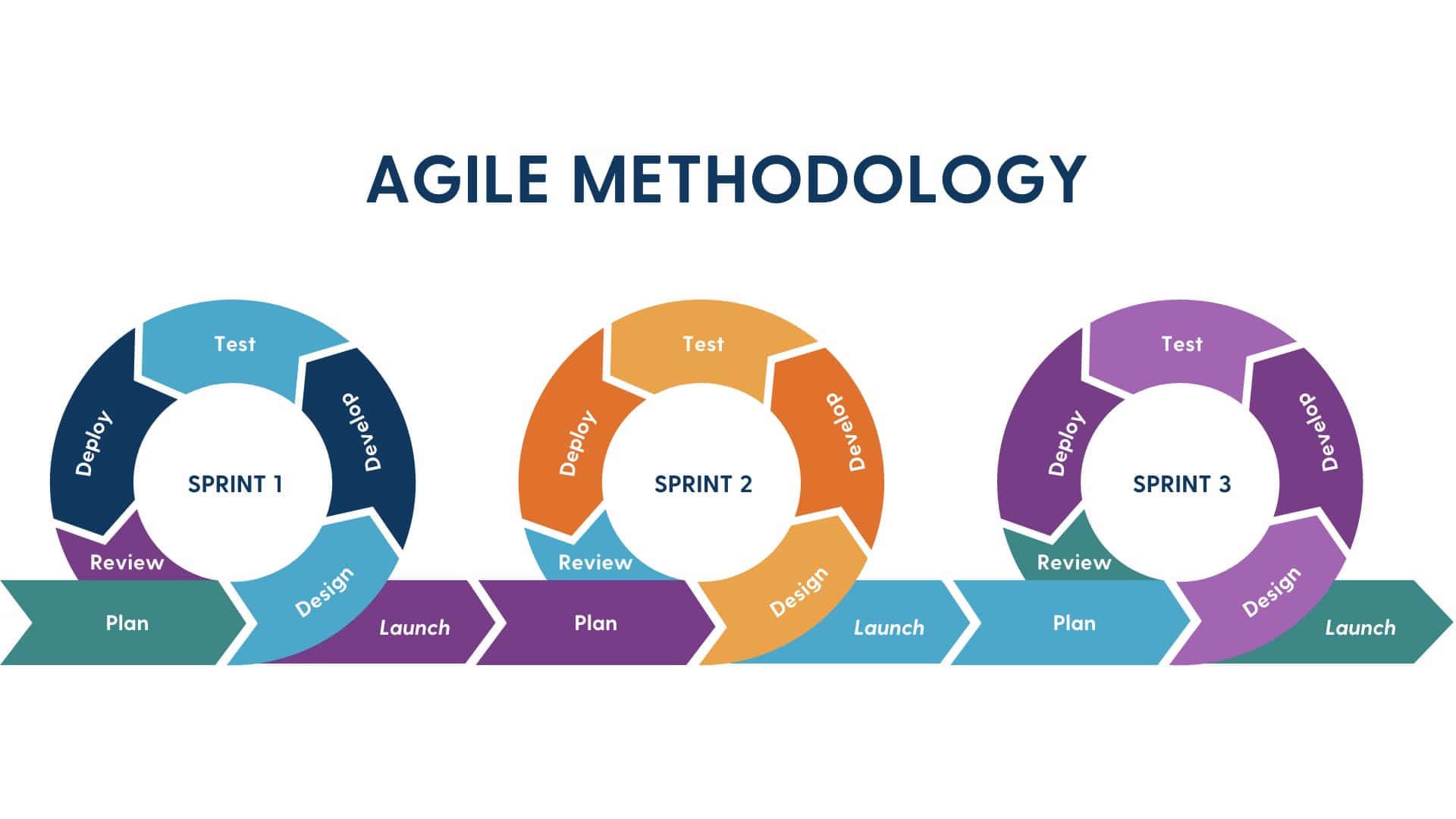
- Agile Methodology: Originally developed for software development, Agile emphasizes flexibility, collaboration, and continuous improvement. Teams work in short cycles (sprints) to deliver incremental value and adjust based on feedback. Agile focuses on what works in practice, constant adaptation, and providing functional solutions that meet current needs.

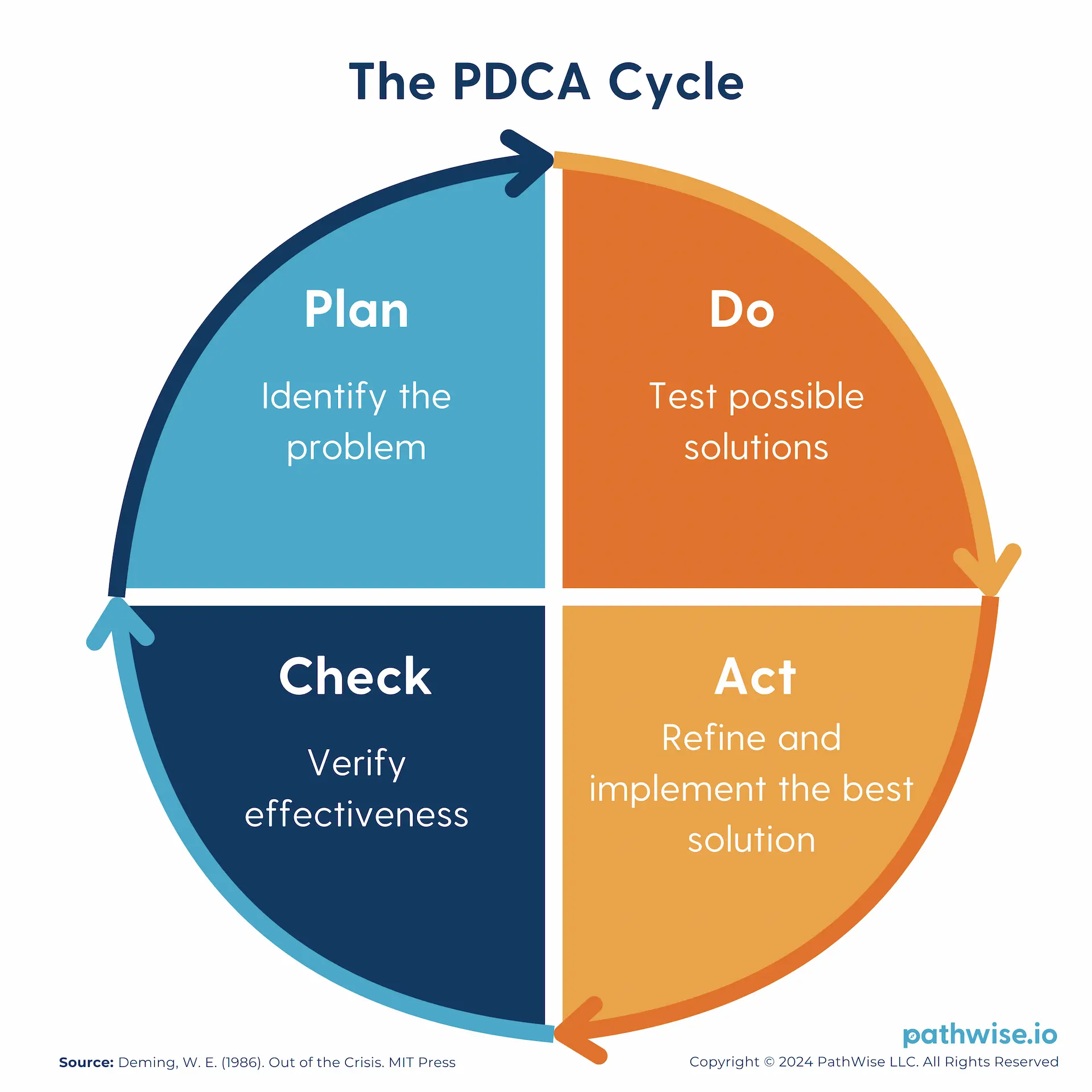
- PDCA (Plan-Do-Check-Act) Cycle: The PDCA cycle is a pragmatic, iterative problem-solving process used in quality control and continuous improvement. It helps organizations focus on ongoing refinement and practical implementation.
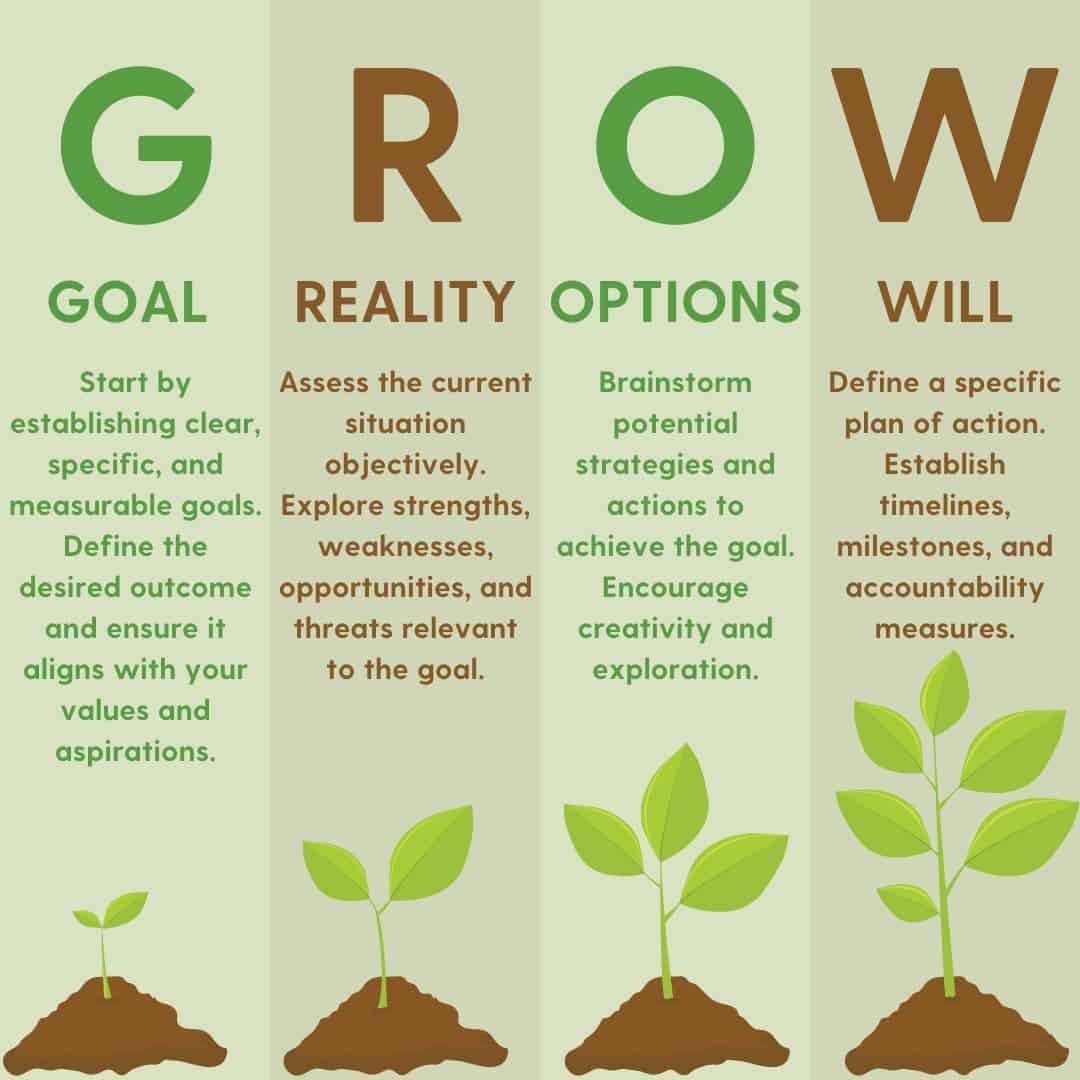
- GROW Model: GROW is a popular coaching framework that helps individuals and teams set and achieve goals through a structured approach. The framework is based on aligning goals with reality, exploring practical options, and ensuring commitment to achievable steps.

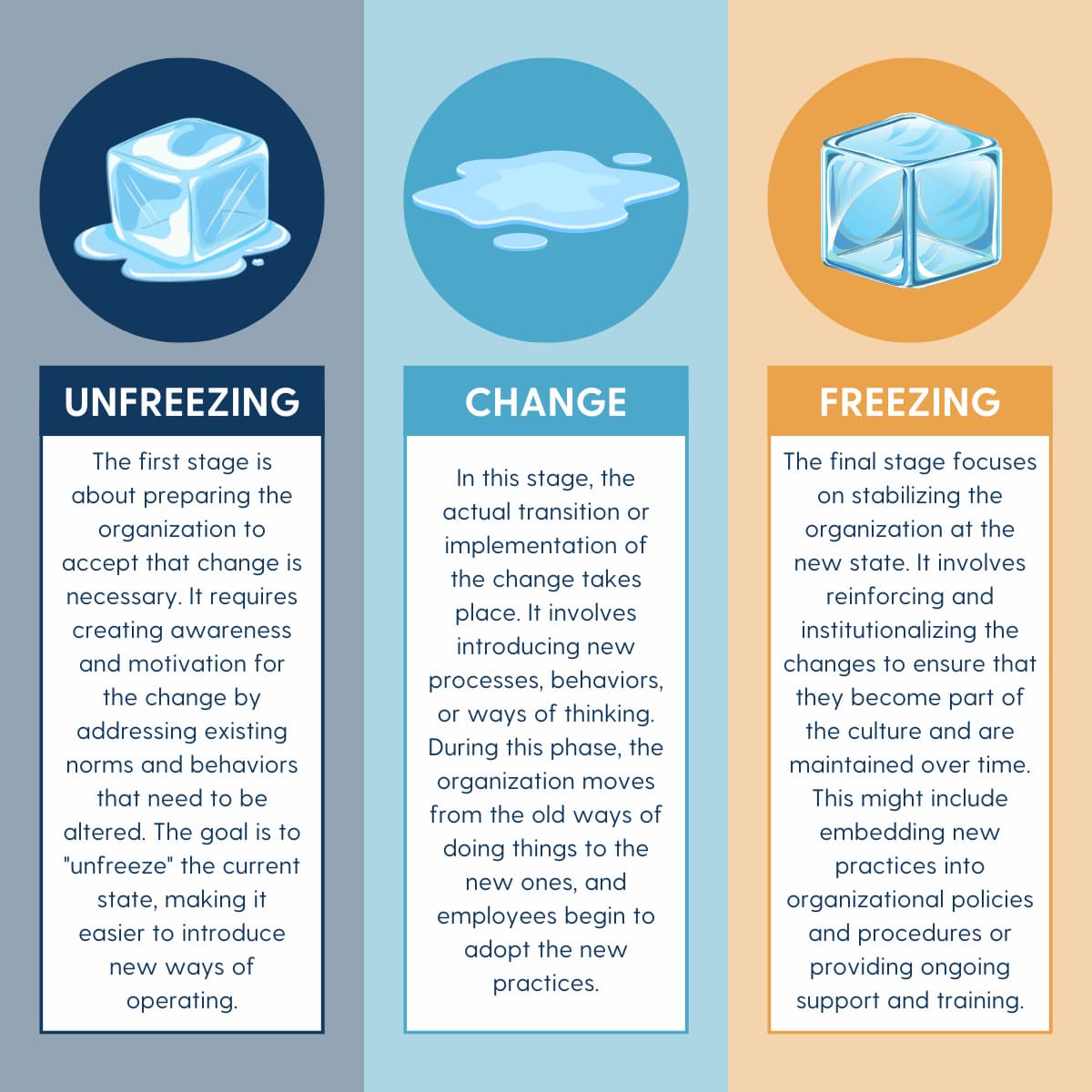
- Kurt Lewin’s Change Management Model: This model is used for implementing organizational change in a structured, practical way. It emphasizes understanding the real-world dynamics of an organization and making adjustments that are feasible and effective.

- Effectuation Theory: This entrepreneurial framework encourages people to focus on what they can control and work with existing resources rather than striving for ideal outcomes. It’s widely used in entrepreneurial decision-making. This prayer also conveys a similar sentiment: “Grant me the strength to accept the things I cannot change,
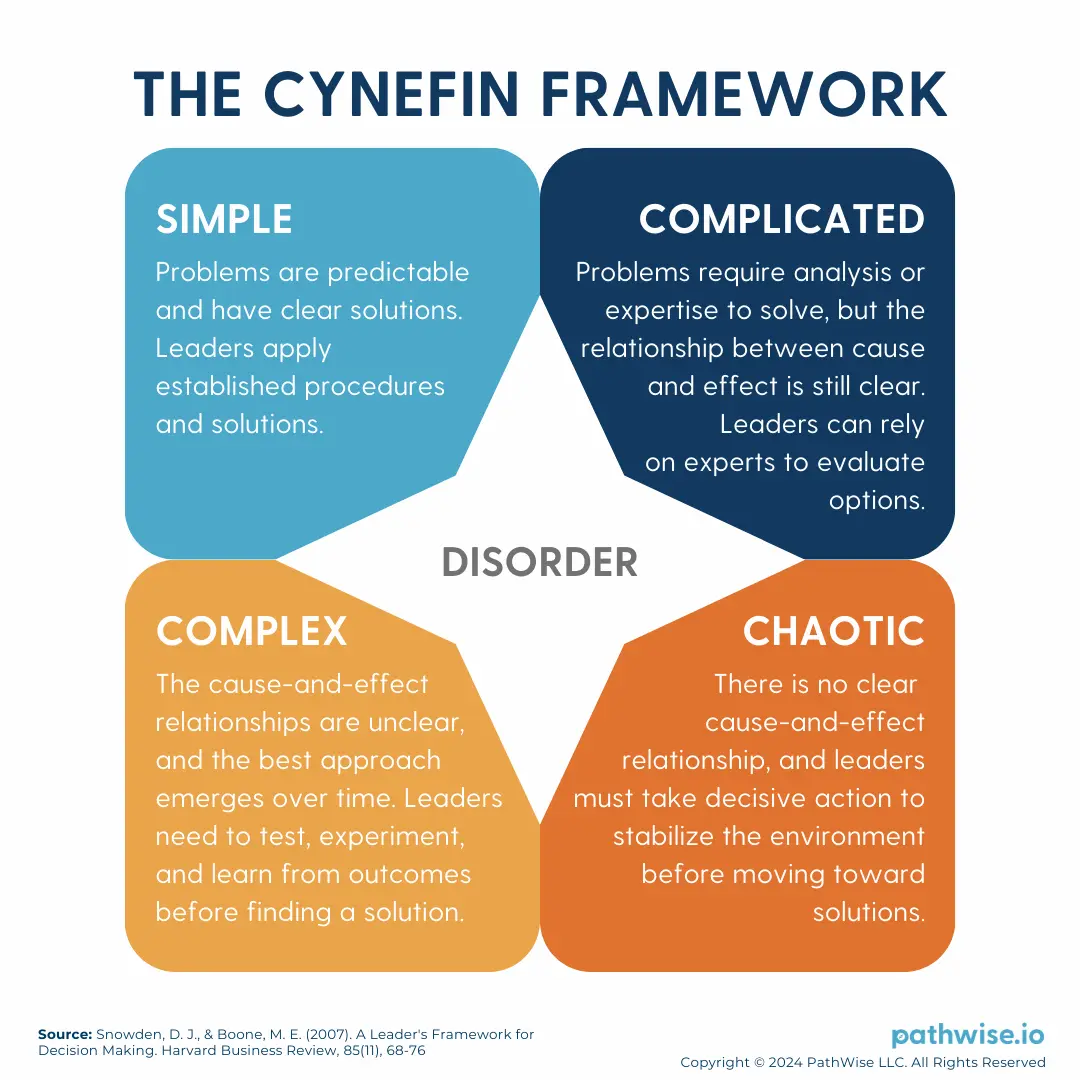
the courage to change the things I can, and the wisdom to know the difference. - Cynefin Framework (David Snowden): A decision-making model that helps leaders understand the context of their challenges (simple, complicated, complex, chaotic) and decide on appropriate actions. It focuses on understanding the nature of the problem and taking practical actions that align with the situation.
Pragmatism in Leadership
Leadership, by its very nature, involves navigating uncertainty, making decisions that affect others, and driving meaningful outcomes. Pragmatism in leadership emphasizes a results-driven approach grounded in practical thinking and adaptability rather than abstract theory. Leaders who adopt a pragmatic mindset focus on what works in reality, make decisions based on empirical evidence, and remain flexible in the face of changing circumstances. Managers who adopt this mindset understand that conditions change, new information becomes available, and strategies must evolve. They are not wedded to any one approach. That’s why constraints do not deter them, as they see them as part of problem-solving and recognize that success often comes from making the most of current circumstances rather than waiting for perfect conditions to align.
At its core, pragmatic leadership is about making realistic and achievable decisions. Unlike theoretical approaches that may prioritize ideal outcomes or long-term perfection, pragmatic leaders focus on the question, “What is the best solution given our current resources, constraints, and goals?” They understand the importance of real-world considerations such as budgets, timeframes, and stakeholder needs.
Pragmatic leaders are also savvy at balancing long-term vision with short-term practicalities. They understand the importance of having a strategic direction but are also keenly aware that immediate, incremental steps are necessary to achieve that vision. Rather than becoming paralyzed by grand aspirations, they break down their goals into smaller, actionable pieces that can be accomplished in the short term. They also empower their teams by grounding their leadership in practical strategies and openness to experimentation and feedback.

AI-Generated image used under license from Shutterstock.com
Pragmatism in Personal Development
Being pragmatic can help improve our career journeys by encouraging a practical, adaptable, and results-oriented mindset. Here are a few key ways it plays a role:
- Realistic Goal Setting: Pragmatism helps us set achievable, realistic goals based on our circumstances. Rather than aiming for lofty, abstract ambitions, through pragmatism we can break our goals down into actionable steps. This increases the likelihood of success and keeps momentum going, as each small achievement brings us closer to long-term aspirations.
- Adaptability and Flexibility: Careers rarely follow a straight path, and pragmatism allows us to remain adaptable. A pragmatic approach helps us pivot when necessary, responding to changing market trends, new opportunities, or personal interests.
- Focus on Results Over Perfection: Pragmatism emphasizes getting things done over waiting for perfect conditions. This means that instead of being stuck in indecision or striving for the ideal scenario, we make progress through experimentation and learning from outcomes. A pragmatic mindset encourages us to take calculated risks and learn from failures, making continuous improvements along the way. It also encourages us to know when to stop. As the expression goes, “Perfect is the enemy of good enough.”
- Problem-Solving with Constraints: Pragmatic thinking helps us navigate constraints like limited time, resources, or support. Instead of being paralyzed by these challenges, we focus on finding practical solutions. This mindset fosters creativity and resourcefulness, allowing us to move forward even in less-than-ideal conditions.

Conclusion
Embracing pragmatism as a mindset can transform our careers. Focusing on what works and staying adaptable helps us set ourselves up for long-term success. Our professional journeys will be inundated with uncertainty. We’ll face career crossroads and daily challenges, but adopting a pragmatic approach ensures we stay grounded, resilient, and always moving forward. Ultimately, it’s not about having the perfect plan but about making the best possible decisions. Sometimes, it’s simply about being pragmatic.
Other Resources
- PathWise Book Summary: Designing Your Life
- TED Talk: The Perks of Being a Pirate
- HBR: The Leaders as a Principled Pragmatist
- HBR: To Craft a Purpose That Motivates Your Team, Balance Pragmatism and Idealism
- HBR: How to Become a More Well-Rounded Leader
- Forbes: A Pragmatic Approach Is The Key To Successful Growth Hacking
- Forbes: Balancing Passion and Pragmatism
