



Imagine stepping onto a soccer field without knowing which position you’re playing, what the rules are, or which goal is yours. You might run hard, chase the ball, and even score, but you’d have no idea if you were helping your team or working against it. In the workplace, that’s what operating without role clarity feels like. Lacking a clear understanding of responsibilities, decision-making authority, and performance expectations leaves teams frustrated and results inconsistent.

Image used under license from Shutterstock.com
What is Role Clarity?
Role clarity refers to the degree to which an employee understands their responsibilities, the expectations for their performance, the boundaries of their decision-making authority, and how their work contributes to team and organizational goals. It answers questions like, What am I responsible for? How will success be measured? Who do I collaborate with? Where do my responsibilities end and someone else’s begin?
Role clarity has a direct impact on performance, collaboration, and job satisfaction. When team members know what is expected of them, they can focus their time and energy on the right activities instead of guessing priorities or duplicating work. It reduces misunderstandings, gaps, overlaps, and conflicts, making it easier to hold people accountable in a fair and transparent manner. Role clarity also strengthens alignment as team members see how their work contributes to broader objectives, boosting engagement and motivation. Conversely, unclear roles can lead to wasted effort, missed deadlines, strained relationships, and disengagement, all of which undermine team effectiveness and organizational results.

Image used under license from Shutterstock.com
Thought Leaders
Notable thought leaders who have contributed meaningfully to our understanding of role clarity, performance, and workplace alignment—either directly or through closely related work such as in organizational behavior, leadership, and team effectiveness – include:
- Stephen Covey: Author, educator, and leadership consultant, best known for The 7 Habits of Highly Effective People, he emphasized principles such as “Begin with the End in Mind” and “Put First Things First,” both of which underscore the importance of clarity in roles and objectives. His work blends personal productivity with organizational alignment, influencing leaders on how to set clear expectations.
- Patrick Lencioni: Founder of The Table Group and author of The Five Dysfunctions of a Teamand The Advantage, he stresses the importance of clarity in building cohesive, high-performing teams, arguing that role confusion erodes trust and accountability. His frameworks help improve team communication and role definition in corporate settings.
- Amy Edmondson: Professor of Leadership and Management at Harvard Business School and author of The Fearless Organization, she is best known for her work on psychological safety. Edmondson often highlights how clarity of roles and objectives supports open communication and team learning. Her research also shows that it helps reduce interpersonal risk, enabling more innovative and collaborative environments.
- Simon Sinek: A leadership speaker and the author of Start With Why, Leaders Eat Last, and The Infinite Game, he focuses on purpose-driven leadership, which ties to role clarity. Employees who understand their “why” can see how their role contributes to the mission. His work encourages leaders to connect roles with meaning to foster engagement and loyalty.
- Marcus Buckingham: Researcher, author, and strengths expert who co-created the StrengthsFinder assessment (now CliftonStrengths) and wrote First, Break All the Rules, his research, particularly during his time at Gallup, shows that clarity of expectations is one of the strongest predictors of employee engagement. He advocates for managers to individualize roles to align with people’s strengths.
- Liz Wiseman: Executive advisor, researcher, and author of Multipliersand Impact Players, she studies how leaders can get the best from their teams. Her findings show that clarity about roles and responsibilities allows high performers to excel.
- John Doerr: A venture capitalist at Kleiner Perkins and author of Measure What Matters, who popularized Objectives and Key Results (OKRs), a goal-setting framework that inherently promotes clarity of role and objectives. The concept itself came from Andy Grove, the CEO of Intel, where Doerr first learned about it. His work bridges strategy and execution, helping teams understand their goals and how progress will be measured.

Image used under license from Shutterstock.com
Key Frameworks
Several models and frameworks can help organizations achieve and maintain role clarity. While each takes a slightly different approach, ranging from structured charts to goal-setting systems, they all aim to reduce ambiguity, strengthen accountability, and align individual contributions with broader objectives. Some of the most notable ones include:
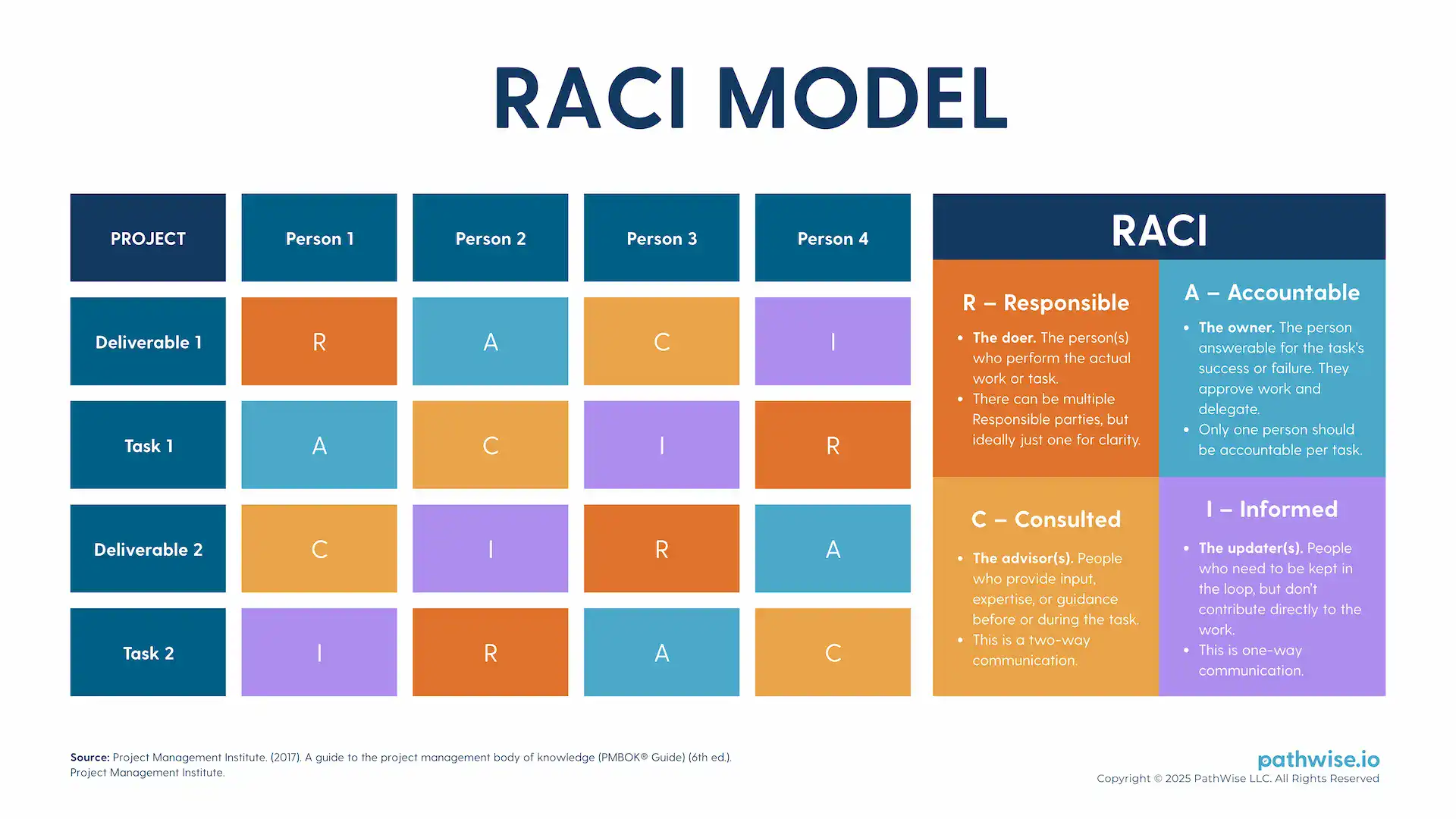
- RACI Matrix: The RACI (Responsible, Accountable, Consulted, Informed) model is a tool used to define roles in projects and processes. It clarifies who is doing the work, who makes decisions, who provides input, and who needs to be kept informed. It also helps avoid confusion, duplication, and missed responsibilities.
- OKRs (Objectives and Key Results): Popularized by John Doerr, OKRs align teams around shared goals and measurable outcomes. Each person’s role becomes clear through specific objectives and defined key results, ensuring everyone knows both what to achieve and how success will be measured. This framework helps link individual contributions to larger organizational priorities.
- Role Negotiation Technique: Developed in organizational psychology, this structured process allows employees and managers to openly discuss and agree on role expectations. It often involves identifying current duties, desired responsibilities, and boundaries, which helps eliminate ambiguities. The result is a mutually agreed-upon role definition that improves accountability and satisfaction.
- Responsibility Assignment Chart: Similar to RACI but often more detailed, this chart maps tasks against individuals or teams to visually show ownership. It is particularly useful in cross-functional projects where roles may overlap. By making responsibilities visible, it supports coordination and reduces misunderstandings.
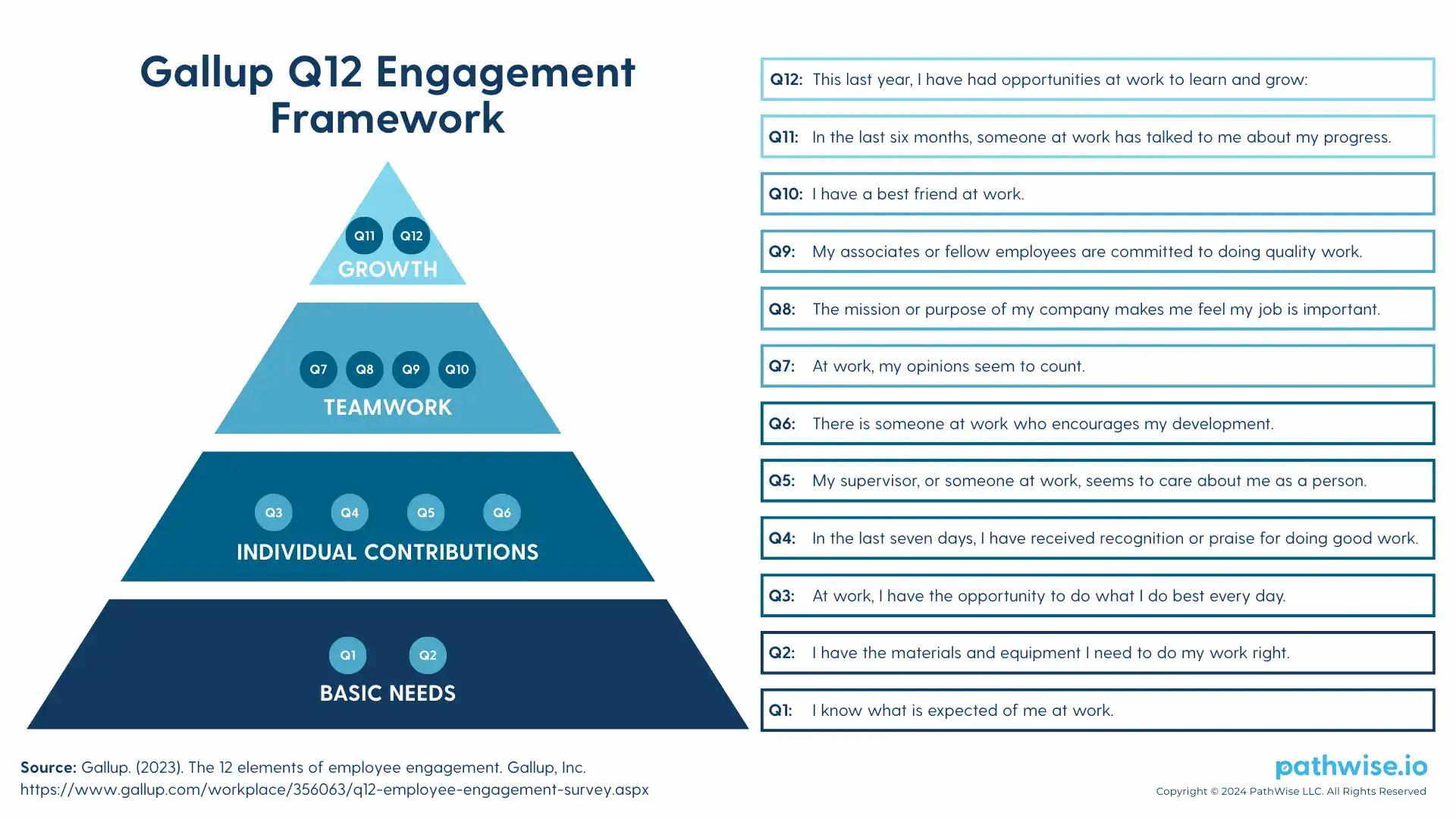
- Gallup Q12 Engagement Framework: Gallup’s Q12 survey measures employee engagement. The first question, “I know what is expected of me at work,” highlights the centrality of role clarity. Gallup’s research links clear expectations to higher productivity, lower turnover, and stronger employee well-being. The framework utilizes data to help managers identify areas where role clarity may be lacking.
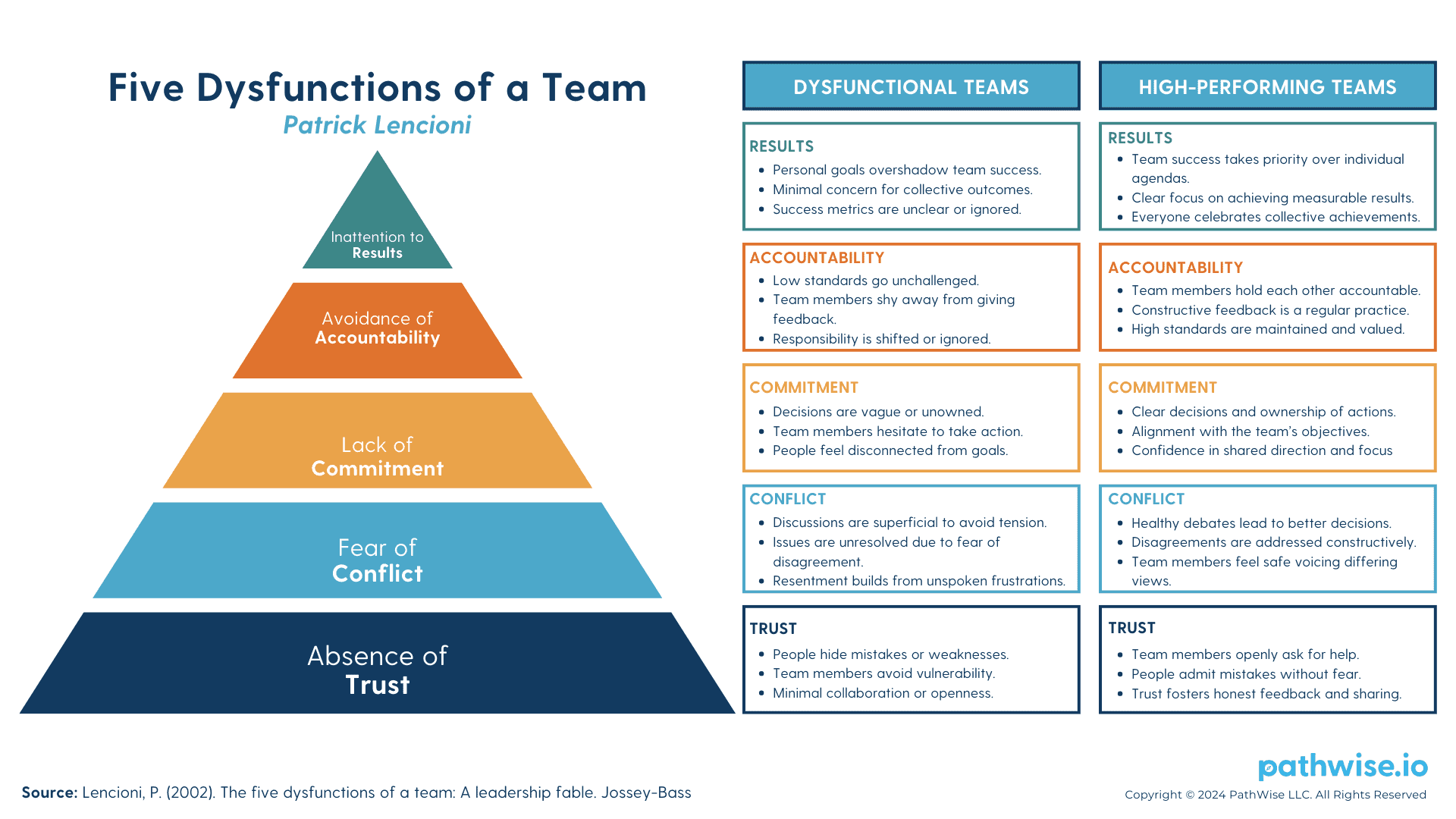
- The Five Dysfunctions of a Team Model: Created by Patrick Lencioni, this model explores the behaviors that undermine team performance, with “lack of clarity” often appearing within the dysfunction of the absence of accountability. By explicitly defining roles and responsibilities, teams can address this dysfunction and build a stronger foundation for trust, commitment, and results.

Roles & Role Clarity in Leadership
Ensuring role clarity is a key responsibility of a manager. Taking the time to define responsibilities, clarify decision-making authority, and connect individual work to broader goals removes ambiguity that can drain energy and cause frustration, both at the individual and team level. This gives team members the confidence to act independently, knowing they are working within clear expectations, which in turn reduces micromanagement.
Clear roles also help managers lead strategically. With responsibilities well-defined, they can spot skill gaps, delegate more effectively, and ensure workloads are balanced, spending less time firefighting misunderstandings and more time coaching, mentoring, and guiding their teams toward growth. Additionally, role clarity enhances credibility, as employees perceive their manager as someone who communicates openly, sets clear expectations, and fosters a structured environment where people can thrive. Over time, this improves team results by building trust and respect.
Image used under license from Shutterstock.com
Roles & Role Clarity in Personal Development
While role clarity improves day-to-day performance, it can also accelerate professional growth. When we understand exactly what is expected of us and how our work fits into the broader picture, we can make more informed decisions about where to invest our time, efforts, and energy in terms of development. More specifically, role clarity fuels professional growth by:
- Focusing skill-building: When responsibilities are clear, we know which competencies to strengthen and which skills will have the greatest impact on performance.
- Enabling targeted feedback: Clear expectations make it easier for managers to give specific, actionable feedback that guides our growth.
- Supporting career planning: Understanding current responsibilities and performance measures helps us identify logical next steps in our career path.
- Encouraging proactive learning: When we recognize how our work aligns with broader goals, it becomes easier to identify areas where additional knowledge or training can enhance our contribution.
- Building confidence and autonomy: Clarity reduces hesitation, allowing us to take initiative and expand our capabilities without fear of overstepping.
- Reveals advancement opportunities: Distinct role boundaries make it easier to see where cross-training or taking on new responsibilities could lead to promotions or lateral career moves.

Image used under license from Shutterstock.com
Conclusion
Role clarity is the foundation on which effective teams and sustainable performance are built. When we understand our responsibilities, the scope of our authority, and how our work supports broader goals, we can focus our energy on meaningful contributions. For managers, ensuring role clarity is both a key responsibility and a strategic advantage, as it builds trust, fosters engagement, and drives results.
Other Resources
