



Setting goals is like plotting a course on a map before a long journey. Without a clear destination, it’s easy to drift, take unnecessary detours, or end up somewhere you never intended to go. In professional life, the same principle applies. Without defined goals, your career can stall—or worse, veer off in directions that don’t align with your skills, interests, or values.

Image used under license from Shutterstock.com
What is Goal Setting?
Goal setting is the process of identifying something you want to achieve and creating a clear plan for how to reach it. It involves defining specific objectives, determining actionable steps, and establishing timelines to track progress. In both personal and professional contexts, goal setting helps provide focus, motivation, and direction by turning broad ambitions into concrete targets. This makes it easier to stay accountable and measure success.
To set goals,
- Reflect on Your Career Priorities: Think about where you want your career to go. Consider your skills, interests, values, and long-term aspirations.
- Make Your Goals Specific and Measurable: Use frameworks like SMART Goals (Specific, Measurable, Achievable, Relevant, Time-bound) to clarify exactly what you want to accomplish and by when.
- Break Big Goals into Smaller Steps: Large career goals can feel overwhelming. Break them into short-term milestones or actions you can take each week or month.
- Align Goals with Your Current Role: Look for opportunities that both support your current job and lay the groundwork for your next role. This could include improving a skill, leading a project, or expanding your network.
- Clarify and Involve your Values: Identify what matters most to you (e.g., creativity, stability, leadership, learning, etc.). Setting goals that align with your values increases motivation and satisfaction.
- Track Your Progress and Adjust When Needed: Regularly check in on your goals. Celebrate progress and revise your approach if circumstances or priorities change.
- Seek Feedback and Support: Share your goals with a manager, mentor, or coach. They can offer guidance, accountability, and resources to help you succeed.

Image used under license from Shutterstock.com
Thought Leaders
Several thought leaders have studied the process of setting goals that are actually achievable. Some of these experts include:
- James Clear: James Clear is a writer and speaker best known for his bestselling book Atomic Habits, which explores how small behavioral changes compound over time to drive meaningful personal and professional growth. His work focuses on habit formation, behavior change, and continuous improvement—key components of successful goal setting.
- Stephen R. Covey: Stephen Covey was an influential leadership and personal development expert, best known for The 7 Habits of Highly Effective People. His work helped popularize goal-oriented time management and personal effectiveness frameworks, such as Begin with the End in Mind. Today, Covey’s principles continue to shape how individuals and organizations approach goal setting and leadership.
- Brian Tracy: Brian Tracy is a veteran author, speaker, and consultant specializing in goal setting, time management, and personal achievement. His book Goals!Offers a step-by-step strategy for clarifying objectives and staying committed to them.
- Carol Dweck: Carol Dweck is a psychologist and professor at Stanford University, known for her research on mindset and motivation. Her book, Mindset: The New Psychology of Success, discusses the concept of a growth mindset, which encourages people to see abilities and intelligence as developable through effort and learning—an essential belief when setting professional goals.
- Michael Hyatt: Michael Hyatt is a leadership mentor and former CEO of a major publishing company who now focuses on productivity and goal achievement. His book Your Best Year Everoffers a research-based goal-setting framework designed to help professionals set and achieve meaningful goals.
- Angela Duckworth: Angela Duckworth is a psychologist and author of Grit: The Power of Passion and Perseverance. Her research focuses on how perseverance and long-term commitment to goals (that is, grit) are stronger predictors of success than talent alone. Her work helps professionals understand the psychological traits that support goal completion and long-term achievement.
- Brendon Burchard: Brendon Burchard is a high-performance coach and author of books like High Performance Habits. He focuses on personal productivity, motivation, and intentional living. Burchard’s research-driven approach to goal setting and behavior change has made him a popular speaker and consultant for professionals and leaders looking to maximize their impact.
- Jim Huling: Jim is a co-author of The Four Disciplines of Execution and a former Managing Consultant at Franklin Covey. His work and book focus on 4 disciplines to turn intent into outcomes: setting a Wildly Important Goal (WIG), applying lead measures, creating a visible scoreboard, and establishing a cadence of accountability. This framework has been shared with tens of thousands of leaders and applied by more than 300,000 organizations.

Image used under license from Shutterstock.com
Key Frameworks
Relying on frameworks or models can help make sure we set goals that we can achieve and that will actually benefit us. Some of these include:
- OKRs (Objectives and Key Results): OKRs is a goal-setting framework popularized by companies like Google and Intel. It encourages setting ambitious Objectives, along with measurable Key Results, to track progress. Introduced by Andy Grove at Intel and later championed by venture capitalist John Doerr in his book Measure What Matters, OKRs promote alignment, focus, and transparency across teams and organizations.
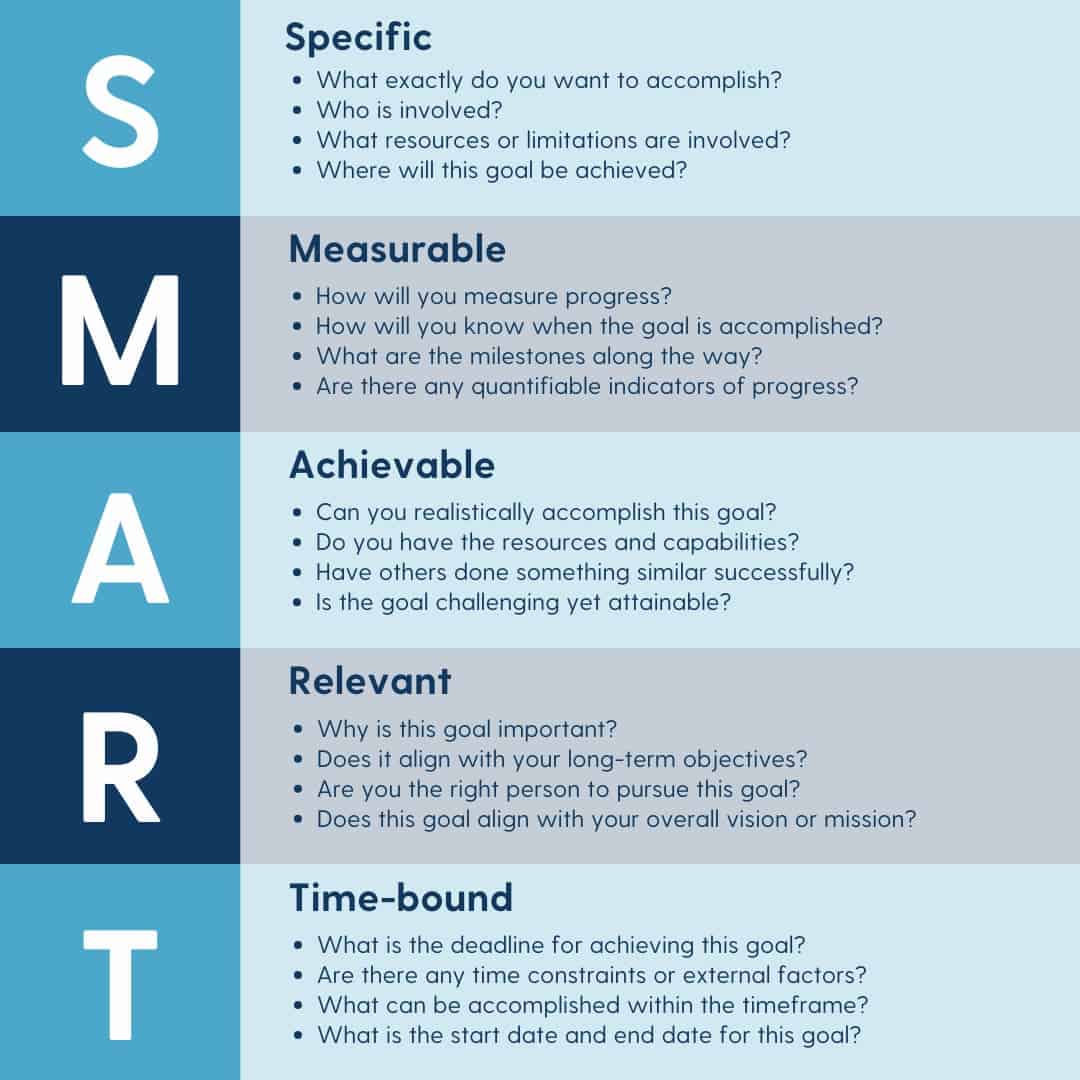
- SMART Goals Framework: The SMART Goals model is one of the most widely used frameworks for goal setting in both professional development and organizational management. SMART stands for Specific, Measurable, Achievable, Relevant, and Time-bound. This framework helps create clear, actionable, and trackable goals.
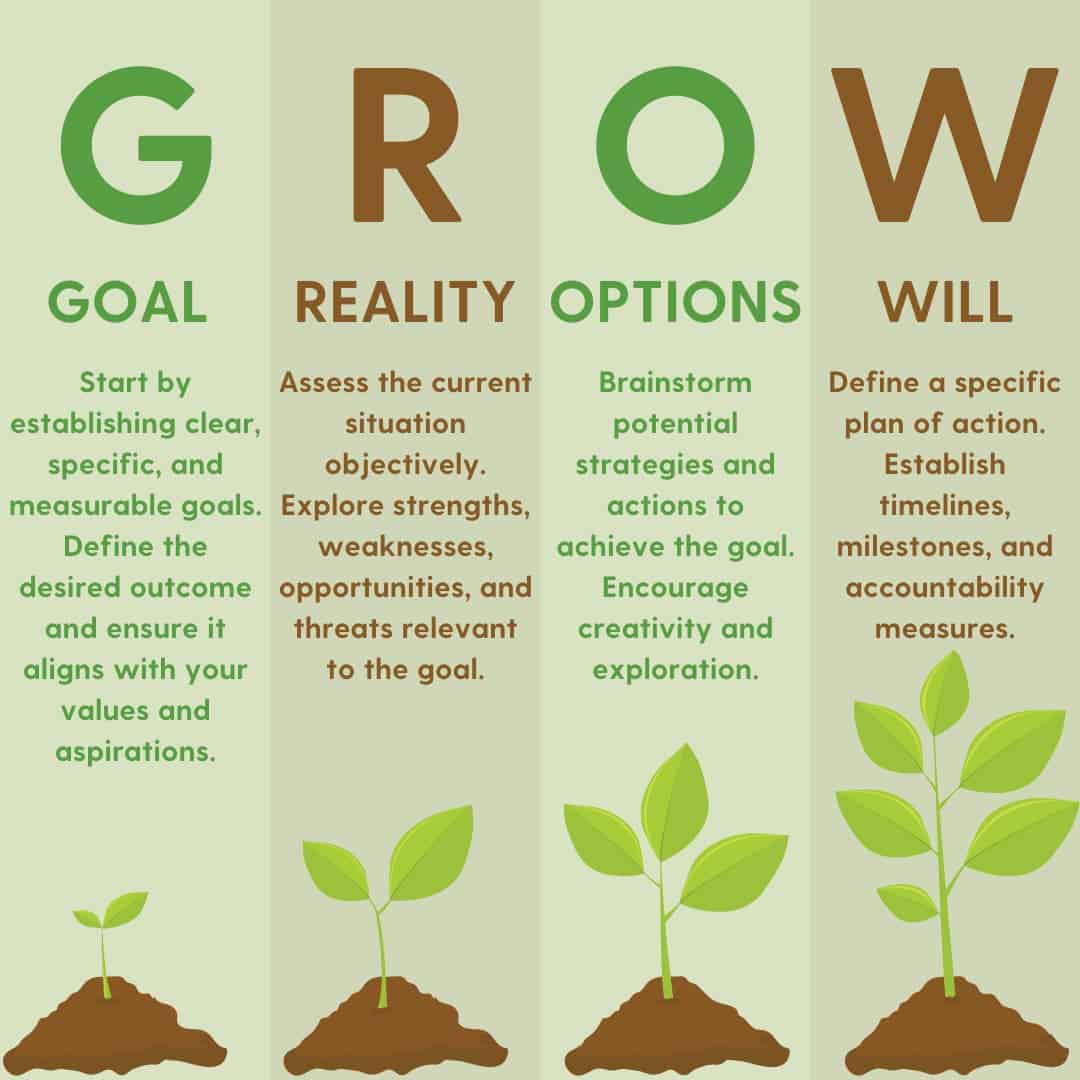
- GROW Model: The GROW Model is a coaching and goal-setting framework widely used in leadership development and professional coaching. It stands for Goal, Reality, Options, and Way Forward. This model guides a structured reflection and action planning process, helping set and achieve meaningful goals.
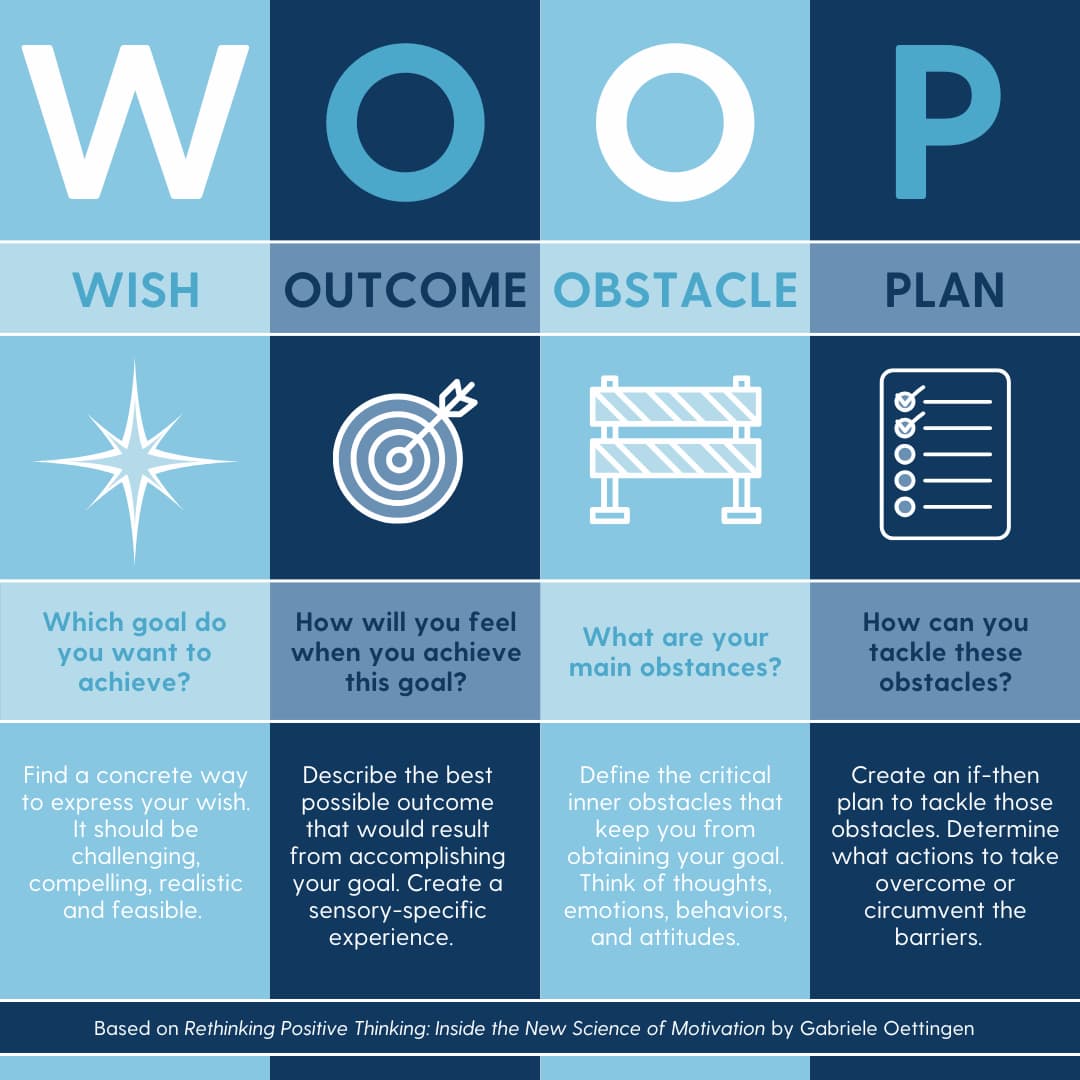
- WOOP (Wish, Outcome, Obstacle, Plan): WOOP is a science-based mental strategy for goal achievement developed by psychologist Gabriele Oettingen. It stands for Wish, Outcome, Obstacle, and Plan. Unlike more traditional goal-setting frameworks, this model focuses on mental contrasting: encouraging us to visualize both our desired future and the obstacles we’re likely to face, along with a plan to overcome them.
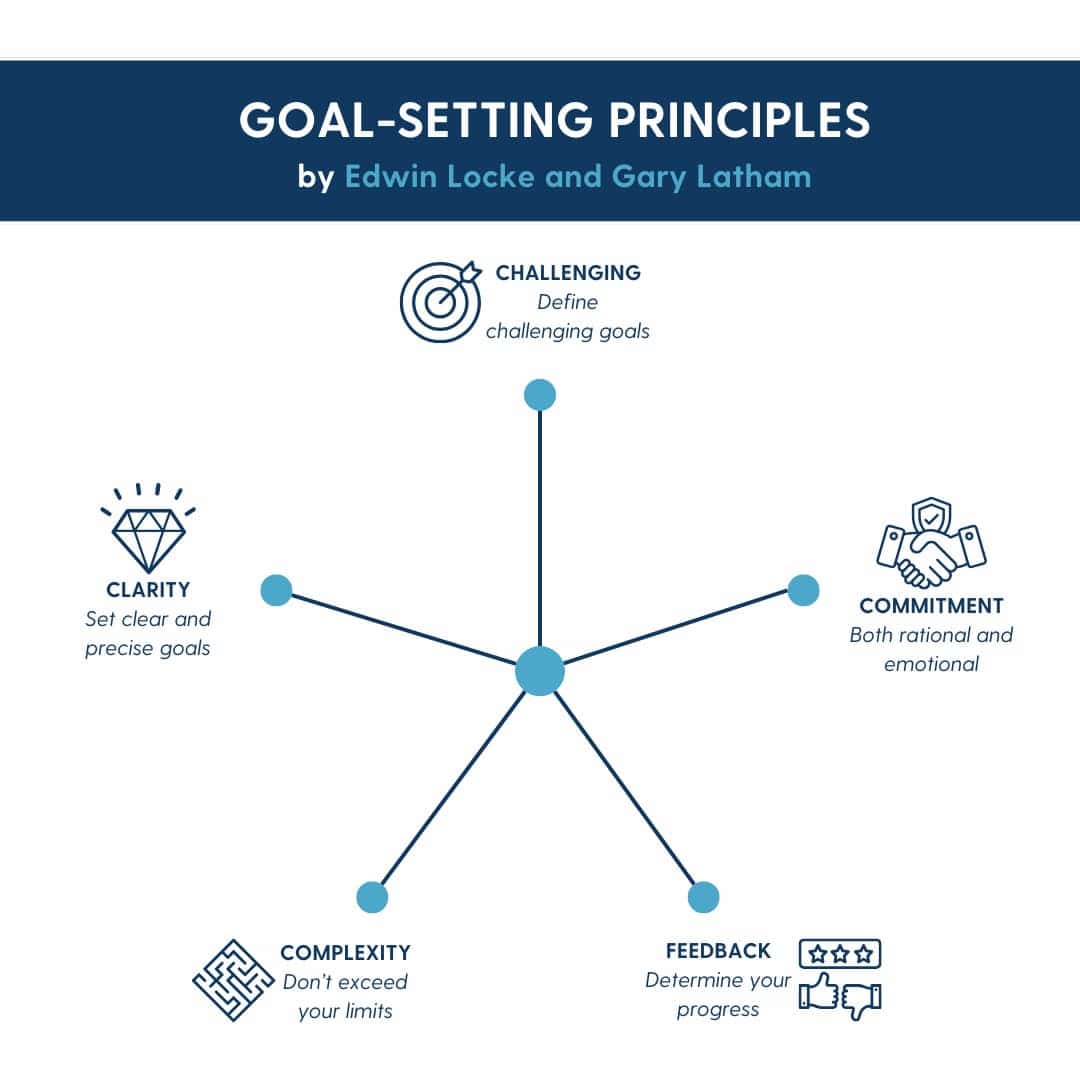
- Locke and Latham’s Goal-Setting Theory: Developed by psychologists Edwin Locke and Gary Latham, this theory highlights the relationship between clear, challenging goals and performance outcomes. Their research emphasizes the importance of goal specificity, difficulty, and feedback.


Goal Setting in Leadership
Part of being a manager and becoming a leader is inspiring others. To do so, managers need to be able to set a clear path forward. Setting goals for themselves and their teams helps them create structure, build trust, and drive progress. Here, goal setting turns vision into action by fostering the ability to stay focused, make informed decisions, and bring out the best in others. More specifically, goal setting:
- Provides Clear Direction: Leaders who set goals help their teams understand what success looks like. Clear objectives reduce confusion, align everyone’s efforts, and create a shared sense of purpose.
- Improves Decision-Making: With well-defined goals in place, managers can make smarter choices about where to invest time and resources. This helps them prioritize work that supports larger business outcomes.
- Builds Accountability and Trust: When managers follow through on their own goals, it sets the tone for accountability across the team. Consistent follow-through builds credibility and fosters trust.
- Encourages Growth and Development: Setting personal leadership goals pushes managers to expand their skills—whether it’s improving communication, delegating more effectively, or developing strategic thinking. As they grow, so does their leadership impact.
- Motivates and Engages the Team: Leaders who communicate clear and meaningful team goals give people something to rally around. This focus helps boost motivation, engagement, and team morale.
- Enhances Feedback and Coaching: Defined goals create a natural framework for providing effective feedback and coaching. Managers can recognize progress, address roadblocks, and offer support that’s specific and actionable.
- Drives Results and Business Impact: At the end of the day, leadership is about delivering results. Goal setting helps managers connect daily actions to broader company objectives, ensuring that both efforts contribute to business success.

Image used under license from Shutterstock.com
Goal Setting in Personal Development
Goal setting plays a central role in professional development as it provides structure and direction to our growth. Without clear goals, development efforts can feel scattered or reactive. Setting specific objectives, on the other hand, helps us focus on building the skills and experiences most relevant to our career aspirations. It also encourages intentional action, making it easier to prioritize learning opportunities, projects, and feedback that align with our desired path.
Goal setting also creates a measurable way to track progress and stay motivated. Seeing milestones reached builds confidence and momentum. Over time, this consistent pursuit of goals helps us expand our capabilities, increase our visibility, and position ourselves for new opportunities. It turns professional development from a vague concept into a series of achievable steps toward long-term success.

Image used under license from Shutterstock.com
Conclusion
Your professional journey won’t always follow a straight line. There will be twists, roadblocks, and unexpected turns along the way. But setting clear, meaningful goals gives you a compass to navigate through uncertainty. It helps you stay focused on what matters most, track your progress, and adjust your course as needed. The road ahead is yours to shape—so set your destination, map your route, and take the next step forward.
Other Resources
- PathWise Book Summary: Atomic Habits by James Clear
- PathWise Book Summary: Mindset by Carol Dweck
- PathWise Book Summary: Grit by Angela Duckworth
- HBR: 5 Ways To Set More Achievable Goals
- HBR: What Stops Us From Achieving Our Goals
- Forbes: How To Set Goals (And Why You Should Write Them Down)
- Forbes: Mastering the Art of Goal Setting
- Forbes: 10 Ways To Innovate Goal Setting For Greater Growth
