Why Talent Isn’t Enough: The Discipline That Separates Top Performers, with Dre Baldwin
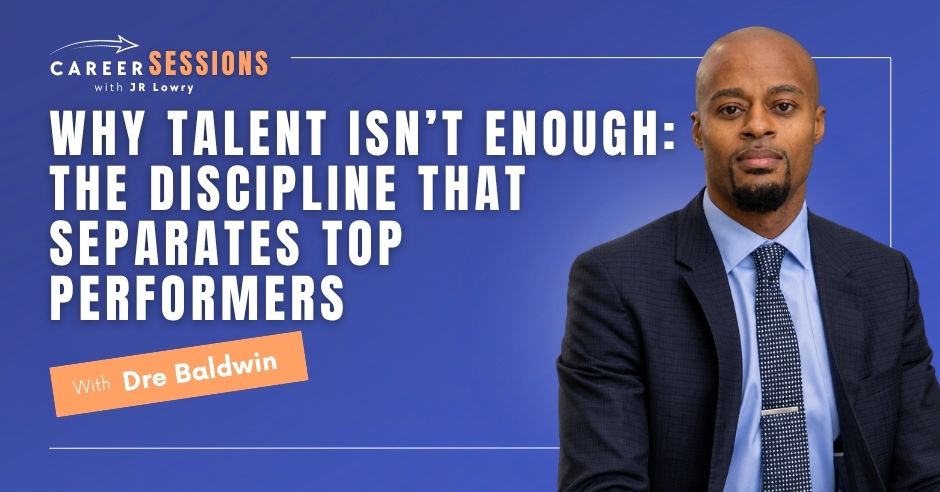
Most careers stall because professionals wait for permission, confidence, or the right timing rather than taking action. In this episode, host J.R. Lowry sits down with former professional athlete and entrepreneur Dre Baldwin to dissect why professional discipline outperforms raw motivation every time. Baldwin reveals how he translated lessons from overseas sports courts into scalable business frameworks centered on mindset, strategy, systems, and execution. They explore actionable ways to build true executive presence before you get the promotion, navigate career reinvention, and develop the human judgment skills AI can’t replace.
Check out the full series of “Career Sessions, Career Lessons” podcasts here or visit pathwise.io/podcast/. A full written transcript of this episode is also available at https://pathwise.io/podcasts/dre-baldwin
—
Watch the episode here
Listen to the podcast here
Why Talent Isn’t Enough: The Discipline That Separates Top Performers, with Dre Baldwin
Stop Waiting for Permission
One thing that I’ve observed over the years and still observed now is that a lot of people spend their careers waiting. Waiting for permission, being noticed, for confidence, for the magical intervention that in most cases never comes. My guest believes that mindset is why so many talented people fail to reach their potential or achieve their dreams. Dre Baldwin went from being an overlooked basketball player with no scholarships and no major opportunities to building a professional sports career.
A global personal brand, a business built around performance, discipline and mental toughness. He was clearly taking initiative. You’ll learn his story as we talked. Millions of people have watched his content online, but what makes his message resonate isn’t just Sports. It’s his ability to break it all down and to things that people can clearly understand and his relentless focus on accountability and consistency.
Whenever anyone else is promising hacks or shortcuts or offering simple feel-good motivations, Dre argues that discipline is the real separator and he shows up consistently day after day. His website is called All Day Dre. That pretty much says it. In this episode, we’re going to be talking about self-belief, leadership and career reinvention. We’ll discuss why so many professionals unknowingly have their own potential. By reading or watching, my goal for you is to identify where you can release some of the constraints that you may be placing on yourself. You are going to feel Dre’s palpable energy. I’m convinced of that. I’m J.R. Lowry. This is Career Sessions.
—
Dre, thank you for being with me.
I’m excited to be here. How are you?
I’m good. Thanks. How are you?
Doing excellent. Thank you.
Glad to hear it. Let’s get going. Give us your backstory. I know you fought your way into the professional basketball ranks. How did you do that? How did discipline help you in addition to being motivated?
I started playing basketball around the age fourteen. It was pretty late if you’re going to play in college, let alone play pro. There we played in high school, walked on the Division 3 level of college, which is not the level to produce as pros. I had to sell myself into professional playing opportunities, which I was able to do successfully. At the same time, I started publishing content on his new website called YouTube in 2005.
That’s where I started to build a name for myself online exclusively through this basketball training. I was just on the court doing drills and showing other players how to practice and get better. About five years into that, at the time, I’m still playing professionally. I’m playing overseas and traveling to different countries every year. I started to sell programs. I started to make training programs for basketball players at this time. Publishing became a thing and that’s when I started to write books. Also, athletes started asking me about the mental side of the game and when I started talking about those things, that’s when the non-sport professional started to find me.
They said, “The way that you break down and explain things, not only mindset but other aspects. This is useful for us. We don’t even play sports.” That’s how I knew what my segway would be out of sports into the next chapter of my life. We all know athletic careers are very short. When I stopped playing sports in 2015, I went full-time into working with professionals and entrepreneurs on not only mindset, but also strategies systems and execution, which is where we are.
Talk a little bit about when you talk about breaking it down in a way that resonates with people who aren’t professional athletes. How do you take somebody who’s juggling work and family and all of the related pressures that come with that? Explain what worked for you and the things that have been different makers in your life to somebody who’s just living that normal day-to-day existence.
The Four Pillars of Performance
The same things that work in any professional realm, the same stuff that works in sports. Sports is a great canvas from which to explain it, and that’s the reason I was able to translate it the way that I did. It’s those four pieces that I just mentioned. The first one is mindset. It’s the way that you think. The way that you think leads to how you speak. How you speak leads to what you do and what you do becomes your habit, your character, your virtue and your destiny. That’s starting off with just the mindset. What is the mentality around your behavior? If you want to change your behavior, you have to change the way you think.
That’s the first thing that starts. I don’t mean in a woo-woo motivational sense. If your mindset is leading you to take certain actions that are not getting you what you want, then we have to change the way you look at the situation so you can change your behavior. The second one is the strategy. Strategy is simply a plan of action. A plan of action does not have to be a 100-page SOP. A plan of action can be three steps like wake up, put your shoes on, and go outside. That can be a strategy as well. Strategy is the plan of action designed to achieve a clearly defined goal.
Systems Create Scalable Results
Interestingly enough, a lot of people operate with no strategies. They have a lot of talent, time, and energy but no strategies. What we usually do is deconstruct strategy from the gold back to the present moment. The third thing is the systems. The system is a set of steps to be followed that can be duplicated and repeatably. It doesn’t require the specific talent of any individual person. I can have a strategy that works for me because some of my talents are part of that strategy. For me to make it into a system has been duplicated by somebody who doesn’t have my talent, my knowledge, my experience and hasn’t been where I’ve been.
AI automates routines, but it can't replace human judgment. Your ability to discern and lead remains your sharpest career advantage. Share on XThey can still execute it and get it done. The best example of this is if you look at Starbucks or McDonald’s. They don’t have to hire PhDs. They can hire people who can just follow instructions. If you can follow instructions, they can make it work. The last one is the execution. This is the biggest thing for professionals. What we usually call leadership just means execution done in a disciplined way over an extended period of time.
It’s executing over and over again. When you’re following the system, it’s usually a lot easier to do than when you’re having to figure it out on the fly even when you’re highly resourced, very talented, smart and you have a lot of energy. You eventually can burn yourself out if you don’t have a simple process to follow that allows you to put it on autopilot.
James Clear in Atomic Habits and others have certainly written about habits, but he probably is best known for the one who talks about the fact that you don’t rise to the level of your goals, but you fall to the level of your systems. Systems, as you say, allows people to put things on autopilot so that they become things that they do. Over time when you build those things, they do start to accumulate, and you start to realize that you can accomplish more and more bit by bit over time.
Yes, I agree. Having those systems in place, once you know what you want to achieve or you achieve it even by let’s say accident. You aren’t trying to do it systematically but you achieve it, then the next thing is, “How do I deconstruct what I just did to make sure that it works?” Again, this could be something as simple as how you like your hand towels folded in the bathroom. Also, be something much bigger like, “How did I close that deal? How did I get that prospect? How do I get them to this position? How can I do that over and over again so I can hire a salesperson and the whole team?”
You’re an entrepreneur. That’s a specialty important when you’re an entrepreneur or take something that you haven’t ever done, certainly in the context of your business. You do it. You start to figure out what will make it successful. You systematize it. You hand it off to somebody and if you’re a successful entrepreneur, you keep doing those things because you’ve got to focus your time on the things that are the biggest difference makers. You can’t do everything. You’ve got to make sure that you’ve got something that you can hand off that they will be able to pick up and be successful with and that takes skill, too.
That’s an important skill if you want to, at some point, let’s say exit your business or sell it to someone else if you want to bring other people into the business to replace you at certain jobs or if you want to pass it on to your kids. It can’t all be based on your individual talents. That’s where the systems and the ability to break things down and put them back together, which is my personal superpower. That ability works wonders when you’re trying to build systems for yourself or for others.
Talk a little bit about how you take some of those same things, the mindset, the strategy, the systems, the executions and you apply it when you’re reinventing yourself. You’ve gone through that yourself. A lot of people, especially as people are having longer careers, go through periods where they have to reinvent themselves. Talk about that journey for you and how you applied some of those same practices. The four things that you’ve talked about when you shift it out of your professional basketball career and into some of the things you’re doing now.
Reinvention Requires Identity Shift
Reinvention happens when your identity is too small for your ambitions. When you see where you want to go in the future, but you look at how you currently see yourself. You see that this person is not going to match that future. That’s when reinvention happens, and it starts on the inside out. I’ll use myself as an example. The first step is, when I’m moving into entrepreneurship. The first thing is I have to get my mind out of the athlete’s mindset. Out of, “I’m going to solve this with physical exertion,” which is what athletes do.
If I have a challenge, I see that by going to the gym, working on my game and getting better. Winning the next game even though I’ve lost the last game. In business, you can’t do that because that’s not the way the game is played. It’s played out in a different way. You have to reshape the way you see yourself and reshape who you see in the mirror so that you start thinking automatically more on a business level than on an athletic physical exertion level. That’s an example of a mindset piece.
As far as the strategy piece, it’s finding people who have already solved this puzzle, who’ve already figured out, “What can I take from what I did as an athlete? How can I use this in a professional world?” I was fortunate enough to have mentors in the game who would say to me, “Dre, you have this framework, Work On Your Game®. You have this idea.” Work On Your Game® is very useful because in a professional world, what people like about athletes and you asked me this question. They like the fact that you have to show up every day as anybody with a job does. You have to be disciplined and do your work even when you don’t feel like it.
There are times when things don’t go the way they’re supposed to. In sports, that’s losing a game. In business, it can be a myriad of things. You still have to keep showing up and its competition. A lot of sales industries and a lot of athletes, because we’re used to competition and we can deal with the back and forth, the ups and downs we’re going through. You have to move yourself to perform at your highest possible level because you’re competing against a lot of people to keep it up at the top 2% of the sports world.
In the professional world, employers love people who are going out there and trying to compete. Maybe not against other people, but often against themselves. Against the benchmarks and against their quotas. How can you take all that stuff? This is what was told to me, “How can you take all that stuff and make it translatable for someone who has never picked up a ball?” Again, as I’ve told you. My superpower is my ability to extract from one place and be able to communicate it to another place so I can talk to someone who’s never played basketball before. Within ten minutes, I can have you pretty well understanding the game and anything else.
If you were to explain to me something that you know at a high level that I never heard of, about an hour of conversation, I can understand it enough that I can take ten minutes and help somebody else get about 68% of the basics of it. That’s what I did with my experience as an athlete. I begin to translate it to the professionals and at the same time you update your formulas while you’re learning. As I’m talking to more entrepreneurs and more professionals, I’m finding out what their challenges are and what they are dealing with.
They had to deal with superiors. They had to deal with middle management. They have to deal with teams that they inherited that they did not choose. It’s the same thing as sports. You deal with different types of leaders, teammates, and opponents. You’re on different teams where you may not like the situation, but you’re signed to a contract. You still have to show up and do your job. All of these pieces are translated out of the sports world into the business world.
Executive presence is discipline under pressure. It's staying grounded and calm when situations go off kilter. Share on XThere are two follow-ups I want to ask you about from what you just said. One, you mentioned earlier that you played in a lot of different countries. You had to fit into a lot of different teams and a lot of different international cultures. How did you learn to become more adaptable through that process? I’m sure that was a key requirement for your success.
In the Sports world, the good part about it is that basketball is universal. It’s a universal language. I remember I was playing in Herceg Novi, Montenegro and my coach did not speak English. None of the coaches spoke English, and I don’t speak any other languages. I know a little bit of Spanish, but they don’t speak Spanish over there in Herceg Novi. I had two teammates who could speak English and they would be my translators. The good thing about that, I always joke is that if the coach talked to the team for 30 minutes and the teammate gave me the translation. It will be like two minutes long, so I could always pretend that I don’t know what the coach said because I literally didn’t know what he said.
On the courts, the certain movements of basketball and certain things that can be communicated, like pass here, set a screen, or grab the rebound are universal languages. As long as I had the basketball skill, we could communicate on the court to a certain degree. As far as off the court, by the time that I started playing in 2005, a lot of the people under the age of 30, are heavily influenced by what goes on in America. They watched our TV. They are looking at our internet and listening to our music. They’re watching our entertainers, so they speak English pretty well.
That was under 30 then. By now, it’s probably 50. A lot of people speak English pretty clearly. They understand the stuff that we pay attention to. Though, there were always some people in town, whether they were players, teammates, or just people who were fans of the local team. They would come find me and I would make friends with them. They could show me around town. Tell me what to do and what not to do. It was a pretty smooth transition almost everywhere that I went. Also, keeping in mind that you’re an athlete traveling the world to play sports. I’m 6’4”. If you’re a 6’4” Black guy walking around somewhere in Eastern Europe, they know why you’re there for the most part.
That’s probably true. The other thing I wanted to ask you is when you shifted out of basketball and into your business career. What was the hardest part of that transition for you?
One is that you have to get used to doing “real work.” A lot of athletes don’t like when I say that. The reality is, when you’re an athlete, a hard day of work is four hours. That’s a two-hour practice in the morning and two-hour practice at night. If you have a game, that’s 2 or 3 hours. That’s a work day. When you’re an entrepreneur, you’re a professional, especially high performing professionals, eight hours is like you’re slacking. There are much longer days. Also, as a professional entrepreneur, there’s always more work to be done.
We have to pull ourselves away from the desk. Pull ourselves away from the office. There’s always more that we haven’t completed that we could be doing. It’s a lot more work, especially when you’re trying to start a business, get it off the ground or establish yourself on a certain market. It’s a market penetration. You have that and also getting people to respect your name and know who you are. When I first stopped playing and came into the business world talking about these concepts, but not exactly what we’re talking about exactly here because it’s been some time.
At first, they are looking at me like, “It’s cool that you play basketball, but what does it have to do with us? How can you help us? Do you have any Bonafide’s in this space working with these people? We know you can be basketball players but what about us?” You have to establish yourself. You got to prove yourself. A lot of athletes may not want to do that work, because it is a lot of work to get yourself established as, “Don’t let me see athletes. Looking at me and seeing this person in this space.” They happened to have been athletes. By this point, I’ve established that but at first, that was not established.
When you were doing that, it sounds like this goes back roughly twenty years at this point when you were first getting into this thing called YouTube and producing content. You were probably a bit ahead of that trend in terms of making that transition. I’m sure you had to learn a lot of hard lessons along the way.
Yes, and a great thing was that what we now know is social media was just coming out right when I got out of college. I graduated in 2004. Facebook comes out about the next year, then you get all the other social apps and then it becomes easy to go direct to the consumer. You didn’t have to go through a middleman to publish a book, to have a radio show, which we call podcasts, and have a TV show as we call YouTube. The middleman was all going.
There were no barriers to entry at the exact time that I was looking to figure out what I am going to do professionally. Athletes started thinking about those things but also, all people now could do them because there was nothing blocking anybody from putting himself out there. It’s a fortuitous bounce, we could say, with the way the world went for me to be able to do it.
I know you write and speak a lot about presence. I will tell you your presence is palpable even though we are on video here together. I can sense it right from the beginning. Talk about how you build presence. Not everybody will have the natural presence that you do. For somebody who feels like they struggle with that or people often get told, “You lack executive presence.” How do you coach them on building their own form of presence?
That’s an excellent question. Also, a lot of professionals work in organizations who come with that exact challenge. They have a leadership or authority position on some level, but the people who they allegedly have authority over don’t listen to them. They’re asking them to do things that people aren’t following through, or people are taking their orders as suggestions. Their higher ups will say to them, “If you want to get this promotion, you need that executive presence because we can’t put you in charge of more people if the people are not listening to you.”
Presence Under Pressure
It’s an excellent question that you’re asking. First, let’s get clear what presence is. Presence is discipline embodied under pressure. It’s the same things done the same way every time consistently following a structure and then the under pressure part doesn’t necessarily mean like you’re sweating bullets and there’s a gun to your head. Under pressure just means things are not normal. Everything is not easy and comfortable. That’s what under pressure means. As soon as the situation goes off kilter, that’s under pressure.
Can you maintain your presence of mind? Maintain your state, maintain that discipline, and that collectiveness, even when things are not going the way that you want them to go. That’s what presence is about. How can someone develop their presence? The first thing is you have to learn to quiet the mind. Quieting the mind means not allowing whatever outside noise is happening to throw you off the game that you’re supposed to be playing at the moment. It’s lessening your reactivity, your output, and the noise going on in your mind and noise that you put up.
In our presence, we talk about four specific things. The first one is groundedness. Groundedness just means being rooted in the reality of what’s happening in the moment. If you listen to the biohackers, there’s a lot of them down here in South Florida. They talk about when you start the day. The best way to start the day is to get some sunlight while the sun is still coming up because the UV rays are not as strong. You want to let your bare feet touch the ground. Touch actual grass or dirt or something like that. These days, some people would call it touching grass, like you need to touch grass. What does it mean? It means you’re connected to what’s happening. Connected to the Earth.
Groundedness means you are focused on the present moment. Where you are is where your mind is. Your mind and your feet are in the same place. What happens with a lot of people these days is that their mind is somewhere way different than where they’re at physically because there’s so many distractions that we have. It’s like a person. They’re at the park playing with their kids, but with one hand, they’re looking at their phone. Mentally you’re in one place but physically, you’re in another. That’s the opposite of groundedness. Groundedness is where you are.
The second one is stillness. Stillness means reducing your mental output. What’s coming out of you through what’s going on in your mind. In other words, if you are angry or frustrated, not allowing that anger or frustration to show through what you’re saying or through your physical presence. The third one is containment. Containment is lowering of the actual tangible output things that you do. Not doing more than you need to do. Not fidgeting. Being able to stand still. Being able to maintain actual solid eye contact. Not reaching for your phone every five minutes when you’re standing at the airport gate waiting for your flight.
It’s physically not moving when you don’t need to be moving. Stillness and containment are about the emotional and the physical, keeping it in. The last one is calibration. Calibration is about you offering a proportionate response to the situation at hand. If you ever see somebody overreacting, that’s an uncalibrated response or somebody under-reacts. When someone’s calibration is off, then they can say all the right things, but the message doesn’t quite land the right way. When you get those four things aligned groundedness, stillness, containment and calibration, that’s when the signal of all those aligned comes out as what people call presence.
How do you factor into the idea of being both decisive in these moments of pressure and also being empathetic?
Leadership Demands Distance
Being decisive is about coming up with all other options. The word decision comes from a Latin word. The root of it is a Latin word means to cut off. That’s what a decision is. You’re cutting off everything else and this is all this way. When it comes to being empathetic, it’s about understanding how other people feel. Maybe not necessarily feeling it yourself, but understanding somebody else’s feelings. What a leader must do and this is something that I’ve told people for years. A leader has to have the ability to disappoint people at a rate at which they can accept a leader.
A leader cannot please everybody. You cannot lead people and need people at the same time. That’s not possible. As a leader, you can’t be the class clown and everybody’s friend. Even if you want to be, you can’t do that as the leader because you lose authority. Leadership requires a certain amount of distance between you and the people that you’re leading. The empathy part is helping people understand, “I know this may be disappointing to you. However, this is the decision and this is the way that we’re moving forward. You can let me know how you feel about it and what you think about it. Most importantly, let me know what you need from me so that you can best help us as a team move forward with the decision that has been made.”
That needs to be communicated in a calibrated way in a way that people understand that I’m not asking you if you’re going to follow it. I’m telling you this is what it is. I’m asking you what you need from me for me to best help you and follow through on what we’re going to do. It’s an important point with people who need that presence. You have to be able to communicate this in a way that you don’t have to say what I just said explicitly, but people should still get the point. That’s what leadership is about.
How do you demonstrate that presence in the absence of pressure? There are going to be moments in business where you are not fighting for your life. You’re not on the playing field metaphorically as you are when you’re an athlete but they’re just in the everyday moments. How do you show presence when the pressure isn’t as present in the room?
It is when you establish, first of all, from the beginning who you are and how you’re showing up. How you walk in the room is how you walk out of the room. You have to establish yourself as that leader even when you don’t have a leadership title because that’s what gets you promoted. You can be competent but you don’t get promoted just because you’re good at the job. You get promoted because the people who are promoting you see you as someone who can lead and inspire others who are going to be doing a job once you move up. Not just because you can outpace everyone else.
It’s the way that you show up on a consistent daily basis. Being present with people when you’re talking to them. Being able to motivate and inspire. Being able to set the tone and setting the bar and the standard. Upholding the standard to where other people look at you when they’re trying to figure out what to do. That’s what makes you a leader. A boss is a person who can tell people what to do and they have to comply.
A leader is a person who gives other people to do something because they want to. They see you and they want to get to where you’re at so they start following you even though there’s nothing that says they have to follow you. That’s how you start to establish it even when everything is calm and normal. Human beings are social creatures. We are oriented to follow the leader. Who is the leader here? Who’s going to take that leadership position? Even when no one has been appointed. You put a group of people who never met each other together, get them stuck in an elevator and somebody’s going to take the lead. Everybody is going to be following the lead of that person. That’s just human nature.
Who is that person who is calm? They seem to have an idea of what to do. They’re willing to take on the risk of possibly being wrong. |Everybody else who would rather follow them than make the decision themselves get behind that person when you carry yourself in that way. Again, it’s not something that you announced. It’s all in your energy. People have to remember that 85% of communication or maybe more is nonverbal. It’s not what you say. It’s how you carry yourself. It’s what’s being said, even when you’re not talking. People get a pretty good read and understanding of who you are and what you’re about before you even open your mouth. That’s where you establish leadership.
I would imagine you work with early tenured people as well. What do they misunderstand? For example, when an individual contributor becomes a manager or when that frontline manager becomes a manager of managers about what’s required to be successful at the next level.
The first thing is they have to understand that a certain amount of distance is required. Leadership and authority requires a certain amount of our distance between you and your subjects. Meaning you can’t be the one joking in the lunchroom the way that you were before. You can’t do it because it undermines your authority. People see you as a peer and they see you as a friend, then when it’s time for you to use that authority, they’re going to be offended by the fact that their friend is trying to tell them what to do or what not to do.
Don't rely on talent alone. Build simple systems that let you execute consistently even when you don't feel motivated. Share on XIt’s accepting the fact that leadership comes with it in a package deal. A little bit of distance, and a little bit more isolation. A lot of people, when they ascend to management, don’t want to deal with that isolation. They’d rather be part of the group. This is just a human thing. Many humans would rather be part of a bigger group than part of a smaller group because they feel more connected, but that’s the reason why leadership is a burden. Not only just a reward. That’s one thing.
The second thing is that, what got you here is not the same thing that’s going to get you there. What was working for you to move up? It was you doing the job and also showing the leadership tools but when you move up to a new position, you have to adjust to that position. Adjusting to that position means figuring out, “What works here?” What worked there versus what’s going to work here. Usually, if you got promoted, you got moved up or promoted, the people who promoted you know what it takes and they’re going to tell you.
What I find is, a lot of times, people either are confused by what they’re told. They don’t know what to do with it or they hear it and reject it because it seems a little bit cold and a bit distant. “I don’t want to be that type of person,” as they say and then they go out and try to do it their way. It ends up not working and now they’re stuck. It’s heating the advice from the people who already are in the position that you’re in and asking yourself, “How can I develop more of that?” A lot of it is not technical. It’s not to say, “Push this button and send this memo.” It’s all in a way that you’re carrying yourself.
Again, that 85% of communication is nonverbal. That’s where leadership lives. It doesn’t live in speeches. It doesn’t live in memos. It lives and that communication. When people can feel that energy, they can peg you as a leader, even though they don’t know who you are. The example I get from people is that if you were watching an Amazon board meeting. We were just watching it on camera and I turned the sound off. You can’t hear anything anybody says. You don’t know anything about Amazon.
I would ask you after about ten minutes, “Who’s Jeff Bezos?” “He’s the guy who runs the company.” “Point him out.” Everybody can point him up and why is that? You’ll see everyone in the room orienting towards the boss, the leader or whoever it is. People physically orient towards them in a way that you can tell even if you can’t hear what’s being said. It’s the same thing with human beings in any environment.
You’ve taken a lot of initiative in the course of your career. There’s clearly an entrepreneurial bent to the way that you think. A lot of people seem to be waiting for permission. How do you coach them to become more the masters of their own destiny?
The number one thing is, even if you are not an entrepreneur in name. You must be an entrepreneur in spirit because even if you don’t own the company, you own your career. Where do you want to go? You own yourself because one day, you’re not going to be working here. Whether it’s the day you retire, or you change companies or you change Industries. Where do you want your career to go? What do you want your career to be about? You have to take ownership of that because the company that you’re at, as long as you’re doing a good job, they’ll keep you. Is this where you want to go?
If you want to go somewhere else, then you need to ask yourself where is it that I want to be, and what is required there? The first step again is not the technical skills. It’s the interpersonal abilities, presence and the, how do I see myself when I’m looking in the mirror? You carry yourself in a certain way that makes people know without you saying it and without them asking it. They’re like, “This person looks like, they feel like the type of person that we want in this position that we need fulfilled.” It’s not necessarily, “Do you have the skill?” Skill these days is a dime a dozen.
I’m not saying that skills don’t matter. Develop your skills, work on your game and get better at the technical tools. Skill can be easily replaced by a lot of people. Most of the people reading, there are 100 people in your industry who can replace you and do the same job that you’re doing with the similar training that you have. That’s not what makes you valuable. What makes you valuable is how you are as a person. Not who you are.
In the venture capital world, what a lot of them would say is that when we’re looking at an entrepreneur and deciding who to invest in. We’re not asking for someone who has all the answers or necessarily the best product because you never know what’s going to work. You invest in some and you think they’re going to be amazing. They’re trash and you invest in some and you think there’s going to be small then they blow up. We’re looking for someone who is magic about to happen, someone who was frightening in a bottle. That’s a feeling. That’s not a technical thing that you can write down and count.
Do you feel like lightning in a bottle?
Yes.
What’s the mix? Tell us about the mix of business things that you’re doing.
The main thing these days is our execution reliability. Execution reliability is all about how you show up consistently and execute the way that you’re supposed to execute. Upholding the standard, following the disciplines and getting done what needs to be getting done. Especially in organizations where the biggest challenge is not strategies or skills or mindset even. Its execution drifts.
Slowly, over time, human beings when not corrected or checked or held to accountability standards slowly drift off the path of what they’re supposed to be doing. Not because they’re trying to, but because without parameters and rules, you get chaos and disorder. Execution reliability is all about making sure that companies at scale even as they expand, everyone stays on the process. That’s our main focus.
Stop waiting for permission or confidence to arrive. Your professional growth requires you to take initiative today. Share on XThinking back to when you started this journey, what something about leadership that you felt back then that you’ve changed your mind on since?
The number one thing with leadership is about how people are responding to you, not necessarily about what you know. I’m a high processing person. I could explain for hours any subject and I like doing that, but that’s not what makes people follow you. That makes people think that you’re smart but doesn’t make them follow you. What makes people follow you is the energy and that’s much less about what you say. It’s much more about how you carry yourself. What makes you a leader has nothing to do with talking. You talk, give speeches and say things, but that’s window dressing. Real leadership is just about who people decide to follow when they have a choice.
For our audience, that’s trying to figure out what to do who has a career, uncertainty and maybe they’re facing layoffs. We’ve got a lot of that going on. AI is looming in the background as this threatening thing that a lot of people are feeling. What advice would you give somebody about managing their career over the next 3 years, 5 years or even 10 years?
I Cannot Replace Human Judgment
AI is going to replace a lot of duplicatable tasks. It’s already doing that and it’s going to continue to do that. It will be a long time before artificial intelligence can replace human judgment. AI cannot do human judgment the way humans do judgment. Your ability to discern, lead, and make tough decisions when you have incomplete information and when you have unclear information. They’re a lot of different choices you could make and they all look equally good and bad. What you do in that moment and how you can get other people to remain confident and steady by following your energy. There’s no artificial intelligence system that can do that, because the human touch cannot be replicated by a computer chip.
At least not yet. Any last thoughts you want to share with our audience before we break?
The biggest thing is that execution is what makes the professional organization a professional organization and also the professional as a person. Continually doing what the standard says to do even under pressure.
There’s lots of good lessons here. You are clearly a coach and teacher. It comes across as strongly as your presence, Dre. I know you enjoy that. It shows just even in the brief conversation we’ve had. I appreciate that you reached out to me to get this set up and it was good to talk to you. Thank you for your time.
Thank you for the time and for sharing your platform.
—
What a fabulous discussion with Dre and so much practical wisdom that he shared. The first thing to understand is that you have to take ownership for your career. Dre describes people being constrained by a lack of ownership. Not necessarily a lack of talent. Those who are consistently advanced are the ones who stop waiting for these external validations, and start treating their careers like they’re the CEO of their own business.
As Dre said, you don’t necessarily own the company, but you have to own your career. The second thing is that discipline creates opportunities that motivation alone never will. Sustainable success comes from the things that Dre talked about such as mindset, strategy, systems, and execution, doing that stuff day in day out, even and especially when you don’t feel like it and when conditions aren’t perfect. That’s when everybody else gives up and that’s when you start to stand out.
The third thing is that leadership starts with self-leadership and building presence. That presence piece that they talked about comes in moments of pressure where you’ve got to demonstrate that groundedness, the stillness, and being connected to what’s right in front of you and not distracted by the many things around you. That’s something a lot of people struggle with. It’s frustrating for rising people in their careers because they often get told, “You lack executive presence,” and then they ask what that means. They don’t get a good answer.
Dre gave some practical advice there that you can apply whether you’re an Individual contributor, a new manager, a leader, or even in the C-suite. Lots of good advice from the discussion. It was great talking to Dre. Again, thank you to him for joining me. I invite you to subscribe to Career Sessions on Apple Podcasts, Spotify and YouTube or any other platform that you happen to use. If you found this discussion enlightening, which I hope you did, please join my membership community which is called PathWise and subscribe to our newsletter PathWisdom. Thanks.
Important Links
- Dre Baldwin
- Dre Baldwin on LinkedIn
- Dre Baldwin on Instagram
- Dre Baldwin on YouTube
- Work On Your Game®
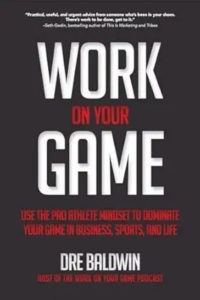
- Work on Your Game: Use the Pro Athlete Mindset to Dominate Your Game in Business, Sports, and Life
- PathWise on LinkedIn
- PathWise on Facebook
- PathWise on YouTube
- PathWise on Instagram
- PathWise on TikTok
- PathWise on Twitter
About Dre Baldwin
 Dre Baldwin built Work On Your Game® to turn disciplined execution into dominance. A 4x TEDx speaker and 43-time author, Dre played pro basketball for 9 years. Today, he helps experts and entrepreneurs install mindset, systems, and strategy to scale from six to seven figures with presence and power.
