



In an age of abundant yet often overwhelming, conflicting, or misleading information, the ability to think critically is becoming increasingly necessary. Critical thinking is a fundamental skill that empowers us to analyze, evaluate, and synthesize information, allowing us to make informed decisions and solve problems more effectively. Imagine navigating the complexities of today’s world without the ability to discern fact from fiction, make reasoned judgments, or approach challenges with a strategic mindset. With so much noise in today’s data-rich world, it’s crucial that we learn critical thinking skills. They can be the key to advancing your career and bolstering your company’s success.
What is critical thinking?
Critical thinking is the ability to think clearly and rationally, understanding the logical connection between ideas. To think critically, we need to evaluate information and arguments, identify biases and assumptions, and systematically solve problems.
In the context of work, critical thinking helps us make well-informed decisions, solve problems effectively, and navigate complex situations with logic.
Some components of critical thinking include:
- Analysis: Breaking down complex information into smaller parts to understand it better.
- Evaluation: Assessing the credibility and relevance of information and arguments.
- Inference: Drawing logical conclusions based on evidence and reasoning.
- Explanation: Clearly and concisely conveying our reasoning and conclusions.
- Self-Regulation: Reflecting on our own beliefs, thought processes, and biases to improve our thinking over time.

Image used under license from Shutterstock.com
Thought Leaders
Several prominent thought leaders have made substantial contributions to understanding and promoting critical thinking across various domains, from education and psychology to business and decision-making. Here are a few notable figures:
- Daniel Kahneman: Nobel laureate known for his work on behavioral economics, cognitive biases, and decision-making under uncertainty, which heavily involves critical thinking principles.
- Richard Paul and Linda Elder: Advocates of critical thinking education, they have authored many books and articles on the subject, underscoring its importance in education and everyday life.
- Howard Gardner: Known for his theory of multiple intelligences, Gardner has also written about the importance of critical thinking in fostering deeper understanding and creativity.
- Edward de Bono: Famous for developing the concept of lateral thinking, de Bono’s work focuses on creative and critical thinking techniques that challenge traditional problem-solving methods.
- John Dewey: Philosopher and educational reformer who emphasized the importance of reflective thinking and inquiry-based learning in fostering critical thinking skills.
- Barbara Minto: Creator of the Minto Pyramid Principle, which is widely used in consulting and business writing to structure and present arguments logically and persuasively.
- Peter Facione: Known for his work on defining and assessing critical thinking skills, Facione has contributed significantly to understanding how critical thinking can be taught and evaluated.
Key Frameworks
There are several frameworks and approaches to critical thinking that can help us systematically analyze and evaluate information. Here are some commonly recognized frameworks:
- Paul-Elder Framework: Developed by Richard Paul and Linda Elder, this model proposes analyzing thoughts based on eight key elements: purpose, question, information, inference, concept, assumption, implication, and point of view. It also suggests thoughts can be evaluated based on clarity, accuracy, precision, relevance, depth, breadth, logic, significance, and fairness. Both sets of elements build upon our ability to think critically by analyzing and testing thought.
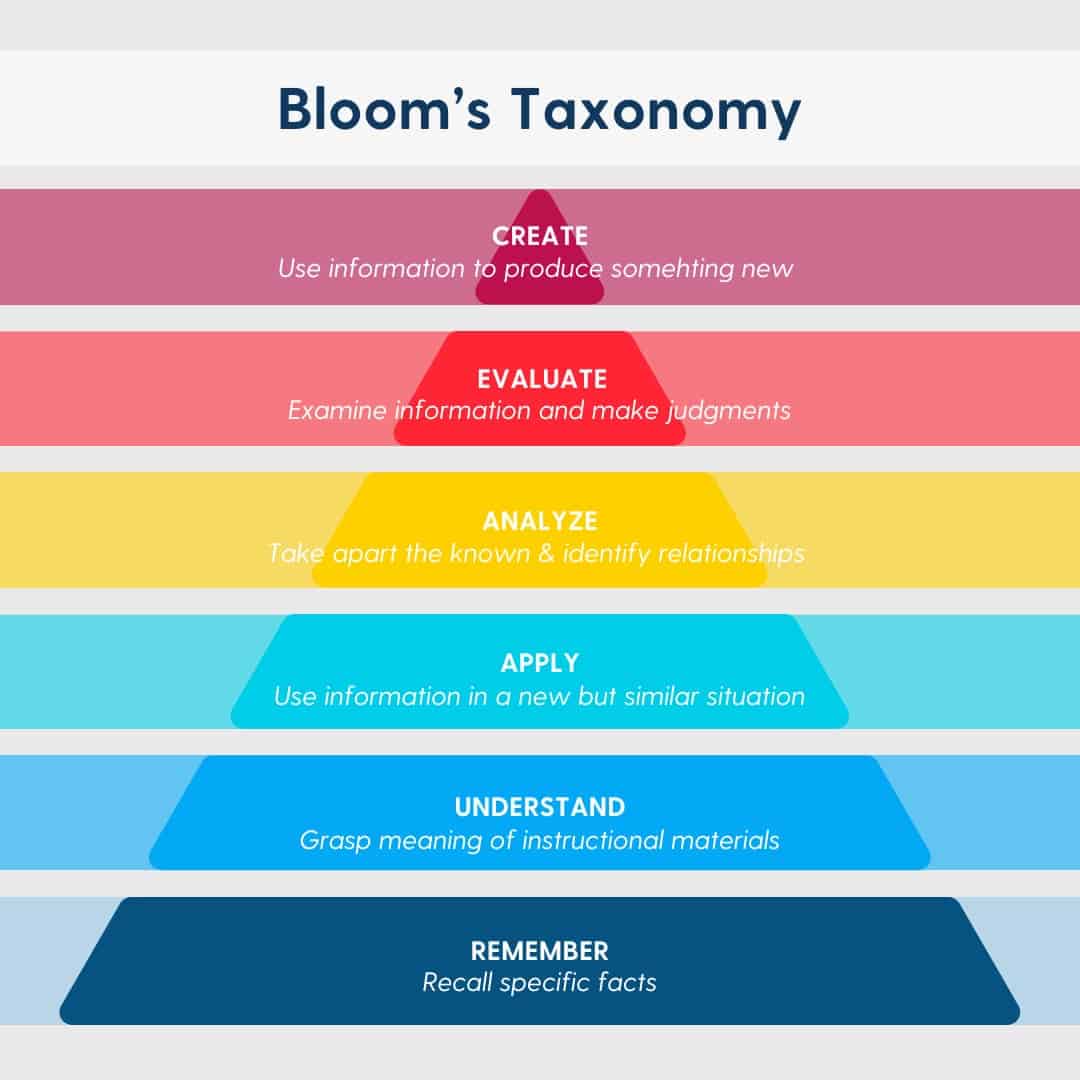
- Bloom’s Taxonomy: While this is primarily a framework for educational objectives, Bloom’s Taxonomy can also be applied to critical thinking. It categorizes cognitive skills into the levels of remembering, understanding, applying, analyzing, evaluating, and creating, with critical thinking mainly focusing on the higher levels of analysis, evaluation, and creation.

- Toulmin Model of Argumentation: This model argues that the components of an effective argument are claim, evidence, warrant, backing, qualifier, and rebuttal. It helps systematically evaluate the strength of arguments and identify areas that need further evidence or reasoning.
- Facione Model of Critical Thinking: This framework provides a structured approach to reasoning and decision-making, proposing six key elements: interpretation, analysis, evaluation, inference, explanation, and self-regulation. This model is widely applied in educational and professional contexts to enhance critical thinking skills and improve decision-making processes.
- SOLO (Structure of Observed Learning Outcomes) Model: This model categorizes levels of understanding and learning complexity across five stages. It starts with pre-structural understanding, where learners lack comprehension, progressing through unistructural and multi-structural stages where they grasp one or several aspects of a topic separately. Relational understanding marks the ability to connect and integrate different elements, culminating in extended abstract thinking, where learners apply knowledge in new and broader contexts.
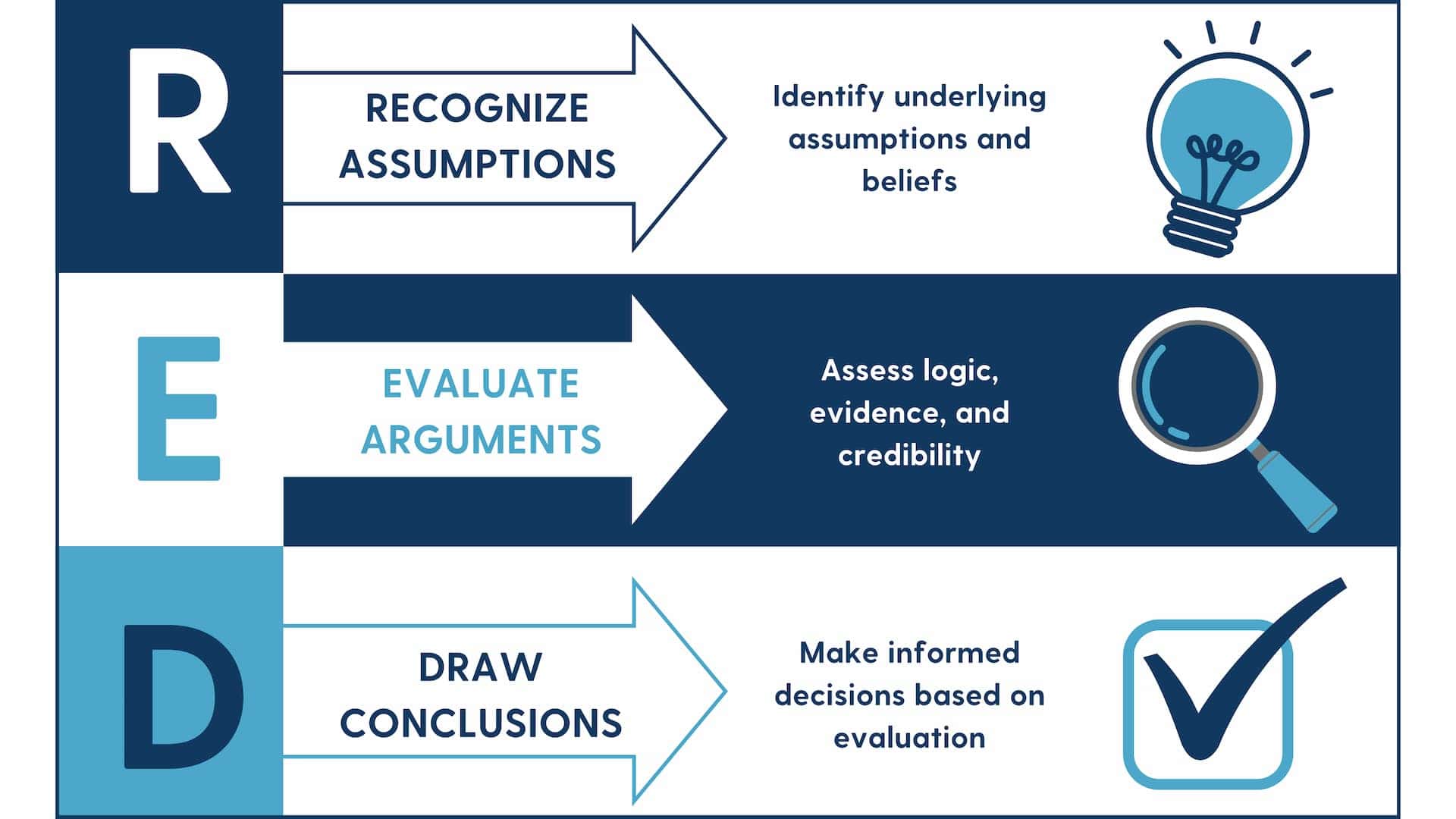
- RED Model: Introduced by Paul J. H. Schoemaker and his colleagues, the RED (Recognize assumptions, Evaluate arguments, Draw conclusions) model guides individuals through critical thinking processes by focusing on identifying assumptions, assessing arguments, and deriving logical conclusions.

Critical Thinking in Leadership
Critical thinking equips leaders with the tools to navigate complex environments, make sound decisions, and lead their teams confidently and consistently. Specifically, it helps with:
- Improved Decision-Making: Critical thinking enables leaders to evaluate information thoroughly, consider multiple perspectives, and anticipate the consequences of their decisions, leading to more informed and balanced decisions.
- Problem-Solving Skills: With critical thinking, leaders can identify the root causes of problems, develop innovative solutions, and implement strategies effectively. Thinking critically helps them break down complex issues into manageable parts and find practical solutions.
- Enhanced Communication: Critical thinkers can articulate their thoughts clearly and logically, making it easier to communicate ideas and decisions to their teams. This fosters better understanding and collaboration.
- Bias Reduction: Leaders can make more objective decisions by recognizing and challenging their own assumptions and biases. This leads to fairer and more equitable outcomes, fostering a sense of fairness and ethical leadership.
- Adaptability: Critical thinking helps leaders to be flexible and open-minded, allowing them to adapt to changing circumstances and new information.
- Strategic Planning: Leaders can use critical thinking to analyze market trends, evaluate risks, and foresee future challenges, enabling them to create robust and forward-thinking strategies.
- Conflict Resolution: By understanding different viewpoints and underlying issues, leaders can mediate conflicts effectively. Critical thinking aids in finding common ground and developing mutually beneficial solutions.
- Continuous Improvement: Critical thinkers are committed to ongoing learning and improvement. They regularly reflect on their actions and decisions, seeking ways to enhance their leadership skills and effectiveness.

Image used under license from Shutterstock.com
Critical Thinking in Personal Development
Critical thinking is a valuable skill that significantly aids in career growth by enhancing problem-solving abilities, decision-making processes, and overall effectiveness in the professional setting. Here are some specific ways critical thinking helps us in our career growth:
- Enhanced Problem-Solving Skills: Critical thinkers can analyze problems from multiple angles, identify root causes, and develop practical solutions. This ability to tackle complex issues is highly valued in any profession.
- Improved Decision-Making: By evaluating information logically and objectively, critical thinkers can make well-informed decisions, resulting in better outcomes and increasing the likelihood of success in their roles.
- Effective Communication: Critical thinking involves clear and logical reasoning, which enhances our ability to effectively communicate ideas, arguments, and solutions. This is crucial for collaboration, presentations, and negotiations.
- Increased Innovation: Critical thinkers often challenge the status quo and think outside the box. This ability to generate innovative ideas and approaches can lead to career advancement and recognition within an organization.
- Better Time Management: Critical thinkers can manage their time more efficiently by prioritizing tasks based on their importance and urgency. This leads to increased productivity and the ability to handle more responsibilities.
- Career Advancement: Employers value employees who can think critically and make sound decisions. Demonstrating strong critical thinking skills can lead to promotions, leadership opportunities, and increased job responsibilities.
- Conflict Resolution: Critical thinkers can understand different perspectives and mediate conflicts effectively. This ability to resolve disputes and find common ground is vital in maintaining a harmonious work environment.
- Lifelong Learning: Critical thinkers are naturally curious and open to new ideas. This commitment to continuous learning and self-improvement is essential for staying relevant and competitive in any career.
Conclusion
Critical thinking equips us to navigate our professional journey with excellence. It enables us to make better decisions, solve problems, improve communication, and foster innovation. In today’s highly technological work environments, where there is an abundance of data and often too much noise, embracing critical thinking allows us to analyze information objectively, recognize biases, and consider different perspectives. Ultimately, thinking critically will lead to growth and success both in terms of your career and that of your organization.
Other Resources
- PathWise: Thinking, Fast and Slow Book Summary
- HBR: Critical Thinking is About Asking Better Questions
- The HBR Guide to Critical Thinking
- Forbes: Improve Your Critical Thinking by Avoiding Assumptions
- Forbes: Enhancing Decision-Making And Problem-Solving
- Forbes: 3 Critical Thinking Skills You Need In 2024
- Forbes: In the Age of AI, Critical Thinking is Needed More than Ever
