



Imagine stepping into a room for a big presentation. You’ve spent hours refining every word, but as soon as you begin, you sense that your audience’s attention is slipping. Could it be your message, or is it something more subtle—like your posture, your tone, or even your eye contact? It’s often the unspoken elements, like bearing and body language, that speak volumes.
Nonverbal cues are powerful tools for influencing perceptions, establishing credibility, and building rapport in any professional environment. This includes having a job interview, leading a team meeting, or negotiating a contract. In these situations, the way you carry yourself can impact not just how others see you but how confident and competent you feel and, therefore, how successfully you perform.

Image used under license from Shutterstock.com
What is Bearing and Body Language?
Bearing and body language refer to the way you carry yourself, communicate nonverbally, and present yourself through posture, gestures, facial expressions, and eye contact. Bearing often conveys confidence, poise, and professionalism, and body language can reveal emotions and attitudes, intentionally or unintentionally.
In career management, bearing and body language are crucial because they influence how others perceive you, impacting professional relationships, leadership potential, and overall career advancement. Here’s why they’re important:
- First Impressions: Nonverbal cues play a significant role in forming first impressions. A confident, open posture and friendly expression can foster positive perceptions, making you more approachable and memorable to new contacts.
- Building Trust: Consistent and confident body language can help you build trust with colleagues and clients, which is crucial for forming strong, collaborative working relationships.
- Communicating Confidence and Competence: A well-composed bearing and controlled body language projects self-assurance and reliability. This can increase others’ confidence in your capabilities, making you a more likely candidate for leadership roles.
- Influence and Persuasion: Positive body language can increase your ability to influence and persuade others. A calm and assured presence can make your arguments and proposals more compelling in negotiations, presentations, or team meetings.
- Managing Perceptions in High-Stress Situations: In challenging moments, maintaining calm and controlled body language can signal resilience, making you appear reliable and competent even under pressure.
Ultimately, mastering bearing and body language enables you to consciously project confidence, credibility, and approachability, qualities essential for career progression and effective leadership.

Image used under license from Shutterstock.com
Thought Leaders
Several thought leaders in the field of bearing, body language, and nonverbal communication have conducted extensive research or provided insights on how these elements can shape human interactions, leadership, and personal success. Some notable experts include:
- Amy Cuddy: Known for her research on power posing, Cuddy’s work highlights how adopting expansive postures can increase feelings of confidence and, meanwhile, influence how others perceive you. Her book, Presence: Bringing Your Boldest Self to Your Biggest Challenges, delves into the psychological effects of body language on self-perception.
- Joe Navarro: A former FBI agent and body language expert, Navarro has authored books like What Every BODY is Saying, which provides insights into reading nonverbal cues. His work emphasizes the importance of understanding body language for effective communication and relationship building.
- Allan and Barbara Pease: The authors of The Definitive Book of Body Language, the Peases explore the nuances of body language across cultures and provide practical advice on interpreting gestures and expressions. They’re widely known for breaking down complex body language cues in an accessible way.
- Paul Ekman: A psychologist and pioneer in the study of facial expressions, Ekman’s research on micro-expressions (brief, involuntary facial expressions) has been foundational in understanding emotions through body language. His work is especially influential in understanding emotional cues in high-stakes situations like negotiations and interviews.
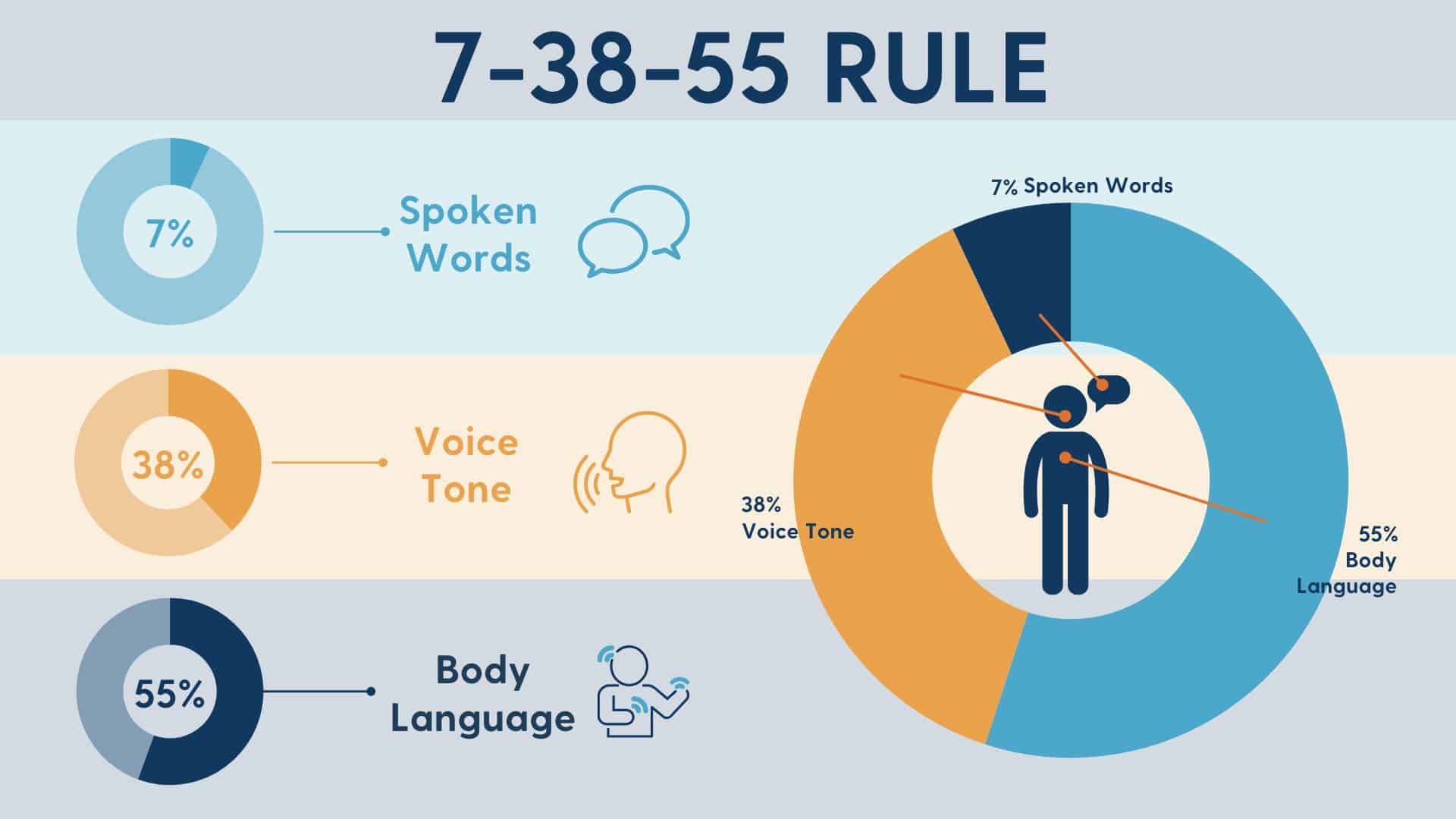
- Albert Mehrabian: Known for the 7-38-55 rule of communication, which suggests that 93% of communication is nonverbal, Mehrabian’s research underscores the role of body language and tone of voice in conveying attitudes and emotions. His work has been highly influential in understanding the relative importance of nonverbal signals in communication.
- Carol Kinsey Goman: A speaker and author, Goman specializes in the impact of body language in leadership and business contexts. Her book The Silent Language of Leaders offers insights into how leaders can use body language to inspire trust, motivate, and connect with their teams.
- David Matsumoto: Known for his work on cultural differences in facial expressions and nonverbal behavior, Matsumoto’s research emphasizes that while some nonverbal cues are universal, many are culturally specific, which is crucial to understand in global business contexts.
Key Frameworks
Several models and frameworks have been developed to help understand and leverage body language and bearing in different contexts, from communication to leadership. Here are a few widely used ones:
- The 7-38-55 Rule: Developed by Albert Mehrabian, this rule breaks down communication into three elements: words (7%), tone of voice (38%), and body language (55%). This model emphasizes the importance of nonverbal cues in conveying emotions and attitudes, helping professionals focus on nonverbal communication to ensure their body language aligns with their message, which is especially important in emotionally charged situations. Note that the rule is context-sensitive and not a universal ratio, yet it serves as a reminder of the weight nonverbal communication holds in making impressions.

- Facial Action Coding System (FACS): Created by Paul Ekman, FACS is a comprehensive model for identifying micro-expressions and subtle facial movements. It categorizes muscle movements that correspond with specific emotions (e.g., joy, anger, sadness). This model is useful for those in leadership, negotiations, or professions where reading emotions is essential. It helps accurately interpret others’ feelings, even when they try to mask them.
- The Four Zones of Proxemics: Edward T. Hall’s proxemics theory focuses on the zones of physical space around people that affect their comfort levels in social interactions: intimate, personal, social, and public space. Understanding these zones is key to respecting personal boundaries and facilitating rapport. The distance ranges are:
-
- Intimate Zone: 0–18 inches (close relationships)
- Personal Zone: 18 inches–4 feet (friends, colleagues)
- Social Zone: 4–12 feet (formal, business interactions)
- Public Zone: 12+ feet (speeches, presentations)

- Power Posing: Amy Cuddy’s research at Harvard popularized the idea of power posing, which argues that adopting expansive postures (like standing tall with arms open) can increase feelings of confidence. Though her findings on hormonal impacts were challenged, her core idea—that power poses can influence self-perception and impact confidence in stressful situations—remains widely discussed.
- The SOLER Model: Developed by Gerard Egan, the SOLER model outlines active listening postures:
-
- S: Face the person Squarely, which conveys attentiveness.
- O: Keep an Open posture, showing that you’re receptive.
- L: Lean slightly towards the person, signaling interest.
- E: Maintain Eye contact without staring, which fosters connection.
- R: Be Relaxed, as it sets a comfortable tone.

Bearing and Body Language in Leadership
Bearing and body language are essential for managers, as they can help them communicate more effectively, build trust, and establish authority in ways that verbal communication alone can’t achieve. Here’s how:
- Establishing Authority and Credibility: Managers who demonstrate confidence through an upright posture, steady eye contact, and calm body language exude authority and reassure their team. A manager’s confident bearing helps team members trust their decisions and feel secure under their leadership.
- Building Trust and Approachability: Managers who maintain open body language – such as keeping arms uncrossed, leaning forward when listening, or using gentle eye contact – appear more approachable and encourage team members to communicate more freely, which is key to understanding issues early and addressing them effectively. It also facilitates building rapport and empathy, helping managers create stronger connections and making team members feel understood and valued.
- Providing Clear Communication: Managers have to communicate clearly, especially when giving directions or feedback. Aligning body language with words – such as nodding while affirming a team member’s progress or maintaining a calm stance during discussions – reinforces clarity and avoids mixed messages. Also, gestures that invite participation encourage team members to contribute ideas or voice concerns, creating a more collaborative environment.
- Enhancing Feedback Delivery: An empathetic, relaxed posture can help make critical feedback feel constructive. Positive body language that shows understanding makes it easier for team members to accept and act on feedback. Similarly, a calm, composed bearing helps demonstrate self-control, showing team members how to handle constructive criticism without becoming defensive.
- Managing Conflict and Maintaining Composure: In conflicts, adopting a neutral stance and controlled body language can de-escalate tension and encourage open dialogue. A manager who listens without crossing their arms or raising their voice sets an example of professionalism and emotional regulation.
- Motivating and Inspiring the Team: When managers use enthusiastic body language – like smiles, nods, and open gestures – they create a positive atmosphere that energizes and motivates the team. Positive nonverbal cues help keep morale high and demonstrate genuine investment in the team’s success.
- Projecting Optimism During Challenging Times: A manager who maintains a relaxed and upright posture, especially during challenges, communicates optimism and confidence in the team’s ability to overcome obstacles. This instills a sense of shared purpose and resilience.

Image used under license from Shutterstock.com
Bearing and Body Language in Personal Development
Mastering and consistently applying confident, approachable, and adaptable body language can help in individual interactions that foster career development opportunities, enhance overall workplace reputation, increase leadership potential, and pave the way for a successful career trajectory. For instance, in networking settings, positive body language like open posture, genuine smiles, and steady eye contact make you appear approachable and confident. People are more likely to engage with and remember someone who seems comfortable and engaging. Mirroring the body language of the person you’re speaking to (subtly matching their posture or gestures) can also help build rapport, as it signals a natural connection and attentiveness. And a strong posture, firm handshake, and expressive gestures make you memorable, leaving a lasting impression.
Similarly, in the context of job interviews, sitting up straight, maintaining eye contact, and avoiding nervous gestures (like fidgeting or crossing arms) show that you’re composed and competent. This reassures interviewers of your reliability and suitability for the role. Leaning in slightly when the interviewer is speaking, nodding along, and smiling at appropriate moments reflect genuine interest and enthusiasm, signaling that you’re highly engaged and motivated. Consistency between what you say and how you say it strengthens your credibility. For example, conveying excitement about the role while showing expressive body language amplifies your words and makes you appear authentic.
Other ways in which embracing bearing and body language influences your personal development include:
- Presence: Strong body language helps convey authority and inspires trust, two key components of presence. Standing confidently and communicating clearly with steady eye contact and open gestures tends to command respect and motivate others. This executive presence is often a deciding factor in promotions.
- Teamwork and Collaboration: Receptive body language, like uncrossed arms and facing people directly, fosters trust among team members. Using gestures to encourage others to speak, like nodding or leaning forward, also builds an inclusive environment. A relaxed and attentive posture shows you’re actively listening, making colleagues feel valued and more willing to share their ideas.
- Conflict Resolution: In tense or conflicting situations, calm and neutral body language can defuse tension. Demonstrating active listening through body cues shows empathy and willingness to understand others’ perspectives, helping to resolve conflicts more effectively.
- Presentations and Public Speaking: Clear, engaging body language makes presentations more impactful. Nonverbal communication strengthens verbal messages, helping people connect with and influence their audience, which can be pivotal for career visibility and credibility.
- Negotiation, Influencing and Persuasion: Convincing others requires more than just well-chosen words; your body language must also align with your message. When people perceive your confidence and sincerity through body language, they’re more likely to be persuaded by your ideas. This can be instrumental in gaining buy-in from colleagues or executives for projects and proposals.
- Receiving and Giving Feedback: When receiving feedback, maintaining a receptive body language shows that you’re approachable and open to improvement. When giving feedback, a relaxed but confident posture and thoughtful gestures help convey support and constructiveness, which enhances your effectiveness as a mentor or manager.
- Cross-Cultural Communication: Body language can act as a bridge in cross-cultural interactions, where language barriers or cultural differences might exist. Adaptable and respectful body language demonstrates cultural awareness, an increasingly valuable skill in global workplaces.
- Boosting Personal Confidence: There’s a strong link between body language and internal states, as suggested by Cuddy’s work. Adopting positive body language – like standing tall or maintaining a steady gaze – can boost self-confidence, improving your performance in high-stakes situations like negotiations or important presentations.

Image used under license from Shutterstock.com
Conclusion
Mastering your body language is ultimately about aligning your external presence with your internal goals and values. Paying attention to your posture, eye contact, and gestures will help you create a more authentic and powerful presence that resonates with others and reinforces your professional credibility.
So, the next time you’re preparing for an important meeting, conversation, or public speaking event, take a few moments to check in with your body language. Stand tall, make eye contact, and let your actions convey confidence and respect. Ensure your body language reinforces your words. After all, the way you carry yourself can be a silent yet impactful statement of who you are and the value you bring.
Other Resources
- PathWise Article: Executive Presence
- HBR: When Giving Critical Feedback, Focus on Your Nonverbal Cues
- HBR: Your Body Language Speaks for You in Meetings
- Forbes: What Your Body Language Says About Your Leadership Impact
- Forbes: Body Language Basics For New Leaders
- Forbes: What Leaders Need To Know About Male/Female Body Language
- TED Talk: Your Body Language May Shape Who You Are
