



In the journey of career development, challenges are inevitable—and, in fact, essential. You might be navigating a major transition, acquiring a new skill, or managing the complexities of leadership. Whatever the case, the obstacles we face can often feel daunting. However, it’s through overcoming these challenges that we grow the most. Embracing career challenges with resilience and a strategic mindset paves the way for personal growth while propelling us toward our long-term professional goals.

Image used under license from Shutterstock.com
What is Challenge?
Challenge is the space where growth happens—a delicate balance between comfort and panic. It exists in the learning zone, where tasks feel stimulating but not overwhelming. Challenge pushes you beyond the familiar while staying within reach of your abilities, enabling skill development, resilience, and adaptability. In a career context, embracing challenges means actively seeking opportunities that test your knowledge, expand your experience, and help you navigate ambiguity. It’s about seeing discomfort not as a threat but as a means for growth and development.
The following skills can position you to seek and embrace challenges, transforming discomfort into a stepping-stone for meaningful career growth.
- Growth Mindset: Believing that your abilities and intelligence can be developed through dedication and hard work, and viewing setbacks as opportunities to learn rather than failures.
- Curiosity: A desire to explore, learn, and ask questions to better understand situations, ideas, or problems.
- Goal-Setting: The ability to define clear, measurable, and attainable objectives that push you out of your comfort zone while maintaining focus.
- Problem-Solving: The ability to approach challenges with critical thinking, creativity, and resourcefulness to find effective solutions.
- Risk-Taking: The willingness to step outside your comfort zone, embrace ambiguity, and take calculated risks to achieve growth and success.
- Emotional Intelligence: The capacity to recognize, understand, and manage your emotions while empathizing with others to navigate social complexities
- Adaptability: The ability to adjust to new conditions and learn quickly in the face of change or uncertainty.
- Resilience: The capacity to recover from difficulties and persist in pursuing goals despite setbacks.
- Self-Reflection: The practice of analyzing your actions, thoughts, and results to identify areas for improvement and growth.
- Learning Orientation: A commitment to acquiring new knowledge and skills throughout your career, embracing lifelong education.

Image used under license from Shutterstock.com
Thought Leaders
Several experts have significantly contributed to understanding how seeking challenges fosters personal and professional growth. Some of these thought leaders include:
- Carol Dweck: A psychologist and professor at Stanford University known for her pioneering work on motivation and mindset. She’s the author of Mindset: The New Psychology of Success, and her work on the growth mindset has been widely influential in education and business, earning her numerous accolades, including election to the American Academy of Arts and Sciences.
- Daniel Pink: Author and speaker specializing in behavioral science, work, and motivation, he has published several bestselling books, including Drive: The Surprising Truth About What Motivates Us, which explores intrinsic motivation. He was also named one of the most influential management thinkers by Thinkers50.
- Angela Duckworth: A psychologist and professor at the University of Pennsylvania, her research focuses on grit and self-control. She is the author of Grit: The Power of Passion and Perseverance, a recipient of a MacArthur Genius Grant, and founder of the Character Lab nonprofit.
- Brené Brown: Researcher and professor at the University of Houston, specializing in vulnerability, courage, and leadership, she has authored multiple New York Times bestsellers, including Dare to Lead. Her TED Talk, The Power of Vulnerability, is one of the most viewed talks of all time.
- Simon Sinek: An author and motivational speaker focused on leadership, purpose, and inspiration, he has published best-selling books such as Start With Why and The Infinite Game. His TED Talk How Great Leaders Inspire Action is one of the most-watched talks ever.
- Adam Grant: Organizational psychologist and professor at the Wharton School, specializing in motivation and creativity, he’s the author of Give and Take and Think Again. He was recognized as one of Fortune’s 40 Under 40 in management.
- Liz Wiseman: A leadership consultant and researcher focusing on talent development and maximizing potential, she authored Multipliers: How the Best Leaders Make Everyone Smarter. She is also a Thinkers50 award recipient.
- Matthew Syed: A journalist, author, and speaker specializing in high performance, adaptability, and growth, he has published Bounce and Black Box Thinking. He is a former Olympic table tennis player and columnist for The Times.
Key Frameworks
Several frameworks provide structured approaches to understanding, embracing, and leveraging challenges for growth. Some of these include:
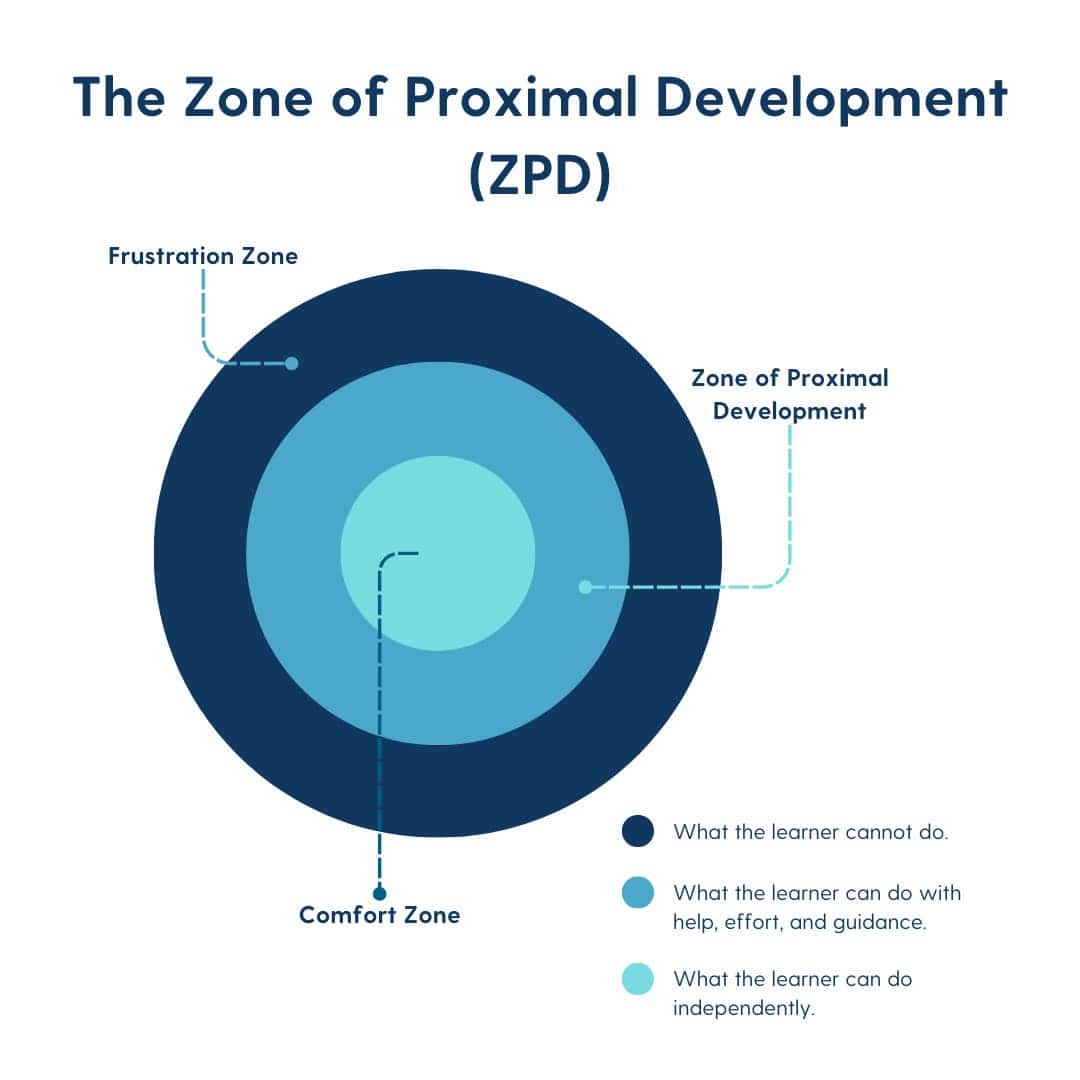
- The Zone of Proximal Development (ZPD):A concept from educational psychology developed by Lev Vygotsky, which defines the “sweet spot” for learning as tasks slightly beyond a learner’s current abilities but achievable with guidance or collaboration. This model encourages identifying challenges that are neither too easy nor too difficult, fostering growth through mentorship, feedback, and support.
- Stretch Goals Framework: A concept from management theory that promotes setting ambitious yet achievable goals to push individuals and teams beyond their comfort zones. It encourages seeking bold challenges while providing resources and support to mitigate excessive stress.
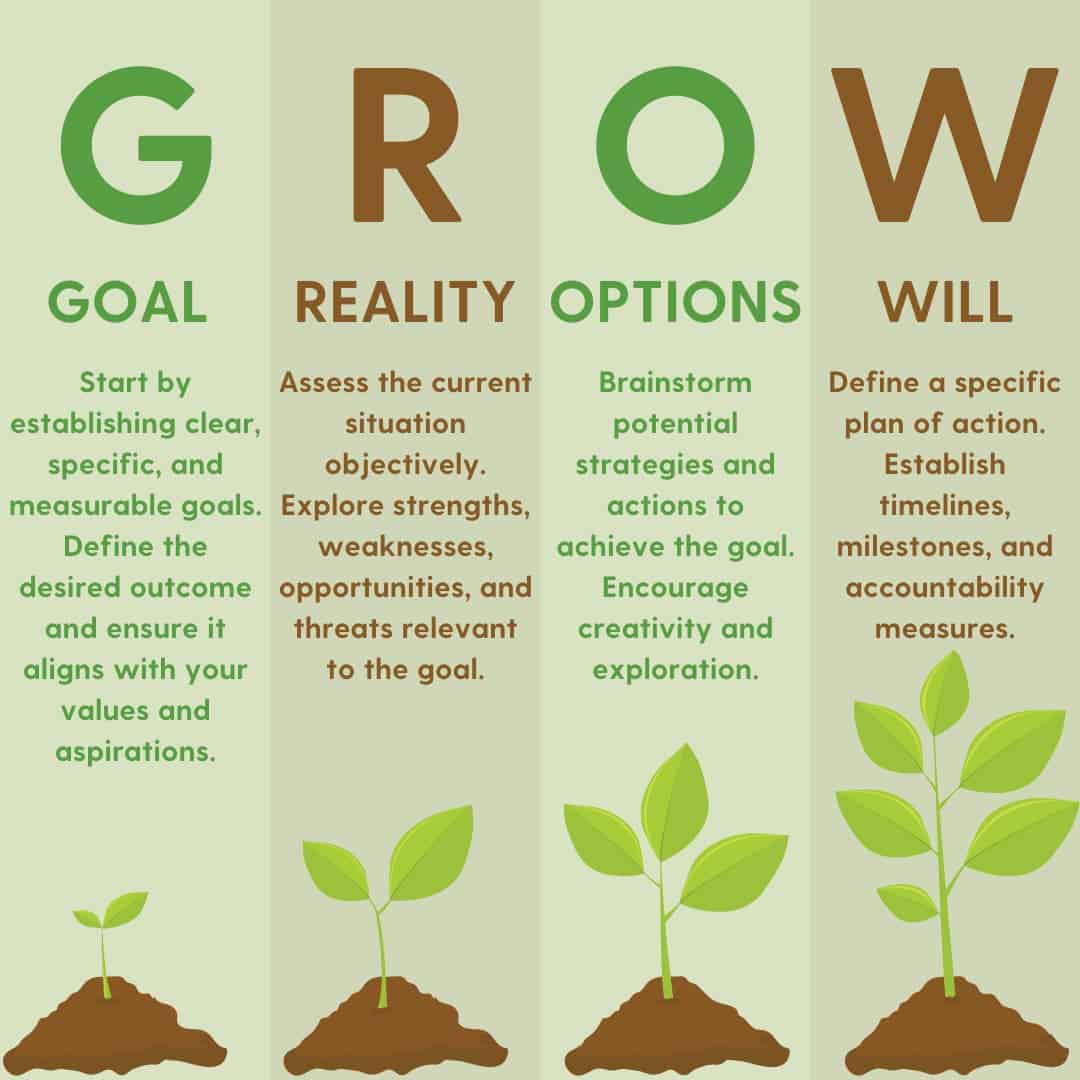
- GROW Model:A framework that stands for Goal, Reality, Options, and Will, designed to help individuals tackle challenges by setting clear objectives, assessing the current situation, exploring solutions, and committing to action. It’s frequently used in career coaching to navigate challenges and facilitate structured problem-solving.
- Kaizen (Continuous Improvement): A Japanese business philosophy focused on incremental and continuous improvement by addressing small, consistent challenges. This concept helps professionals and organizations foster a culture of ongoing development through manageable challenges and iterative progress.
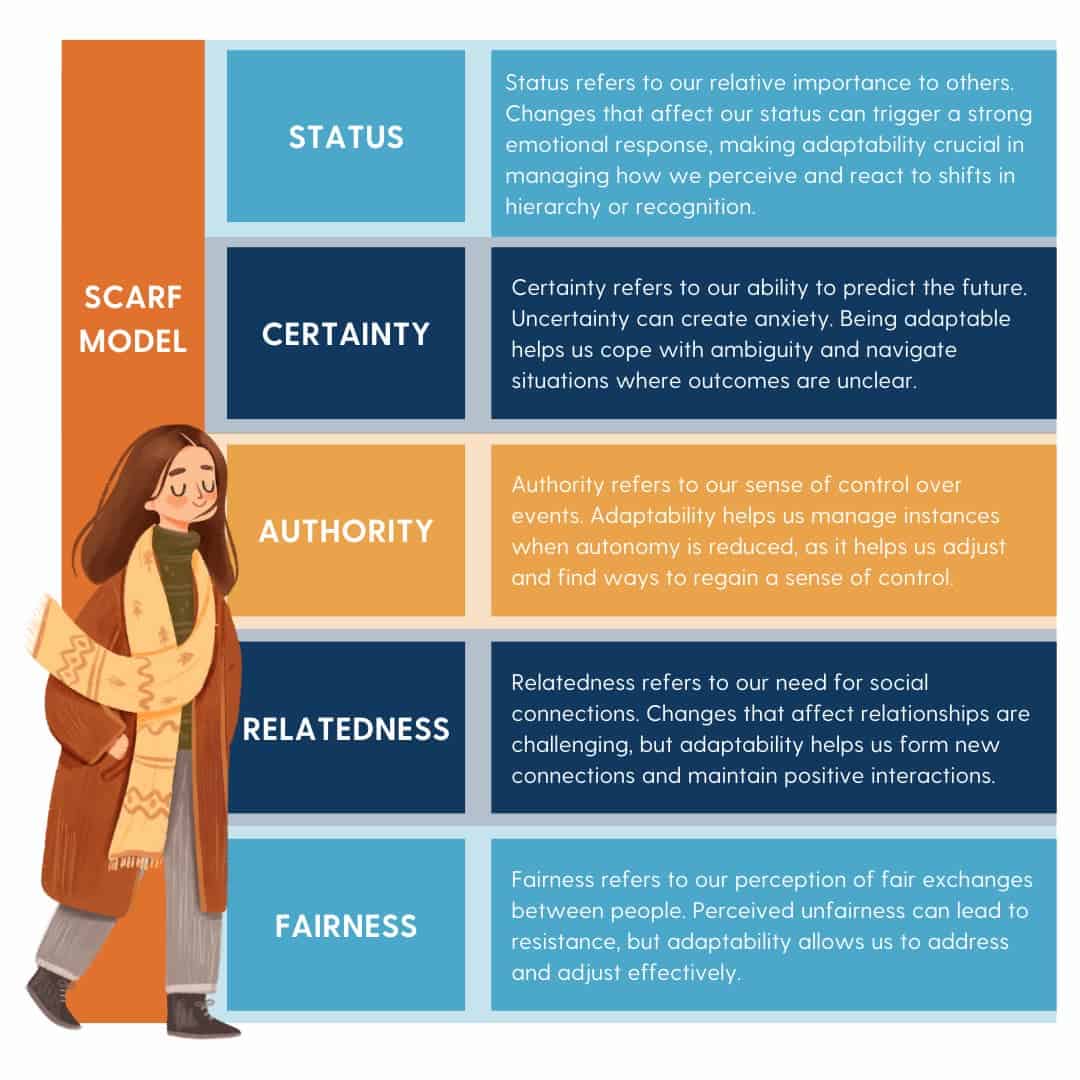
- SCARF Model: A neuroscience-based framework that highlights five domains of human experience (Status, Certainty, Autonomy, Relatedness, Fairness) that influence motivation and engagement in challenging situations. This framework helps leaders design challenges that minimize threat responses and maximize engagement.
- Kolb’s Experiential Learning Cycle: A four-stage model that includes Concrete Experience, Reflective Observation, Abstract Conceptualization, and Active Experimentation, emphasizing learning through tackling challenges.
- Growth Mindset: A belief system that emphasizes the idea that abilities, intelligence, and talents are not fixed traits but can be developed through effort, learning, and perseverance. This framework is foundational to fostering a love of learning, resilience in the face of obstacles, and a proactive approach to seeking challenges in a career.
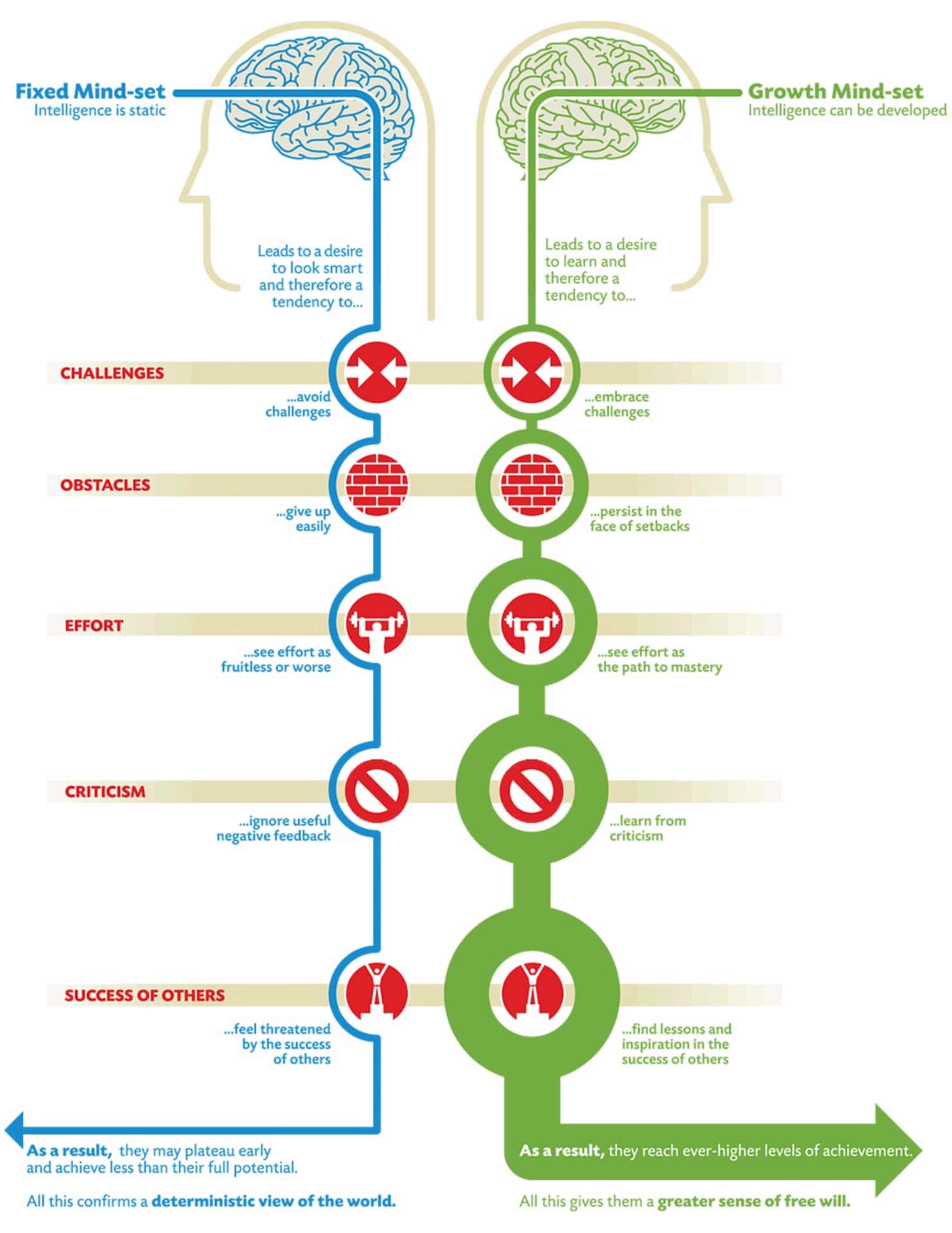
Diagram by Nigel Holmes, taken from Carol Dweck’s Mindset: The New Psychology of Success (p. 263).


Image used under license from Shutterstock.com
Challenge in Leadership
Challenge plays a crucial role in helping managers evolve into better leaders by fostering critical skills, broadening perspectives, and cultivating a growth-oriented mindset. That’s because continually seeking challenges:
- Builds Resilience and Adaptability: Facing and overcoming challenges strengthens a manager’s ability to remain calm and composed under pressure. This resilience inspires confidence in their teams and equips them to lead effectively through uncertainty.
- Enhances Decision-Making: Challenges often require managers to weigh competing priorities, consider diverse perspectives, and make difficult decisions. These experiences refine their analytical and strategic thinking, enabling them to lead with greater clarity and foresight.
- Strengthens Emotional Intelligence: Leading through challenges demands empathy, self-awareness, and strong interpersonal skills. Managers who face difficulties learn to navigate complex team dynamics, communicate effectively, and maintain morale, fostering a culture of trust and collaboration.
- Encourages Innovation and Creativity: Challenges push managers to think outside the box, explore new ideas, and experiment with unconventional solutions. This innovative mindset is essential for leaders to drive progress and inspire their teams to do the same.
- Develops Coaching and Mentorship Skills: When managers confront challenges, they gain insights into their own growth journeys, making them more effective coaches and mentors. They can use their experiences to guide their teams through similar obstacles, empowering others to succeed.
- Builds Credibility and Influence: Successfully navigating challenges earns managers the respect and trust of their teams and peers. This credibility enhances their ability to influence others and drive organizational success.
- Instills a Growth Mindset: Challenges reinforce the belief that abilities can be developed through effort and learning. Managers with a growth mindset lead by example, creating an environment where employees feel encouraged to take risks, learn from mistakes, and continuously improve.
Image used under license from Shutterstock.com
Challenge in Personal Development
Facing challenges is a cornerstone of professional development because it pushes us beyond our comfort zones, encouraging growth. When faced with a challenge, we’re often required to develop new skills, adapt our thinking, and expand our problem-solving abilities. This process enhances our capabilities and builds confidence in tackling future obstacles. For example, taking on a stretch assignment or leading a high-stakes project can help us discover strengths we were unaware of, fostering a sense of achievement and capability.
One of the most significant benefits of challenge in professional development is cultivating resilience. Navigating difficulties teaches us how to handle setbacks, recover from failures, and persevere in adversity. These experiences help us develop emotional strength and adaptability, which are essential traits for long-term success in any career. Plus, they prepare us to handle increasing levels of responsibility and complexity, positioning us for leadership roles.
Challenges also encourage continuous learning and innovation. When we encounter unfamiliar situations, we’re often required to seek out new knowledge, ask questions, and experiment with different approaches. This process helps us stay relevant in our fields and equips us with the ability to adapt to rapidly changing environments. Overcoming challenges also builds a growth mindset that enhances professional development and inspires others in the workplace, contributing to a shared growth and improvement culture.
Ultimately, challenges are opportunities in disguise. They encourage us to think critically, act decisively, and embrace discomfort as a path to growth. By consistently seeking and addressing challenges, we can accelerate our development, achieve greater career satisfaction, and make meaningful contributions to our organizations.

Image used under license from Shutterstock.com
Conclusion
The challenges we face in our careers aren’t roadblocks but stepping stones. By reframing challenges as opportunities for growth, we unlock the potential to evolve into more capable, confident, and adaptable professionals. So, when faced with your next challenge, remember: it’s not the difficulty that defines your career journey—it’s your response to it that shapes your success. Embrace the challenge, learn from it, and let it catalyze your next big leap forward.
Other Resources
- PathWise Book Summary: Grit by Angela Duckworth
- PathWise Book Summary: Mindset by Carol Dweck
- PathWise Book Summary: Dare to Lead by Brené Brown
- PathWise Book Summary: Multipliers by Liz Wiseman
- PathWise Book Summary: Right Kind of Wrong by Amy Edmondson
- PathWise Book Summary: Drive by Daniel Pink
- HBR: How to Convince Yourself to Do Hard Things
- HBR: How to Become Adaptable in Challenging Situations
- TED Talk: To Overcome Challenges, Stop Comparing Yourself to Others
