



As Prussian Field Marshal Helmuth von Moltke the Elder once said, “No plan survives first contact with the enemy.” In the workplace, we could translate that to, “Every ambitious plan looks brilliant on paper—until it meets reality.”
Often, organizations and professionals fixate on strategy, believing that a well-crafted plan is the key to success. But strategy without execution is like a blueprint without builders—it remains theoretical, full of potential but ultimately unfulfilled. Execution is where plans take shape, obstacles emerge, and real progress is made.
Many initiatives falter due to the gap between strategy and execution, not because of poor ideas but because they were never fully realized. So why does execution often lag strategy, and what does it take to bridge the gap effectively?

Image used under license from Shutterstock.com
What is Execution?
Execution is the discipline of getting things done efficiently and effectively. When efforts fail, it is often not because they lack a plan or strategy but because they struggle to execute it well.
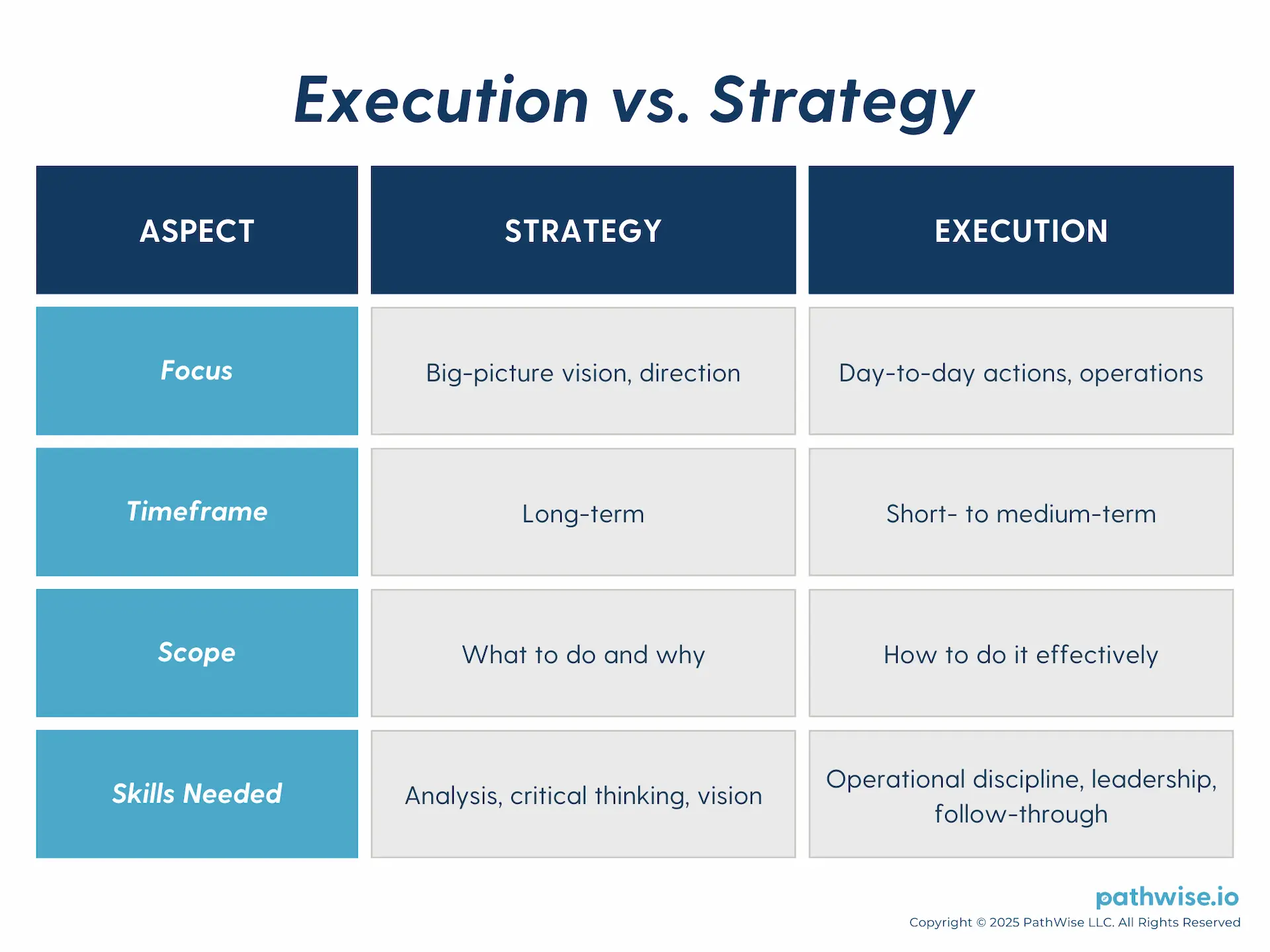
More specifically, strategy is the what and why—the overarching plan that defines goals, priorities, and competitive positioning. It answers:
- What are we trying to achieve?
- Why is this the best path?
- Where should we focus our efforts?
Execution, on the other hand, is the how—the actual implementation of the strategy. It involves turning strategic objectives into concrete actions, allocating resources effectively, managing people, processes, and systems to deliver results, adapting to obstacles, and ensuring follow-through.
It’s key to note that a brilliant strategy with poor execution can lead to failure just as much as strong execution without a clear strategy leads to wasted effort. Great companies align execution with strategy to ensure that everyday decisions and actions support long-term goals.
The key elements of strong execution include:
- Clear Goals & Priorities: Everyone in the organization must understand the strategy and how their role contributes to it. To help determine goals, rely on the SMART framework, which proposes that goals should be specific, measurable, achievable, relevant, and time-bound (SMART).
- Accountability & Ownership: Execution is better when teams and individuals take responsibility for results. Meanwhile, leaders must hold people accountable, track progress, and remove obstacles.
- Strong Leadership & Culture: Leaders must communicate expectations clearly and model execution discipline. A high-performance culture values follow-through, adaptability, and continuous improvement.
- Operational Processes & Systems: Efficient workflows, technology, and performance tracking ensure smooth execution. Standard Operating Procedures (SOPs) and key performance indicators (KPIs) help monitor execution.
- Resource Allocation: Effective execution requires properly allocating people, time, and money. Bottlenecks occur when resources are misaligned with strategic priorities.
- Adaptability & Continuous Improvement: Plans rarely unfold exactly as expected, and execution requires agility. Therefore, learning from failures and adjusting course is critical.
A strong execution culture ensures that strategy is a living process. The best companies create feedback loops where execution informs strategy and vice versa, ensuring continuous progress.
When well-thought-out strategies fail, it’s usually because of:
- A lack of clarity: People don’t know what success looks like.
- Poor communication: Misalignment between teams leads to confusion.
- Weak leadership: Leaders don’t reinforce priorities or remove barriers.
- Ineffective follow-through: Tasks are started but not finished.
- Resistance to change: Employees or teams resist new initiatives.

Image used under license from Shutterstock.com
Thought Leaders
Several thought leaders have contributed to our understanding of project execution. Some of the most notable ones include:
- Larry Bossidy and Ram Charan: Authors of Execution: The Discipline of Getting Things Done, Bossidy is the former CEO of Honeywell, and Charan is a business consultant. They argue that execution is a discipline, not just a set of tactics, emphasizing clear accountability, robust follow-through, and the linking of people, strategy, and operations.
- Peter Drucker: Considered the father of modern management, he highlighted effectiveness over efficiency—focusing on the right things, not just doing things right. He published The Effective Executive and argued that decision-making, prioritization, and delegation are critical execution skills.
- Stephen Covey: Best known for The 7 Habits of Highly Effective People, his work focuses on personal and organizational effectiveness. His 4 Disciplines of Execution (4DX) framework emphasizes focus, lead measures, scorekeeping, and accountability as key to driving results.
- John Kotter: A leading expert on change management, he wrote Leading Change, outlining an eight-step process for successfully implementing strategic change. His work highlights the role of leadership, urgency, and culture in effective execution.
- Richard Rumelt: Author of Good Strategy, Bad Strategy, he argues that many organizations fail due to poorly defined strategy and lack of execution discipline. He emphasizes diagnosing real challenges, focusing efforts, and aligning actions with clear strategic objectives.
- Stephen Bungay: A British management consultant, historian, and author, he takes a unique approach by applying lessons from military history to business execution. In The Art of Action, he examines why even the best strategies often fail to translate into effective execution and highlights the concept of directed opportunism, where leaders must balance clear intent with the flexibility to adapt in dynamic environments. Bungay’s work is particularly relevant for organizations operating in fast-changing industries where rigid execution models fail.
- Andy Grove: Former CEO of Intel and author of High Output Management, he was a pioneer in performance-driven execution and operational excellence. He introduced the OKR (Objectives and Key Results) framework, which has been widely adopted by companies like Google to ensure strategic execution through measurable objectives.
Key Frameworks
Some frameworks and models that can help successfully translate strategy to execution include:
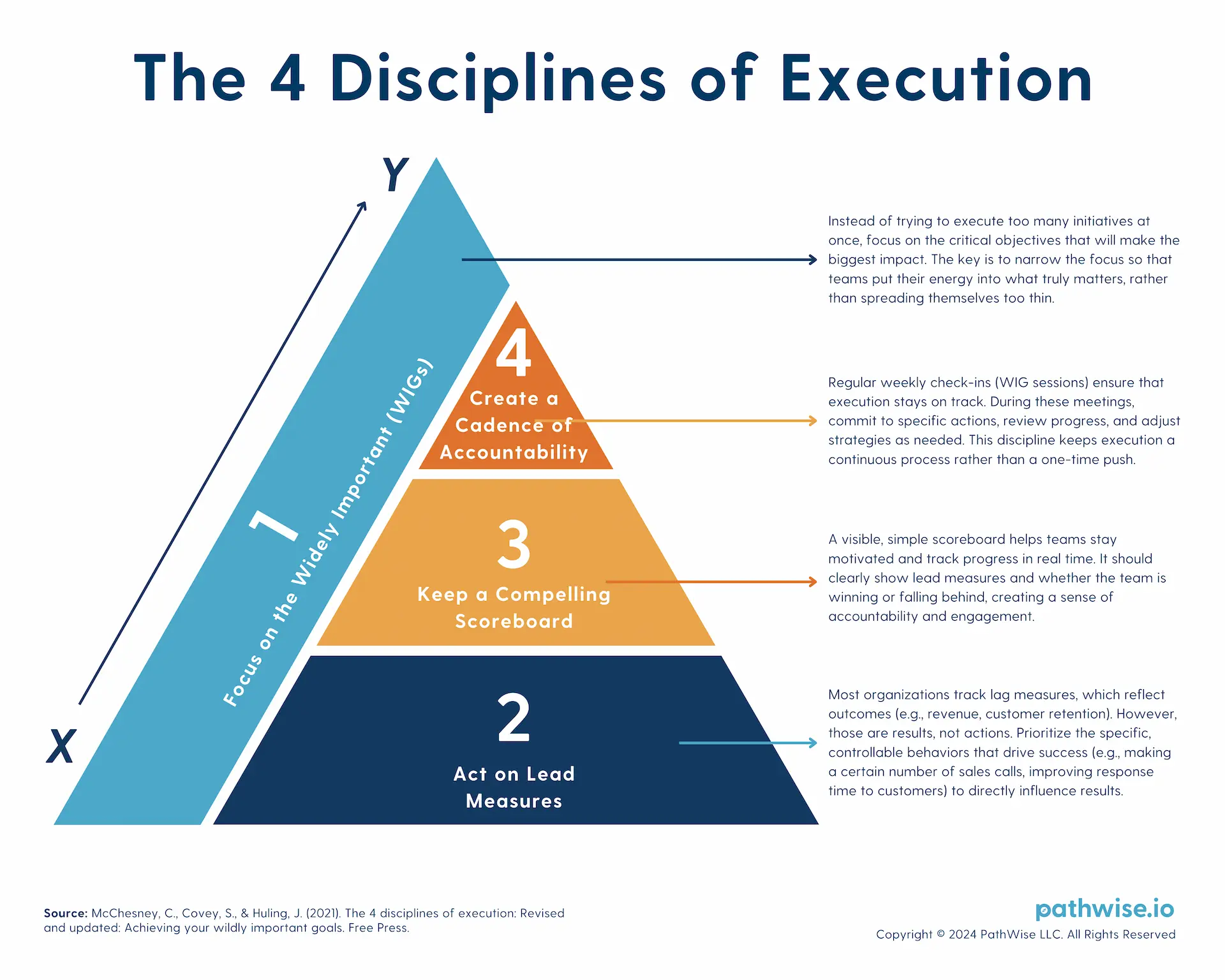
- The 4 Disciplines of Execution (4DX): Developed by Franklin Covey, this model helps organizations translate strategy into action. The four disciplines are: Focus on the Wildly Important (prioritizing critical goals), Act on Lead Measures (measuring behaviors that drive results), Keep a Compelling Scoreboard (tracking progress visually), and Create a Cadence of Accountability (regular check-ins to maintain momentum).
- OKRs (Objectives and Key Results): Originally developed by Andy Grove at Intel and later popularized by Google, this framework ensures alignment between strategy and execution. It consists of setting clear, ambitious objectives and defining measurable key results to track progress.
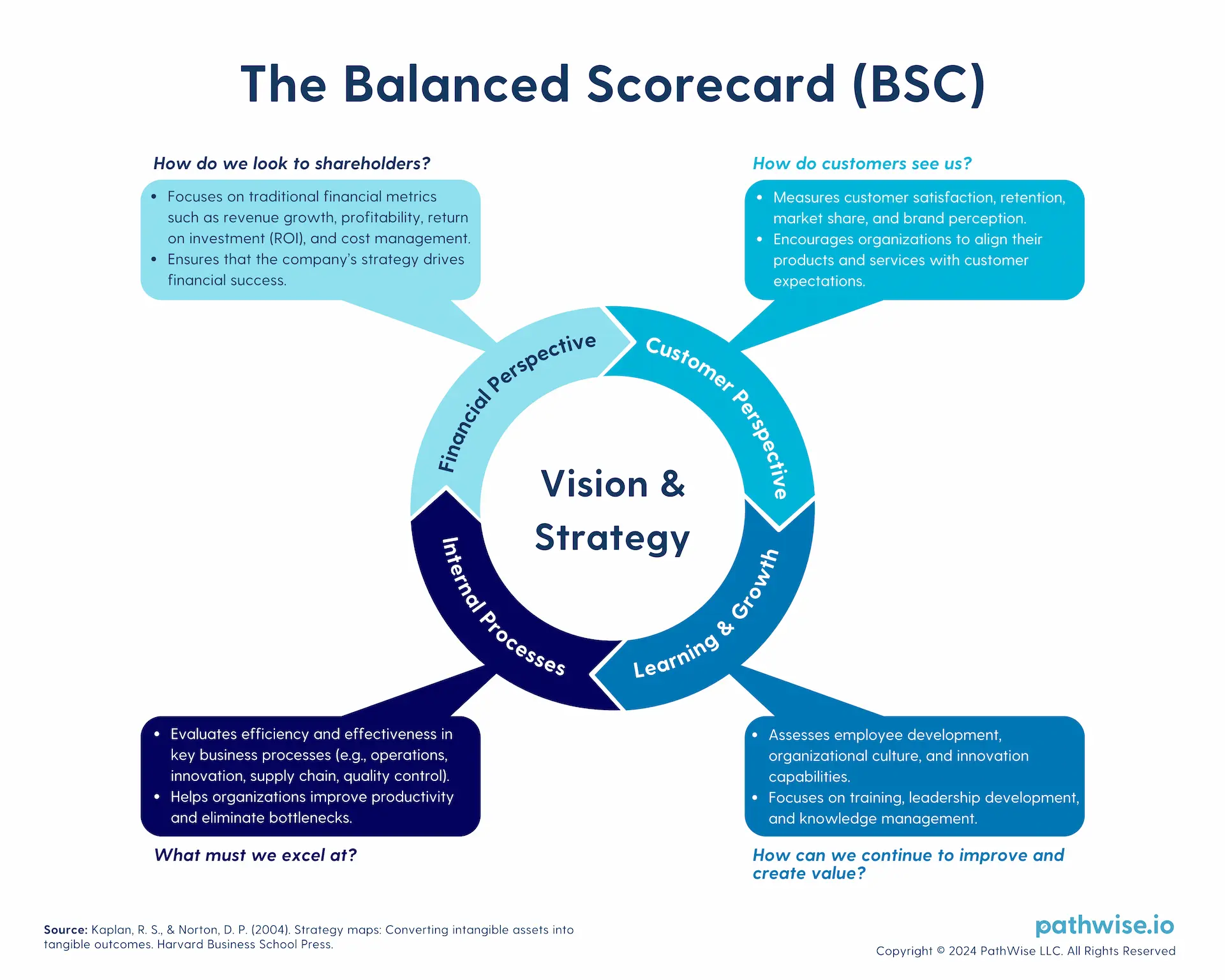
- Balanced Scorecard: Created by Robert Kaplan and David Norton, this model helps organizations track execution across four key areas: Financial (profitability and financial health), Customer (customer satisfaction and engagement), Internal Processes (operational efficiency and effectiveness), and Learning & Growth (employee development and innovation).
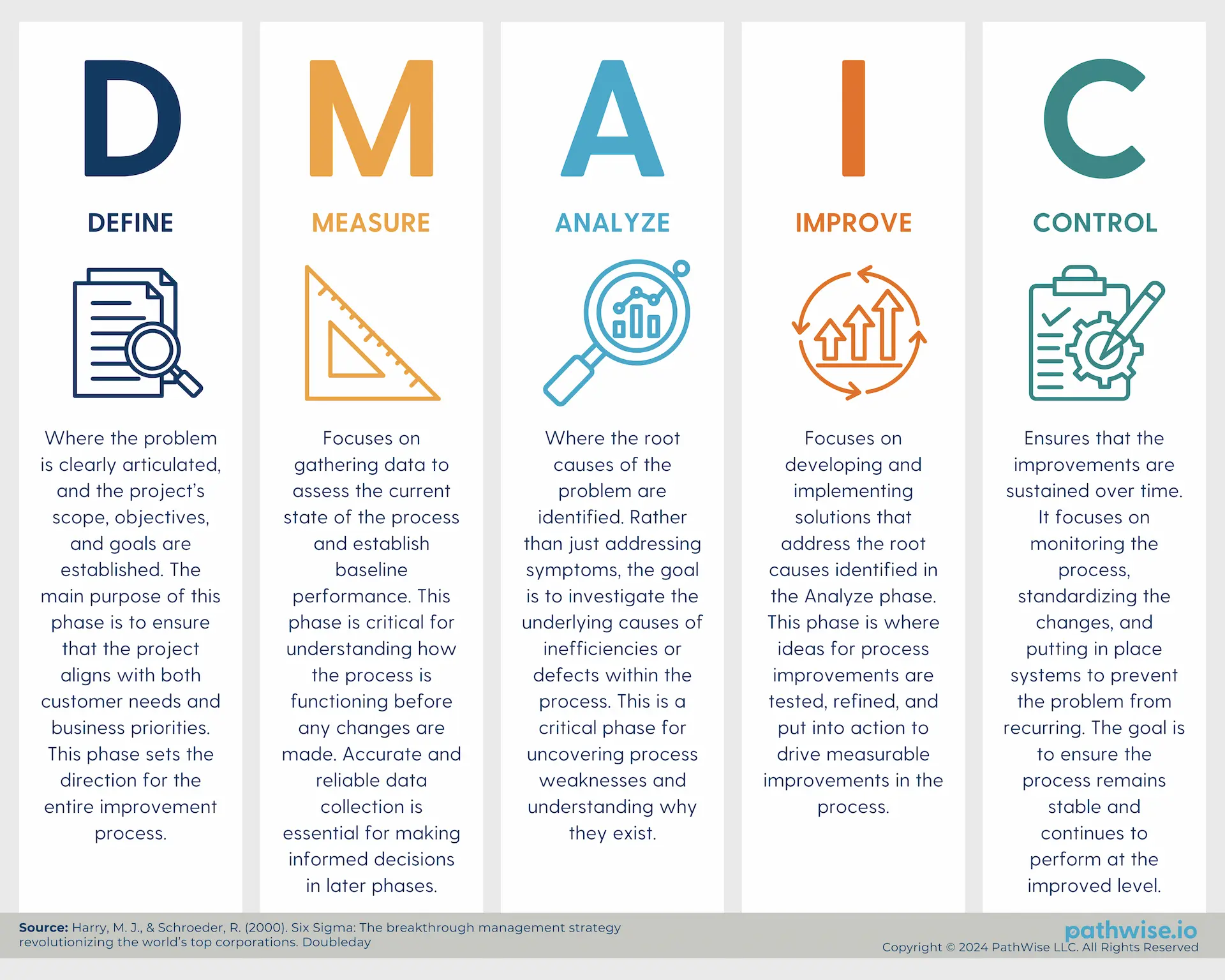
- Lean & Six Sigma: These execution methodologies focus on efficiency, process improvement, and reducing waste. Lean (originating from Toyota) aims to streamline operations by eliminating inefficiencies, while Six Sigma (developed at Motorola) or DMAIC (define-measure-analyze-improve-control) reduces defects through data-driven decision-making and process optimization.
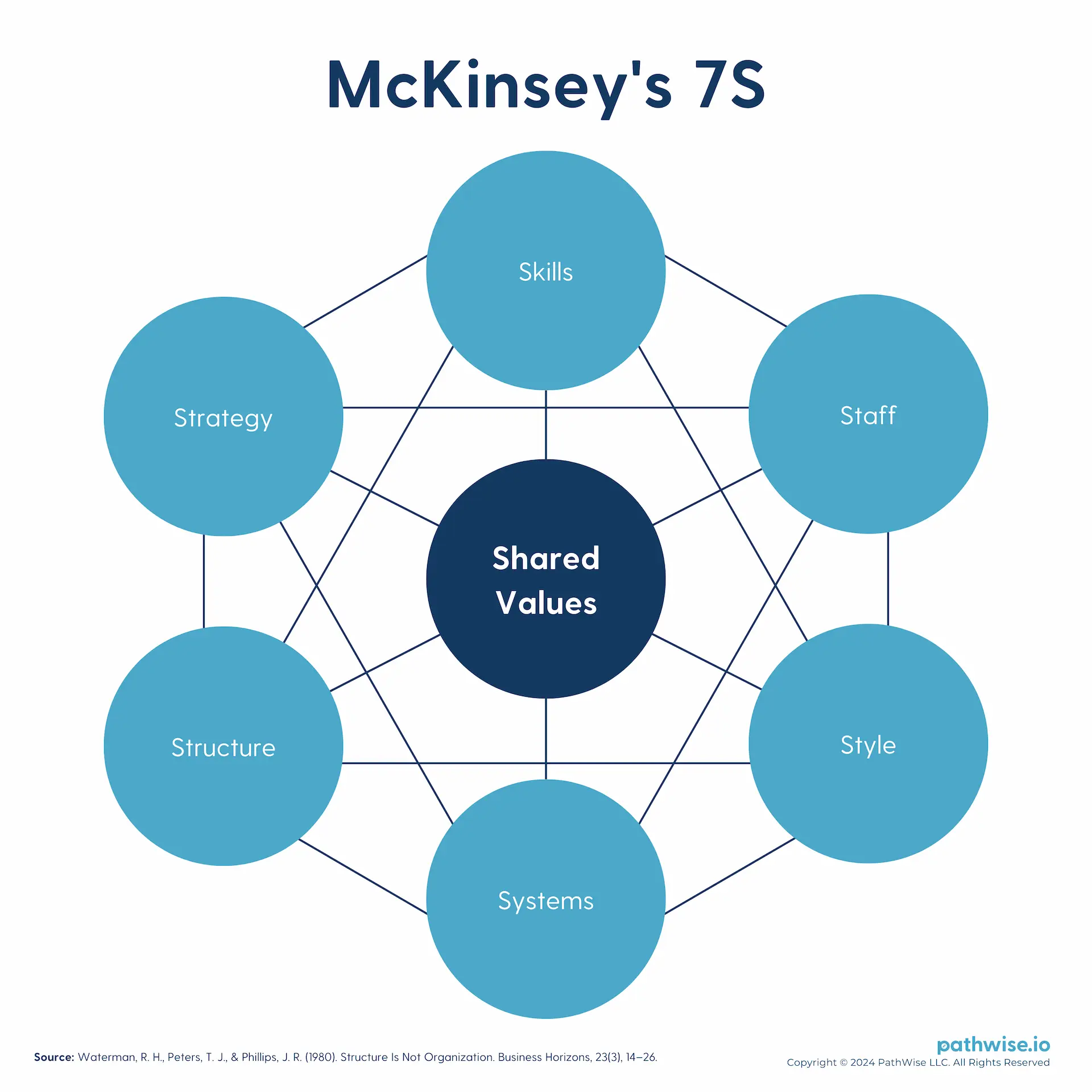
- McKinsey’s 7S Framework: This model ensures organizational alignment by analyzing seven key elements: Strategy (the overall plan), Structure (organizational hierarchy), Systems (processes and workflows), Shared Values (company culture and guiding principles), Style (leadership approach), Staff (talent and workforce), and Skills (organizational capabilities).
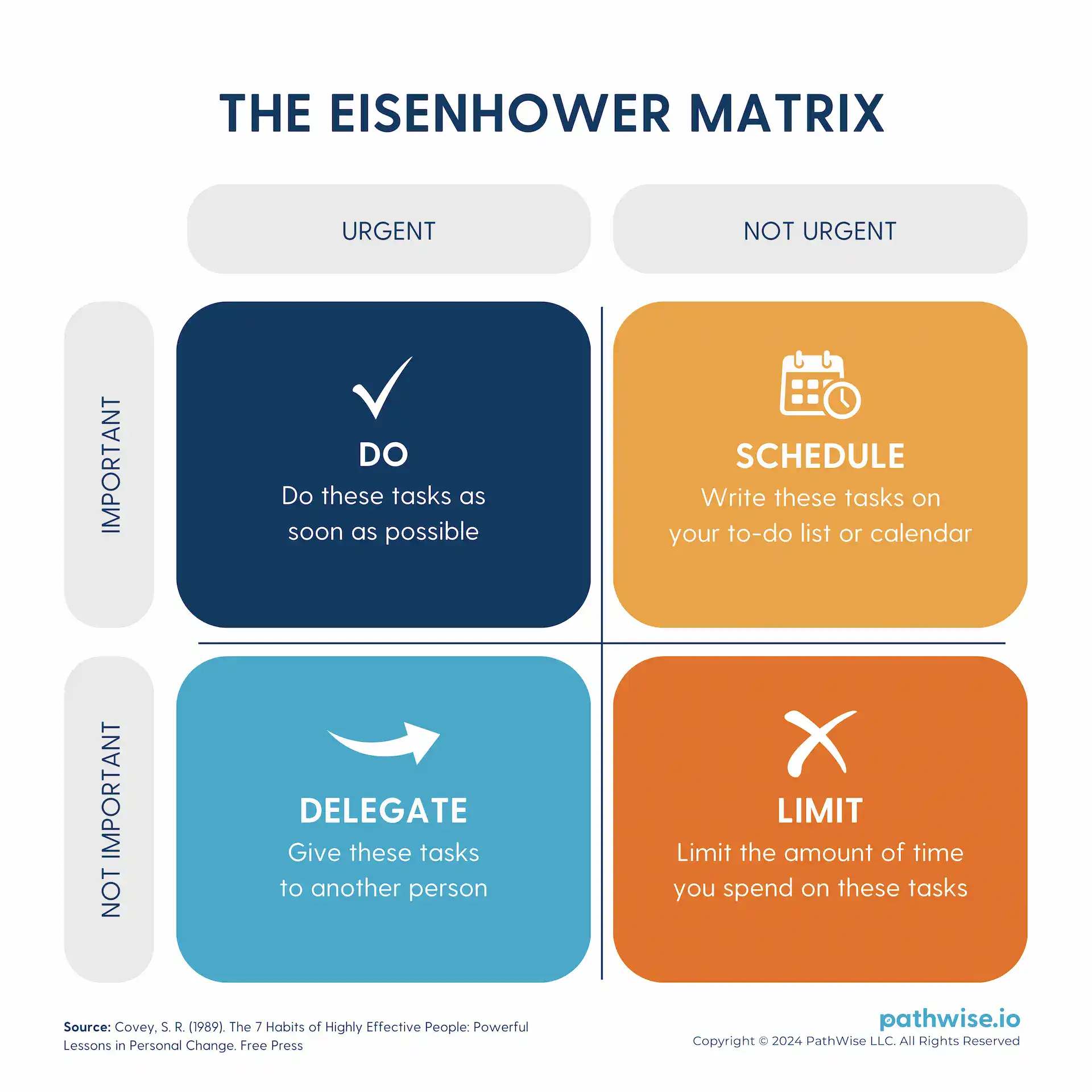
- The Eisenhower Matrix: A time management and execution tool used to prioritize tasks based on urgency and importance. It divides tasks into four quadrants: Urgent & Important (do immediately), Important but Not Urgent (schedule it), Urgent but Not Important (delegate it), and Neither Urgent nor Important (eliminate or minimize).
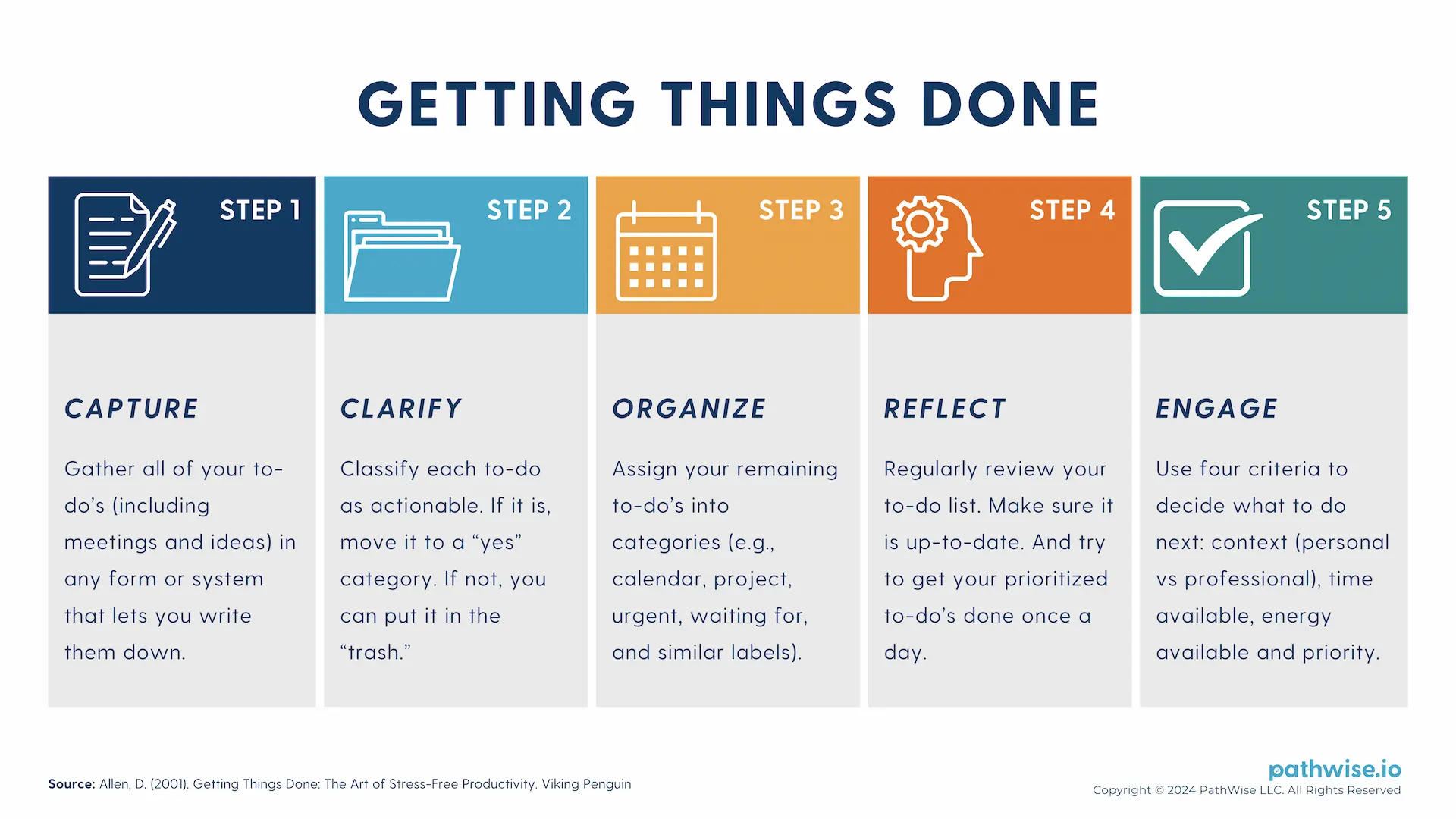
- Getting Things Done (GTD): Created by David Allen, this personal productivity system helps individuals execute tasks effectively by capturing every task, clarifying next actions, organizing tasks into appropriate lists, reviewing commitments regularly, and engaging in the right work at the right time.
- The Entrepreneurial Operating System (EOS): Developed by Gino Wickman and outlined in Traction, this framework helps businesses execute their vision through six core components: Vision (clearly defining goals), People (right team members in the right roles), Data (using metrics to drive decisions), Issues (solving problems effectively), Process (documenting workflows), and Traction (establishing accountability through regular meetings and goal-setting).
Execution in Leadership
Project execution is where leadership gets tested in real time – where plans turn into action, people see results, and trust is built. A manager who excels at execution becomes a better leader by:
- Turning Vision into Reality: Strong leaders strategize and ensure things get done. A manager who executes well proves they can move from planning to tangible results, which builds trust and credibility.
- Decision-Making Under Pressure: Execution often involves solving problems, making trade-offs, and adapting to changing circumstances. A manager who can make timely, well-informed decisions strengthens their leadership presence.
- Accountability and Ownership: Leaders take responsibility for outcomes. A manager who follows through, owns results (good or bad), and holds their team accountable gains respect and influence.
- Effective Communication: Execution requires clear direction, feedback, and alignment. A manager who communicates effectively keeps teams motivated and on track, fostering engagement and teamwork.
- Empowering the Team: Strong execution isn’t about simply doing things. For leaders, it’s about enabling others to perform. A manager who delegates wisely, provides resources, and removes obstacles helps their team succeed.
- Building Resilience and Adaptability: No project goes 100% according to plan. Managers who lead through execution learn to pivot, manage setbacks, and keep morale high, which prepares them for larger leadership roles.
- Delivering Results and Inspiring Confidence: Leaders are judged by outcomes. A manager who consistently executes well earns the trust of their team, peers, and senior leadership, making them a natural choice for bigger responsibilities.

Image used under license from Shutterstock.com
Execution in Personal Development
Execution transforms knowledge and ideas into real-world accomplishments. Regardless of industry or role, those who consistently follow through on tasks, projects, and strategic initiatives build a reputation for reliability and competence. Execution sharpens critical skills such as problem-solving, time management, and adaptability, all of which contribute to long-term career growth. If we execute well, we demonstrate value and create opportunities for advancement by proving we can drive results.
Execution also fosters continuous learning. Each project completed provides valuable experience that refines decision-making, collaboration, and leadership abilities. Taking ownership of execution develops resilience and resourcefulness, helping us learn to navigate setbacks and optimize processes over time. This hands-on experience builds confidence and prepares us for larger responsibilities.
Additionally, strong execution skills enhance visibility within an organization. Consistently delivering results earns trust from peers and leadership, making us more likely to be considered for promotions, mentorship opportunities, and leadership roles. In contrast, those who struggle with execution may find themselves overlooked, regardless of their strategic thinking or technical expertise. Ultimately, professional development is about learning and applying knowledge effectively, bridging the gap between potential and achievement.

Conclusion
Execution is what separates visionaries from achievers. While strategy provides direction, execution determines whether that direction leads anywhere meaningful. The most successful professionals and organizations recognize that strategy is just the starting point—it’s the ability to follow through, adapt, and refine in real time that drives results. Bridging the gap between strategy and execution requires discipline, accountability, and a willingness to navigate the messy realities of getting things done. At the end of the day, success is about what actually gets accomplished.
