


Paraphrasing Heraclitus, in this life, change is the only constant. As such, our ability to adapt is essential if we want to succeed, especially as change becomes increasingly common and faster-paced.
Imagine waking up one day to find that the skills you’ve honed for years will likely become obsolete soon or that the industry where you’ve built your career is being disrupted by unforeseen forces such as AI, automation, offshoring or other disruptive advancements. How would you respond?
For many, this scenario is a growing concern. And even if you’re not worried about AI coming for your job, you could lose your job due to an economic downturn, or your company could be acquired.
To keep yourself at the forefront of emerging trends and tech, foster your adaptability skills. Anticipate what’s next and position yourself ahead of the curve. Learning to adapt means you won’t feel overwhelmed by change but will thrive because of it. Remember, not adapting could mean falling behind, losing relevance, or even losing your job. As Charles Darwin once said, “It is not the strongest of the species that survives nor the most intelligent but the one most adaptable to change.”
What is Adaptability?
Adaptability is the ability to adjust to new conditions, changes, or challenges in your environment. In the context of your career management, it refers to being open to learning new skills, embracing changes, and finding creative solutions to unexpected problems. This is a key career skill because it enables us to thrive in dynamic work environments. It also allows us to remain relevant, overcome challenges, and create new opportunities for growth and advancement. Here’s how:
- Embracing Change: Because there is no way to eliminate change, we need to learn to become comfortable with it. To succeed in our careers, we need to accept and welcome change to stay ahead of trends, remain relevant, and avoid becoming stagnant in our roles.
- Learn New Skills: The rapid evolution of technology means that industries are constantly changing, and with that change comes the need for new skills. Adaptability empowers us to continuously learn and grow, ensuring we remain competitive and open to new opportunities.
- Problem-Solving: While adaptability helps us cope with change, it also enhances problem-solving skills. Being adaptable makes us less likely to be stressed by change and more likely to think creatively and consider different perspectives. This fosters a sense of confidence and resilience, allowing us to navigate challenges and find effective solutions quickly.
- Networking and Collaboration: Being adaptable means working effectively with a wide range of people, including those from different backgrounds or perspectives. Fostering adaptability skills can enhance our professional networks and lead to collaborative opportunities that benefit our careers.
- Career Growth: Employers value adaptability because it often leads to a more positive attitude, willingness to take on new challenges, and ability to work well in a team. Therefore, demonstrating adaptability can lead to promotions, new responsibilities, and increased job satisfaction.

Thought Leaders
Several thought leaders have contributed to our understanding of adaptability. The following are a few who provided valuable perspectives on how adaptability can be developed and leveraged for career advancement and success in a continually changing work environment.
- William and Susan Bridges: Known for their work on managing transitions, William Bridges, along with contributions of Susan Bridges, authored Managing Transitions: Making the Most of Change. Their work focuses on the psychological process of transitioning through change, arguing that the key in managing it successfully is understanding the human side of organizational transitions.
- Herminia Ibarra: A professor of organizational behavior and author of Working Identity, she explores how people can reinvent their careers and adapt to new professional roles. Her work highlights the importance of experimentation and flexibility in career adaptability.
- Chip Heath and Dan Heath: Known for their work on decision-making and change, the Heath brothers authored Switch: How to Change Things When Change Is Hard, which provides insights into the psychology of change and how to best adapt to it.
- Matthew Syed: An author and speaker, Syed’s work, such as Black Box Thinking, focuses on the importance of learning from failure and the need for adaptability in achieving success. He advocates for a growth mindset and continuous improvement.
- Kurt Lewin: Often referred to as the father of social psychology, Lewin’s work laid the foundation for understanding organizational change. His model of unfreezing, changing, and refreezing is widely used in change management.
- John Kotter: A leadership expert and author ofLeading Change, he is known for his 8-step process for organizational transformation. His work emphasizes the need for adaptability in the face of change, as he argues that leaders and organizations must be agile, continuously seeking opportunities and adapting strategies to thrive in changing environments.
- Reid Hoffman: Co-founder of LinkedIn and author ofThe Startup of You, he advocates for individuals to think of their careers as startups, constantly iterating and adapting to new opportunities. His work highlights the importance of network building, pivoting, and staying flexible in the ever-evolving world of work.
- Susan David: A psychologist and author ofEmotional Agility, she focuses on how individuals can navigate life’s challenges by being emotionally adaptable. Her work emphasizes the importance of mental flexibility, recognizing emotions without being controlled by them, and adjusting one’s thoughts and actions to meet changing circumstances.
Key Frameworks
- ADKAR Model: Developed by Prosci, the ADKAR model proposes five stages of change—Awareness, Desire, Knowledge, Ability, and Reinforcement as key elements for successful change adoption. Here, adaptability is crucial as individuals must progress through these stages to successfully embrace and sustain change in a structured manner.
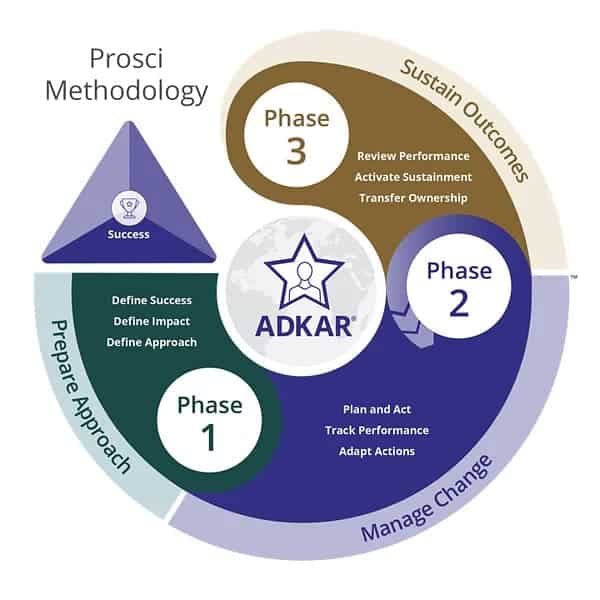
Image Source: https://www.prosci.com/blog/prosci-methodology
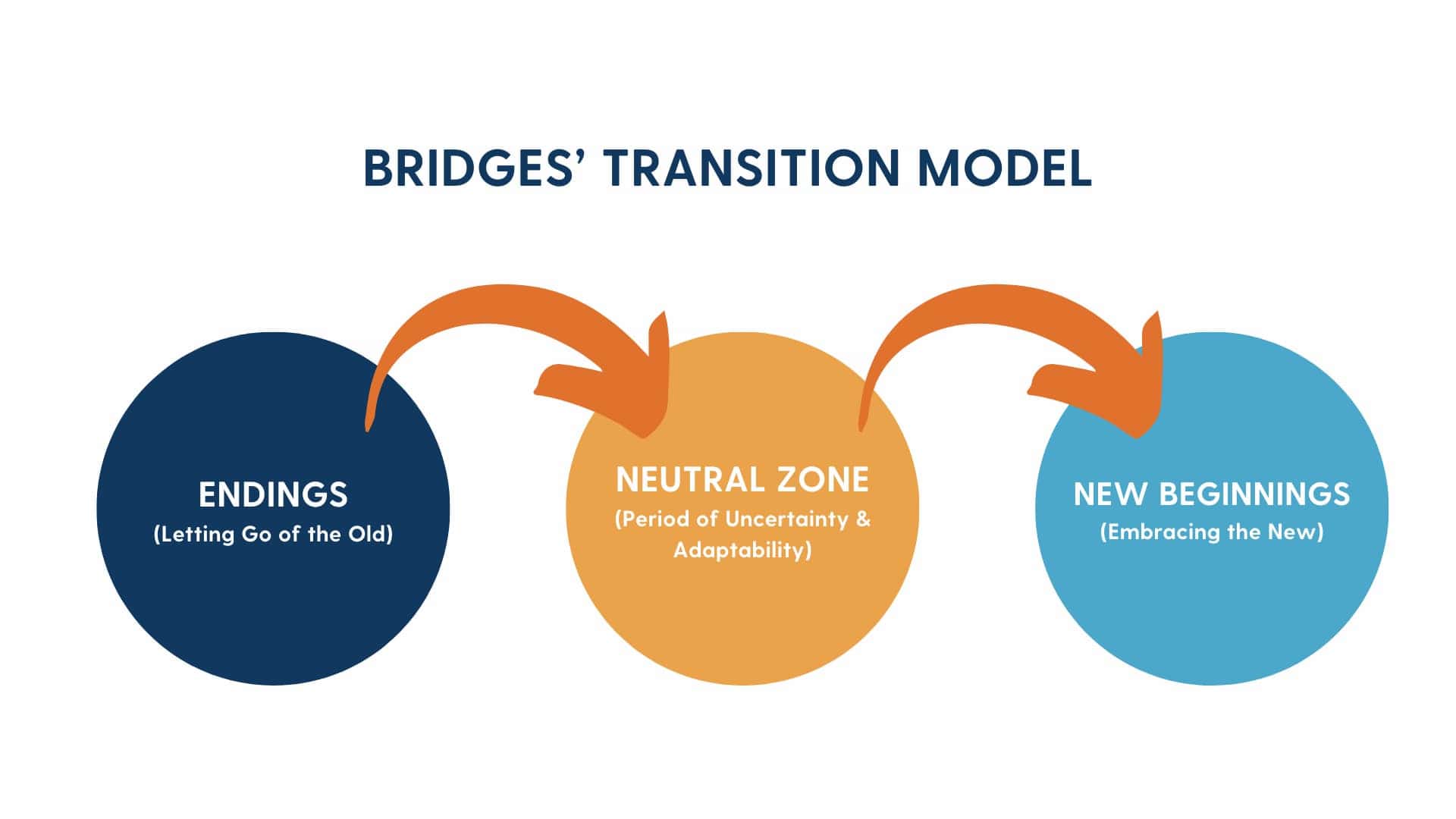
- Bridges’ Transition Model: Proposed by William Bridges, this model differentiates between change (external) and transition (internal). It emphasizes the psychological adaptation required during transitions, highlighting the importance of adaptability in moving from endings, through the neutral zone, to new beginnings.
To learn more about Managing Transitions, check out Dr. Hayley Lewis’s Sketchnote below.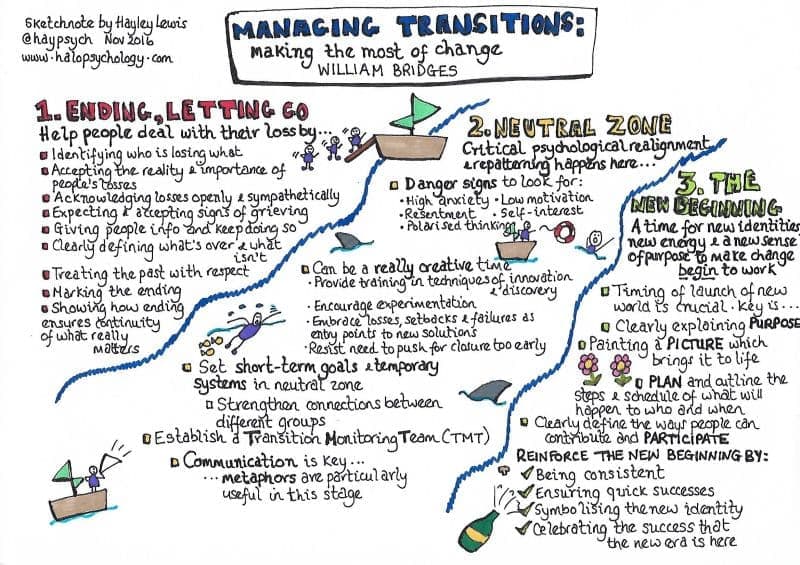


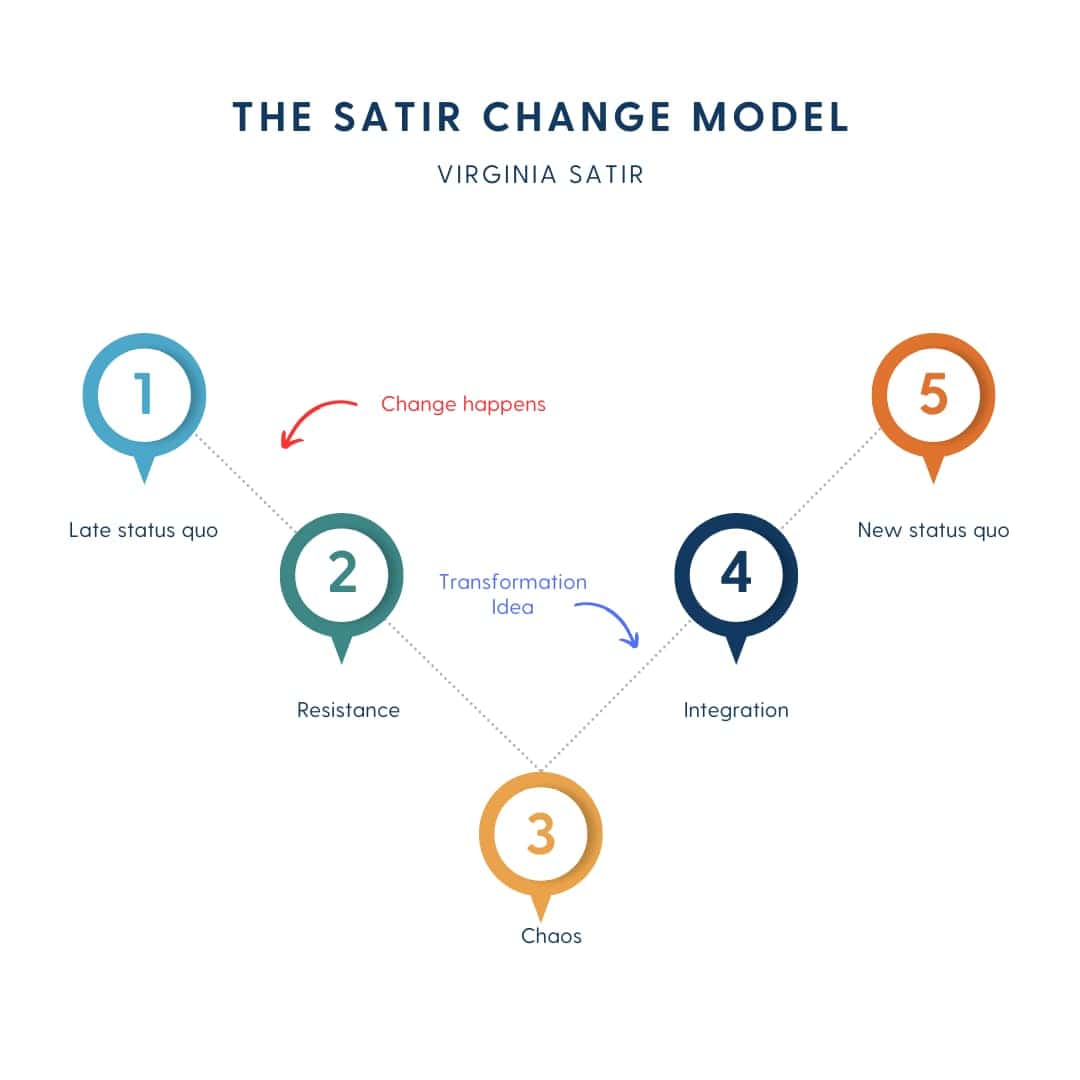
- The Satir Change Model: Developed by family therapist Virginia Satir, this model describes the emotional responses to change, from the initial status quo to chaos, and then to integration and a new status quo. Adaptability is key in navigating the emotional turbulence of change and achieving growth and stability.
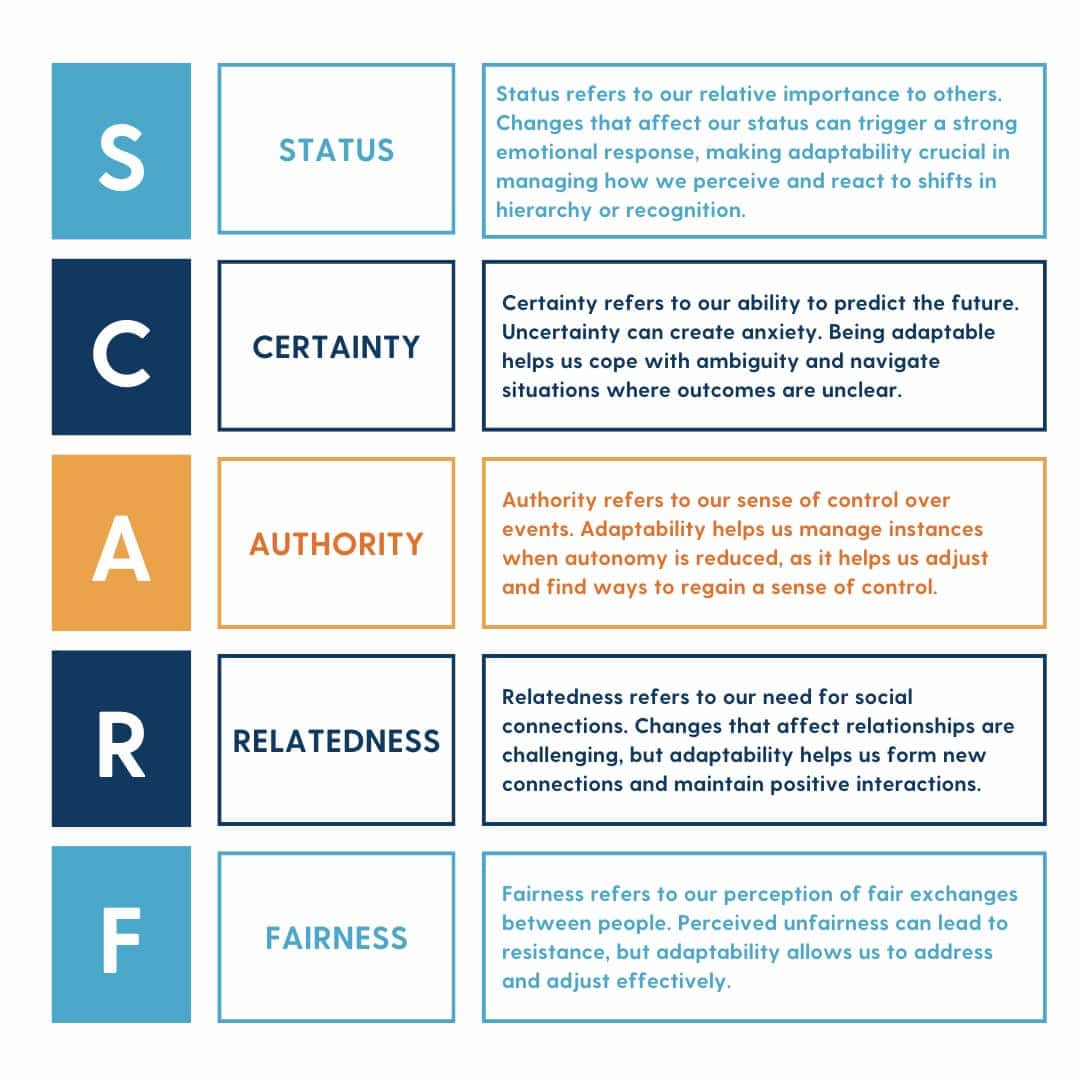
- The SCARF Model: Developed by David Rock, the SCARF model identifies five social domains (Status, Certainty, Autonomy, Relatedness, and Fairness) that can be used to examine the influence of individuals’ reactions to change. Understanding and addressing these factors can help manage the emotional impact of change. The SCARF model highlights the emotional and social triggers that can impact our ability to adapt to change. By understanding these domains, individuals and leaders can create environments that minimize threats and maximize rewards, making it easier to adapt to new situations, reduce resistance to change, and enhance overall resilience.
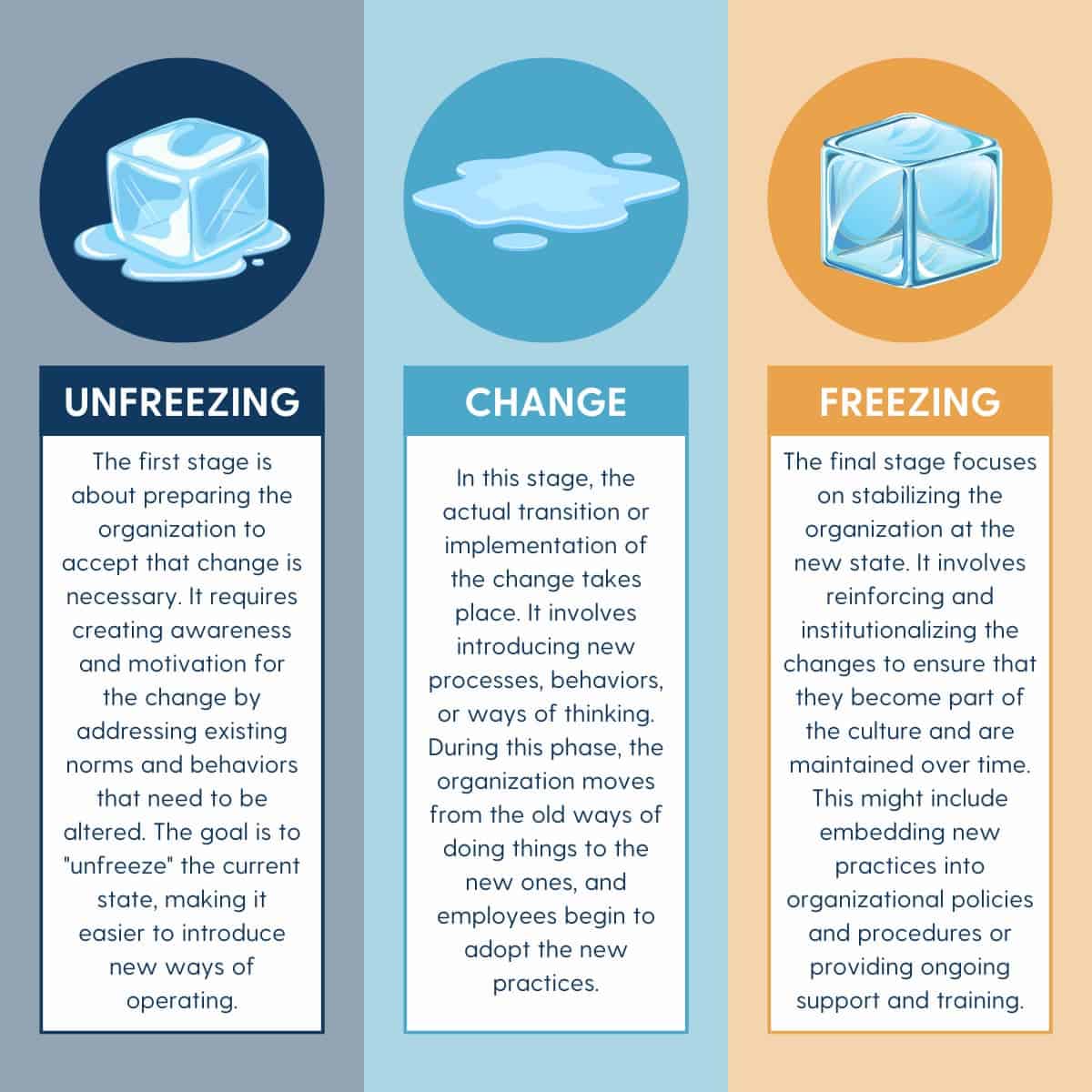
- Kurt Lewin’s Change Model: Also known as the Unfreeze, Change, and Freeze model, this is a framework for understanding and managing organizational change. It consists of three key stages. The first is Unfreezing, and it consists of preparing for change by breaking down existing practices and creating a motivation for the new approach. The second is Changing and it involves the process of implementing the new practices or behaviors. Finally, freezing refers to stabilizing and embedding the new changes to make them a permanent part of the organization.
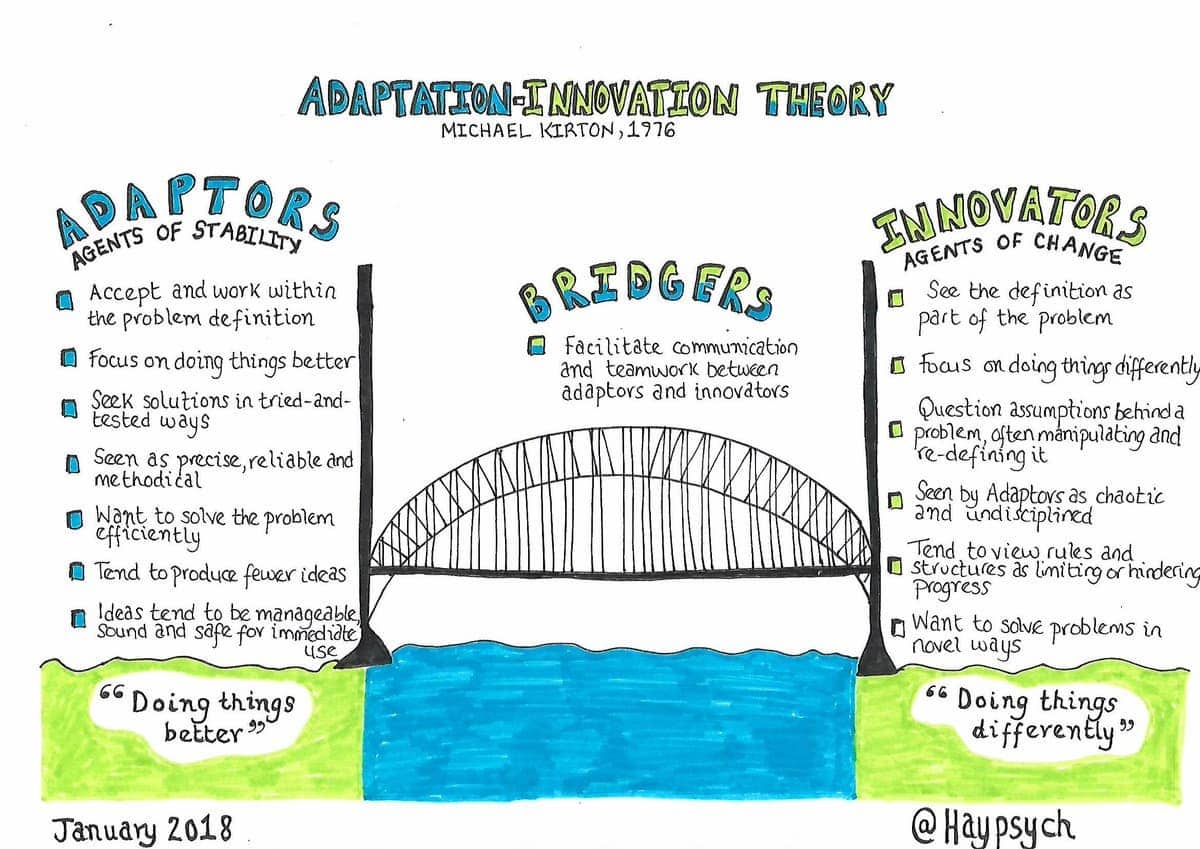
- The Adaptation-Innovation Theory: Developed by Michael Kirton, this theory explains how people differ in their cognitive styles for problem-solving and creativity. It suggests that we fall on a continuum between adaptors, who prefer structured and incremental changes, and innovators, who seek radical and unconventional solutions. To learn more, check our Dr. Hayley Lewis’s Sketchnote below.


Adaptability in Leadership
Embracing adaptability and fostering associated skills (such as creativity, problem-solving, growth mindset, etc.) can make a manager a better leader, as it enables them to navigate and respond to changing circumstances effectively. For instance, an adaptable leader can pivot strategies, embrace innovation, and make informed decisions in uncertain situations, all while maintaining the confidence and morale of their team. This flexibility also helps build trust, as the leader demonstrates resilience and a willingness to learn and grow, fostering a culture of continuous improvement and responsiveness within the team. More specifically, adaptive leadership can help with:
- Responsive Decision-Making: Adaptable leaders are better equipped to make quick, informed decisions when unexpected challenges arise. Instead of being rigidly tied to a plan, they can assess the situation, consider new information, and pivot strategies as needed. This agility ensures that the team stays on course despite turbulent times.
- Embracing Innovation: An adaptable manager is open to new ideas and encourages experimentation, which fosters a culture of innovation within the team. This results in environments where employees feel safe to propose creative solutions and take calculated risks.
- Resilience in Change: Change is inevitable, and how a leader handles it sets the tone for the entire team. An adaptable manager can help their team smoothly transition through change, managing, too, the inherent psychological and emotional impact of change, by providing clear communication and offering support.
- Empathy and Understanding: Adaptability involves understanding different perspectives and adjusting approaches accordingly. A manager who is adaptable can better relate to their team members, recognizing individual needs and motivations. This empathy builds stronger relationships and fosters a more inclusive and supportive work environment.
- Continuous Learning: Adaptable leaders are lifelong learners who actively seek out new knowledge and skills. They model this behavior for their team, demonstrating that growth and learning are ongoing processes. By staying curious and up-to-date, they ensure that the team remains competitive and ready to tackle future challenges.

Image used under license from Shutterstock.com
Adaptability in Personal Development
Adaptability is a key driver of career growth as it allows individuals to navigate inevitable changes and challenges in the workplace with ease and confidence. As industries evolve and job roles transform, those who can quickly learn new skills, embrace emerging technologies, adapt to new circumstances, and adjust their strategies will likely succeed or seize new opportunities. Adaptable professionals demonstrate both flexibility and a proactive approach to change. That’s why they are often considered for promotions, leadership roles, and special projects that pave the way for career advancement.
Adaptability also enhances our ability to collaborate with diverse teams and across different functions. It helps us adjust communication styles, embrace different perspectives, and adjust to the varying factors in distinct work cultures. Along with increased performance, this aspect of adaptability helps expand professional networks, allowing us to gain greater visibility. This, in turn, provides access to opportunities within and outside our current organizations. Over time, adaptability contributes to a robust and resilient career trajectory, where growth is sustained through continuous learning, innovation, and the ability to turn challenges into opportunities for success.
Other Resources
