



As the lines between personal and professional life continue to blur, with technology enabling constant communication and the ability to work from anywhere, the expectations for availability and productivity continue to grow. These phenomena make setting and maintaining boundaries appear particularly challenging. Yet, establishing clear limits is essential for keeping our well-being and mental health in check, which will ultimately also support workplace effectiveness.
Without defined limits, the risk of burnout increases, creativity may suffer, and job satisfaction can plummet. Setting boundaries is about creating a system that allows you to thrive professionally while protecting your personal time. Moreover, when you establish and communicate your boundaries, you foster mutual respect among colleagues, as it helps others understand your limits and ensures that your privacy is maintained. By understanding what these limits are and implementing boundaries accordingly, you can achieve positive outcomes both at home and in your office (even if you work from home!). Ultimately, boundaries lead to a more balanced, fulfilling career and cultivate a work environment where respect, privacy, and excellence are prioritized.

Image used under license from Shutterstock.com
What are Boundaries?
In the context of work, boundaries are guidelines, rules, or limits that we create to identify reasonable, safe, and permissible ways for others to behave toward us and how we’ll respond when someone steps outside those limits. The goal is to set boundaries that maintain a healthy work-life balance, promote respect, protect privacy, prevent burnout, and foster a more productive work environment.
Boundaries can be categorized into several types:
- Physical Boundaries: These include personal space and physical touch. For instance, they may involve maintaining a comfortable distance from colleagues or setting limits on how much physical work you’re willing to take on.
- Emotional Boundaries: These boundaries protect our emotional well-being by defining how much energy you’re willing to expend on work-related matters. For example, an emotional boundary could be not taking on others’ stress and managing our emotional involvement with colleagues.
- Time Boundaries: These pertain to how you allocate your time between work and personal life. Some examples include setting specific work hours, taking breaks, and not allowing work to infringe on personal time.
- Mental Boundaries: These boundaries involve protecting your cognitive space, ensuring that work doesn’t constantly overwhelm your thoughts, and taking care of your mental health. For example, a key boundary is being able to say no to extra tasks that could lead to cognitive overload.
- Social Boundaries: These dictate how you interact socially at work, including your involvement in workplace gossip, your level of personal sharing, and maintaining professionalism in relationships.
- Workload Boundaries: These relate to managing the amount of work you take on, setting realistic goals, and ensuring that your workload is manageable to prevent stress and burnout.

Image used under license from Shutterstock.com
Setting and Maintaining Boundaries
Setting and maintaining boundaries is about knowing your limits through self-awareness. Yet it’s also about clear communication, assertiveness, learning to negotiate, and emotional intelligence. These skills are crucial in fostering a respectful and productive work environment, and in ensuring that our boundaries are respected. More specifically,
- Self-Awareness: Understanding our physical, emotional, and mental limits is crucial for setting boundaries. We need to be aware of what we can and cannot handle regarding workload, work hours, and emotional energy, as well as recognize our needs and triggers to set effective limits.
- Communication: Effective boundary setting requires clear communication. This involves strong verbal and written communication skills to express boundaries assertively, without being offensive. Active listening is also essential as it helps us understand others’ perspectives, negotiate mutually agreeable boundaries, and foster a sense of connection and empathy.
- Assertiveness: Maintaining boundaries involves being confident in our ability to stand up for ourselves and communicate our needs without being aggressive or passive. With practice, we can become comfortable saying no to tasks or requests that overstep our boundaries without feeling guilty. Assertiveness also helps when someone challenges our boundaries, allowing us to calmly but firmly restate them and explain their importance.
- Emotional Intelligence: Understanding and managing our emotions, as well as empathizing with others, is key to handling boundary-setting conversations diplomatically.
- Negotiation: Setting boundaries often involves finding a middle ground when there is a conflict of interest. Negotiating skills ensure our boundaries are respected while also considering others’ needs.
- Stress Management: It is essential to develop techniques to manage stress and avoid burnout. Within this context, the goal is to uphold our boundaries even during high-pressure situations.
- Consistency: Steadily enforcing boundaries prevents them from being ignored or dismissed. This helps others understand that our boundaries are non-negotiable. However, while it’s important to be firm, occasional flexibility is reasonable when it doesn’t compromise our well-being.
- Time Management: Effectively prioritizing tasks and setting realistic deadlines helps prevent overcommitting and ensures we have time for personal activities.
Key Frameworks
To home in on the skills covered above, consider relying on a few models. The following are frameworks from different domains that can help set boundaries at work, depending on our needs and specific situations:
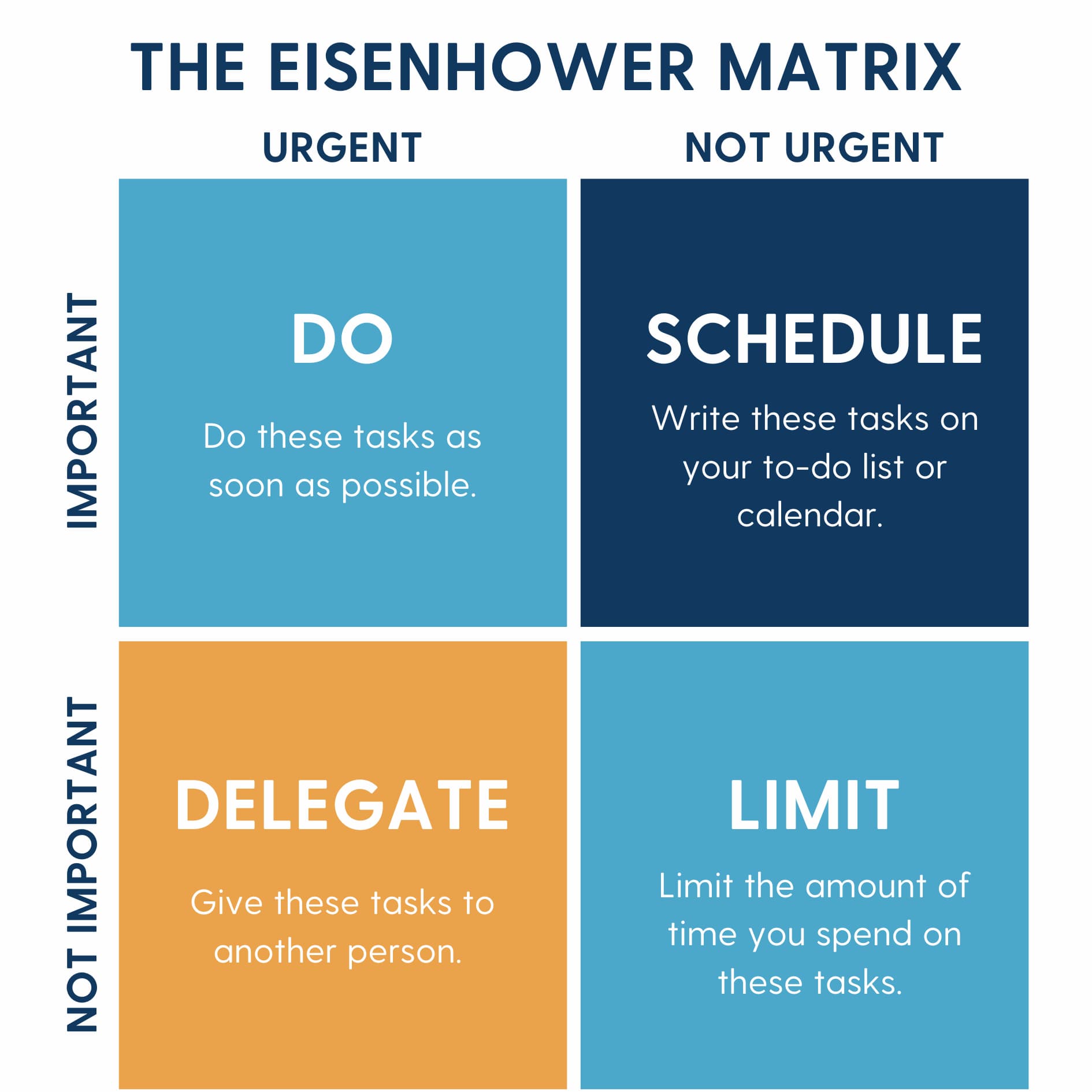
- Eisenhower Matrix: This is a time management tool that helps prioritize tasks by urgency and importance. It can help set boundaries on what tasks we should focus on and what can be delegated or eliminated. It consists of four quadrants: Urgent and Important, Not Urgent but Important, Urgent but Not Important, and Not Urgent and Not Important.
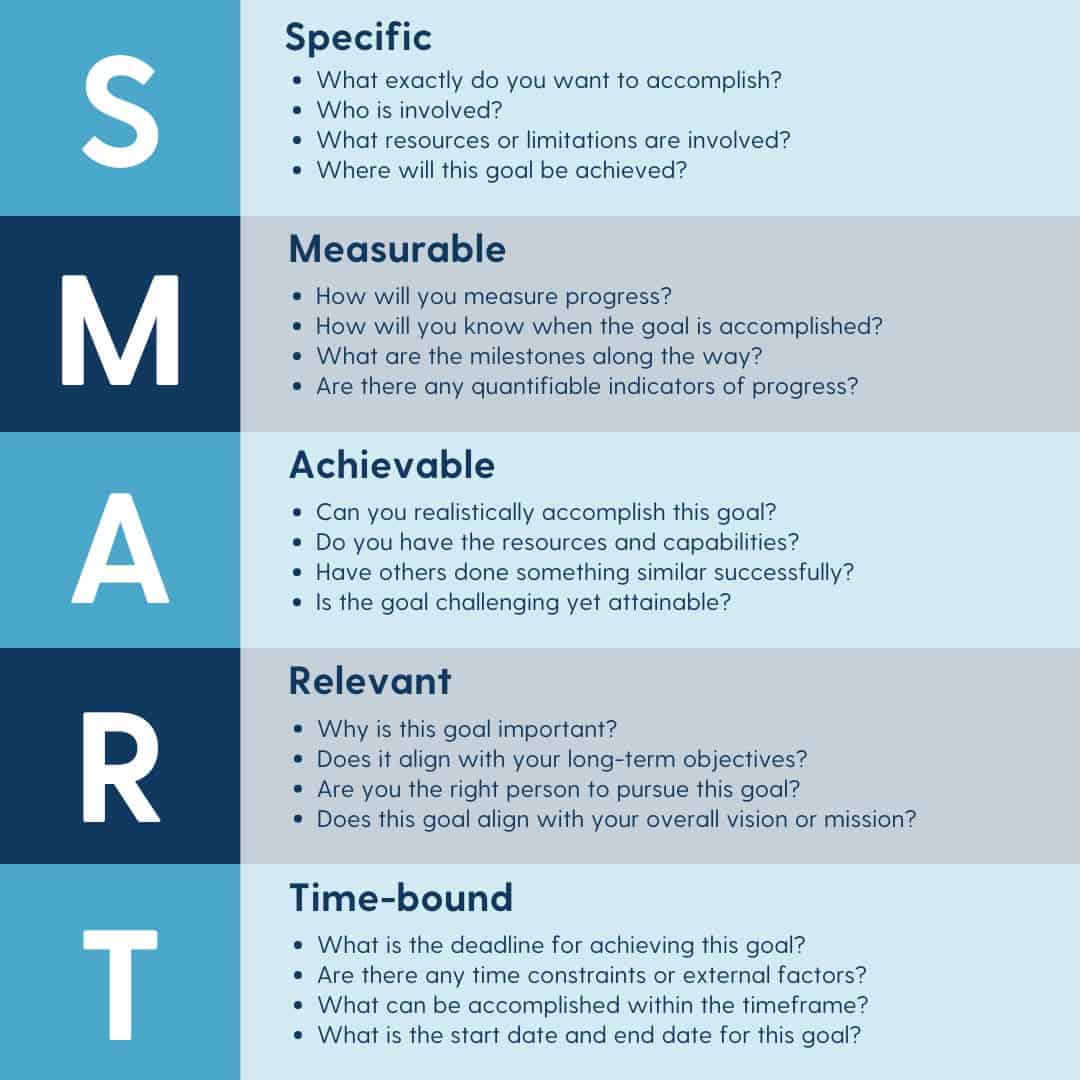
- SMART Goals: This goal-setting framework can also help set clear, achievable boundaries by defining specific, measurable, achievable, relevant, and time-bound goals. By setting SMART goals, you can better manage your workload and set limits on what you can realistically accomplish.
- Energy Management: This model focuses on managing our energy rather than just our time. It encourages setting boundaries based on peak performance times, ensuring we allocate time for rest and recovery.
- Physical Energy: Managing our physical health through exercise, nutrition, and sleep.
- Emotional Energy: Managing our emotions by fostering positive relationships and managing stress.
- Mental Energy: Focusing on tasks requiring high cognitive function during peak mental performance times.
- Spiritual Energy: Engaging in activities that provide a sense of purpose and meaning.


To learn more, check out Dr. Hayley Lewis’s Sketchnote below.

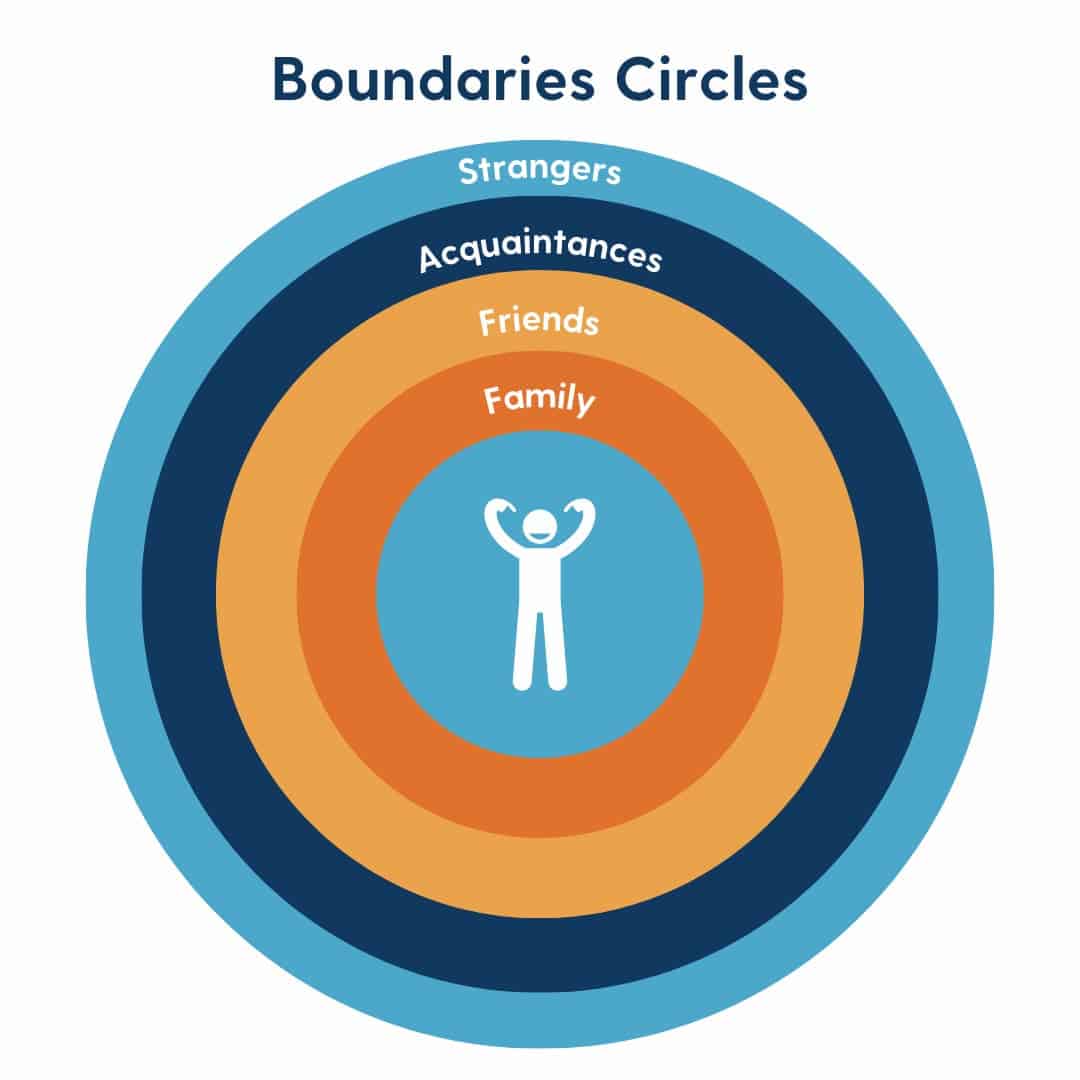
- Boundaries Circles: This framework helps visualize different levels of boundaries with concentric circles representing varying degrees of intimacy and access. Each circle represents different levels of intimacy, trust, and access to your time, energy, and resources. High levels of trust and intimacy are expected in your innermost circle, with fewer boundaries, but still maintaining limits to protect your well-being. You share your deepest thoughts and feelings and offer significant time and support. The most rigid boundaries, where you share only necessary or surface-level information, is your outmost circle. Here, interaction is often formal and limited, with clear boundaries to protect your privacy and time.
- DEAR MAN: This dialectical behavior therapy-based framework describes the skill necessary to assert needs and set boundaries. The steps are:
-
- Describe: Clearly describe the situation.
- Express: Express how you feel and why.
- Assert: Assert needs or boundaries.
- Reinforce: Reinforce the positive outcome of respecting boundaries.
- Mindful: Stay focused on your goals without distraction.
- Appear Confident: Maintain a confident demeanor.
- Negotiate: Be open to negotiation and compromise.


Thought Leaders
A few thought leaders whose work includes boundaries and similar topics include:
- Brené Brown: Known for her research on vulnerability and courage, Brown has discussed the importance of boundaries in several publications, including the books Daring Greatly, Braving in the Wilderness, and Dare to Lead. In these books, she explores how setting boundaries can support emotional well-being and foster authentic relationships.
- Diana Wu David: David describes herself as a futurist, and her work focuses on the complexity and constant change of work with its impact on career adaptation. In her book Future Proof: Reinventing Work in an Age of Acceleration, she discusses how setting boundaries can help balance work and personal life in an evolving work environment.
- Herminia Ibarra: A professor of organizational behavior and the author of Act Like a Leader, Think Like a Leader and Working Identity, Ibarra’s work often explores how boundaries can enhance career growth and leadership effectiveness.
- Adam Grant: An organizational psychologist known for his books Give and Take and Originals, some of Grant’s research looks at how boundaries impact productivity and collaboration within work cultures.
- Cal Newport: An author and full-time professor of computer science at Georgetown University, Newport’s work on focus and productivity often emphasizes the importance of setting boundaries to improve concentration and balance between professional and personal life.
- Megan McArdle: A journalist and author of The Upside of Down: Why Failing Well Is the Key to Success, McArdle addresses economic and social issues, including strategies for effectively managing work-life boundaries.
- Gretchen Rubin: A writer and researcher who focuses on happiness and habits, Rubin’s books, including Better Than Before and The Happiness Project, offer insights into how setting boundaries and creating good habits can enhance personal and professional life.
Boundaries in Leadership
Setting boundaries is a crucial practice for leaders to maintain their well-being, lead effectively, and create a positive work culture. More specifically, leaders can benefit from setting boundaries in several ways, including:
- Enhanced Focus and Productivity: By setting clear boundaries, leaders can concentrate on their priorities without being constantly pulled in different directions. This focus can improve their productivity and the overall efficiency of their teams.
- Reduced Burnout: Boundaries help prevent leaders from overextending themselves, which can lead to burnout. By setting limits on their time and energy, leaders can maintain a healthier work-life balance and sustain their effectiveness long term.
- Improved Team Dynamics: Leaders who model healthy boundaries set an example for their team members, encouraging them to establish their own boundaries, ultimately resulting in a more respectful and balanced work environment.
- Clearer Communication: Setting boundaries involves clearly communicating expectations and limits. This clarity can reduce misunderstandings and conflicts within the team, as everyone knows what is expected and what is off-limits.
- Increased Trust and Respect: Leaders who establish and maintain boundaries demonstrate self-respect and respect for others’ time and commitments. This can foster trust and respect from team members.
- Better Decision-Making: By defining boundaries, leaders can make decisions more effectively. They can avoid being overwhelmed by every issue and focus on strategic decisions aligning with their goals and values.
- Enhanced Personal Growth: Setting boundaries allows leaders to reflect on their priorities and values, which can lead to personal growth and development. It encourages leaders to be intentional about how they use their time and energy, aligning their actions with their long-term goals.
- Improved Work Environment: Boundaries help create a more structured and predictable work environment, which can lead to higher employee satisfaction and retention. The work environment becomes more stable and supportive when everyone understands the limits and expectations.

Image used under license from Shutterstock.com
Boundaries in Personal Development
Setting boundaries is a critical element in career growth, with direct implications for personal development and professional effectiveness. By defining clear limits on work hours, project scope, and personal time, for instance, we can effectively manage our workload and steer clear of burnout. This equilibrium allows us to sustain high performance and enthusiasm for our roles, a key factor for long-term career success. When we establish boundaries, we also learn to prioritize tasks and concentrate on what truly matters, enhancing our ability to make strategic decisions and drive significant results.
Setting clear boundaries also fosters personal growth by encouraging self-awareness and reflection. It drives us to evaluate our values and career goals, which can lead to more intentional career choices and a clearer sense of direction. As we define our boundaries and ways to maintain them, we usually develop stronger skills in time management, communication, and assertiveness, all of which are valuable for career advancement. Learning to negotiate and enforce boundaries effectively also builds resilience and confidence, empowering us to advocate for our needs and career aspirations.
In a broader context, those who set boundaries contribute to a healthier work environment and are often seen as team leaders. The ability to manage time and energy enhances performance. It sets a positive example for colleagues, increasing visibility and recognition within organizations and paving the way for career growth opportunities. Ultimately, setting boundaries helps us maintain a sustainable pace, continually develop our skills, and advance our careers in a balanced and fulfilling manner.
Conclusion
Setting boundaries at work is a personal necessity and a professional strategy. It allows us to protect our time, maintain our well-being, and enhance our productivity. Our aim is to create and foster a space where we can engage fully but sustainably while contributing to a healthier, more balanced work culture and setting ourselves up for long-term success.
Other Resources
- PathWise Book Summary: Dare To Lead by Brené Brown
- PathWise Book Summary: Working Identity by Herminia Ibarra
- HBR: A Guide to Setting Boundaries
- HBR: Set Better Boundaries
- HBR: How To Set Boundaries When Starting a New Job
- HBR: Protect Your Time at Work by Setting Better Boundaries
- Forbes: The Hard Truth About Boundaries and Self Care
- Forbes: How To Set Boundaries at Work Without Jeopardizing Your Career
