



Uncertainty is becoming a constant in the workplace, and change seems upon us ever more quickly. In this context, how can we manage our hesitation and doubt as we’re continually navigating shifts and transitions? How can we build our confidence and conviction?
There’s an illusion that confidence and conviction are innate qualities that we either possess or don’t. The reality is that we can develop our senses of confidence and conviction just as we can any other skill. That’s because confidence isn’t merely a feeling of self-assurance; it results from a profound understanding and mastery of our strengths and weaknesses. It’s such a knowledge that empowers us to face any situation with a deep sense of trust in ourselves. Conviction, on the other hand, is the unwavering belief in our values and goals, even when faced with adversity, that stems, again, from understanding ourselves. Together, conviction and confidence form the basis of resilience and success.

Image used under license from Shutterstock.com
What is Confidence?
In the context of work and career management, confidence refers to the belief in our own abilities, skills, and judgment. Confidence manifests in various ways, such as the willingness to take on new challenges, make decisions, and persist in the face of setbacks.
Confidence impacts several aspects related to career enjoyment and advancement. For instance, it leads to more proactive career management, prompts us to seek growth opportunities, makes us feel comfortable taking on challenging projects, and empowers us to advocate for ourselves. Confidence also impacts,
- Self-Efficacy and Competence: Confidence affects our beliefs about our capability to perform tasks and achieve goals. This belief often comes from past successes and experiences, but it also impacts our actual skills and knowledge. The more competent we feel, the more confident we’ll be and the more likely we are to succeed.
- Decision-Making: Confident people are more likely to make decisions promptly and assertively. They trust their judgment and are not easily swayed by doubt. Confidence also helps us take smart, calculated risks.
- Resilience and Persistence: Confident people handle criticism and setbacks constructively. They see failures as opportunities to learn and grow rather than as reflections of their worth. Even when faced with challenges, confident individuals keep pushing forward, maintaining their motivation and focus.
- Communication Confidence helps us communicate clearly and persuasively. With confidence, we can more effectively express our ideas and opinions, fostering more impactful interactions.
- Networking: Confidence aids in networking, as it enables us to build and maintain professional relationships, seek mentorship, and collaborate effectively.
- Leadership: Confident leaders inspire trust and motivation in their teams. They’re seen as reliable and capable, which helps foster a positive work environment. They also set clear visions and directions for their teams.
- Adaptability: Confidence involves the ability to adapt to change. Confident professionals are more likely to embrace new trends, technologies, and methodologies; stay relevant in their fields; and adapt to change.
Cultivating Confidence
Given its importance in improving our career journeys, fostering confidence is necessary. The good news is that confidence, like any other skill, can be learned and practiced. It’s not necessarily something innate, but rather, an aptitude that comes from putting ourselves out there, accumulating learning experiences, and getting back up whenever we fall.
So, to cultivate confidence, foster:
- Continuous Learning: Engage in constant learning and skill development.
- Positive Self-Talk: Practice positive self-talk and affirmations to reinforce a confident mindset.
- Seeking of Feedback: Constructive feedback from mentors and peers can help you recognize strengths and areas for improvement.
- Reflecting on Successes: Regularly reflect on past achievements.

Image used under license from Shutterstock.com
What is Conviction?
Conviction, though related to confidence, is different. It refers to a firm belief or certainty in the principles, values, and goals that guide our actions and decisions. It’s characterized by a strong sense of purpose and commitment to our professional and personal ideals.
Here are some key characteristics of conviction in the context of managing our careers:
- Core Beliefs and Values: Conviction involves having clear, well-defined values and beliefs that guide behavior and decisions. It means staying true to what we stand for, even when facing challenges. That is, conviction is about acting with integrity and ensuring that our actions align with our moral and ethical standards.
- Purpose and Passion: Conviction is often fueled by a deep sense of purpose, passion for our work, and commitment to our goals. Together, these lead to high levels of motivation and dedication, pushing us to strive for excellence.
- Decision-Making: In decision-making, conviction leads to decisiveness. Those with higher levels of conviction make decisions confidently because they know they are rooted in their core beliefs and long-term objectives. Additionally, decisions made with conviction tend to be consistent over time, allowing for a steady adherence to set principles and goals.
- Leadership and Influence: Conviction-driven leaders inspire and motivate others. Their firm belief in their vision and values encourages their teams to rally behind them and work towards shared goals.
- Authenticity: Conviction leads to authentic behavior, as individuals act in ways that are true to their beliefs and values. This authenticity fosters trust and credibility in professional relationships.
Cultivating Conviction
Like confidence, conviction is also a skill that we can foster so that we can better manage our careers. To do so,
- Clarify Your Values: Reflect on and clarify your core values and beliefs. Understanding what truly matters to you is the foundation of conviction.
- Set Meaningful Goals: Establish clear, meaningful goals that align with your values and purpose. These goals will serve as a guiding compass in your career.
- Articulate Your Beliefs. These beliefs could be about your day-to-day work, the ‘how’ of your approach to work, or where you see yourself – or your team or organization – heading in the future. Seek opportunities to test your beliefs and invite challenge. Doing so will help you find holes in your thought processes and adjust accordingly. This, in turn, will help you strengthen your conviction.
- Step Up To Decisions. Leaders want people who both possess conviction and are willing to act on it. Without being reckless or rushed, be prepared to make decisions when they are required. This will help build your confidence in converting thoughts into actions.
- Build Resilience: Develop resilience by embracing challenges and learning from setbacks. Resilience strengthens your conviction by reinforcing your commitment to your goals.
- Seek Support: Surround yourself with supportive mentors, colleagues, and a network that reinforces and challenges your beliefs and values, helping you stay true to your convictions.
How do Confidence and Conviction Relate?
Confidence and conviction are deeply interrelated, each reinforcing and enhancing the other. Confidence provides the self-assurance needed to act on one’s beliefs and make decisions, while conviction offers the foundational principles and purpose that guide those actions and decisions.
Having conviction means we have a clear sense of our values and goals. This clarity instills confidence by providing a strong sense of direction and purpose. Knowing what we stand for and aim to achieve reduces uncertainty and hesitation, allowing for more decisive and assertive actions. Confidence, in turn, reinforces conviction by enabling us to act on our beliefs without fear of failure or doubt. The self-assuredness that comes with confidence allows us to pursue our goals with determination.
Conviction also strengthens confidence by providing a deep-rooted sense of authenticity and integrity. When we align our actions with our core values, we are more likely to feel secure in our decisions and actions. This alignment builds trust in oneself, which is a key component of confidence. Conversely, confidence enables us to express our convictions more effectively, allowing us to stand firm in our beliefs, influence others, and inspire trust and respect.

Image used under license from Shutterstock.com
Thought Leaders
Several thought leaders have made significant contributions to the understanding and development of confidence and conviction in the professional and personal development domains. Here are a few notable figures:
- Brené Brown: Brown is known for her research on vulnerability, courage, and leadership. Her work emphasizes the importance of embracing vulnerability to build true confidence and authenticity. In her books, such as Daring Greatly and The Gifts of Imperfection, along with her TED Talk, The Power of Vulnerability, she presents the notion that to build confidence we must embrace vulnerability and authenticity.
- Simon Sinek: Sinek is known for his book Start with Why, which underscores the importance of having a clear purpose and conviction in leadership and career development. He supports his arguments in other books, such as Leaders Eat Last and his popular TED Talk How Great Leaders Inspire Action, which argue that leading must be done with conviction to build trust.
- Carol Dweck: Dweck’s research on the growth mindset has been key in understanding how our own minds influence success. Her work shows that believing in one’s ability to grow and improve fosters resilience and confidence. Her book Mindset: The New Psychology of Success explores how adopting a growth mindset can build confidence and drive personal and professional development.
- Amy Cuddy: Cuddy’s research on body language and presence show that physical posture and behavior can influence confidence and perceptions of self-assurance. Her TED Talk, Your Body Language May Shape Who You Are, and her book Presence discuss how harnessing body language can boost confidence and assertiveness.
- Marshall Goldsmith: Goldsmith is a leadership coach and author who focuses on helping people achieve positive, lasting behavioral change. His books, such as What Got You Here Won’t Get You There, The Earned Life, and Triggers, provide practical advice on building confidence and conviction in leadership.
- Brittany Packnett Cunningham: Packnett Cunningham advocates for social change and empowerment, making an emphasis on the role of confidence in leadership and activism. She focuses on building confidence in oneself and inspiring it in others. Her TED Talk How to Build Your Confidence – and Spark It in Others provides actionable insights on cultivating confidence.
- Adam Grant: Grant’s research on organizational psychology explores how people can find meaning and motivation in their work. His focus on giving, resilience, and innovation ties into building confidence and conviction. His books, such as Give and Take and Originals, and his TED Talks, explore confidence, creativity, and leadership themes.
- Matthew Syed: Syed is an author and speaker who specializes in high performance, resilience, and innovation, focusing on the concepts of growth mindset, adaptability, and the willingness to learn from failure. His books, such as Bounce: The Myth of Talent and the Power of Practice and Black Box Thinking: Why Most People Never Learn from Their Mistakes-But Some Do, explore how developing a growth mindset and learning from failure can enhance confidence and conviction.
- Katty Kay and Claire Shipman: Kay and Shipman are journalists and authors who have researched and written about confidence, particularly for women. Their work focuses on understanding the confidence gap and providing strategies to build and sustain confidence in personal and professional settings. Their books, The Confidence Code: The Science and Art of Self-Assurance-What Women Should Know and The Confidence Code for Girls, delve into the science behind confidence, offering practical advice on how to develop and nurture it.
Key Frameworks
Several models and frameworks about confidence and conviction explore different aspects of these concepts, including their development, impact, and ways to foster them. Here are a few notable ones:
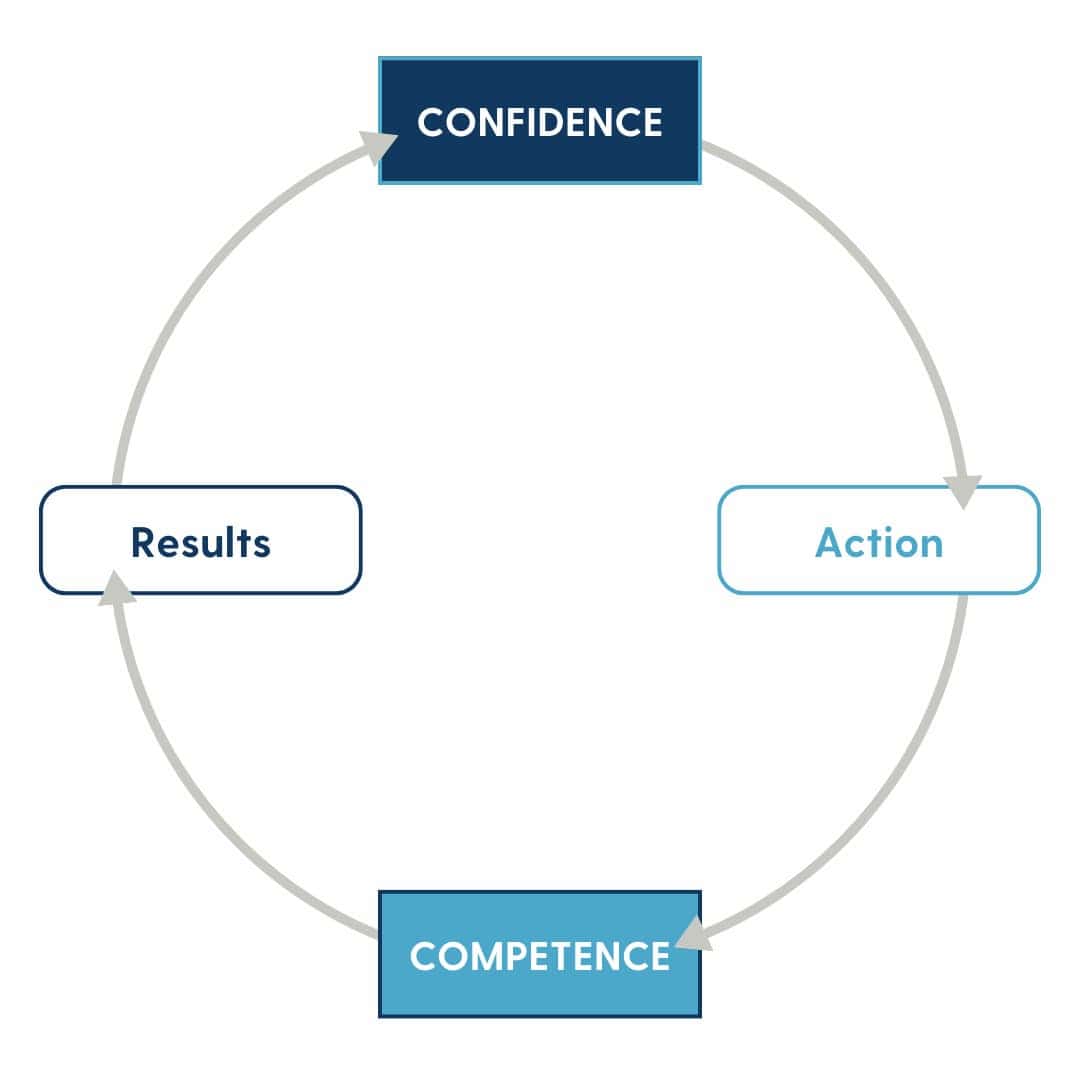
- The Confidence-Competence Loop: This model suggests that confidence and competence reinforce each other. As individuals gain skills and knowledge (competence), their confidence increases, which in turn encourages them to take on more challenges, further enhancing their competence.
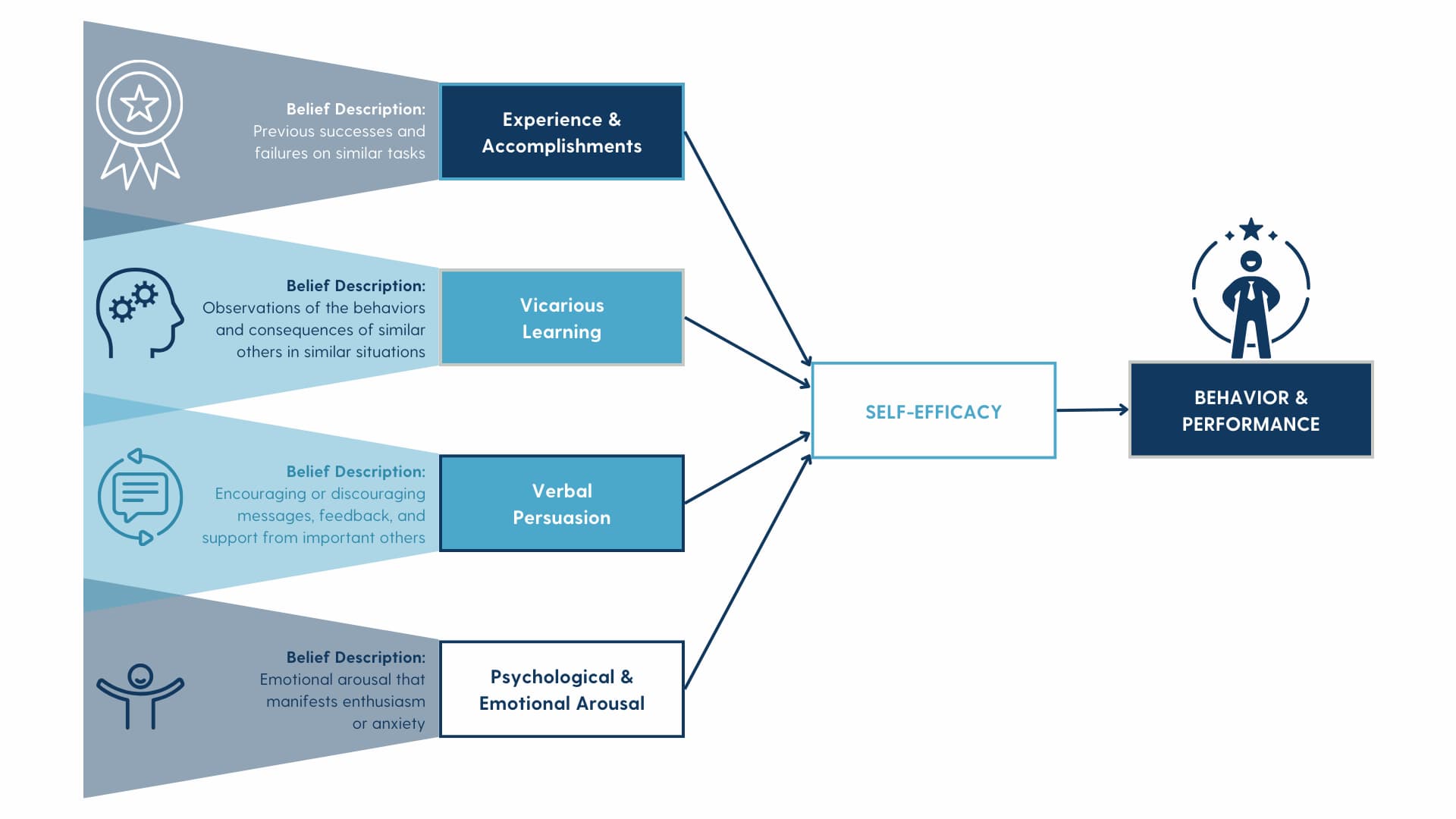
- Self-Efficacy Theory by Albert Bandura: Self-efficacy refers to an individual’s belief in their ability to succeed in specific situations. According to Bandura, self-efficacy influences how people think, feel, and act. Higher self-efficacy can lead to greater motivation and persistence. Though initially, the self-efficacy was conceptualized within the context of social cognitive theory and was mainly used in the fields of psychology, education, and communication, its application have been extended to other fields of study and it also applies in contexts such as career management. For instance, the model below showcases how self-efficacy can impact work successes and your career journey.
- Growth Mindset by Carol Dweck: A growth mindset is the belief that our abilities and intelligence can be developed through effort and learning. This mindset fosters confidence as it encourages individuals to “embrace challenges, persist in the face of setbacks, see effort as a path to mastery, learn from criticism, and find lessons and inspiration in the successes of others” (Mindset: The New Psychology of Success, p. 263; see diagram below for a comparison to the fixed mindset).
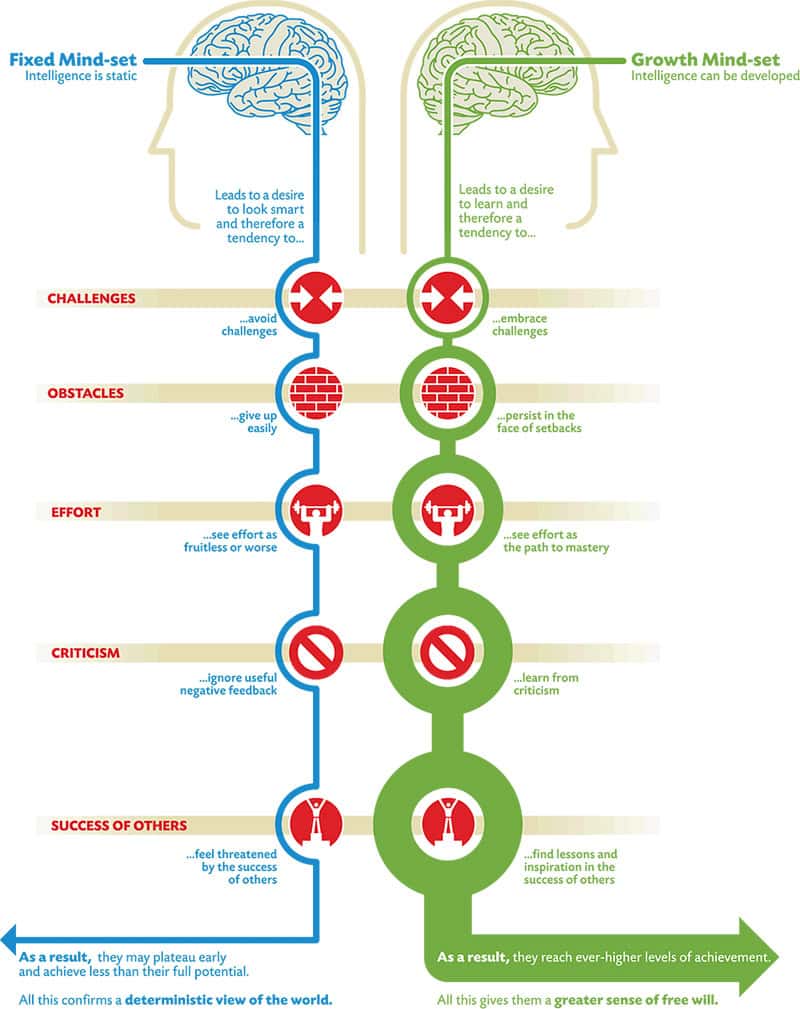
Diagram by Nigel Holmes, taken from Carol Dweck’s Mindset: The New Psychology of Success (p. 263).
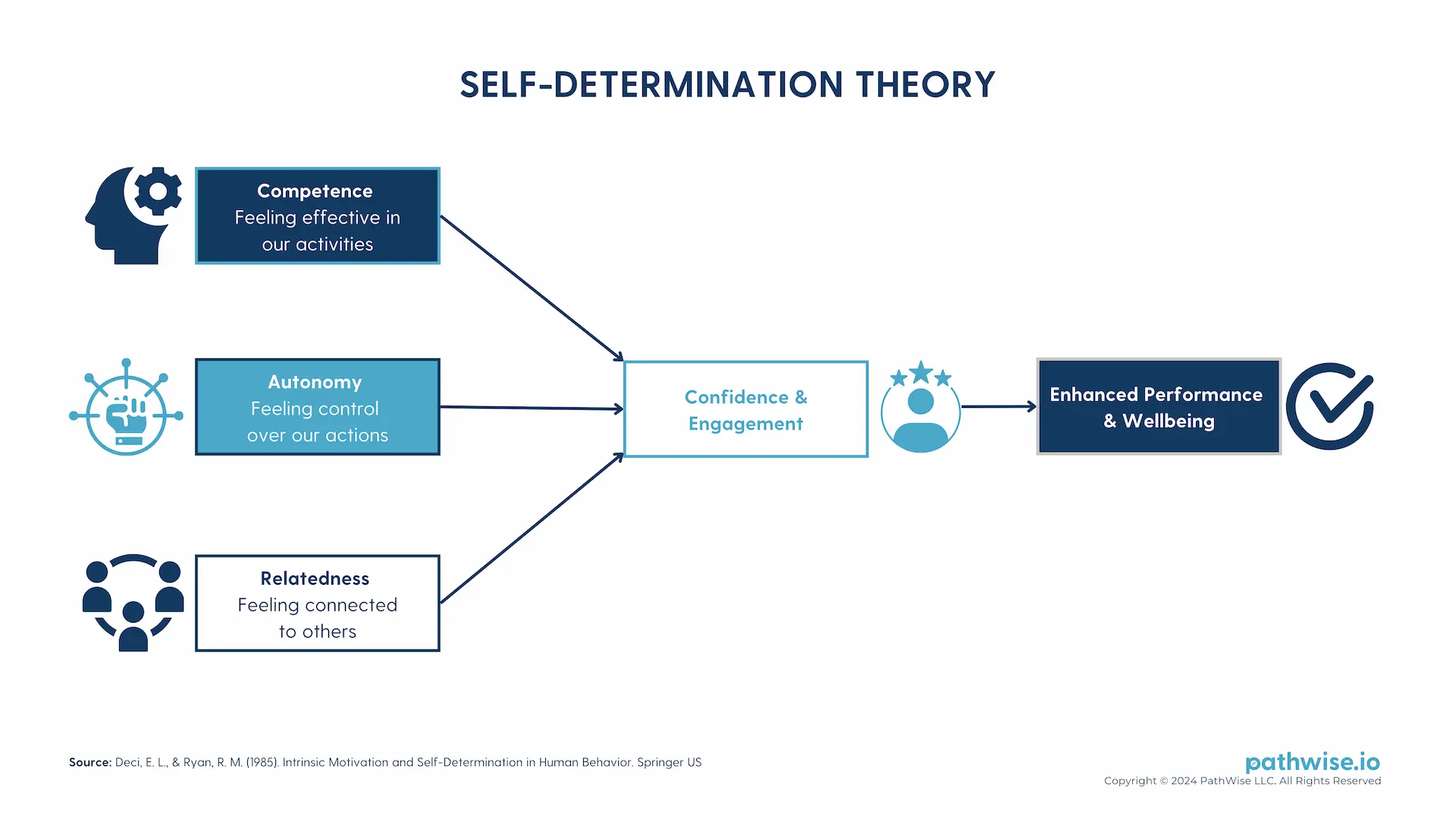
- Self-Determination Theory (SDT): SDT posits that confidence and motivation are driven by three basic psychological needs: autonomy (control over our actions), competence (feeling effective in our activities), and relatedness (feeling connected to others). Meeting these needs fosters intrinsic motivation and well-being. By creating environments that support autonomy, competence, and relatedness, leaders can build confidence and motivation among their team members.


Building Confidence and Conviction in Others
Given the key role confidence and conviction play in success, it’s important that leaders take the time to build confidence in their teams, so that they can tackle challenges with greater assurance and effectiveness.
Here are some strategies:
- Model Confidence and Conviction: Leaders should demonstrate confidence in their own decisions and abilities. By being transparent and decisive, they set a positive example for their team.
- Balance Confidence and Humility: Leaders should, in themselves and in their teams, foster a sense of confidence that doesn’t creep into arrogance or condescension. Confident Humility, to take a phrase from Adam Grant, is about having faith in your capabilities while also appreciating that you may not have the right solution or even be addressing the right problem.
- Provide Clear Goals and Expectations: Set clear, achievable goals to help team members understand their roles and what is expected of them. This clarity reduces uncertainty and builds confidence in their ability to meet objectives.
- Offer Regular Feedback: Constructive feedback helps team members improve and grow.
- Provide Recognition: Recognizing their achievements boosts morale and reinforces their sense of competence.
- Encourage Autonomy and Decision-Making: Empowering team members to make decisions and take ownership of their work fosters a sense of control and confidence in their abilities.
- Create a Supportive Environment: Building a culture of trust and support where team members feel safe sharing ideas, asking questions, and making mistakes promotes confidence. Meanwhile, it also promotes open communication and collaboration, which build a strong, cohesive team.
- Invest in Development: Providing opportunities for training, skill development, and career growth demonstrates a commitment to the team’s development and builds their confidence in their own skills and potential.
- Learn from Failures: Reframing failures as learning opportunities helps team members build resilience and confidence in their ability to overcome challenges.

Image used under license from Shutterstock.com
Conclusion
Upon facing constant change and uncertainty, actively cultivating confidence and conviction can improve our approach to challenges and help us seize opportunities. Confidence fuels our ability to take bold actions and pursue our goals with determination, and conviction provides the unwavering beliefs that guide our decisions. Together, they increase the chances of success and enjoyment of our career journeys.
Other Resources
- Pathwise Book Summary: The Earned Life by Marshall Goldsmith
- Pathwise Book Summary: Dare to Lead by Brené Brown
- Pathwise Book Summary: Mindset by Carol Dweck
- HBR: To Strengthen Your Confidence, Look to Your Past
- HBR: Do Your Commitments Match Your Convictions?
- LinkedIn: The Power of Confidence and Conviction
- Forbes: Acting on Conviction – How We Can Become More Confident
- Forbes: 5 Ways to Build Confidence as a Leader
