



Setbacks and challenges are inevitable. A missed promotion, a failed project, or even a challenging client can shake anyone’s confidence. But what distinguishes those who thrive from those who falter isn’t luck or talent—it’s persistence and tenacity. These qualities fuel the resilience to push through obstacles, adapt to changing circumstances, and keep moving forward despite adversity.
What is Tenacity or Persistence?
Tenacity and persistence are qualities that drive you to remain committed to your goals, even in the face of setbacks, obstacles, or slow progress. While often used interchangeably, there are subtle differences. Tenacity refers to the unwavering determination to hold on to a goal or task, even when it becomes difficult. It’s about refusing to give up, showing grit, and maintaining focus over the long term. Persistence is the act of continuing to push forward despite challenges, maintaining momentum and effort toward goals even when faced with resistance. As you manage your career, tenacity and persistence are essential because they enable continuous growth and adaptation. Specifically, these qualities help:
- Navigate Challenges: Career growth often includes setbacks—like layoffs, challenging projects, or unanticipated role changes. Tenacity allows professionals to see these as learning opportunities rather than as failures.
- Develop Resilience: Persistent professionals build resilience over time, helping them handle high-pressure situations and rebound from difficulties. Resilience is a key attribute in dynamic workplaces, enabling adaptability and effective problem-solving.
- Build Skills and Expertise: Career advancement typically requires continuous learning and improvement. Persistence fuels the ongoing effort needed to build and refine skills, even when the payoff isn’t immediate.
- Achieve Long-Term Goals: Many career aspirations, such as reaching leadership positions or gaining mastery in a specific field, take years to accomplish. Professionals with tenacity are more likely to stay committed to their vision, making incremental progress until they reach their objectives.
- Establish a Strong Professional Reputation: Tenacity and persistence often translate to reliability, a trait that colleagues and leaders value. Demonstrating these qualities can help professionals establish trust and credibility, opening doors to new opportunities and advancement.

Image used under license from Shutterstock.com
Thought Leaders
Several thought leaders have researched the importance of tenacity and persistence in personal and professional growth, often tying these qualities to resilience, grit, and long-term success. Here are a few widely recognized figures:
- Angela Duckworth: A psychologist and author of Grit: The Power of Passion and Perseverance, Duckworth explores the concept of grit as a combination of passion and persistence, identifying it as a significant predictor of long-term success. Her work is influential in understanding how sustained effort and resilience can drive achievement over talent alone.
- Carol Dweck: Known for her work on mindset, Dweck’s research demonstrates the power of a growth mindset—the belief that abilities and intelligence can be developed through effort and learning. This mindset fosters persistence, as it encourages individuals to embrace challenges and learn from setbacks rather than avoiding them.
- Ryan Holiday: The author of The Obstacle Is the Way and Ego Is the Enemy, Holiday draws on Stoic philosophy to highlight how persistence and resilience in the face of challenges can lead to success. His work resonates with professionals looking to transform obstacles into opportunities through tenacity and a resilient mindset.
- Simon Sinek: Best known for his book Start with Why, Sinek’s philosophy often emphasizes purpose and resilience. He argues that having a strong sense of purpose helps professionals stay tenacious and persist through setbacks, as a clear “why” gives meaning to long-term efforts and challenges.
- James Clear: The author of Atomic Habits, Clear explores the role of small, consistent habits in achieving long-term goals. His focus on incremental improvement and persistence in daily routines provides a framework for professionals to stay tenacious and gradually build toward big achievements.
- Gabriele Oettingen: A psychologist and author of Rethinking Positive Thinking: Inside the New Science of Motivation, Oettingen’s work focuses on motivation, goal-setting, and mental contrasting. She argues people can more effectively achieve their goals by balancing positive thinking with a realistic understanding of potential obstacles.
- David Goggins: Known for his books and motivational speaking, Goggins emphasizes pushing past mental and physical limits through “callousing the mind.” His story of resilience and relentless self-improvement often resonates with those pursuing career growth by challenging themselves and persisting through difficult periods.

Image used under license from Shutterstock.com
Key Frameworks
Several frameworks and models explore the concepts of tenacity and persistence, even if indirectly, by addressing motivation, resilience, adaptability, mindset, and strategies needed to persevere in challenging situations. Some of these include:
- Grit Theory: Proposed by Angela Duckworth, Grit combines passion and perseverance for the pursuit of long-term goals. Duckworth’s research shows that grit, more than talent, can predict success in fields as diverse as education, business, and the military. Grit can be cultivated by setting long-term goals, maintaining focus, and regularly reflecting on progress to stay motivated.
- Growth Mindset: A growth mindset emphasizes the belief that abilities and intelligence can be developed, which encourages persistence through difficulties. The theory suggests that progress comes through sustained effort and continuous learning, as well as viewing challenges and failures as opportunities to grow. Cultivating a growth mindset involves embracing challenges, learning from feedback, and seeing effort as a path to mastery.
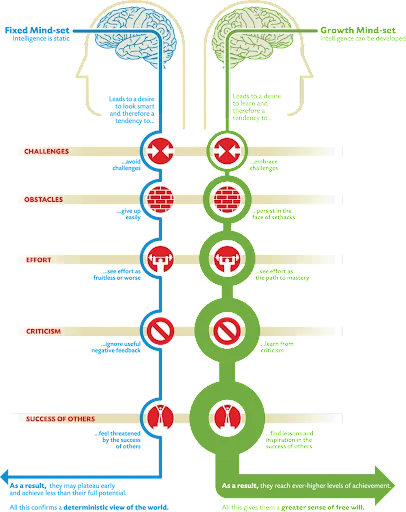
Diagram by Nigel Holmes, taken from Carol Dweck’s Mindset: The New Psychology of Success (p. 263)
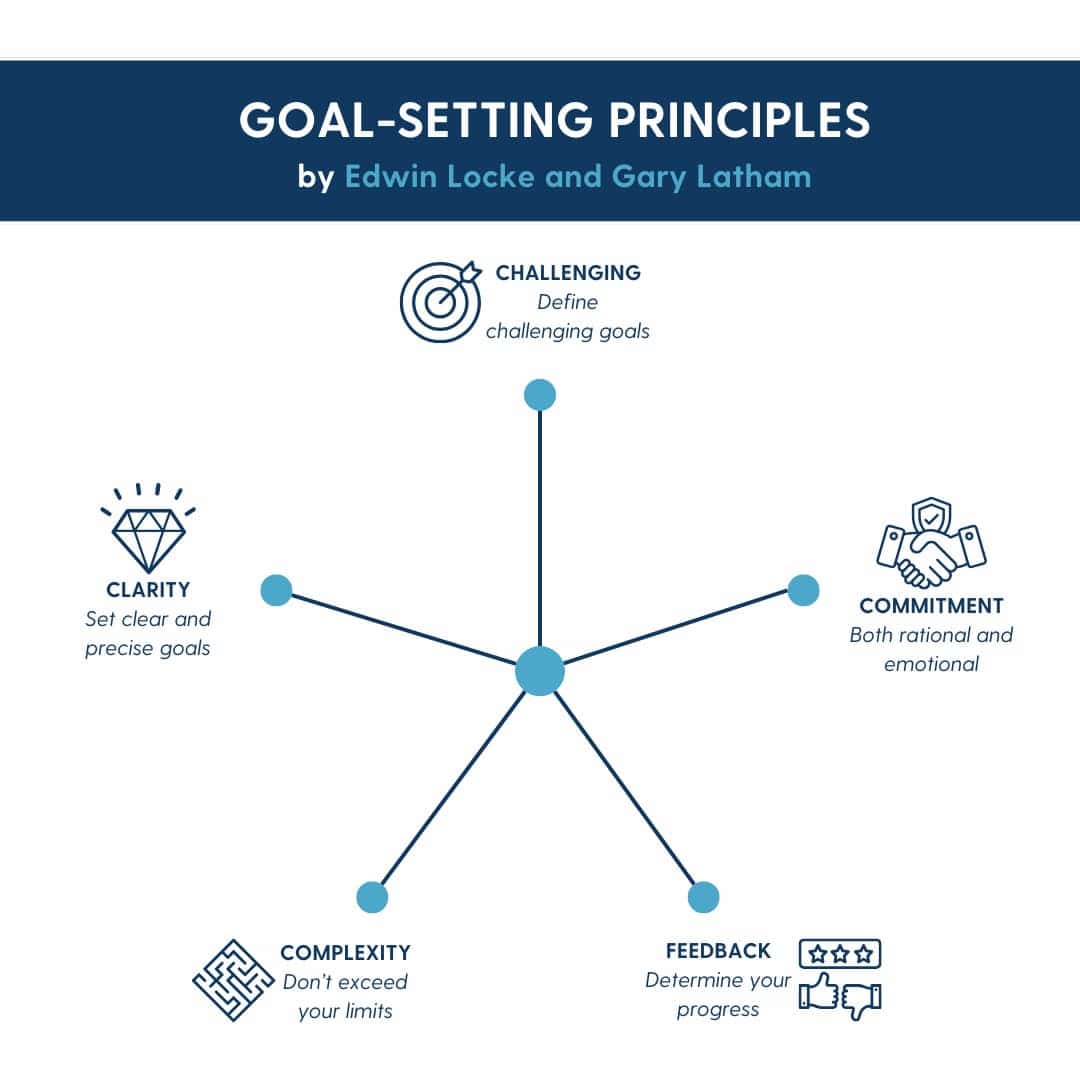
- Goal-Setting Theory: Proposed by Edwin Locke and Gary Latham, goal-setting theory argues that specific, challenging goals can drive motivation and persistence. Setting measurable and realistic goals, staying committed, and regularly reviewing progress encourages persistence. See the diagram below to learn about this theory’s principles.

- WOOP: Proposed by Gabriele Oettingen, WOOP is a framework for achieving goals through mental contrasting—imagining desired outcomes and identifying obstacles in advance to stay motivated and resilient. This method boosts persistence by mentally preparing for setbacks and creating actionable plans, encouraging consistent effort despite challenges. WOOP stands for:
-
-
- Wish: Defining a clear goal or aspiration.
- Outcome: Visualizing the benefits of achieving the goal.
- Obstacle: Recognizing what could hinder progress.
- Plan: Creating an “if-then” plan to overcome obstacles.
-

- Theory of Deliberate Practice: Proposed by Anders Ericsson, deliberate practice emphasizes focused, effortful practice to master a skill over time, requiring persistence and resilience. This theory helps individuals persist by emphasizing structured practice and improvement over time.
- Hope Theory: Hope theory, as proposed by Charles Snyder, emphasizes goal-oriented thinking, wherein individuals maintain persistence by setting goals, finding pathways, and sustaining motivation. This framework encourages perseverance by creating a sense of agency and multiple pathways, which helps individuals keep going even when faced with setbacks.
- The SCARF Model: Developed by David Rock, the SCARF model explains social drivers that influence motivation and resilience, focusing on factors that, if managed well, can support persistence in team and social settings. By addressing these factors, individuals can boost resilience and motivation to persist, especially in organizational environments. These factors are:
-
- Status: Feeling valued in a group.
- Certainty: Understanding what is coming next.
- Autonomy: Having control over choices.
- Relatedness: Feeling connected to others.
- Fairness: Believing in just treatment.

- The 10,000-Hour Rule: Popularized by Malcolm Gladwell and based on Anders Ericsson’s work, this rule suggests that 10,000 hours of dedicated practice is necessary for mastery, requiring consistent effort and persistence. This idea encourages the view that sustained effort, rather than talent alone, is key to reaching high levels of expertise.
Tenacity in Leadership
Persistence and tenacity are critical qualities for managers aiming to become effective leaders. They shape a leader’s ability to inspire, navigate challenges, and sustain long-term success, directly impacting team performance and morale. Here’s how these qualities help managers improve as leaders:
- Modeling Resilience and Grit: Managers who demonstrate persistence set a powerful example for their teams. When employees see leaders persevere through tough times, they’re more likely to adopt a resilient mindset themselves, which can create a culture of determination and proactive problem-solving.
- Encouraging Growth and Learning: Persistent leaders are committed to continuous improvement and learning, which helps them develop both personally and professionally. This mindset fosters a growth-oriented environment where team members feel encouraged to take risks, learn from mistakes, and seek feedback, knowing that their leader values development.
- Fostering Trust and Dependability: A tenacious leader who doesn’t give up on team goals, even when things get difficult, builds trust. Teams are more likely to rally behind a manager who consistently follows through, showing that they are committed to achieving shared objectives and supporting their people.
- Strengthening Problem-Solving Skills: Persistence enhances a manager’s ability to solve complex problems over time. Rather than seeing obstacles as roadblocks, tenacious leaders view them as challenges to be overcome, finding creative solutions and encouraging their teams to do the same.
- Enhancing Strategic Vision and Follow-Through: Persistent managers are better at keeping sight of long-term goals and sustaining the effort required to achieve them. This ability to stay focused, even when progress is slow or when obstacles arise, helps them lead teams through large projects or organizational changes effectively.
- Building a Positive Team Culture: Leaders who are persistent through challenges create a stable, supportive environment that promotes teamwork. Team members often feel more motivated and engaged when they’re part of a culture where effort is recognized, and perseverance is valued.
- Instilling a Sense of Purpose and Ownership: Tenacious leaders convey a strong sense of purpose and commitment, inspiring their teams to take ownership of their work. When leaders persist toward shared goals, teams feel more connected to those goals, increasing their motivation to contribute meaningfully.

Image used under license from Shutterstock.com
Tenacity in Personal Development
Persistence and tenacity are key in helping us navigate the often unpredictable path of a career journey. With a strong sense of tenacity, we’re more likely to remain committed to our long-term goals, even when faced with obstacles or temporary setbacks. Instead of becoming discouraged by rejections, unmet expectations, or unforeseen changes, persistence helps us view these as part of the growth process, staying focused on our aspirations and pushing forward. This resilient mindset helps us overcome major challenges like job loss or career transitions, and smaller setbacks like difficult projects or tight deadlines.
Tenacity also fuels continuous learning and skill development, which is essential for long-term career growth. Career success often requires expanding our knowledge and improving our abilities over time. A persistent approach allows us to stay dedicated to learning, seeking new challenges, and adapting to industry changes. This commitment to improvement builds our skills and our reputation for reliability and adaptability—qualities highly valued by employers.
Finally, persistence and tenacity help us build a network of relationships and a reputation for resilience, which can open doors to new opportunities. Showing up consistently, delivering results, and following through on commitments lets us earn trust and respect from colleagues, mentors, and industry contacts. Over time, these qualities create a strong professional brand that can lead to recommendations, promotions, or career advancements. With a tenacious mindset, we are better equipped to pursue our career goals and weather our journey’s inevitable ups and downs, leading to a more fulfilling and successful professional life.
Conclusion
Building a career marked by persistence and tenacity is no easy feat. It means embracing setbacks as learning moments, committing to growth even when the path forward isn’t clear, and refusing to settle in the face of obstacles. Ultimately, the professionals who achieve lasting success are those who don’t give up when things get tough. So, the next time you encounter a setback, remember that each challenge is an opportunity to strengthen your resolve and refine your path.
Other Resources
- PathWise book summary: Grit by Angela Duckworth
- PathWise book summary: Atomic Habits by James Clear
- PathWise book summary: Mindset by Carol Dweck
- HBR: The Connection Between Pride and Persistence
- HBR: 12 Guidelines for Deciding When to Persist, When to Quit
- HBR: Giving Up Is the Enemy of Creativity
- HBR: Two Traits Every Entrepreneur Needs
