



Imagine sailing without a compass. You might move quickly, catch favorable winds, and even cover a lot of distance, but without knowing which direction you’re headed, it’s easy to drift off course. Careers can unfold the same way. In the absence of clearly defined values, it’s possible to make progress that feels impressive on the outside but misaligned on the inside. You check the boxes, but something feels off. You’re moving, but not toward something meaningful. Values serve as your internal compass, ensuring you’re heading in the right direction.

Image used under license from Shutterstock.com
What are Values?
Values are the deeply held beliefs and principles that guide your behavior, shape your decisions, and influence how you evaluate what matters most in life. They act like an internal compass—pointing you toward what feels meaningful, fulfilling, and right. While values are often shaped by culture, upbringing, and personal experiences, they are ultimately individual and can evolve over time.
In the context of career management, values reflect the kind of work you find satisfying, the environments in which you thrive, the people with whom you work best, and the goals that feel worthwhile to pursue.
Not every person takes the time to determine their key values, and those who do tend to list between five and ten. The reality is that for your values to become your North Star as you navigate your career journey, you must be clear on your top two or three. This is because, with your values:
- Decision-Making Becomes Easier and More Aligned: When you know your values, it’s easier to evaluate options and say yes or no with confidence—whether it’s a job offer, a promotion, or a pivot. You’re choosing with purpose.
- You Avoid Burnout by Recognizing Misalignment Early: Staying in a role or culture that conflicts with your core values can lead to frustration, disengagement, and burnout. Knowing your values helps you recognize the early signs of a bad fit so you can act before it takes a toll.
- You Strengthen Your Professional Brand: Values drive consistency. When your actions reflect what you stand for, others come to know and trust you for specific qualities, which builds credibility and influence.
- You Gain Clarity on What “Success” Actually Means to You: Without values, success can feel like an ever-moving target. When you define success in terms of your values, it becomes personal and achievable.
- You Make Tradeoffs More Strategically: No career path is free of compromise. However, when you understand what truly matters, you can make sacrifices that feel worthwhile and avoid those that lead to long-term regret.
- You’re More Resilient Through Career Transitions: During periods of change (e.g., layoffs, career pivots, or role transitions), values provide a stable foundation. They remind you of what’s still true and what can guide your next move.
- You Build More Fulfilling Relationships at Work: When you operate from a place of values, you tend to seek out colleagues, mentors, and teams that share the same principles, creating a stronger bond.
- You Focus Your Energy Where It Matters Most: Being values-driven helps filter distractions and people-pleasing tendencies. You prioritize projects and habits that reinforce your sense of purpose and momentum.
- You Lead with Integrity and Authenticity: Whether or not you’re in a formal leadership role, leading with values builds authenticity, and people are drawn to leaders who are consistent and self-aware.
- You’re More Likely to Craft a Career That Feels Meaningful: Ultimately, satisfying careers don’t necessarily have to be the most prestigious or lucrative. Fulfillment and joy stem from career journeys that reflect your true self. Knowing your values provides the foundation to build a career on your own terms.

Image used under license from Shutterstock.com
Thought Leaders
Several thought leaders’ work explores the role of values in leadership, personal growth, and career development. Each offers a distinct perspective rooted in psychology, business, or personal development. Some of the most notable experts include:
- Brené Brown: A research professor at the University of Houston, she is known for her work on vulnerability, courage, and values-based leadership. In Dare to Lead, she emphasizes that clear values are essential for brave leadership and resilient teams.
- Bill George: A senior fellow at Harvard Business School and former CEO of Medtronic, he is best known for his work on authentic leadership. His book True Northexplores how leaders who operate from their core values inspire trust and drive meaningful impact.
- Stephen R. Covey: Best known for The 7 Habits of Highly Effective People, his work focuses on principles and values as the foundation of lasting personal and professional effectiveness. His approach encourages individuals to align their daily actions with deeply held values to live with integrity and lead with purpose.
- Simon Sinek: A leadership expert and speaker, his work revolves around the concept of “starting with why.” In his books, he argues that understanding your values and purpose is the key to inspiring others and sustaining meaningful work.
- Richard Barrett: Founder of the Barrett Values Centre, he is a pioneer in values-based leadership and organizational culture. His book The Values-Driven Organizationpresents tools for measuring and aligning personal, leadership, and organizational values to improve culture and performance.
- James Clear: Though not a traditional leadership theorist, his bestselling book Atomic Habitsdiscusses how identity and values influence behavior change. Clear argues that lasting professional growth stems from aligning habits with the type of person you want to become, anchored in your core values.
- Carol Dweck: A psychologist at Stanford University, she is best known for her research on mindset. In Mindset: The New Psychology of Success, she emphasizes the importance of aligning effort with personal values to cultivate resilience and long-term growth, particularly in career and leadership development.

Image used under license from Shutterstock.com
Key Frameworks
Several frameworks and models can help understand how values impact career development. A few of the most notable ones include:
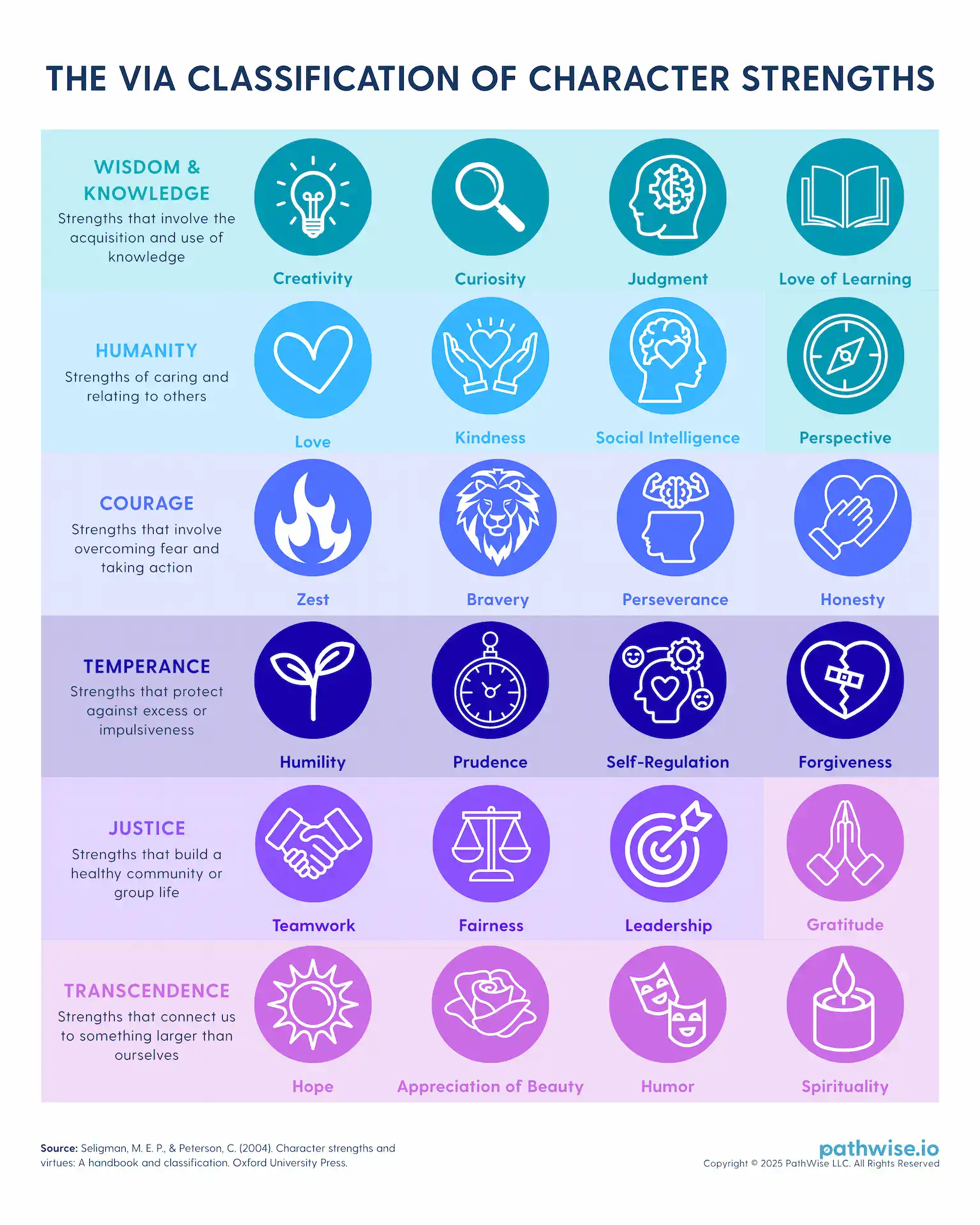
- Values in Action (VIA) Classification of Character Strengths: Developed by Martin Seligman and Christopher Peterson as part of the positive psychology movement, the VIA model identifies 24 character strengths categorized under six core virtues. It provides a framework for understanding how values can be intentionally developed and applied in work and life.
- True North Framework: Created by Bill George, this model encourages leaders to discover and lead from their authentic selves, guided by five areas: self-awareness, values, motivations, support team, and integrated life. Values are central to this model, acting as a moral compass that shapes purpose and consistent leadership.
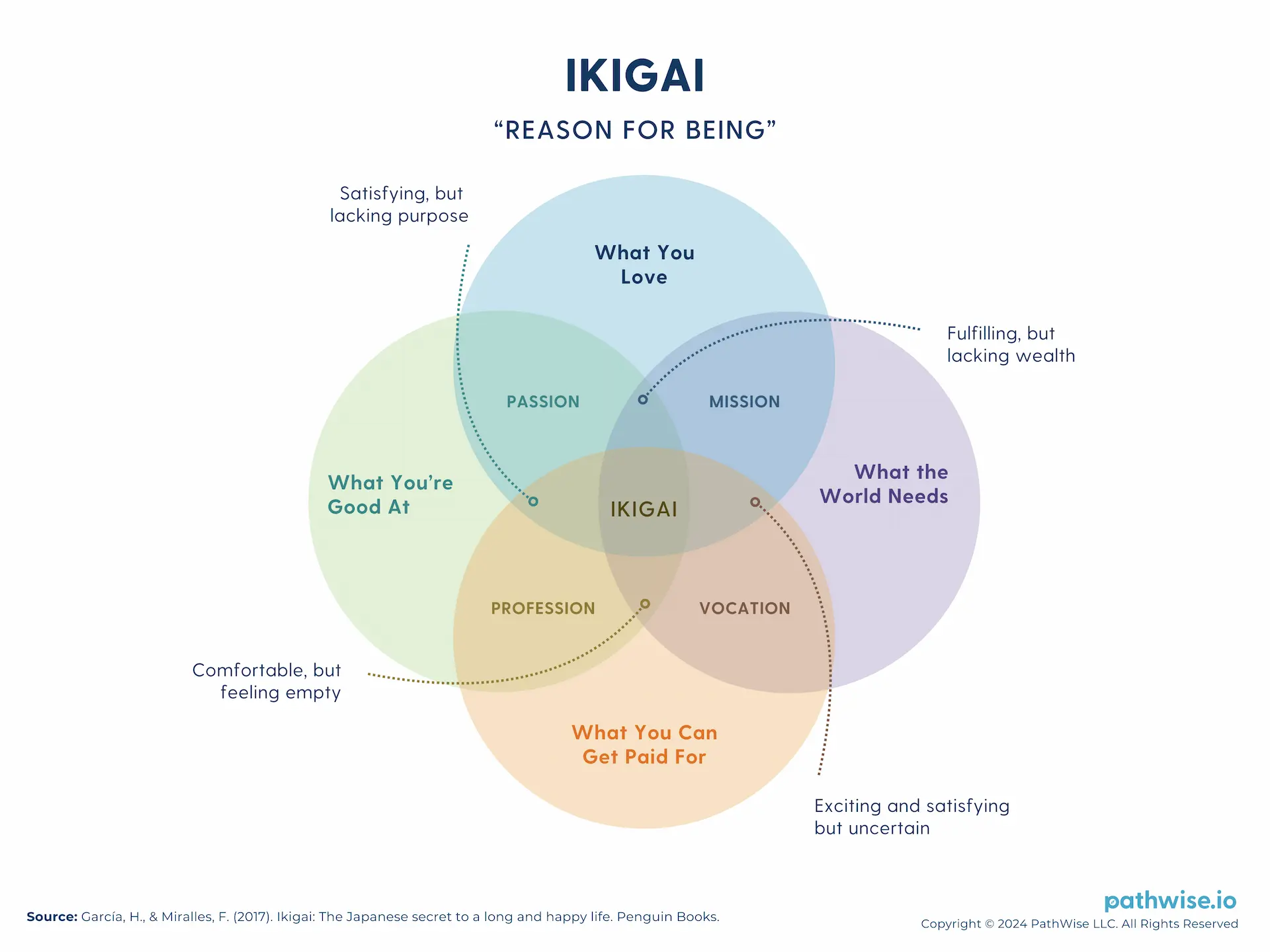
- Ikigai Model: Originating from Japanese philosophy, Ikigai is a Venn diagram-based framework that helps individuals find meaningful work at the intersection of what they love, what they’re good at, what the world needs, and what they can be paid for. Values help guide each of these quadrants and clarify what makes work fulfilling beyond financial success.
- The Leadership Circle Profile: Developed by Bob Anderson and Bill Adams, this 360-degree leadership assessment tool maps leadership effectiveness in terms of both creative competencies and reactive tendencies. It integrates personal values into a broader system of self-awareness, enabling leaders to uncover how values-driven behavior correlates with business outcomes.
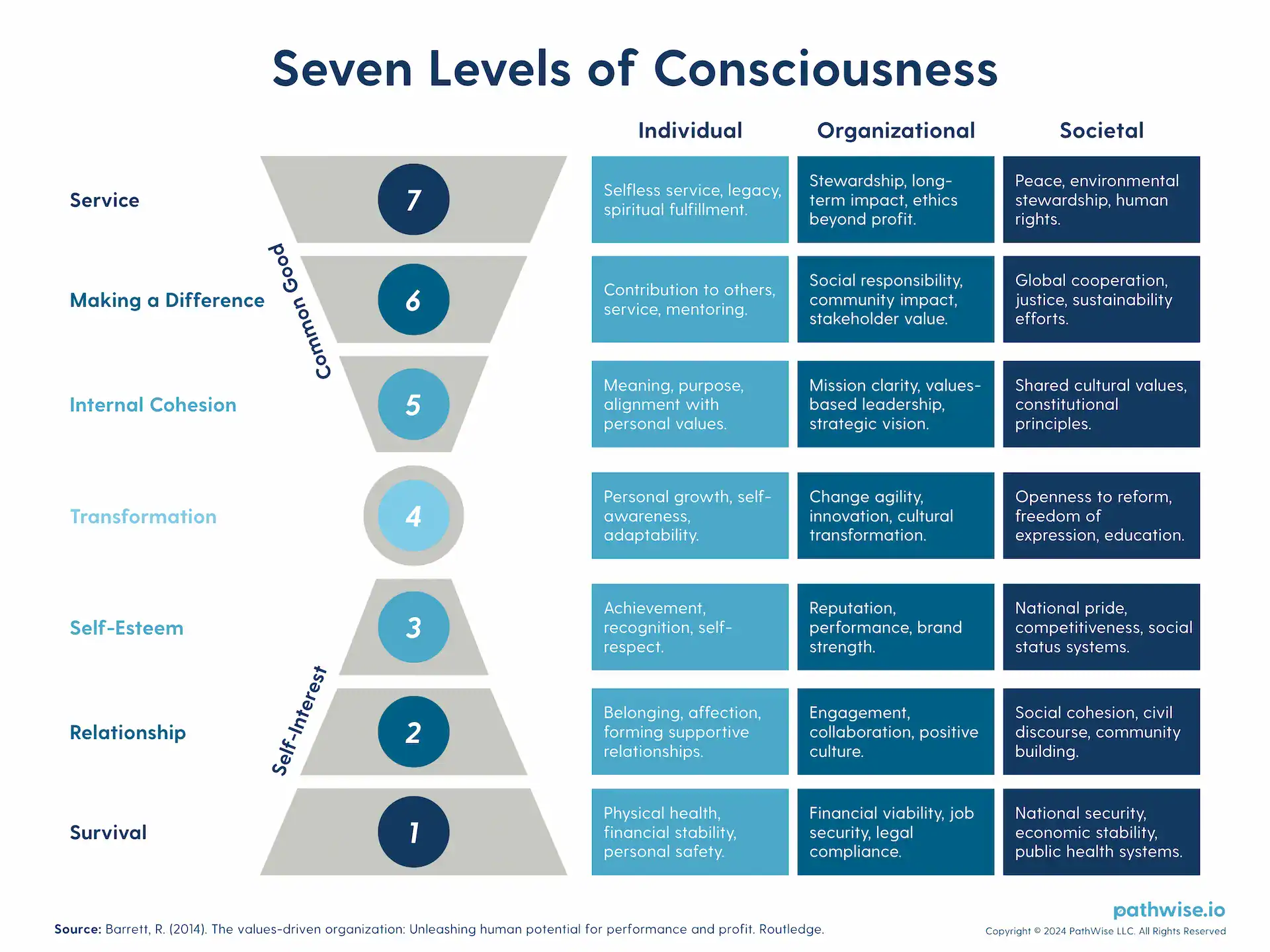
- Barrett Values Model: Created by Richard Barrett, this model measures individual and organizational values across seven levels of consciousness, from basic survival to service and societal contribution. It’s used to align personal, team, and corporate values to improve culture, leadership effectiveness, and employee engagement.
- Schein’s Career Anchors: Developed by organizational psychologist Edgar Schein, this framework identifies eight career anchors: Technical/Functional Competence, General Managerial Competence, Autonomy/Independence, Security/Stability, Entrepreneurial Creativity, Service/Dedication to a Cause, Pure Challenge, and Lifestyle Integration—each representing a core value or motivation that shapes how individuals define career success and make work-related decisions. The model helps individuals make career decisions that align with their internal drivers, rather than just external opportunities.
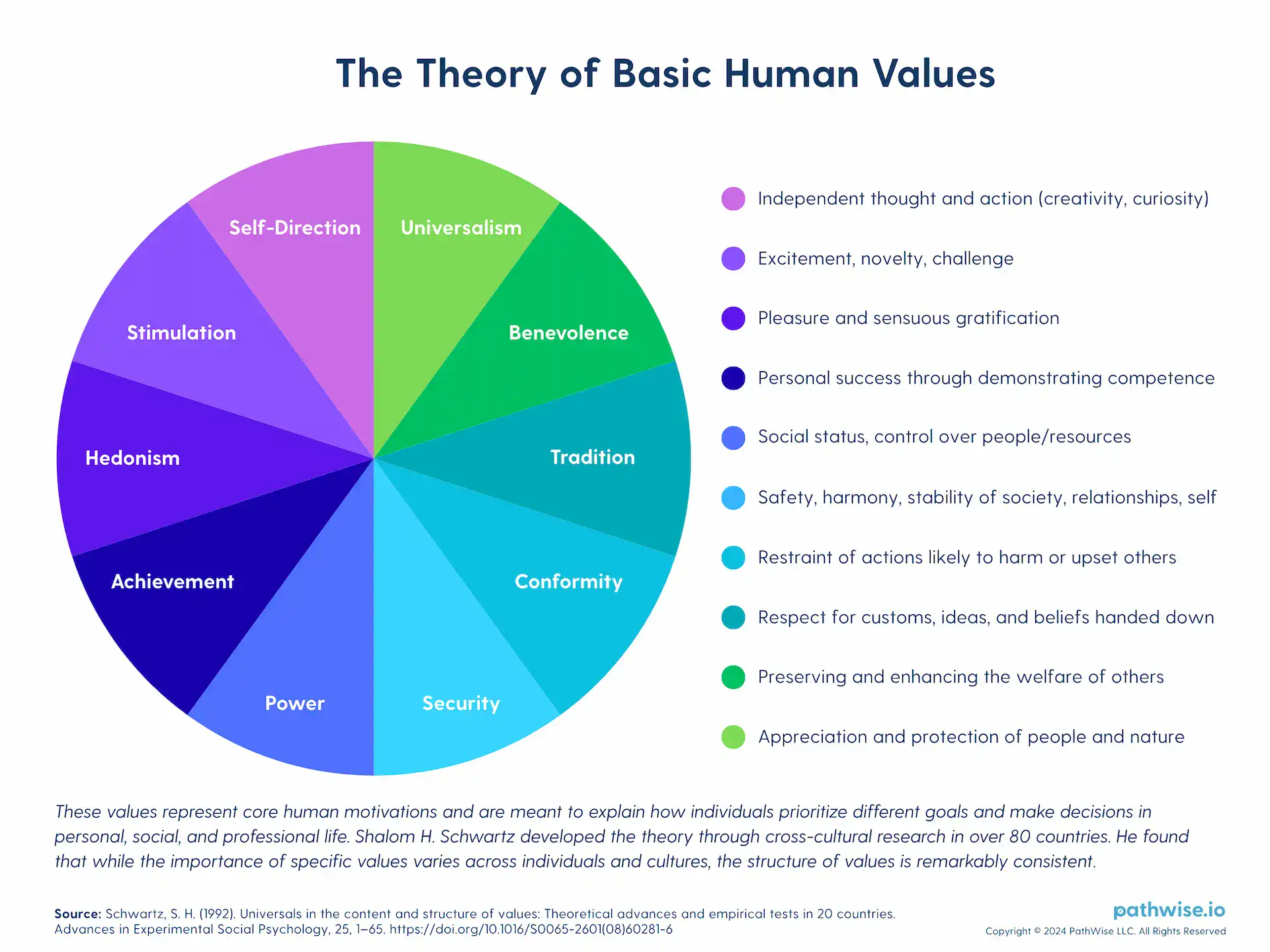
- Theory of Basic Human Values: Psychologist Shalom H. Schwartz proposed a universal model that identifies ten broad personal values organized into motivational continua. It’s widely used in cross-cultural research and in workplace applications to understand how individual values shape behavior and goals.
Values in Leadership
Clarity on values makes managers significantly better leaders because it grounds their actions in purpose, builds trust, and sharpens their ability to guide others with consistency and authenticity. More specifically, values:
- Anchor Decision-Making in Integrity: Leaders constantly face complex, high-stakes decisions, often under pressure. When a manager is clear on their values, they can make decisions that are not only strategic but also principled. This consistency creates a sense of fairness and predictability for their team.
- Build Credibility and Trust: Team members tend to trust leaders who are authentic and consistent in their actions. When managers operate from clearly defined values, their words and actions align. People can rely on them, even if they disagree with some of their decisions.
- Clarify Priorities and Focus: In leadership, distractions are constant—shifting goals, competing demands, and organizational noise, among others. Managers with strong values know what to protect and what to let go of. This helps them avoid reactive leadership and maintain strategic focus.
- Shape Culture Through Behavior: Culture is shaped by what leaders tolerate, reward, and model on a daily basis. When managers lead from their values, they shape a culture that prioritizes what they genuinely value.
- Enhance Resilience in Times of Change: Leadership inevitably involves challenges and ambiguity. Values provide emotional ballast. Managers who are clear on their values are less likely to drift, burn out, or make fear-based decisions under pressure. Additionally, in uncertain times, teams look to those leaders who seem grounded. Values are what make that possible.
- Guide How Leaders Treat Others: Strong leadership fosters healthy relationships. Values help managers treat people with dignity, listen actively, give fair feedback, and navigate conflict ethically. These behaviors build psychological safety and drive performance.
- Create a Legacy: Managers come and go, but the best leaders leave behind stronger people, better systems, and a clearer sense of purpose. Values help managers think beyond short-term wins and ask: What kind of leader do I want to be remembered as? A values-driven leader plays the long game.

Image used under license from Shutterstock.com
Values in Personal Development
Values play a foundational role in development as they influence what we prioritize, how we define success, and where we direct our growth efforts. Being clear on our values helps us choose learning experiences, roles, and goals that feel meaningful and motivating more effectively. This sense of internal alignment fuels commitment and persistence, especially when challenges arise.
Values also act as a filter in evaluating opportunities. In a world full of potential paths, professionals who are values-driven can distinguish between what’s merely impressive and what’s genuinely fulfilling. This clarity helps avoid detours based on external validation or fear of missing out, and instead promotes intentional development grounded in long-term purpose.
Ultimately, values shape how we present ourselves in our development journey. Someone who values curiosity may be more open to feedback and seek out diverse perspectives. Someone who values integrity might focus on leadership training that emphasizes ethics and trust. Over time, aligning professional development with personal values creates better outcomes and cultivates a stronger, more authentic sense of self in the workplace.

Image used under license from Shutterstock.com
Conclusion
Professional success is ultimately about your journey and whether it reflects who you really are. Clarifying your values won’t guarantee smooth sailing, but it will ensure you’re steering with intention to the right destination. They are the steady points on the horizon that facilitate building a life of purpose and meaning.
Other Resources
- PathWise Book Summary: Dare to Lead
- PathWise Book Summary: Atomic Habits
- PathWise Book Summary: Mindset
- HBR: Make Your Values Mean Something
- HBR: How to Create Company Values That Actually Resonate
- Forbes: Why Core Values Matter—And How To Choose Them
- Forbes: How Great Authentic Leaders Bring Core Values To Life
