From Musician To Music Industry Pioneer With Josh Simons
What happens when a touring musician decides to rewrite the music industry from the inside out? Today, we sat down with Josh Simons the force behind Vinyl Group, Australia’s only ASX-listed music company, and the founder of Vampr, the world’s largest social network for creatives. Discover how Josh went from a semi-successful musician touring with the likes of Keith Urban to becoming a CEO, the secrets behind Vampr’s explosive growth, and his strategy for navigating nonstop change in media and music tech.
He shares essential lessons for entrepreneurs, fundraising insights for founders, and a fresh perspective on creativity, leadership, and the future of music in the age of AI. Don’t miss this candid conversation about playing to your strengths, building cohesive teams through acquisitions, and why anyone with the entrepreneurial itch should scratch it.
Check out the full series of “Career Sessions, Career Lessons” podcasts here or visit pathwise.io/podcast/. A full written transcript of this episode is also available at https://pathwise.io/podcasts/josh-simons/.
—
Watch the episode here
Listen to the podcast here
From Musician To Music Industry Pioneer With Josh Simons
We are going to be diving into the music industry. My guest is Josh Simons, the CEO of Vinyl Group, Australia’s only ASX-listed music company. He is also the founder of Vampr, the world’s largest social professional network for musicians and creatives. Josh and his team are bringing a modern approach to the industry. We will be covering that as well as Josh’s own career as a musician, his approach as a CEO and entrepreneur, and how he maintains his productivity and energy, given everything he has on his plate. Let us get going.
—
Josh, welcome. Thanks for doing the show with me.
Thank you, J.R.
Before we dive into Vinyl Group and everything else you have got going on, just give us a quick background on you.
Personal Background In Music & Family History In The Industry
I have been a serial music industry pest for decades. I started in management, but then I had an artist project that did okay in a couple of countries. That evolved into starting a music tech startup, which subsequently led me to run Vinyl. Music is a part of my life is sprinkled in there. It was the same for my father and his father before. It must be in the blood, I guess. As I say, that has taken me on a bit of a wild journey, but it is the music industry for you.
Some people certainly feel like they have it in their soul, and it stays with them for their whole life. That is a great thing. It is a fantastic thing to have something that you are passionate about like that.
I reckon whenever this Vinyl story for me wraps up, which could be a decade from now, but whenever that is, I might finally step away into something because I have been doing the same thing. It was my 35th birthday.
Happy birthday.
Thank you. The point I was making is that I have been doing this since I could talk. I was literally in record executive offices as a baby, I remember. I have just been around this my whole life. It might be nice to try golf or something.
Vinyl Group’s Business Structure & Growth Strategy
Tell us about the Vinyl Group and how it got started in the various businesses within it.
Vinyl is best understood as a company with two divisions. We call them publishing and platforms. There is our media business, which is publishing. We own lots of mastheads predominantly in Australia, of brands that folks might recognize, like the local licenses to things like Rolling Stone, Variety, Refinery29, and more recently.
That is our publishing business. That is our distribution. It is our reach. We have our platforms business, which is the technologies that we have built or acquired over time. That is much more music industry-focused. It is also global. Where the publishing business is more Australian-focused, the platform business is very much a global operation and opportunity. Those two sides really make up Vinyl Group.
Altogether, there are some 9 or 10 subsidiaries, but that is irrelevant to folks just trying to get their head around it, who just want to understand. They do media and they build technologies. It is broadly focused on music industry opportunities, but we have been expanding beyond that more into cultural spheres of influence and how media or tech can do some good there. That is broadly what we do.
I know you guys. You are publicly listed. Your market cap has gone up by something like 10x over the last few years. What has been the biggest driver and the biggest reason for that growth?
Look, companies really only grow in one of a couple of ways. You have got your organic growth. You can grow through acquisition. We have done both. In fact, it is that DNA or structure that I was describing there, which is that you have got the media businesses, which are more mature businesses. That industry has been around for quite some time. It is somewhat predictable.
We grow that side of the business through acquisition, but we are buying companies that are being very broad here, broadly profitable. You buy these companies that might have a bit of profit each, but the sum of the parts is unlocking quite a bit more profit. We then use that profit to fund the technology growth in the technology businesses, which have grown almost entirely organically since the start.
That is the strategy. That is the plan. It is broadly working as far as how we attribute either of those things to the market cap. When you are buying assets, you would hope the market cap grows alongside that. In our case, it certainly has, but we have actually gone through a healthy combination of both organic progress and acquisitive moves.
How do you decide when to buy a company? What type of company to buy, other than looking for companies, as you say, that are broadly profitable? What are your other key criteria?
What you just described, then, is what I would call an attribute. We have a set of attributes that we look for. That evolves over time. When I say we, I am speaking on behalf of a board of directors, but at the start of a calendar year or financial year or both, we will look at the health of the business, look at what it requires. Certainly, in the last run of acquisitions we did, we identified some glaring opportunities in each of the divisions.
Margin improvement was something we wanted to achieve on both sides. The way to do that for the platform side was slightly different than the way to do it on the publishing side, but they had that in common. We wanted businesses that were going to be complementary to the assets that we already held.
A more specific example on the media side, we had a few assets in Variety and another masthead called The Music Network, which were trade publications, which means media outlets that speak to the industry rather than to consumers. They are great brands, but we were not doing a lot with them. Part of that was a personnel problem.
Part of it was that we did not have the infrastructure in place to run a successful trade operation. This company called Media Week comes along. That is all they do. It was sold under somewhat distress that had nothing to do with the business itself. It was to the outgoing owner. We go, it has got the margin. It will contribute to the margin improvement because it was profitable.
It filled a hole in our trade strategy that I just described. It was complementing existing assets. Those are the attributes you are looking for. It ticked enough of them. It was in a price range that we were comfortable with at the time, given our market cap. There are all these different attributes. You find a company that ticks enough of them and a willing seller. That is always a key component. You put all those together. Things can move pretty quickly.
When you guys go to do one of these acquisitions, Josh, how are you funding it? Are you issuing debt? Are you raising more equity? Are you going back to your investor group and pulling in private capital?
All of the above. Historically, we have raised money from existing shareholders. That has provided the means to make acquisitions. Some of our more recent ones, we have issued equity. In fact, in the sale of my own business. I sold to the group before it was called Vinyl Group. It was called Jackster before that.
I sold my startup, Vampr, in exchange for a healthy chunk of the overall business. We have got lots of different levers available. We use them depending on what the deal calls for. Different deal sizes call for different things. It totally depends. A million-dollar small deal, you are going to pay cash, but something a bit more than that, might get creative and use a combination of script and cash.
Founding Vampr & Cracking User Acquisition
Talk a little bit about Vampr. That is more on the platform side. I know it has been called the LinkedIn for creatives. How did you get started in that space? What made you guys successful in terms of creating that social professional network for the music industry?
I was a semi-successful musician in Australia. I was having a really hard time recreating that success in England. I had spent a year just burning through money, hoping things would happen. I am simplifying the story, of course. There was some great frustration. I got back to Australia. I reflected on what the industry was not doing for folks in my position.
For example, someone like me had recorded songs at a studio quality, a professional standard, had fanbases that they had built online through social media, and had some semblance of a team that was capturing royalties on the publishing side, on the master. You have this basic infrastructure, but what technology was not doing at that time was helping me build a team beyond what I would call those core requirements.
Who was going to be my publicist in America? Who was going to be a promoter who could give me shows? Who was going to write my next batch of songs with me? Who was going to play saxophone in the large band and all these? I thought I did not have the tools to build a network. Frankly, LinkedIn s*** when it comes to creativity. That was the opportunity that I saw. That started me on this journey. Obviously, fast forward a few years from brain spark to execution.
Suddenly, there we were in Los Angeles, launching the thing in May of 2016. As to why it succeeded or grew to where it is today. I think being the customer was a very helpful part. That is always in technology. I built that platform for me. I knew all the other platforms online that were trying to solve the problem. They all had scale issues. They all typically hit this ceiling of 50,000 people.
There is a technical answer to why that is, but we smashed past that when we worked out how to get customers, but it took a while. That limit prevented companies from raising money to make their products better. The existing products out there, or startups rather, that made apps to solve this problem, were clunky, they were slow, and they were limited in their UI. A lot of them were list-based or map-based, which meant a lot of pinching and scrolling.
It is not a very efficient way of finding folks. The whole concept is to find people efficiently. The fundamentals, a lot of these businesses, in my humble opinion, were extremely flawed. Hence why we made Vampr in the first place. A decade later, there are other businesses that have just copied the way we do it. Other businesses take a different approach. I would say we are still broadly the leader in the space.
What did you guys do to crack through that barrier? What were the secrets, technical or otherwise?
We got a few things accidentally right. Before we spent any money at all on marketing outside of our time, which obviously has a value, before we spent any cash on marketing, we were onboarding folks one by one. We were obsessing over the feedback. We were incorporating feedback as much as we could into the product. I suppose that is what product-driven growth is, their growth approach. It also helps in achieving that elusive product-market fit, which I still think we are in search of.
We are close on several fronts, but I do not think we are. We are not Facebook. We have a ways to go. When we got that better, when we started seeing people take a lot longer to churn, certain signals of people making it were 7 or 8 friend requests, certain things that were able to not just simply measure things. We would actually be able to go. Why is this a good benchmark, or why is this a good stretch target?
Not just being able, because some people stop at just measuring. You actually have to understand why the measurements are important. All of that stuff took like a year and a half to figure out. Not to solve for good, just to figure out in the first instance. Once you have those baselines, then I am comfortable.
This is why I say we stumbled into some of this. At that point, I was comfortable spending a little bit of money to acquire users through more typical channels like advertising through social networks and things like that. When you are acquiring people and your ship is not leaky, because you know you have got a fundamentally good product. The retention rate is pretty good. It is amazing how fast that can snowball.
Your cost of acquisition drops because it is not just the advertising that is bringing on new people. It is word of mouth. There are certain network effects that start to come into play. We enjoyed a lot of that in the late 2010s. We pressed pause. We took a couple of years off because we ran out of money. We had won all these awards. We just could not keep going because we did not know VCs. There is all this drama, which is quite funny to look back on now, but the fundamentals of the business were discovered early on. We still abide by a lot of them.
Now you have got all these pieces, Frag Media, MediaWeek, Concrete Playground, Bunkafied Serenade, all handling these different pieces of things in the music industry. What is the grand vision? Does the grand vision evolve as you see what is out there in the market that is potentially available to buy?
The Evolving Grand Vision + Flexible Strategy
I am sure some people would be dogmatic on an end goal. They would say this is the final position. I broadly know where things are going in the next 3 to 5 years. You can see some of it already taking shape. We have consolidated all of our media brands under a single umbrella called Vinyl Media. On the technology side, some of that consolidation has happened with Vampr and Jaxsta coming together, and Serenade, hopefully, doing a bit more with Vinyl.com.
Broadly, you can see some of these things converging. I am very conscious of being respectful of brands and delicate when it comes to consolidation. I have seen it go wrong too many times, but with the five-year plan, I broadly know where it is headed, but I am not so stubborn as to be immovable on that. When new things come along and new ideas present, they can happen overnight.
Someone can present something that is just a game-changer that suddenly seems like the right direction. I will pursue it if it feels right. What I am saying is that the target and that plan evolve. As it should be, it is silly to be stubborn on a vision. It is good to be stubborn on a vision when the company needs it to drive momentum, but we have plenty of other things providing momentum. I am able to keep more of an open mind.
Our targets and plans evolve. You should keep an open mind. Share on XBeing flexible, particularly in this day and age, things change. The world is changing more quickly than ever.
That is right. There is so much stuff that comes out every day. You think, “How would that work if I incorporated that into my business?” Quite frequently, things come along. You go, “It is an absolute game changer. Let us try that out. Let us go down that path for a little bit and see where it leads.” I love that. That is my favorite part of the whole job.
That is part of what makes it really interesting to be an entrepreneur is just thinking about the possibilities and the different directions that you can go. It can be a bit daunting, too.
It can. What I am finding is just so cool, as I guess I have been around the industry for some time, is that things come along now that are not necessarily for Vinyl Group, but I will know the right person for it to go to. I am playing this new role in the business a little bit, or in the music ecosystem, where I am a master connector. I can route people in the right directions. I have done that to enough people. I have watched them sell their businesses. I have had life-changing events and things like that. It is awfully rewarding.
It certainly can be. When you hit that point where you feel like I am deeply entrenched in this ecosystem at this point. I understand it about as well as anybody else out there does. It gives you an additional way to add value for yourself. Also, create value for the ecosystem more broadly. That is a fun place to be. You mentioned earlier that you had this in your blood. I did not realize your father and his father were both in the industry. You were a singer in a band for a while.
A band called Buchanan. We made alternative rock pop. In Australia, there is a radio station called Triple J, which can be quite influential in breaking acts. There is this thing where people go, “You were a Triple J artist,” which just means, did you get your early support from that station? They have the same as the BBC in England. We were very much a Triple J act.
We did not really have the Triple J sound, which is probably why we did not get very far, but we got far enough that I played on some pretty big stages. I have done most of the things that anyone who starts in music wants to do. I have played stadiums. I have played with my favorite artists. I have written with my favorite artists. I have been on the radio. I have been on TV. I have had groupies. I have done the whole thing. It is not as glamorous as it all sounds. It is a lot of hard work, but yeah, I would not trade those memories for anything.
My brother-in-law, at one point, ran a production studio. He had some artists that he was representing in the US. One of which was a rock band. It was fascinating to watch him go through that journey. It was a bit horrifying because you realize how hard it is to break out.
It is hard to break out. It is also hard on the body and the mind while you are going through the motions. It is so interesting, man, because people go into art forms because they do not want to be in business, typically. Being an artist is being in a business. Most people only work that out once they have decided that it is a bit too much, but it is an interesting observation. It is all just, you are creating a product for someone else to consume.
It makes it sound very mercenary, but it is not. It is a reality of being a creative person in a capitalist world and needing to survive. Anyway, I do not really know why I went on that tangent, but hearing what you are saying, it is like most people who were in that early stage of trying to work out how to survive in the music industry, they look past that. That is for the best, but the reality always comes home.
In his case, his lead act, the rock band, the lead singer threw in the towel. He just said, “I cannot do this anymore. This is way too hard.” He left my brother-in-law with a bunch of debt that he had to work off because he had thrown a lot of his own savings into helping these guys get going. That is just many stories out there like that.
That is, probably closer to the norm than an exception.
What happened with you guys, with your band?
The Transition From Musician To Entrepreneur
We ended on a high. I went to London. I had some trouble recreating the success there that we had had in Australia. I came back to Australia, licked my wounds, started Vampr, and moved to America. On my first day in America, I got a phone call from Keith Urban asking if I wanted to go back out on the road and tour again, which I thought at that point I thought I was done. I really thought I was done.
That same day, I got a call from one of the I will not say which country but a CEO of a local Universal Music subsidiary asking if I would allow this song that I had written some years ago to be the lead single for the winner of The Voice. That all happened literally on the same day, my first day in America as well. I was like, “This country is amazing.” It had nothing to do with America, but it was pretty amazing that happened on that first day.
That was all very life-changing stuff that allowed me to keep that all going for another year or two. I did this tour. I got to write and work out of Kanye West’s studio for a little bit as well in LA. All this great stuff is happening. Vampr started getting bigger. I had raised some capital at that point. It is still under a million dollars, but it does not matter if it is $500 or $500 million. You are playing with other people’s money.
I just had to choose a certain point. I wrapped up some of those bigger, cooler engagements. I had those experiences. I had a chat with myself about, “Are you an entrepreneur who is trying to get a return on the capital? Are you still chasing the dream?” It was a hard decision. It was an emotional decision, but there was never any doubt which route I was going to honor because, as I said, I was playing with other people’s money. To be honest, I do not have time to do both. I played my first show in eight years last year.
I played guest guitar on this Coldplay tour, which is a hell of a first show back after eight years, I have to say. Even though it was 2 or 3 weeks of touring. I was like, it was the best thing I have ever done. That tour that I played in is the biggest in the history of music. We played to a million people, just under eight nights, but it was so grueling. Running a publicly listed business and trying to be a musician, not that I was doing that. I was playing guest guitar on the shows, but what I am saying is that even that was grueling. There is no way that I could do what I do for Vinyl Group and even think about playing music as a profession.
What did you learn from being a musician that has made you a better CEO?
Problem solving. Being in a band, particularly, and then writing songs as an extension is just a series of solving problems and navigating egos and motivating human beings to do stuff together. That is all running your businesses. If you think about it, it is getting people aligned on the same page, motivated, working together to achieve a common goal. That is writing a song. That is playing on stage. That is getting through a tour. It is these non-sexual marriages of groups of people, non-sexual polyamorous marriages. That is what being in a band is. That is what being in business is.
Human beings working together, that’s what running a business is really about. If you think about it, it’s getting people aligned, motivated, and collaborating to achieve a common goal. Share on XThere is certainly a lot of creativity required in both, whether you are writing music or having to figure out your way through the latest technical challenge, business challenge, or whatever challenge.
Number challenges. How to tell a story through numbers. I find that to be all incredibly creative and flexing that same muscle in the brain that you use for the music side. I have talked about this topic at length, but it is something I find endlessly fascinating.
Let us talk a little bit more about how the music industry itself has changed so much in the past few decades. We have gone from physical CDs to streaming. The economics of streaming are vastly different from they were when artists were selling records to record stores. You used to do tours to sell records. Now you make records to do tours. You know the industry way better than I do, Josh. I am going to stop before I get myself into too much trouble. What is the industry like for artists today? What are some of the key challenges that the rank-and-file musician is facing?
The Impact Of Technology & Change On The Modern Music Industry & Artists
As you probably know, not just the music industry, is one constant is changes. It is synonymous with technology. Technology is always changing and evolving, too. There are challenges with piracy for well documented in the early 2000s. Years before that, there were challenges with bootleg tapes and cassettes. The current one is slightly different because it does not refer to consumption.
It is more about creation, but the challenge with AI is. Musicians would say accustomed to dealing with change and certainly talking about it. Fair enough, because it is a challenging part of the job, but I suppose as a prerequisite for being in the industry, you just get used to it. You roll with it. You only need to have been doing it for 10 or 20 years to have gone through two, possibly three, of those cycles of change.
I do not know really where I am getting at other than to say, I do not think about it that much anymore. I am sure that is easier said than done from my little perch, and I am sure a young artist would not feel quite the same way and might be a little bit more perturbed by it. I do not know. Again, and maybe this is the optimist in me, but anytime I see change happening, I just see the opportunity. That is another quality of the music industry that I just fundamentally love. I get that it is disruptive.
It is not everyone’s cup of tea, but I will give you a really practical example. MySpace came along in I want to say early 2000s or mid-2000s. That, for a moment, was the way that every A&R, which is a person in a record label who is really responsible for signing new artists. It was really the way that they discovered new artists. Artists suddenly had to become experts at like, it was not called SEO, but whatever the SEO equivalent for getting your MySpace page in shape was, they had to really get good at that and work on that.
Almost overnight, that disappeared when Facebook knocked MySpace off. Musicians did not have anywhere to go. They had to find different ways. What that meant was people really flocking to different platforms. They were trying their hand at becoming the master of that platform. That is a great, beautiful example of an opportunity moment.
The music industry has them every 5 to 10 years. It is really cool. It is also really daunting. It is also extraordinarily time-consuming. What we all deep down want is an industry where artists can just focus on refining their crafts, be it writing music, playing live, performing in the studio, or being better musicians. It has not been like that for a long time. Go back to the 1950s. Artists started incorporating dance into their acts.
Music videos shortly thereafter. There has always been this requirement for musicians to be more than just musicians. Again, I am not really commenting on whether that is good or bad. It is probably not great. What I am commenting on is the opportunity that presents. Let us say the next thing comes along, whatever it is. It was TikTok a couple of years ago. This AI will now know there will be artists and people who work out what the opportunity in that moment actually looks like, and define it. They blow up as a result of that. That is really cool in my mind.
Social media, I think it has had this democratization effect. It has made it easier for people to get their music out there and to find fans for their music without having to go through a record label. A lot of other industries were gated by a small number of dominant firms that decided who got published and who did not get published. It changed.
Now, as you said, because anyone can put music out. You can put it out under any name. Now we have the opposite problem, where there is too much noise. People can’t get discovered. This is what I am saying. These cycles happen every 5 to 10 years. Smart cookies work it out every single time.

Music Industry: Today, there’s so much noise that getting discovered has become nearly impossible.
The Rise Of AI-Enabled Music Creation & New Creative Pathways
I am watching my brother go through this right now. He is writing the music and the lyrics for country music, which, by the way, I hate. It is a little hard for me personally to listen to it, but he is into it. He is having a good time with it. He has been doing a mix of using an AI-generated voice and publishing that way. He has been singing a little bit himself. It has been more the former than the latter. He has gotten a decent number of listens on TikTok and has built a decent fan base. He has done that, mostly just through persistence, which he is very good at. It is an interesting example of how the world is changing. You do not necessarily even need to sing to be a musician.
This makes me not popular right now, but in a year, I bet you this will make me probably one of the cool kids, but it just shows you how sickly cool it is. What you just described there is really cool. I am envious because I look at people who are going, “I am embracing this new thing. I am going to do it legally.”
I am going to use the licensed software and not the unlicensed AI stuff. I am going to do it all properly, distribute or build a modest fan base. Start to even make a few dollars. I look at that. I am like, “I wish I had the time to do that. I would be doing it all day long. It is so cool.” That is just because I am an early adopter. I love playing with new toys. Again, I think that is just like puppy dog enthusiasm, but I love it.
I am so happy for people who make it work for them because that is the whole point of this time on this planet is to humans, make things. We share those creations with other people. They make things with those things. Someone has made these AI products. Your brother is taking that. He is making songs with that. That is how it should be. That is the world working in a civilized way. I love it, but that is just my two cents.
AI is a flash point, though. A lot of people refuse to have any association with it because they feel like their rights are being usurped. You see this in Hollywood. You see it in any creative industry where AI is basically ingesting large amounts of things. Probably well beyond what copyright protections would allow.
Those issues will be sorted out. Do not get me wrong. I am not for anyone usurping any of those protections, but smarter, better people will sort that part out. As long as the rest of us are just using the ones that have the tick of approval power to us. I also think what you are saying is true right now, but in two years, if we have this chat again, I do not think you will be right.
You just look at it and say, “It has got to change.” You cannot have an entire part of the economy that is creating all these things and have what I would argue are their legal rights taken away. Copyright protections are there for a reason. Just because it is a machine doing the copyright violation does not make it more acceptable than if it were a person. We’ve got a lot of court cases to see before we get this sorted.
The Future of AI, Copyright, & Industry Guardrails
There is going to be a lot of precedent that has to be sorted out in lots of different jurisdictions. You are going to have international conflicts. You know what, if it is permissible in one country, but not another? Does that mean the film cannot be released? The song cannot be heard. There is going to be all kinds of stuff. This is just the normal journey that any new technology goes through in this world that we live in.
Again, there is so much nuance there. We will not get into it now because we could do a whole podcast on it. I will probably get myself in trouble, but I am confident that not only will it be resolved, but it might take some time, but on the other side of that, AI will not be special in the same way that it is not special. Do you have a website, like a personal website?
I have a business website that is associated with this podcast.
There is nothing remarkable about you having that. It is a requirement of business. How AI is incorporated into all workflows, whether it is sorting out your emails, or how you use the web, how you ask the internet questions, how you create this podcast, or how you polish the sound mix. How I write a presentation, or I get my structure in order, or what have you. I am convinced that when it is all said and done, these are just going to be normal parts of workflows.
You will not in the same way that you do not go, “My name is JR and I have a website,” and pause and hope people will clap. None of us is going to say in a few years, “I am J.R., I am Josh. I used AI in the making of this.” People just go, “Who is not?” It is just going to become a normal part of daily operating in the same way that the World Wide Web, we just think we expect it now. It is like oxygen, almost.
We certainly agree with you on that. The guardrails around what you can and cannot do with AI are still very much being figured out. The pace at which AI technologies are advancing means it has got to be figured out quickly because we are crossing some thresholds where it is hard to get things back. If you dump every bit of music lyrics into pick your favorite AI platform, ChatGPT or otherwise, and ask it to start writing Bruce Springsteen songs. It is going to do a good job of that. Bruce Springsteen may not like that. He may feel like he has a unique voice that is being taken away from him.
What you are talking about is policing the output. I am a fan of that because that is what we would do in the real world before AI. For example, if I go into a recording studio, I am a pretty accomplished songwriter and musician. Someone says, “Can you copy Bruce Springsteen?” I would possibly get sued by him and his people because I have made something that is either a direct copy or so close that they deem it to be a copy.
A more seasoned person would go, “I can make something that has some influence, but I want to make it original. I want to meld it with influences that I have taken from here and there.” At the end of the day, it is going to be a better quality product because it is not going to sound derivative. For humans to do that, we do not pay a royalty for stuff that is inspired by, but we do pay to consume the music in the first place.
There is the nuance. If I can go into a studio and make something that sort of sounds inspired by Springsteen, I do not owe him a royalty, but I did probably pay for his music so that I could be inspired in the first place, whether it was going to one of his shows or streaming his music or downloading files, or buying CDs back in the day. That was how he got compensated for my inspiration.
The machines are inspired by everything. It is interesting. One of our platforms gets paid like royalties get paid based on usage, this thing called Jaxsta. There is a similar challenge that we solve there. It is not AI, but if you are looking at certain things and you are consuming information about certain things, we work out how to pro rata micro cents into smaller micro cents and pay it out. Some systems will have to solve the problem of compensating the original artist if some of their work was used in the inspiration or creation of something else.
Again, I take that as a given. I have said this at a few podcasts and a few conferences later. I will go a step further. I am aware of most of those companies that are working on that. I have met with a lot of them. I have connected the dots between a lot of them cross-country. I am working with some governments on some stuff related to all this, too. I am not playing an active role myself in solving it because it is just a little bit too far outside of the wheelhouse that I am excelling in.
It will be a big rabbit hole, a deep one for anybody who goes down. I think it is going to take a long time. As I said earlier, I do not know that we have a long time to solve this because it will be too late to solve it. It is almost like trying to teach all of these AI systems to unlearn all of the things that they have learned in a way that we later decide might have been illegal or immoral or whatever. We have got to figure that out. The process of figuring it out is going to be a very complicated and time-consuming one. I can completely get why you would not want to throw yourself into the mix there because you have got other things you are doing.
That is right. Looking forward to seeing where it all lands in a few years.
Advice For Founders On Fundraising & Capital Strategy
Come back to the business. You have raised tens of millions of dollars along the way from investors. What advice would you have for founders who are contemplating fundraising or who are going through the fundraising process? What did you learn from that that you would want to pass on to others?
Just to be clear and literal without any hyperbole, if you can avoid it, of how investors can hope to see a return. Also, like without making promises that you cannot keep, but you can, there are plenty of promises you can make that you can keep. I will give you, be specific. You can say, “With your money, we are going to commercialize the product before we go and raise at a 2.5X high evaluation.”
All of that is promises you can keep between taking money and whatever the next round is, whether it is 18 months or 24 months, you can absolutely use that time to find a way to commercialize whatever it is you are building. You can absolutely go to market and say, “This is what I am seeking.” We might not get validation at that price point, but you can do those things. It is still a risk. It is still a bet, but it provides a pathway in the mind of the investor, how they are going to get a return on, not even a return because it is not liquid, but how they can improve, hopefully, the paper value of their investment.
What a lot of founders do wrong is they will say, “With your money, I am going to build feature X. Feature X is going to be the game changer. That game changer will generate enough hype and attention that somehow we will magically just grow.” It is like, it is not very literal. It is aspirational. It is a bit too product-focused, which, when you are talking with investors, is not how you want to gear the conversation in my mind. The investor conversation almost needs to be quite ruthlessly all about your capital strategy.
I do not think that investors, a lot of the time, particularly investors, may be accepted because they are typically investing for passion as much as a return, but outside of that, and angel round and maybe friends and family round, I think you just have a capital strategy. Talk about your timeline and your milestones through the lens of those capital catalysts and events rather than product events. They just do not really mean anything. That is advice.
Those investors are being pitched every day. They are getting way more requests for money than they have time to review, let alone consider actually funding. You have got to break through the noise. You talked about noise earlier in the conversation. You have got to break through the noise there, just like a musician has to break through the noise and try to become discovered.
If you are not speaking their language, which is ultimately about how do I take this amount of money and turn it into this amount of money in a certain period of time, they are just not going to give you the time of day. To your point, once you get past the early rounds with an angel or with friends and family who will care about you and care about the purpose and the passion, everybody else is just in it to make more money. If you do not view it that way, you are missing a key part of the sales proposition.
The other thing that someone once told me, I do not think it is rare advice, it just stuck, but I really believe in it, is that investors look at lines and not dots. That resonated with me, probably the second or third round of money I ever raised, because I stopped telling the story about flash-in-the-pan moments. I started telling stories about, “This is what I said I would do a year ago. This is what I delivered. This is what I said I would do six months ago. This is what I delivered. This is what I am now going to do.”
Investors look at lines, not dots. Share on XI still use that strategy with Vinyl Group. It is interesting now that we are dealing with a very different type of investor. Now we are talking to institutional investors, which are different again from VCs and stuff. The feedback I am getting is that they want a slightly different approach again. I am always learning. Every day is a school day. I am still refining how I raise money and how I speak to those sorts of people. Broadly speaking, that sentiment of showing a track record and then projecting or forecasting it out from there is a fairly reliable strategy.
How do you think about your own team? You have got roughly ten businesses, you said earlier in the conversation, Josh, that make up the different main threads of your business, the publishing and the platform pieces. You have got people, I would assume, across these different bits. You have acquired some, you have built others. How do you create a cohesive sense of team among all of the pieces in its collective set of shared values and purpose?
With a lot of effort and a lot of work, every acquisition that we have done, we have sat down with the current or existing group of key stakeholders or the key managers and the executive and all that, and sat down with the new incoming business and do a bit of a sanity check on where do the values align and where did they differ? Where are there some new complementary ones that we can add into the mix?
We refresh our values. We have refreshed our values. Not on every single acquisition, but certainly on some of the larger ones. It is a process that I think will probably continue. You have got the people part, which comes almost next. You sort of set things up with values. You actually have to sit and watch. Everyone takes this part a little bit differently in terms of how much time, but once you buy a business, do you sit with it and watch it for 3 months, 6 months, 12 months?
That is up for debate, but certainly, some time must pass because you need to observe how these people operate, both just how they operate their own business, but also how they operate inside the broader group. That is different every time. I always learn a lot through that process. I am always surprised by who excels and who struggles a little bit. That is always a big learning experience. You have to make changes after you watch the business.
You observe it for some period of time until you have a good grasp on what you think might need to happen, and then changes need to happen. Sometimes it is people who change. Sometimes it is a process change. Sometimes it is a product change. It is almost always one of those three things. That part can be painful because you are effectively saying some subdivision of your larger company, “We are going to shake some things up.”
No one loves change. It is tricky. It is tricky, but you work hard at it. If you always operate from a place of authenticity and you shoot straight. I was about to say, you cannot go wrong. You get things wrong every day. You reflect. You go, “I could have done that better. I could have been a bit more sensitive with this person. I probably could have given this person a heads up.”
There are lots of things you can do wrong, but you can walk away with your head held high. Go, “I gave that my best.” I had a few things in our story in my way this year online. Folks who think we have not handled some are looking for errors and problems in how we have integrated things. Some of it is a beat-up. Some of it probably has some truth to it. Again, I know we have done everything as authentically as we can.
All these things you have got going on. How do you keep yourself organized?
I got a badass calendar system that I use. I am looking at it right now. I am at one of my monitors. I have got a pretty robust calendar. I have a good team around me that keeps me on track. It works. I do not have a better answer. It is long days, early mornings, late nights. Always taking time to pause throughout the day. The good thing about having those extreme working hours is that you can actually take some time for yourself during the day. I do it every day. It is when I work out. It is when I run errands. You do a lot of your best thinking in those hours.
Any particular daily rituals or habits that you apply, other than making sure you are getting out to work out?
I got my 10,000 steps a day, which I am anal about. I try to, at least on an average basis, always be at 70,000 or more over the course of a week. I try and work out three times, sometimes four a week, definitely three times. Outside of that, not really. I go through weird little phases. I get little obsessions about certain routines. They are never really lasting.
We will put you in the category of those not ruthlessly regimented about your days.
They are consistently full. I will say that.
Fair enough. Any last advice you want to leave our audience with, people thinking about their careers, whether in entrepreneurship or otherwise?
Everyone who has even got the itch of, “I will give it a go. Should I give it a go?” It is certainly not for everyone. Not everyone should be an entrepreneur, but everyone who wants to should try it. There is a distinction there. The great thing about trying something is that if it is not for you, you can stop. I do think anyone who has it should try it out, but also go into it knowing that it might not be for them. That is okay. I am not going to ever be a neurosurgeon or a bartender. The reason for both is the same.

Music Industry: Not everyone should be an entrepreneur, but anyone who wants to should give it a try.
My hands are too shaky. What I am saying is that there are lots of different things that I cannot do. There are probably lots of different things that you cannot do. There are also lots of things that you can do. There are lots of things I can do. Part of this time we spend on Earth is just working out how to play to our strengths, enjoying our strengths, and really working out how to play the best version of ourselves inside of that role.
Sounds rather simple, but it is hard for a lot of people.
I must admit I never struggled with that, as we start to bring this whole conversation full circle. Music was there from day one. I never had trouble going, “I want to probe if this is the thing for me. I found out it was, but maybe I did not want to be a musician. Maybe I wanted to work in the business.” I just kept probing until I found the thing I was best at. Once you find the thing you are best at, typically, life starts to work out around you.
It is a good place to be. Thanks for doing this, Josh. It was really good to get to know you and dive into the music industry, something which is about as far from what I think about day to day as anything. Appreciate the opportunity to live vicariously through you for an hour.
My pleasure. Thanks for having me.
Take care.
—
I want to thank Josh for joining me to discuss Vinyl Group and its impressive rise and trajectory over the past few years, as a reminder that our podcast was brought to you by Pathwise.io. If you are ready to take control of your career, join the Pathwise community. You can also sign up on the website for our newsletter and follow us on LinkedIn, Facebook, YouTube, Instagram, and TikTok. Thanks. Have a great day.
Important Links
- Josh Simons
- Josh Simons on LinkedIn
- Josh Simons on X
- Josh Simons on Instagram
- Vinyl Group
- Vampr
- Vinyl Media
- PathWise on LinkedIn
- PathWise on Facebook
- PathWise on YouTube
- PathWise on Instagram
- PathWise on TikTok
- PathWise on X
About Josh Simons
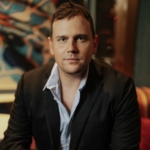
Josh Simons s the CEO of Vinyl Group (ASX:VNL), Australia’s only ASX-listed music company, and Founder of Vampr, the world’s largest social-professional network for musicians and creatives. Described as a visionary entrepreneur, Simons has raised $35M for his technology startups from various sources, including from venture capital, institutional investors, HNW individuals, family offices and angel groups. These ventures have seen him reside in Los Angeles, London, Sydney and Melbourne.
Formerly known as Jaxsta, Vinyl Group launched in 2023 as a parent company encompassing its foundational brands Jaxsta, Vampr, and Vinyl.com and has since expanded aggressively across media, e-commerce and music tech. Since taking the helm, Simons has grown Vinyl Group’s market capitalisation nearly tenfold to over $130M, driven by a clear acquisition strategy and a focus on monetisation. Under his leadership, the company has acquired The Brag Media, publisher of Rolling Stone Australia and Variety Australia, as well as Mediaweek and Concrete Playground, combining them to form Vinyl Media, now one of the most influential youth publishing and cultural networks in the southern hemisphere. He has also led the acquisitions of Funkified Entertainment, a premium live events and talent booking agency, and Serenade, a Web3-native platform for digital and physical collectibles, strengthening Vinyl Group’s fan engagement and technology offerings.
Jaxsta remains the industry’s single source of truth for official music credits, winning Billboard’s Master of Metadata Award in 2023 and playing a critical role in solving the global metadata problem. Meanwhile, Vinyl.com has emerged as a top-tier music e-commerce destination, offering over 50,000 vinyl and CD titles, with fast global shipping and exclusive releases and merchandise that support artists directly.
Simons is also the co-founder of Vampr, the world’s largest social-professional network for musicians and creatives, often dubbed the “LinkedIn for creatives.” Vampr connects a global community of 1.4 million users across 180 countries and has been recognised by Fast Company as one of the World’s Most Innovative Companies. Most recently, Vampr partnered with Songtradr to launch the Vampr Ad Network, giving artists new tools to monetise their reach.
Before transitioning to tech, Simons ran a record label, publishing arm, and film production company, and was the lead singer of indie rock band Buchanan. As a songwriter and producer, he has shared credits with Travis Scott, Troye Sivan, and Kanye West, and as a performer, has toured with Coldplay, Keith Urban, and Carrie Underwood.
In recognition of his contributions to music and innovation, Simons was named to The Music Network’s 30 Under 30 in 2020, winning Reader’s Choice, and in 2024, received Young Entrepreneur of the Year honours from Business News Australia. He holds a Bachelor of Business from Swinburne University.
