How Courage And Purpose Can Help You Find Your True Path, With Christopher Williams
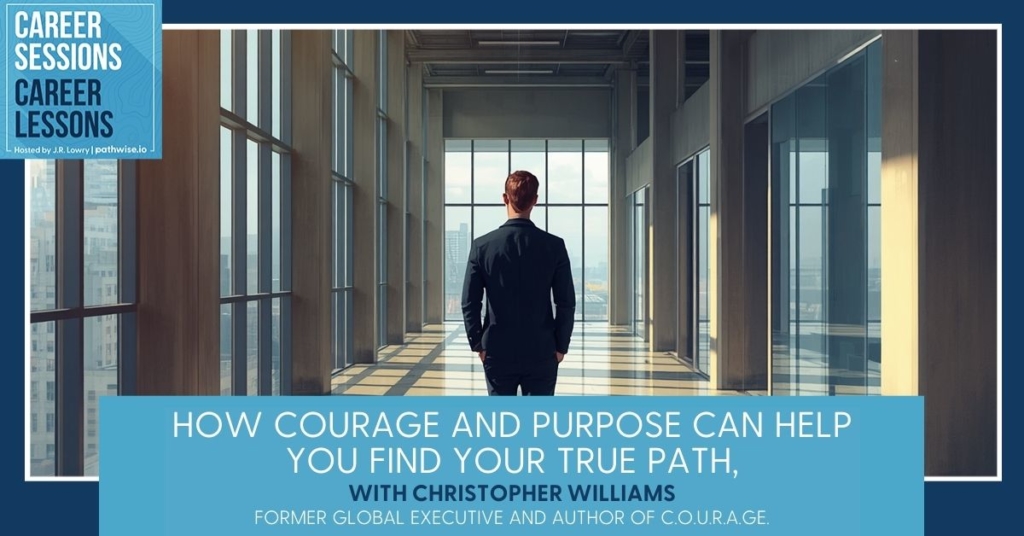
What does it take to walk away from a successful global executive career to pursue a deeper purpose?
In this episode of Career Sessions, Career Lessons, JR Lowry sits down with Christopher Williams, former global executive and author of the new book C.O.U.R.A.GE., to explore how courage shapes our careers, leadership decisions, and personal growth.
Born in Sierra Leone and educated at Morehouse College, Christopher built an international career spanning four continents, multiple industries, and senior leadership roles. Yet despite professional success, he reached a turning point that forced him to ask a difficult question: What is the real purpose of my work?
That reflection led Christopher to rethink his career, step away from the corporate track, and dedicate his work to leadership, governance, and helping organizations balance business success with societal impact.
In this conversation, JR and Christopher discuss:
- Christopher’s journey from Sierra Leone to Morehouse College and a global executive career
- The moment he felt successful but unfulfilled—and what he did about it
- Why courage is essential for meaningful leadership and career growth
- The seven-part COURAGE framework for making bold decisions
- Why rejecting distracting voices is often the hardest part of change
- What living and leading across multiple cultures and continents taught him about people
- The courageous decision to leave the corporate ladder and redefine success
- How corporate boards and leaders can create greater societal impact
- Why individuals must reclaim their personal agency in a rapidly changing world
If you’re questioning your career path, navigating a leadership transition, or seeking a clearer sense of purpose in your work, this episode offers powerful insights on how courage can reshape both your career and your life.
Follow Career Sessions, Career Lessons for weekly conversations with leaders, authors, and innovators sharing the lessons that shape meaningful careers.
Check out the full series of “Career Sessions, Career Lessons” podcasts here or visit pathwise.io/podcast/. A full written transcript of this episode is also available at https://pathwise.io/podcasts/christopher-williams/
—
Watch the episode here
Listen to the podcast here
How Courage And Purpose Can Help You Find Your True Path, With Christopher Williams
We are going to be talking about courage. Oftentimes, we look at the leaders of our organizations, and we criticize their lack of courage. However, when we apply a lens of courage to ourselves, we let ourselves off the hook, blaming our circumstances for an unwillingness to be bold. With me to talk about courage is Christopher Williams, who has a new book out called C.O.U.R.A.G.E: 7 Choices for Living a Life Without Regret. We will be covering the book, its applications in leadership and in broader human psychology, and Christopher’s own journey from his early years in Sierra Leone to a multinational career spent on four continents. Let us get going.
—
Christopher, welcome, and thanks so much for doing the show with me.
Thanks, J.R. I am excited to be home.
How Christopher Experienced An Epiphany In Life
I’m glad that we are getting a chance to do this. We are going to talk mostly about your new book, C.O.U.R.A.G.E: 7 Choices for Living a Life Without Regret. Before we get into that, why don’t we talk a little bit about you? Give us your brief background.
I was born in Sierra Leone and moved to the US when I was about 18 or 19 to attend Morehouse College in Atlanta, Georgia. After that, most young students who moved abroad into the workforce, I spent much of my career in sports, lifestyle, fashion, and retail. Before that, a short stint in investment banking. That work took me to a number of places around the world as an expat, and I ended up living and working in Asia and Europe. In my last role, which was when I was out in Europe, I went through this, you might call it an epiphany of what I was doing with my life. My personal notes ultimately became fodder for what became the book.
Talk a little bit more about this epiphany that you mentioned a minute ago.
It happened in a very short period of time, but we had been in the making for many decades. Let me explain what I mean by that. As I said, I grew up in Sierra Leone, and I moved to the US. I moved from a country that, post-independence, had had a lot of aspirations about what it was going to be as a new republic. Immediately after that started a spiral that led to economic decline. That is the context in which I spent much of my young life. I grew up wanting to be the best that I could be.
My parents were educated people who had moved us and pushed us towards being very curious about the world. When I ended up coming to the US and started to succeed in the corporate world and ascend, it was part of this dream, this aspiration I had for quite a while. Fast forward to 2017, I was working for a major multinational. I had a really good year and had been newly promoted to a new role. I was looking forward to obviously doing more work with them.
I started to be more reflective because I got to this point where I felt, “You are doing great, Christopher, but what about all the people and the places and the things that you saw along the way which cheered you on and in many cases invested in you, either emotionally or in some cases with money and with support? Still, it is my Vanguard of support. What about them?” I mean, what is going on with them?
It was then that I started to begin to really think about how I would apply my talents and my key strengths going forward. I wanted it to be in service of something that was big and broader. In many cases, I wanted to begin to look back and be more engaged with a lot of amazing people along the way. Many of them had not had the opportunities that I had had. It also happened at the same time when I transitioned into a new initiative at my company.
That was quite difficult, not because the work was difficult, but I was working with a team that was not very functional. I started to juxtapose that team with all of these other people. For me, the challenge was that these are the people you want to work with when there are those other people you can help. That juxtaposition was so jarring. I had to respond to it. That was the starting point of this epiphany in many ways that led me to courage. I can talk a little bit more about how that happened.
You walked the Camino de Santiago at some point in this time period, right?
I did.
How did that deepen your understanding of courage and influence this book?
It is an interesting thing. One of the things I have come to appreciate lately in life, and definitely as I was writing the book and as I have been more reflective, is the value of serendipity and the value of being in the moment, always having a sense of self-awareness, and being comfortable connecting dots and acting on those things.
Because I write, I have always written. I have never written a book, but I write articles from time to time. Even as I think, I always think through this notion of the journey metaphor. It is just part of how I think, the journey, the trials, the tribulations, the ups and downs, the decisions, the forks in the road, the preparation, the tiredness, the pain, all of that stuff. Writing the book had not put the book in the context of a big journey.
It ended up being a really interesting experience, even more than I had expected, because it helped so many elements of the courage journey come to life and reinforced within me that this was indeed a great framework with which to think about how we move, how we transcend, how we become from one point to another. If you notice this pilgrimage language in the book, it came very late.
Breaking Down The Seven-Step C.O.U.R.A.G.E. Framework
Walk us through the framework that makes up the acronym that you use for C.O.U.R.A.G.E.
The first one is to commit to a purpose. I needed to frame that up upfront because what I discovered is this idea that courage, first and foremost, is the ability to act in pursuit of an ideal, of a vision, of a mission, a sense of purpose, despite the risks we face or despite the fears that we feel. This idea of the purpose is really central to it, because without the purpose, there is nothing to be courageous about. The purpose is what gives you the need to even ask yourself, what is the job to be done?
Without purpose, there is nothing to be courageous about. Share on XThe purpose is what ultimately frames the intensity with which and the comfort with which you can make the courageous choice. I start off with C talking about committing to a purpose. O, it is not just enough to have a purpose. You have to own it. A lot of people I found have aspirations, they have goals, they have dreams, but they have never really put themselves as a central actor, a central figure in the achievement of those goals.
It is almost like sometimes we assume that they are just going to fall in place because we are people. Sometimes that does happen. What I found and what I wanted to communicate was that you have to own it. The second is O, own your potential. Potential is speaking to just the possibilities that ultimately move you towards something bigger. U is unmask fear.
As soon as you start to take on notions of newness or aspiration, you are going to begin to deal with the voice in your head that begins to second-guess and question whether you are ready, or whether you are the right person, or whether it is the right time. That is the voice of fear. Fear could come from within you or outside of you as well. I spend a lot of time talking about how you unmask fear. The idea there is not to see fear as a stop sign, but to see it as a signal.
The signal does not stop you from moving forward. It just cautions you and makes you more thoughtful. R is to reject distracting voices. I want to spend more time here because we live in a society that has its own rules and norms and mores and standards. We have programmed people, many of us, from a very young age to conform. That is okay, it serves its purpose. Sometimes we do it so well, we lose ourselves in the process. I speak about that as well. How do you filter?
Know which voices you let in and which you reject. The idea I use a lot is to try not to empower others to disempower you by giving them too much of a platform in your thought process or putting them in the driver’s seat in your car. All that said and done, you have to act. There is no courage without action. You cannot be courageous just in your head. You have to show it. You have to be brave enough to put it out there, and acting is the best way to do so.
When you actually expose yourself to risk, and maybe you make a mistake, and you might fail, and you might stumble, but that is not the end of the story. Stumbling does not negate everything else that has come before that action. It just tells you, “That move was not the right one,” or “That move could have been done differently.” You have to be able to grow from that failure, grow from that mistake. That is G, grow from failure.
At the end of the day, all of these will be part of a mix of dynamics that will go on for a while. Are you resilient? Are you able to hang in there? Are you going to give up, give out, or give in? Are you going to capitulate? Are you going to trade away all the strengths you are developing? There is this element of resilience. That is the last one, E, which embodies resilience.
In the process, embrace all of this with joy and optimism. This process of being courageous and going through these dynamics and experiences is not homework. It is not a bad thing. It really is in service of us, of finding our own authentic role in the world, which hopefully is the place where we feel most fulfilled and can make decisions we will not regret. That is a joyful process, a joyful experience.
I use that framework to explain my seven choices, but I do not want it to feel laborious. I wanted people to feel no stress, no worksheets, do not worry about timelines, just ease your way into the self-discovery. You might be good at some of these elements, less so at others, and that is okay. Just ease your way into them. The goal is to keep pushing yourself to try to grow in the process.
Of the seven choices you just walked us through, which do you think people struggle with the most? Is it rejecting distracting voices? You zeroed in on that a minute ago.
It is, because so much of the risk, if we calibrate what risk is or the fears that we feel, so much of it, whether it comes internal or external, it is in response to how we see our social status. It is in response to or in protection of our ego, and to a degree, we want to make it vulnerable or put it in play for others to see it in less than perfect terms.

Purpose: If we calibrate what risk is or the fears that we feel, it is in response to how we see our social status.
That is about our social upbringing, our social nurturing. That struggle is one that we all go through. I am sure you know people, and I have experienced it myself. You know what to do, you know how to do it, or you just do not do it. When it comes to not doing it, it is less about you not knowing what to do and how to do it. It is more about you overthinking the timing, and oftentimes it is about society. It is about others.
When you start making some of these moves and doing things differently from what you did in the past, people notice, and you get feedback. “You do not hang out with us anymore. You think you are better than us.” There are different ways society tells you that you are veering away from the tribe. You are not doing the things that we all used to enjoy. Yes, the hardest one is this notion of rejecting the distracting voices.
Discovering The True Purpose Of Your Life
You put a big focus on purpose and doing something that feels authentic. Do you feel like how you have shifted your life is what your purpose is meant to be at this point?
My purpose has evolved, and it was not always called purpose. As a young boy, you have aspirations, you have goals, and then you have personal life and professional life, and they all intermingle, and you are still just trying to be the best person that you can be, but you do not have a name for everything that you are doing. I remember being very young and becoming quite aware of the difference between a good leader and a not-so-good leader.
That awareness came through the lens of my Sierra Leone experience. I could see the impact it was having not just on the community, but on our family, when things we used to afford were no longer affordable. You can see your quality of life declining. I was very aware that I was connected to the country’s leadership. As a young kid, I could not understand why a leader would not lead. I remember feeling, when I got older, that I never wanted to be like that. Over time, it evolved to what it actually is and then ultimately became, “I want to help fix that.”
At least where I am, I do not feel like it is a dramatically different place than when I was seven. The challenge was that as I went through working life, I was not always listening for those opportunities. I went back and forth, suspending that awareness from time to time to be more focused on my career. I got to the point where as I saw my career and my growth as an executive connected to this bigger conversation about leadership and impact, when I got to the point where I could not separate the two as an executive, then I needed to really own that fully. That is where I was three years ago.
How did you end up at Morehouse?
I was aspiring to go to school in the US because our local university was slowly eroding in its quality. I also knew that my parents could never afford to succeed in paying my way through university. Going back to awareness, while there were first-class avenues to be educated around the world, we could never access them because we could not pay for them.
If we apply ourselves to academic excellence, we could win scholarships. It happened to me when I was ten that I was going to need a scholarship to get the education that I needed. That goal fueled a lot of my high school years. When I finished high school, I started to apply for access to US schools and went through two years of applying, trying to win a scholarship, getting accepted, but not getting aid money. Eventually, in the second year, well, actually in both years, I was accepted by Morehouse.
The first year, I could not figure out how my parents would pay for what was, at the time, partial aid. I could not figure out how they could pay for the rest of it. I just laid it away. The second year, the exact same letter came with the exact same amount of money. My mom stepped in and said, “We can figure this out.” I came to Morehouse on partial financial aid, not knowing if I was going to be able to finish my time at Morehouse, and miraculously, after we committed to come in the first year, I was awarded additional aid for the remaining three years at the school that made it possible for me to do so.
How did you find the move to the US?
It was big because it was the first time I had left Sierra Leone. It was the first time I had been on a plane, andI had left home. I was nineteen and had this suitcase in hand, and I was landing in Atlanta. I am going to Morehouse. It was jarring. It was exciting. It was heavy. I was quite aware of the magnitude of the step that it was.
I remember coming to the dorm on the very first day of school in August of 1991, and I found my room, and my new roommate was there already, and his mom and his dad and his sister were helping him unpack, and they had all the stuff, and I am thinking to myself, “Is this what is supposed to happen? I do not have all the stuff.” I had essentially just one bag, and it was not even that large a bag, maybe about 2 or 3 changes of clothes, and he had a TV, and he had all the stuff.
I remember his mom. She was quite nice. She walked to me, she hugged me, and she said, “We are going to finish here with his stuff, and then we are going to come downstairs and help you bring your stuff upstairs.” I said, “What are you talking about? My stuff is here.” She said, “Where is your stuff?” I said, “It is here.” She told that story for years, how surprised she was. That was just day one. Again, at the end of the day, we were all students at school.
We had a common interest in why we were there. I learned a lot about the world, obviously. Morehouse, being what it is and the role that it played in the US civil rights movement, brought a lot of global understanding of a lot of topics. It ended up being, in retrospect, the best thing that could have happened to me at the time. Still, when I look back at just my sense of conscience about lots of things, I think Morehouse has so much in perspective that it is impossible now to think of myself without thinking about the impact at the same time.
Morehouse made that quite intrinsic to my identity. For someone coming from Sierra Leone, I could not have landed in a better place that cared about me as a person, educated me in economics, and got me ready to go to investment banking, which is what I did. At the same time, it helped address so much of the person and the growth that I needed in the context of my own role in the world and society. Incredibly grateful for that experience.
Connecting With People From Different Cultures
In a way, I would imagine it started this journey for you in being a citizen of the world. How did that rise up the corporate ladder and all of the expat experiences that you mentioned at the beginning of our conversation further shape who you are?
It’s very instrumental because I think what I realized more than anything else was how different and how similar different parts of the world are. Here we talk about language and culture and practices, and those exciting ways to explore and understand other people and how they view the world. As an executive, and now I travel by choice more than anything else, I find families and husbands, wives, and kids trying to get educated, and everyone is on the journey of becoming.
At a human level, everyone is trying to grow into their own and trying to first discover what that is and then try to achieve it. As an executive leading across cultures, I was challenged with my own perspectives, Sierra Leone-born, US naturalized, US trained, living in another part of the world, how do I bring the work of the business, the brand, the company, and achieve success, but in their own unique cultural context?
At a human level, everyone is trying to grow into their own and trying to discover their purpose in life. Share on XNot only their own unique cultural context, but also the interesting ways that their own history has shaped them, and what that means for their own approach to leadership, and what is the right way to speak and engage so that we can all get to the same place, and we can all grow together. What I found more than anything else, and that worked for me, was distilling it all down to the individual and really understanding and valuing individuals for who they are, understanding what their aspirations are, understanding what their fears are, and understanding what opportunities they have to grow.
If you help them address those things, you build trust, you build camaraderie, and ultimately, you build collaborators with whom you can do amazing things. That was my secret to working internationally is really forget about the brand. If I came in with a heavy-handed, top-down perspective of the brand and the business, or “I come from corporate,” nothing ever happened. It was resentment. You are really leaning and feeding into stereotypes.
When I got into conversations with people, in small conversations, one-on-one, looking at people in the eyes and understanding who they were, I began to understand that they have all the same fears and aspirations that we have. One thing I found out in the content of this book is that the idea of courage resonates everywhere.
I saw in all of those people, all the experiences, elements that all support and validate the themes that I was discovering as I was writing the book, which is why I have tried to make the book very universal. The examples I used in the book come from every continent. I will continue to talk about this book as I travel because I see it as a truly universal and foundational concept that works in both personal and professional lives and works across the world.

It is interesting. I never really thought about it, Christopher, in exactly this context, but just listening to what you were just saying and thinking about my own experience, when you get down to the individuals, there is a lot more similarity, I think, than there is in cultures. In some ways, when you are working in a different country, you have to navigate the culture of that country and the lenses through which it ends up meaning that people see themselves.
When you crack down to the individual, there is a lot more similarity in what everybody wants out of life. You have just got to be able to create that connection in the context of whatever the culture may be. Obviously, with your travels over the years, you have certainly learned how to do that.
You need courage to do that because you have to suspend your own judgments and preconceptions and not let those be the only lens through which you engage people. It is one perspective you have. It is not about right or wrong, but it is just your perspective. You have to somehow shift and empathize with where they are coming from. It takes courage to do so because you are now stepping into the unknown. You are exposing yourself to some degree, and you are creating vulnerability for yourself.
As you make that step, that is understood. That is valued. In my experience, that helped build community, relationship, and trust, which made it easier for me to transition into the business conversation. I remember when I first moved to Malaysia, I sat down with my team and went to a restaurant, and there were all these things on the menu, and I could have said, “I just want some chicken fried rice and all the things that look familiar.” I remember looking at this thing I read, I am like, “What is this thing?” and I am like, “That is what I am going to have.”
The local team looked at me and said, “Are you sure? That is really local. That is what we eat. In fact, some of us do not even eat that, it is that homey.” I said, “Bring it on.” I ended up loving it, but the effort of just stepping out of what I would have considered safe, and they would have thought was safe, made it so much. It was almost at the end of that lunch meeting, and I was many steps ahead in just the way the relationship had evolved. Just by that small decision, because I ate what they considered their local country food. It was not something that had been westernized for expats. You have got to step out. Those are the choices that you make in small ways.
Moving Away From The Corporate World
Transplanting yourself into another country and getting your family settled and figuring out how to navigate the day-to-day and deal with the setbacks that come, and the embarrassing experiences when you do something that is a faux pas in a particular country, and somebody has to pull you aside and say, “Do not do that anymore.” You ultimately decided, and I think this was a bit of a courageous move to move away from the corporate world. Talk a little bit about what that thought process was like for you and how it has felt so far.
It is an interesting one. To pick up where I left off before, all things being equal, the goal was to stay on the path of just growing in the corporate world. I have been lucky to have had many good experiences and many successful outcomes with many amazing companies. I get called about different roles quite a bit. Most of the time, I turn them down, but you get a general sense of how you are regarded by the market.
I was at the point where I was getting a lot of calls and was ostensibly thinking, “This is where I make another big move, and it is likely joining an executive team.” You can see on that path. Just as I am ready to tap into what this next transition looks like, I go through this epiphany, as we talked about. The trade-off is, “What happens now?” This is the runway, and it is there, and I can see it. This is the emerging choice, which is to take a step back and rethink everything, and which one is it going to be?
That is where all of the elements that I talked about came to be here. Number one was this overarching sense of purpose and this crystal clear sense in my mind that I wanted to have more impact in all this. It framed up two things. Number one is I was only going to work with an organization that had a very strong social conscience that lived it day in, day out and had that impact. I took it seriously. I also realized that it is hard to find.
I was going to need to take some time off to discover what that looked like. I was not going to rush into it. The choice at the time was to stop working. That is when I ended up moving to the island of Mauritius to work for a bit as an executive in residence at a university there, which ultimately led to more interesting developments, including becoming president of that university, the African Leadership University, and leading it through COVID. That is a fork in the road.
Once I started that path, I realized another thing. That experience was so fulfilling. The conversations were so meaningful, and the impact that I was having and what I was learning and growing from was so visceral that I realized that I could not go back into a more traditional corporate role. This is organic discoveries, but with that North Star in mind.
What I still have working with brands, I still have working with companies, I still like growing and scaling, but I am also very clear in my mind that you can do well as a company and do well as a civic citizen as well in terms of your societal impact. Where that has come full circle is that I advise companies that understand and are committed to that balance. I want to have the most impact that I can have.
I think that we have to create a new definition of success that strikes that balance. A lot of my work now is focused on public governance and really trying to influence just how companies think and what they aspire to. Even before it becomes the work that the CEO and his team need to do, it is really going to the conversation, taking the conversation to shareholders in the boardroom, and really understanding that as an imperative.
That is where I see I can impact and have the skill. The value that I want to have in the world while still enjoying the work that I do with brands and companies, while still feeling like I am touching and impacting people who I may not be seeing, but I know are employees and stakeholders of these corporations who are looking up to these companies to help impact their lives, but these companies need guidance and direction. The governance role or the governance seat is one of the best ways to help create security.
Back to my business school training decades ago, and I took a class on corporate boards. The professor was one of these guys who had been around forever and seen it all done it all. He managed to get people in to talk about a topic that maybe, for a 25-year-old, could feel a little bit dry. We had a lot of interesting conversations about how boards can either function in a really helpful way, or they can prop up bad management, or just lack courage and not do the right thing for the shareholders and the employees. Unfortunately, still even decades later, corporate governance has improved over the past few decades, but it is still not where it needs to be.
It goes back to a little bit of the conversation we had about rejecting distracting voices. There are a lot of elements in that chapter of the book. One of them is how we define our tribes and who our friends are, and who we get cues from, and the role of groupthink. Corporate boards have had to come to terms with the fact that there is a lot of groupthink.
There is a lot of cheering on your friends versus really holding them to higher standards, bigger expectations, and to some degree, it is by definition how we have built corporate boards in the past. The opportunity now is to really lean into the idea of different perspectives, intergenerational, cross-generational, international, interdisciplinary, multiracial, and multinational. All of those elements, I think, will help the decisions that boards make. It is time to reason out.

Purpose: Corporate boards must lean into the idea of different perspectives: intergenerational, cross-generational, international, interdisciplinary, multiracial, and multinational. It is time to reason out.
If all my childhood friends and I got together and looked at one question, because we all have enjoyed the same life experience or similar life experiences, we would all align very quickly on what we think the right thing to do is. That does not really mean that it is the best solution. We will come up with an answer, but it is not necessarily a good solution. If we had other people with different perspectives be part of that conversation, we might be challenged to think things differently and hopefully maybe get to a better solution.
That is just a simple arithmetic, really, of how boards can get better. It is to continue broadening beyond just a CEO, a former CEO, or a former CFO, and really understanding that companies are multidisciplinary, companies are increasingly global, companies are subject to analog and digital technologies, and how we understand all of them and their impact. There is just so much that you can do. That is a journey that we have made a lot of progress in, and hopefully, we will continue to make progress in going forward.
Harnessing Your Own Power Of Agency
Going back to the book, what is the one thing you really want your readers to take away from C.O.U.R.A.G.E?
The one thing I want readers to take away is their own power of agency. One thing I kept in the back of my mind in light of a lot of change and in light of a lot of what I have seen evolve in the world in terms of technology, terms of polarization of wealth and equity and power in the haves and the have-nots, and more importantly, the decline of institutions that we believed in, that we respected, that we could trust to help grow us and do the right thing on behalf of all of us.
It is not to say all of those things are bad, but to really understand your own role in your own life and to find agency and to understand that there is a lot that we can control. There is a lot that is externally impacted, but that really does not mean much if we have not really exercised our own agency in our own lives. What do we believe? What are we aspiring to? What are the building blocks?
How much are we standing in our own way? How do we take the steps that we need to take to optimize what we can control? Only when we have made progress in that journey can we really begin and be ready to understand how the external world can help us. There is work that we can do for ourselves. The book is really directed at us, at the individual, on starting that journey, on really harnessing these free abilities, these traits that we have that can have so much impact, not just on our lives, but on the lives of people around us.
In many ways, be transformative, which is why I talk about it as a superpower, because it is a skill, it is a trait. When we exercise it, it can change outcomes for the better and in exponential ways. That is what I want you to take away is that we have that power, we have that control, we have that agency, and we should take advantage of it.
Agency is a skill and a trait. When we exercise it, we can change outcomes for the better and in exponential ways. Share on XIt was fabulous getting to know you, Christopher, and I wish you the best. I continued publicizing the book and all the work you are doing, and be well.
Thank you. Take care.
—
Thanks so much to Christopher for joining me to discuss his book, C.O.U.R.A.G.E: 7 Choices for Living a Life Without Regret, its relevance to leaders and boards, and a bit about his own very unique career journey. As a reminder, our show was brought to you by PathWise.io. If you are ready to take control of your career, join the PathWise community by visiting Community.PathWise.io. You can also sign up for our newsletter and follow us on LinkedIn, Facebook, YouTube, Instagram, and TikTok. Thanks. Have a great day.
Important Links
- Christopher Williams
- Christopher Williams on LinkedIn
- C.O.U.R.A.G.E: 7 Choices for Living a Life Without Regret
- PathWise on LinkedIn
- PathWise on Facebook
- PathWise on YouTube
- PathWise on Instagram
- PathWise on TikTok
- PathWise on Twitter
About Christopher Williams
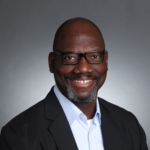 A former Fortune 500 executive, Christopher Williams now serves as a business consultant, executive mentor, board director, and public speaker on strategy and transformation. With thirty years of experience, his career has spanned four continents, with senior corporate and management roles at Nike, Adidas, Goldman Sachs, Gap, VF Corporation, and Lehman Brothers. His mission? To contribute to positive change in the world by developing and enabling those who seek to unlock their true potential and create consequential change through the practice of COURAGE.
Christopher is also the author of the forthcoming book, C.O.U.R.A.G.E. (publishing 18th November), an empowering guide that combines real-life stories, personal experiences, important concepts, and practical steps and tools to take action, reach potential, and lead an authentic life free from regret.
