



What if I fail?
This question has stopped dreams, kept innovative ideas locked away, and left potential untapped. Yet, every breakthrough, every career-defining moment, begins with a single leap into the unknown. For you, this could be leaving a stable job to pursue a passion, pitching a bold idea that challenges the status quo, or stepping into a leadership role without guarantees. Whatever your situation, risk-taking is behind every success story, as taking risks can open doors to new opportunities, foster growth, and ultimately create a more fulfilling career journey.
What is Risk-Taking?
Risk-taking refers to making decisions or pursuing actions that have uncertain outcomes, where the possibility of failure balances the potential for success. In career management and development, risk-taking often involves stepping out of our comfort zones to explore new opportunities, learn new skills, or pursue unconventional paths that could lead to significant personal and professional growth.
Why Risk-Taking is Important in Career Management and Development:
While risk-taking requires us to be bold and courageous, it also demands a certain degree of strategic thinking. Learning to take calculated risks will improve your career development by:
- Fostering Innovation and Creativity: Taking risks encourages innovation and creativity, as trying new approaches leads to discovering more efficient ways to solve problems, to developing unique solutions, and to creating new products or services that can set us apart.
- Promoting Learning and Growth: Risk-taking often involves tackling challenges that push our limits. This leads to personal and professional growth as we learn from both our successes and failures. Over time, this process builds resilience and adaptability, which are both crucial for long-term career success.
- Seizing Opportunities: Many career advancement prospects come from recognizing and acting on opportunities involving some degree of risk. For instance, accepting a new job in a different industry, leading a high-stakes project, or starting a business all require taking calculated risks, but they can also open doors to new possibilities that were not otherwise available.
- Building Confidence: Successfully navigating risks boosts confidence. If we start taking risks and failing intelligently (as discussed in Amy Edmondson’s Right Kind of Wrong), we’ll learn and grow. And as we grow, we’ll succeed. The growth itself and our success record build the self-assurance that we can handle uncertainty and overcome challenges, leading to more proactive and bold decision-making in the future.
- Encouraging Differentiation: In a competitive job market, those willing to take risks can differentiate themselves from others. Employers and colleagues often notice and appreciate colleagues who take the initiative and demonstrate the courage to pursue ambitious goals.
- Stimulating Adaptability: As change becomes more rapid and constant, adaptability is becoming a necessity. Risk-taking fosters the flexibility and openness necessary to deal with change, as it helps us to become accustomed to dealing with uncertainty. This adaptability can make us more effective in navigating career transitions and shifts in the industry.

Image used under license from Shutterstock.com
Developing Risk-Taking Skills
To effectively incorporate risk-taking into career management, learn to navigate uncertainties more effectively, and position ourselves for long-term success, it’s important to develop the following skills:
- Decision-Making: Learn to evaluate potential risks and rewards to make informed decisions.
- Resilience: Cultivate the ability to recover from setbacks and view failures as learning opportunities.
- Confidence: Build self-confidence by setting and achieving small, manageable goals.
- Strategic Thinking: Understand when and how to take risks in alignment with long-term career goals.
- Networking: Leverage relationships and mentorship to gain insights and support when taking risks.
Stanford Engineering School professor Tina Seelig argues that risk-taking is key to increasing our luck and ability to see and seize opportunities. In her TED Talk, The Little Risks You Can Take To Increase Your Luck, she describes three main ways to control our fortune. To learn what these are, access the video here.
Thought Leaders
The following are some thought leaders whose work has provided new perspectives on leveraging risk-taking for career management and development. They offer theoretical frameworks and practical advice on navigating the uncertainties often accompanying significant career decisions.
- Adam Grant: An organizational psychology, risk-taking, and innovation scholar, Grant’s work explores how people can embrace risk-taking in their careers to drive creativity and innovation. His book Originals: How Non-Conformists Move the World examines how individuals who take risks and challenge the status quo can achieve remarkable success.
- Daniel Kahneman and Amos Tversky: Kahneman was a Nobel Prize-winning psychologist and author of Thinking, Fast and Slow. He was regarded as one of the most influential figures in decision-making research, as his work on cognitive biases, prospect theory, and behavioral economics profoundly impacted the understanding of human decision-making processes. Tversky’s collaboration with Kahneman produced groundbreaking research on cognitive biases, heuristics, and decision-making under uncertainty. Their work laid the foundation for the field of behavioral economics.
- John S. Hammond, Ralph L. Keeney, and Howard Raiffa: Hammond is a co-author of Smart Choices and an expert in decision analysis who has contributed significantly to understanding decision-making by providing strategies for systematically making good choices. Keeney is also a co-author of Smart Choices and is known for his work in decision analysis, risk management, and value-focused thinking. Finally, Raiffa is the third co-author of Smart Choicesand a pioneer in decision analysis. His work has influenced the fields of negotiation, game theory, and decision science.
- Nassim Nicholas Taleb: An expert on risk, uncertainty, and decision-making, Taleb published The Black Swan: The Impact of the Highly Improbable, where he explains the importance of understanding and embracing uncertainty in decision-making, particularly in career and investment decisions. His concept of “antifragility” also explores how some individuals and systems thrive in the face of risk.
- Seth Godin: A marketing, entrepreneurship, and career management expert, Godin discusses the importance of taking risks in career management, particularly in the context of entrepreneurship and personal branding. His book, The Icarus Deception, challenges the notion of playing it safe and encourages taking risks to stand out in a crowded marketplace.
- Brené Brown: A vulnerability, courage, and leadership scholar, Brown’s research shows how embracing vulnerability—taking emotional risks—can lead to greater personal and professional fulfillment. Her book Dare to Lead is particularly influential in this area.
- Hermann Simon: Creator of the hidden champions concept, Simon argues that small and medium-sized enterprises should engage in calculated risk-taking within niche markets to be successful. His work provides insights into how these companies navigate risks to achieve global success.
Key Frameworks
The following are some risk-taking theories, models, and frameworks that can help us manage our careers more effectively, as they provide structured approaches to evaluating and managing career uncertainties, helping us make informed decisions that align with our long-term goals.
- Prospect Theory: Developed by Daniel Kahneman and Amos Tversky, Prospect Theory explores how people decide between probabilistic alternatives involving risk. The theory rests on our natural biases toward avoiding risks and weighing options, and argues that human beings are not inherently good decision-makers.
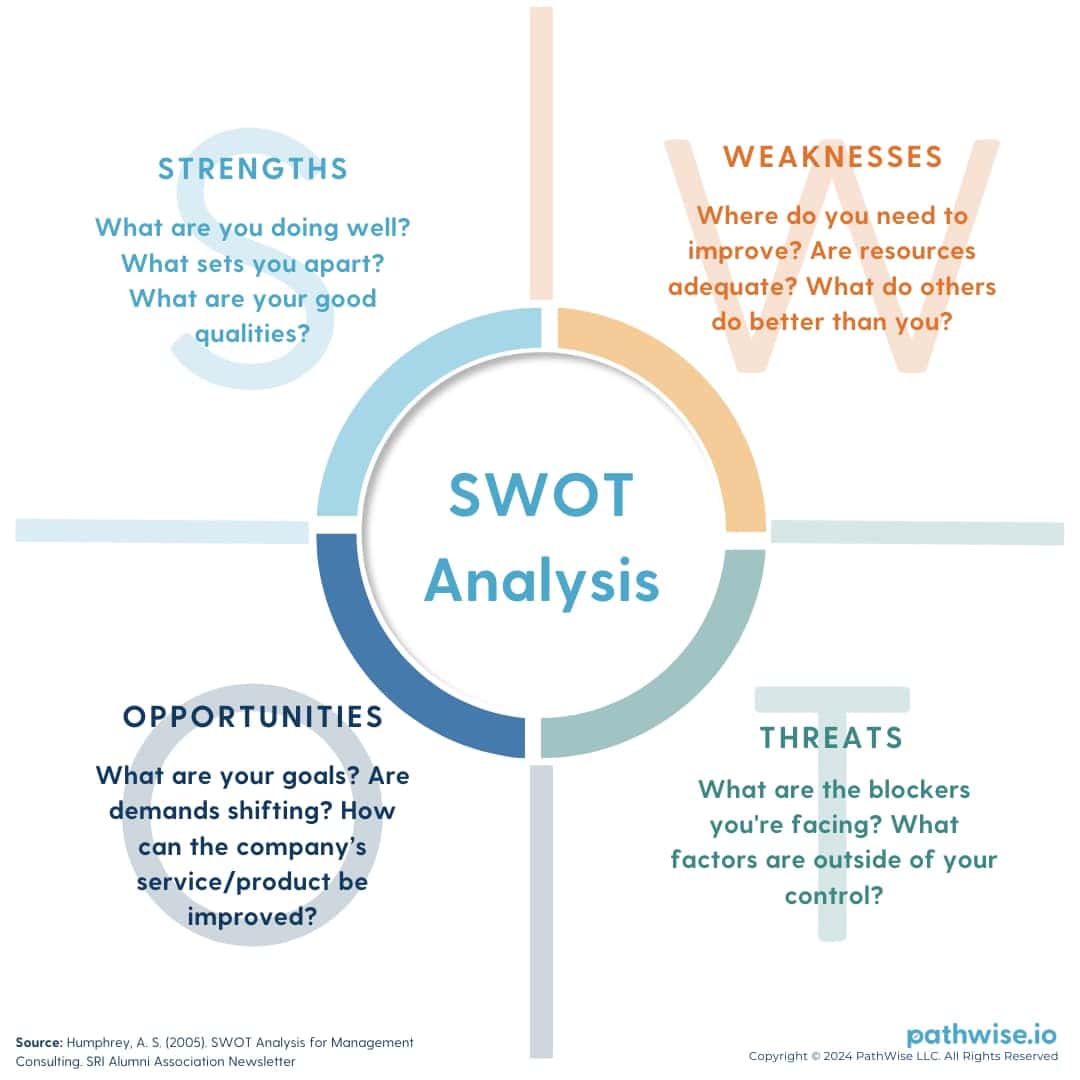
- SWOT Analysis: The SWOT (Strengths, Weaknesses, Opportunities, and Threats) analysis is a strategic planning tool often used in business. Yet, it can applied to personal career management to assess our current career situation and external opportunities and threats. It can help determine which risks are worth taking and which ones might require further development or mitigation.
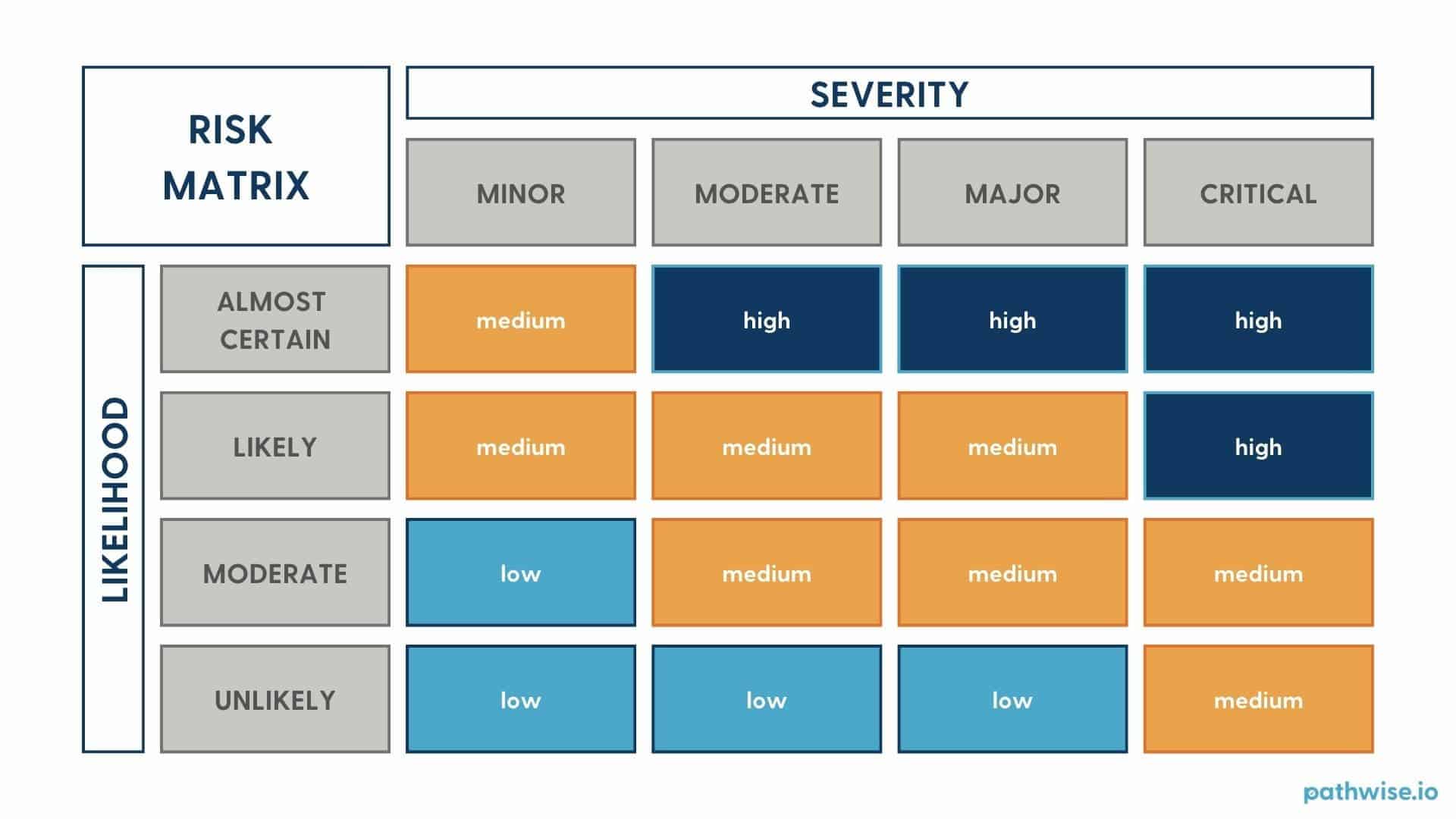
- Risk Matrix: The Risk Matrix is a tool for assessing and prioritizing risks based on their likelihood and impact. It involves categorizing risks as low, medium, or high, helping us focus on managing the most significant ones. This framework can guide us in taking calculated risks and preparing contingency plans. You can supplement this analysis with options or actions to mitigate each risk, giving you a separate view of inherent risk (the risk before you’ve taken any mitigating actions) and residual risk (what remains after you’ve taken the mitigating actions).
- Fail-Fast, Fail-Forward: This framework encourages taking risks by quickly experimenting with new ideas or strategies, learning from failures, and iterating toward success.
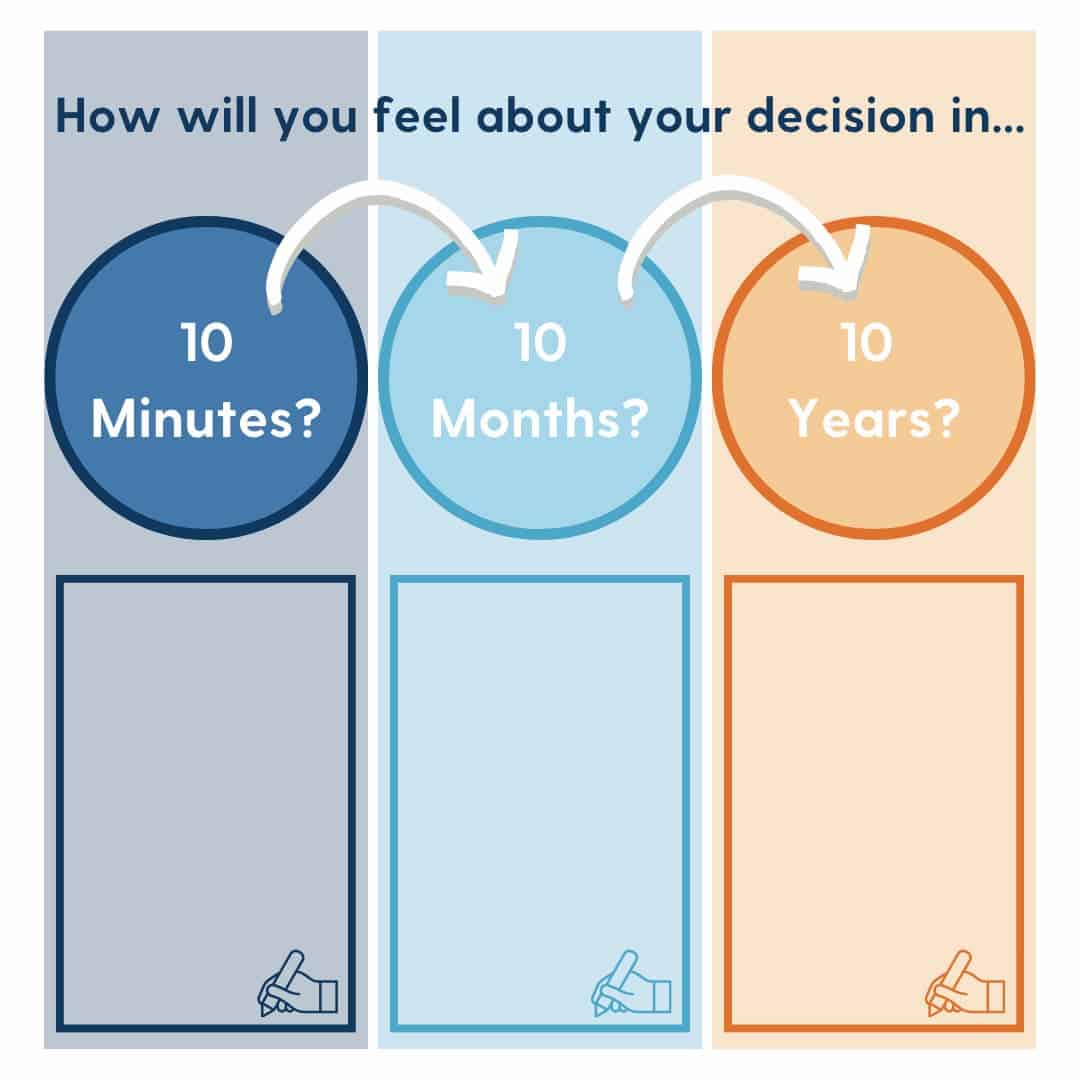
- The 10/10/10 Rule: Developed by Suzy Welch, the 10/10/10 Rule is a decision-making framework that asks us to consider how we’ll feel about a decision ten minutes, ten months, and ten years from now. When faced with a risky career decision, using this framework to assess the long-term impact of our choice can help balance short-term fears with long-term benefits, making it easier to take calculated risks.
- Pre-Mortem Analysis: A Pre-Mortem analysis involves imagining that a project or decision has failed and then working backward to determine what could have gone wrong. Before making a risky career move, conducting a Pre-Mortem to identify potential obstacles allows us to prepare strategies to address them, increasing our chances of success.
- Risk Tolerance Assessment: Risk tolerance assessments or statements help us understand our personal comfort levels with risk and uncertainty. This allows us to align our career choices with our willingness to take risks, leading to more satisfying and less stressful career decisions.


Risk-Taking in Leadership
Risk-taking is a crucial component of effective leadership and management, as those who are willing to take calculated risks are more likely to drive innovation, foster a dynamic work environment, and inspire their teams to achieve more. Here’s how:
- Encouraging Creativity: Risk-taking leaders are likelier to encourage creative thinking and experimentation within their teams. They promote a culture where taking risks is valued and enable their teams to explore new ideas and solutions, leading to innovative outcomes. They also embrace failure as a learning opportunity.
- Leading by Example: When leaders take risks, they set a precedent for their team. This creates an environment where employees feel empowered to propose bold ideas without fear of failure.
- Navigating Uncertainty: Risk-taking leaders are often better equipped to decide in ambiguous situations. Their willingness to embrace uncertainty allows them to make bold decisions that propel their organizations forward, even in challenging environments.
- Balancing Risks and Rewards: Good managers understand the importance of assessing both the potential risks and the rewards of their decisions. This balance allows them to take strategic risks, leading to significant organizational gains.
- Encouraging Professional Development: Risk-taking leaders often promote a culture of continuous learning. By encouraging employees to take on challenging projects or roles, they help their team members grow and develop new skills, which can lead to increased job satisfaction and retention.
- Creating a Vision for the Future: Risk-taking leaders are often visionaries who see opportunities where others see challenges. By articulating a clear vision and taking the necessary risks to achieve it, they can inspire their teams to work towards a common goal with passion and dedication.
- Sustaining Competitive Advantage: Leaders who take strategic risks are likelier to achieve and maintain a competitive advantage for their organizations. By being proactive and seizing opportunities, they can position their companies as industry leaders.

Image used under license from Shutterstock.com
Risk-Taking in Personal Development
Embracing risk-taking is essential for career development because it opens doors to opportunities that might otherwise remain out of reach. Playing it safe can lead to stagnation, while taking calculated risks can propel our careers forward. Stepping out of our comfort zones exposes us to new experiences, challenges, and learning opportunities that can significantly accelerate our personal and professional growth. Embracing risk can also lead to greater job satisfaction and fulfillment. By taking risks, we pursue opportunities that align with our passions and goals rather than settling for what feels comfortable or secure. This results in a more meaningful and rewarding career and a more fulfilling professional life.
Other Resources
- PathWise Book Summary: Dare to Lead
- PathWise Book Summary: Thinking, Fast and Slow
- PathWise Book Summary: Smart Choices
- PathWise Book Summary: Right Kind of Wrong
- HBR: Not Taking Risks Is the Riskiest Move of All
- HBR: How to Push Your Team to Take Risks and Experiment
- TED Talk: The Little Risks You Can Take To Increase Your Luck by Tina Seeling
- Forbes: How to Get Comfortable Taking Risks
