



Humility
Many of us see world champion-level assertiveness and confidence as the keys to success in the workplace. We’re skeptical about embracing humility for career growth. Yet a number of experts and historical figures would argue that humility is the foundation of collaboration, growth, and success. As Sir Isaac Newton famously said, “If I have seen further, it is by standing on the shoulders of giants.” The quote doesn’t undermine Newton’s abilities, findings, or accomplishments. It does, however, acknowledge that he couldn’t have done it alone. And that’s the essence of true humility.
What is humility?
Humility is a quality or virtue characterized by a modest opinion of our own importance, abilities, or achievements. It’s a sense of perspective about ourselves, acknowledging our limitations and weaknesses, accepting that there are many other talented people in the world, and being open to learning from others. Humility involves a lack of arrogance or pride and, therefore, a willingness to admit mistakes or uncertainties. It’s about understanding that no one of us is perfect and that there’s always room for growth and improvement, including and especially within ourselves.

Fostering Humility
Fostering humility entails cultivating a mindset and behaviors that promote openness, growth, and collaboration. Here are some ways to do so:
- Acknowledge Your Limitations: Recognize and accept your personal strengths and weaknesses. Being aware of what you don’t know allows for continuous learning and improvement.
- Seek Feedback: Actively seek constructive feedback from colleagues, supervisors, and clients. This demonstrates a willingness to learn and grow from others’ perspectives.
- Admit Your Mistakes: Take responsibility for errors or shortcomings without deflecting blame. Admitting mistakes shows honesty and a commitment to personal and professional integrity. It’s about being accountable.
- Value Others’ Contributions: Recognize and appreciate the expertise and contributions of others. Encourage a collaborative environment where everyone’s input is valued.
- Practice Active Listening: Listen attentively to others’ ideas and opinions before expressing your own. This shows respect for others’ viewpoints and encourages a more inclusive dialogue.
- Show Gratitude: Acknowledge and thank those who have helped or supported you along the way. Gratitude fosters humility in that you’re recognizing the contributions of others to your success.
- Stay Teachable: Maintain a mindset of continuous learning and growth. Be open to new ideas, perspectives, and opportunities for development.
- Let Go of Hubris: Let go of the tendency to pride yourself on achievements or status. Embrace a more balanced perspective that values humility over self-importance.
- Embrace Vulnerability: Allow yourself to be vulnerable by sharing uncertainties, asking for help when needed, and admitting when you don’t have all the answers.
Thought Leaders
Several thought leaders, such as C.S. Lewis and Mahatma Gandhi, have promoted the concept of humility, arguing it is key for personal growth. When it comes to humility in the workplace specifically, other experts have explored its significance and application in organizational settings, focusing on how humility can drive effective leadership, build strong teams, and create positive workplace cultures conducive to innovation and growth.
- C.S. Lewis: Known for his philosophical and theological writings, in addition to his fictional works, Lewis often discussed humility as a virtue essential for personal and spiritual growth.
- Mahatma Gandhi: Leader of the Indian independence movement, Gandhi advocated for humility as a cornerstone of his nonviolent resistance and social change philosophy.
- Brené Brown: A research professor and author specializing in vulnerability, courage, and empathy, Brown often explores how embracing vulnerability and humility can lead to more meaningful connections and personal growth.
- Jim Collins: Author of books like Good to Great and Built to Last, Collins highlights humility as a key characteristic of Level 5 leaders who achieve sustained greatness in their organizations.
- Edgar Schein: An organizational psychologist, Schein has written extensively about organizational culture and leadership, highlighting the importance of humble leadership in fostering trust and collaboration.
- Patrick Lencioni: The author of The Five Dysfunctions of a Team and other leadership books, Lencioni discusses humility as a critical attribute for building cohesive teams and an influential organizational culture.
- Kim Scott: Author of Radical Candor, Scott advocates for a leadership style that combines caring personally with challenging directly, which requires the humility to listen, learn, and grow from feedback.
- Adam Grant: An organizational psychologist and author, Grant explores humility in successful leadership and teamwork in his research and writings on organizational behavior.
- Simon Sinek: Author of Start with Why and advocate of inspirational leadership, Sinek discusses the importance of humility in leadership that prioritizes the well-being and development of employees.

Key Frameworks
While there might not be a framework about humility per se, there are several models that can help organizations and individuals thrive by embracing humility as a virtue. These frameworks provide structured approaches to integrating humility into leadership practices, team dynamics, and organizational culture, fostering environments where individuals can thrive and collaborate effectively.
For example,
- Servant Leadership: Developed by Robert K. Greenleaf, servant leadership emphasizes leaders serving their teams rather than being served. Humility is a core principle of this framework, which focuses on prioritizing others’ needs and development. See Dr. Hayley Lewis’s SketchNote below to learn more.
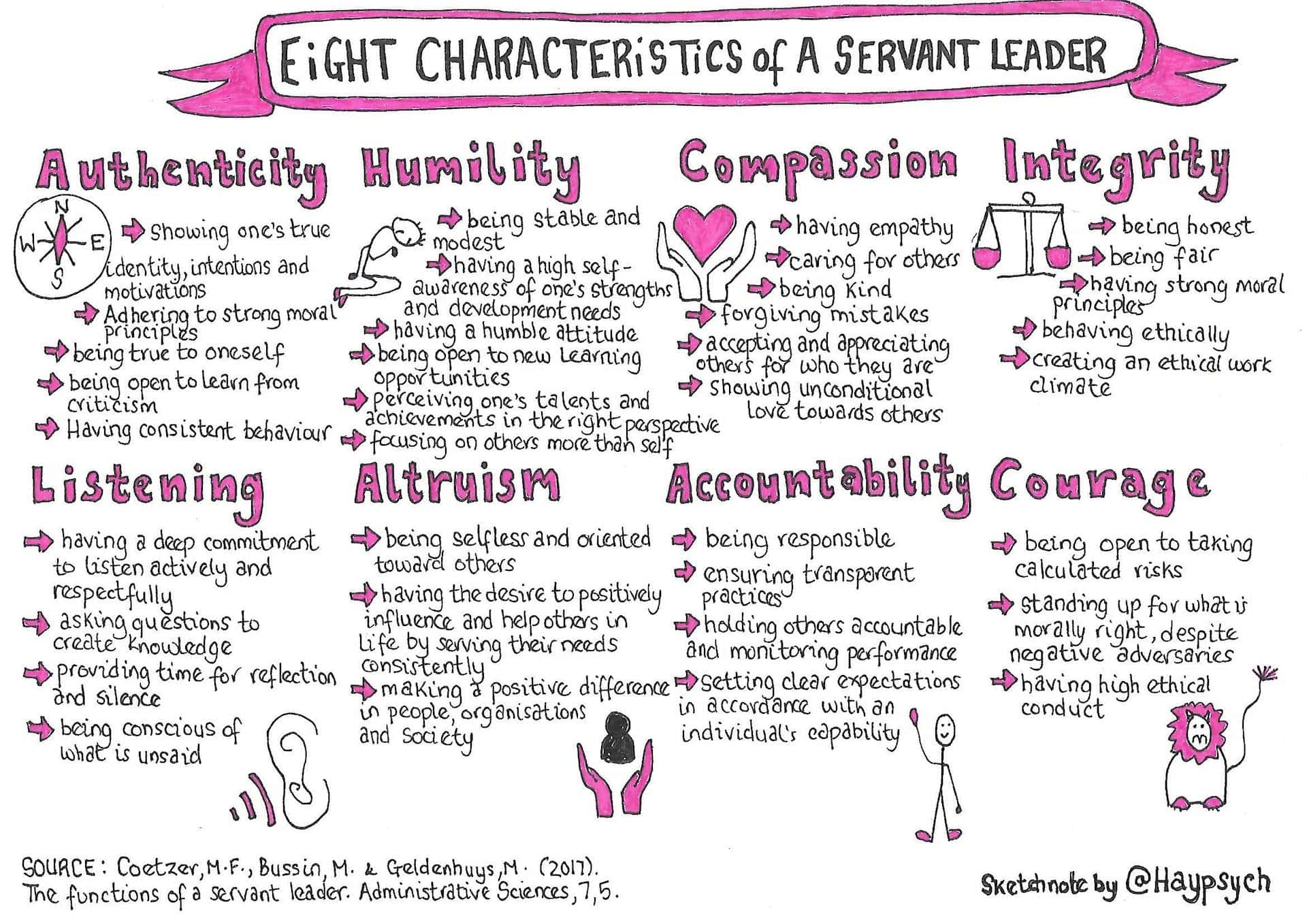
- Level 5 Leadership: Coined by Jim Collins in his book Good to Great, Level 5 leaders are characterized by a combination of personal humility and professional will. This framework suggests that humility is crucial for achieving sustained organizational success.
- Humble Inquiry: Developed by Edgar Schein, humble inquiry is a communication technique that emphasizes asking questions with genuine curiosity and a willingness to learn from others. It promotes humility as a means of building trust and fostering effective relationships.
- Radical Candor: Introduced by Kim Scott, Radical Candor combines caring personally with challenging directly in leadership and feedback. Humility is essential within this framework to constructively receiving and acting upon feedback.


Humility in Leadership
Embracing humility can significantly enhance a manager’s effectiveness as a leader. With it, they can create a more positive, productive, and resilient workplace where both individuals and the organization as a whole can thrive. This is because humility helps:
- Build Trust and Respect: Humble leaders are more likely to gain the trust and respect of their team members. They create an environment of openness and mutual respect by admitting mistakes, seeking input, and valuing others’ contributions.
- Encourage Collaboration: Humility fosters a collaborative atmosphere where team members feel valued and heard. When leaders demonstrate that they do not have all the answers and are open to others’ ideas, it encourages more active participation and collective problem-solving.
- Enhance Learning and Growth: Humble leaders are more likely to seek feedback and continuously learn and improve. This attitude benefits their personal development and sets a positive example for their team while promoting a culture of continuous improvement.
- Promote Psychological Safety: Humility in leadership helps create a safe space for team members to express themselves without fear of judgment or retribution. This psychological safety encourages innovation, risk-taking, and honest communication.
- Strengthen Relationships: Humble leaders build stronger, more genuine relationships with their team members. Showing empathy, understanding, and appreciation fosters a sense of loyalty and commitment within the team.
- Improve Decision-Making: Leaders who embrace humility are more open to diverse perspectives and willing to consider alternative viewpoints. This inclusiveness leads to better-informed decisions that consider a more comprehensive range of insights and expertise.
- Increase Employee Engagement: When employees feel valued and respected by a humble leader, their engagement and motivation levels are likely to increase. This can improve productivity, job satisfaction, and overall team morale.
- Reduce Turnover: Humble leaders create positive work environments where employees feel supported and recognized. This can lead to higher retention rates, as team members are likelier to stay in a workplace where they feel appreciated and part of a cohesive team.

Humility in Personal Development
Embracing humility can create a strong foundation for ongoing professional development and success. More specifically,
- Humble individuals are more likely to acknowledge their limitations and seek out new knowledge and skills. This openness to learning helps them stay relevant and adaptable in a constantly evolving professional landscape.
- Humble professionals are more approachable, willing to listen, and considerate of others’ ideas and feedback, leading to a more collaborative and supportive work environment.
- Humble people also inspire trust and respect. They recognize their colleagues’ contributions and give credit where credit is due, which results in trust, loyalty, and appreciation.
- Humility helps individuals accept setbacks and failures as opportunities for growth rather than threats to their self-esteem. This resilience makes them more adaptable and capable of navigating challenges effectively.
- Humble professionals are more likely to make ethical decisions as they prioritize the greater good over personal gain. This integrity can enhance their reputation and lead to more opportunities for advancement.
- Humility involves a realistic assessment of one’s strengths and weaknesses. This self-awareness is crucial for personal development and helps individuals leverage their strengths while working on their weaknesses.

Conclusion
Embracing humility in your professional journey isn’t about diminishing your accomplishments or undervaluing your skills. It’s not about meekness. It’s about recognizing that growth comes from continuous learning, collaboration, and the acknowledgment of the value in others’ contributions.
As you navigate your career journey, remember that true success isn’t measured solely by titles or accolades but by the respect you earn, the relationships you build, and the positive impact you create. Fostering humility sets the stage for lasting professional growth and career fulfillment.
So, the next time you face a crossroads at work, consider the power of humility. Seek out the wisdom of those around you, learn from your experiences, and lead with a spirit of collaboration and respect. In doing so, you’ll elevate your career and inspire those around you to strive for greater heights.
After all, as C.S. Lewis wisely noted, “Humility is not thinking less of yourself; it’s thinking of yourself less.” By focusing on growth and contribution over ego, you’ll find that the professional development journey is as rewarding as the destination itself.
Other Resources
- HBR: How Humble Leadership Really Works
- HBR: To Get Ahead, You Need Both Ambition and Humility
- HBR: If Humility is So Important, Why Are Leaders So Arrogant?
- Forbes: Humility Helps Leaders – Here’s How:
- Forbes: Want Better Leadership Results? Try Practicing Radical Humility
- PathWise Book Summary: Radical Candor
- PathWise Book Summary: Dare to Lead
