How To Steer Your Small Business Through The Stages Of Growth, With Matt Pohl
Every entrepreneur dreams of scaling their business, but what happens when business growth stalls? You’ve hit a revenue ceiling, your team is expanding, and suddenly, the systems that once brought success seem to be working against you. Matt Pohl, founder and CEO of The ReWild Group, faced this exact challenge—taking his own plateaued business from $1 million to $4 million in three years after discovering a framework that fundamentally changed how he viewed organizational complexity.
In this deep-dive interview, Matt shares the revolutionary concept of organizational rewilding, explaining why employee count, not revenue, is the true driver of complexity and growth stages. Discover the hidden barriers most business owners overlook, the critical difference between being owner-centric and enterprise-centric, and the “missing gray wolves” you need to reintroduce into your company’s ecosystem to thrive through chaos and competition. If you’re struggling to sustain momentum, or just want to make growth easier, Matt’s roadmap is the essential guide to lightening your entrepreneurial backpack.
Check out the full series of “Career Sessions, Career Lessons” podcasts here or visit pathwise.io/podcast/. A full written transcript of this episode is also available at https://pathwise.io/podcasts/matt-pohl/
—
Watch the episode here
Listen to the podcast here
How To Steer Your Small Business Through The Stages Of Growth, With Matt Pohl
What do you do when your company or your career starts to stall? How you reignite growth and institute systems that keep growth coming back is what we’re going to be discussing. With me is my guest, Matt Pohl, the Founder and CEO of the ReWild Group, which provides the definitive roadmap for small and medium-sized businesses to prosper through chaos and competition. Matt, welcome and thanks for doing the show with me.
Thanks, J.R.
It’s good to have you. Before we dive into what you’re doing and your business, talk a little bit about your brief background.
I studied statistics and information systems in my undergrad and graduate degrees. I’m a data guy, and I start off with the various corporate occupations at the Federal Reserve, Arthur Andersen and Corporate Express, which is a $4 billion office products company, but been in the data site of things before I started my first business in my mid-30s.
You were running a business that had plateaued over a period of time before you came across this research that ultimately became an Organizational ReWilding. What was the a-ha moment that changed how you saw business growth?
The “Aha Moment” & The Revenue Ceiling
My wife and I have been business partners for several decades and we started a business in our mid-30s. Our kids were getting off into school and she wanted to get back in the workforce. We decided to start a business and did that for a total of fifteen years. I say there’s like two seasons of the business for the first twelve years. We were just working the business. Mostly working in the business, I would say and had good success. It was profitable but we had hit a revenue ceiling that we couldn’t seem to get passed.
What happens next?
At that point in year twelve, a business broker came and offered value to our business. He’d never thought about it. It was a nice lifestyle business. When he came back with the valuation like most business owners, we were like, “For twelve.” It was under a million dollars which isn’t nothing but definitely not something you can retire on. We were like, “We’re at this inflection point. Do we just keep on doing the business like we have been or do we change things?” We said, “We’re going to be working for another 10 or 15 years. Let’s change it.”
In my childhood, my parents owned their business. In fact, their business was when I was just going in high school. The idea of just walking one day into the company and locking the doors, turning off the lights and walking away was my dad’s experience. I didn’t want to have that. He said, “Let’s do something different.”
What were some of the steps that you took?
I felt like I was a smart guy, smart enough. I went to business school, so I should be able to figure this out. I had just tried to do it with my own reasoning for a decade where we were stuck and realized I needed some new ideas. Another CEO had recommended a book to me called Navigating the Growth Curve. It’s a very interesting book. I read through it and realized that the author lived just miles away from me in Denver. I hooked up with him. He taught me and coached me on the research that he had done.
One of the key ideas is that businesses go through these different stages of growth. The rules change because complexity changes. These stages of growth are dependent on the number of employees because as you add more people, the organization gets more complex. There’s ranges of employees where that level of complexity is somewhat static. It’s within a range. Understanding how to grow comes down to, do you understand the stage you’re in, the rules that are associated with that stage, and how well you are aligned with those guidelines.
Stages Of Growth Are Employee-Driven
The idea that its employee was driven with something that was a bit counterintuitive for me. There’s so many other things you think about in terms of a business like the number of customers you have, the amount of revenue you have, whether you’re profitable or not or your cashflow positive. It’s interesting that the approach zeroed in on employees being the key driver of those different elements of the growth curve.
The reasoning behind that, first of all, is research-based. The research was trying to identify why businesses basically stopped growing. What it found is that revenue is an easy one to categorize businesses within because it’s readily available. It’s pretty easy to know so it goes across industries but a $10 million construction company and a $10 million professional services company are two different kinds of businesses to generate that volume in professional services. It takes a lot more people than construction. A lot of materials.
Revenue was not as highly correlated to these different stages as the number of employees. Again, it comes down to complexity. If you have five people versus 25 people, you know those organizations are different. The driver of that is you have more variability because you have more people. There’s more complexity there. That ecosystem is more complicated. That’s why that’s what the research showed, the driver of these different stages.
It comes down to complexity. An organization with five people is very different from one with 25. More people mean more variability, more complexity, and a more complicated ecosystem. Share on XWhere did the idea of ReWilding, as you call it, come into play?
We adopted this framework. To complete the story of our business, those last three years of ownership we saw our business triple. We went from about a million to $4 million in revenue. We went from 8 employees to almost 40 employees. What was interesting for me as a business owner is I fell in love with my business again. Twelve years in, I was pretty beat up. I was getting tired of it but running a stage one business, versus a stage three business, you might say there’s a lot more complexity and a lot more people so it isn’t a lot harder.
I was working fewer hours and enjoying it more at stage 3 because I had this road map to help guide me. That was a big part of it. The CEO’s role when you have 30 or 40 people is a lot different than when you have eight. I was leading more. I was leaning into some other areas that they enjoyed. We sold the business in year fifteen and what was interesting is that we had the business valued. That was the impetus to change and the value of the business had grown 10X in those three years.
Defining “Organizational Rewilding”
It was coming out of that, that I realized that the system, this roadmap, was the thing that got me unstuck and helped me get the business going again. The inventor had never been able to monetize his research. It was to, what I’d call Inventor Century. He was the only guy that could use it. He had come to me and asked the team to try to make it a more scalable and monetizable system. We launched the business. He was older and had some health issues. About a year into it, he said, “Matt, I don’t think I can do the startup business again.” There’s a lot of stress there. I ended up acquiring all his research and IP. We came up with the name of a ReWilding because we felt it captured how the system works. ReWilding is not a common word, but it comes from a scientific basis that looks at why ecosystems become unhealthy and then how you restore the health of that ecosystem.
The idea is that you need to rewild it. You need to make sure all the key elements that naturally exist, but in some ecosystems, typically humans have interfered and something’s missing usually by human interaction. The most famous or well-known story about this is Yellowstone National Park, where elk were overrunning the park. The ecosystem was literally deteriorating. Hundreds of species had disappeared from the park and it was the introduction of the gray wolves back into that ecosystem. They had been gone for over 50 years. It set off this powerful dynamic, this ripple effect.
That’s what we see. That’s rewilding in the environment. We see businesses in human organizations as ecosystems. Not a watch that has all these gears and you just need to fix one little gear and everything runs smoothly. There are humans involved so there’s a lot of dynamic relationships there just like Yellowstone National Park. There’s all these ripple effects. What we said is, we want to call it Organizational ReWilding because we’re rewilding that organization by identifying what’s missing like the gray wolves and then infusing those missing elements into that human ecosystem.
We see businesses and human organizations as ecosystems, not as a watch with gears you can just fix. With humans involved, it’s never that simple. Share on XGive us an example. What are some of the missing elements that you would reintroduce into a business that are analogous to that gray wolf at Yellowstone?
We’ve identified eleven elements that are required to have an exceptional business. What’s nice about our system is that because it is stage-oriented, it essentially right sizes to the organization instead of a one-size-fits-all. These eleven elements follow their important criteria for an exceptional business. They don’t all have to be there on day one. They don’t have to be their stage one. As you grow in stage and complexity, you need more of these building blocks. A couple elements just to give you an example. One is brand and core values. With values, having shared values creates unity with an organization.
We’ve identified this element of having brand values, which we call the promise to the market who you are to the world outside of your organization. Core values which are your promise to the team, the internal team. These are the values that direct how we interact with one another within the organization. An organization that lacks this element that gray wolf is missing from their ecosystem tends to have high turnover and has trouble hiring the right people. They don’t necessarily fit. It’s hard to delegate because people don’t know what are the values that are driving decisions.
There’s a lack of unity. It’s hard to scale up, especially as you grow pretty dramatically. You may lose what you had when you are smaller because these values haven’t been codified and communicated to the organization. When that’s missing, you see all these like Yellowstone. Some negative effects there, but by infusing that organization, putting those values into the organization. It’s incredible to see these ripple effects that solve things that you never even realize. Why would you not be able to delegate because you don’t have values?
When people don’t know what the parameters are to make values when they’re interacting with the customer, they don’t know how to handle a bad situation or a bad customer experience. When they have clear values of how that interaction is supposed to be handled, they can do it on their own and everybody’s doing it consistently. That creates a more powerful force in the marketplace for your brand. That’s an example.

Business Growth: When people don’t know the parameters for creating value in customer interactions, they struggle with handling difficult situations or bad experiences. But when they have clear values guiding those interactions, they can act independently—and everyone does it consistently.
You talked earlier about your own business going from, I’ll say relative study, state of having a million dollars in revenue and eight employees then you scale it up over three years to multiple of that from a revenue perspective and 40 employees. What were the gray wolves that were missing from your business?
There are several and two aspects. These elements or these building blocks that you need to scale but then you have the set of rules that is stage specific. A big part of it was I was simply not aligned with the rules of growth for stage one. The analogy I give is when you’re misaligned, it’s like in Colorado. I like to climb 14ers. I don’t go to the trailhead to start that hike. I don’t kneel down, open up my backpack and shove it with rocks. I don’t want to make my backpack heavy. When you’re misaligned with the rules, growth is just hard. It’s harder than it has to be.
The Three Gates Of Focus
Usually, what happens as a business owner, as they get some growth they may have this heavy backpack because they’re misaligned. At some point, growth is just simply too hard. They just stopped. They say, “Eight employees is okay but whenever I get to twelve, things fall apart. I don’t know why. I’m just going to stay at eight. My backpack is too heavy.” By coming aligned with the rules of growth, you open up the backpack. You lighten it and it makes growth easier. A specific example is, there’s one rule in the roadmap that talks about how you prioritize what we call the gates of focus.
You can focus on three things for growth. You can focus on profit, so growing profitable revenue. You can focus on your people and invest in your people or you can invest in the process. You can spend energy improving your process. My analytical background is that I’m a process focused person. What comes natural to me is like, “Let’s build the best mouse trap. People like that great mouse trap. We’ll get business that way.” People are my second one because I know people are important. I like to coach them. I’m big on people.
For me, profit was third. It just doesn’t come naturally. I don’t like business development. I approached those gates through a lens of what is comfortable for me. Where is my strength versus weaknesses? I prioritize my strengths. When I looked at the road map for stage one, I had it basically flipped upside down. To grow out of stage one, profit has to be your gate of focus, people is second and process is third. What that did is, it flipped my mindset. I said, “If I want to grow I need a change that comes natural to what the organization needs.” I didn’t know what it needed until I had a roadmap, some guidelines or some best practices.
What that meant for me is that I had to spend more of my time doing business development. I’m still process oriented but what we turned it into was like, “Let’s spend our energy building process around bringing in profit.” We totally changed what we were spending our time on. We went from getting maybe 4 or 5 proposals a month to 25 to 30 proposals a month by becoming this lead generation engine. We just put systems and got data.
In one year, we made 15,000 outbound calls to people within our industry. It changed things because I knew that in stage one, I had to have profit first. In stage two, profit remains for first. Those two stages are profit focused. That helped give me those guidelines to make my backpack easier. I was carrying a heavy backpack making growth harder because I was going to do the process first. That’s not what a stage one business needs to focus on.
As I’m listening to you talk about that, I’m reminded of a job description I was reading for a company in the UK. They were not in the stage one element of growth, but they had something like 80 employees. They talked about how they had spent £500 million on advertising on Facebook, Google, and elsewhere. It hearkens the way that some of these businesses, particularly the B2C businesses have gone to market. It’s not about the process of people or profit. It’s about getting your name out there so broadly that people can’t ignore the fact that you’re there.
I’m just curious how you look at those situations. It’s been a big way that people in the tech industry have driven. It’s been a big way that other B2C businesses like the delivery apps and some more services. They spend incredible amounts of money up front on advertising or something similar. They put themselves in a hole that probably will be a decade before they have any chance of digging out. That’s like the antithesis of your approach.
At 80 employees, you’re in stage 5. Profit is the top gate of focus, but I should say the roadmap doesn’t tell you every little thing to do. These are broad categories usually overlooked. We call them the hidden barriers of growth. These are things that until you read them, they aren’t on your radar. As I was saying, I had a business degree. I’d run the business for twelve years and when I looked down this list, there wasn’t a single thing on these lists of rules that I had thought about. Not even categorically.
That’s why there are these hidden barriers. They don’t teach them in business school. They’re not on your radar but once you learn them, it seems like just common sense. Knowing that there are those three gates and I need to make sure I know for my particular stage I’m aligned with that. That’s very easy to do.
What are some of the mistakes that people make as they graduate from one stage to the next?
This is the crux of it. The research shows the businesses get stuck typically because they’ve done enough in one state to allow them to grow to the next stage. By moving to a new stage, the rules change. It’s the proverbial. What got you here, won’t get you there statement that essentially is saying you have to be willing to change things even those things that made you successful up until this point. The problem is, you go into the next stage and it’s like going into a room that you’ve never been in and the lights are turned off.
Research shows businesses often get stuck because they’ve done enough to succeed at one stage, but moving to the next stage requires new rules. As the saying goes, what got you here won’t get you there. Share on XYou’re just fumbling around hoping through trial and error you can navigate through that room. With the stages of growth framework, you get to turn the light on in that room and you neatly know the contours. You know where the obstacles are. What happens is, as the business goes from one stage to the next, the rules change and they’re playing cards with the wrong rules. It’s no wonder that success isn’t coming as much.
I would say it’s not one thing that people do wrong or they’re misaligned. It’s that they simply don’t know they need to be aligned with new rules. That’s the fundamental. Things have changed. They don’t recognize that, oftentimes, it gets more chaotic. There’s more complexity and either the business will just get stuck there in that next stage or it’ll get pulled back into the prior stage. You see this oscillating in businesses very frequently between those stages because they’re running into that dynamic and they don’t see the hidden rules that are causing it.
You’ve worked for a lot of companies in the year since you first came across this research. Walk us through a real world example of a company that got passed its systems and was misaligned.
The needs of the organization can be quite dramatically different based on your stage. An example was a 150 person engineering firm. Maybe it was 200 by that point, but it’s been around for 15-20 years. It’s very successful looking from the outside and financially as well. The CEO had never been able to get his leadership team to step up to that next level to allow him to be a CEO. He kept on trying to get there but the element he was missing is what we call a strong management team. A simple name. You can immediately understand what it is.
It wasn’t that he didn’t have strong people, but they didn’t have a shared language and vision for how to lead the organization. We have a program that helps infuse a strong management team. It’s a year-long management team training program where the entire management team CEO down to managers all participate in that. They put 25 people through the program and spend a year going through that. What came out is they not only raise the bar for their management skills, but we spend time on what we call ownership thinking so all the managers, directors and VPs shared this language of understanding their business.
They came out of that. In our last meeting, I asked all the participants what they got out of it. When it came to the CEO, he said, “This might seem cliché but this program has changed my life.” I said, “That’s a little bit too much.” He says, “I’ve been trying to get to this place where we can talk about these things that I couldn’t get there.” Not only was the program felt to be helpful through the program, but years later, the business was sold to a French engineering conglomerate. The CEO of this single location business in Denver became the head of the North American group of that company.
Many of the executives of the Denver office became the leaders of the North American for various locations in part because they had this clear understanding and had built these skills and common language for the management team. That was one that took us very successful businesses and blew the top off of it.
You worked with that company for a year as you mentioned. What were some of the main things that you focused on with the people one, two levels down from the CEO?
The program has three components. One is ownership thinking. Another one is what we call the management wheel, where we talk about how managers need to manage the work, the staff, the self, and the workplace. There’s four quadrants that they need to work on and be able to manage well. Going through the management wheel was helpful in building skillsets and then management tools, so infused five different management tools into the organization.
Some specific things is when you do the ownership thinking segment of each course, you talk about the business. You’re working on the business as a group. We were talking about core values and brand values. They had never thought about that. They had pretty strong values, but they hadn’t thought as a team about it. We talked about business model concepts like, what are our revenue groups? Where are the key services that we provide? Are we organized based on common operational structures? Who are our customer segments?
Again, these are things that you think a $50 million or $100 million business would know, but they haven’t thought through their customer segments for many years. As you work through those as a group, there were discoveries made. People in engineering are talking to the business development folks about these topics for the first time. There is a lot of improving of the business and understanding the business that came out of it.
I would say, most businesses have good operational language, which means that if you’re in construction, you know what framing something or if you’re a welder, you know what different welding certifications are or if you’re a restaurant, you know what a five top is and what those sections are. You have operational language because you have to communicate about doing the work. Most businesses do not have a managerial language or a strategic language and that’s what this program helps is.

Business Growth: Most businesses don’t have a managerial or strategic language, and that’s what this program helps provide.
It gives a common way to talk about managerial issues through the management wheel and strategic ideas through this ownership thinking. Yet there were some key things. This was a project based business and we talk about project management. We have something called a project management triangle. It was just a simple tool and principle. Even in this very sophisticated engineering business, they were able to take this principle of the project management triangle.
It helped them manage customer expectations better. It’s basically balancing scope, timing and cost and saying the customer doesn’t get control of all three of those. They had fallen into a habit of sometimes allowing the customer to dictate all three sides of the triangle, which puts them in a bad spot for delivering a good service in a profitable manner. There are little things like that, but then they’re these bigger concepts that were helpful.
Where Most Founders Struggle
In that particular instance, Matt. You had an owner who was desperate for this, who was fully on board, and committed emotionally to it. Where do you find in this stage growth framework that more founders struggle with the emotional changes that it requires them?
I would say the first three stages. Stage one, 1 to 10 employees is very owner centric. It varies depending on the business owner in that case. In most instances, sometimes those are hard to crack because there’s not enough cashflow. Money’s tight or something like that. Sometimes, they’re new enough that the business owners are desperate enough.
When you’ve been in business for many years and haven’t figured it out. By then you’re saying, “Maybe I need help.” Maybe in year three you don’t. You find business owners that are not opened ideas in all three of those first three stages but I would say by stage three, the business has been around long enough. They’ve bang their head against the wall long enough and haven’t been able to get past that.
The businesses who aren’t big enough and there’s enough complexity know that there’s stuff that they don’t know. That stage tends to be a sweet spot for us when we can go in and help a business owner. Stage three is a very unique stage. We call this a key transition. It’s the delegation stage. This is where the business is so complex. The business owner has to start delegating significant responsibility just because there’s just too many people for one person overseas.
This is a transition period where the business is going from owner centric, which is like stage 1 and stage 2 to enterprise century, which is stage 3 and above. It tends to be the hardest transition for business owners and for founders because a lot of them are used to having a lot of control. They’re very involved in all decisions. If they can’t find a way to delegate, they often go into stage three and find that they can’t sustain it and pull back into stage two then stay in stage two. They don’t understand that as an owner, there’s a big transition going on in stage three from owner centric to enterprise centric.
That is a very big shift where you start to create a set of management systems and day-to-day processes that aren’t as directly dependent on the person at the top of the organization. This is where a lot of founders struggle. It’s where a lot of organizations struggle because they’ve built their whole culture around, to your point, being owner dependent.
You can see how the lack of being able to adjust to that can hamper growth because if you can’t delegate then there’s only so much work you can push through the organization. If you have to make all the decisions, the same thing and that’s why it’s called the delegation stage because you have to learn to delegate the stage three. If you can’t, then you probably won’t be able to sustain stage three or you’ll get burned out because you’re just working so hard to keep all the balls in the air. Most commonly, you’ll fall back into stage two because of that.
Have you ever thought about how this stage framework could be applied to help somebody think about the stages of their career?
The idea of stages and seasons if we use maybe more general thought is important. I would say that the idea of stages or seasons is very applicable to careers. I didn’t have this growing up as I was going through my career but things I’ve read after the fact that the twenties are this key period of time. That’s one season. It revolves around the decades of your life, so your 20s or 30s 40s. It’s not necessarily exactly that but my thought is that early stage, that early season is about skill building. You should be focused on just the best opportunity to make you work the hardest and get you the motion experience.
Career Strategy: The “Warrior Stage” & Small Business Value
If you can do that in your twenties, usually you’re only going to have more responsibility on the home front after your twenties. You’re young and you have a lot of energy. I call that the warrior stage or season, where you have to go into the battle. You’re just trying to conquer as much as you can from a career standpoint. Doing that when somebody else’s dying is valuable. They’re paying for you to get all this experience.
Thirty is this pivot point. It was for me and maybe this may be more gender-oriented. Men might be a little bit different than women. I see the age of 30 is this pivot point of whether you’re going to stay in the corporate environment or go out on your own. I didn’t do that right at 30, but I started to get the itch at 30. By 34, I had started my first business. That’s at least a season.
In your 30s, you should be overseeing people and adding value because your managing more people. When in your 40s, again there’s different plateaus and you can choose to stick in those. That’s fine for many people but if you want to keep on advancing. By your 40s, you want to be leading larger teams. That’s what I’ve seen, but that’s maybe just my own experience as being a more general framework.
You apply with your Organizational ReWilding. How would you compare and contrast it to something like an EOS that’s all very popular in the entrepreneurial world?
EOS is a popular framework and we have a great deal of respect for it. I would say they’re very similar in what they’re trying to do. It’s to create some reduced variability to give some clarity and some structure to riding the business. We have a number of blogs comparing the two. If you want some more details, you can search for that EOS versus Organizational ReWilding. Those will pop up. There’s a lot of parallels.
In fact, if you look at what they teach, some of the principles. You’ll see some parallels there as well. They’re both focused on fundamentals of having a successful business, so there’s going to be some parallels there. I would say probably the biggest difference is that EOS is one size fits all. It teaches some principles. Some important principles but those don’t change based on your business stage of growth or Organizational ReWilding because it focuses at its foundation. It has seven stages of growth. It is the right size for the organization.
It shows that stage 1 and stage 3 business are not the same. The rules are not the same. Now, are there some fundamentals that you need in both those stages? Sure. EOS covers those but if you want something that’s the right size for your organization, Organizational ReWilding provides that. What we find is, a lot of organizations that use EOS feel like they outgrow it after a period of time or after reaching a level of complexity. It is a natural graduation into Organizational ReWilding if you feel like you got all you can out of EOS. Organizational ReWilding focuses on critical thinking, the strategic thinking of the business as opposed to the operating of the business. That’s why people like to graduate into Organizational ReWilding.

Business Growth: Businesses are not the same, and the rules aren’t the same. There are some fundamentals needed at both stages—EOS covers those—but if you want something truly tailored to your organization, rewilding provides that.
I’m curious to get your views about just this decision point that you mentioned a minute ago, Matt, between the corporate world and I’ll say the independent world. You’ve been in business and had your career going for a while now as have I. We’ve both seen lots of changes over the past few decades. Do you feel like corporate life has changed in terms of the value that it presents to people as an option?
You and I are old enough to remember the days where having a corporate job is usually pretty safe. There’s a reciprocal relationship there. With all the competition, it’s more dynamic. Our economies are more dynamic and there’s more ups and downs. Businesses have to be more nimble. They have to be able to change strategies, change personnel and because of that, you’ve lost a lot of relationships with companies. My youngest son has had many jobs. More jobs and he’s just turning 30 than I had my whole career. I think there is more dynamism both ways. Businesses are more churning. Employees are going through more jobs. I don’t think it’s necessarily bad, but there is a challenge there.
Something that’s been on my mind, Matt, in terms of just the value proposition of working for a big company. To your point, you go back to, I’ll say to the pre-1980s or early ‘80s. Late ‘70s, early ‘80s is when the idea of layoffs started. Until then, there was a completely different equation, social fabric, social contract between company and employees that’s completely gone at this point. Some of that’s for the better.
You should have to continue to prove yourself and earn what you’re being paid right in terms of your productivity and what you’re delivering to the company. I also think a lot of people look at it and say, “This is so stressful. I work for a company that I could get let go at any point. I don’t have a safety net.” They either permanently stress about that or they say to themselves, “I’m getting out of that system entirely.” I wonder a little bit.
I’m always curious to get people’s perspectives because I worry that I’m starting to participate in an echo chamber of people who have made the decision to take a different turn in life that maybe isn’t born out by these statistics of the number of people or the percent of people. Take the US economy as an example who are working for businesses that have fewer than 100 people or something like that. I would bet that it’s gone up, but I have not looked at the data.
I have a sense of it. I don’t know that I’ve studied enough to know for certain, but there does feel to be. Speaking of the US economy. Most of the economy feels like it’s controlled by corporations and because of that, you’re right, corporations used to have more of this social compact with their employees. They don’t anymore. The challenge in a large organization, you can be fired or let go for no reason of your own. You don’t control your own success to some level because some executive might say, “We’re getting rid of that division or whatever, and you didn’t have any impact on that individually.”
When you are with a smaller organization, typically, it’s clear who’s adding value and who’s not. If I feel you have a little more control of whether you’re your main at the company or you don’t. It’s that difference between the small and mid-sized business, versus the corporate work environment. That’s a fundamental difference.
I’m concerned about more and more power economically. Maybe even politically in the corporate environment because it’s a little less humane. Only because it is this entity that operates without a soul. Whereas if you work with a small mid-size business. At the end of the day, you can point to the CEO and the CEO is showing up at work. There’s a healthier human dynamic that’s going on there. That’s why I’m a big believer in the small and midsize enterprise part of the economy. It’s so valuable not just from an economic standpoint. It’s important there because it brings a dynamic that’s needed.
I'm concerned that more and more power—economically, maybe even politically—is concentrated in the corporate world, because it’s so less humane. These entities operate without a soul. Share on XYou are innovating more in small businesses than at large corporations. All those types of things, but there’s this social piece of it too that’s important. It’s important for the workers that work in those small and mid-sized businesses because there is more of a humanity about it. They have to watch their profitability like any corporation. Usually, again if you’re let go, most of the time it’s more about personal performance than just broad changes. It’s also critical for the leaders of those organizations, the business owner, the CEO, or the entrepreneur.
America was founded on the idea of the frontier of getting people out of their comfort zone of Europe, going into this new world. Literally, it was a new world. It’d be like going to Mars now. It was coming to North America. It drew this type of person, this courageous risk taker. In our modern societies, we lack a lot of risk-taking opportunities. We wear a helmet when we ride a bike. We’ve got air bags and seat belts in our cars and automation.
We live in a very safe bubbled world and what I say is entrepreneurship is one the last frontiers for humanity. Where you have to put yourself out and you take risks. It’s up to you to build value in the marketplace. You’ll either succeed or fail based on you. That’s a critical part of society that we have to have. Otherwise, we just become glazed over corporate owned bodies. Maybe I’m going a little bit too dark there but it’s a critical part. That’s why it’s so important to me to do what I can to help small and mid-sized business owners be more successful. This roadmap helps them accomplish that.
When I talk to others like you, who are spending their life working with other small businesses, there is a sense of purpose that I hear from them. Small businesses are about creation. They are the start of something new. They’re potentially the start of a brand new business that we’ve never had before like pure innovation. They could be another version of something that we already have, but they’re all new. They are creating that freshness in the economy and to your point, that many big established companies lose. This is like Clayton Christensen’s, Innovators Dilemma.
This is why all of that research on creative destruction has been so powerful and so enduring in business thinking because it’s so hard for big established companies to do that. That’s why small businesses matter. In small businesses, we think about startups and Silicon Valley and all of the crazy things and people spending £500 million on advertising before they have 100 employees. That’s not the majority of small businesses.
The majority of small businesses are, they’re your neighbors. They’re people you go to church with or people that you might have gone to college with. They’re doing things that are across all aspects of the economy and it’s hard work. It can be quite lonely work and helping like what you’re doing, to help people in that situation and what others do to help people in that situation. It’s sparking and fostering a very important part of our economy.
It’s interesting. There’s always a pendulum in the US. They want to return to maybe more simplicity or more local or less of that corporate. There’s this yearning. Having gone through these decades of where the relationship with the corporation says, it hasn’t been as healthier long term or transactional where people are looking for work that’s meaningful where they have an impact. They’re not just a number. They’re not just working remotely and barely put in any work. It’s challenging them where they’re growing as an individual.
The Impact Of AI On The “Humanity Of Work”
The whole concept of work is critical from my Christian perspective. We’re created for work. One of my concerns is, does AI turn out to be a work eliminator? When we go to work, we’re asked to do things we don’t want to do or we’re not good at. Only because we’re getting paid and the boss asks, we have to do it. When we do that, it’s like, “I can do that. I’ve learned a new skill. It wasn’t as bad as I thought.” As a business owner, you’re constantly faced with things you don’t necessarily want to do but you have to do it.
I’m a little concerned that if we eliminate work, that could have a serious impact on humanity if everything’s just easier or if everything’s done for us. As humans, we like relaxation. We’re not going to just do exercise 40 hours a week. There’s at least an interesting time to be alive as we look at what innovation is going to do over the next several decades.
This idea that we’re in the fourth industrial revolution. We’re at the age of AI. I have a hard time seeing how it will not be disruptive and not be disruptive in the initial years in a negative way. There is clearly a move to streamline organizations. In the news all the time, it’s crazy to me that the stock market continues to be booming and yet more and more companies are talking about reducing the number of employees.
You can’t put government employees and private sector employees out onto the street without jobs and expect that it’s not going to have a ripple effect on the economy trickling down to all those small businesses around the country in a way that’s negative. Now, maybe we will come up with new forms of work and that’s what everybody argues. AI could happen faster than that. That’s the $64,000 question now.
I’m a big Austrian economist. My economic philosophy comes from that but I like free markets. I think capitalism is awesome but there could be pretty rapid disruption and significant pain there. The question is, what will come out with that? What opportunities come out of that? That’s the thing I’ve struggled with because we’re not just streamlining something.
We’re replacing the need for a human and it’s like, we have dishwashers that saved a lot of time and washing machines. My mom grew up with hand washing machines. Those are all positive things, so I’m trying to take a positive perspective on it. There is a great opportunity. It will be interesting to see how it all works out.
The “Lighter Backpack” Philosophy
It will. As you say, it’s an interesting time to be alive. Matt, what are one or two things you want people to take away about this idea of rewilding or how they should think about managing their careers?
From a career standpoint, I’d encourage people to think about joining a small knit size business. They don’t always have the same benefits as large corporations, at least in the US. There’s some trade-offs there. If you want to be challenged, if you want to take on more ownership, if you want to grow, a small business doesn’t typically care how long you’ve been there. It doesn’t care about your degree. A small business owner only cares one thing, what value added to the organization.
There’s a lot of opportunity and small and mid-sized businesses take on more responsibility beyond maybe what you studied in school or what you’ve done in the past. If you’re willing to work hard and help the organization, sky is the limit and I don’t think that that’s the same in most corporations. I’d encourage folks in their career to consider that. Spend at least part of your time in the small and mid-sized business. If you’re a business owner, know your stage of growth. That’s where it starts.

Business Growth: If you’re willing to work hard and truly help the organization, the sky’s the limit.
We’ve got a calculator on our website where it calculates your stage of growth. Once you know that stage, you’ll be directed to a page that gives you specific resources and things to think about for your stage. Know your stage because without it, you’re making growth harder than it has to be. You have enough challenges as a business owner. You can control this part. Go ahead and figure that out and you’ll make your backpack lighter.
I was thinking about the backpack comment that you made earlier as you were saying that. Especially when you’re climbing 14ers out in Colorado. You don’t need to be doing it with rocks in your backpack. It’s hard enough. Thank you for doing this. I appreciate the opportunity to get to hear more about what sparked Organizational ReWilding and a business and how you work with other small businesses. It’s been an interesting conversation.
I appreciate the opportunity. If you’re a small business owner, we’d love to provide something of value to you, so figure out your stage.
Take care, Matt.
—
Thanks to Matt for joining me to discuss his journey and the concept of Organizational ReWilding and the different stages of growth that come in owning a small business. As a reminder, this episode was brought to you by PathWise.io. If you’re ready to take control of your career, join the PathWise Community. You can also sign up on our website for our newsletter. Follow us on social media at LinkedIn, Facebook, YouTube, Instagram, and TikTok. Thanks.
Important Links
- Matt Pohl on LinkedIn
- ReWild Group
- Arthur Andersen
- Navigating the Growth Curve
- Innovators Dilemma
- PathWise on LinkedIn
- PathWise on Facebook
- PathWise on YouTube
- PathWise on Instagram
- PathWise on TikTok
About Mathew Pohl
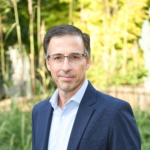 Mathew Pohl is a former data analytics professional turned small business owner and advocate for organizational growth. After discovering his company’s undervaluation, he applied the Stages of Growth methodology, resulting in a remarkable 10x increase in value within three years. This success motivated him to establish the ReWild Group, dedicated to sharing the methodology with others.
Pohl’s expertise is reflected in his book series, “Organizational ReWilding Rules for Business Growth,” which examines the seven stages of growth, offering principles and real-life illustrations. He is also developing “The Element Guidebook Series,” focusing on the eleven elements that foster exceptional businesses. Pohl’s passion for knowledge sharing extends to business leaders, owners, and advisers.
Pohl is genuinely curious about others’ work and seeks opportunities for fruitful collaborations. His journey showcases his entrepreneurial spirit, resilience, and dedication to empowering businesses to achieve their full potential. Beyond his professional pursuits, Pohl enjoys the natural beauty of Colo ado, his home state, and spending time with his family. As an avid hiker, he undertakes the challenge of conquering a 14er each summer.
