How To Choose Your Next Role And Make A Strong Start With Shveta Miglani
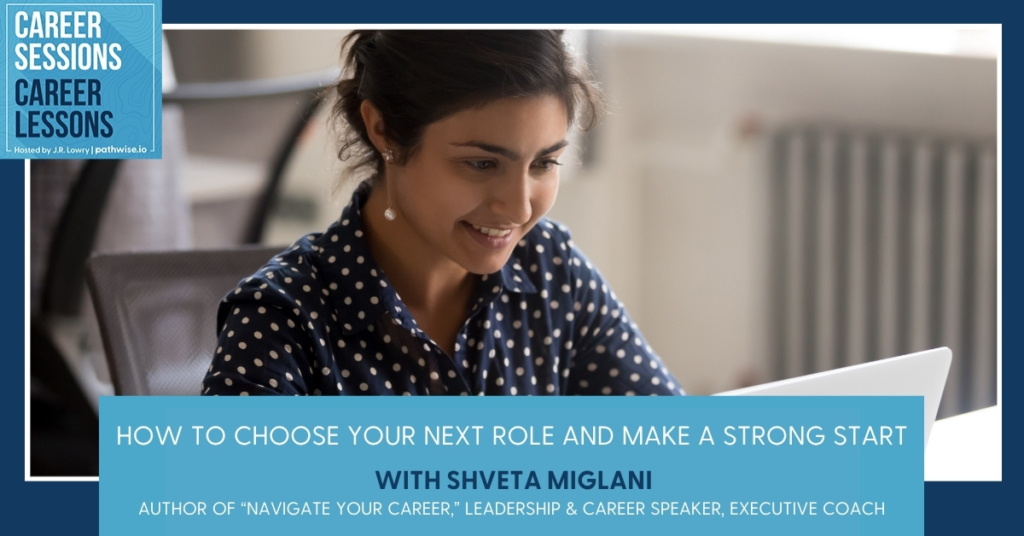
Ready to navigate your career with confidence and achieve unparalleled success? Join us as we sit down with Shveta Miglani, a luminary in organizational development and talent management, and author of the essential guide Navigate Your Career: Strategies for Success in New Roles and Promotions.
In this insightful discussion, Shveta shares her two decades of wisdom from pivotal roles at tech giants like Google and Salesforce, offering actionable strategies for choosing your next role and mastering career transitions from acing your first 90 days to continuous learning. Whether you’re eyeing a promotion or stepping into a new organization, discover how to transform challenges into triumphs and build a career that truly aligns with your aspirations.
—
Watch the episode here
Listen to the podcast here
How To Choose Your Next Role And Make A Strong Start With Shveta Miglani
Author Of Navigate Your Career Strategies For Success In New Roles And Promotions
My guest is Shveta Miglani, a distinguished leader in organizational development, talent management, and career coaching. With over two decades of experience, she has held pivotal roles at industry giants such as Micron Technology, GLOBALFOUNDRIES, Sandisk, Palo Alto Networks, Google, and Salesforce. Her new book, Navigate Your Career – Strategies for Success in New Roles and Promotions is available on Amazon and is an essential guide for anyone stepping into a new role. In our discussion, we’re going to be talking about Shveta’s book and her career journey. Let’s get going.
—
Shveta, welcome and thanks for being on the show with me.
Thanks, JR, for the invite.
Yeah, absolutely. We’re going to talk mostly about your book but tell us a bit about you before we dive into that.
I’ve been in this field for talent development and organizational learning for many now. It feels like just yesterday, I was learning about the basics, and now I’ve had the fortunate advantage of working with Fortune 500 companies like Salesforce, Google, GLOBALFOUNDRIES, Micron, just to name a few. It’s been exciting, and I’m looking for the next 25 years ahead of me.
Career Journey & Educational Background
It’s good to make these shifts in your career and do different things across it. Careers are longer than they used to be for many of us. I’m over 30 years in my career and it’s like, where did the time go? I know you got your Bachelor’s degree in Economics and Sociology. Did you envision moving into learning and development, or did that happen inadvertently?
It was like a comedy of errors, to be really honest. I moved to the US just to do my Master’s in Journalism after Sociology and Economics. If somebody asked me why I got into sociology and economics, I don’t know, I just liked the professor I worked with and she made the narrative and the storytelling so much fun that it felt like a no-brainer for me to get that.
It also helped me to understand the basics of how economics and sociology are connected. We talk about cultural aspects in communities and how do traditions come in and how do things become a must-have and a not-to-have within communities. Taking the same concept and the co concept of economics has really helped me as I’ve gone through my career, because you see the same patterns emerge in organizations and when you look at organizational cultures. It all comes back from the same foundation.
Going back to when I did my undergrad, I wanted to be in the US and I just decided to go into journalism, which I thought my pen would save the world. As they said, the pen is mightier than the sword. When I came here, I realized it’s not what I wanted to do. It was a time when things were happening in the world.
Historically, every year there’s something and I realized I’m not strong enough. You need to have a thick skin to report on things and not make it emotional and not make it personal. That’s when I was confused. That’s the time when I first had a mentor in my life without naming him as a mentor. I was a research assistant for in the psychology department. He sat me down once and he said, “What got you excited about journalism?”
I mentioned messaging and communication and getting the information out there. He said, “Have you looked into instructional technology?” I was like, “What is that? That is such a new thing. I had never heard about a coursework or even a degree in that.” Once I understood what it stood for, the technology piece was very interesting because at that time, Adobe and a lot of the platforms were coming up with amazing courses that you could create.
I thoroughly enjoyed it, did my Master’s in that, got my first job, and after the job, I realized how much I love organizational development and talent management. I did my second Master’s in that and then decided to pursue my PhD. I really wanted to be that person who was the expert in the room, and not somebody who just read a book and decided to do a workshop on it.
There’s nothing wrong in that. I think that also is credible. People do get certified in those things, but I really wanted to be that problem solver. I think that combination of my background and where it came from and how I utilized everything, I learned, I think it was Steve Jobs who mentioned in his biography where he took a calligraphy class. His parents said, “What is that going to help you with?” When the Mac OS was being created, he utilized that experience to create the fonts because we had training in it. I feel those a-ha moments on every single day, honestly, because whatever you learn in life, it comes in handy no matter where you end up.
Whatever you learn in life will come in handy, no matter where you end up. Share on XI use this story of the movie Slumdog Millionaire sometimes. All of these seemingly random events in his life that ended up positioning him to be able to answer all of the questions that he got while he was on the quiz show. I think as you accumulate those experiences in your career, sometimes you find yourself in that similar situation of all these things that felt random at the time or that I never would’ve necessarily connected as an integrated set of things. All of a sudden, I’m realizing how I can tap all of these different things that I’ve learned over the years and make more of them together than even what they were individually. It’s a fun moment when you find yourself in those situations because you realize you’re really in a position to succeed.
That’s so true. I love the analogy that you just provided. I have a sixteen-year-old and I always tell him, “Exams will keep on happening in life. Life will test you almost every day.” The Slumdog Millionaire example reminds me of how many times we have sat in that chair at work or with clients, and we still have to win the round.
Motivation For Writing “Navigate Your Career”
How did all of that lead to your book that you’ve got in the background there, Navigate Your Career? What sparked your desire to write a book and why this topic in particular?
As an immigrant who needed support for certain areas at work, a lot of my decision-making for choosing organizations in my early career were for can this organization support me and sponsor me. I feel I did not really take a lot of time to sit back and say, “Do they align with my value set? Do they align with what I want to see or learn?” Everything was good at that time. When you are younger in your career, that’s a good thing. Innovation is a good thing because it really helps you to jump in, roll up your sleeves and get the job done and learn as you go.
However, I realized every organization I joined, or every client I worked with, I really felt a bit lost. I had my own little cheat sheet that I had created of how do I work with the organizational seniors? How do I work with my peers? How do I work with people who report to me? When I started creating this playbook and having conversations with some of the people I was coaching, they said, “I wish I had something like that,” because there are very few resources available online. When a company hires you, they hire you because they like you, but they also sometimes oversell.
No. Say that doesn’t happen.
I think they believe in it. It’s not that they’re lying, they truly believe in the company that they’re hiring you for. It’s just every organization has its subcultures. You might have been sold on the big vision or an aspirational vision that the company wants to get to, but they’re not there yet. Instead of telling you, “We are hiring you to get us there,” a lot of companies and interview processes end up saying, “We are already there, and you are going to be in an amazing company.”

Choosing Your Next Role: Every organization has its subcultures. You might have been sold on a big or aspirational vision that the company strives for—but they’re not there yet.
There has to be a balance, and you have to be smart enough to ask the right questions. It just felt like what we were hearing in the market, people were being oversold on stuff, my own experience. Where the a-ha moment really hit me was in my PhD work, I actually picked up this topic of how do organizations help assimilate new hires successfully.
It all boiled down to transitions, the specific transitions that people go through in their career journeys, whether they are getting a new job, whether they’re getting promoted, whether they’re doing talent mobility from one team to the other. Those are the key transition points. Organizations, unfortunately, don’t have enough support on all of those career transitions.
The book actually started with research for organizations, and then I realized how nice it would be if I convert this and gave this as a playbook to the individual also. This book is designed for both organizations and the individual where you can pick it up and say, “We don’t have a mentorship program as an organization. Can we build something to help new hires or help a new manager who’s just been promoted?”
In the same way, I always say, it’s on you, which is when you join a new job, a lot of people spend six months interviewing, learning, answering questions and really preparing. Once they join the job, they’re like, great. The organization will tell me what to do. That’s where I caution people like, “You should have a six-month plan when you join also.” As you get more senior, that is an imperative. There are no two ways about it.
It definitely needs to be two ways. I look down because right below on my desk here is Michael Watkins, The First 90 Days, which is one of those classics, particularly for more senior people, about how to get yourself into a new organization or into a new role and set yourself up for success. As you’re talking, I realized you could almost write that from the other perspective, from the company’s perspective about how do you make sure when you get one of these people into the company that you actually are helping them succeed.
I think a lot of companies go through their pre-hire checklist. They’ve got to make sure that background check, criminal records, those kinds of things you need to do, get yourself set up for payroll, get you an email account, get you a desk, get you a computer, and then they throw you into it with maybe two hours of, “Here’s what our company’s like,” in two hours or less because they realize people really don’t want to sit in these week long orientation sessions, which I get.
After that, they leave them to their own. If their managers really not on top of it or the people around them aren’t really helping them, it can feel like a really uncomfortable place for a while until you feel like you’ve grabbed on and gotten yourself settled. I’ve seen it happen from the perspective of a leader. It’s happened to me. I’ve had some jobs I’ve started where there’s just literally been no form of support whatsoever. You’re like, “I’ve got to figure out how to make myself useful.” It’s uncomfortable.
Organizations are investing so much time, money, and effort in hiring this person. Most of the pressure is coming from the hiring manager. I’ve seen this in tech companies, especially because that’s where my experience lies. That hiring manager creates pressure and says, “We wanted you yesterday.” Even if the new hire wants to sit in a week’s session of truly understand the company, the products, and the people, they choose not to because they feel like they owe it to their managers for being productive immediately. Especially, you’ve been hired with 5, 6 years above experience. I see companies doing a great job with new grads because they really feel they need that white glove service, which I think is great, but we don’t see that same luxury happening for mid-experience hires.
This is the book that really helps to remind people, here are the ways you can do it. I’ve read so many books in my life that are great philosophically, but they don’t tell you the how part of it. I’ve tried to merge both inspiring interviews from CEOs, senior leaders and individual contributors in all over the companies, like small companies, big companies, different industries, and brought in their experience to say what worked for them.
Had they gotten more support from their organization and things like that, that help you to go, “A-ha, yes. Here’s why it’s important.” There are so many checklists out there that say, “Do this, do that,” but they don’t tell you the why. Adult learning theory, the basics, which is we want to know the why, otherwise, it’ll never get embedded in our learning and we will never make time for it.
Let’s go back to a point you made earlier about you as the candidate interviewing the company in a way. You’re choosing them just as they’re choosing you. I know you’ve had some of your own missteps in choosing and starting new roles. You talk about them in the book. Do you want to share a few of your own stories or maybe some stories from others that come out of your book that are relevant to this idea of how you should be thinking about choosing the right role and the right employer?
As I alluded to earlier, a lot of my job seeking came from a sense of getting sponsorship and getting a certain paycheck. That’s when the moment you get a little desperate, I feel, at least for me and the people I’ve interviewed, it feels like that’s when they end up making so many mistakes. Maybe the name of the company is huge, it’s a consumer company, so you get lost in the name. You don’t ask specifics around the job. You don’t ask who does this report to? Why is this job open?
Many times, maybe there was something bad that happened with the previous person and they were let go or something made them leave. You need to understand what are you getting into. For me, that one example where I remember going through an interview where everything was great, and on my first day, the person I was reporting to said, “How good are you in laying off people?” I was shocked.
Red flag afterwards. I’d already accepted, I said goodbye to my previous employer, made the changes very excited and over lunch, and he asked me that. I took it as a challenge at that point saying, “Maybe this is part of my leadership journey. Maybe this is what the good and the bad for a leader comes through.” There was guilt, there was confusion. I knew within a matter of a year that I am not the best person for this role.
Maybe there’s somebody out there who can do that, but I won’t be the right person. It doesn’t align with where I want to see myself or my values. Just a caveat, all organizations go through this and it’s for organizational changes when it comes to budgets or whatever the geopolitical issues are as we see around the globe. At the end of the day, if you are the leader who was hired to do it, you’d better know that upfront.
That’s one huge mistake I still think about and reflect on where it was my fault. I should have asked more specific questions during the interview process, and I wouldn’t blame anybody for that. That’s one big one, I would say. I’ve heard from one of my interviews where I saw a pattern come in where I interviewed some of the leaders was when they hired somebody thinking that this person would come in with specific skillsets or capabilities, and they, as hiring managers, didn’t do a good job of setting the expectations or giving them a timeline and thinking, “I’ve just hired somebody with fifteen years of experience. I don’t need to handhold them.” Huge mistake. Every single hiring manager I’ve spoken to, when they’ve not done that proactively, it’s not really turned out good.
It’s work. I think a lot of hiring managers and often the HR people who are running the recruiting process with them, they just desperately want to get the role filled. They aren’t as discerning as they should be, and they end up sometimes settling on the basis of, “I’ve got to get this role filled. I’ll take this person. They’re not perfect, but hopefully it will work out.”
Sometimes it does, but sometimes, what you do is you just do the metaphorical kicking the can down the road because it’s not going to work out. You’re just going to force yourself to go through a painful process of not being in sync with one of your team members and having to do performance improvement and all of the legal HR processes required to work somebody out of the organization. Frankly, that’s ten times as much effort as just doing a better job in the interviewing process and the onboarding process. I think a lot of people just underappreciate that when they underinvest upfront, they will pay for it later.
Absolutely. To go back to the organization and how they measure success, for recruiting, if their measure of success is time to fill the role, and that’s one of their biggest measures, you will see wrong people added into the company. I think one of the biggest measures should be is the right person for the role. It’s really helped me. When I’ve talked to organizations, I always ask the question, “How quickly are you looking to fill the role?” Whenever the organization comes back and says, “Wait until we find the right person,” I love it. I absolutely love it. It might not work with my timing at times when I’m looking for that next adventure pretty quickly, but I really appreciate that because it shows the culture.
Challenges Of Onboarding In Hybrid & Remote Environments
Let’s fast forward a bit into the onboarding part of the process. One of the points you make in the book is that onboarding people’s getting harder, given hybrid and remote work environments and some other things that have changed in the nature of the employee-employer relationship. Can you talk about some of those things that you’ve observed?
Yeah. There’s been so much confusion in the last few years because I’ve talked to a lot of people I’ve coached where they said they were hired for complete remote roles and suddenly, they were asked to come in and work. That’s back to office. A lot of companies are doing that, and these people have said, “I don’t think I signed up for that because my personal life commitments don’t let me go in the office.” That’s one aspect of it.
From an organizational perspective, I really urge the organizations and HR leaders and business leaders to think through how they want to message it, what are they losing and how much are they losing. Is it worth making this decision? That’s one part of it. Even as people are being hired in hybrid and complete remote roles, how do you get onboarded is such a big change for even HR leaders as we are creating onboarding programs.
Remember, this person needs to have their laptop before they come into an onboarding session. They need to have their emails ready. They need to feel that they have access to the same resources people have when they are being onboarded in person. That inclusion and that leveling of the playing field need to happen. Most of it can come from the HR teams, but as those who are being hired in these roles, make sure you’re proactive.
I’ve seen a lot of people who, for twenty years, were in person and suddenly, life has given them the opportunity to be completely remote and they have grabbed it. However, they forget that they also need to transition their habits as they are getting into this remote role, which is, like I mentioned, proactive earlier. Set up a stakeholder map. That is something no matter where you are, whether you are hybrid, remote, or in person, a stakeholder map will really help you to prioritize your time to make sure you are talking and providing communication to the right people, especially if you’re dealing with vendors, customers, and people above you.
If you don’t have that correctly, I’ve also heard it being called power maps or organizational power maps, whatever you want to call it. I think that’s the most important piece. As we see hierarchies going away, like a lot of companies have less and less hierarchies, you might not have a leader title, but then you are influencing a lot of the products that are going out. That’s even more confusing because nobody’s given you that prescription model.
You have to design that for yourself, check on it every month, and make sure you’re connecting with your boss on a regular basis because, at the end of the day, the person who hired you should be the person who understands what you’re doing, what you’re delivering, and when in doubt, reach out to them. I think that’s such an important piece that especially when you’re remote, people don’t take time to do it.
I think that’s very true. It’s easy to be forgotten when you’re sitting at home working remotely. It’s a lot harder when you see the new person next to you fumbling through some application that they’ve never used before. You feel compelled to help them. You don’t see that if they’re not next to you. I think that’s the part that really makes that process a lot harder for people who are coming in. I think we’ve got to figure out the balance between being in the office and being remote and the battle continues. It’s been years since the return to office as things started, and we’re still arguing about it.
I see the pros and cons and I think everybody has a different choice for that. The good part is, you said you’ve been in the field for many years. Many of us didn’t have that choice earlier. Now that we do you, again, go back to the why behind your career and behind your job, and if that position aligns with what works for you, go for it.
Seven Strategies For A Strong Start
Ultimately, you’ve got the book organized around seven strategies for making a strong start. You mentioned the stakeholder map, which is one of the pieces of people. Do you want to give us a quick flyby of the seven or a few of the seven, and then we can maybe dive into a few of them?

Yes. I won’t go through all because I do want people to buy the book. Also, I don’t think we have enough time. The highlights for the stakeholder map that I mentioned, absolutely important. In fact, I start my first chapter, which is called People, and I’ve called it people because that’s one thing, especially in my observation in technical roles and financial roles where people think they were hired for their skillset on the resume, which is true at a large level, but also because you can move things you can get done.
We never, ever work alone. I think it’s a myth when somebody says, “I did this by myself.” It’s a complete myth. People are moving mountains to make sure your product gets delivered. There are so many different things happening, but how do you influence them? How do you motivate them? This is where I feel that people part should be the start of anything that companies do or new hires come in or somebody’s been promoted. That’s where people comes in.
The second part of it is communication. When you are a part of a group that is ready to get the product out or ready to do that sales pitch or whatever, or you’re in HR for that matter, you are talking to these stakeholders who need communication on a regular basis. The foundation is stakeholder map and whatever comes out of it, create a communication frequency. That’s the second piece that I go into and deep dive because that’s where a lot of people make mistakes. I myself was in a very large organization, walked in with a huge amount of years of experience, but really made a huge mistake with stakeholder mapping.
It was a company that was going through a lot of changes. People were moving around, roles were being changed. I said, “Yeah, I did that stakeholder map a year ago, but never kept up with it.” I never really went out and created a communication plan around it. Huge mistake, but learn from it. I think the third part, which we hear a lot of people talk about, which I’ll highlight, is organizational culture.
As we spoke a few minutes ago, it starts during your interview process. It starts during the expectations and understanding what does an approval look like for the company. How are decisions being made? More than 80% of the time in organizations I’ve been at, I realize that decisions are not being made by the person you report to alone or the person they report to. There are three other groups that are part of that decision-making and you didn’t bring them on the table during the design phase.
Now they’re annoyed. They didn’t get a chance to give you insights. These three things, which is people, communication and organizational culture. A lot of people organizational culture gets a little bit lost. What does that mean? Is it the posters? Is it the mission and values? Yes, it starts with that. Do you observe the same behaviors? That’s the tricky part. During interviews, without sounding too eager to ask deep dive questions, you need to have certain questions in the back of your mind, which help you to understand, is this the right place for me?
You bring that theme back about it being the right place. I think in other levers of your seven strategies as well. Understanding the business and knowing how processes work and things like that. Learning how to navigate an organization and figuring out how to do it successfully is one of the most valuable skills that people can bring. It’s one of those things I would argue is for people who are really good at it is a real differentiator because most people rarely get out of their own box.
They sit with their team, they think about the things that are going on immediately around them. They don’t try and understand the bigger picture, they don’t understand the power structures as you’ve referenced points in the conversation. They don’t really see how decisions get made. They don’t understand the unwritten rules. If you really want to be effective at an organization, particularly if you’re more than at a junior level, you’ve got to figure all that stuff out because it becomes more and more important as you move into increasingly senior roles. I see a lot of people really struggle with how to do that.
That’s true. I’ve heard so many people say, “I have the same qualifications as this person. Why was this person promoted or why did this person get a chance to do that special project?” These are the areas that people differentiate themselves. This book was highly designed for individuals also. When you take this book, think about how can I apply it to my current role? I am not saying in this book to go and change your job. That’s not the message of this book. The message of this book is within your organization, within your role, how can you optimize your career and create a strategy around it?
I think being intentional about that is the overarching theme. Don’t just meander your way into a new job. Be deliberate about how you go about choosing that employer. Be deliberate about how you get yourself fully settled.
I’ve also seen people make mistakes when they’re promoted within the organization. They say, “I’ve been with the organization for ten years. I know everything and now I’m promoted.” Even with promotion, your stakeholders just drastically changed where you were part of the team earlier, now you are leading the team. What does that look like? What does that change for you? Those are the things that people need to remind themselves and not just fall back on, “I’ve been here ten years, I know everything.” When you say that, you are really making a big mistake.
I think when you hit that point, you should be asking yourself whether it’s time to move on, just to put yourself into a new situation that will push you out of your comfort zone. I had a conversation with somebody who I would argue is the biggest thing on her mind. She’s ready for the next challenge. Think when you get to that point, if you can’t find it in your own company or in your own job, and if you can’t find your own job, maybe in your own company, if you can’t find your own company, then maybe you need to move to something different and that’s okay.
Your personal life could have changed. Your needs could have changed. See what works best for you. For many people, a paycheck is what matters. If you know that’s your key reason to stay back, make it work. I have also seen organizations where they do need the paycheck, the employees, but they also are whining a lot. I always tell people, “Be careful who you talk with and bind to because if you’re not bringing in a solution, then you’re just being nice. That’s not helping anyone.
If you’re not bringing a solution, then you’re just being nice—and that’s not helping anyone. Share on XThere’s a certain amount of therapy, therapy that everybody gets and gives in a work setting. You can’t take advantage of that privilege. You got to know when into whom you can vent and when and to whom you should just keep your thoughts to yourself.
That’s why they say having even one friend in your workplace helps you to stay longer.
I completely get that. It’s something that I first heard when I was working at Fidelity. This probably goes back almost twenty years, the research that comes out every year, own employee engagement and all the surveying that everybody does in employee engagement. That’s one of the key questions. “Do you have a best friend at work?”
It still is being asked in employee engagement surveys.
To come back to one of the other areas that you talk about in the book is goal setting. One of the questions that I wanted to ask is you come into an organization with your own goals and sometimes, you’re a little hesitant to put them out there because you don’t want to appear too careerist to ambitious right at the get go. In the meantime, the company’s dumping on you a bunch of their goals. What’s your advice for people of how they should balance making sure that they’re getting their company’s objectives for them accomplished and at the same time, not giving up on their own personal goals?
I think for any role, no matter which level you are at, the reason you were hired is to solve a problem or to maintain something that was left behind by your predecessor. You are inheriting your predecessor’s goals, you are inheriting a team, or you are inheriting some work that came to you. Your first line of thought should be, “How can I help? How am I adding value?”
I think taking yourself out of the equation for the first six months is absolutely important because if you get too self-centered around, “Am I doing this, am I doing that?” then again, you are making a mistake there because the company is waiting for you to show results. They’ve invested in you. They hired you out of the twenty people that they had, the talent that they had coming. Especially if you’re on bigger companies and well-known companies, that expectation is very high.
First and foremost, make sure you absolutely sit down with your boss. Understand what you’re inheriting, what are the gaps? Bring in your own first 90-day observations. I would say 90 days is still a lot. I would say get your observations in the first 3 to 4 weeks because things are moving fast. Access to information is also easier now. Those 90 days, I can understand where people had to fly in from one location to the other. Still, if you can do it and you have a budget, go for it.
Now you can have those conversations faster. You can make yourself understand the company and what’s expected of you faster. I always say do that first. That’s the first rule of the thumb, which is make sure you understand what the company needs from you. Understand what problem you’re solving, how you can help and then leave space in that first one year, that one goal that you think could be a personal goal for you.
I also think in that first one year, your goal should be completely aligned to the company’s goal, which is my first one year is I want to learn about the business. I want to learn about the products that we have, or I want to learn about this team, the marketing team who I’m supposed to work with more closely. I would be surprised if the net first year somebody comes and says, “I want to learn how to negotiate and I’ll take this course.” Good for you but nobody’s paying attention to that first one year of your own personal goal.
If you put it there, depending on the culture you are in, they might applaud you for it. The reality is they’re still waiting for that product or that goals to be achieved. Be sensible, balance it and be practical because when you hire somebody as a leader, think about what your expectations could be for them. Especially if you own your own company or your own team with a budget or a P&L structure. Those are the things that I would recommend people do is balance it but do 90% or as much as possible for your company first, that one year.
I think it’s important, as you say, to make sure that you’re positioning yourself as somebody who came in and hit the ground running and is successful and focused on what’s being asked of them because that’s what the company’s paying you for. Over time, you can shift the balance a little bit more. It’s hard, especially I think with people who are impatient to advance and, in this era, where people seem to be moving jobs more regularly. At some point, the balance probably gets out of whack in that. I guess that’s when you perhaps get yourself into trouble.
I agree. I admire people who can change and assimilate really fast. Those are the people I interviewed for the book also. You’ll hear great stories and anecdotes from them that says, “Here’s what they did to get productive quickly.” At the end of the day, we are in a business, we are in a society where there is a give and take and we need to understand what role do we play? How can we best benefit those around us and ourselves? That’s the balance you need to have.
Importance Of Continuous Learning
You end with a focus on the importance of continuous learning. You’ve talked about burning at points in the conversation. You’ve got a PhD, two Master’s degrees and a Bachelor’s degree. You’ve clearly been committed to learning over the course of your life. How are you investing in learning now for yourself?
I was just having a conversation with a friend. There’s a London School of Economics. Free ads for them, but the London School of Economics Digital Transformation, which talks about AI and HR. Actually, I enrolled myself for that course. It’s online. I love the topics they had in that. Those are the ways you can actually go ahead and keep learning.
The degrees you mentioned were great for a good foundation, but I also have to be practical to say what’s the latest and greatest out there? What are the tools out there that are helping my work, my team to get better at? How can we benefit in doing things faster, in a more efficient way so that we can collect data and then give that data to our business leaders?
At least from my perspective, my role as an HR leader, that’s what my goal is, to help my businesses move forward and to build that rotation and create successes. How can I give them data that can do that? Anybody who’s reading, look around you. Go to conferences and there’s so much online. You can sit at your desk and see the world only if you have a growth mindset.
The growth mindset is an absolute must, especially in today’s world. We are hearing so much fear around AI. Don’t be fearful. Jump in with both feet, roll up your sleeves and learn about it. Just see how you can benefit from it. Minds prevail and organizations and leaders make the right decisions. The person who’s ahead of the curve will have nothing to worry about.
A growth mindset is essential today. Don’t fear AI—jump in, learn, and explore how it can help you. Calm minds and curiosity will keep you ahead of the curve. Share on XI think it’s going to be increasingly important. Technology is just exploding into businesses in new ways, particularly AI. It’s not like you can go to work in the factory that your father worked in and their father worked in and or the coal mines or the whatever. That were these lifetime professions for people. Nobody has a lifetime profession anymore. You’ve got to continue to prove yourself.
As technology’s changing and other forces, not just technology are changing, what skills are valued and what skills are taken for granted, you’re not adaptable and you’re not constantly learning. I think you’re putting yourself at a disadvantage. I think sometimes, companies look at some of these things that people will do on the side as well. They’re just doing that to go find their next job. There’s probably some truth to that, but I guess if you look at it that way, you say, “Okay, but they’re investing in themselves. How can I convince them to stay and how can I get more value out of them?”
They clearly want to be playing at a bigger level. I would love to have them participating at a bigger level, get more value out of them. Sometimes, I just feel like we lose the plot a bit, particularly on the company side of the equation about people who want to do advanced degrees or some form of learning. We see them as dilly-dallying maybe and not necessarily focusing on the core of their work. You still have to get your job done. I think the people who are focused on learning and adapting are going to be the winners, particularly given what’s going on in the job market right now.
I think you said it well. My only request to organizations would be is think about a skill strategy. If you are an HR leader or a business leader reading this, look into what a skill strategy could look like for your organization because it’s a long-term goal. If you build that, then you can actually look at what skills are transferable.
If things are moving from basic to automation, who are the people I can help move because they have transferable skills or new skills that they can actually adapt on the foundation. There is so much potential there. If done correctly, this can take organizations to the next level without the fear of losing talent and without your fear of AI taking over the world.
Thank you for sharing all of that. The book is out. It’s available. You can find it on Amazon and I’m sure many other places as well. I wish you the best with that. Let’s shift gears a little bit before we wrap and talk a little bit more about your career. You mentioned it a bit at the beginning, a lot of the technology companies mainly that you’ve worked for in the course of your career. When you look back on your journey so far, what are the couple of moments that really stand out as pivotal experiences for you?
Pivotal Career Moments & Lessons Learned
I would say when I first transitioned from an IC to a manager, I was a leadership development leader, I was giving workshops to leaders on how to be good managers. When I became a manager, I thought that should come so naturally to me because I know the basics, I know the theory, but that was a big transition.
I had to put so much time and effort in making things right, started around on the wrong foot, took the peers I was working for who were now reporting to me for granted. That’s another place why this book is so important. I learned from our mistakes. I heard so many leaders talk about the same. When their roles change from an IC to a leader, that’s when they had to make more effort. That’s where they had to understand that it’s not what you say, but it’s what you have to give other people a chance to speak up.
Let them be part of the design process so that the adoption is faster for whatever you end up doing. I would say that was the most important and pivotal moment in my career. We need more time for all the other mistakes I’ve made in my life. That’s surely the one that I look back to reflect on and say I will never make that mistake again.
We all make mistakes. Some small, some big. Anybody who claims they did it all themselves or they did it all perfectly is delusional. There are lots of things that go wrong that you just have to learn from and move on. Otherwise, you’re just going to wallow in your own misery of what’s not gone the way that you’ve wanted it to go.
Are there any big things you would do differently or things that you wish you’d been able to explore that you hadn’t done? I think sometimes about like all the careers that I, in another life, could have had that I think I would’ve found very interesting that just didn’t happen for one reason or another. Do you have that or do you have things that you wish you’d done differently?
Yes, I do. It’s just my own experience. What I’m about to share is my own wish, honestly, and it might not be great for others, but I wish I had stayed within a certain company when I was eager and hungry to learn more. Rather than stepping outside the company, I wish I had spent more time and effort trying to find more opportunities within that organization.
I’m saying this is because we spoke about this. The time and effort it takes to learn a new company, learn a new culture does drain you out and not putting your 110% in front. Looking back at my career, there were 1 or 2 positions like that where I wish I’d stayed back and spent more time exploring internally within the organization. That would’ve given me more time to focus on that skill that I was trying to develop rather than trying to learn everything new. No regrets. I think that position helped me to learn something different, a new skill, but that’s one place where I wish I could have changed things a little bit.
I certainly think about this question as well. People say, “Would you do anything different in your life?” Every little step you take, obviously, sets you down a path. There are a billion other ways that you could have gone, all those split-second decisions that form the basis of the whole multiverse thing that everybody wants to do movies about right now.
It’s hard to reimagine other than in pure fantasy what that might have looked like because that could mean not meeting your spouse, not having your kids, other things that you are very happy happened. I think it’s difficult but certainly, I think about some of the job changes that I’ve made and whether I made them for the right reasons. I think it comes back to your point that you’ve made during the course of our conversation so far about that. The book is out. What else is keeping you busy at the moment and what are your near-term plans?
Thank you for asking. I have started my own consulting group, the Strategic Career Architect Lab. The idea is I work with organizations on helping them to architect the career path. That is usually anchored in skills and capabilities. These days, the industry is doing so well in creating automation around that, providing real-time data to help organizations understand what are the skills needed for this role and what should be helping them for the future, so helping to create those roadmaps. That’s what I’m excited about. The book really helps me to get my message out there on how important it is to plan those career moves. Not just for the individual but for the organizations also.
What last advice would you have for our audience before we wrap up?
Keep learning, have a growth mindset and get up every week and say, “What can I learn this week or that month?” Create goals. Creating goals and achieving them will make you more satisfied.
It just gives you something to find some purpose. Even if you’re not necessarily finding a huge sense of purpose in your job, which I think is an issue for a lot of people, find something else. Set a goal and find purpose in doing something else that gets you motivated to get up in the morning.
I agree. Motivation’s all around us. It just takes five minutes to get our heads out of our phones and look around.
Thanks for doing this with me. It was nice to get to know you and hear a little bit more about your book and your career journey, and I appreciate it.
Thanks, JR, and likewise.
You take care.
—
I want to thank Shveta for joining me to discuss her book, Navigate Your Career – Strategies for Success in New Roles and Promotions and her career journey. This episode is brought to you by PathWise.io. If you’re ready to take control of your career, join the PathWise community now. You can also sign up on the website for the PathWise newsletter. Follow us on LinkedIn, Facebook, YouTube, Instagram, and TikTok. Thanks.
Important Links
- Shveta Miglani
- Navigate Your Career – Strategies for Success in New Roles and Promotions
- The First 90 Days
- PathWise on LinkedIn
- PathWise on Facebook
- PathWise on YouTube
- PathWise on Instagram
- PathWise on TikTok
About Dr. Shveta Miglani

Dr. Miglani is a passionate advocate for empowering professionals through personalized coaching and strategic initiatives. Her expertise has made her a sought-after speaker at leadership panels and key events, including those with Josh Bersin, USC Marshall School of Business, and Chief Learning Officer events. Her book Navigate Your Career Strategies for Success in New Roles and Promotions, which is available on Amazon, is an essential guide for anyone stepping into a new role, offering practical advice and actionable strategies to ensure a smooth and successful transition. The book is a culmination of Dr. Miglani’s extensive experience in coaching and mentoring professionals, providing readers with a comprehensive toolkit to navigate the challenges of a new job with confidence.
